

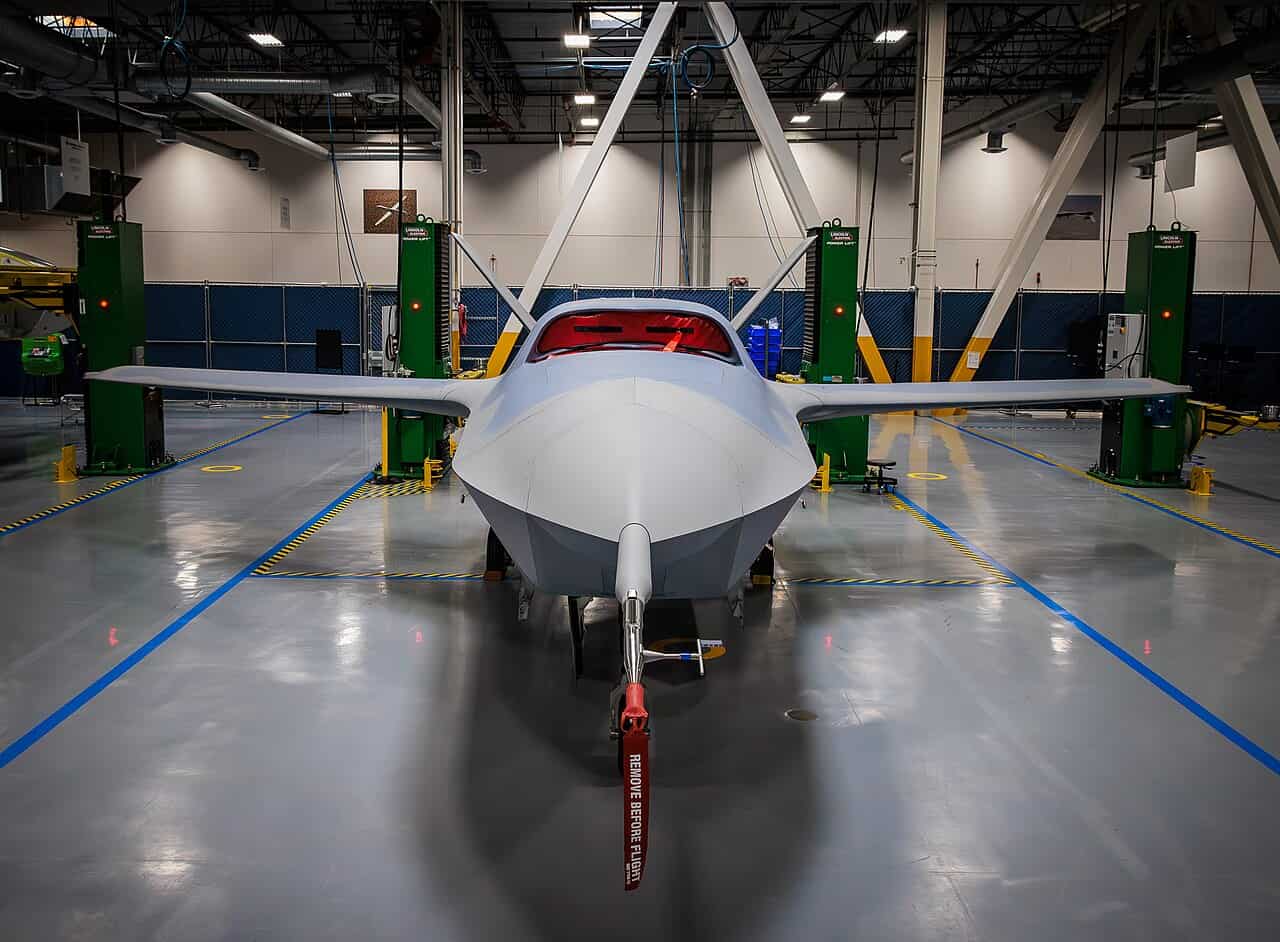
On September 14, 2026, Air Force Secretary Troy Meink announced names for the service’s two Collaborative Combat Aircraft: General Atomics’ FQ-42A is now the Vengeance, and Anduril’s FQ-44A is the Fury. He made the announcement in his keynote at the Air & Space Forces Association’s Air, Space & Cyber Conference in National Harbor, Maryland.
In the same speech, Meink more than tripled the service’s near-term goal for the drones. “We intend to have at least 500 of these in service by 2032,” he said, according to Air & Space Forces Magazine.
Only one of the names is new. General Atomics had been calling its aircraft Dark Merlin, and the Air Force replaced that with Vengeance, while Fury was already the name Anduril used, The Aviationist reported.
A Target That Keeps Growing
The 500 figure is the latest in a run of rising goals. In 2024, then-Secretary Frank Kendall said the service would have 100 CCAs by 2029. Earlier this year, Meink put the number at 150 by the end of the decade.
That 150 went into contracts on June 17, 2026, when the Air Force gave both companies engineering, manufacturing development and production contracts for at least 150 aircraft combined by the end of the decade. Their value is classified, Air & Space Forces Magazine reported at the time.
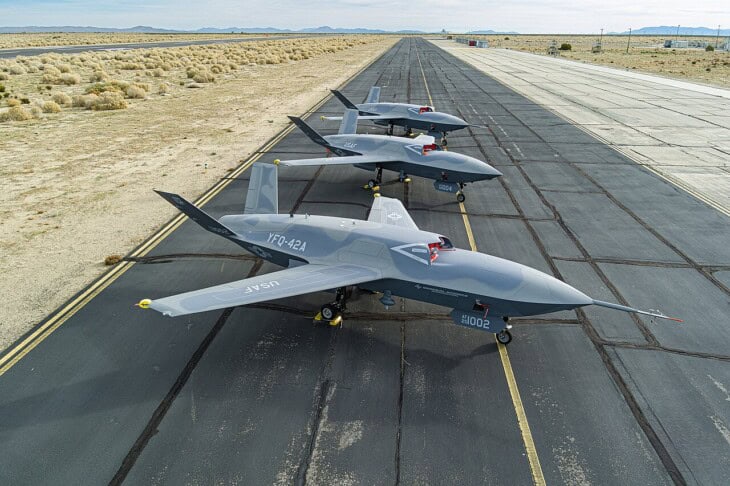
Meink suggested 500 may not be the ceiling. “We talk about 500 by 2032, [but] we could actually build more of them than that,” he said, in remarks reported by The War Zone, which notes the program’s goal, set in 2023, of at least 1,000 aircraft over its life.
Meink also said the first production aircraft of both types are already rolling off the assembly line. Anduril rolled out the first Fury built at its Arsenal-1 plant in Ohio on July 27, days after both types flew their first field exercise at Creech.
Why the “F” in FQ Matters
The designations carry a message. When then-Chief of Staff Gen. David Allvin unveiled the prototype names YFQ-42A and YFQ-44A on March 3, 2025, they became the first uncrewed aircraft to carry a fighter designation, according to Air & Space Forces Magazine.
Under Air Force naming rules, Y means prototype, F means fighter and Q means unmanned. The Y came off when the aircraft entered production in June. The F stays, which means the service is classing these drones as fighters in their own right.
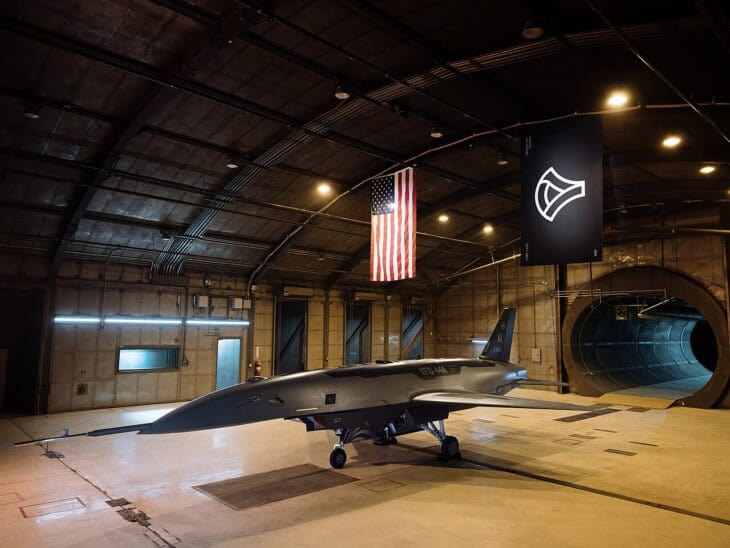
The first increment is built for air-to-air work. The drones are designed to carry air-to-air missiles and fly alongside crewed jets such as the F-35A Lightning II and the future F-47, the Air Force’s planned sixth-generation fighter, giving those pilots extra firepower, Stars and Stripes reported.
Cost is what makes a 500-aircraft fleet thinkable. Air Force officials told reporters on September 3 that a CCA air vehicle will cost about $20 million, not counting sensors or other systems. The program’s stated goal is a price about one-third that of an F-35, or less than roughly $30 million per aircraft.
That is the logic behind the numbers. An aircraft priced at a fraction of a crewed fighter can be bought in quantities no fighter budget could reach, and it adds weapons to a formation without adding a pilot who has to come home.
A Second, Cheaper Drone Fleet
Meink paired the CCA goal with a second one for Massed Modular Aircraft, cheaper drones meant for reconnaissance and strike. The Air Force wants 100 of them by 2029 and 500 by 2032, at roughly $10 million per air vehicle, again without sensors or other systems.
That would put about 1,000 uncrewed combat aircraft of the two types in service by 2032, if both goals hold. Meink described the result as “a significantly different force by 2030 or 2032,” in remarks reported by DefenseScoop.
Reality check
500 by 2032 is a goal, not a funded purchase. The June production contracts cover at least 150 aircraft and their value is classified, while the $996.5 million in the fiscal 2027 budget request only begins Increment 1 procurement. The $20 million figure also excludes sensors and other systems.
Get the Newsletter
The latest aviation news and stories sent to your inbox.
About the Author

Tim is the owner and lead editor of AeroCorner since 2019, overseeing aviation content covering aircraft, airlines, airports, and the broader aviation industry. Through years of researching, writing, editing, and publishing aviation-focused content, he has developed extensive practical knowledge of commercial aviation and air travel. Based in Asia and a frequent traveler himself, Tim also brings firsthand passenger experience to AeroCorner’s coverage. Outside of publishing, he has also explored aviation firsthand through hands-on flight training in New Zealand.