

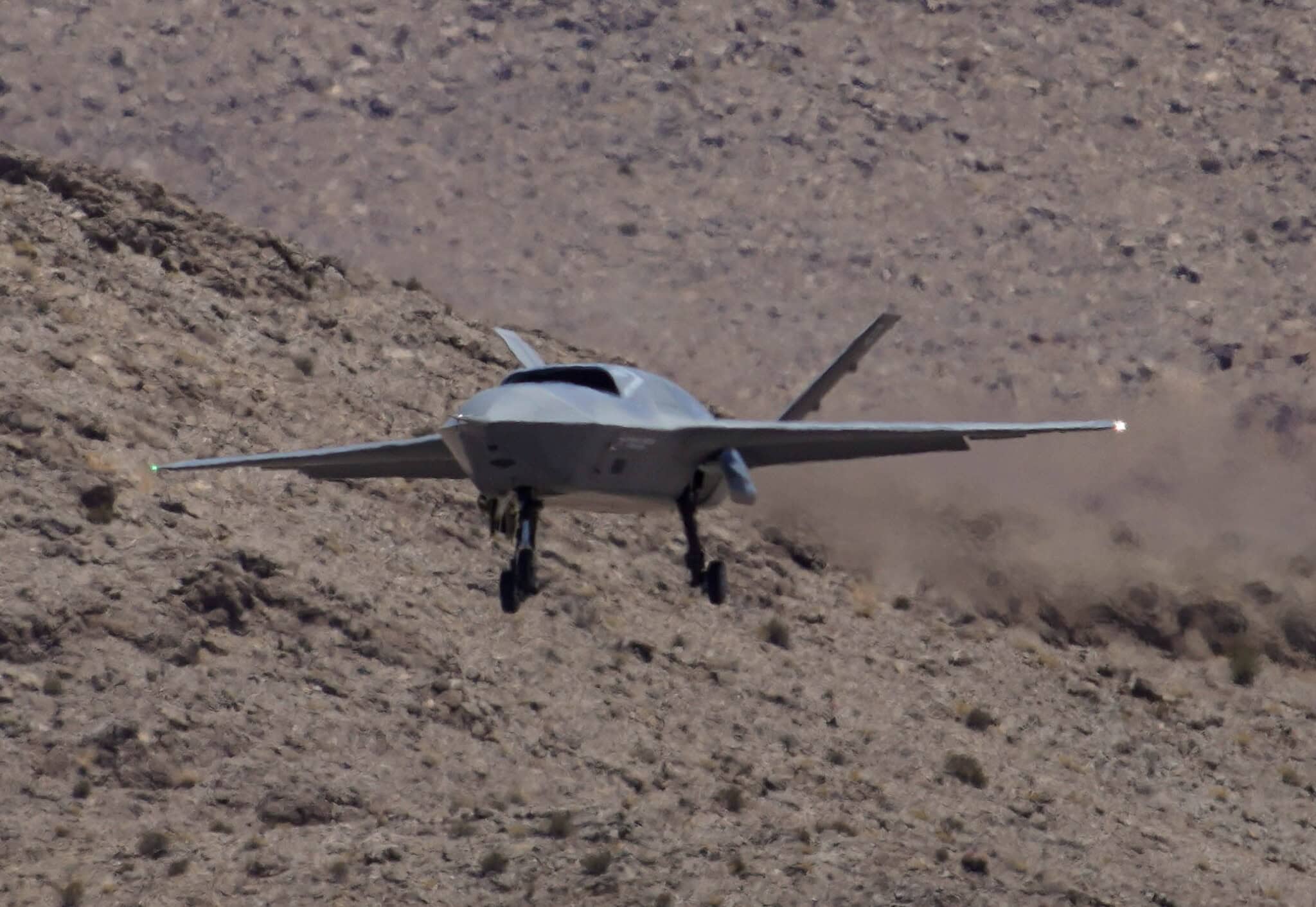
The Air Force flew both of its prototype fighter drones in a field exercise at Creech Air Force Base, Nevada, on July 21 and 22, 2026, the first time the aircraft have operated outside a formal test environment. Six days later, Anduril rolled the first Ohio-built example of its drone off a production line that does not yet have a production contract.
What happened at Creech
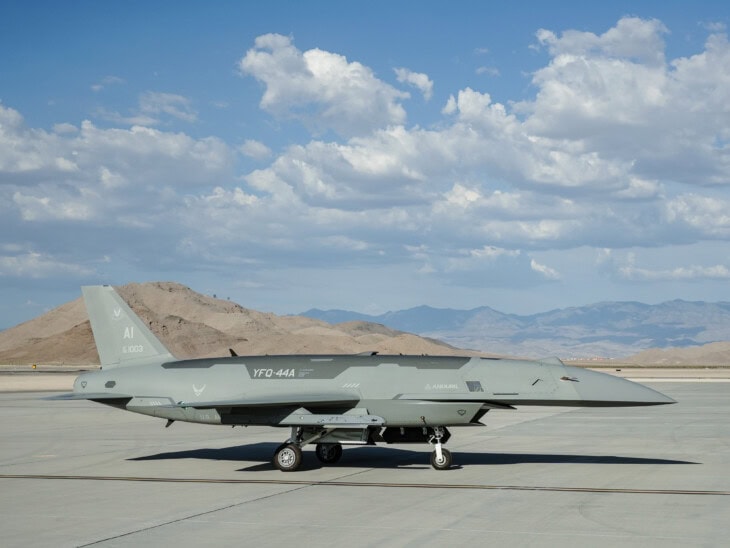
The Collaborative Combat Aircraft Experimental Operations Unit ran the exercise with General Atomics’ YFQ-42A and Anduril’s YFQ-44A Fury, the two aircraft that make up Increment 1 of the program. Both are semi-autonomous jets designed to fly alongside crewed fighters.
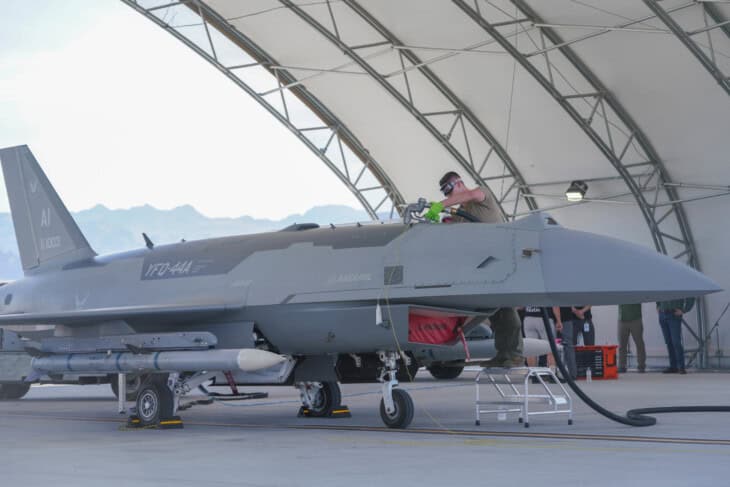
The scenario was built around Agile Combat Employment, the doctrine of scattering aircraft across austere sites and moving them often. Crews practiced deploying with a minimal logistics footprint and loading the aircraft with inert AIM-120 air-to-air missiles, according to the Air Force.
“We are focused on operating CCA outside of a traditional test environment so we can continue to learn, inform, and rapidly iterate,” said Lt. Col. Matthew Jensen, who commands the Experimental Operations Unit.
Creech is the Air Force’s main remotely piloted aircraft base, home to the MQ-9 Reaper community, so the infrastructure and the culture were already there. The Royal Netherlands Air and Space Force sent observers, and the unit expects to take the aircraft to Red Flag at Nellis.
A finished factory, an unfinished decision
On July 27, Anduril unveiled the first YFQ-44A assembled at Arsenal-1, its plant in Pickaway County, Ohio. Chief Operating Officer Matt Grimm said the aircraft took 126 days to come off the line, and the site is sized to build up to 150 Furys a year.
That capacity is speculative for now. The Air Force has set September 30, 2026, as the deadline for its Increment 1 production decision, and officials have said both airframes could be selected rather than one.
The money is beginning to line up. The service’s fiscal 2027 request includes $996.5 million to start buying CCAs, plus $150 million in advance procurement for 2028, though the budget documents do not state how many aircraft that buys.
Not in production yet
Neither CCA has a production contract. The Creech exercise used prototypes, and the aircraft Anduril rolled out in Ohio was built ahead of a decision the Air Force has not made. Quantities, unit costs, and whether one or both types survive are all still open.
What “optionally attritable” actually means
Speaking at the Life Cycle Industry Days conference in Dayton, Ohio, on July 28, Col. Timothy Helfrich, the portfolio acquisition executive for fighters and advanced aircraft, pushed back on how the program is usually described.
“We’ve actually never treated CCA as attritable. We have treated CCA as optionally attritable,” Helfrich told reporters, in remarks reported by Air & Space Forces Magazine. The aircraft “will have a very long service life, if they need to, or they could be attritable if that’s what the operational commander needs to happen.”
That distinction matters more than it sounds. “Attritable” is Pentagon shorthand for cheap enough to lose, and designing for it changes the aircraft: no ejection seat, thinner redundancy, shorter structural life, and a maintenance plan that assumes the thing will not be around long.
A crewed fighter is the opposite. Every part of it is built on the assumption that it comes home, which is a large part of why an F-35 costs what it does.
“Optionally attritable” is an attempt to have both. Build an aircraft durable enough to fly for years, price it low enough that a commander can spend one on a mission worth the trade, and let that call be made in the moment rather than at the design review.
The cost target
The Air Force wants each CCA to cost less than an F-35, which puts the ceiling near $30 million. Helfrich said both Increment 1 aircraft are currently coming in under that target.
Whether that holds through production is the open question. Autonomy software, weapons integration, and the ground systems that control the aircraft are where unmanned programs usually find their costs, not the airframe.
The Air Force is already looking past Increment 1. A second increment is expected to draw a wider field of vendors, and allied programs are moving in parallel, including Boeing’s MQ-28 Ghost Bat and the sixth-generation fighter efforts these drones are meant to fly beside.
Sources and references used for research and fact-checking.
Get the Newsletter
The latest aviation news and stories sent to your inbox.
About the Author

Tim is the owner and lead editor of AeroCorner since 2019, overseeing aviation content covering aircraft, airlines, airports, and the broader aviation industry. Through years of researching, writing, editing, and publishing aviation-focused content, he has developed extensive practical knowledge of commercial aviation and air travel. Based in Asia and a frequent traveler himself, Tim also brings firsthand passenger experience to AeroCorner’s coverage. Outside of publishing, he has also explored aviation firsthand through hands-on flight training in New Zealand.