

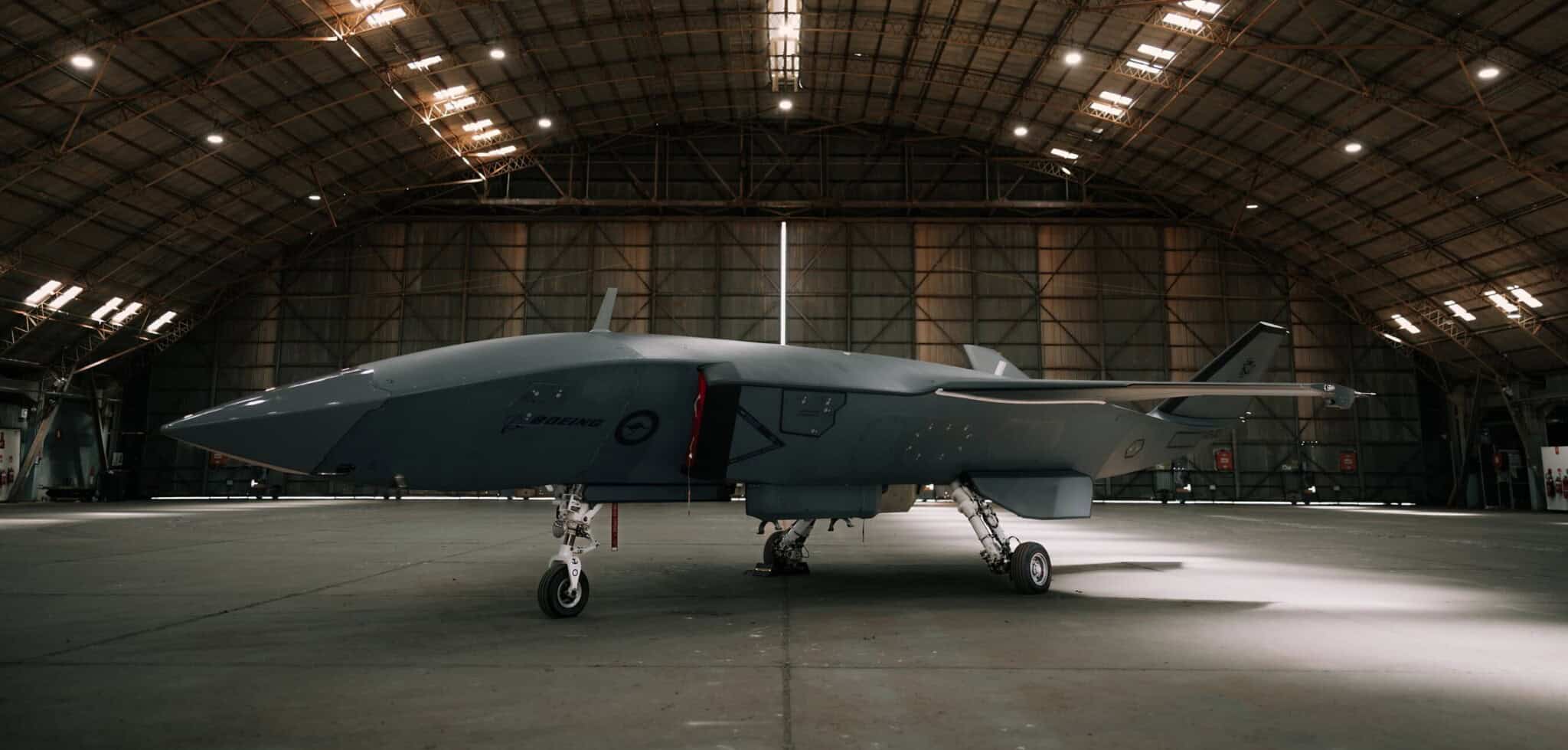
As the Farnborough International Airshow opened on July 20, 2026, Boeing put its uncrewed MQ-28 Ghost Bat on public display for the first time at the UK event. According to Boeing, the aircraft is a static-display highlight of a stand that also includes a full-size 777X cabin section, a CH-47 Chinook, and a T-7 flight deck simulator. A media briefing on the Ghost Bat program is scheduled for July 21.
What the Ghost Bat actually is
The MQ-28 Ghost Bat is what the defense world calls a collaborative combat aircraft, or CCA. Rather than replacing a fighter, it is designed to fly alongside crewed aircraft and take on tasks that would otherwise put a pilot at risk or simply add more capacity to a formation. Boeing describes its roles as surveillance, electronic warfare, and force multiplication, the idea being that one crewed jet can direct several uncrewed teammates that carry sensors or jammers ahead of it.
The program was developed in Australia in partnership with the Royal Australian Air Force, and it is one of Boeing’s most significant aircraft-development efforts outside the United States. That origin is part of why a Farnborough appearance matters: it is the aircraft’s introduction to a European audience of governments and industry partners who are running their own uncrewed aircraft programs and weighing how CCAs fit into future air forces.
Why the timing is notable
The Ghost Bat arrives at Farnborough on the back of a run of milestones that have moved it from concept toward an operational tool. The aircraft has fired an AMRAAM air-to-air missile during a trial, and it took part in Exercise Valiant Shield in the Pacific, which its backers describe as the first time a collaborative combat aircraft has been folded into a joint exercise of that scale.
For a category that has spent years being described in the future tense, those are concrete steps, and they are what Boeing is effectively advertising by bringing the airframe to a major international show.
What a debut does and does not mean
A static-display debut is a marketing and diplomacy moment, not a sale. It signals that the program is mature enough to show off and invites partner interest, but it is not an order and not a flying demonstration. Read it as a milestone in the Ghost Bat’s rollout, not a contract.
The wider context is a race among manufacturers and air forces to field affordable uncrewed teammates for crewed fighters, a contest that increasingly defines the rivalry between the big defense aircraft makers. The appeal is straightforward: a CCA is meant to be far cheaper than a crewed fighter, so an air force can afford to buy them in numbers and, if necessary, risk losing them on missions too dangerous or costly to fly with a pilot aboard. Bringing a working example to Farnborough lets Boeing make that case to prospective international customers directly.
The rest of Boeing’s Farnborough presence rounds out the pitch. The full-size 777X cabin section speaks to its commercial side, while the CH-47 Chinook and the T-7 simulator underline the defense and training portfolio. But the Ghost Bat is the piece drawing attention, because it represents the part of military aviation that is changing fastest: the shift from a fleet of purely crewed aircraft toward mixed formations where software-driven teammates do a growing share of the work.
Sources and references used for research and fact-checking.
Get the Newsletter
The latest aviation news and stories sent to your inbox.
About the Author

Tim is the owner and lead editor of AeroCorner since 2019, overseeing aviation content covering aircraft, airlines, airports, and the broader aviation industry. Through years of researching, writing, editing, and publishing aviation-focused content, he has developed extensive practical knowledge of commercial aviation and air travel. Based in Asia and a frequent traveler himself, Tim also brings firsthand passenger experience to AeroCorner’s coverage. Outside of publishing, he has also explored aviation firsthand through hands-on flight training in New Zealand.