

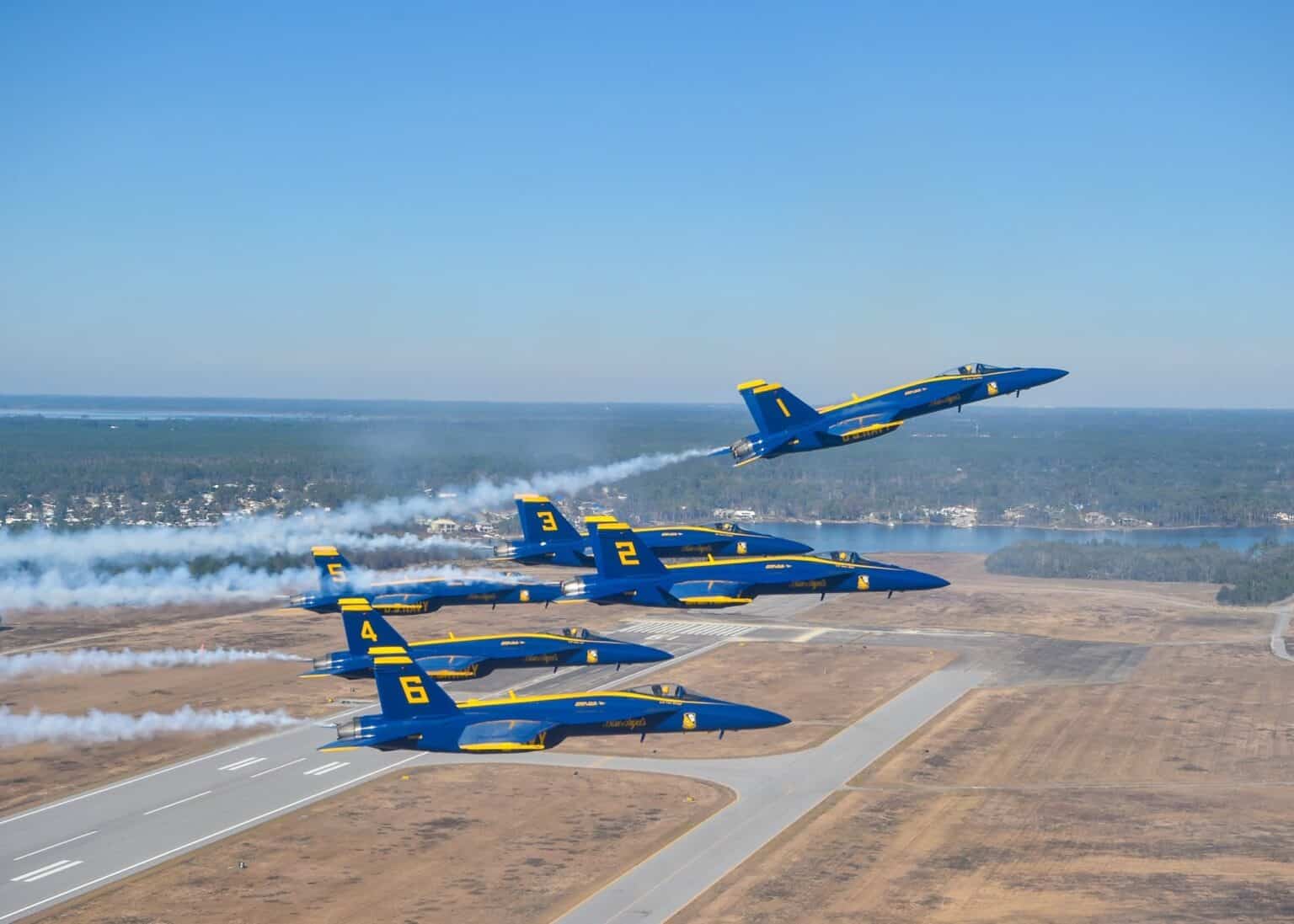
The U.S. Navy has removed Marine Corps Maj. Scott Laux, the Blue Angels’ No. 6 opposing solo pilot, from the flight demonstration team. The Chief of Naval Air Training (CNATRA) confirmed the removal on November 6, 2026, the opening day of the team’s season-ending Homecoming Air Show at Naval Air Station Pensacola, Florida.
The removal was first reported by the Pensacola News Journal, which received the statement from CNATRA’s public affairs office.
What the Navy said
The core of the statement, as quoted in the coverage, reads: “Blue Angel #6 was removed from the team for failing to uphold the standards expected of members of the Navy Flight Demonstration Squadron and will not participate in the team’s remaining performance this season.”
The Navy has not said which standards were involved, what led to the decision, or whether it involves an investigation or disciplinary action. A CNATRA officer could not confirm when the decision was made, Must Do Pensacola reported.
Newsweek noted that no flight-safety incident has been publicly linked to the removal. It also reported that Laux’s photo and biography appeared to have been taken off the team’s website, and that it had asked the Navy for further comment.
Five jets for the season finale
Without its No. 6 jet, the team flew five F/A-18 Super Hornets instead of the usual six on the first day of the show, the Pensacola News Journal reported. The two-day event on November 6 and 7 closes the team’s 2026 season, its 80th, and also marks the 200th anniversary of NAS Pensacola, the squadron’s home base.
The Navy’s statement means Laux will not fly the final day either. In October, he flew with the team at San Francisco Fleet Week, the show that also brought two days of FAA ground delays to SFO.
Laux is from Chantilly, Virginia, and graduated from the U.S. Naval Academy in 2012. He earned his wings in 2015 and flew the F/A-18 Hornet with Marine Corps squadrons before joining the team, according to The Aviationist, which drew on his team biography.
What the opposing solo does
A Blue Angels demonstration runs two acts at once. Jets No. 1 through 4 fly the Diamond, the tight formation at the center of the show, while No. 5, the lead solo, and No. 6, the opposing solo, fly high-speed passes, rolls and tight turns in between.
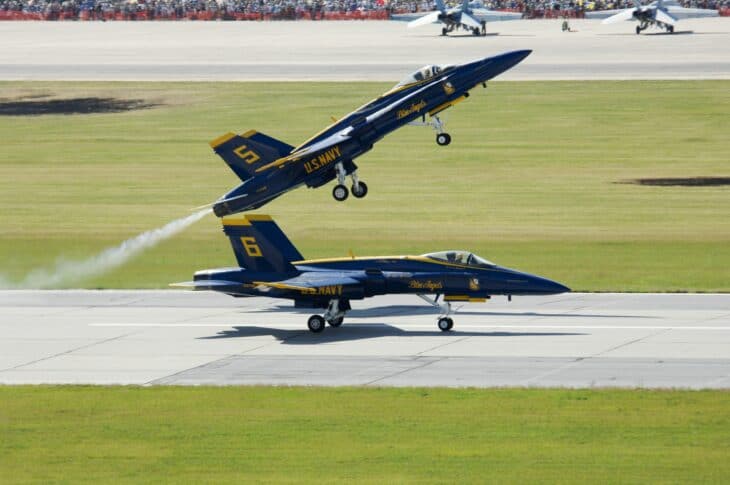

The opposing solo’s signature work is done with the lead solo: head-on opposing passes and mirror-image formations in front of the crowd. Near the end of the show, both solos join the Diamond for the six-jet Delta formation.
Those paired passes need both solo jets. Must Do Pensacola reported that the routine was adjusted for five aircraft, but did not say which maneuvers changed.
Pilots usually move through the seats over three years. The No. 7 pilot narrates the show for a season, then typically flies opposing solo, then lead solo the year after.
Laux followed that path. He joined the team in 2024, served as narrator in 2025 and flew No. 6 in 2026.
Not the first short-handed finish
The team has ended a season a jet short before. In 2008, it flew its last three shows of the year, one in Texas and two in Florida, with five jets after two members were removed from duty over an inappropriate relationship, a team spokesman said at the time, Fox News reported.
In April 2014, the Navy relieved Capt. Gregory McWherter, who had commanded the Blue Angels in 2008 to 2010 and 2011 to 2012, of his later post as executive officer of Naval Base Coronado. The Christian Science Monitor reported that the Navy tied the move to an investigation of the squadron’s command climate under him.
Those cases came with a stated reason. In Laux’s case the Navy has given none beyond its one sentence on standards, and nothing in its statement says the circumstances resemble either earlier case.
Sources and references used for research and fact-checking.
Get the Newsletter
The latest aviation news and stories sent to your inbox.
About the Author

AeroCorner News is the aviation news desk of AeroCorner.com. It covers accidents and incidents, safety rulings, airline and airport disruption, and new aircraft. It works from primary sources such as the NTSB, FAA, EASA and the manufacturers' own announcements.