

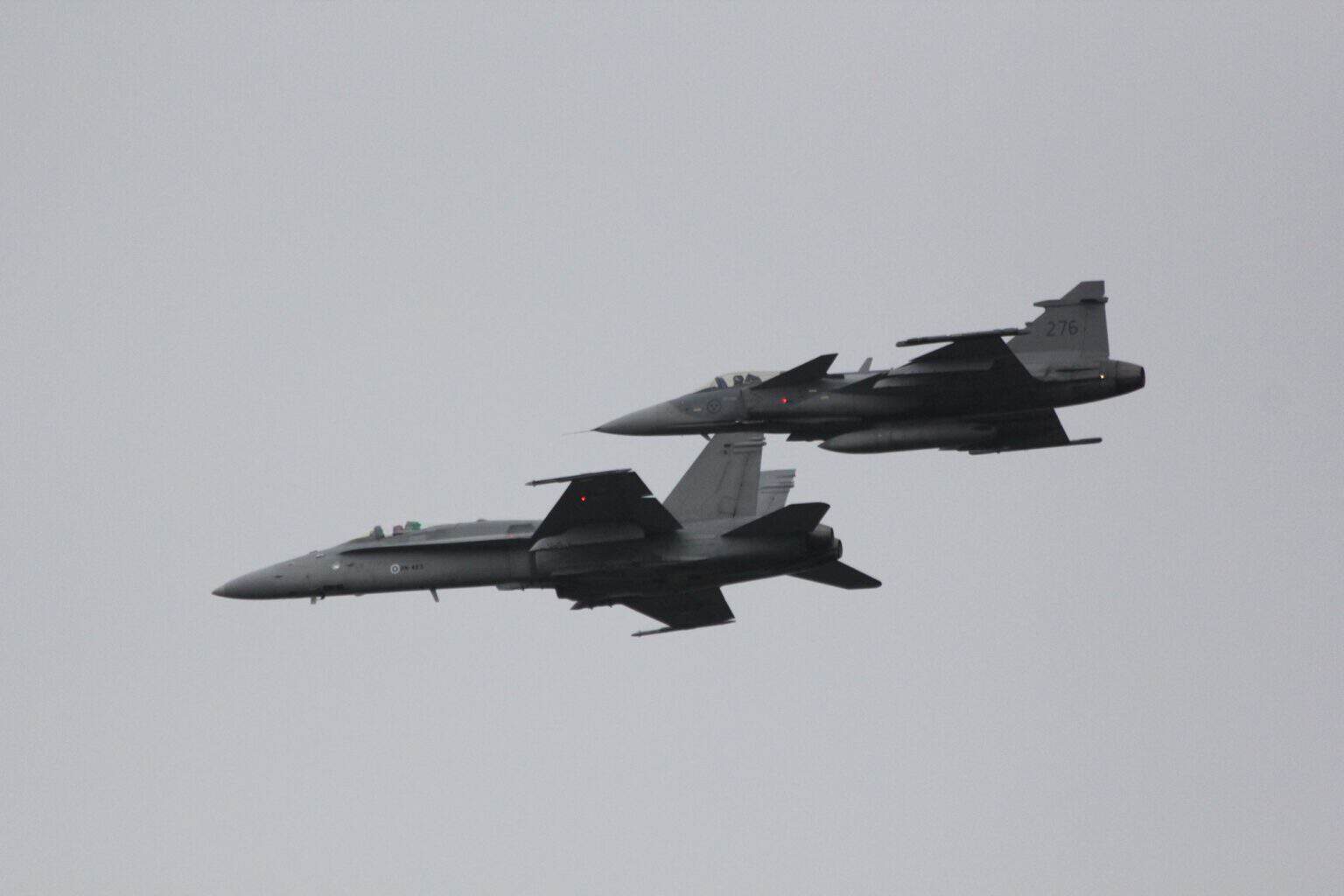
On September 24, 2026, Finnish and Swedish quick reaction alert (QRA) fighters intercepted a group of Russian military aircraft over the Gulf of Finland. Finland’s Defence Forces, announcing it on September 25, called it the first joint operational identification mission flown by the two air forces.
The Russian group was a Tu-134 transport flying with MiG-31 and Su-30 fighters, according to the Finnish release. The mission paired Finnish F/A-18 Hornet and Swedish JAS 39 Gripen fighters, with the Finnish Air Force’s Air Operations Centre directing the mission.
The Defence Forces placed the whole encounter in international airspace. It did not say how many fighters each side launched.
What changed this autumn
Sweden began helping to guard Finland’s airspace under an arrangement the Finnish Defence Forces announced on August 28. Sweden contributes Gripen fighters and a Visby-class corvette in the Baltic Sea region, and the cooperation runs until at least the end of 2026.
Finland tied the move to Ukraine’s drone attacks on Russia, saying some of those drones had strayed into Finnish airspace and territory. It said the attacks were unlikely to end soon, while stressing that no direct military threat is aimed at Finland.
The practical change is basing. Colonel Vesa Mäntylä, Deputy Chief of Staff at Air Force Command Finland, said the deeper cooperation “enables joint identification missions and allows QRA fighter jets to operate from the other country’s air bases.”
The two air forces already knew each other well. They have flown Cross Border Training sorties almost every week for several years, and Major General Jonas Wikman, commander of the Swedish Air Force, said they “can now operate seamlessly together.”
How an identification mission works
Finland’s air policing is run from the Air Operations Centre at Tikkakoski Air Base near Jyväskylä. It fuses radar and other sensor data that reach well beyond Finland’s borders, according to the Finnish Air Force.


When an aircraft in or approaching Finnish airspace cannot be identified from flight plans, civil air traffic control data or other information, the centre can scramble a fighter. Its pilot establishes the target’s nationality and tail number and photographs it with a hand-held camera.
What the fighter may do depends on where the meeting happens. In international airspace, as on September 24, the pilot may only identify and notify. Inside Finnish airspace, an intruder can be told to turn back or land, or warned by radio or with a warning burst.
Scrambles like this are routine around the Baltic. NATO’s Allied Air Command says its Baltic Air Policing fighters are often launched to identify Russian aircraft, many of them flying between mainland Russia and the Kaliningrad enclave without transponders, flight plans or contact with air traffic control.
The Finnish release did not say where the September 24 formation was heading, or whether it was using transponders. It did carry identification photos that the Finnish and Swedish air forces took of the Russian jets.
Finland had a closer call this summer. On August 20, a Russian Il-20 reconnaissance aircraft was suspected of entering Finnish airspace south of the island of Utö for about three minutes, reaching roughly 4.7 nautical miles inside, the Finnish Border Guard said, as reported by Yle.
Farther south, allied jets have gone past identifying. In August, NATO fighters shot down a drone over Latvia for the second time that summer.
Sources and references used for research and fact-checking.
- Finnish Defence Forces, Finland and Sweden identify Russian aircraft together for the first time
- Finnish Defence Forces, Finland to cooperate more closely with Sweden in surveillance and protection of territorial integrity
- Finnish Air Force, Surveillance and protection of Finnish airspace
- NATO Allied Air Command, Baltic Air Policing
Get the Newsletter
The latest aviation news and stories sent to your inbox.
About the Author
Tim is the owner and lead editor of AeroCorner since 2019, overseeing aviation content covering aircraft, airlines, airports, and the broader aviation industry. Through years of researching, writing, editing, and publishing aviation-focused content, he has developed extensive practical knowledge of commercial aviation and air travel. Based in Asia and a frequent traveler himself, Tim also brings firsthand passenger experience to AeroCorner’s coverage. Outside of publishing, he has also explored aviation firsthand through hands-on flight training in New Zealand.