

Table of Contents
The jet the Air Force has tried to retire for decades is down to its final squadrons, and the last of them now has a date.
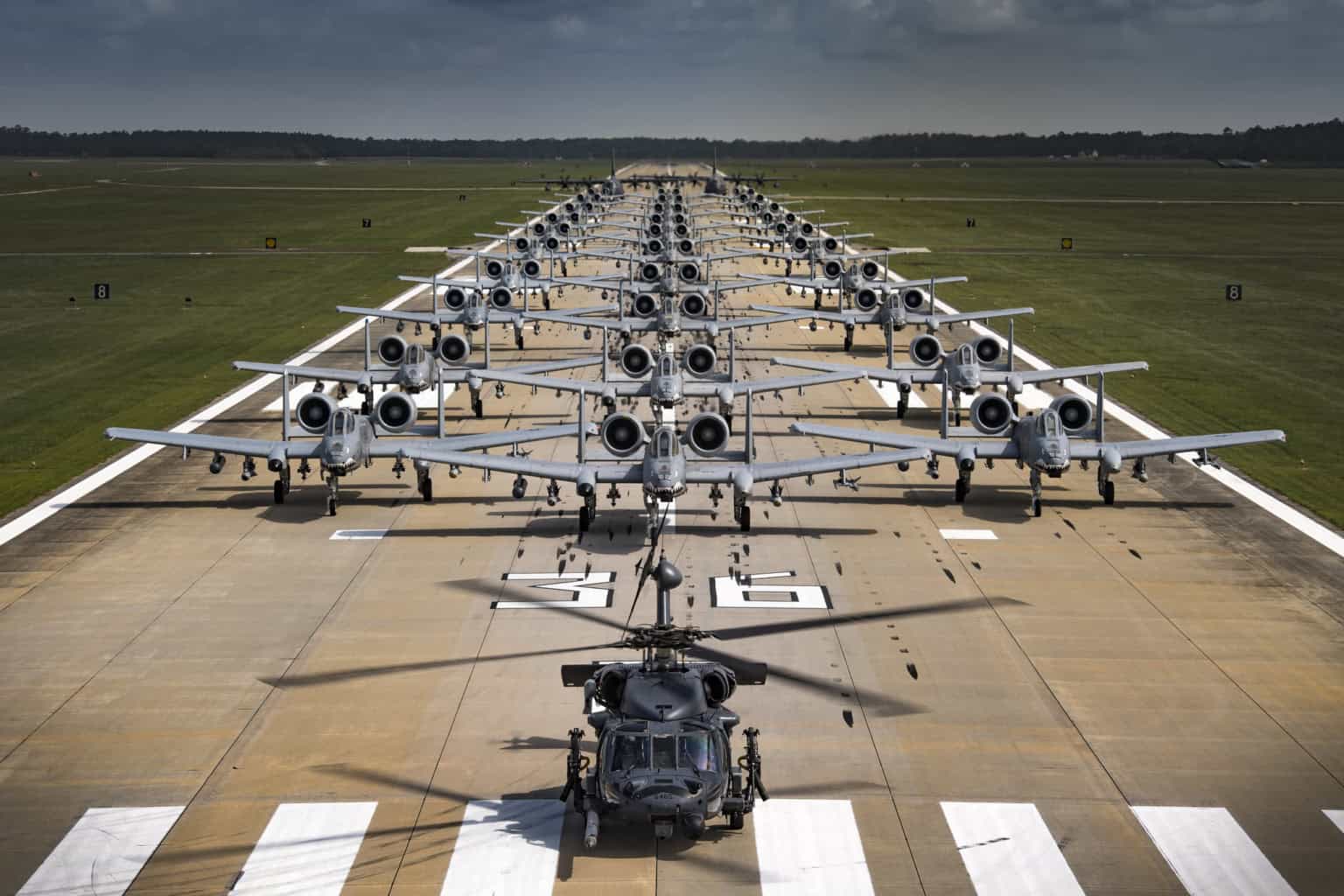
Fairchild built 716 A-10 Thunderbolt II attack jets, the Warthog, before production ended in 1984. Congress required the Air Force to keep at least 103 of them through Sept. 30, 2026.
Under the plan the service announced in April 2026, that falls to 54 jets in three squadrons through 2029, then 36 in two squadrons during 2030. That is about one Warthog in 20 of everything Fairchild built.
The open question is whether Congress lets the Air Force get there, because it has blocked this retirement more than once.
Why the Air Force wants the Warthog gone
The A-10 was designed for one job, close air support of troops on the ground, and built around one weapon. Its GAU-8/A Gatling gun fires 3,900 rounds a minute, and the airframe was laid out to carry it.
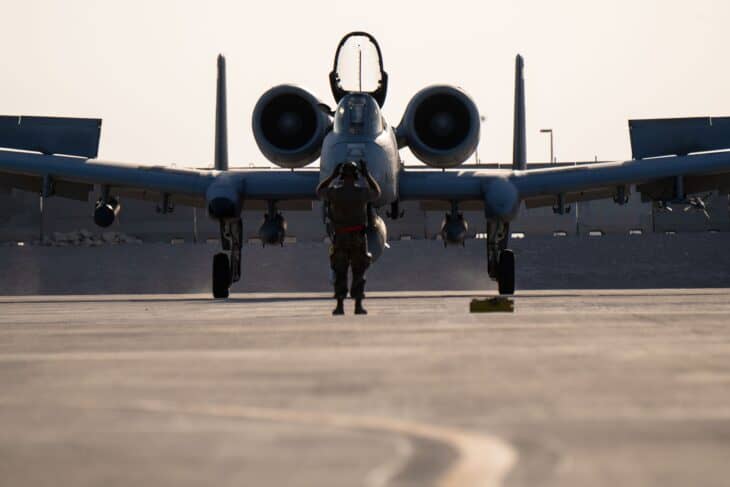

That design works by flying low and slow over the fight. The Air Force’s case against it is that low, slow flight exposes the jet to modern air defenses, and that it would not survive well against a peer military.
Money is the other half of the argument. The Air Force’s fiscal 2026 budget request estimated that retiring the fleet would save $423 million in operation and maintenance costs.
Its plan spreads the A-10’s work across three jets it already flies: the F-35A, the F-15E Strike Eagle and the F-16. None of them was designed around a cannon the way the Warthog was.
Congress has pushed back for years, which is why the A-10 keeps outliving its own retirement dates. For fiscal 2026, the Air Force asked to retire all 162 remaining A-10s. Lawmakers refused and set the 103-aircraft floor instead.
Then the war with Iran changed the timetable. In Operation Epic Fury, A-10s flew close air support over the Strait of Hormuz and joined a search and rescue mission that recovered two downed F-15E airmen. One A-10 crashed during that mission, and its pilot was rescued.
On April 20, 2026, Air Force Secretary Troy Meink announced on X that the service would “EXTEND the A-10 ‘Warthog’ platform to 2030.” The old plan had the last jet gone in 2029.
From 716 Warthogs to 36: the count, year by year
The two YA-10 prototypes first flew on May 10, 1972, and Fairchild delivered the last production jet in 1984. Histories differ by one airframe: Dennis Jenkins counts 716 built, while Robert Spick counts 715 delivered, including the two prototypes and six development aircraft.
The Air Force’s 1970 request for proposals set a target unit cost of $1.4 million. In the 1991 Gulf War, A-10s flew 8,100 sorties and launched 90 percent of the AGM-65 Maverick missiles fired in the conflict.
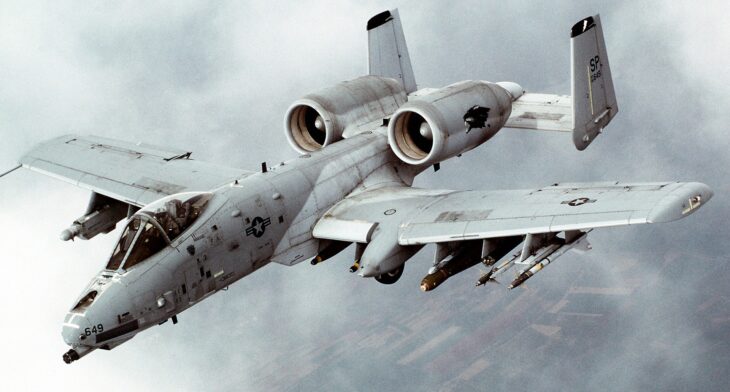
Between 2005 and June 2011, the entire fleet of 356 A-10s and OA-10s went through the Precision Engagement upgrade and became A-10Cs. By 2017, 282 A-10Cs were reported as operational: 141 with the active-duty Air Force, 55 with the Air Force Reserve and 86 with the Air National Guard.
The cuts came steadily after that. In 2024, 39 went to storage, and by September 2024 the boneyard at Davis-Monthan held 50 A-10As and 107 A-10Cs. By 2025, the fleet was down to 162.
The 103-jet floor in the fiscal 2026 defense bill allowed up to 59 of those 162 to go, and it ran to Sept. 30, 2026. The fiscal 2027 budget request asks to retire 49 more: 103 minus 49 is the 54 jets the extension plan keeps.
The Warthog's countdown
716 built by 1984. 356 upgraded to A-10C by 2011. 162 left in 2025. A floor of 103 through Sept. 30, 2026. A planned 54 through 2029, and 36 during 2030.
Under the April plan, each surviving squadron keeps 18 aircraft. One active-duty squadron at Moody Air Force Base in Georgia and one reserve squadron at Whiteman Air Force Base in Missouri run to 2030, and a second Moody squadron runs to 2029.
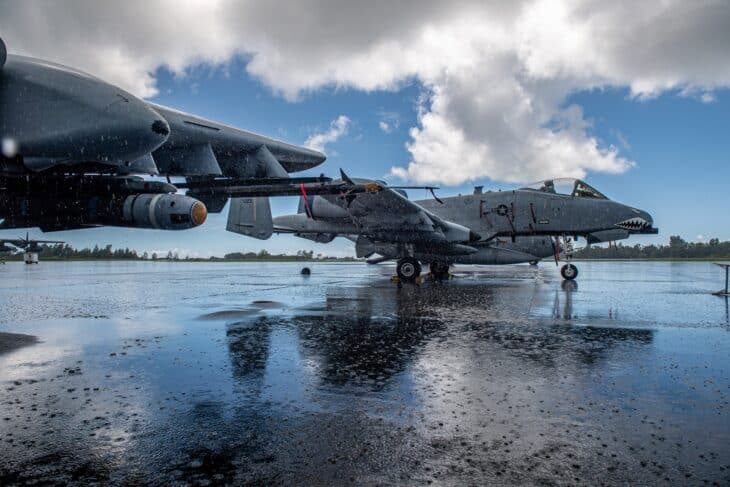

The Air Force said it would use a fleet management strategy to keep the A-10s with the longest serviceable life. That matters, because the fleet’s average age is now more than 43 years.
Why 36 Warthogs is a problem, not just a number
A fleet that small has no spare jets. When an Iranian missile strike on a base in Jordan on Sept. 8-9, 2026 left one A-10 missing a wing, there was no word on whether it could be repaired. Every airframe counts in a fleet planned to shrink to 54.
The support system around the jet was also being shut down on the old schedule. The Ogden depot at Hill Air Force Base in Utah, which had handled A-10 structural repairs and wing replacements since 1998, held the closing ceremony for that mission on Feb. 12, 2026.
Davis-Monthan Air Force Base in Arizona, a Warthog base since the 1970s, ended its operational A-10 flying on July 29, 2026. An extension on paper does not rebuild a depot or a schoolhouse.
The cuts also land on an Air Force that already flies fewer fighters than the minimum Congress requires. Our count of how many fighter jets the US has shows where the rest of the fleet stands.
The Warthog is not a fighter, and it is not on our ranking of the best fighter jets in the world. Its value has always been the one mission it was built for, which is exactly the argument its supporters keep winning.
What happens to the last A-10 squadrons now
Whiteman is already lined up for what comes after. On July 29, 2026, it was named the only candidate location for 24 F-15Es to replace its A-10s, with the Strike Eagles not due to start arriving until fiscal 2031.
Congress may still move the finish line. The bipartisan BRRRRT Act, H.R. 9780, introduced on July 20, 2026, by Rep. Abe Hamadeh of Arizona, would require at least 126 A-10s in the inventory from fiscal 2027 and keep the fleet viable through fiscal 2033.
As of early September 2026, that bill had no committee vote and had not become law. The Air Force’s 49-jet cut is also a request, and Congress writes the final number.
For now, the plan on the books is the one Meink announced: 54 Warthogs through 2029 and 36 into 2030. Of the 716 Fairchild built, that would be the last one in 20 still flying, more than half a century after the prototype first left the ground.
Sources and references used for research and fact-checking.
- Air Force Times, US Air Force extends A-10 Warthog through 2030
- Military.com, The Air Force Wants to Retire the A-10. The 'BRRRRT Act' Would Keep 126 Flying
- Aerospace Global News, A-10s, U-2s and F-15Es: What the US Air Force wants to retire in 2027
- Aerospace Global News, A-10 Warthog retirement slowed by Senate NDAA bill
- Wikipedia, Fairchild Republic A-10 Thunderbolt II
- AVweb, Me And The A-10
- U.S. Air Force, A-10 Thunderbolt II fact sheet
Get the Newsletter
The latest aviation news and stories sent to your inbox.
About the Author

Tim is the owner and lead editor of AeroCorner since 2019, overseeing aviation content covering aircraft, airlines, airports, and the broader aviation industry. Through years of researching, writing, editing, and publishing aviation-focused content, he has developed extensive practical knowledge of commercial aviation and air travel. Based in Asia and a frequent traveler himself, Tim also brings firsthand passenger experience to AeroCorner’s coverage. Outside of publishing, he has also explored aviation firsthand through hands-on flight training in New Zealand.