

Table of Contents
The number nearly doubled since May, and it does not mean what most headlines made it sound like. Most of the destroyed aircraft on the list had no one on board.
The Congressional Research Service updated its tally of US aircraft hit in Operation Epic Fury on October 5, 2026. It now lists 81 aircraft “reportedly lost or damaged” since the war with Iran began on February 28, up from 42 in its May edition.
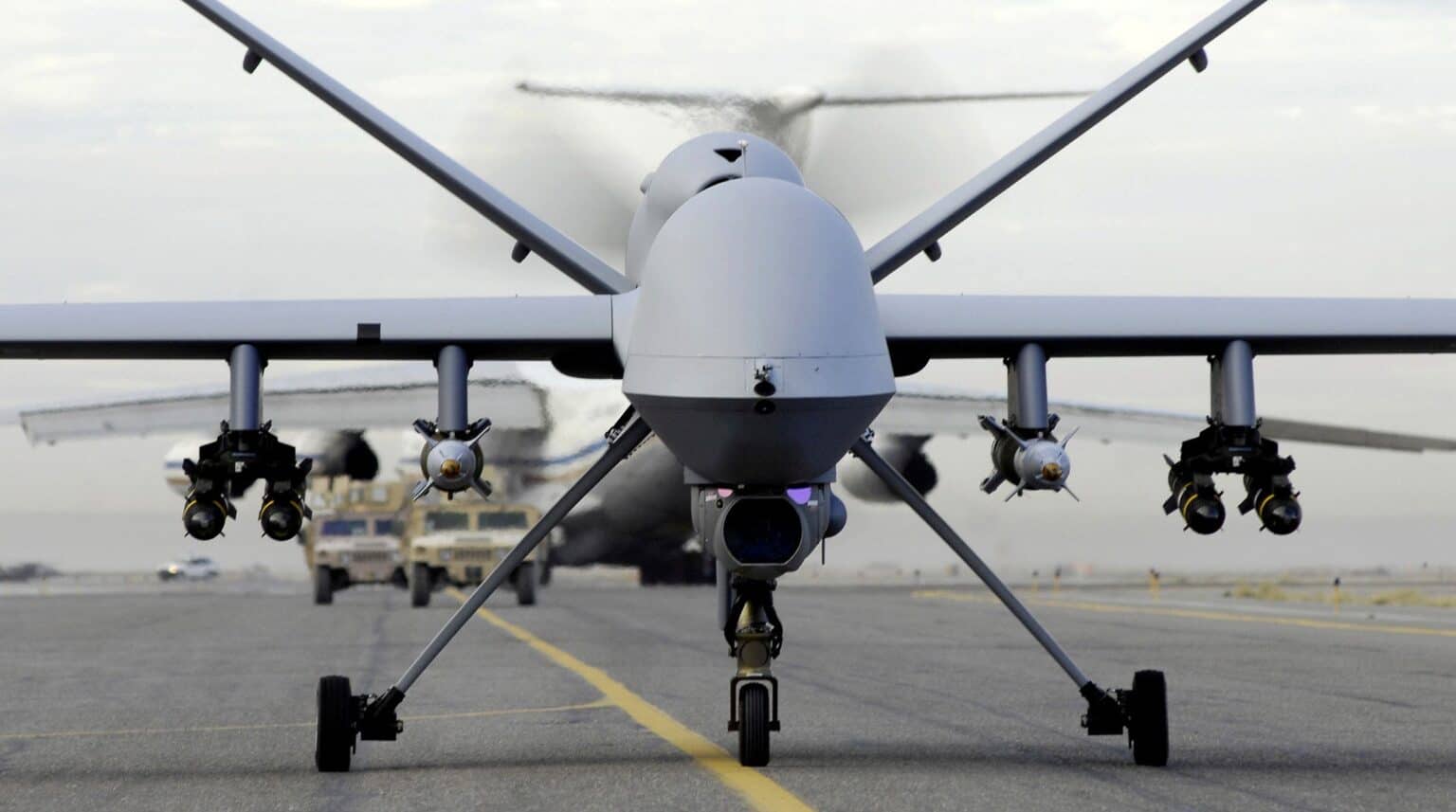
The biggest line on the list is the MQ-9 Reaper: 45 of them, more than all 32 crewed aircraft on the list combined. Read entry by entry, at least 63 of the 81 were destroyed, and 45 of those 63 were Reapers.
What the 81 Actually Counts
The 81 is not 81 aircraft shot down. CRS built the list from news reports, Central Command statements and the Pentagon inspector general, and it mixes jets that were destroyed with jets that took light damage and flew again.
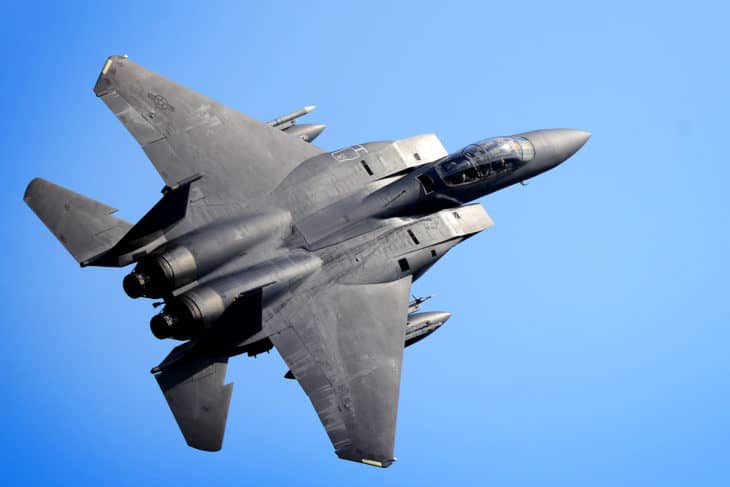
Eight of the 12 F-15E Strike Eagles on the list, for example, were lightly damaged in an Iranian missile strike on Muwaffaq Salti Air Base in Jordan and have been returned to service. That September 8 to 9 attack also cost an A-10 Warthog its wing.
| Aircraft | Listed | What the record says |
|---|---|---|
| MQ-9 Reaper | 45 | “At least 45” lost, per US officials (August 13 report) |
| F-15E Strike Eagle | 12 | 4 destroyed (3 by friendly fire over Kuwait, 1 over Iran); 8 lightly damaged in Jordan, back in service |
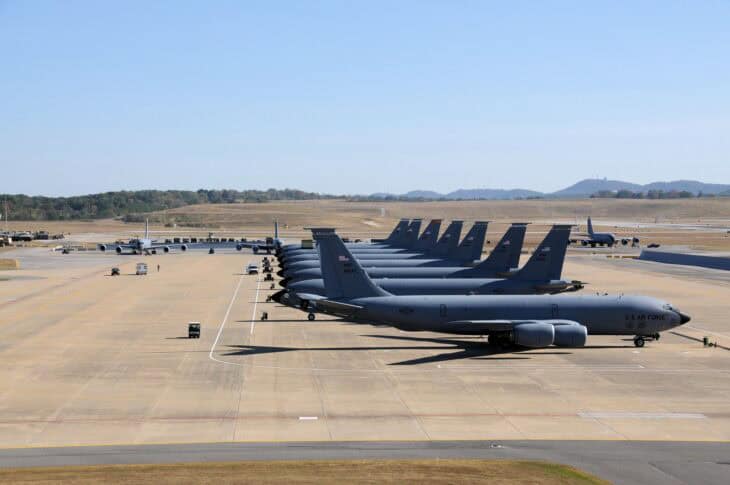
| KC-135 Stratotanker | 7 | 1 crashed in Iraq, 1 damaged in the same collision, 5 hit on the ground in Saudi Arabia |
| AH-6 Little Bird | 4 | Destroyed by US forces as unrecoverable during a rescue |
| MQ-1 | 3 | Downed by Iran |
| A-10 Thunderbolt II | 2 | 1 destroyed after enemy fire, 1 severely damaged in Jordan |
| MC-130J Commando II | 2 | Destroyed by US forces during a rescue |
| F-35A Lightning II | 1 | Damaged by ground fire over Iran |
| E-3 Sentry | 1 | Hit on the ground in Saudi Arabia; listed as damaged |
| HH-60W Jolly Green II | 1 | Damaged during a rescue |
| AH-64 Apache | 1 | Shot down over the Strait of Hormuz |
| MH-60 Sea Hawk | 1 | Crashed over the Arabian Sea |
| MQ-4C Triton | 1 | Crashed |
| Total | 81 | 49 uncrewed, 32 crewed |
Sorted by what happened, the list splits three ways. At least 63 aircraft were destroyed, 13 were damaged, and 5 KC-135 tankers hit at Prince Sultan Air Base sit in between: the inspector general lists them as “damaged or destroyed.”
Even the damaged column may undercount. CRS still lists the E-3 as damaged, but Air & Space Forces Magazine has called it likely unrepairable, according to Military Times.
The costliest crewed losses came in single moments. Three F-15Es were destroyed by friendly fire over Kuwait in the war’s first days, and the KC-135 that crashed in western Iraq on March 12 killed all six of its crew. Two MC-130Js and four AH-6s were destroyed by US forces themselves during the April rescue of a downed F-15E crew, so Iran could not capture them.

Why the Reaper Dominates the List
The Reaper, among the best-known military drones in the world, was the workhorse of this war. In May testimony, Air Force Chief of Staff Gen. Kenneth Wilsbach called the MQ-9A “maybe the most valuable player” of Operation Epic Fury, according to CRS.
It can stay airborne for up to 27 hours, and US forces flew it extensively around the Strait of Hormuz for scouting and precision strikes. That is a lot of hours over a defended coastline in an aircraft that Air Force officials, proposing to end its production in their fiscal 2021 and 2022 budgets, had warned “was not designed for operation in a future highly contested environment.”

How each one was lost is not public. The inspector general’s report gives no split between shootdowns, crashes and aircraft hit on the ground, and a classified annex accompanies it.
The 45 Is Not an Official Number
The Air Force has not disclosed how many Reapers it has lost. Every figure in circulation comes from somewhere else, and each one counts a different window.
Air & Space Forces Magazine reported nearly 30 lost as of May. The inspector general’s report counts “as many as 30 destroyed in various circumstances” through June 30. The 45 comes from a Washington Post report of August 13, in which three US officials said the military had lost “at least 45.”
CRS carries the 45 because it is the latest figure, not because the Pentagon confirmed it. “At least” leaves room for more, and CRS says its whole count “may remain subject to revision,” citing classification, ongoing combat and attribution.
A Fleet That Was Already Shrinking
The losses landed on a fleet the Air Force had been cutting on purpose. Its budget documents showed 351 MQ-9As in fiscal 2022, before it began retiring older Block 1 aircraft and losing others in accidents and combat.
The fleet stood at 165 at the start of fiscal 2026, on October 1, 2025. On May 13, 2026, Lt. Gen. David Tabor told Congress it was down to 135 and said the service was “concerned about how they’ve attrited.” Reports of the Post’s figure put 45 at roughly a quarter of the pre-war fleet.
Replacing them is the hard part. The MQ-9A production line is closed, and a General Atomics official told CRS it would take two to three years to restart.
Almost none left to buy
In June, General Atomics told The War Zone there were fewer than 10 new MQ-9As available to any customer anywhere in the world. The Air Force said it intended to buy several unused ones.
The Reaper bill alone is large. CRS puts a Reaper at $30 million to $50 million depending on its sensors, so 45 of them come to roughly $1.35 billion to $2.25 billion.
For scale, the Congressional Budget Office estimated the cost of all US equipment lost in the war through August 1 at between $1.9 billion and $3.3 billion, depending on what the Pentagon chooses to replace. The Pentagon’s own figure for equipment losses was $3.7 billion as of June 29, measured at replacement cost.
What Replaces the Reaper
Not more Reapers, if the Air Force gets its way. Its fiscal 2027 budget request asked for no new MQ-9As; the only new ones requested were five for the Marine Corps, through the Navy. A June supplemental request mentions unspecified “MQ-9 platforms.”
Instead, the service wants a cheaper drone it calls the Massed Modular Aircraft, reportedly about $10 million each, with a goal of 500 in service by 2032. General Atomics has already pitched its own successor, a clean-sheet drone called Wildfire, built to be fielded in large numbers on missions where losses are expected.
Congress is less sure. The Senate Armed Services Committee’s version of the 2027 defense bill would bar the Air Force from shrinking its MQ-9 inventory until September 30, 2031, and the House version would block retirement until a replacement reaches initial operational capability.
The war itself is not over. CRS describes a ceasefire in April, strikes resuming within weeks, and conditions that “remain fluid,” so the list is likely to grow again.
That is the real lesson of the 81. The aircraft the US could most afford to risk, because no one was aboard, turned out to be among the hardest to replace. The Air Force’s answer is a cheaper drone it plans to buy by the hundred.
Sources and references used for research and fact-checking.
- Congressional Research Service, U.S. Aircraft Combat Losses in Operation Epic Fury: Considerations for Congress (IN12692, updated October 5, 2026)
- Congressional Research Service, Air Force MQ-9A Reaper: Background and Issues for Congress (IF13318, September 23, 2026)
- Department of War Office of Inspector General, Lead Inspector General Report to the United States Congress: Operation Epic Fury, April 1, 2026 to June 30, 2026
- Military Times, US aircraft lost or damaged in Iran war nearly doubles in latest congressional report
- Military Times, Heavy losses of MQ-9 Reaper to factor in future plans to divest, replace aircraft
- The War Zone, USAF Scrambling To Buy What Few MQ-9 Reapers It Can Find After Epic Fury Losses
- The Defense Post, US Lost At Least 45 MQ-9 Reapers in Iran War
- DroneXL, Pentagon IG report counts as many as 30 Reapers lost in Iran war
Get the Newsletter
The latest aviation news and stories sent to your inbox.
About the Author

Tim is the owner and lead editor of AeroCorner since 2019, overseeing aviation content covering aircraft, airlines, airports, and the broader aviation industry. Through years of researching, writing, editing, and publishing aviation-focused content, he has developed extensive practical knowledge of commercial aviation and air travel. Based in Asia and a frequent traveler himself, Tim also brings firsthand passenger experience to AeroCorner’s coverage. Outside of publishing, he has also explored aviation firsthand through hands-on flight training in New Zealand.