

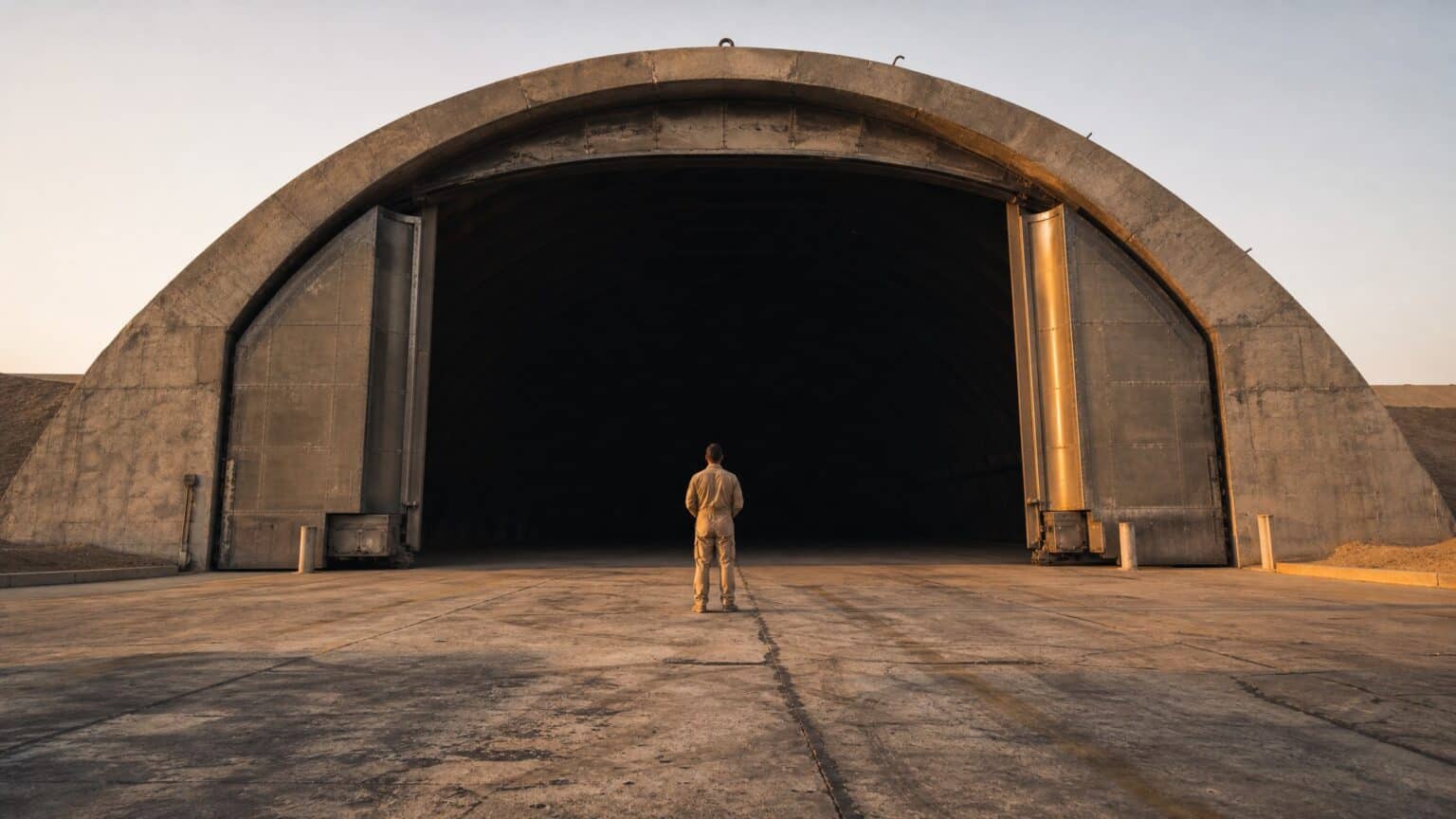
Jordan says its air defenses destroyed 18 of the 20 missiles fired. About nine American jets were damaged on the ground anyway, and the Air Force still has not settled whether concrete would have saved them.
Iran fired ballistic missiles at Muwaffaq Salti Air Base in eastern Jordan overnight on September 8, 2026. One US Air Force A-10 Thunderbolt II was left with a severely damaged wing, and a CBS News report, relayed by the Jerusalem Post, said the wing was missing entirely.
About eight F-15E Strike Eagles took light damage and are considered serviceable, Air & Space Forces Magazine reported. US officials said no American personnel were killed.
The strike lands on a question the Air Force has left open for a decade: whether its jets need concrete over them. Within 1,000 nautical miles of the Taiwan Strait, China has more than 650 hardened aircraft shelters. Since the early 2010s, the US has added two there.
A crowded base, hit again and again
Muwaffaq Salti is not a new target. Iran has fired on it repeatedly since the war began on February 28, 2026, and US soldiers were killed defending it during a missile attack in July.
It is also a crowded one. Satellite imagery from early February, analyzed by The New York Times, showed more than 60 US jets on the base, including 30 F-35s and 36 F-15s, about three times the usual number of American combat aircraft there.
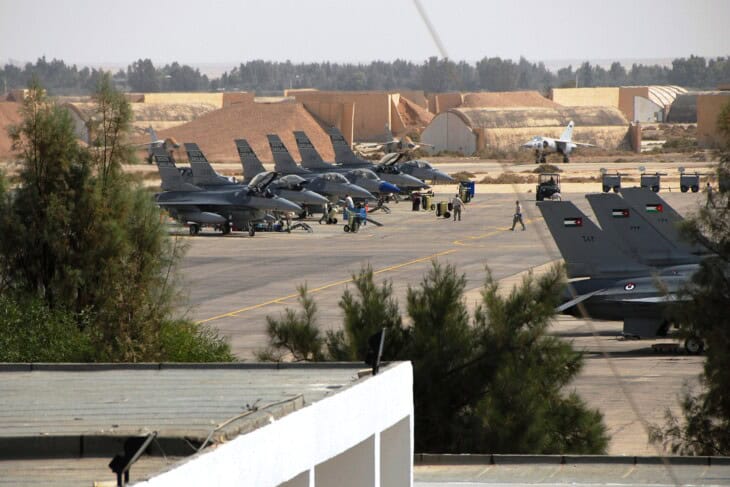
On September 8, Jordan’s armed forces said they engaged 20 missiles, destroyed 18, and that two fell in unpopulated areas. American batteries fired more than 30 Patriot interceptors during the barrage, according to the CBS report.
Roughly nine jets were damaged regardless. As of September 10, US Central Command has declined to comment, and no official has said whether the A-10 was inside a shelter or parked on open concrete.
The pattern is not new in this war. On March 27, an Iranian strike on Prince Sultan Air Base in Saudi Arabia destroyed an E-3 Sentry radar jet, one of only 16 the Air Force operated, and damaged several KC-135 tankers.
Satellite imagery had shown the E-3s parked out in the open. The destroyed jet was valued at up to $500 million.
News: Multiple American military aircraft suffered damage in strikes overnight on Muwaffaq Salti Air Base in Jordan, sources told @JimLaPorta and me. One A-10 Thunderbolt, known as the Warthog, was struck and left with a missing wing. Roughly eight F-15s sustained light damage…
— Jennifer Jacobs (@JenniferJJacobs) September 10, 2026
America once built shelters by the hundred
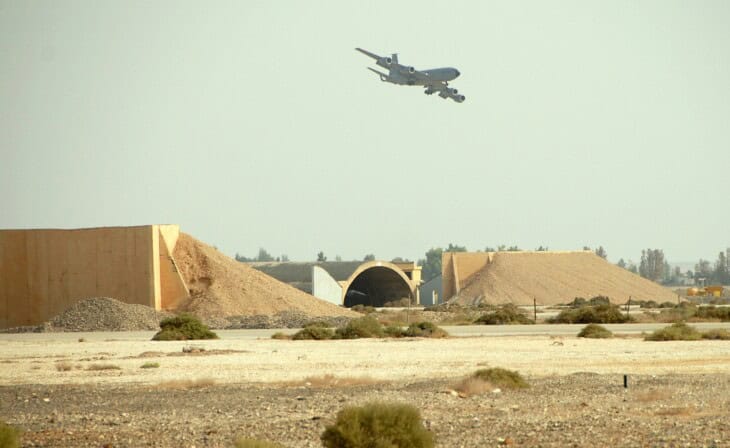
The Cold War settled the concrete question the other way. The US and its allies had roughly 1,000 hardened aircraft shelters by the end of the Cold War, more than 100 of them in Japan, according to the Hudson Institute’s January 2025 study Concrete Sky.
Then the building stopped. Since the early 2010s, at airfields within 1,000 nautical miles of the Taiwan Strait and outside South Korea, the US military has added two hardened shelters, 41 non-hardened ones, one runway and one taxiway.
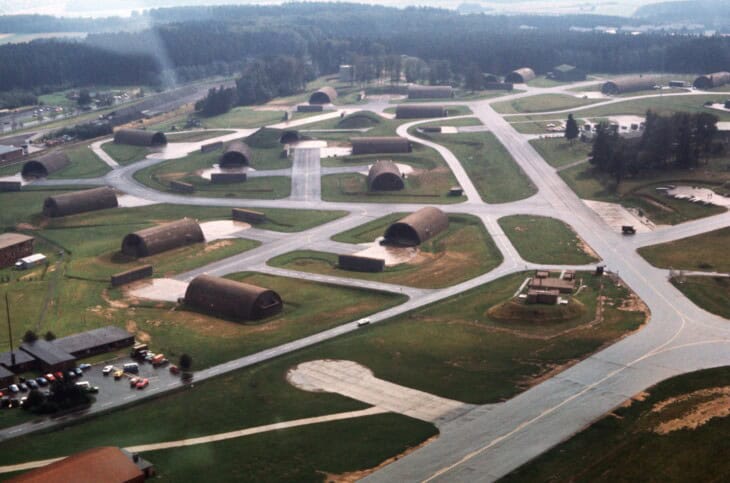
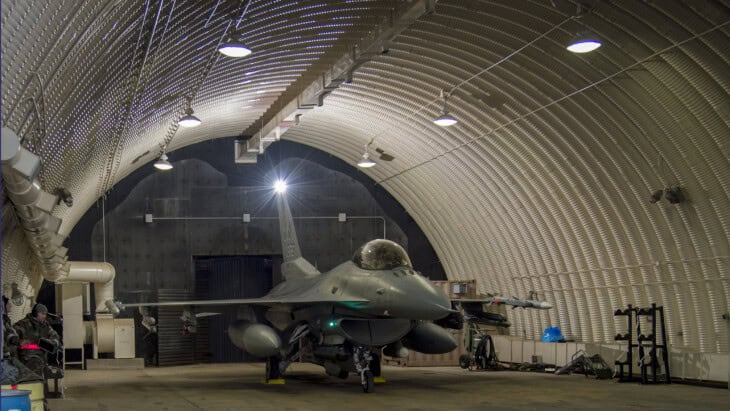
China went the other way. It now has 134 air bases inside that same radius, with more than 650 hardened shelters and almost 2,000 lighter, non-hardened ones, protecting the fighters that would face American jets in any US-China air war.
The missiles to exploit the gap exist too. Analysts cited by Hudson estimate the PLA Rocket Force holds 1,300 medium-range ballistic missiles that can reach bases in Japan and the Philippines, plus 500 intermediate-range missiles that can reach Guam.
An open ramp is the worst case. A 1999 RAND study estimated that a single accurate Chinese ballistic missile carrying submunitions could damage scores of fighters parked at standard spacing.
Hudson applies the same math at home. At Langley Air Force Base in Virginia, home to more than a third of the F-22 Raptor fleet, it estimates that as few as 10 submunition-armed missiles could destroy the aircraft and fuel stores. The F-22 sits at number one in our ranking of the best fighter jets in the world.
A fighter shelter costs about as much as one interceptor
Analyst Michael Dahm, quoted in the Hudson study, put a fully enclosed hardened fighter shelter at about $4 million: the price of a single Patriot missile, or one-twentieth of an $80 million fighter. More than 30 Patriots were fired defending Muwaffaq Salti in one night.
The Air Force chief is not sold on concrete
The case against shelters comes from the top. Gen. Kenneth Wilsbach, now the Air Force chief of staff, dismissed them in 2023 while commanding Pacific Air Forces: “They’re not so hard when you put a 2,000-pound bomb right through the roof.”
The Iran war has not changed his mind. “Unless you’re going to send something 100 feet or more underground, we can blow it up, and so can they,” Wilsbach said in July 2026, according to Breaking Defense, adding that “the economics of building a shelter that is impervious to a strike doesn’t work.”
He prefers cheaper layers: nets that keep small drones off parked jets, a new point-defense career field, and inexpensive guns, rockets and directed-energy weapons. The Air Force’s broader answer is to scatter jets across many smaller airfields, a concept it calls Agile Combat Employment.
Hudson’s reply is that imperviousness was never the point. A shelter forces an attacker to spend a large, expensive penetrating weapon on each aircraft instead of blanketing an open ramp with a few submunition missiles, which shrinks the number of strikes it can mount over a campaign.
Either way, the fleet has little slack for losses on the ground. The Air Force told Congress on May 5, 2026, that it had 1,098 fighters, 47 short of the 1,145 minimum set in law.
The A-10 is the sharpest case. The Hill Air Force Base depot that had replaced A-10 wings since 1998 held its closing ceremony on February 12, 2026, and the Air Force plans to keep only 54 Warthogs through 2029, falling to 36 in 2030.
Bunkers are now a “theater priority” in the Middle East
The war has already moved the Pentagon on the Gulf. On March 23, the Space Force sought “prefabricated, transportable, hardened shelter systems” for delivery to Jordan.
Two days later, the Army Corps of Engineers posted a notice for hardened underground facilities at Al Udeid Air Base in Qatar, with work set to begin in 2028. On March 31, four days after the E-3 loss, Secretary of War Pete Hegseth said rapidly fielding more bunkers at Middle East bases “is a theater priority.”
The Pacific has not seen the same shift. There were no hardened aircraft shelters on Guam or in the Northern Mariana Islands as of mid-2024, and Hudson noted in January 2025 that the Air Force was planning no hardened shelters for its new B-21 bombers, only sunshade-style covers.
Jordan was one base, 20 missiles, and a defense that Jordan says stopped 18 of them. China’s rocket force is estimated at about 1,800 medium- and intermediate-range ballistic missiles, and the airfields it would aim them at are, in Hudson’s words, “generally unhardened.”
Sources and references used for research and fact-checking.
- Air & Space Forces Magazine, Iran Damages A-10, F-15s with Missile Attack on Air Base in Jordan
- AeroTime, Iranian strike damages USAF A-10, F-15Es in Jordan
- The Jerusalem Post, US military aircraft damaged in strikes on Muwaffaq Salti Air Base in Jordan - report
- The Jerusalem Post, Dozens of US fighter jets moved to Muwaffaq Salti air base
- Wikipedia, 2026 Iranian strikes on Jordan
- Hudson Institute, Concrete Sky: Air Base Hardening in the Western Pacific
- Breaking Defense, Air Force strategy to protect aircraft was designed for China. Will it work for Iran?
- The War Zone, Bunkers For U.S. Bases In Middle East Now A Top Priority For Pentagon
- Military Times, Calls for tougher US bunkers, hangars go back years, analysts say
- The War Zone, Does The U.S. Need To Be Building Hardened Aircraft Shelters For Its Combat Aircraft?
- Breaking Defense, USAF Chief Wilsbach on lessons from Iran, T-7 flight and F-35 delays
- Congressional Research Service, Air Force Fighter Force Structure: Background and Issues for Congress
- Military Times, Hill Air Force Base bids farewell to A-10 depot mission as final Warthog departs
- Military Times, Air Force extends 3 A-10 squadrons, each expected to keep 18 Warthogs
Get the Newsletter
The latest aviation news and stories sent to your inbox.
About the Author

Tim is the owner and lead editor of AeroCorner since 2019, overseeing aviation content covering aircraft, airlines, airports, and the broader aviation industry. Through years of researching, writing, editing, and publishing aviation-focused content, he has developed extensive practical knowledge of commercial aviation and air travel. Based in Asia and a frequent traveler himself, Tim also brings firsthand passenger experience to AeroCorner’s coverage. Outside of publishing, he has also explored aviation firsthand through hands-on flight training in New Zealand.