

Table of Contents
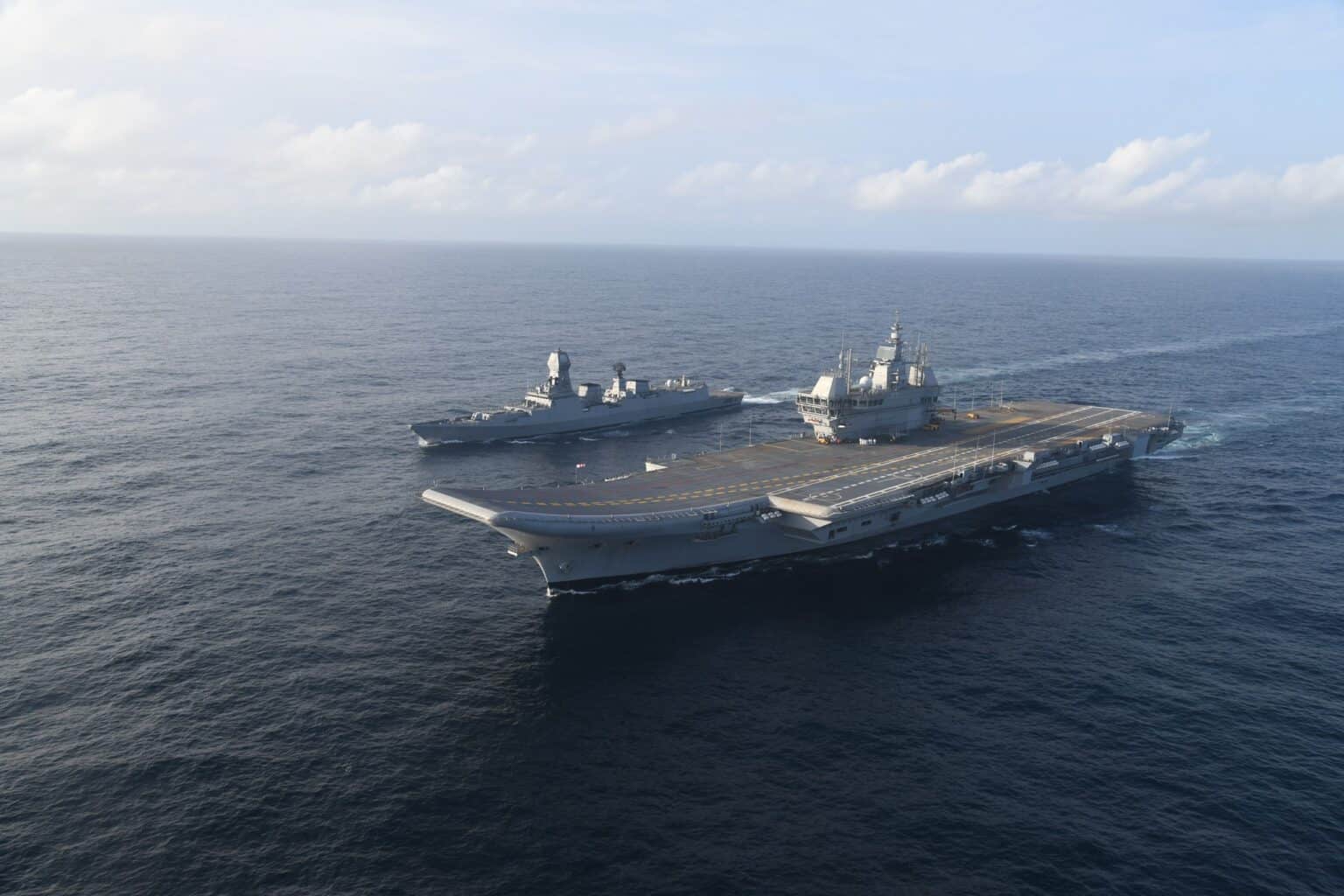
The Indian Navy is one of a handful of navies in the world that sails two aircraft carriers at once. Its most powerful ship is INS Vikrant, a 45,000-ton carrier that India designed and built itself and commissioned on September 2, 2022.
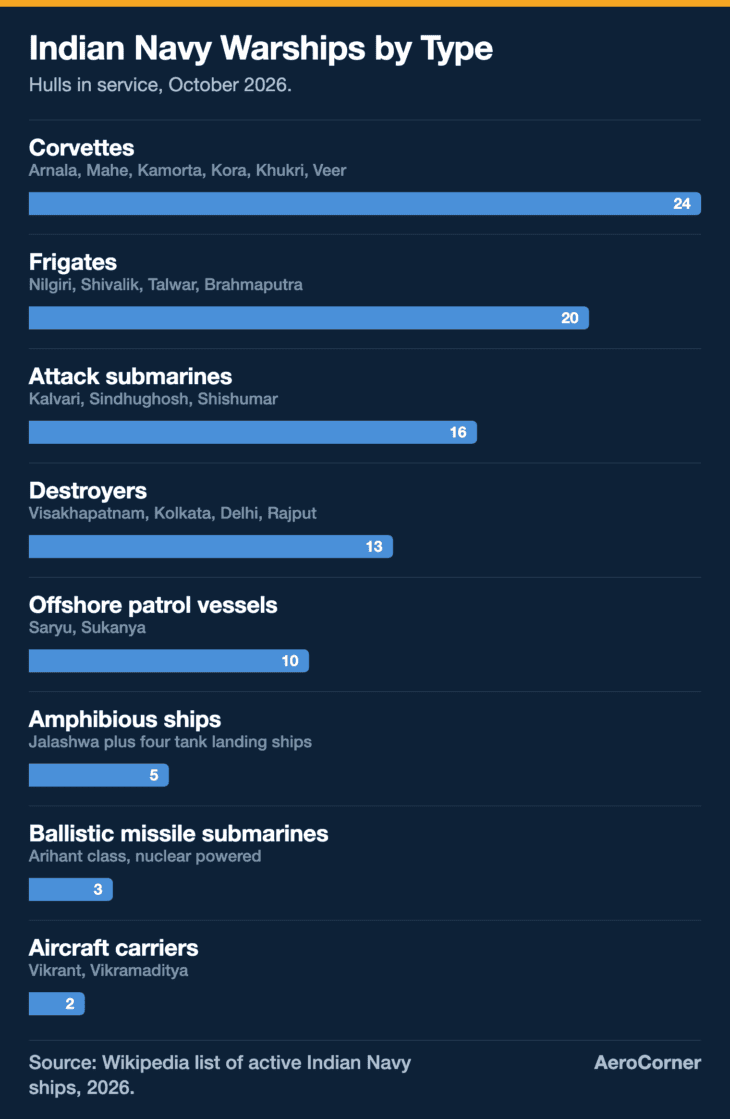
Behind Vikrant sit three nuclear ballistic missile submarines, the newest commissioned on April 3, 2026, plus 13 destroyers, 20 frigates, 24 corvettes and 16 conventional attack submarines. GlobalFirepower’s 2026 index counts 343 naval assets in all, fourth in the world behind China, Russia and the United States.
This guide ranks every major class India sails by fighting value as of October 2026, with hull counts, the ships that joined this year and the aircraft that fly from the fleet.
| Rank | Class | Type | Hulls in service | Status, October 2026 |
|---|---|---|---|---|
| 1 | INS Vikrant | Aircraft carrier | 1 | Commissioned 2022, built in India |
| 2 | Arihant | Ballistic missile submarine | 3 | Aridhaman joined April 2026 |
| 3 | Visakhapatnam | Destroyer | 4 | Surat joined 2025 |
| 4 | INS Vikramaditya | Aircraft carrier | 1 | Ex-Soviet, in Indian service since 2013 |
| 5 | Nilgiri | Stealth frigate | 6 | Three joined in 2026; seventh due |
| 6 | Kolkata | Destroyer | 3 | Active |
| 7 | Kalvari (Scorpène) | Diesel-electric submarine | 6 | Vagsheer joined 2025 |
| 8 | Talwar | Frigate | 8 | Tamal joined 2025 |
| 9 | Shivalik | Stealth frigate | 3 | Active |
| 10 | Kamorta | Anti-submarine corvette | 4 | Active |
| 11 | Delhi | Destroyer | 3 | Active |
| 12 | Sindhughosh (Kilo) and Shishumar (Type 209) | Diesel-electric submarine | 10 | Aging, 1986 to 2000 |
| 13 | INS Jalashwa and landing ships | Amphibious ships | 5 plus 8 landing craft | Active |
| 14 | Arnala and Mahe | Shallow-water anti-submarine craft | 7 | All joined 2025 to 2026 |
| 15 | Older warships (Rajput, Brahmaputra, Kora, Khukri, Veer) | Destroyers, frigates, corvettes | 19 | Being replaced |
How this ranking works
Classes are ranked by fighting value in October 2026: how modern each one is, what it carries, and how much it changes what the fleet can do. A single carrier ranks above eight frigates because it brings its own air force. Hull counts come from open-source lists checked against 2026 commissioning reports, because the Indian Navy publishes no full order of battle. Patrol boats, tugs, survey ships and other auxiliaries are left out of the ranking.
1. INS Vikrant: The Carrier India Built Itself
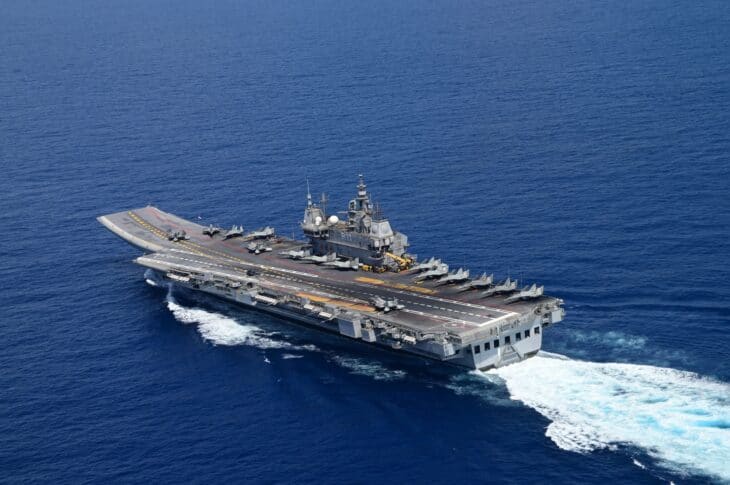

Vikrant is the ship that put India in the small club of countries that can design and build their own aircraft carrier. It is 861 feet (262.5 m) long, displaces about 45,000 tons fully loaded, and was built by Cochin Shipyard before being commissioned on September 2, 2022.
Like India’s other carrier, Vikramaditya, it launches jets off a ski-jump bow and catches them with arrester wires. Its air wing is sized at up to 36 aircraft, today built around the MiG-29K fighter plus Kamov Ka-31, MH-60R and Dhruv helicopters.
Vikrant led India’s carrier battle group in the Arabian Sea during the May 2025 standoff with Pakistan, part of a deployment of 36 warships. In October 2025 it sailed alongside the British carrier HMS Prince of Wales in Exercise Konkan, the first dual-carrier drill between the two navies.
Its fighters are on order from France
India signed for 26 Rafale M naval fighters, 22 single-seat and 4 two-seat, on April 28, 2025, at a reported cost of about Rs 63,000 crore. They are meant mainly for Vikrant. Reported delivery dates range from 2028 to 2030 for the first jets, with the whole fleet expected by 2031.
2. Arihant Class: The Nuclear Deterrent
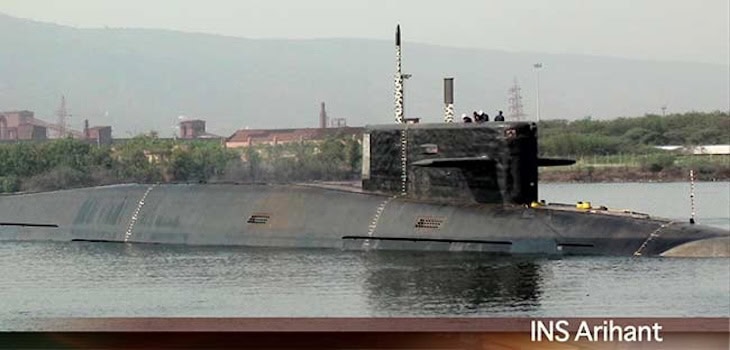
The three Arihant-class submarines are India’s sea-based nuclear deterrent, the hardest leg of its triad to find and destroy. When INS Arihant was commissioned in August 2016, India became the first country outside the five permanent members of the UN Security Council to operate a ballistic missile submarine.
INS Arighaat followed on August 29, 2024, and INS Aridhaman on April 3, 2026, at a ceremony in Visakhapatnam presided over by Defence Minister Rajnath Singh. Aridhaman is a stretched design of about 7,000 tonnes with eight launch tubes, double the four on the first two boats.
Those tubes can hold eight K-4 missiles with a range of about 2,175 miles (3,500 km), or 24 shorter-range K-15s. A fourth boat was launched on October 16, 2024, and is expected in service around 2027.
3. Visakhapatnam Class: The Newest Destroyers
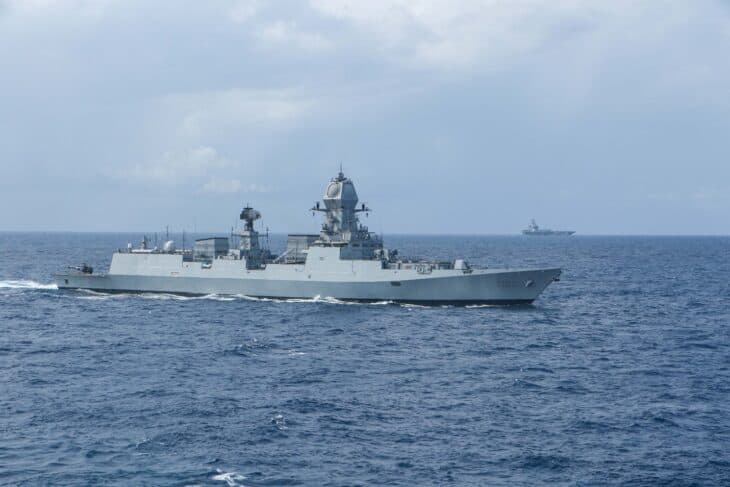

The four Visakhapatnam-class destroyers are the most heavily armed surface ships India has. Each displaces about 7,400 tonnes, is 535 feet (163 m) long, and carries 16 BrahMos supersonic anti-ship missiles and 32 Barak 8 air defense missiles in vertical launchers.
Visakhapatnam joined the fleet in 2021, Mormugao in 2022, Imphal in 2023 and Surat in 2025. They are an upgraded version of the Kolkata class, and in practice the two classes work as one seven-ship group of carrier escorts and strike ships.
BrahMos is the reason they rank this high. The Indian-Russian missile flies at up to Mach 3, and all seven Kolkata and Visakhapatnam destroyers deployed with it during the 2025 standoff with Pakistan.
4. INS Vikramaditya: The Soviet Carrier India Rebuilt
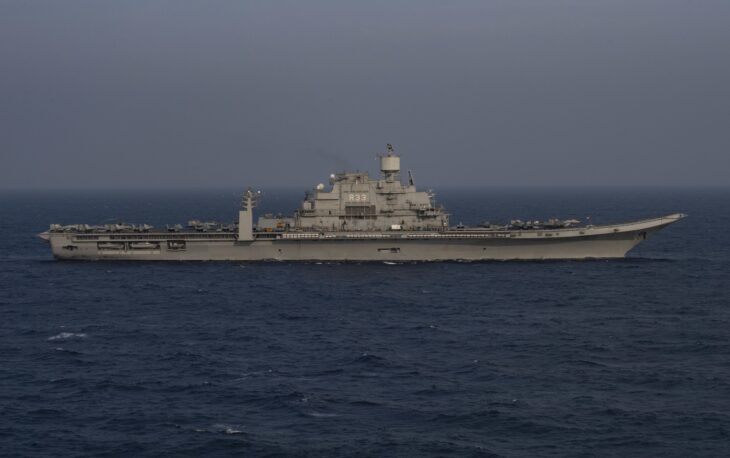

Vikramaditya started life as the Soviet Baku, commissioned in 1987 and later renamed Admiral Gorshkov. Russia laid it up in 1996, and India bought it in a 2004 deal that included its first MiG-29Ks.
Rebuilding a missile cruiser-carrier into a ski-jump carrier took years longer than planned. The refurbishment bill rose to about $2.35 billion, and the ship was not commissioned into the Indian Navy until November 16, 2013.
At 932 feet (284 m), it is longer than Vikrant and can carry up to 34 aircraft. It ranks lower because it is older, and in November 2024 India signed a Rs 1,207.5 crore contract with Cochin Shipyard for a short refit and dry docking.
5. Nilgiri Class: Three New Frigates in One Year
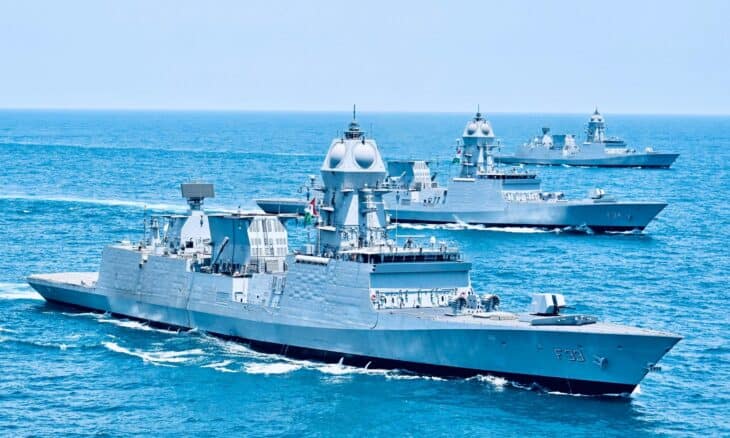

The Nilgiri class, known as Project 17A, is where India’s shipbuilding pace shows. Nilgiri was commissioned on January 15, 2025, Udaygiri and Himgiri together on August 26, 2025, then Taragiri on April 3, 2026, Dunagiri on June 21, 2026 and Mahendragiri on July 11, 2026.
Each is a 6,670-tonne stealth frigate, 489 feet (149 m) long, with eight BrahMos and 32 Barak 8 missiles. That is the same air defense load as a Visakhapatnam destroyer in a smaller hull.
Mahendragiri carries more than 75% Indian-made content. A seventh and final ship is due to complete the class.
6. Kolkata Class: The Carrier Escorts
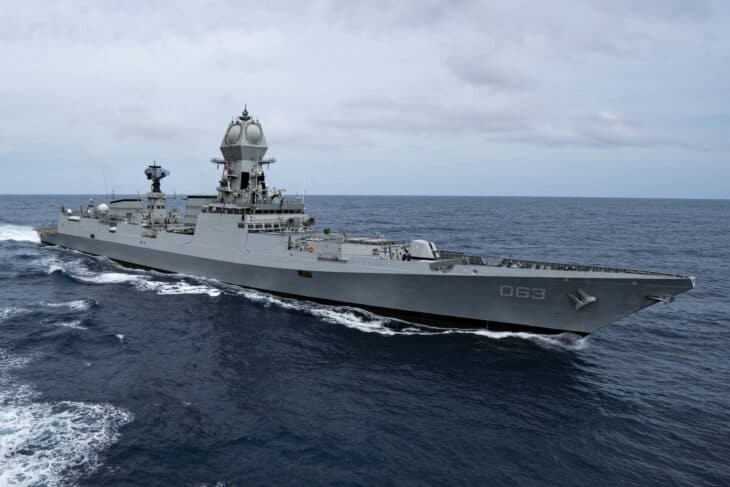

The three Kolkata-class destroyers, commissioned from 2014 to 2016, introduced the missile fit the Visakhapatnams carry. Each displaces about 7,400 tonnes full load and carries 16 BrahMos and 32 Barak 8 missiles.
They rank just below the Nilgiris only because they are a decade older. INS Kolkata escorted Vikrant during Exercise Konkan in October 2025.
7. Kalvari Class: The Scorpène Submarines
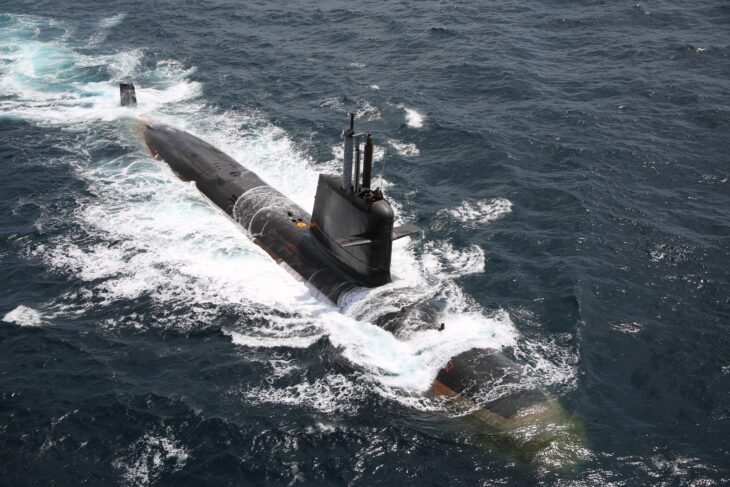

The six Kalvari-class boats are an Indian version of the French Scorpène, built by Mazagon Dock in Mumbai under a 2005 technology transfer deal. They displace about 1,615 tonnes surfaced, are 221 feet (67.5 m) long, and fire torpedoes and SM39 Exocet anti-ship missiles from six tubes.
Kalvari was commissioned in 2017 and the sixth, Vagsheer, in 2025. They are India’s most modern attack submarines, but they are not nuclear powered, and India has no nuclear attack submarine in service in 2026.
A follow-on order for three improved Kalvaris was still awaiting cabinet approval in October 2026, and a separate deal for six German-designed Project 75I submarines remained in negotiation.
8. Talwar Class: The Russian Frigates
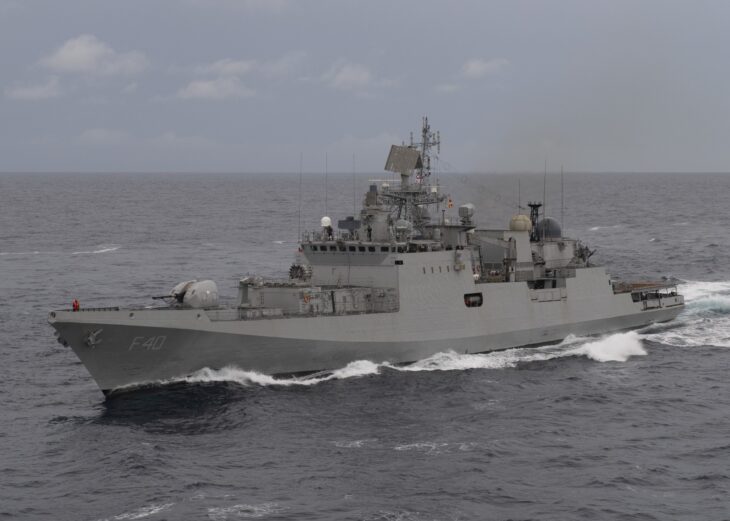

India has eight Talwar-class frigates, all built in Russia. Six entered service from 2003 to 2013, and two more followed: INS Tushil in 2024 and INS Tamal, commissioned in Russia on July 1, 2025.
They are 409 feet (124.8 m) long and displace about 3,850 tons standard, roughly half the size of a Nilgiri. More of the class are being built in India at Goa Shipyard, where the last of them, Tavasya, was launched in March 2025.
9. Shivalik Class: India’s First Stealth Frigates
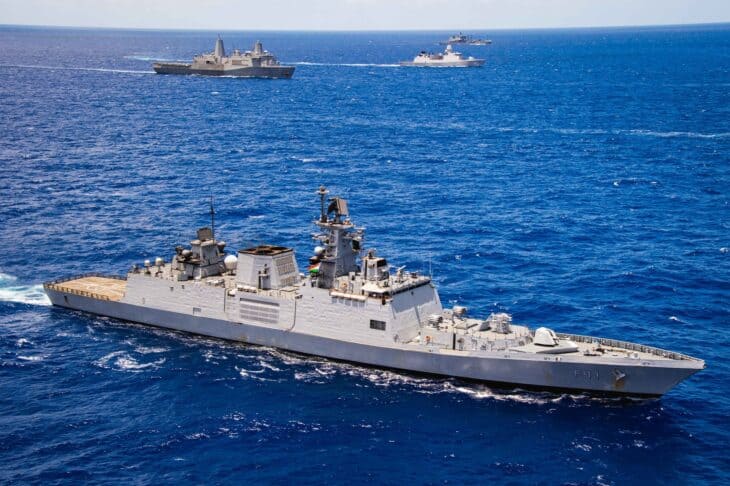

The three Shivalik-class frigates, commissioned from 2010 to 2012, were the first Indian-built warships designed to be hard to see on radar. They displace about 6,200 tonnes full load and are 472 feet (144 m) long.
The Nilgiri class is their direct descendant. Shivalik, Satpura and Sahyadri remain front-line ships.
10. Kamorta Class: The Submarine Hunters
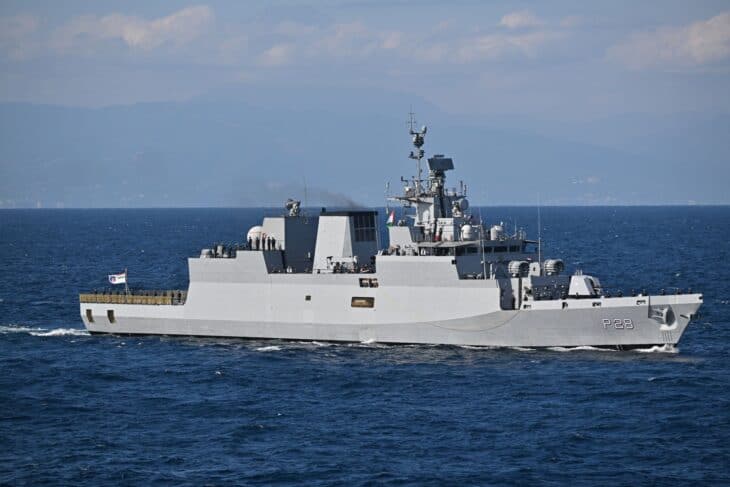

The four Kamorta-class corvettes are built for one job: finding submarines. At about 3,300 tonnes full load and 358 feet (109 m) long, they are as big as many navies’ frigates.
They joined the fleet from 2014 to 2020, and they hunt submarines in the open ocean, beyond the reach of the smaller Arnala and Mahe craft.
11. Delhi Class: The First Indian Destroyers
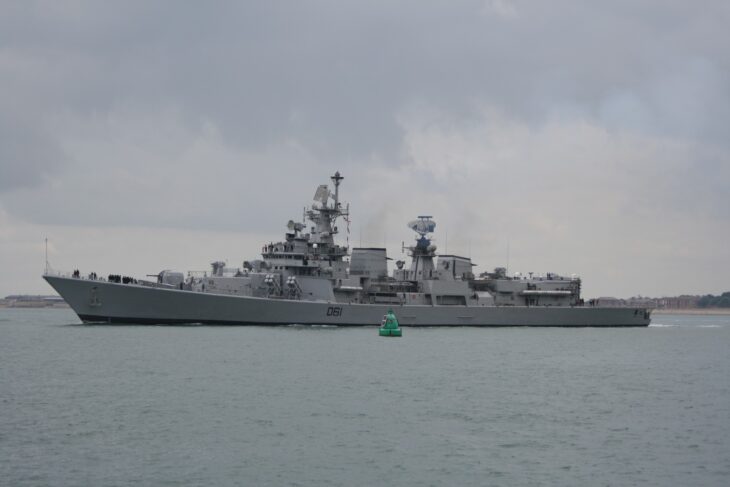

Delhi, Mysore and Mumbai, commissioned from 1997 to 2001, were the first destroyers India designed and built. Each displaces about 6,200 tonnes and is 535 feet (163 m) long, and the class has been upgraded with BrahMos.
They are still useful escorts, but at 25 to 29 years old they are among the oldest major ships in the fleet.
12. Sindhughosh and Shishumar: The Older Submarines
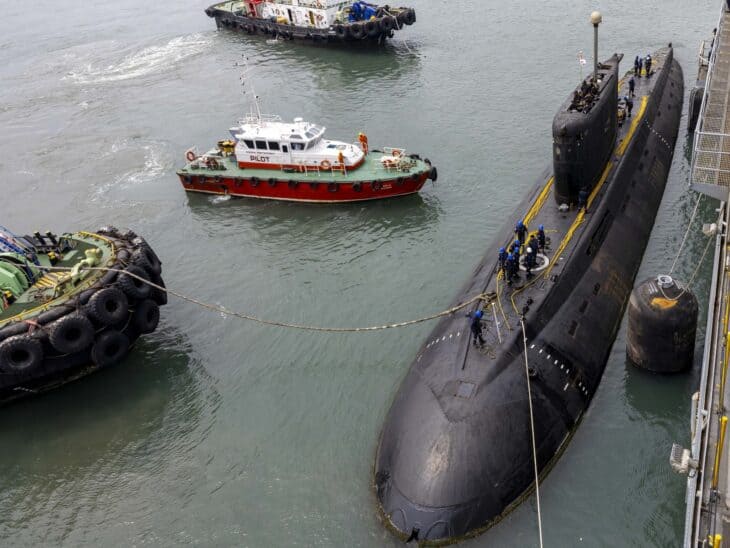

Ten of India’s 16 attack submarines are old boats bought in the 1980s and 1990s. Six are Sindhughosh-class boats, an Indian version of the Soviet Kilo commissioned from 1987 to 2000, armed with Club-S cruise missiles.
The other four are Shishumar-class boats, a German Type 209/1500 design commissioned from 1986 to 1994. These aging boats are why the submarine follow-on deals matter so much: they still make up most of the force.
13. INS Jalashwa and the Landing Ships
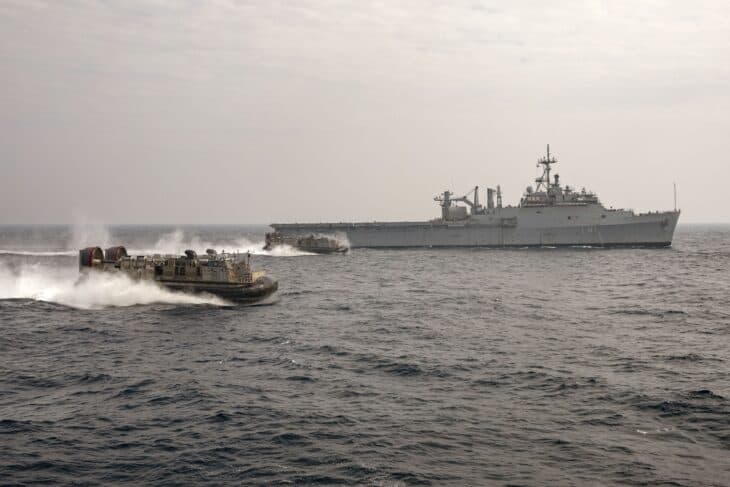

India’s largest amphibious ship is INS Jalashwa, the former USS Trenton. Launched in 1968 and transferred to India in 2007, it is 570 feet (173.7 m) long and is the only ship of its kind in the fleet.
Four tank landing ships of the Shardul and Magar classes and eight Mk. IV landing craft make up the rest. India has no amphibious assault ship with a full-length flight deck.
14. Arnala and Mahe: The Shallow-Water Hunters
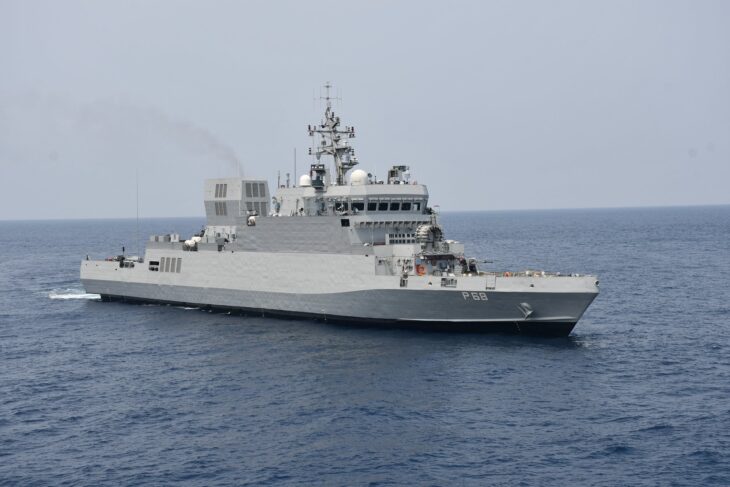

Seven small anti-submarine craft joined the fleet in 2025 and 2026, built to hunt submarines in coastal waters too shallow for bigger ships. Four are Arnala-class ships of about 1,490 tonnes, and three are smaller Mahe-class ships of about 1,100 tonnes.
INS Mangrol, the third Mahe-class ship, was commissioned in Mumbai in October 2026. According to All India Radio, it was the tenth warship the navy had commissioned that year, with eight more expected soon.
15. The Older Warships
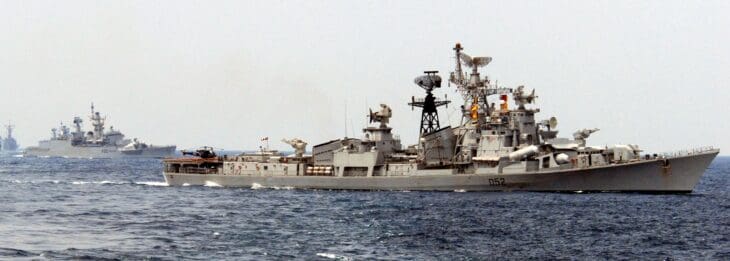

Nineteen older warships still serve. They are three Soviet-built Rajput destroyers from the 1980s, three Brahmaputra frigates from 2000 to 2005, and 13 corvettes of the Kora, Khukri and Veer classes.
These are the ships the new frigates and corvettes are meant to replace.
The Aircraft That Fly From the Fleet
The Indian Navy runs its own air arm of fighters, patrol planes and helicopters. Its fighters are the MiG-29K and two-seat MiG-29KUB: India bought 45 of them, and five have been lost in accidents.
Its submarine hunters are the Boeing P-8I, a version of the US Navy’s P-8 Poseidon with an extra magnetic anomaly detector. India has 12, the last delivered in February 2022, and the US cleared the sale of six more in 2021.
Helicopters do the rest. India ordered 24 MH-60R Seahawks, and 21 had arrived by July 2026; the second squadron, INAS 335, stood up in Goa in December 2025. The Kamov Ka-31 provides airborne early warning, and the old HAL Chetak still flies from smaller ships.
Our ranking of the best carrier-based fighter jets puts the MiG-29K and Rafale M side by side, and the Indian Air Force guide covers the land-based fleet.
How Big Is the Indian Navy, Really?
It depends on what you count. GlobalFirepower’s 2026 index lists 343 naval assets for India, fourth in the world, but that total includes patrol boats and small craft.
Counting only the fighting fleet in this guide gives 2 carriers, 13 destroyers, 20 frigates, 24 corvettes and 19 submarines, backed by 10 offshore patrol vessels and 5 amphibious ships. Our list of the largest navies in the world compares India with the others by both ships and tonnage.
Is the Indian Navy bigger than China's?
No. GlobalFirepower’s 2026 index credits China with 841 naval assets to India’s 343, and China’s three carriers outnumber India’s two. India’s edge is geography: its bases sit beside the Indian Ocean sea lanes that Chinese ships must sail thousands of miles to reach.
The Navy marks Navy Day each year on December 4. Its 27th chief, Admiral Krishna Swaminathan, took command on May 31, 2026.
FAQ
Sources and references used for research and fact-checking.
- Wikipedia, List of active Indian Navy ships
- Wikipedia, Indian Navy
- GlobalFirepower, Navy Ships by Country (2026)
- Wikipedia, INS Vikrant (2013)
- Wikipedia, INS Vikramaditya
- Wikipedia, Arihant-class submarine
- Wikipedia, INS Aridhaman
- Business Today, India gets its 3rd nuclear submarine? What we know about INS Aridhaman so far
- Wikipedia, Visakhapatnam-class destroyer
- Wikipedia, Kolkata-class destroyer
- Wikipedia, Nilgiri-class frigate (2019)
- Marine Insight, Indian Navy Commissions Sixth Indigenous Project 17A Stealth-Guided Missile Frigate INS Mahendragiri
- All India Radio (News on AIR), Indian Navy commissions third anti-submarine warfare craft INS Mangrol in Mumbai
- Wikipedia, Kalvari-class submarine (2015)
- Wikipedia, Talwar-class frigate
- Wikipedia, Shivalik-class frigate
- Wikipedia, Kamorta-class corvette
- Wikipedia, Delhi-class destroyer
- Wikipedia, Sindhughosh-class submarine
- Wikipedia, INS Jalashwa
- Wikipedia, Indian Naval Air Arm
- Wikipedia, Mikoyan MiG-29K
- The Tribune, Navy to get 26 Rafale-M jets in Rs 63,000-cr deal
- Shephard Media, State Department clears Indian deal for six more Poseidons
- Naval Technology, Indian Navy receives new MH-60R Seahawk from US
- Herald Goa, MH-60R squadron INAS 335 commissioned, strengthening Western Seaboard capabilities
- All India Radio (News on AIR), Admiral Krishna Swaminathan assumes charge as 27th Chief of the Naval Staff
Get the Newsletter
The latest aviation news and stories sent to your inbox.
About the Author

Tim is the owner and lead editor of AeroCorner since 2019, overseeing aviation content covering aircraft, airlines, airports, and the broader aviation industry. Through years of researching, writing, editing, and publishing aviation-focused content, he has developed extensive practical knowledge of commercial aviation and air travel. Based in Asia and a frequent traveler himself, Tim also brings firsthand passenger experience to AeroCorner’s coverage. Outside of publishing, he has also explored aviation firsthand through hands-on flight training in New Zealand.