

Table of Contents
The most powerful ships in the Russian Navy are submarines. Eight Borei-class boats each carry 16 Bulava nuclear missiles, and five Yasen-class boats are the most modern attack submarines in the fleet.
The surface fleet is a different story. Russia’s only aircraft carrier, the Admiral Kuznetsov, has not deployed since 2017, neither of its two nuclear battlecruisers is in active service, and the Black Sea Fleet has spent four years losing ships to Ukrainian missiles and sea drones.
By count, it is still a large navy. RussianShips.info, which tracks the fleet hull by hull, listed 80 submarines and 219 warships on October 1, 2026, and the World Directory of Modern Military Warships ranks it the third most powerful navy on Earth. This guide ranks every major class Russia still sails by fighting value as of October 2026.
| Rank | Class | Type | Hulls in service | Status, October 2026 |
|---|---|---|---|---|
| 1 | Borei and Borei-A | Ballistic missile submarine | 8 | Active; two more building |
| 2 | Yasen and Yasen-M | Cruise missile attack submarine | 5 | Active; Perm due by end of 2026 |
| 3 | Admiral Gorshkov | Frigate | 3 | Active; carries Zircon |
| 4 | Oscar II | Cruise missile submarine | 6 to 7 | Several in refit or reserve |
| 5 | Kirov | Nuclear battlecruiser | 2 | None active; Admiral Nakhimov due by end of 2026 |
| 6 | Delta IV | Ballistic missile submarine | 6 | Five active, one to be retired |
| 7 | Kilo, Improved Kilo and Lada | Diesel-electric submarine | 19 to 27 | Active; Black Sea boats hit |
| 8 | Akula | Nuclear attack submarine | 9 to 10 | Most in refit or reserve |
| 9 | Slava | Guided missile cruiser | 2 | Active; third ship, Moskva, sunk 2022 |
| 10 | Udaloy | Anti-submarine destroyer | 8 | About six active |
| 11 | Buyan-M and Karakurt | Missile corvette | 19 | Active |
| 12 | Steregushchiy and Gremyashchiy | Multipurpose corvette | 10 | Active; one damaged 2026 |
| 13 | Older frigates (Grigorovich, Neustrashimy, Krivak, Gepard) | Frigate | 9 | Two Grigorovichs reported damaged 2026 |
| 14 | Ropucha, Ivan Gren and Tapir | Landing ship | 17 to 18 | Heavy Black Sea losses |
| 15 | Admiral Kuznetsov | Aircraft carrier | 1 | In commission, not operational |
How this ranking works
Classes are ranked by fighting value in October 2026: the weapons they carry, how modern they are, and how many Russia can actually send to sea. A class with one active ship ranks below a class with five, even if the single ship is bigger. Hull counts include boats in refit or reserve, because both main trackers do, and the status column says how many are really working. Russia publishes no official order of battle, so every count here is an open-source estimate.
1. Borei and Borei-A: The Nuclear Deterrent
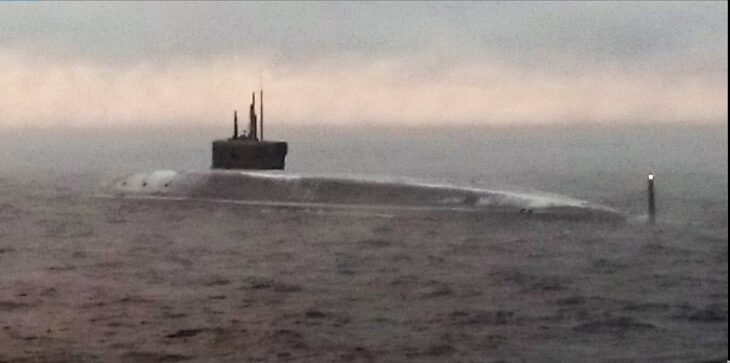

The Borei class is the reason the Russian Navy still matters to every other military on Earth. Each boat carries 16 RSM-56 Bulava ballistic missiles with six independently targeted warheads apiece, and displaces about 24,000 tonnes submerged.
Russia has eight. The newest, Knyaz Pozharsky, was commissioned on July 24, 2025, with Vladimir Putin attending, as the fifth upgraded Borei-A and the eighth boat overall. Five sail with the Pacific Fleet and three with the Northern Fleet, and the oldest, Yuriy Dolgorukiy, is in overhaul until 2027.
Two more Borei-As, Knyaz Potemkin and Dmitry Donskoy, are under construction, and two more are planned. No other class in the fleet is still being built at that pace.
2. Yasen and Yasen-M: Russia’s Best Attack Submarine
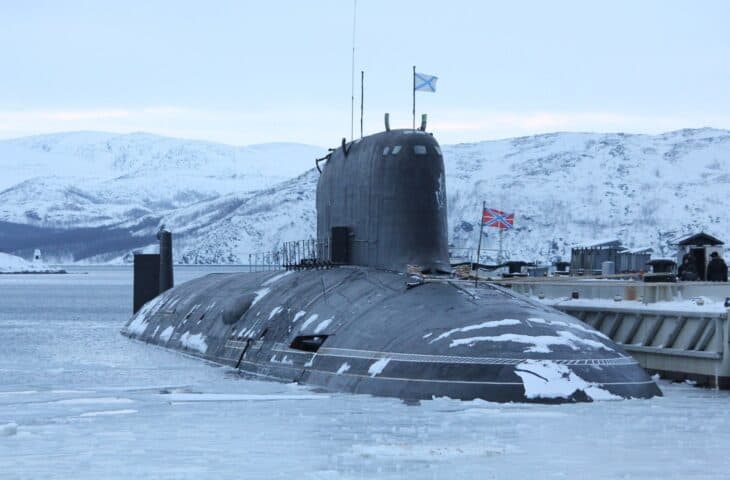

The Yasen class is a nuclear-powered attack submarine built around eight vertical missile silos. Together they hold up to 32 Oniks anti-ship missiles or 40 Kalibr cruise missiles, a strike load no older Russian attack boat can match.
Russia has five: the original Severodvinsk and four improved Yasen-Ms. The sixth, Perm, was launched on March 27, 2025, and Navy chief Admiral Alexander Moiseyev told Putin in late July 2026 that it would enter service by the end of the year as the first nuclear submarine armed with the Zircon hypersonic missile.
It ranks below the Borei only because its job is different. A Borei exists to make a nuclear attack on Russia unthinkable; a Yasen exists to sink ships and hit land targets from far away.
3. Admiral Gorshkov: The Zircon Frigate
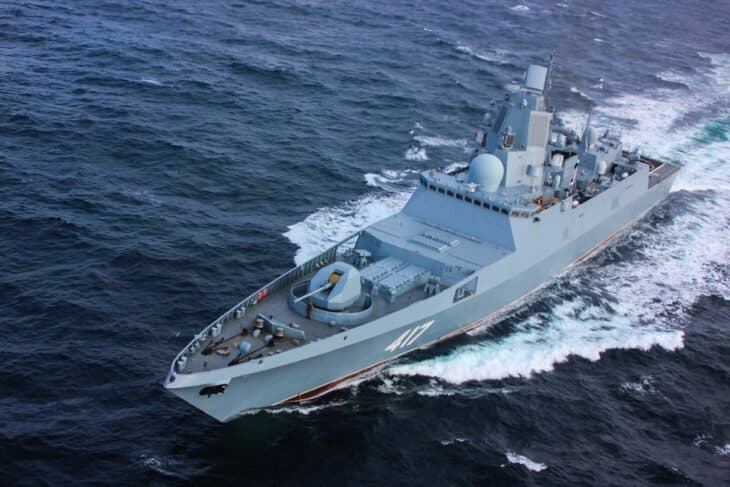

The Admiral Gorshkov class is the most capable new surface warship Russia is building. Each 5,400-tonne frigate carries 16 vertical launch cells at the bow that can fire Kalibr, Oniks or Zircon missiles.
The lead ship sailed with Zircon aboard in January 2023, when Defense Minister Sergei Shoigu announced it was carrying the missile. Russia’s defense ministry claims Zircon reached more than Mach 8 in testing, a figure no outside source has confirmed.
There are only three, all with the Northern Fleet. The fourth, Admiral Isakov, was floated out in September 2024 after more than a decade on the slipway and is expected in 2027, and the fifth, Admiral Amelko, was launched on August 14, 2025.
Russia's newest naval weapon is barely at sea
Zircon is Russia’s headline naval missile, yet almost four years after the Admiral Gorshkov first sailed with it, the list of ships built to carry it is short: three frigates in service, the battlecruiser Admiral Nakhimov on its way back, and the submarine Perm, due by the end of 2026.
4. Oscar II: The Carrier Killers
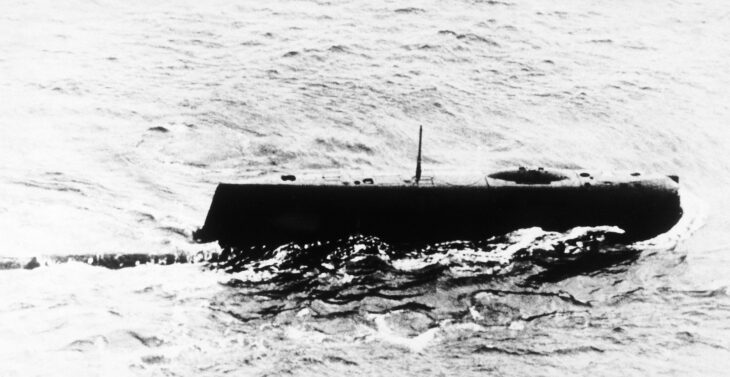

The Oscar II was designed in the Soviet era to attack NATO carrier battle groups from long range. Each boat carries 24 P-700 Granit anti-ship missiles and displaces about 19,400 tonnes submerged.
Counts run from six to seven hulls depending on the tracker. Orel and Omsk have been reported active in 2025 and 2026, while Chelyabinsk is in refit with its nuclear fuel removed and Tver sits in reserve.
5. Kirov: The Battlecruiser Coming Back
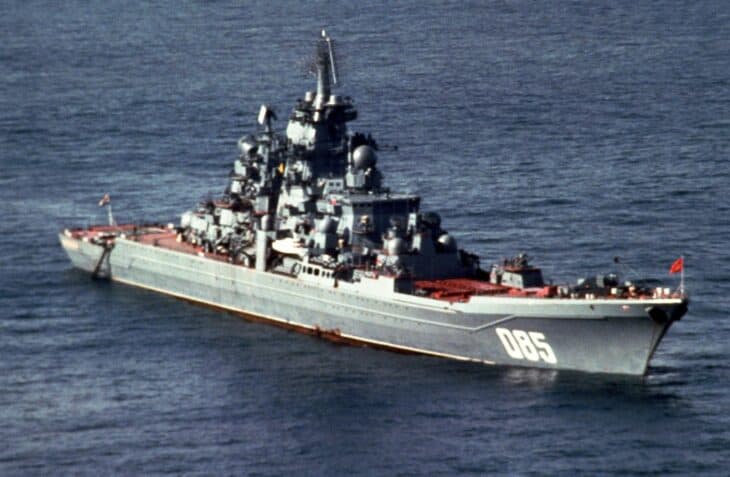

The Kirov-class battlecruisers are Russia’s largest warships after the Kuznetsov, at about 28,000 tonnes and 823 feet (251 m) long. Russia owns two, and neither is in active service today.
Admiral Nakhimov last served with the fleet in 1997. After nearly three decades away, most of it spent in refit, it anchored outside Severomorsk on June 25, 2026, with 80 vertical launch cells for Kalibr, Oniks and Zircon missiles and 96 launchers for long-range air defense missiles.
It has finished sea trials, and Admiral Moiseyev expects it in active service by the end of 2026. Its sister Pyotr Velikiy has been laid up since autumn 2022 and is expected to be scrapped, after its own upgrade was canceled. Our ranking of the largest warships in the world shows where the class sits on size.
6. Delta IV: The Old Deterrent Still on Patrol
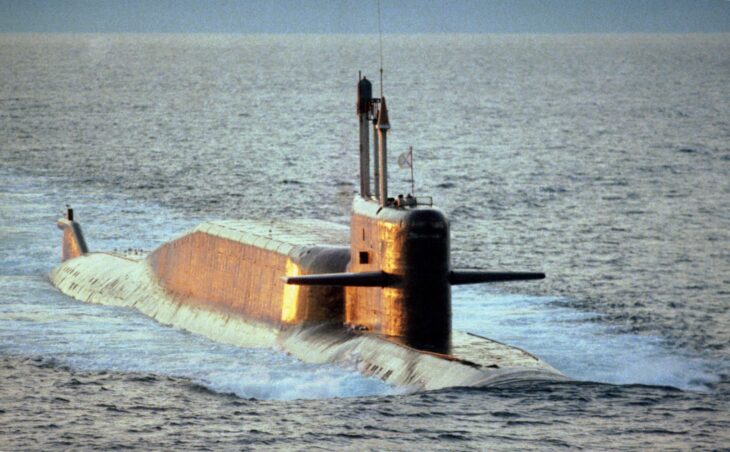

Before the Borei, the Delta IV carried Russia’s sea-based nuclear missiles, and five of them still do. Each carries 16 liquid-fueled R-29RMU Sineva missiles with four warheads apiece.
All six hulls are in the Northern Fleet, commissioned between 1984 and 1990. Karelia finished repairs in 2026, while Ekaterinburg is inactive and due to be retired.
7. Kilo, Improved Kilo and Lada: The Kalibr Boats
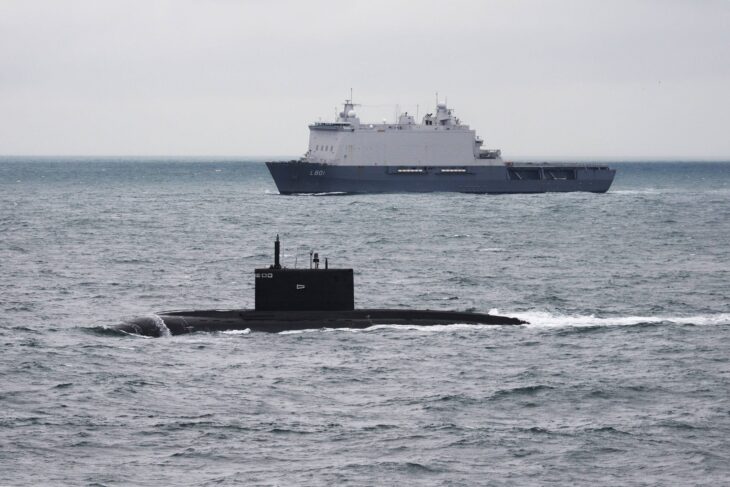

Russia’s diesel-electric submarines are quiet, cheap and busy. The Improved Kilos can fire Kalibr cruise missiles through their torpedo tubes, and the Black Sea Fleet’s boats have used them against targets in Ukraine since 2022.
The two trackers disagree more here than anywhere else. Wikipedia’s list counts 19 boats, including two of the new Lada class, while RussianShips.info counts 27.
The Black Sea boats have paid for their work. Rostov-on-Don was hit by Storm Shadow missiles in a raid on Sevastopol on September 13, 2023, and hit again in dry dock by a Ukrainian missile attack on August 2, 2024.
8. Akula: The Hunters Stuck in the Yard
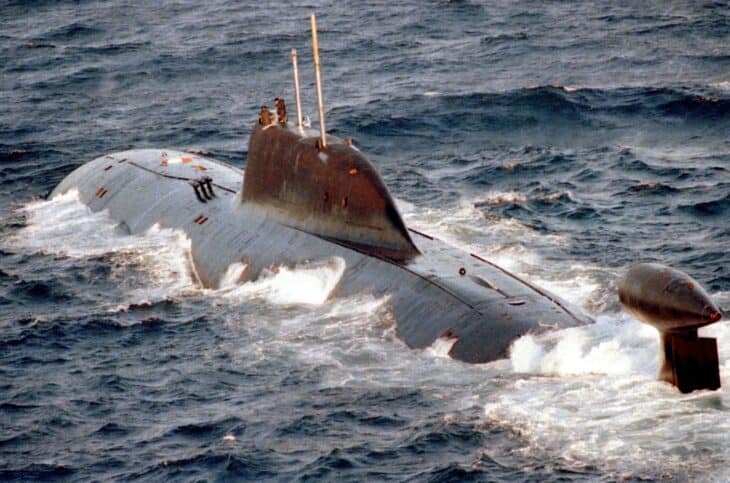

The Akula is a late Soviet nuclear attack submarine, a 12,770-tonne hunter originally armed with Granat cruise missiles and since upgraded for Kalibr. Russia has nine or ten, depending on the source.
It ranks this low because so few can sail. Only Vepr and Gepard were reported active in 2025, Leopard was on sea trials in 2026 after a long refit, and most of the rest are in overhaul or reserve. Two Sierra II and two Victor III boats make up the rest of Russia’s older attack force, and the Sierras are in reserve or barely active.
9. Slava: The Moskva’s Surviving Sisters
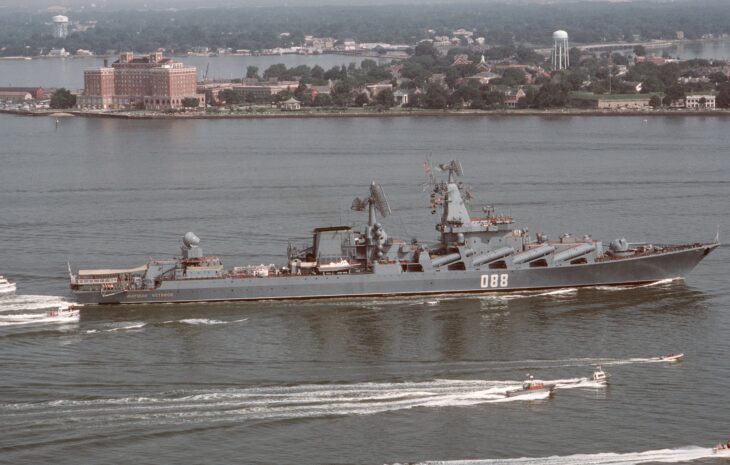

The Slava-class cruisers were built to carry heavy anti-ship missiles: 16 P-1000 Vulkans each, plus 64 long-range S-300F air defense missiles. Two remain, Marshal Ustinov with the Northern Fleet and Varyag with the Pacific Fleet, and both were reported active in 2026.
The third was the Moskva, flagship of the Black Sea Fleet. Ukraine says two of its Neptune anti-ship missiles hit it on April 13, 2022, and Russia said the ship sank under tow the next day after a fire set off its ammunition.
10. Udaloy: The Sub Hunters
.jpg)
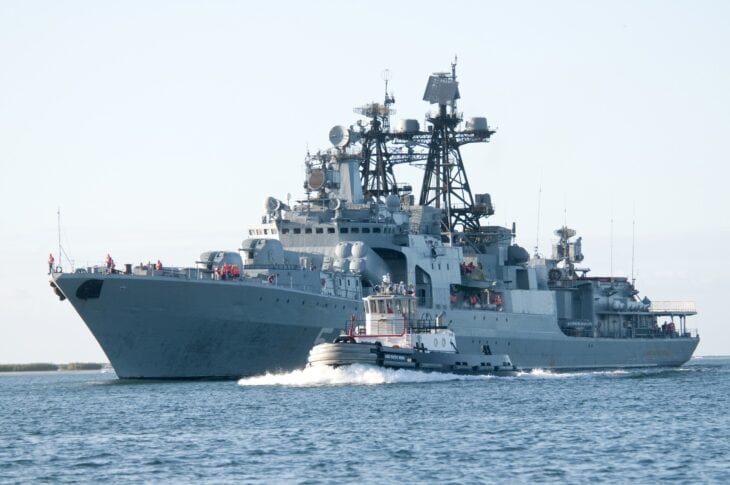
Russia calls them large anti-submarine ships, and the West calls them destroyers. Each 7,570-tonne Udaloy carries anti-submarine missiles, torpedoes and 64 vertical launch cells for short-range air defense missiles.
There are eight, and about six are working. Admiral Chabanenko is inactive and Admiral Vinogradov is in a long refit, while Severomorsk has been operating regularly in the Baltic in 2026.
11. Buyan-M and Karakurt: Small Ships, Big Missiles
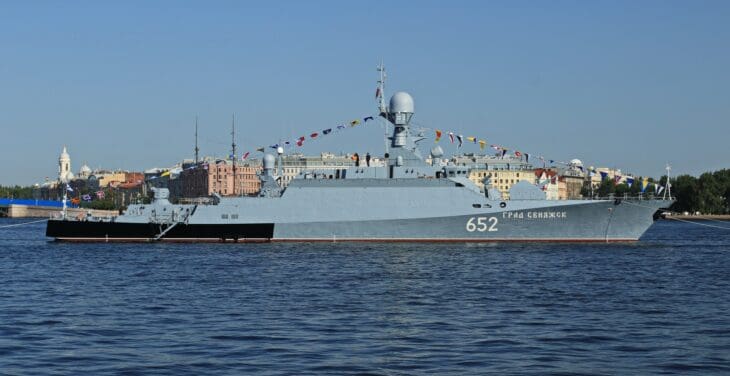

These two classes are Russia’s answer to a shrinking shipbuilding budget. Each Buyan-M, at under 1,000 tonnes, and each 800 to 860-tonne Karakurt carries eight vertical cells for Kalibr or Oniks missiles, half the load of an Admiral Gorshkov frigate.
Russia has 12 Buyan-Ms and seven Karakurts. They are small enough to move between seas on Russia’s inland waterways: two Black Sea Fleet Karakurts, Tucha and Typhoon, now operate in the Caspian.
They have not escaped the war. The Karakurt Askold was hit by Ukrainian cruise missiles at the Kerch shipyard on November 4, 2023, before it was even commissioned.
12. Steregushchiy and Gremyashchiy: The Workhorse Corvettes
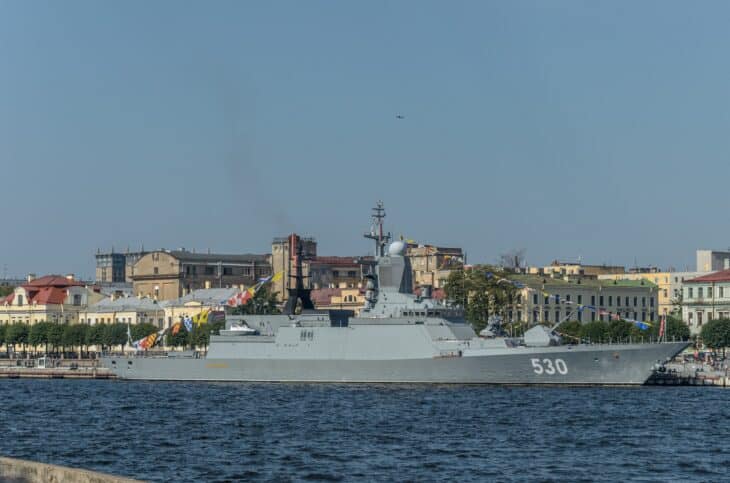

The 2,200-tonne Steregushchiy is the standard Russian corvette, with nine in service plus one larger Gremyashchiy. Each carries eight Kh-35 anti-ship missiles and 12 Redut air defense cells.
Most serve with the Baltic and Pacific fleets. Boikiy was reported heavily damaged in dry dock in a Ukrainian drone attack in June 2026.
13. The Older Frigates
.jpg)
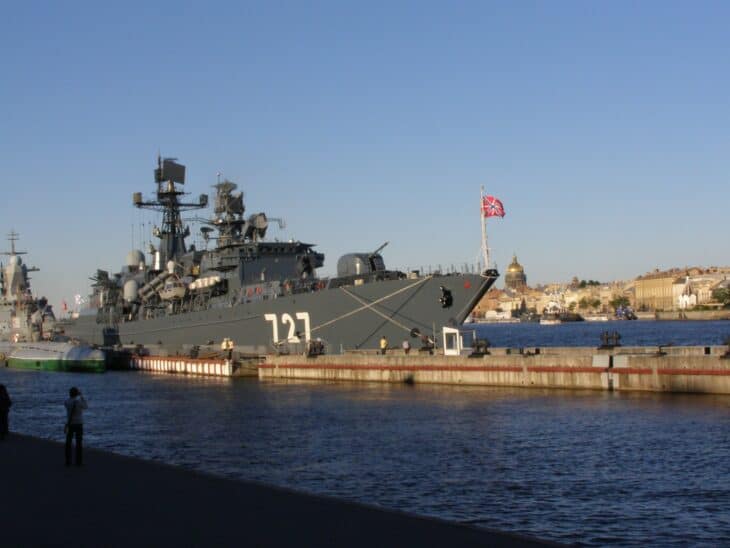
Nine more frigates fill out the list: three Admiral Grigorovich, two Neustrashimy, two Krivak and two Gepard. All three Grigoroviches belong to the Black Sea Fleet, and Admiral Grigorovich itself has operated in the Baltic and the Mediterranean.
Its sisters have stayed closer to the war. Ukrainian sources say Admiral Essen and Admiral Makarov were both hit in attacks in 2026, and how much capability either keeps is unclear.
14. Landing Ships: The Hardest-Hit Part of the Fleet
.jpg)
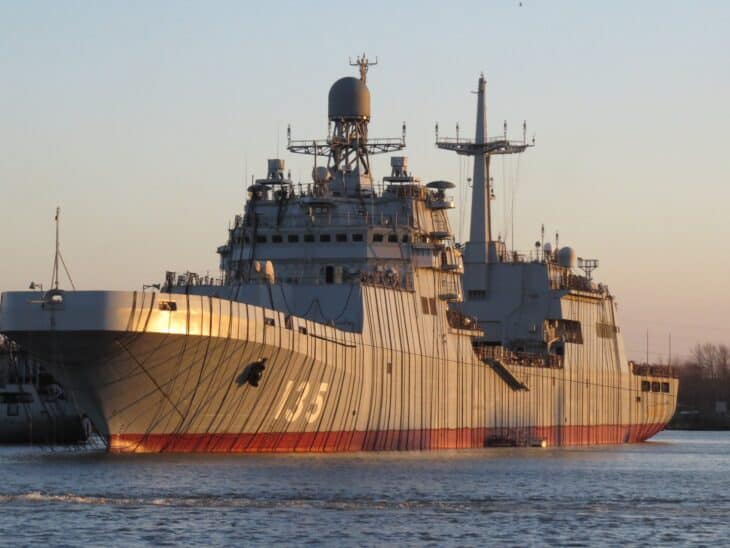
Russia has 17 or 18 large landing ships, most of them Soviet-built Ropuchas. Only two are modern: the 6,600-tonne Ivan Gren and Pyotr Morgunov, and Pyotr Morgunov has been deployed to the Black Sea for the war.
Landing ships have taken some of the war’s heaviest losses. Saratov was scuttled at Berdiansk after a missile strike in March 2022, Minsk was visibly destroyed at Sevastopol in September 2023, Novocherkassk blew up at Feodosia on December 26, 2023, and Tsezar Kunikov was sunk by sea drones on February 14, 2024.
15. Admiral Kuznetsov: The Carrier That Does Not Sail
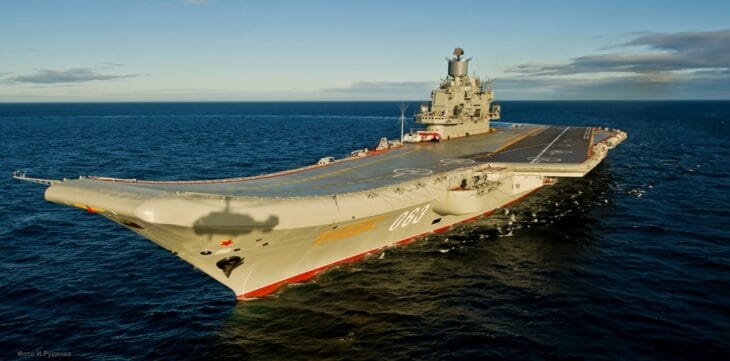

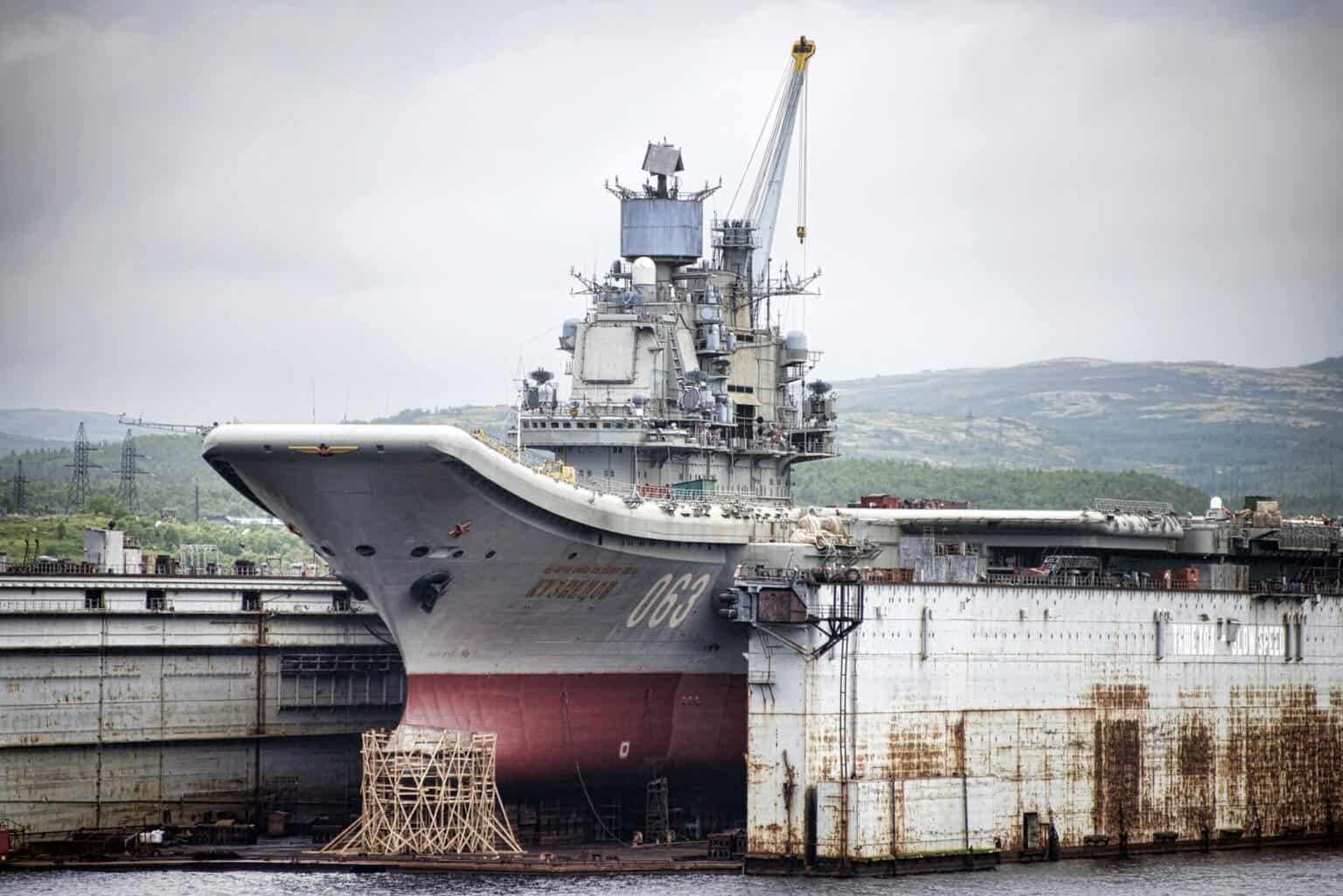
On paper, Russia’s biggest ship is a 58,600-tonne aircraft carrier. In practice, the Admiral Kuznetsov has not deployed since its 2016 to 2017 mission off Syria, and it ranks last because it cannot go to sea.
Its overhaul has been dogged by accidents. In 2018 the floating dock holding it sank and a crane fell onto the flight deck, and in 2019 a fire broke out aboard and killed workers.
In July 2025, Andrei Kostin, chairman of Russia’s state shipbuilding corporation, said it would likely be sold or scrapped. It formally remains in commission in 2026, but no decision has been announced. Our explainer on how many aircraft carriers Russia has covers the whole saga.
Doesn't Russia have a carrier fleet?
No. The Kuznetsov is the only carrier Russia has, and it is not working. Two Project 23900 amphibious assault ships, Ivan Rogov and Mitrofan Moskalenko, are being built at the Zaliv yard in Crimea, but they are assault ships, not carriers. Until the Kuznetsov sails again, Russia cannot put fixed-wing jets to sea.
The Doomsday Submarines: Belgorod and Khabarovsk
Two boats sit outside any normal ranking. Belgorod, a rebuilt Oscar II commissioned on July 8, 2022, is 604 feet (184 m) long and was redesigned to carry the Poseidon nuclear torpedo, a nuclear-powered underwater drone.
Khabarovsk is a new submarine built for the same weapon, with room for six Poseidons. Laid down on July 27, 2014, it left Sevmash for its first sea trials in the White Sea around August 16, 2026, and is meant to join the Pacific Fleet.
Belgorod sits with about ten special-purpose submarines under the Main Directorate of Deep Sea Research, a command separate from the regular fleets.
The Black Sea Fleet After Four Years of War
Ukraine has fought the Black Sea Fleet mostly without warships. Neptune and Storm Shadow missiles, then Magura V5 sea drones packed with explosives, did most of the damage.
On July 4, 2026, President Volodymyr Zelenskyy said Russia had “lost the Black Sea,” putting the toll at 19 Russian vessels destroyed and 18 damaged. That is Ukraine’s count, and Russia has not published one of its own.
The confirmed losses are serious on their own. Beyond the Moskva and the landing ships, Ukraine sank the missile corvette Ivanovets on February 1, 2024, and the patrol ship Sergey Kotov on March 5, 2024, both with sea drones.
Russian Naval Aviation: The Jets and Helicopters at Sea
The navy has its own air arm, and with the carrier idle, its jets fly only from land. Its fixed-wing fleet includes Su-30SM fighters, Su-24 strike jets, MiG-31 interceptors, and Tu-142 and Il-38 long-range submarine hunters.
The Kuznetsov’s air wing was built around the Su-33 and the MiG-29K. On the Syria deployment, one of each was lost: the MiG-29K ran out of fuel, and the Su-33 was lost after an arresting-gear failure. Our ranking of the best carrier-based fighter jets compares both with Western jets.
The most numerous naval aircraft is the Ka-27 anti-submarine helicopter, which flies from warships across the fleet. The fleet also operates the Ka-31 radar helicopter and the Ka-52K, the naval version of the Ka-52 Alligator. The air force side of the story is in our guide to what the Russian Air Force still flies.
How Strong Is the Russian Navy, Really?
By hull count, it is the second-largest navy in the world. GlobalFirepower counts 747 Russian vessels in 2026, behind China’s 841 and ahead of the US Navy’s 465, but that figure includes patrol craft and auxiliaries.
By size, it falls well back. GlobalFirepower puts the Russian fleet at 1,426,539 tonnes, third behind China’s 3,192,411 and the US fleet’s 8,265,799, which is nearly six times larger. Our ranking of the largest navies in the world lays out both measures.
The fairest summary is a split navy. Its submarines remain world-class and its nuclear deterrent is being steadily renewed, while its surface fleet is old, short of big ships, and has taken heavy losses in the Black Sea to an enemy fighting mostly with missiles and drones.
What Comes Next
Admiral Moiseyev told Putin in July 2026 that the navy plans to commission 21 more vessels by the end of the year, led by the submarine Perm. Admiral Nakhimov is due back in service in the same window.
Further out, the pipeline is mostly submarines and frigates: two more Borei-As under construction, five more Yasen-Ms including Perm, and six more Admiral Gorshkovs. Khabarovsk’s trials and the fate of the Kuznetsov will decide what Russia’s navy looks like at the end of the decade.
FAQ
Sources and references used for research and fact-checking.
- RussianShips.info, List of Active Russian Navy Ships and Submarines
- Wikipedia, List of active Russian Navy ships
- GlobalFirepower, Navy Fleet Strength by Country (2026)
- GlobalFirepower, Navy Fleet by Tonnage by Country (2026)
- World Directory of Modern Military Warships, Global Naval Powers Ranking (2026)
- Baird Maritime, Russian Navy commissions ballistic missile submarine Knyaz Pozharskiy
- Wikipedia, Borei-class submarine
- Wikipedia, Yasen-class submarine
- Kyiv Post, Russian Navy's New Yasen-M Class Perm Submarine to Integrate Zircon Cruise Missiles
- Wikipedia, Admiral Gorshkov-class frigate
- The War Zone, Russia's Zircon hypersonic missiles now deployed on frigate, officials claim
- Baird Maritime, Russian Navy's fourth Admiral Gorshkov-class frigate floated out
- Wikipedia, Oscar-class submarine
- FW-MAG, Russian battlecruiser Admiral Nakhimov completes sea trials
- The Barents Observer, Nuclear-powered battlecruiser returns to Severomorsk for first time in 27 years
- Wikipedia, Russian battlecruiser Admiral Nakhimov
- Wikipedia, Delta-class submarine
- Wikipedia, Kilo-class submarine
- Wikipedia, Akula-class submarine
- Wikipedia, Slava-class cruiser
- Wikipedia, Russian cruiser Moskva
- Wikipedia, Udaloy-class destroyer
- Wikipedia, Buyan-M-class corvette
- Wikipedia, Karakurt-class corvette
- Wikipedia, Steregushchiy-class corvette
- Wikipedia, Ivan Gren-class landing ship
- 19FortyFive, Russia's Only Aircraft Carrier Will Likely Be Sold or Scrapped
- Wikipedia, Russian aircraft carrier Admiral Kuznetsov
- Wikipedia, Russian submarine Belgorod
- Interesting Engineering, Khabarovsk nuclear submarine starts sea trials
- UNITED24 Media, Russia has lost the Black Sea, Zelenskyy says
- Wikipedia, List of ship losses during the Russo-Ukrainian war
- Wikipedia, Russian Naval Aviation
- Wikipedia, List of active Russian military aircraft
- Wikipedia, Russian Navy
Get the Newsletter
The latest aviation news and stories sent to your inbox.
About the Author

Tim is the owner and lead editor of AeroCorner since 2019, overseeing aviation content covering aircraft, airlines, airports, and the broader aviation industry. Through years of researching, writing, editing, and publishing aviation-focused content, he has developed extensive practical knowledge of commercial aviation and air travel. Based in Asia and a frequent traveler himself, Tim also brings firsthand passenger experience to AeroCorner’s coverage. Outside of publishing, he has also explored aviation firsthand through hands-on flight training in New Zealand.