Fighter Jets
Sukhoi Su-27 “Flanker”
ICAO: SU27
The Sukhoi Su-33 is the Russian Navy's carrier-based Flanker, a folding-wing, canard-equipped Su-27 variant that has flown from the Admiral Kuznetsov since the mid-1990s and fought in Syria in 2016.
Updated: by Tim de Vries

The latest aviation news and stories sent to your inbox.
The Sukhoi Su-33 (NATO name Flanker-D) is the carrier-based development of the Su-27, built with folding wings, forward canards, a strengthened undercarriage and an arrestor hook. Only 24 were built, and they have flown from the Admiral Kuznetsov using a ski-jump deck rather than catapults.
Live Fleet Activity (SU33)
Fetching live data…


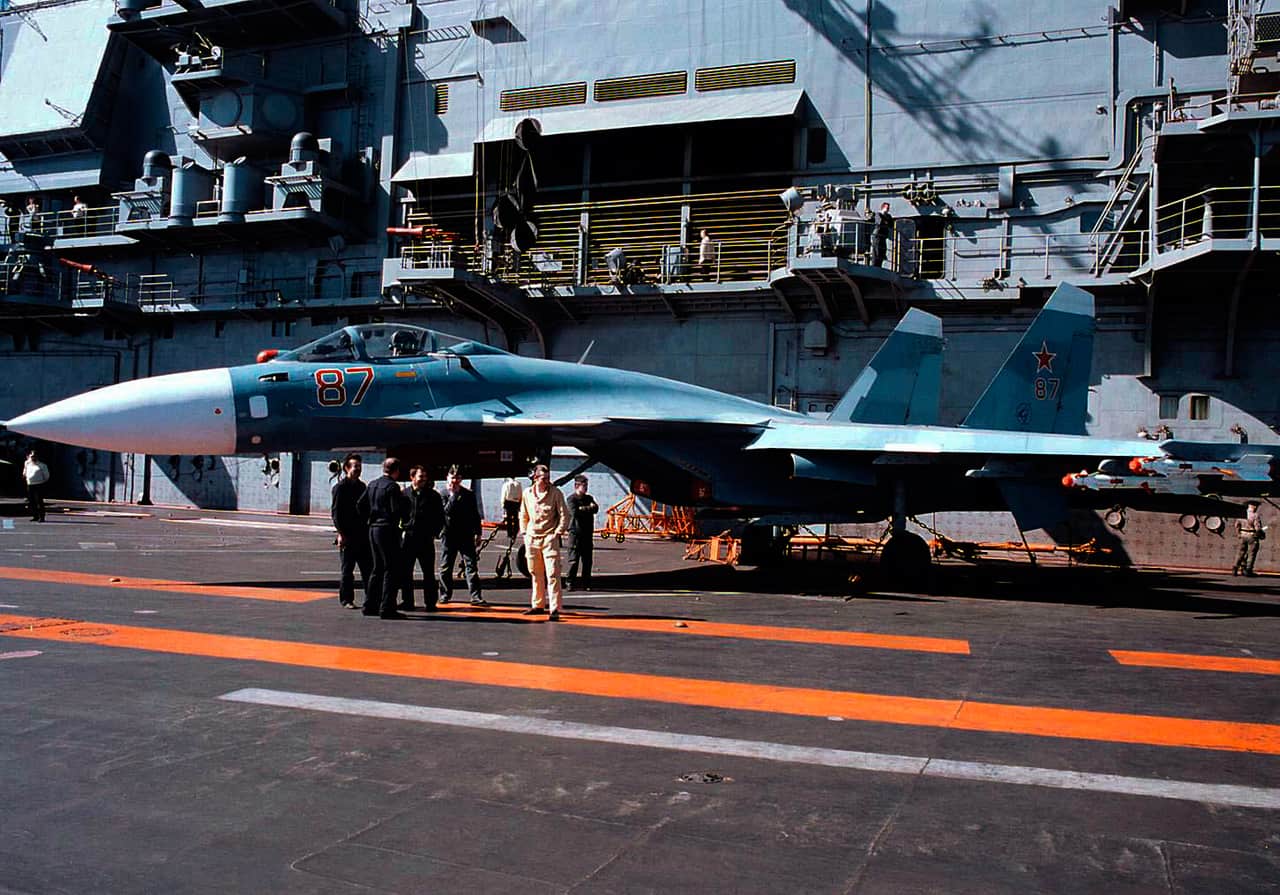
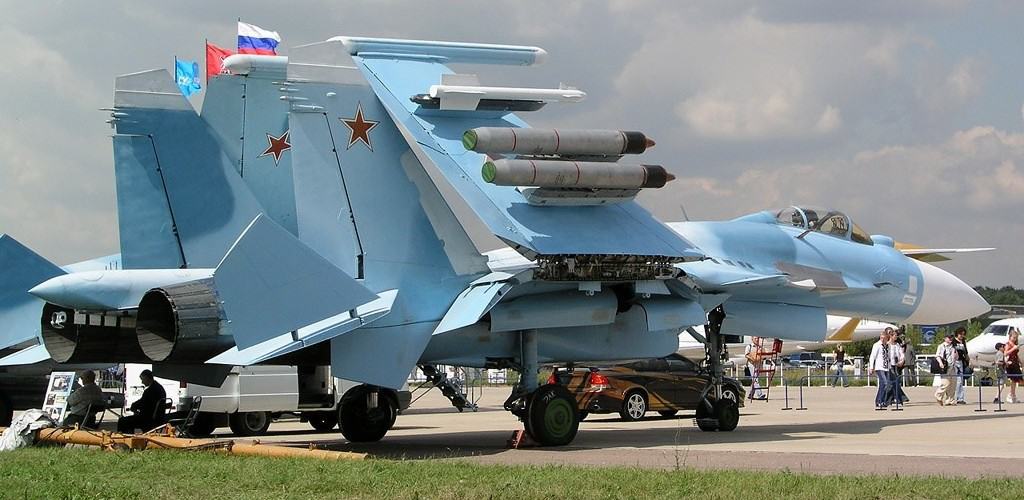


The Sukhoi Su-33 is the carrier-based version of the Su-27 air-superiority fighter, known to NATO as the Flanker-D. It was first designed as the Su-27K and was renamed Su-33 when it entered service on August 31, 1998.
It is flown by the Russian Navy, which operates it from the Admiral Kuznetsov and from shore bases.
Landing on a carrier deck needs a different airframe from landing on a runway. The Su-33 has a strengthened undercarriage, an arrestor hook, and folding wings.
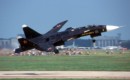
It also gained forward canards, the small foreplanes just behind the cockpit.
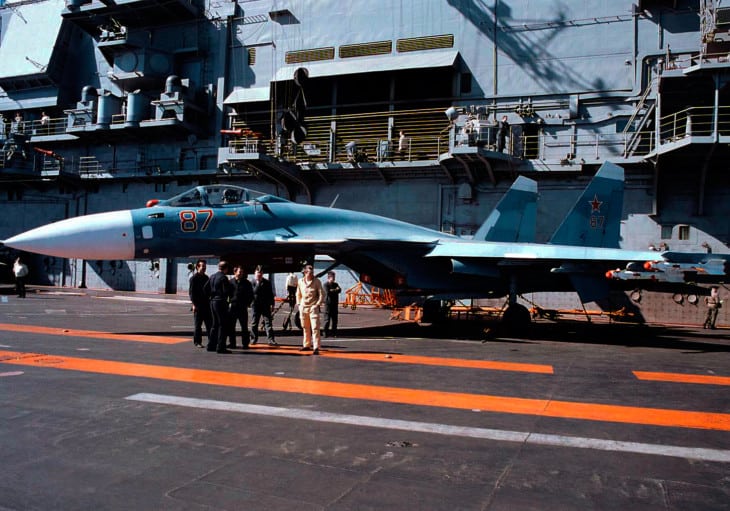
The first prototype flew on August 17, 1987, and a second followed that December. Operational use aboard the Admiral Kuznetsov began in 1995.
Production ran from 1987 to 1999, and only 24 aircraft were built because the end of the Soviet Union cut the program short.
A two-seat Su-33UB trainer-strike version first flew in April 1999, but only one prototype was built.
The Admiral Kuznetsov has no catapults. Su-33s launch from a ski-jump ramp under their own power.
The full specification table for the aircraft is on this page. The top speed is about Mach 2.17 at altitude, a figure the panel does not store in Mach.

The Su-33 carries a 30 mm GSh-30-1 cannon and has 12 external hardpoints for up to 6,500 kg of ordnance. Its air-to-air load is R-27 and R-73 missiles.
It can also carry Kh-31 and Kh-41 anti-ship missiles and unguided rockets and bombs. Upgraded aircraft received SVP-24 bombsights, which gave them a limited ground-attack role.

The Su-33 first saw combat on November 15, 2016, flying from the Admiral Kuznetsov against targets in Idlib and Homs provinces during the carrier’s Mediterranean deployment. The strike figures come from the Russian Defense Ministry and are unverified.
A Su-33 crashed while trying to land on the carrier on December 3, 2016, and the pilot survived. After that the air wing moved ashore to Khmeimim Air Base.
A Su-33 crashed at an air show in the Pskov region on July 17, 2001, killing its pilot, Maj. Gen. Timur Apakidze.
On September 5, 2005, an arrestor cable failed during a landing in the North Atlantic. The pilot ejected and was recovered.
The Navy ordered the MiG-29K in 2009 as the planned replacement for the Su-33. The older fighter was to stay until the end of its service life.
The Admiral Kuznetsov has been out of service since March 2017. A July 2025 report said refit work was suspended, and officials discussed scrapping her.
Published fleet counts for the Su-33 disagree, and reports on how many remain flying vary. The Su-33 is therefore best described as a carrier fighter without a working carrier.
China’s Shenyang J-15 is widely linked to the Su-33 line, and is likely related to the T-10K prototype. The claim that China obtained that prototype from Ukraine rests on weaker sources.
It is a capable heavy fighter with long range and a large weapon load. Its fleet is small, only 24 were built, and the Navy chose the MiG-29K as its replacement.
The Su-27 is the original single-seat air-superiority fighter and the Su-30 is a two-seat multirole development of it, so which is better depends on the mission. The Su-33 is the carrier version of the Su-27.
No. The Su-37 was a Flanker upgrade demonstrator, not a Su-33 variant. The Su-33 is the carrier version in Russian Navy service.
The Su-57 is Sukhoi’s newest fighter and Russia’s fifth-generation type. It is a separate design from the Flanker family that includes the Su-33.
Yes. Its top speed is about Mach 2.17 at 10,000 m (32,800 ft).
Sources and references used for research and fact-checking.