

Fighter Jets
Sukhoi Su-27 “Flanker”
ICAO: SU27
Armored Soviet close air support jet, still flying in combat
Updated: by Tim de Vries
The latest aviation news and stories sent to your inbox.
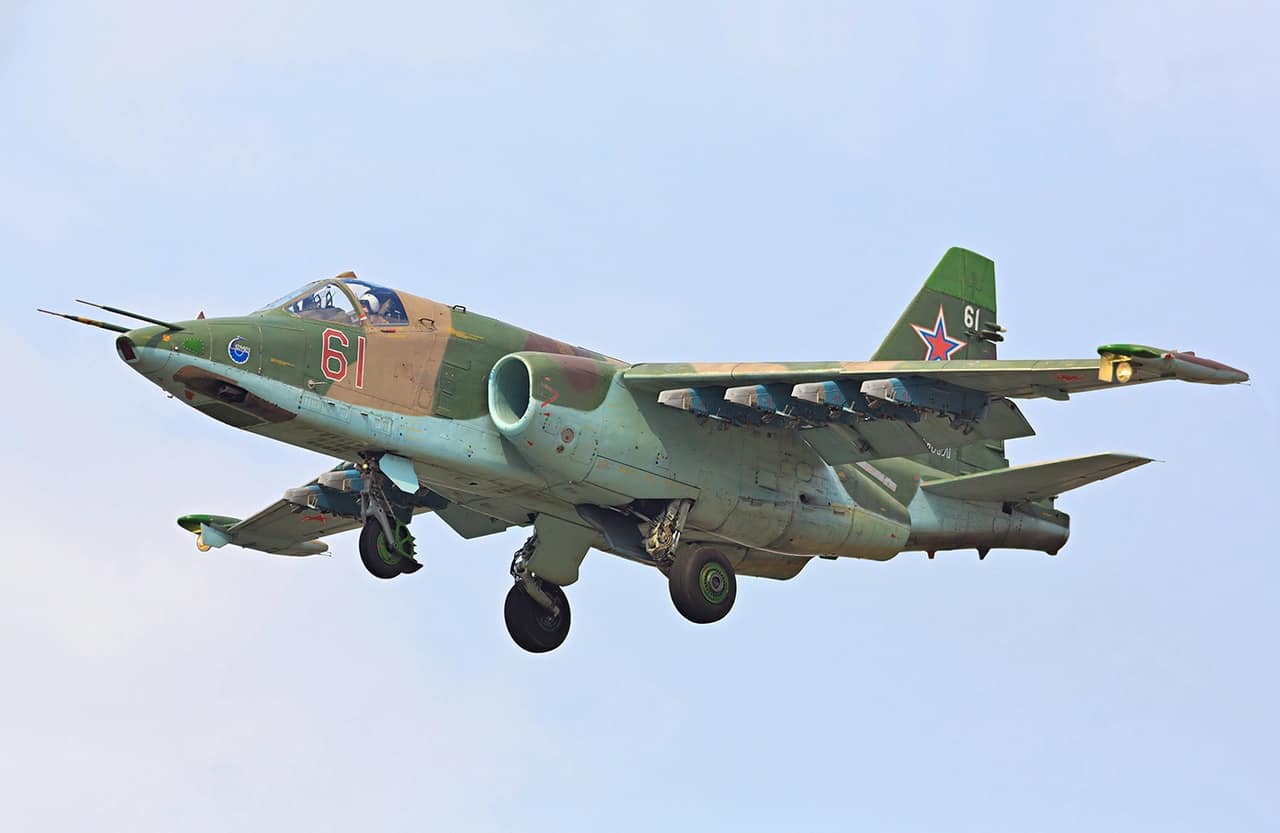
The Sukhoi Su-25 “Frogfoot” is the Soviet Union’s purpose-built armored attack jet, designed to fly low over the battlefield and survive ground fire. Known in Russian service as the Grach (rook), it entered service in 1981 and is still flying and fighting in close air support roles today. This page covers its history, armor, weapons, variants and combat record.
Live Fleet Activity (SU25)
Fetching live data…

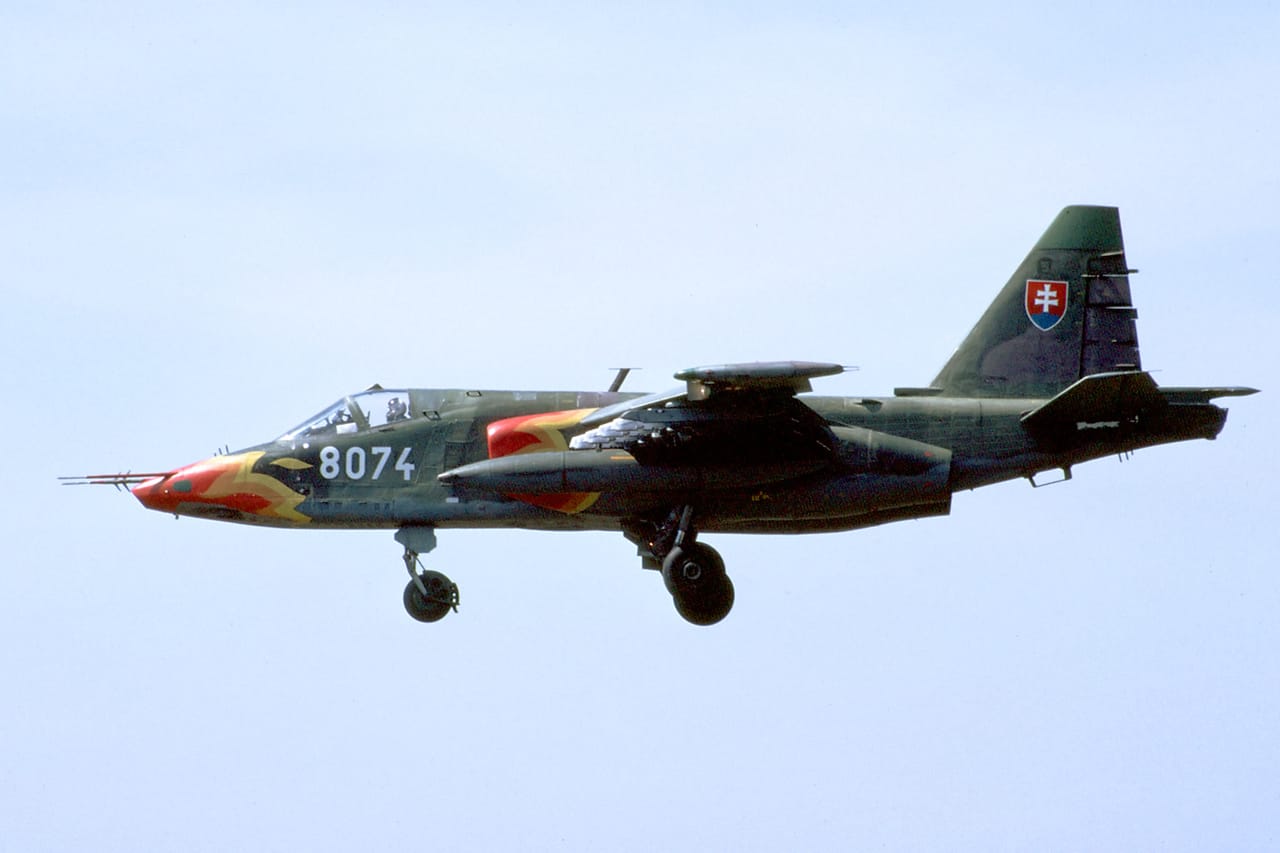

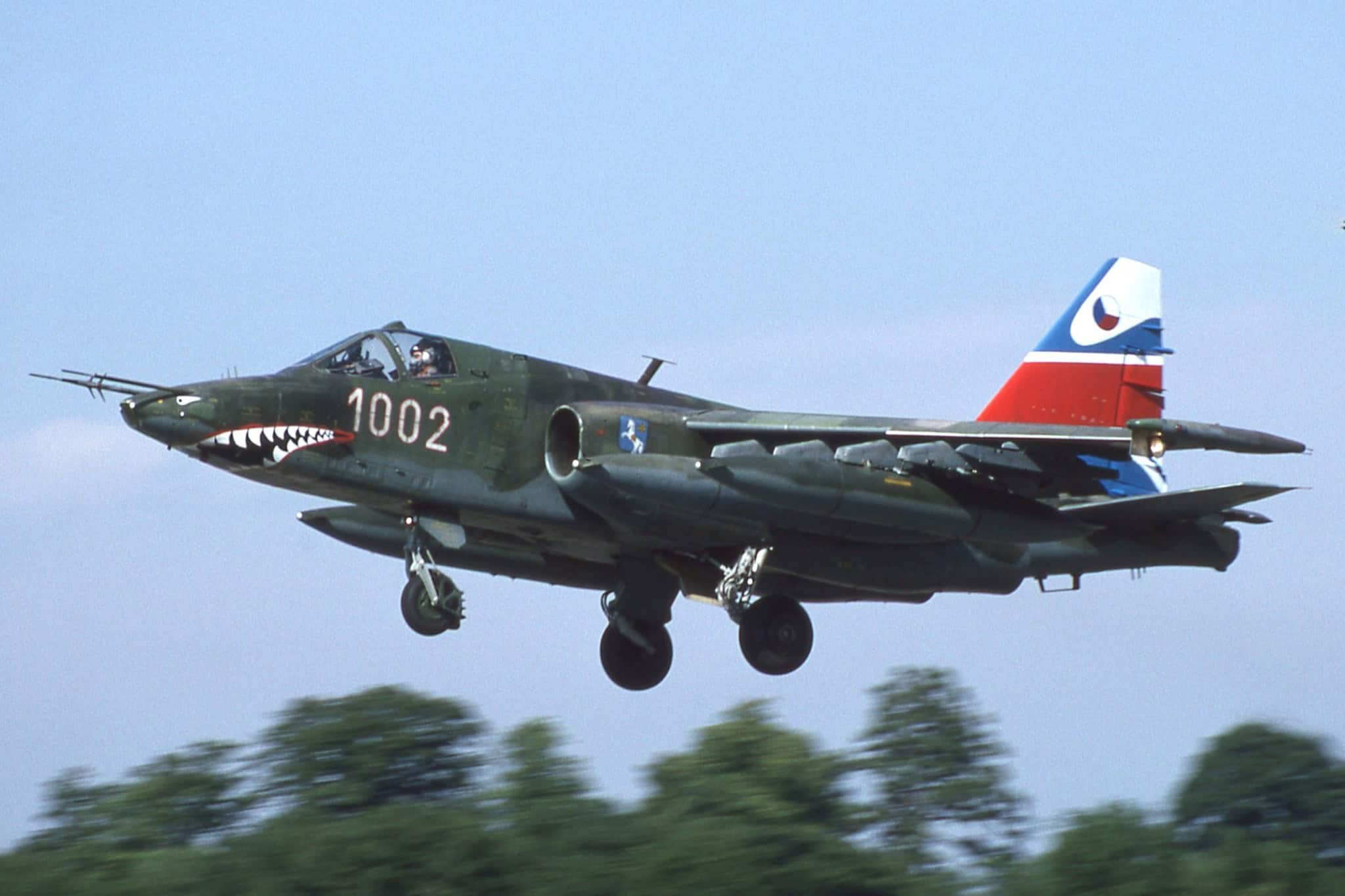
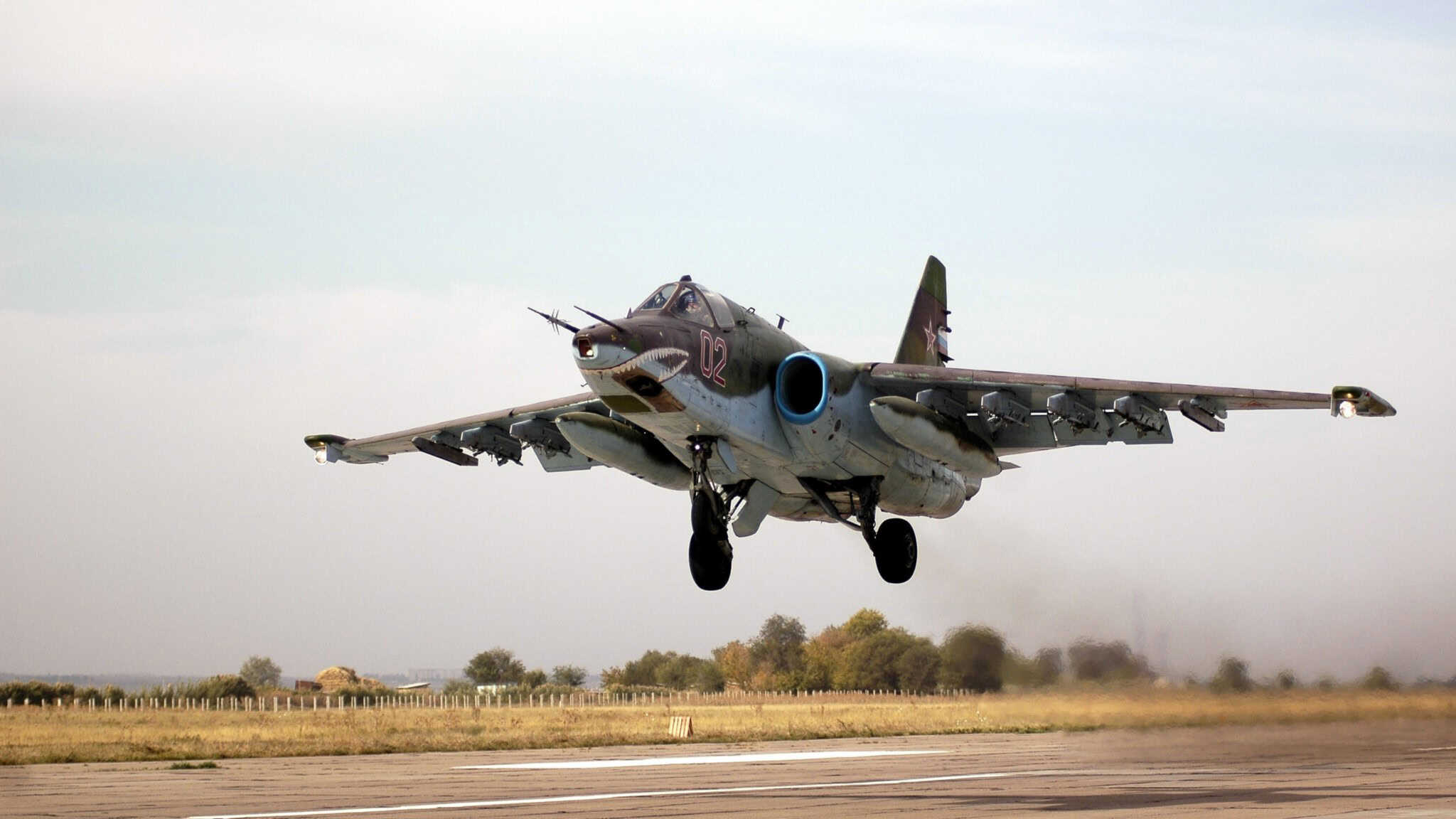
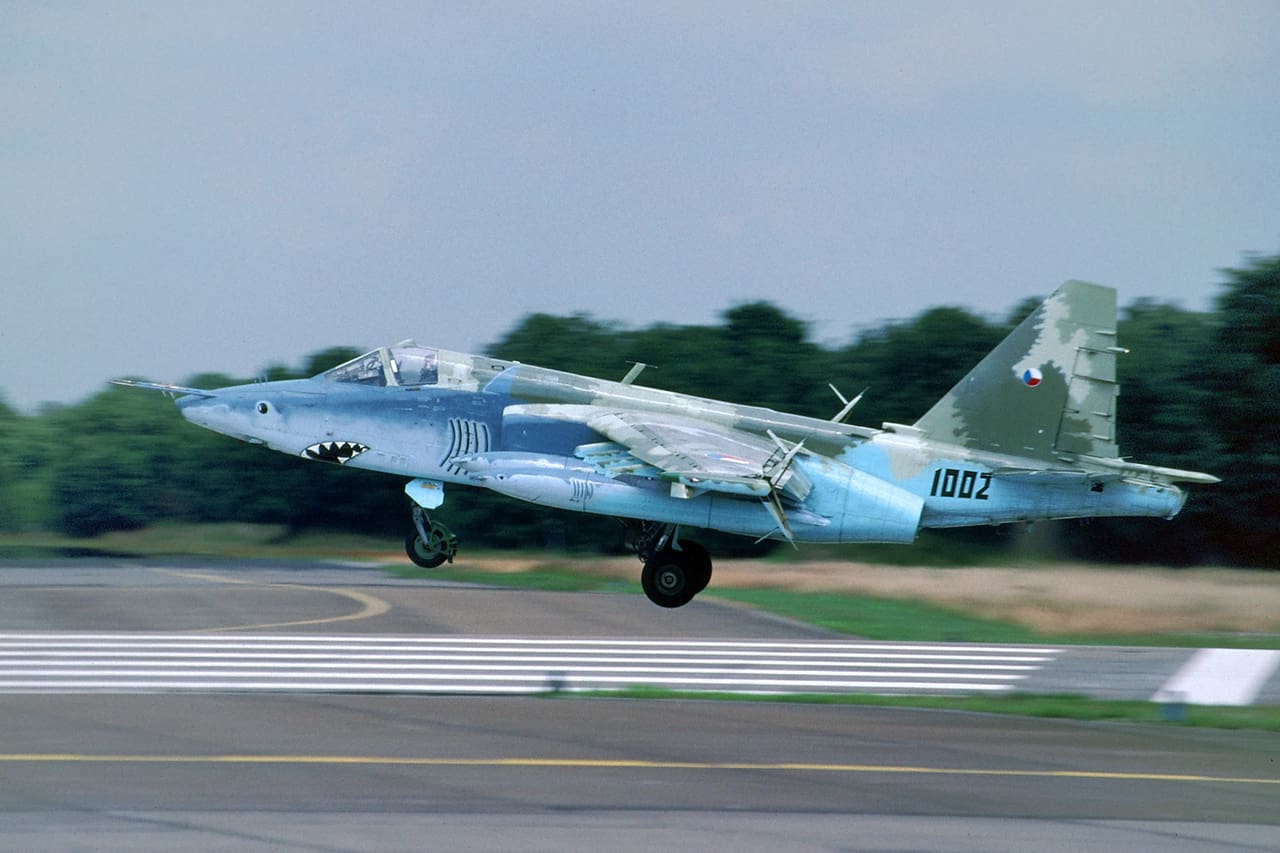
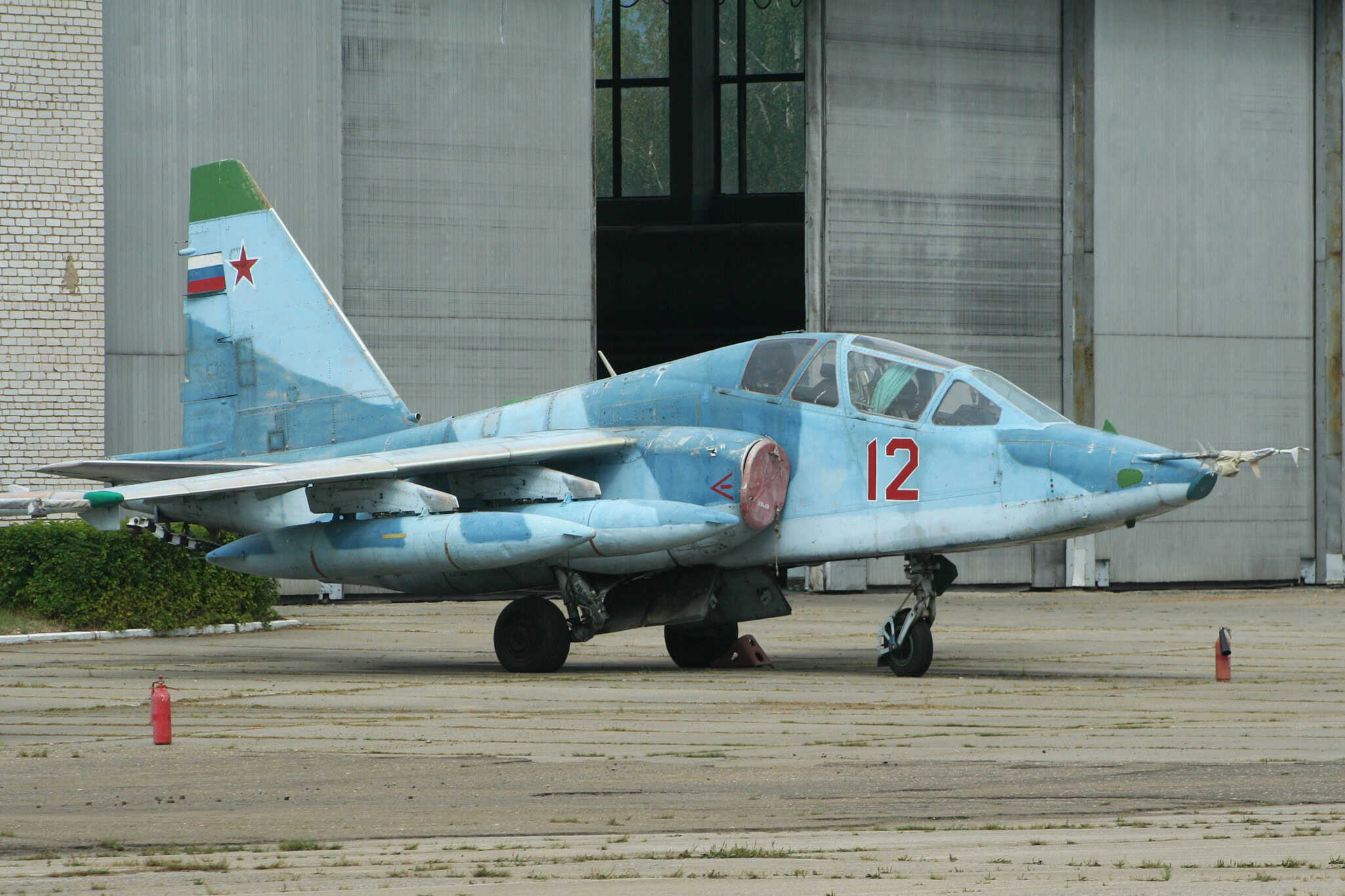
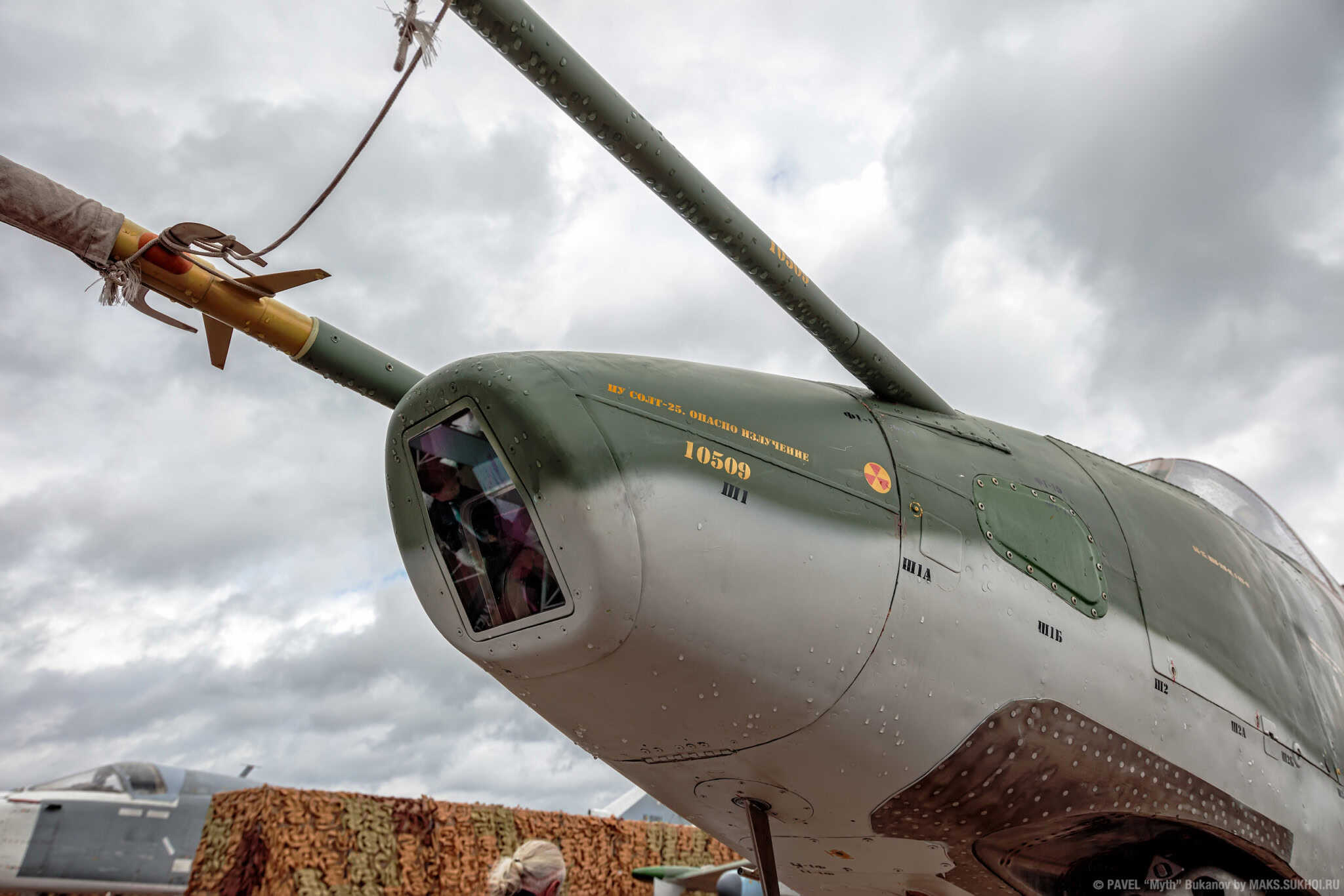


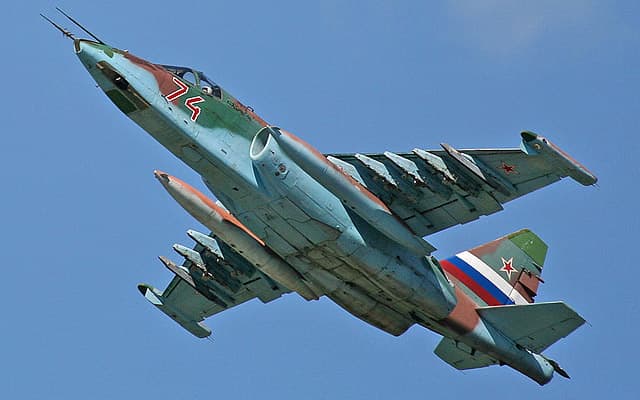
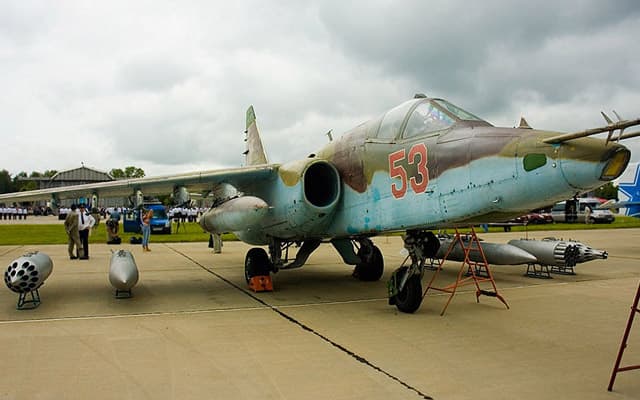
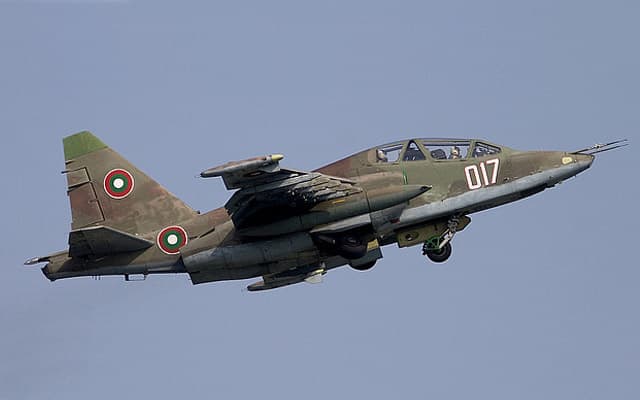
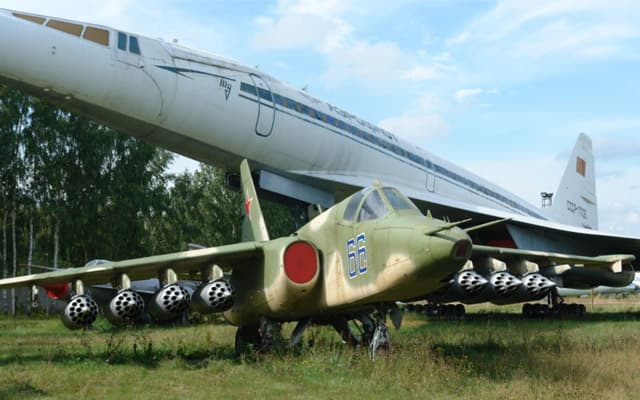
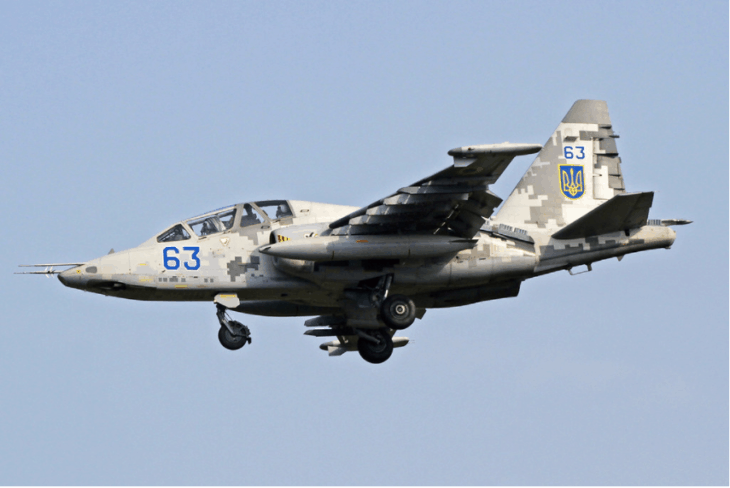
The Sukhoi Su-25 is a single-seat, twin-engine, subsonic attack jet built to destroy tanks, trenches and strongpoints from low altitude. Russians call it the Grach, which means rook. NATO gave it the reporting name Frogfoot.
It first flew on 22 February 1975 and entered service on 19 July 1981. More than four decades later it is still flying in Russian and Ukrainian service.
The specification table for the aircraft is on this page. The sections below explain what the numbers mean and how the jet has performed in war.
The requirement dates to early 1968, when the Soviet Ministry of Defense decided it needed an armored assault aircraft for the ground forces. Existing fighter-bombers such as the Su-7, Su-17, MiG-21 and MiG-23 lacked armor, and their speed made it hard for pilots to keep a target in sight.
The Soviet Air Force opened a competition in March 1969. Sukhoi’s T-8 design beat the Ilyushin Il-102, and series production was approved.
It is often described as a Soviet copy of the American A-10 Warthog. The development record points the other way: the Soviet requirement came from the Ministry’s own review of its ground-attack experience, and the program history Wikipedia gives does not mention the A-10. The two jets simply arrived at the same idea, a slow, armored, gun-armed aircraft for the front line.
Production started in 1978 at Factory No. 31 in Tbilisi, in what was then the Georgian Soviet Socialist Republic. The first Soviet unit formed in February 1981.
Survival is the point of the design. The pilot sits low inside a bathtub-shaped enclosure of welded titanium sheets, with a 6 mm (0.24 in) steel headrest behind. The airframe itself is 13.5% titanium by material mix.
Two engines sit in separate compartments on either side of the rear fuselage. The pilot sits on a Zvezda K-36 ejection seat, the same family used in the Su-27.

The price of that protection is the view. Wikipedia’s description of the cockpit notes limited visibility, poor rearward vision and a periscope fitted on top of the canopy to compensate.
The nose carries a distinctive laser rangefinder. A DISS-7 Doppler radar handles navigation, an SPO-15 receiver warns of hostile radar, and the countermeasure dispensers can launch up to 250 flares and chaff cartridges.
The base Su-25 has no radar for targeting and no TV guidance. Some pages list a Kopyo radar for the type, but that belongs to the Su-25TM, not the standard aircraft.
The fixed gun is a 30 mm Gryazev-Shipunov GSh-30-2 autocannon with 250 rounds, mounted under the cockpit. The aircraft has 11 hardpoints for rockets, bombs, gun pods and missiles.
The usual load is unguided: S-8 rockets in B-8M1 pods, heavier S-24 and S-25 rockets, and bombs. Guided options include the Kh-25ML laser-guided missile and R-60 air-to-air missiles for self-defense.

The Su-25K, for “Komercheskiy,” is the export version. Tbilisi built 180 of them between 1984 and 1989, on top of 582 single-seat aircraft for the Soviet Union from 1978 to 1989.

The two-seat Su-25UB trainer first flew at Ulan-Ude on 12 August 1985. An export trainer, the Su-25UBK, followed from 1986.
The Su-25BM is a target tug, and the Su-25T is a dedicated anti-tank version. The Su-25TM, also called the Su-39, added improved navigation and attack systems and an optional Kopyo radar pod. Neither the T nor the TM was built in significant numbers.
The upgrade that matters most is the Su-25SM. Russia conceived it in 2000 as an affordable alternative to the T and TM, which were judged over-sophisticated and expensive. It added a head-up display, a multi-function display and a GPS/GLONASS receiver.

The Su-25SM3 followed in 2018. By June 2019 Russia had received 25 of them. Combat experience in Syria led to the addition of the SVP-24 bombing aid, which improves the accuracy of unguided bombs.
Range depends on what you count. The spec panel shows a range of 540 nm (620 mi, 1,000 km), which is the figure at altitude. Wikipedia’s Jane’s-based table gives a combat range of 750 km (470 mi) at sea level with 4,400 kg (9,700 lb) of ordnance and two external tanks.
Airforce Technology prints a combat radius of 375 km instead. The two figures describe different things, so do not mix them.
Speed is similar. The panel’s maximum speed is 513 kt (590 mph, 950 km/h). Jane’s, through Wikipedia, prints 975 km/h at sea level for late-production aircraft, so published top speeds run from 950 to 975 km/h.
Either way, the jet is slow by design. The panel’s ceiling is 23,000 ft (7,000 m), but Airforce Technology puts the ceiling with a full weapons load at 5,000 m (16,400 ft). The Su-25 works low, where its pilots can see what they are shooting at.
Payload is quoted two ways. The panel shows 9,700 lb (4,400 kg), the ordnance load behind the combat range above. Wikipedia’s hardpoint capacity line reads 8,800 lb (4,000 kg). Treat both as the same order of magnitude, not a precise limit.
Weights also differ by source, which is why published empty and takeoff weights for the Su-25 do not always agree. Wikipedia’s late-production table gives 21,605 lb (9,800 kg) empty. Airforce Technology prints 10,740 kg for the same figure.
The engines need a note as well. Early Su-25s used two R-95Sh turbojets, and the R-195 came with the later versions. The panel’s engine and thrust figures are for the R-195.
The Su-25 entered combat in Afghanistan. The first unit, the 200th Independent Attack Squadron, moved to Shindand airbase on 19 July 1981 to strike mujahideen positions in the mountains.
Each aircraft averaged 360 sorties a year, more than any other combat aircraft in the country. Nearly 50 Su-25s were deployed by the end of the war, flying about 60,000 sorties. Between 21 and 23 were lost in combat, with up to nine destroyed on the ground.
Iraq bought the type and used it against Iran from 1987, flying about 900 combat sorties late in the war. Only one Iraqi Su-25 is recorded as shot down by Iran, by a Hawk missile, and the pilot ejected.
In the 1991 Gulf War, coalition air superiority was so complete that most Iraqi Su-25s never got airborne. On 25 January 1991, seven flew to Iran.
Russia and Georgia both flew Su-25s in the August 2008 war. Elsewhere the type has served in Chechnya, Ethiopia, Ivory Coast, Macedonia, Iraq against the Islamic State and Syria.
The war in Ukraine is the Su-25’s costliest conflict. Russia reported its first loss on 24 February 2022, blaming pilot error.
Oryx counts only losses with photo or video evidence. When I checked its Russian loss list on 4 October 2026, it showed 41 Su-25 close air support aircraft lost, including a few in non-combat incidents. Wikipedia, quoting the same tracker, gave at least 40 on 24 October 2025. The true total is higher than any visually confirmed count.
Ukraine also flies the Su-25 and lost three on 26 February 2022. North Macedonia confirmed in March 2023 that it was handing four non-airworthy Su-25s to Ukraine. Wikipedia, citing a January 2025 Forbes report, says Ukraine overhauled its remaining aircraft to carry French AASM Hammer glide bombs, which lets them release weapons from outside the range of Russian air defenses.
Su-25s have also kept flying where air defenses are thin. In April 2024, analyst Rob Lee read Su-25s flying unimpeded over Chasiv Yar as a sign of Ukrainian air defense ammunition shortages.
Wikipedia lists the Russian Aerospace Forces, the Ukrainian Air Force, the Korean People’s Army Air Force and the Peruvian Air Force as primary users, with many more operators across the CIS, Africa and the Middle East. It describes the Russian fleet as the largest in the world.
Russia’s fleet is built mostly on the single-seat Tbilisi-built aircraft, upgraded to Su-25SM and SM3 standard. Other sources I opened do not give a reliable current count.
Production of the Su-25 is also a question of definition. Wikipedia says new aircraft stopped coming from Georgia in 2010, and Georgian attempts to restart production from partially built airframes had produced no reported deliveries by June 2022. Russia now modernizes older airframes instead. See also Sukhoi’s other combat jets in our guide to Sukhoi fighter jets.
They are built for the same job but not the same scale. The A-10 first flew on 10 May 1972, uses two turbofans and fires a 30×173 mm GAU-8 cannon. It also carries a titanium armor package of about 1,200 lb (540 kg), per Wikipedia.
The Su-25 is smaller, with a GSh-30-2 gun and 250 rounds. Our A-10 page lists a payload of 16,000 lb, well above the Su-25’s. Neither is better in the abstract, because that depends on the mission and the air defenses over it.
It is good at what it was built for: rugged, simple close air support from rough airfields. It survived Afghanistan and has outlasted its Soviet origins.
It is also vulnerable. Flying low means modern air defenses can reach it, and Oryx’s count of 41 Russian losses shows the cost.
Not as a new-build line, as far as the sources I opened show. Wikipedia says production ended in Georgia in 2010, with no reported deliveries from restart attempts by June 2022. Russia keeps the fleet alive by modernizing existing aircraft to Su-25SM3 standard.
No reliable current figure turned up in the sources I opened. Wikipedia says Russia operates the largest Su-25 fleet in the world, and Oryx has visually confirmed 41 Russian Su-25 losses as of 4 October 2026.
Frogfoot is the NATO reporting name. The Russian name is Grach, which means rook, the bird.
Sources and references used for research and fact-checking.
.jpg)
