Fighter Jets
BAe Panavia Tornado IDS
ICAO: TOR
The vertical takeoff fighter built for close support and expeditionary operations.
The latest aviation news and stories sent to your inbox.
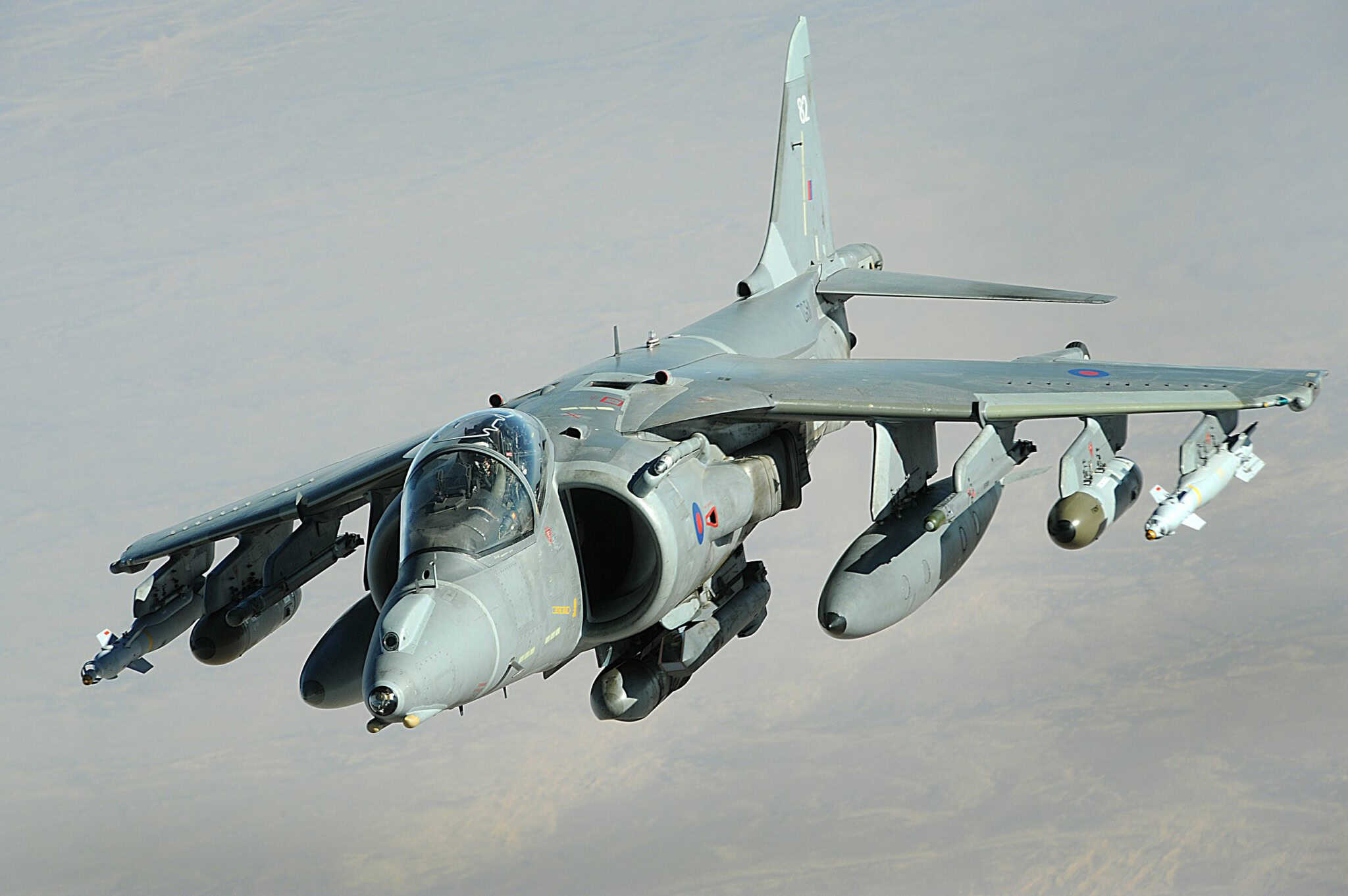
The BAE Harrier II is a second-generation vertical and short takeoff fighter developed from the original Harrier design. Introduced in the 1980s, it combined improved aerodynamics with greater payload capacity. The aircraft became a key component of U.S. Marine Corps and allied expeditionary aviation.
Live Fleet Activity (GR9)
Fetching live data…


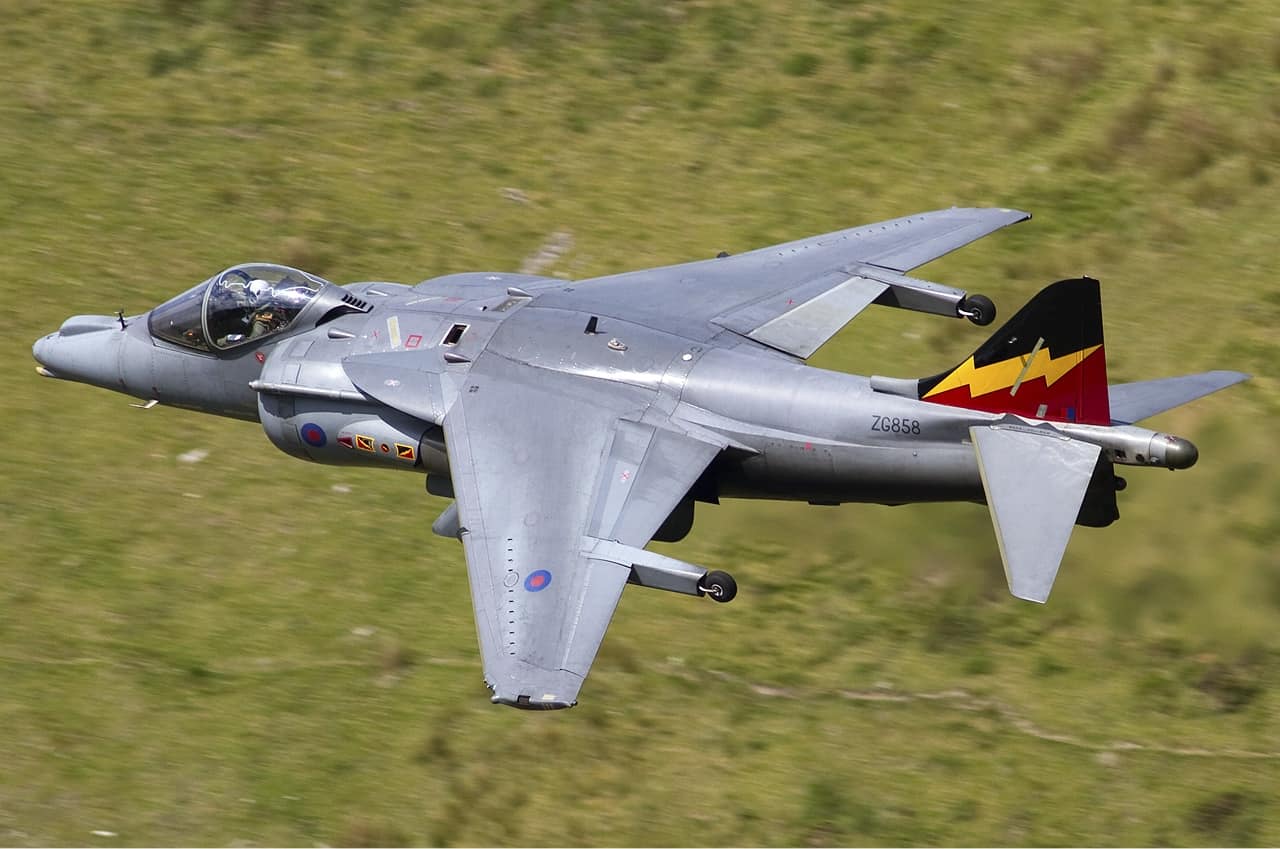


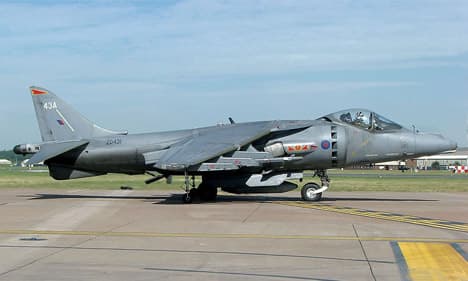
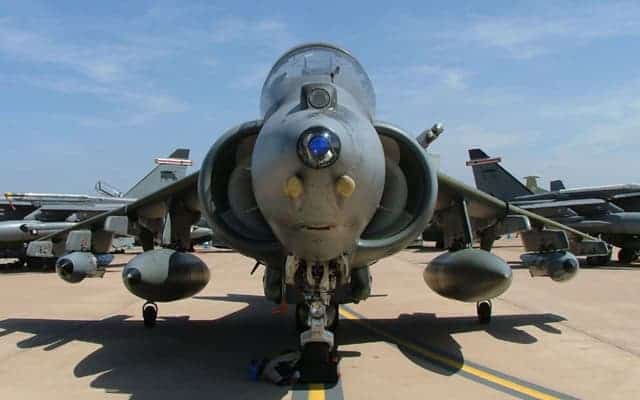

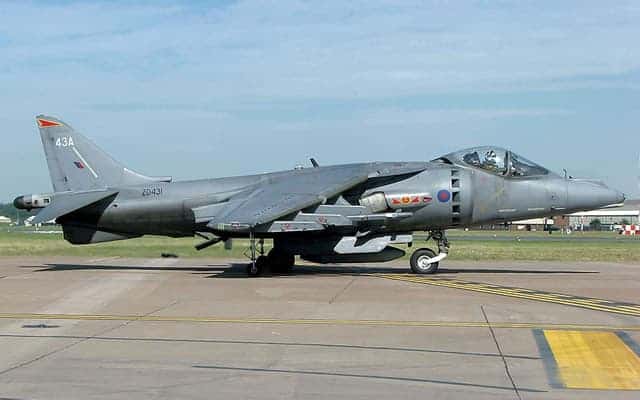

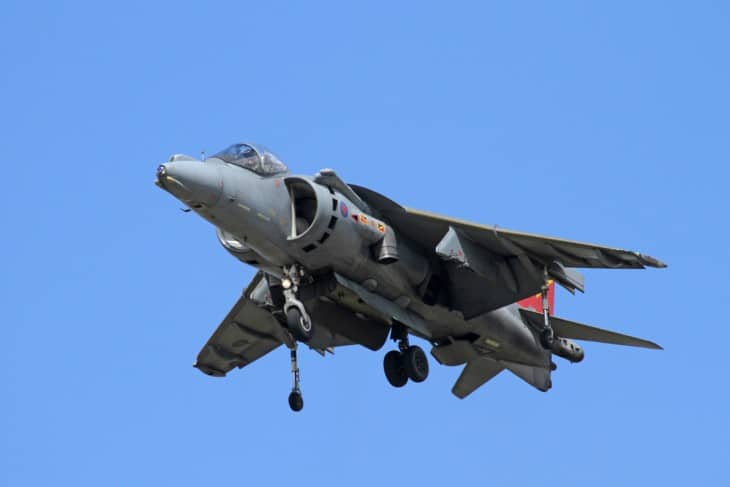
The Harrier II first flew in 1978 and entered service in 1985 as a major redesign of the earlier Harrier. Engineers introduced a larger composite wing, revised air intakes, and improved avionics. These changes increased payload and range while preserving the aircraft’s ability to operate from short runways and amphibious ships.
A single Rolls-Royce Pegasus turbofan engine producing approximately 23,500 pounds of thrust (105 kN) powers the aircraft. The engine’s vectored thrust system enables vertical or short takeoff operations. Maximum speed approaches Mach 0.9, and maximum takeoff weight exceeds 31,000 pounds (14,061 kg).
The Harrier II served primarily in close air support and strike missions. Its ability to deploy from austere locations made it valuable for expeditionary forces. The aircraft remained in frontline service for decades before being gradually replaced by newer short takeoff fighters.
The Harrier II emerged from a requirement to produce a more capable vertical and short takeoff aircraft that addressed the original design’s limited payload and avionics growth potential. British industry led airframe changes while design work incorporated lessons learned from earlier Harrier operations to prioritize mission flexibility and shipborne compatibility.
Initial development used extensively modified existing airframes together with newly built prototypes for structural and systems testing. Test programs emphasized loads, control laws and the viability of larger wing and stores arrangements under operational mission profiles. Incremental flight test data guided structural detail and systems commonality between British and American production lines.
Production and introduction occurred under national procurement arrangements that balanced sovereign maintenance capability with shared logistics for allied users. Certification and fleet introduction followed standard military airworthiness and carrier compatibility processes, including trials for shipboard launch and recovery routines and for in-service avionics and weapons integration.
Program management structured follow-on upgrades as distinct blocks, enabling later fitment of airborne radar, improved navigation and defensive aids through service-life modification programs. This approach aimed to extend operational relevance while minimizing airframe redesign between upgrade phases.
The configuration retains a single-turbofan, single-seat or two-seat cockpit layout with a conventional fuselage and a relatively large, high-aspect wing to increase lift for short or vertical operations. Internal structure emphasizes a blend of conventional aluminum alloys and advanced composite components in control surfaces and wing assemblies for weight control and fatigue resistance.
Systems architecture favors modular maintenance access and line-replaceable units to support expeditionary basing and shipboard turnaround. Hydraulic, fuel and flight-control systems are arranged to simplify maintenance and speed re-arming cycles. Cockpit ergonomics evolved to accept progressively more capable avionics without wholesale cockpit redesign.
Avionics philosophy centers on incremental growth and mission adaptability, with later aircraft receiving multi-mode radar, computerized stores management and improved navigational aids. Defensive aids suites and laser-targeting compatibility were fitted to permit precision weapon employment from tactical altitudes and in adverse visual conditions.
Distinguishing external features include a relatively large wing with multiple pylons for mixed loads and a fuselage arrangement that facilitates carriage of internally mounted avionics packs and underfuselage stores. Structural provisions for shipboard tie-down, folding control surfaces on naval marks and strengthened landing gear for deck operations are integrated in navalized versions.
Operational employment emphasizes short-field and shipborne sortie generation rather than high-altitude intercept performance. Typical missions exploit low-level ingress and short basing close to the objective to reduce transit time and increase time on station. Endurance on station depends strongly on external fuel and store loading, with drop tanks extending patrol time at the expense of payload options.
Climb and transient performance are adequate for tactical maneuvers in the attack role, but hover and vertical performance degrade in high-temperature or high-altitude conditions, influencing basing choices in some theaters. Engine hot-section life and maintenance needs influence sortie generation rates on sustained operations.
Payload flexibility permits mixed configurations of guided munitions, unguided rockets, gun pods and reconnaissance stores on multiple underwing and fuselage stations. Weapons integration in later service included precision-guided bombs and targeting pods to permit day-night and adverse-weather delivery profiles from short basing lines.
Operational limitations include high maintenance intensity relative to conventional takeoff fighters because of thermal and mechanical demands on propulsion and hot-structure systems. Shipborne operations impose additional corrosion-control and turnaround workloads that affect sortie rate and long-term sustainment planning.
The Harrier II family comprised distinct national variants developed from the same baseline airframe and systems architecture. British marks emphasized mission avionics and compatibility with Royal Navy and Royal Air Force operating patterns, while the American-built derivative incorporated specific structural and systems changes to meet U.S. Marine Corps requirements.
Specialized sub-variants included two-seat trainer conversions retaining full mission systems for operational conversion and radar-equipped versions that added airborne search and targeting capability. Navalized versions received deck-strengthened landing gear, arrester-compatible provisions and corrosion-hardened systems for sustained shipboard use.
Upgrades over service life produced discrete capability blocks that fitted new avionics, defensive aids, improved cockpit displays and support for contemporary guided weapons. These incremental variants were managed to preserve commonality where possible while delivering defined capability improvements.
Operators deployed Harrier II aircraft aboard amphibious assault ships and conventional aircraft carriers where available, and from dispersed forward bases to support expeditionary operations. National fleets used the type in maritime fleet-support, joint-force strike and tactical close air support roles, taking advantage of distributed basing options.
Experience in various theaters showed the type’s adaptability to mixed mission sets, particularly in providing timely air-to-ground support from sea or improvised forward areas. Maintenance and logistics planning often prioritized rapid engine and hot-section support to sustain required sortie rates in austere conditions.
Training and doctrine emphasized combined-arms employment with ground controllers and naval strike coordinators, integrating laser designation and targeting-pod workflows for precision engagement. Fleet experience produced detailed procedures for shipboard launch, recovery and rapid turnarounds to maximize operational availability.
In service records noted operational attrition from non-combat accidents and environmental wear; replacement and retirement programs addressed sustainment costs and the arrival of newer short takeoff and vertical landing aircraft with more modern avionics and maintenance philosophies.
Combat employment focused on interdiction, armed reconnaissance and direct support of ground forces. Aircraft often operated at low altitudes with coordinated target designation, employing a mix of unguided and precision weapons to suppress or destroy tactical targets in support of ground maneuver units.
Strike planners used the aircraft’s short-basing flexibility to reduce response times and to operate from locations not accessible to conventional fighters. When equipped with targeting pods and precision weapons, missions expanded to include night and adverse-weather strikes with reduced collateral effects.
Air defense suppression and tactical escort missions were undertaken when integrated with supporting electronic warfare and reconnaissance assets. Mission planning balanced store loads, fuel and threat environment to maintain acceptable ingress, engagement and egress profiles.
Principal operators included the Royal Air Force, the Fleet Air Arm, the United States Marine Corps and other allied naval aviation services that procured ship-capable versions. Each operator tailored maintenance, training and upgrade programs to national operational concepts, with joint exercises validating combined embarkation and expeditionary basing procedures.
Technologically, the Harrier II demonstrated operationally viable short takeoff and vertical landing solutions for multirole tactical aviation and advanced the use of composite structures in combat aircraft. Operational experience informed later STOVL design considerations, particularly in integrating mission systems and reducing life-cycle maintenance burdens.
Program lessons emphasized the logistics and sustainment costs associated with vectoring-engine architectures and heat-intensive components, shaping procurement and maintenance approaches for successor aircraft. Fleet doctrines developed around dispersed basing and shipborne airpower influenced subsequent naval and expeditionary aviation planning.
Although succeeded by newer STOVL types with integrated stealth and sensor fusion, the Harrier II provided a prolonged testbed for integrating precision munitions, targeting pods and night-operational capability into short-basing tactical aviation. Its service record contributed practical data on operational concepts, upgrade block management and international industrial partnership in combat aircraft production.
Sources and references used for research and fact-checking.