

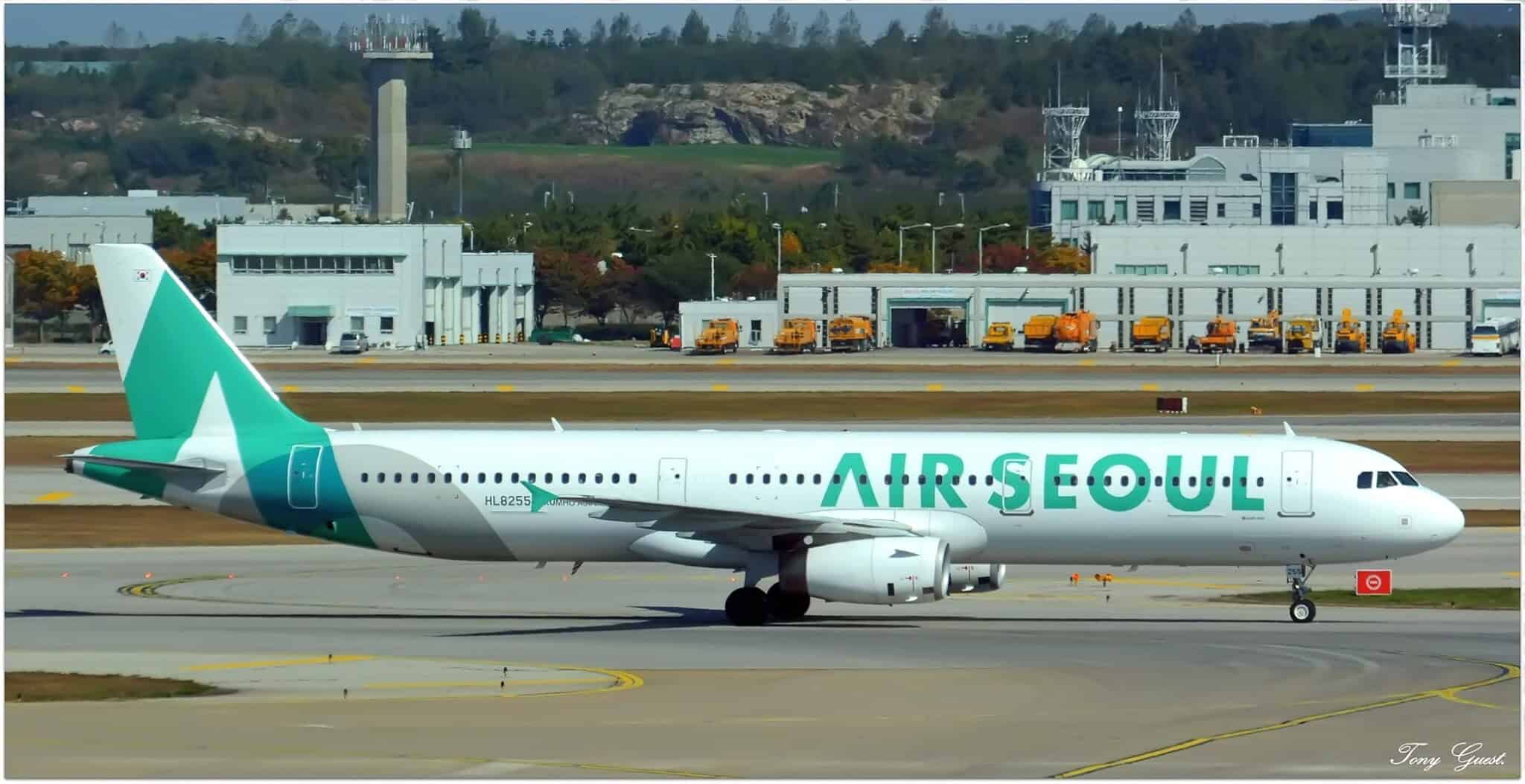
Stand in front of the domestic departures board at Seoul’s Gimpo Airport and the pattern is almost comical. Jeju, Jeju, Jeju, Jeju. Flight after flight to the same place, leaving roughly every ten minutes, all day, on a whole roster of competing airlines. It looks less like an airline schedule and more like a metro timetable that happens to involve jet aircraft.
That single short hop between Seoul and the island of Jeju is the busiest passenger flight route on the planet. Not the busiest in Asia, not the busiest domestic route in Korea: the busiest anywhere, ahead of every glamorous long-haul corridor and every link between the world’s biggest cities. And it is not close.
The obvious guess is that the busiest route in the world must connect two enormous cities, or carry crowds across an ocean. The real answer is stranger and more interesting than that, and it comes down to geography, a nation’s favourite holiday, and the simple fact that you cannot drive to an island.
The short answer
By AeroCorner’s own route rankings, the pairing of Seoul Gimpo and Jeju tops the world’s busiest routes by frequency: about 119 departures a day in each direction, roughly 237 flights every single day once both ways are counted. No other route on Earth comes close on that measure.
And it does not only win on frequency. By seats flown, the aviation data firm OAG also ranks Seoul to Jeju number one, at around 14.4 million scheduled seats in 2025. Count the flights or count the seats, this short domestic hop wins either way.
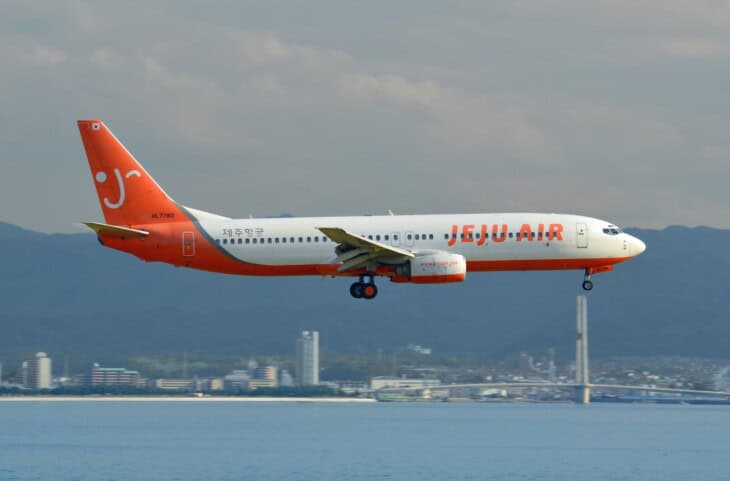
What makes that remarkable is the distance. Jeju sits about 451 kilometres, roughly 280 miles, off the southern coast of the Korean peninsula, a flight of only about an hour and a half. This is not a marathon international trunk route.
It is a short domestic hop, and the reason it tops the list is that an unusually large number of people need to make exactly this journey, and flying is very nearly the only sensible way to do it.
Why Seoul to Jeju leads the world
Three things line up: Jeju is an island with no bridge and no rail link, so surface travel from Seoul is impractical. It is also South Korea’s single dominant holiday destination, generating enormous leisure demand. And because the flight is domestic, it is cheap, frequent, and friction free. Put those together and you get roughly 14 million seats a year on one short route.
An island with no back door
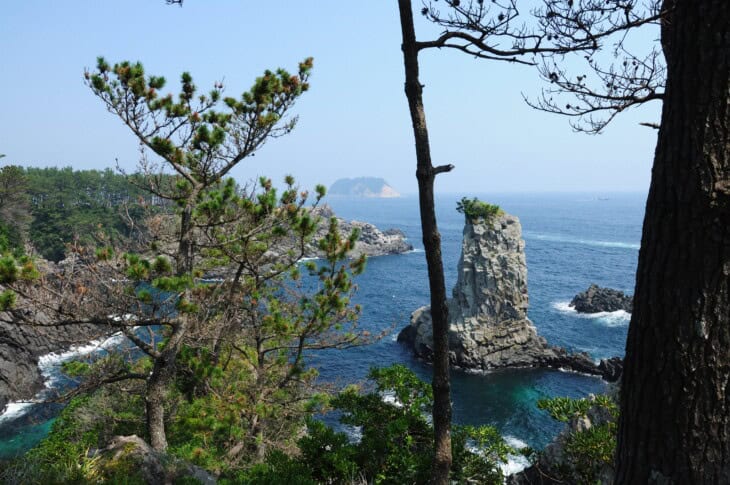
Start with the geography, because it does most of the work. Jeju is a volcanic island in the sea south of the Korean mainland. There is no bridge to it and no tunnel, and no railway reaches it. If you want to get there, you either fly or you take a boat.
And the boat is not a real option for most people travelling from Seoul. Ferries to Jeju leave from ports on the far southern coast, places like Wando and Mokpo, and the crossings themselves run anywhere from under three hours to more than four.
But those ports are already four to five hours south of Seoul by road or rail before you even board a ship. A ferry journey from the capital is an all-day, sometimes overnight, expedition. The flight is about an hour and a half.
This is the crucial difference between Seoul to Jeju and a busy overland corridor like Seoul to Busan, where a high-speed train can be faster and easier than flying once you count airport time.
On those routes, rail quietly absorbs much of the demand and keeps the flights relatively modest. Between Seoul and Jeju there is no train to absorb anything. Every person who wants to cross that stretch of water in a hurry becomes a potential airline passenger. The sea does what no marketing campaign could: it funnels an entire flow of travel onto aircraft.
A whole nation’s holiday island
Geography explains why people fly rather than drive. It does not explain why so many people want to make the trip in the first place. That is the second ingredient: Jeju is not just an island, it is South Korea’s holiday island, sometimes called the Hawaii of Korea.

Jeju draws well over ten million visitors a year with its beaches, volcanic scenery, waterfalls, and resorts. For decades it has been the default domestic honeymoon destination, the easy family holiday, and the quick weekend escape for a country of more than fifty million people, most of whom live within a short drive of an airport.
A single, hugely popular destination, combined with a large population that can only reach it by air, concentrates a staggering amount of travel demand onto one line on the map.
That concentration is what pushes the route past its rivals. The next busiest routes in the world are strikingly similar in shape: short, domestic, and driven by geography or a dominant destination rather than by intercontinental glamour.
| # | Route | Flights/day | Country |
|---|---|---|---|
| 1 | Seoul Gimpo to Jeju | 237 | South Korea |
| 2 | Jeddah to Riyadh | 159 | Saudi Arabia |
| 3 | Melbourne to Sydney | 150 | Australia |
| 4 | Sapporo to Tokyo Haneda | 148 | Japan |
| 5 | Hanoi to Ho Chi Minh City | 143 | Vietnam |
Flights per day, both directions combined. Source: AeroCorner route rankings, July 2026.
Almost every route on that list is a short domestic hop, and nearly all of them are in the Asia-Pacific region. The pattern is clear: the world’s busiest routes are not its most famous ones. They are short, dense, everyday journeys that huge numbers of people simply have to make.
How far ahead it sits
AeroCorner’s route rankings show Seoul and Jeju connected by about 237 flights a day once both directions are counted. The next busiest route on Earth, Jeddah to Riyadh, manages around 159. That is close to fifty percent more daily flights than the route in second place, on a list of thousands. First place here is not a photo finish.
Cheap seats and ten-minute intervals
The third ingredient is what happens once demand and geography are locked in: the route becomes a brutally efficient, low-cost shuttle. Because it is domestic, there is no passport control, no customs, and no international check-in ritual. Passengers can arrive not long before departure and walk straight to the gate.
From the airline’s point of view, that means aircraft can be filled and emptied fast, which is what makes a ten-minute departure interval possible in the first place. Jeju’s airport alone now handles around 271 flights a day to more than thirty destinations, and Seoul is by far its biggest draw.
Roughly seven to nine carriers compete on the route at any given time, from the big full-service airlines to a crowd of low-cost operators. That much competition on a single line drives fares down hard. Seats on Seoul to Jeju can sell for less than the cost of a long taxi ride, which only feeds demand further: cheap, frequent flights encourage the exact casual, spur-of-the-moment travel that keeps the planes full.
It is a self-reinforcing loop, and it depends on the airlines turning their aircraft around at the gate with almost no wasted time. If you have ever wondered how a plane can land, unload, reload, and leave again in well under an hour, this route is that process running at industrial scale. It is the same discipline behind the 45-minute aircraft turnaround, pushed to its limit.
The pricing is not an accident either. With this many carriers chasing the same passengers, fares swing constantly with demand, which is exactly the kind of environment where airline revenue management works hardest. The result for travellers is a route where a short domestic flight can genuinely be one of the cheapest ways to travel a few hundred miles anywhere in the world.
The myth: busiest does not mean biggest
The instinct that the busiest route in the world should connect two megacities, or span an ocean, is the thing worth unlearning here. Routes like London to New York or Dubai to London are enormous in revenue and in importance, but they are not the busiest by passenger volume, and it is not especially close.
The common misconception
Busiest is not the same as longest, richest, or most famous. A route tops the volume rankings when a large population has a strong reason to make a short journey and no good alternative to flying. Prestige international routes lose on raw numbers to short domestic hops that a whole country takes for granted.
Long international routes are limited by how many people realistically fly between two distant countries, by fare levels that suppress casual travel, and by the sheer time each trip takes. A short domestic hop to a holiday island has none of those brakes.
The trip is quick, cheap, visa-free, and made by millions of ordinary people several times a year. Volume rankings reward frequency and habit, not distance and glamour, and Seoul to Jeju is what habit looks like when an entire nation shares the same favourite escape.
So the next time you picture the busiest flight path on Earth, do not imagine a widebody crossing the Atlantic. Picture a departures board at Gimpo, the word Jeju stacked down the screen a dozen times, and a narrowbody jet pushing back for a ninety-minute hop to an island you can only reach by air. It is not the most glamorous route in the world. It is simply the one the most people cannot avoid taking.
If the mechanics behind a route like this interest you, it is worth seeing how airlines actually work to keep aircraft moving every ten minutes, or browsing the full flight route rankings to see which city pairs come next.
Sources and references used for research and fact-checking.
- Busiest Flight Routes in the World 2025 - OAG
- South Korea's Jeju (CJU) - Seoul Gimpo (GMP) is the World's Busiest Airline Route in 2025 - OAG Pressroom
- World's Busiest Flight Routes - AeroCorner
- Flight Time from Gimpo (GMP) to Jeju (CJU) - AeroCorner
- Ferries to Jeju Island - Routes, Schedules, Prices - Direct Ferries
Get the Newsletter
The latest aviation news and stories sent to your inbox.
About the Author

Tim is the owner and lead editor of AeroCorner since 2019, overseeing aviation content covering aircraft, airlines, airports, and the broader aviation industry. Through years of researching, writing, editing, and publishing aviation-focused content, he has developed extensive practical knowledge of commercial aviation and air travel. Based in Asia and a frequent traveler himself, Tim also brings firsthand passenger experience to AeroCorner’s coverage. Outside of publishing, he has also explored aviation firsthand through hands-on flight training in New Zealand.