

Table of Contents
The government’s own count reached 162 in 2005, and the filings never stopped. The airline Wall Street is watching now carries $8.5 billion in debt and has mortgaged its frequent flyer program.
Between airline deregulation in 1978 and September 2005, US airlines filed for bankruptcy 162 times, according to the Government Accountability Office. That is a count of filings, not airlines: repeat filers such as US Airways are counted once for every trip to court.
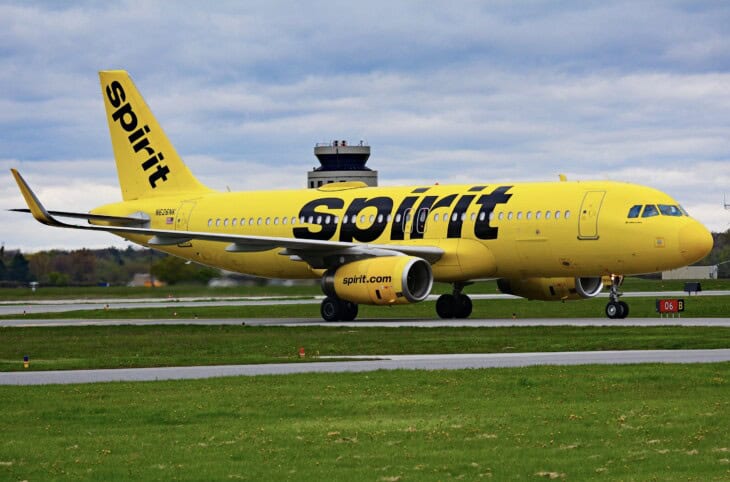
The tally kept growing after the GAO stopped counting. Frontier filed in 2008, American in 2011, and Spirit Airlines twice, less than a year apart, before it stopped flying on May 2, 2026.
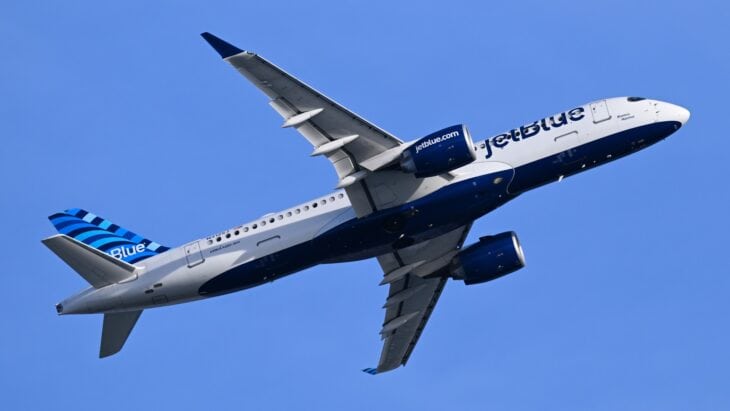
Now JetBlue is the name in the frame. The Wall Street Journal has reported that a group of JetBlue’s senior creditors is working with the restructuring adviser PJT Partners and a law firm, as One Mile at a Time and View from the Wing relayed on Oct. 24. JetBlue has not filed, and says it remains confident in its turnaround.
Why US airlines keep ending up in bankruptcy court
The GAO’s explanation is structural. Airlines carry high fixed costs, sell into cyclical demand, compete hard on price, and take the first hit from shocks like war, terrorism and epidemics.
An aircraft has to be paid for whether it flies full or empty. In 2005 the list price of a single Boeing 777 ran from $171 million to $253 million, and airlines finance their fleets through leases and loans that demand regular cash payments regardless of how busy the jets are.
Chapter 11 offers a way out of those fixed costs without shutting down. Continental proved it in September 1983, when it became the first airline to file for bankruptcy with a plan to keep operating, then used the case to impose new, cheaper labor agreements on its unions.

That move became the industry playbook. Rejecting labor contracts is part of almost every airline bankruptcy, and by the end of 1984 Continental was a larger airline than it had been before it filed.
Bankruptcy is not free, though. Card processors hold back a large share of ticket receipts until the flight is actually flown, which squeezes cash at exactly the moment an airline has the least of it.
162 filings, and only 18 ended with an airline still flying
The GAO’s breakdown of the 162 is the bleakest number in the story. Fourteen were Chapter 7 liquidations from the start, and the other 148 were Chapter 11 reorganizations.
Of those 148 attempts to reorganize, 112 ended with an airline that no longer held an FAA certificate. Another 18 came from airlines that filed again and then lost their certificate. Just 18 belonged to airlines still certificated and flying when the GAO counted.
Most were small. Only 24 of the 162 filings came from airlines with more than $100 million in assets, but 12 of those large cases landed after 2000, including Delta, Northwest, United and US Airways, which the GAO ranked among the largest corporate bankruptcies ever outside financial services.
The names people remember account for 20 filings between them.
| Airline | Filings | Years filed | How it ended |
|---|---|---|---|
| Braniff International | 1 | 1982 | Ceased operations |
| Continental | 2 | 1983, 1990 | Emerged both times, merged with United in 2010 |
| Eastern | 1 | 1989 | Liquidated in 1991 |
| Pan Am | 1 | 1991 | Ceased operations, most assets sold to Delta |
| America West | 1 | 1991 | Emerged in 1994, merged with US Airways in 2005 |
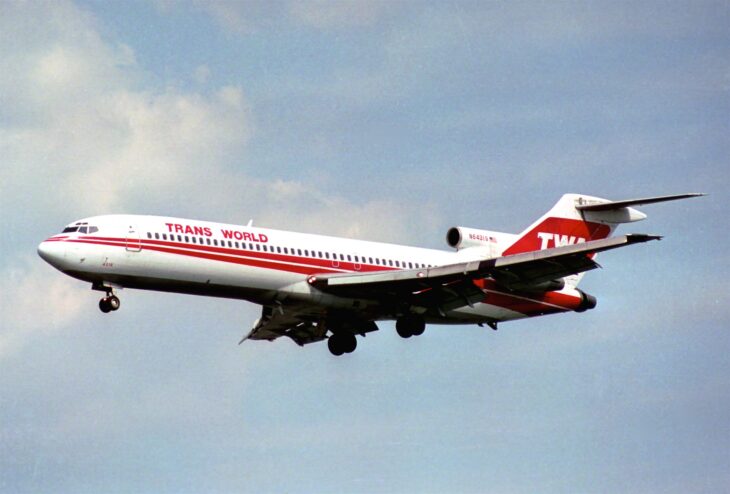
| TWA | 3 | 1992, 1995, 2001 | Acquired by American in 2001 |
| Hawaiian | 2 | 1993, 2003 | Emerged both times |
| US Airways | 2 | 2002, 2004 | Merged with American, single certificate in 2015 |
| United | 1 | 2002 | Emerged in 2006 |
| Delta | 1 | 2005 | Emerged in 2007 |
| Northwest | 1 | 2005 | Emerged in 2007, merged with Delta |
| Frontier (current airline) | 1 | 2008 | Emerged in 2009 |
| American | 1 | 2011 | Emerged in 2013 |
| Spirit | 2 | 2024, 2025 | Stopped flying on May 2, 2026 |
Read the last column and a pattern appears. American, United and Delta each went through Chapter 11 and then absorbed rivals that had been there too, which is how five of America’s 10 biggest airlines of 2001 vanished.
Today’s American alone is built from seven of those filings: its own in 2011, two by US Airways, one by America West and three by TWA.

JetBlue’s frequent flyer program is the collateral
What makes JetBlue’s case different from the 1980s collapses is what its lenders hold. In August 2024 JetBlue and JetBlue Loyalty LP borrowed against the TrueBlue program, and at June 30, 2026 the airline owed $1.991 billion on TrueBlue senior secured notes due through 2031, plus $742 million on a TrueBlue term loan.
Those notes are the bonds now in trouble. They fell to 42 cents on the dollar in the week of Oct. 19, after trading near 80 cents earlier in October, according to One Mile at a Time.
The program secures more than points. View from the Wing notes that these creditors have a claim on the revenue from JetBlue’s Barclays credit card, and that the deal requires at least $750 million of quarter-end liquidity, with card revenue diverted to repay debt if a test is failed.
Points are also a debt in the other direction. JetBlue’s own filing put its loyalty liability, the travel it owes members for TrueBlue points already earned or sold, at $1.283 billion on June 30, 2026. Every point is a promise from the airline, which is why what a mile or point is actually worth depends on the carrier behind it.
That is a modern twist on an old story. View from the Wing calls TrueBlue the airline’s best, highest-margin business, and it is the asset the lenders already hold.
Where JetBlue stands in October 2026
JetBlue reported total debt and finance lease obligations of $8.537 billion at June 30, 2026, and a second-quarter operating loss of $141 million, driven mainly by higher fuel prices. Its shares closed at about $2.60 on Friday, Oct. 23.
Management has been explicit. In an April 21 memo, CEO Joanna Geraghty said a 2026 bankruptcy filing is “not something we’re considering,” days after a leaked recording surfaced in which founder David Neeleman, who left the airline in 2008, said that a $1.3 billion loss would “probably put them into bankruptcy.”
The airline has kept buying while it waits. It flies Airbus jets, from the A320 it started with to the A220-300 it put into service in April 2021, and in August the FAA tentatively cleared it to buy 22 of Spirit’s LaGuardia slots for $58.5 million.

Spirit shows how the other ending goes. Its estate is still auctioning what is left, down to the internal data Google bought for $10 million in August.
JetBlue reports third-quarter results on Tuesday, Oct. 27. Whatever it says, the number it would join is already past 160, and the GAO’s lesson is that most airlines that file never fly out the other side.
Sources and references used for research and fact-checking.
- U.S. Government Accountability Office, Commercial Aviation: Bankruptcy and Pension Problems Are Symptoms of Underlying Structural Issues (GAO-05-945)
- Wikipedia, List of airline bankruptcies in the United States
- One Mile at a Time, JetBlue Creditors Hire Advisers As Stock and Bonds Sink, Bankruptcy Looms
- View from the Wing, JetBlue Creditors Hire Bankruptcy Advisers as $2 Billion in Frequent Flyer Debt Hits 42 Cents on the Dollar
- U.S. Securities and Exchange Commission, JetBlue Airways Form 10-Q for the quarter ended June 30, 2026
- One Mile at a Time, JetBlue CEO Confidently Rules Out Bankruptcy Filing, But Only For 2026
- One Mile at a Time, JetBlue Founder Predicts Bankruptcy For Struggling Airline In Leaked Recording
- Wikipedia, Continental Airlines
- Wikipedia, Trans World Airlines
- Wikipedia, US Airways
- Wikipedia, Hawaiian Airlines
- Wikipedia, America West Airlines
- Wikipedia, Spirit Airlines
- Wikipedia, JetBlue
Get the Newsletter
The latest aviation news and stories sent to your inbox.
About the Author

Tim is the owner and lead editor of AeroCorner since 2019, overseeing aviation content covering aircraft, airlines, airports, and the broader aviation industry. Through years of researching, writing, editing, and publishing aviation-focused content, he has developed extensive practical knowledge of commercial aviation and air travel. Based in Asia and a frequent traveler himself, Tim also brings firsthand passenger experience to AeroCorner’s coverage. Outside of publishing, he has also explored aviation firsthand through hands-on flight training in New Zealand.