Mid Size Passenger Jets
Airbus A318
ICAO: A318
Bombardier's CS300, now built by Airbus in Quebec and Alabama
Updated: by Tim de Vries
The latest aviation news and stories sent to your inbox.
The Airbus A220-300 is the larger A220 variant, a five-abreast single-aisle jet for 120 to 150 passengers that Bombardier designed as the CSeries CS300. It entered service with airBaltic in December 2016 and has since drawn more than 1,000 firm orders, far more than the smaller A220-100.
Live Fleet Activity (BCS3)
Fetching live data…

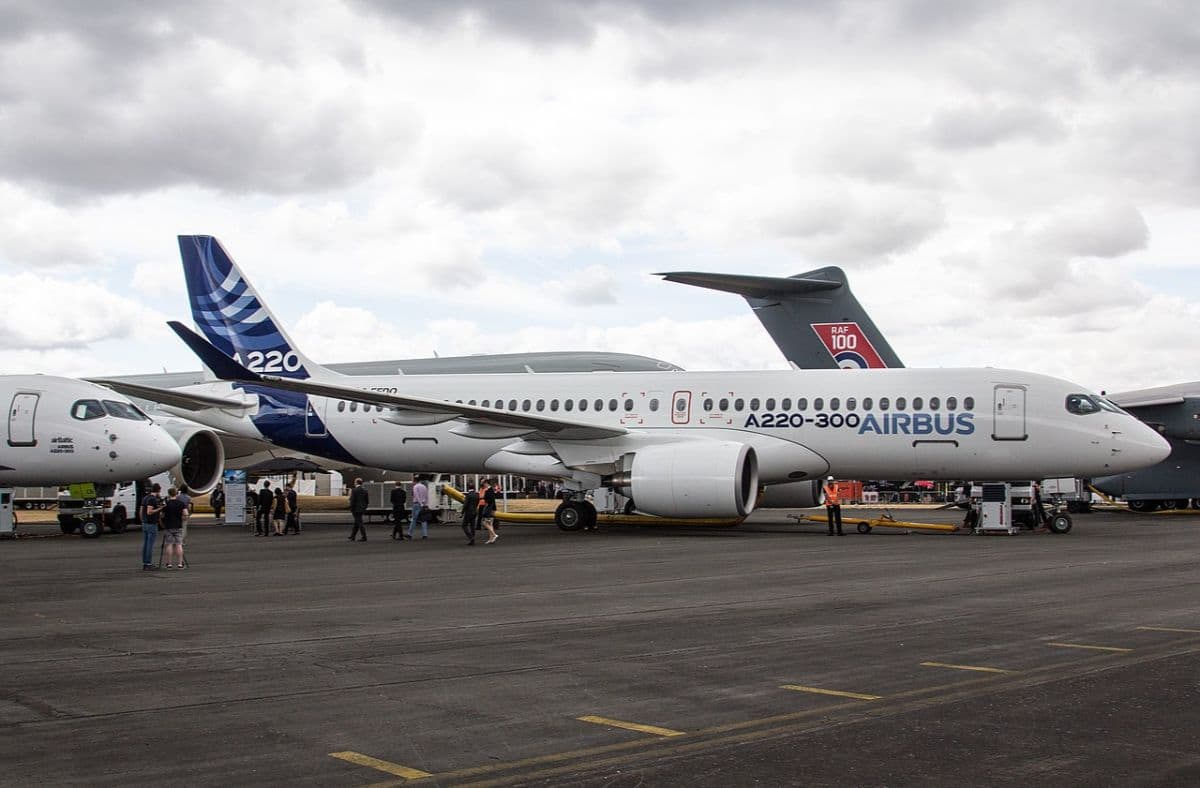
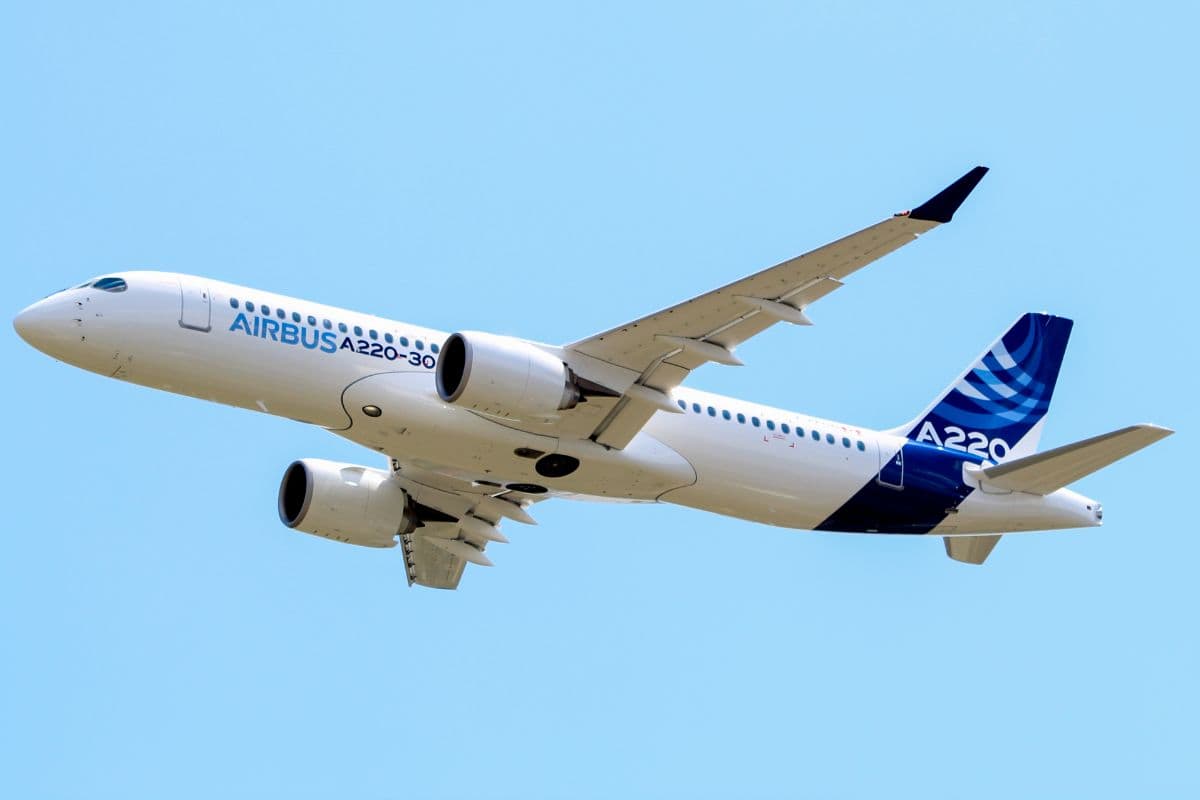
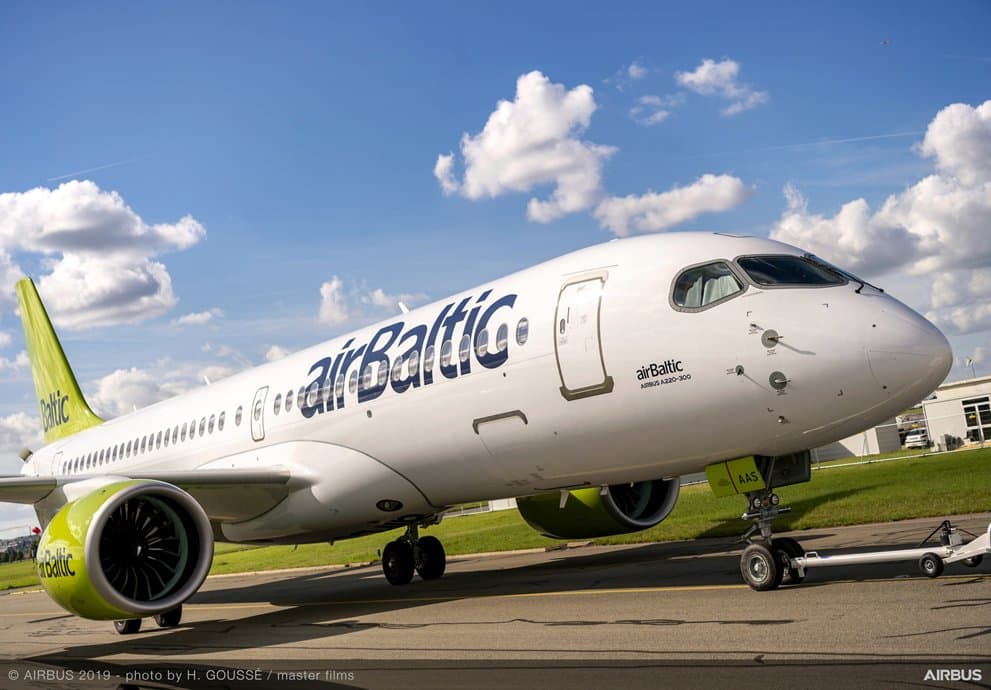
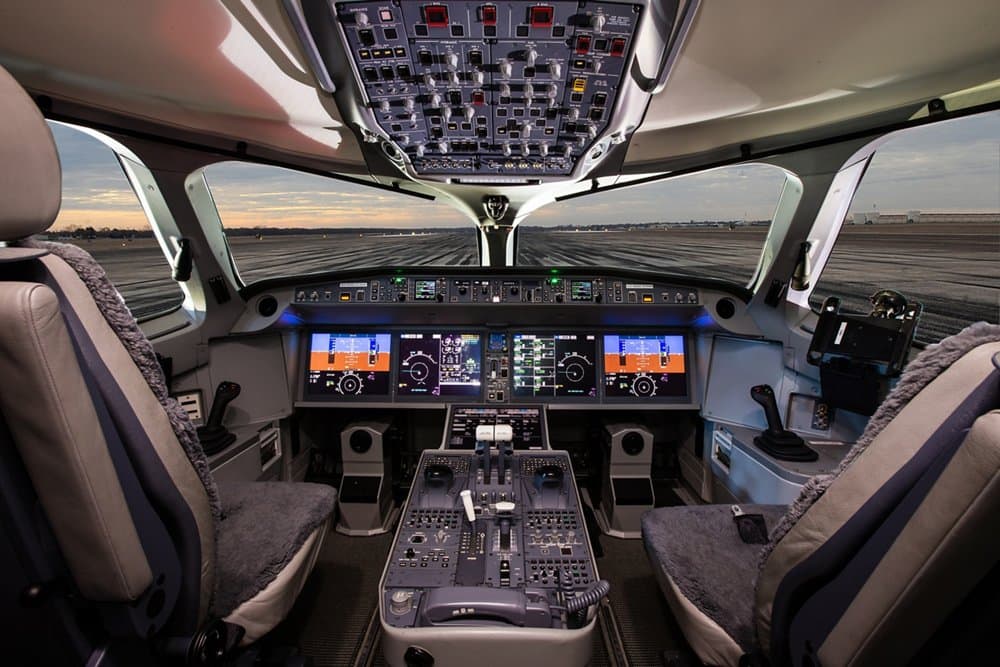
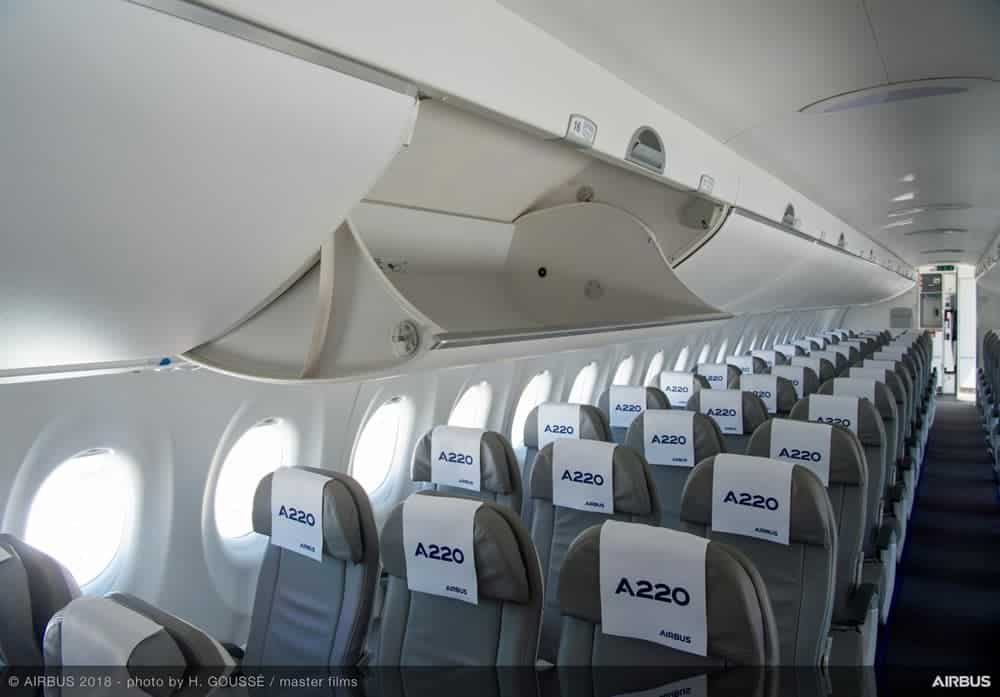
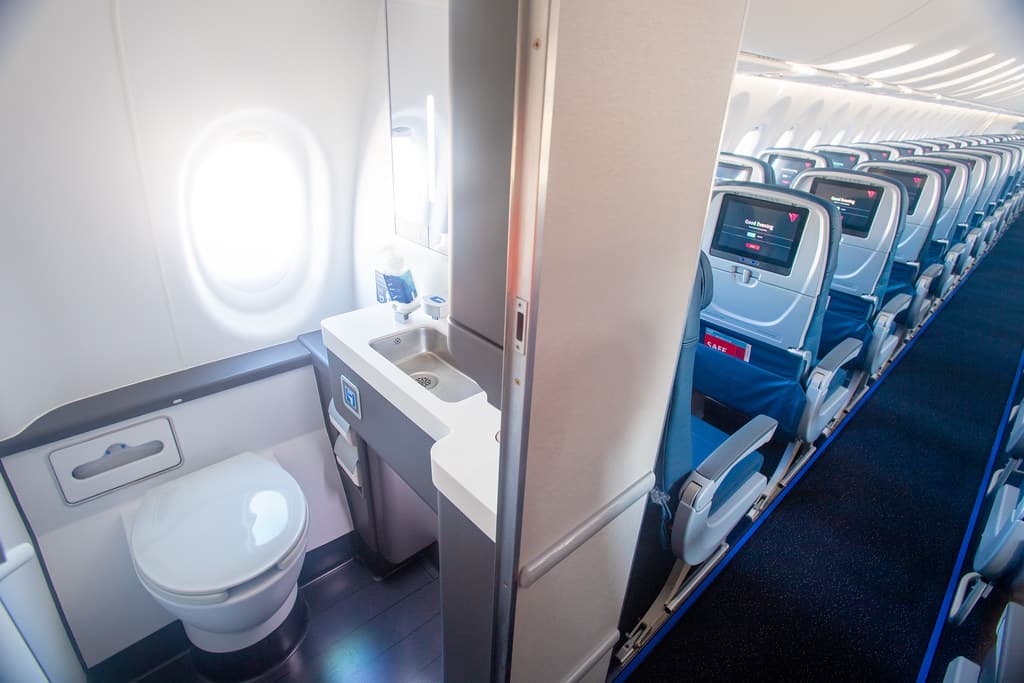
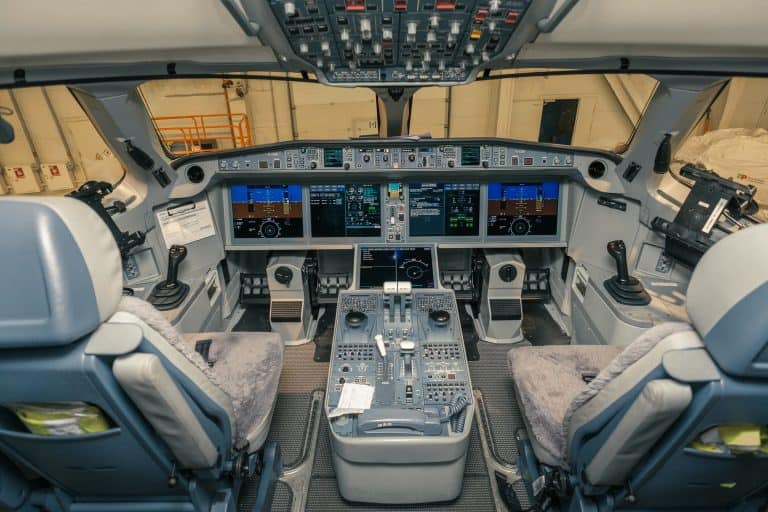
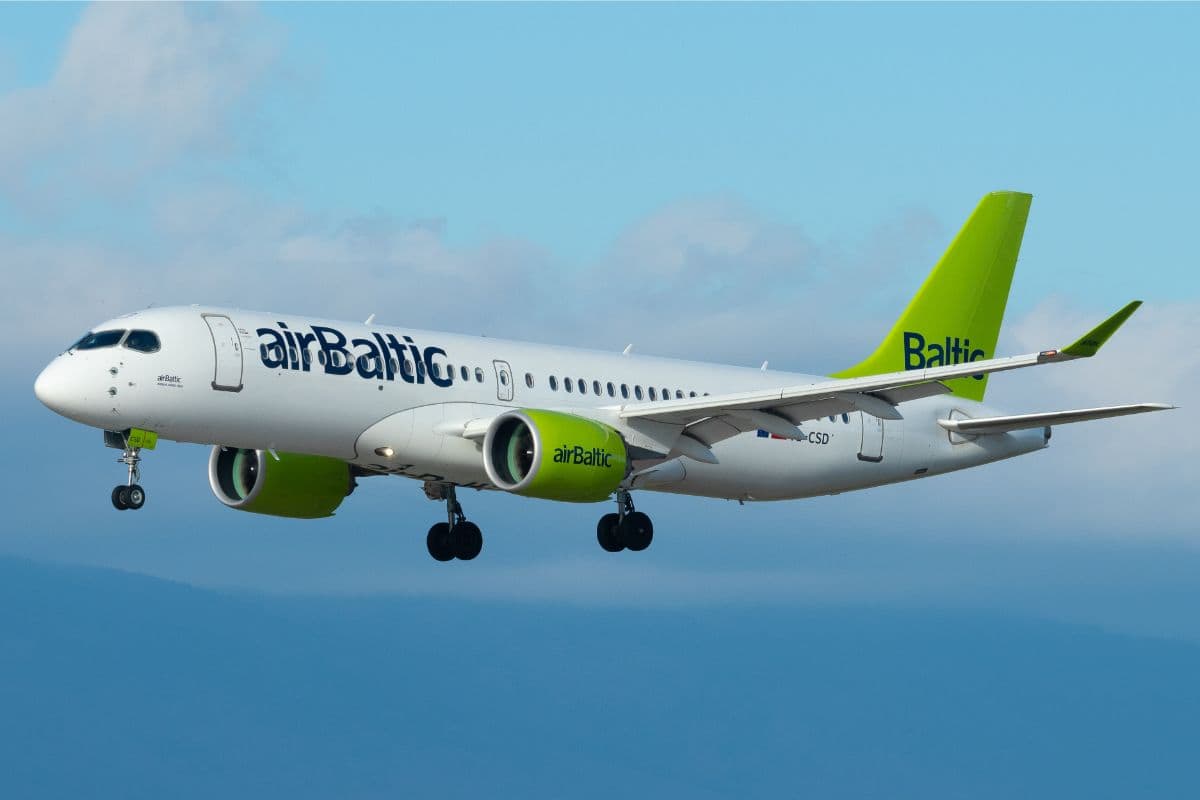
The Airbus A220-300 is the larger of the two A220 variants, a five-abreast single-aisle jet that seats 120 to 150 passengers in a typical two-class cabin. Bombardier designed it as the CSeries CS300, and it became an Airbus product in 2018.
It first flew on February 27, 2015, and entered service with airBaltic on December 14, 2016. By August 2026 the -300 accounted for 1,002 of the 1,110 firm orders for the A220 family, which makes it the version airlines actually buy.
Bombardier formally launched the CSeries in July 2008, on the eve of the Farnborough Airshow. The feasibility study behind it targeted replacements for aging DC-9, MD-80, Fokker 100, Boeing 737 Classic and BAe 146 fleets in the 100- to 150-seat market.
The larger design, first called the C130, was renamed CS300 in March 2009. Back in November 2007, Bombardier had picked Pratt & Whitney’s new geared turbofan as the program’s only engine, a choice that shaped both its economics and its later problems.
The first CS300 took off from Mirabel, Quebec, on February 27, 2015. Transport Canada certified it in July 2016, EASA followed on October 7, 2016, and the FAA on December 14, 2016.
Launch customer airBaltic received the first aircraft on November 28, 2016, and flew its first revenue service from Riga to Amsterdam on December 14 in a 145-seat, two-class layout. Transport Canada and EASA gave the CS100 and CS300 a common type rating on November 23, 2016, so pilots qualify on both.
In April 2016 Delta ordered 75 CS100s, the smaller variant. On April 27, 2017, Boeing petitioned the US government, alleging Bombardier had sold them to Delta for $19.6 million each, below a $33.2 million production cost.
On October 16, 2017, with US duties looming and its finances strained, Bombardier agreed to give Airbus a 50.01% majority stake in the program. Airbus paid no money for it.
The US Department of Commerce’s final ruling in December 2017 set combined duties of 292%. On January 26, 2018, the four US International Trade Commission commissioners unanimously found that US industry was not threatened, and no duty orders were issued.
The Airbus partnership took effect on July 1, 2018, and on July 10 the CS300 became the Airbus A220-300. Airbus raised its stake to 75% in February 2020 when Bombardier exited, with Investissement Québec holding the rest.
Airbus added a second assembly line in Mobile, Alabama. The first Alabama-built A220 flew on June 2, 2020, and the first US-assembled A220, an A220-300, was delivered to Delta on October 22, 2020.
The A220 is an all-new design rather than a derivative of an older jet. Its wing is carbon composite and its fuselage aluminum-lithium, and EASA’s type certificate describes the structure as generally built from carbon-fiber-reinforced plastic and advanced aluminum alloys, with steel and titanium also used.
The flight deck uses fly-by-wire controls with full envelope protection, flown through side-sticks. Five 15.1-inch displays run Pro Line Fusion, the avionics suite Rockwell Collins supplied and Collins Aerospace now offers.
The wingtips carry canted winglets set at 45 degrees, a recognition feature that separates the A220 from Embraer’s E2 jets, whose winglets are attached at 90 degrees. Our explainer on why planes have winglets covers the drag they save.
The A220-300 seats passengers five abreast in a 2-3 layout, which leaves one middle seat per row. The cross-section fits 18.5-inch-wide economy seats, and some airlines go wider: Air Canada calls its 19-inch A220 economy seats the widest in its fleet.
Delta’s A220-300s seat 130: 12 in Delta First, 43 in Delta Comfort and 75 in Main Cabin. Main Cabin seats are 18.6 inches wide with 31 to 32 inches of pitch, and airBaltic, which flies nothing but the A220-300, fits 148 seats.
Airbus markets the A220 with “the largest windows” and “the most spacious overhead bin capacity in its class.” In April 2025 it launched an Airspace cabin for the A220 with Air Canada, bringing larger XL bins, and Airbus will stop installing the older pivoting bins once production switches over.
Airbus markets a maximum of 160 seats, but that figure is not yet certified. EASA’s type certificate data sheet, updated on August 21, 2026, caps the aircraft at 145 passengers, or 149 with an option that fits dual-lane overwing slides.
The 160-seat version adds an extra overwing exit on each side. AirAsia became its launch customer in May 2026 with an order for 150 A220-300s.
The extra seats come from roughly five more rows, not a sixth seat across. Airbus’s Christian Kley put the pitch “below 30 inches for sure.”
Every A220-300 flies on two Pratt & Whitney PW1500G ultra-high-bypass geared turbofans. EASA certifies the -300 with two ratings: the PW1521G-3 at 21,970 lb of takeoff thrust and the PW1524G-3 at 24,400 lb.
Airbus’s headline claim for the A220 is 25% lower fuel burn and CO2 emissions per seat than previous-generation aircraft. It claims the same 25% saving in operating cost per seat.
The GTF has also been the A220’s biggest weakness. Swiss temporarily withdrew its fleet for inspection in 2019 after three in-flight engine shutdowns between July and October.
Durability problems with the PW1500G, and a shortage of spare engines, later grounded far more aircraft. In mid-October 2025, industry data cited by FlightGlobal showed 79 of 367 A220s out of service, about 22% of the fleet.
In June 2026 Airbus said it expected “zero” aircraft grounded for lack of engine spares by the end of 2026. The engines are also valuable enough to strip: in September 2026, parts company AerFin and Turning Rock Partners bought three A220s to fly for an interim period before teardown, with the engines going to long-term lease.
The full specification table for the A220-300 is on this page. A few of its figures need context.
Range: Airbus publishes 3,400 nautical miles (about 3,910 miles, or 6,300 km) alongside its current 156,300 lb (70.9 t) maximum takeoff weight. That heavier weight option, offered from March 2021, added about 200 nm over earlier aircraft.
Weights: not every A220-300 is certified at 156,300 lb. Airbus’s airport-planning data also lists a 149,000 lb (67,585 kg) version, and EASA points to further weight variants in each aircraft’s flight manual, so two airframes can carry different payload and fuel on paper.
Speed: the panel’s 470 kt top speed corresponds to Mach 0.82, the maximum operating Mach number EASA certifies above 27,500 ft. Normal cruise is closer to Mach 0.78, about 447 kt (514 mph, 828 km/h).
Runways: the 6,200 ft (1,890 m) takeoff distance is measured at maximum takeoff weight and the 4,950 ft (1,509 m) landing distance at maximum landing weight. A lightly loaded A220-300 needs less.
The -300 is 12 ft (3.7 m) longer than the roughly 115 ft (35 m) Airbus A220-100. That stretch lifts typical two-class seating from 100 to 120 on the -100 to 120 to 150 on the -300.
The two variants have more than 99% commonality and share one type rating. Airlines have voted for the bigger one: as of August 2026 the -300 had 1,002 firm orders against 108 for the -100, and 467 deliveries against 75.
The A220-300 competes with the Boeing 737 MAX 7 and sits alongside Airbus’s own A319neo. It was designed to be about 13,200 lb (6 t) lighter than the A319neo and nearly 17,600 lb (8 t) lighter than the MAX 7, which Wikipedia credits with up to 12% lower operating costs.
It is also longer than the MAX 7, at 127 ft (38.7 m) against 116 ft 8 in (35.6 m). Even so, Boeing lists up to 172 seats for the MAX 7, against the A220-300’s certified 149.
The A220-300 listed at $91.5 million in Airbus’s 2018 price list, and Wikipedia puts the A319neo at $101.5 million. Those cost advantages have helped the A220-300 outsell both the A319neo and the 737 MAX 7.
The A220-300’s list price in Airbus’s 2018 price list was $91.5 million. List prices are only a starting point: in its 2017 trade petition, Boeing alleged Delta had paid $19.6 million per CS100, the smaller variant.
As of August 2026, 463 A220-300s were in commercial service with 23 operators. JetBlue is the largest A220-300 operator with 66, and Delta flies 48 of them alongside 45 A220-100s.
Across the whole A220 family, the five biggest fleets are Delta (93), JetBlue (66), Breeze Airways (64), Air France (58) and airBaltic (54). airBaltic flies the A220-300 as its only aircraft type and plans to reach 100 by 2030.
The largest customer is AirAsia, whose May 2026 order for 150 A220-300s pushed the family past 1,000 firm orders.
By August 2026 Airbus had delivered 542 A220s against 1,110 firm orders, leaving a backlog of 568. Deliveries reached 93 in 2025, and August 2026 brought 10 A220-300 deliveries, above the roughly eight a month the program had held for over a year.
Airbus had aimed for 14 a month, but Reuters reported in October 2025 that shortages of parts, engines and wings had pushed that milestone back. The current target is 13 a month by 2028.
Reuters also reported that the A220 “continues to lose money,” and that higher output is key to cutting its unit cost.
As of September 2026, Airbus had not launched a stretched A220-500. In June 2026 A220 program chief Guillaume Chevasson said Airbus had accelerated its studies and could decide this year, and that any stretch would keep the five-abreast cabin.
AirAsia’s Tony Fernandes has said his airline would buy 150 A220-500s if Airbus builds it.
As of March 2026, the A220 family had recorded one fatal accident and one hull loss. On December 23, 2024, a Swiss A220-300 flying from Bucharest to Zurich diverted to Graz after an engine problem filled the cabin and cockpit with smoke at 40,000 ft, and a cabin crew member died a week later.
The hull loss happened on the ground. An airBaltic A220-300 caught fire during an auxiliary power unit run in scheduled maintenance on June 14, 2025, and Airbus judged it uneconomical to repair in December 2025.
Airbus says the A220 consistently earns the highest Net Promoter Scores in an airline’s fleet, and the -300 has 1,002 firm orders. Its weak point has been the PW1500G engine, which kept about 22% of the A220 fleet on the ground in October 2025.
Airbus expects groundings for lack of engine spares to reach zero by the end of 2026.
It depends on the 737. The A220-300 is 127 ft (38.7 m) long, longer than the 116 ft 8 in (35.6 m) 737 MAX 7 but shorter than the 129 ft 6 in (39.5 m) 737 MAX 8.
It carries fewer people than either: 149 certified seats, against Boeing’s maximums of 172 for the MAX 7 and 210 for the MAX 8.
Five abreast in a 2-3 layout, so each row has one middle seat. Typical two-class cabins hold 120 to 150 seats; Delta fits 130 and airBaltic 148.
The A220-100 is the smallest jetliner Airbus currently builds, and the A220-300 is the larger of the two A220 variants. The A318, the smallest member of the A320 family, still flies in limited service.
120 to 150 in a typical two-class cabin. As of August 2026 the certified maximum is 149 passengers, and Airbus’s 160-seat version, launched with AirAsia, needs an extra pair of overwing exits.
Airbus publishes a range of 3,400 nautical miles, about 3,910 miles (6,300 km).
Two Pratt & Whitney PW1500G geared turbofans. EASA certifies the -300 with the PW1521G-3, rated at 21,970 lb of takeoff thrust, and the PW1524G-3, rated at 24,400 lb.
$91.5 million at list price, per Airbus’s 2018 price list.
JetBlue, with 66 as of August 2026. Delta has the largest A220 fleet overall with 93 aircraft, 48 of them A220-300s.
Yes. Bombardier developed it as the CSeries CS300 and delivered the first ones under that name. It became the Airbus A220-300 on July 10, 2018, after Airbus took a majority stake in the program.
On Airbus’s final assembly lines in Mirabel, Quebec, and Mobile, Alabama.
BCS3. Its IATA code is 223, and its type certificate designation is BD-500-1A11.
Sources and references used for research and fact-checking.