Jumbo Passenger Jets
Airbus A380-900
ICAO: A389
The widebody twin built to modernize medium-haul travel.
The latest aviation news and stories sent to your inbox.
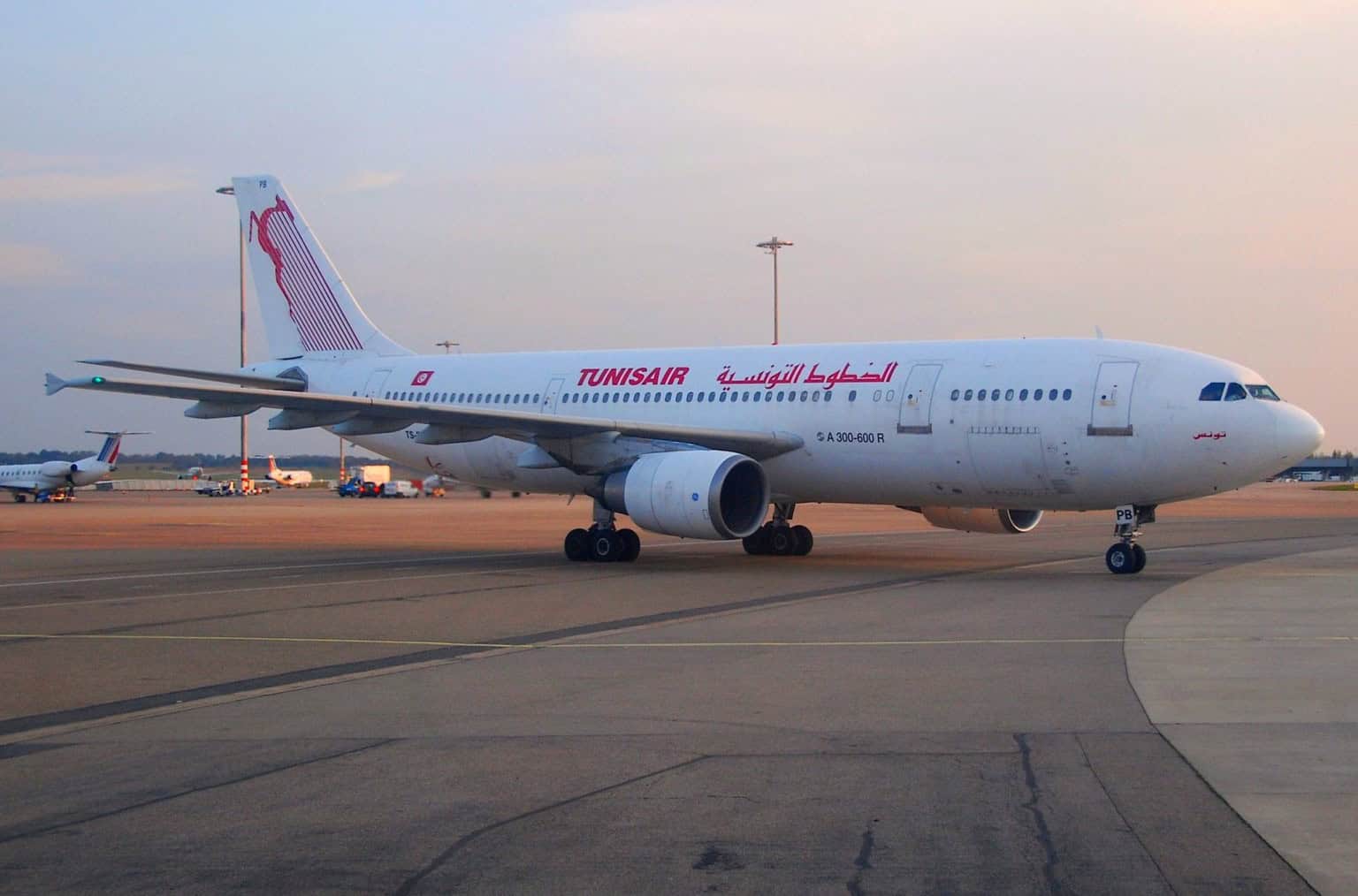
The Airbus A300-600 was introduced in the 1980s as an advanced development of the original A300. Featuring updated avionics and improved engines, it strengthened Airbus’s presence in the twin-engine widebody market. The aircraft served passenger and cargo operators worldwide.
Live Fleet Activity (A306)
Fetching live data…


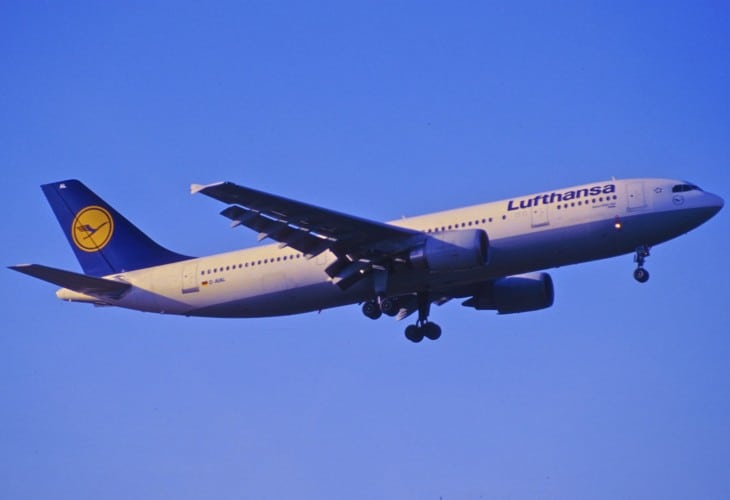
The A300-600 first flew in 1983 and entered service in 1984. It incorporated a modernized cockpit derived from the A310 and structural refinements. Airlines deployed it on medium- and long-haul routes with high passenger demand.
Two turbofan engines producing approximately 60,000 pounds of thrust (267 kN) each powered the aircraft depending on configuration. Cruise speed approached Mach 0.82. Maximum takeoff weight exceeded 375,000 pounds (170,097 kg), with seating for roughly 250 passengers.
The A300-600 became popular with both passenger and freight carriers. Production ended in the 2000s as newer widebodies entered service. Many remain active in cargo roles today.
Airbus initiated the A300-600 program to address airline demand for improved fuel efficiency and operational flexibility within the A300 family. The intent was to integrate systems and aerodynamic refinements developed during the A310 program while offering a commonality advantage for operators upgrading from earlier A300 marks. Program planning emphasized reduced pilot workload and simplified maintenance.
Prototypes underwent flight testing that concentrated on systems integration and handling qualities at higher weights and different center of gravity conditions. Test activity validated structural modifications to the wing and empennage to support increased loads and revised flight control harmonization. Flight test also supported expanded certification envelopes for extended operations.
Certification testing encompassed expanded avionics and engine configurations not present on early A300s. The program pursued approvals that facilitated twin-engine operation on transoceanic routes under appropriate regulatory frameworks. Production context aligned with Airbus’s broader industrial expansion to supply airframes to both passenger and freight markets.
Manufacturing for the series built on the multinational assembly approach used across Airbus programs. Component workshare between partner facilities provided fuselage sections, wing components, and empennage assemblies that were brought together at final assembly. This arrangement sought to optimize production throughput while managing supplier complexity.
The airframe retains a low wing cantilever configuration with a conventional tailplane. Wing design incorporates high-lift devices and structural reinforcements to support variable weight operations. The landing gear is a multi-bogie, retractable unit sized for frequent rotations and ground handling with heavy payloads.
The forward fuselage incorporates a forward flight deck and a two-aisle cabin cross-section optimized for mixed passenger and freight layouts. Cabin systems include environmental controls and sound attenuation tailored to long-duration operations. Cargo door arrangements for freighter conversions were integrated into the basic structural design on certain production lines.
Structural approach emphasizes a semi-monocoque fuselage with bonded and riveted skin panels and integral longerons. Wing spars and ribs use multiple material grades to balance strength and fatigue resistance against weight. Access panels and inspection points are distributed to reduce shop visit times during heavy maintenance checks.
Avionics philosophy centers on pilot workload reduction through system integration and commonality with contemporary Airbus models. Modular cockpit displays and dual flight management systems enabled route management and navigation flexibility. Distinguishing features include a comparatively spacious two-crew flight deck for its class and provisions for optional advanced navigation packages.
The aircraft is configured for medium-haul and higher-capacity trunk routes while retaining the capability for longer sectors when payload is moderated. Typical mission profiles vary from dense short sectors to stage lengths that approach long-range medium widebody operations. Payload-range tradeoffs are a routine aspect of airline dispatch planning.
Climb performance is adequate for rapid departure from busy airports and for meeting obstacle clearance requirements at heavy takeoff weights. Operational ceiling supports high-altitude cruise profiles used to take advantage of favorable winds and fuel efficiency. Endurance on typical missions is governed by payload, winds, and operational reserves set by airline procedures.
Operational limitations include runway length sensitivity at maximum weight and the need to plan payload for hot-and-high departures. Noise and emissions characteristics were managed through engine selection and nacelle treatments to meet contemporary airport restrictions. Suitability for freight conversion made the type attractive for operators prioritizing volumetric payload over passenger density.
The A300-600 series comprises several purpose-specific subtypes built from the same basic airframe. Passenger, combi, and freighter configurations share common structural elements while differing in outfitting and door arrangements. Factory and post-production conversions addressed demand for full freighter capability and for outsized cargo handling in special derivatives.
Certain derivatives include reinforced floors, large cargo doors, and strengthened attachment points for palletized freight. These adaptations require interior structural modifications and changes to ventilation and fire suppression systems. Other versions focus on extended range capability through increased fuel capacity and auxiliary tanks while retaining passenger cabin features.
Some specialized versions were developed to support nonstandard missions, including oversized component transport and high-density freight service. These versions retained core aerodynamic and flight control characteristics while incorporating mission-specific structural and systems work. Production and conversion flows allowed airlines and third-party freighter operators to adapt airframes to changing market needs.
Airlines adopted the type for dense trunk routes where two-aisle cabin access and higher volume were prioritized over four-engine redundancy. Network carriers used the aircraft in both short sector shuttle roles and longer thin trunk services where its capacity matched demand economics. Cargo operators took advantage of the airframe once passenger fleets were retired or converted.
Freight operators benefited from the aircraft’s large fuselage cross-section and adaptable main deck layouts. The airframe became a mainstay for some air cargo fleets that required consistent volumetric capacity and interchangeability with other widebody freighters. Mainline carriers used combi and full-passenger configurations according to route structure and market seasonality.
Operators reported predictable maintenance cycles with accessible inspection points for structural and systems work. Airlines following Airbus maintenance philosophies found transition training and support arrangements eased fleet integration. Fleet experience influenced scheduling for heavy checks and spares provisioning given the aircraft’s mixed passenger and freight service patterns.
Operational deployment included service in multiple regions with diverse climate and airport infrastructure conditions. The aircraft operated from constrained urban airports as well as from long-range gateways and secondary hubs. Operator feedback emphasized the balance between capacity, operating cost per seat, and airport compatibility when assigning the type to routes.
Technological elements validated on the program contributed to refinement of production practices and avionics modularity employed in later models. The multinational manufacturing model used for the airframe informed subsequent program management and supplier integration approaches within the manufacturer. Lessons learned in retrofit and conversion practices influenced how later widebodies were designed for lifecycle adaptability.
The aircraft’s role in transitioning carriers toward two-engine widebody fleets provided operational data used in fleet planning and network design. The program demonstrated the commercial viability of a medium-capacity twin widebody for varied mission sets, shaping choices by cargo specialists and passenger operators when arranging fleet retirements and acquisitions. Successor airframes drew on proven structural and systems concepts while pursuing further gains in efficiency and range.
Sources and references used for research and fact-checking.