Heavy Business Jets
Airbus A340 Private Jet
ICAO: A343
The classic A320 reimagined for private and government luxury
The latest aviation news and stories sent to your inbox.
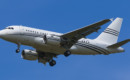
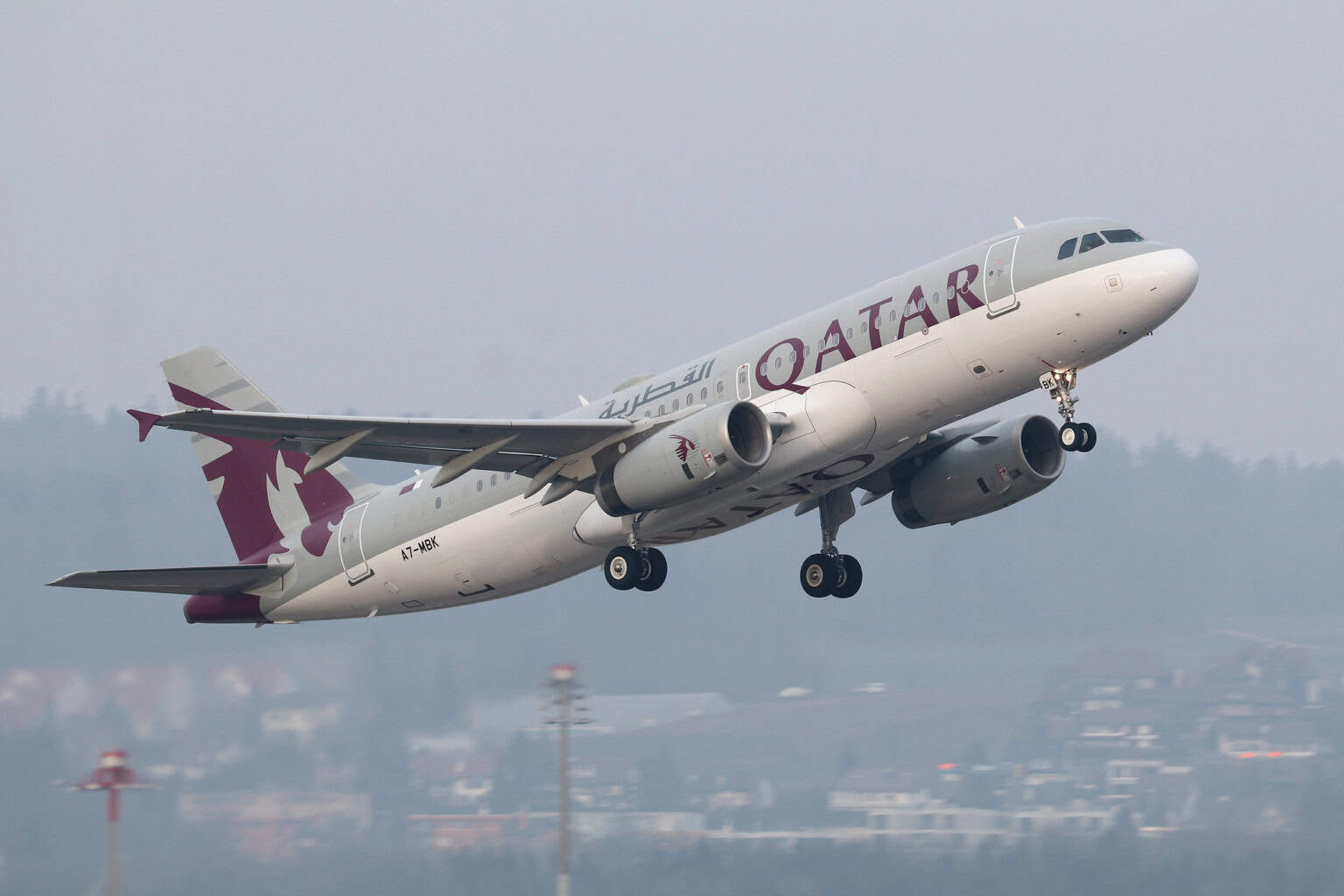
The Airbus A320-200 Prestige, often marketed under the Airbus Corporate Jets line, transforms the proven A320 airliner into a spacious VIP transport. Combining commercial reliability with a wide, flexible cabin, it offers long-range capability and comfort tailored for heads of state, corporations, and private owners.


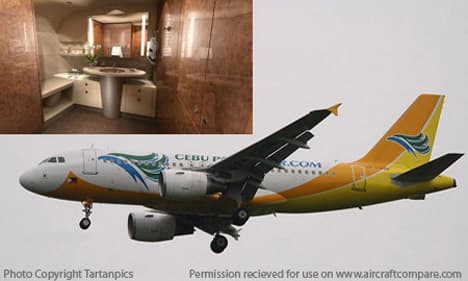
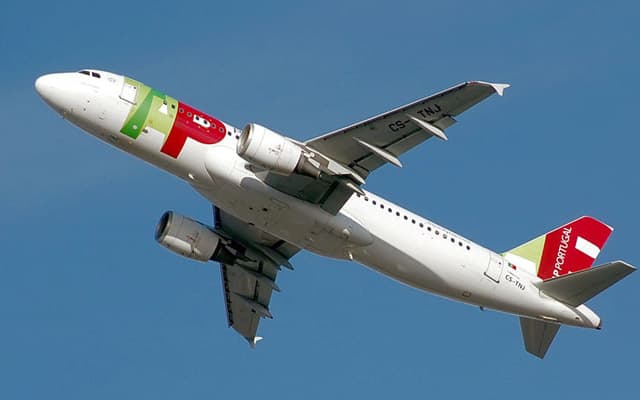

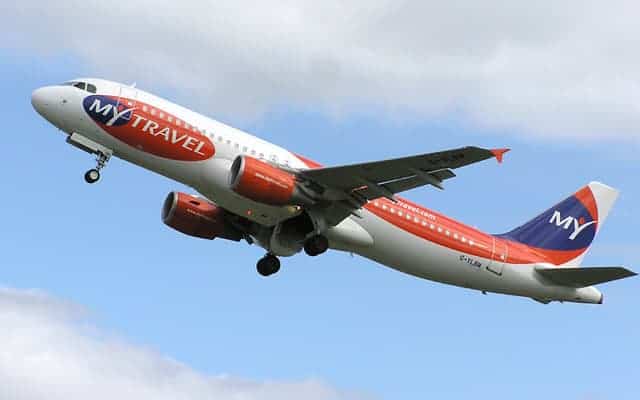

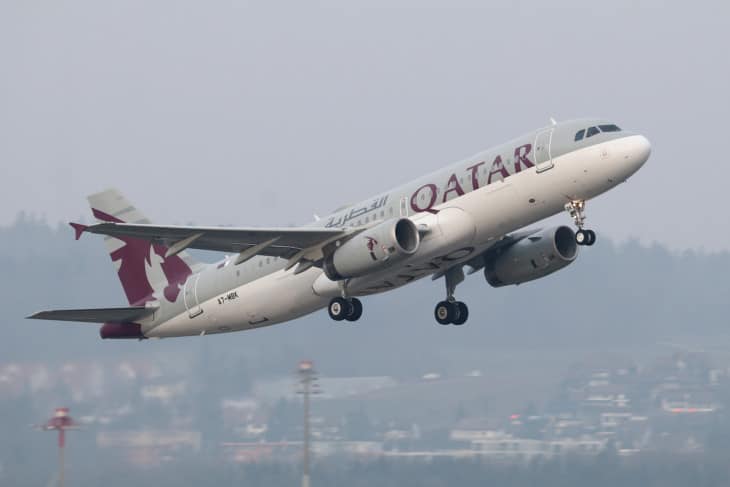
The Airbus A320-200 Prestige, commonly referred to within the Airbus Corporate Jets portfolio as the ACJ320, is a business and government transport version of the standard A320-200 airliner. Introduced in the late 1990s, it was developed to offer large-cabin comfort and extended range while maintaining the reliability and global support network of the commercial A320 family.
Based on the A320-200 airframe, the Prestige variant typically features additional fuel tanks installed in the cargo hold, significantly increasing its range compared to standard airline configurations. This allows nonstop intercontinental travel while carrying far fewer passengers, usually between 19 and 50 depending on the interior layout.
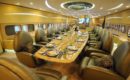
The cabin is the defining feature of the A320-200 Prestige. With a fuselage width greater than most purpose-built business jets, it provides generous space for private suites, conference rooms, lounges, dining areas, and dedicated crew rest compartments. Each aircraft is custom-designed to the owner’s specifications, often incorporating high-end materials and advanced communications systems.
Powered by CFM56 or IAE V2500 engines, the aircraft retains the performance characteristics of the standard A320 while operating at lower passenger loads. Operators include governments, royal families, and corporate clients seeking widebody-style comfort in a narrowbody platform.
The A320-200 Prestige demonstrated that a commercial airliner platform could be successfully adapted for the highest levels of private aviation, laying the foundation for the broader Airbus Corporate Jets family.
The Prestige concept emerged from demand for larger, more cabin-capable business transports that could leverage existing commercial supply chains. Airbus positioned the offering to serve customers seeking airliner levels of reliability while avoiding a bespoke airframe program. Development focused on adapting line-produced airframes for VIP completion rather than designing a clean-sheet aircraft.
Airbus collaborated with independent completion centers and its internal corporate jets unit to establish configuration standards, interior interfaces, and certification pathways. Early work emphasized compatibility between airline production practices and the specialized fit-out processes used by completions houses. This approach reduced lead time compared with wholly new business-jet programs.
Certification relied on supplemental type approvals and customer-specific documentation rather than a separate type certificate for the VIP layout. Modifications that altered weight and balance, fuel arrangements, or evacuation characteristics required coordinated approvals with aviation authorities. The procedural framework allowed operators to obtain tailored approvals while retaining the underlying commercial airworthiness basis.
Production context treated Prestige units as derivatives of regular production lines, with airframes delivered to completion facilities for interior installation. This separation allowed operators to choose levels of customization while keeping access to Airbus global logistics, spares, and maintenance networks for airframe-level support over the aircraft lifecycle.
The Prestige retains the narrowbody cross section but adapts internal architecture for extended comfort and utility. Interior planning typically divides the cabin into distinct zones for work, rest, and hospitality, with bespoke furniture integrated into the aircraft structure to meet airworthiness loads. Cabin systems are often upgraded to support higher electrical and cooling demands from luxury fittings.
Systems integration emphasizes redundancy and commonality with airline-standard avionics and flight controls. Cockpit layout remains compatible with airline operational procedures, while optional enhancements include executive communication suites, secure data links, and cabin management systems. Maintenance practices benefit from keeping the flight deck baseline unchanged.
Structural adjustments accommodate additional furnishings and optional fuel systems without altering primary load paths. Insulation, vibration damping, and acoustic treatments are augmented to reduce cabin noise and improve perceived comfort. Galley and lavatory arrangements are configured for private service, and cargo spaces are often modified for baggage organization and support equipment.
Distinguishing external features are minimal to preserve aerodynamic characteristics and airport compatibility. Potential customer-selectable exterior items include special paint schemes and VIP access doors. The aircraft maintains standard ground handling and gate compatibility, allowing operation from airline infrastructure without bespoke ground support requirements.
Performance largely follows the baseline airframe, with cruise speeds and handling characteristics comparable to the commercial counterpart. Range and endurance vary significantly according to interior fit and optional fuel provisions. Heavier interiors and payloads reduce available range relative to a clean ferry configuration.
Operational ceiling and climb performance remain within the certified envelope for the type, permitting airline-style routings and standard airway operations. Mission planning accounts for higher per-passenger weight and altered center of gravity due to cabin installations, which can affect takeoff performance on short or hot runways.
Typical mission profiles include long stage lengths with reduced passenger counts, state transport missions with diplomatic schedules, and transregional corporate travel. Operators plan fuel and payload tradeoffs to meet itinerary needs, often accepting reduced ancillary payload to extend nonstop capability when required.
Operational limitations stem from airport infrastructure and runway length considerations, rather than unique aerodynamic constraints. Cabin modifications do not alter certified performance categories for approach and landing, but specific operator supplements address emergency egress and service procedures unique to VIP interiors.
The Prestige exists within a family of corporate conversions that align with successive commercial A320 iterations. One significant line extension adopts updated powerplants and aerodynamic improvements from later commercial models. These later conversions provide extended mission capability without changing the fundamental VIP concept.
Completion variants differ mainly in interior fit, auxiliary systems, and optional equipment packages. Some completions emphasize communications and security for government use, while others prioritize luxury hospitality for private owners. Structural and systems interfaces remain consistent to streamline certification of diverse layouts.
Conversion programs also offer phased modernization paths, allowing existing Prestige-configured airframes to receive avionics, connectivity, or comfort upgrades that reflect advances in commercial A320 production. This modular approach reduces the need for ground-up replacement when mission requirements evolve.
Operators encompass state, corporate, and private owners that utilize the platform for executive transport, official missions, and complex itineraries demanding large cabins. Delivery pathways commonly route airframes from final assembly to completion facilities, where customer-defined interiors are installed under supervision of aerospace regulators.
Deployment patterns favor missions requiring large onboard meeting spaces and secure communications rather than high passenger capacity. The aircraft sees use on diplomatic shuttle flights, corporate roadshows, and as airborne command posts when equipped with specialized equipment. Commercial charter use is less common due to bespoke interiors and ownership profiles.
Fleet experience highlights the advantage of global support networks in sustaining operational availability. Operators benefit from established maintenance practices for the commercial baseline while managing interior maintenance schedules through specialized vendors. Refurbishment cycles reflect both aesthetic refresh and updates to cabin electronics.
The Prestige validated a market segment for airliner-based corporate transports with large, modular cabins and access to commercial support infrastructure. It demonstrated that adaptations of in-production airframes could meet stringent VIP requirements without a separate, purpose-built program. This model influenced subsequent offerings that align corporate variants with evolving commercial families.
Technological cross-pollination between commercial upgrades and corporate conversions enabled incremental capability improvements. Owners could adopt newer engines, winglets, or avionics packages introduced on airline variants, extending operational capability without wholesale replacement. The approach set expectations for lifecycle support and modernization.
Market lessons emphasized the balance between customization and maintainability. Operators seeking extensive personalization accepted longer downtime for completions but valued the aircrafts operational commonality. The program underscored the importance of coordinated certification pathways to manage complex interior alterations safely.
Successor developments continued the philosophy of adapting mainstream commercial designs for VIP use while incorporating contemporary efficiency and communications technologies. The platform remains a reference point for large-cabin corporate transports derived from single-aisle airliners.
Sources and references used for research and fact-checking.