


Table of Contents
In 2016, American’s revenue beat United’s by $3.6 billion. In 2025, United’s beat American’s by $4.5 billion, and the man in charge of United was the executive American let go.
Scott Kirby was president of American Airlines until Aug. 29, 2016. That same day, United named him its president. Nearly a decade later, he told The New York Times the exit “felt more like a betrayal,” as View from the Wing reported on Oct. 18.
The scoreboard since then is lopsided. In 2025, United took in $59.1 billion and made $3.35 billion in net income. American took in $54.6 billion and made $111 million.
Why American let its president walk to a rival
Kirby was not an outsider at American. According to United’s 2025 annual report, he started his career at American Airlines Decision Technologies, then spent nearly two decades at America West and US Airways, ending as US Airways president from 2006 to 2013.
When US Airways and American merged in December 2013, he became president of the combined company. Doug Parker was chairman and CEO, and Kirby had been told he would eventually succeed him, View from the Wing reports.
That plan reversed. American’s leadership settled on chief operating officer Robert Isom as Parker’s heir apparent, and on Aug. 29, 2016, Isom took Kirby’s title as president. View from the Wing’s Gary Leff frames it as a company that could keep only two of its three top executives.
American’s Aug. 29 announcement described Kirby as departing. Simple Flying’s account of the interview describes it plainly as a firing, and says the next call Kirby made was to a United board member.
“Stinging isn’t the right word,” Kirby told the Times. “I wanted to go somewhere else and prove something.”
He left with a severance package reported at $13 million, plus lifetime travel. Both outlets note the detail that made the rest possible: American had not tied him to a non-compete clause.
How United passed American, in the numbers
Revenue is the cleanest measure of airline size, and it is the one that flipped. In 2016, American reported $40.2 billion in operating revenue and United reported $36.6 billion, according to each company’s year-end filings.
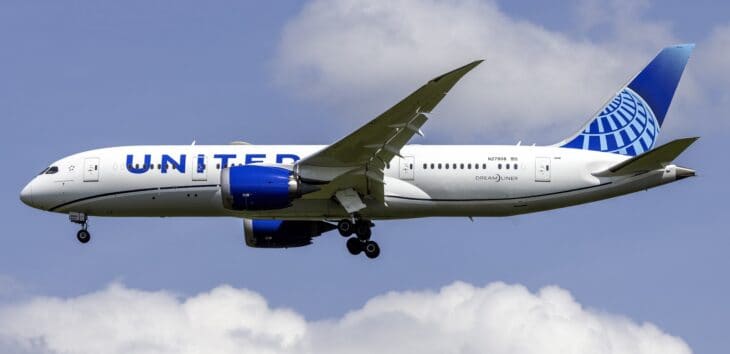

| Measure | United | American |
|---|---|---|
| Operating revenue, 2016 | $36.6 billion | $40.2 billion |
| Operating revenue, 2025 | $59.1 billion | $54.6 billion |
| Net income, 2025 | $3.35 billion | $111 million |
| Mainline jets, Dec. 31, 2025 | 1,066 | 1,013 |
| Regional jets, Dec. 31, 2025 | 424 | 567 |
| Operating revenue, Q2 2026 | $17.67 billion | $16.74 billion |
| Net income, Q2 2026 | $805 million | $71 million |
Kirby became United’s CEO in May 2020, at the start of the pandemic. By 2025, United reported the highest annual revenue in its history and said it was “now the largest airline in the world.”
Profit is where the gap is widest. United’s 2025 net income was about 30 times American’s, on revenue only 8% higher.
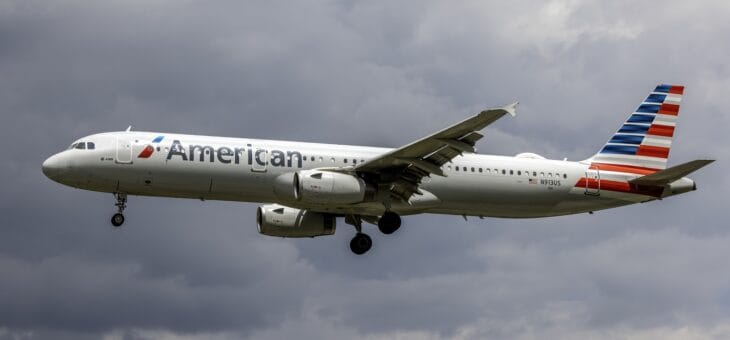
Fleet size is the one count American still wins, and only with its regional partners included. At the end of 2025, American flew 1,580 aircraft to United’s 1,490, but United had 53 more mainline jets. Our count of how many planes American Airlines has breaks down that split type by type.
Why the 2016 decision still follows American
Kirby says losing the American job made him better at the United one. “I am a better C.E.O. of United Airlines because of what happened than I would have been a C.E.O. of American,” he told the Times, as quoted by Simple Flying.

He also described a change in how he leads. Taking the time to make sure everyone else feels good about the answer, he said, is “100 times more effective.”
At American, the succession went to plan on paper. Parker retired as CEO and Isom took over in 2022, a transition delayed by the pandemic.
It has not gone smoothly since. American’s flight attendant union, the APFA, passed a vote of no confidence in Isom in February 2026. In September, Aviation A2Z reported that pilots union president Nick Silva had asked whether another executive could “turn the ship around faster.”
The fleet keeps growing regardless. On Aug. 29, 2025, nine years to the day after Kirby’s exit, American received its 1,000th mainline aircraft, a Boeing 787-9 with Flagship Suite seats.
Where United and American stand in 2026
The gap held through the first half of 2026, even as American’s second-quarter fuel bill rose 83%. In that quarter, United’s revenue rose 16% to $17.67 billion and American’s rose 16.3% to a record $16.74 billion.
The bottom lines were not close. United kept $805 million of its quarter as net income. American kept $71 million.
For a fuller side-by-side of fares, cabins, loyalty programs and hubs, see our comparison of Delta vs United vs American. Our ranking of the largest airlines in the world shows where they sit globally.
Kirby’s stated goal is bigger than beating his old employer. He wants United to be “the best airline in the history of aviation.”
In 2016, American bet it could keep two of its three top executives and lose nothing. Nine years of filings say the one it let go took the lead with him.
Sources and references used for research and fact-checking.
- View from the Wing, United CEO Scott Kirby Calls Being Fired by American Airlines a Betrayal
- Simple Flying, United Airlines CEO says American firing felt like betrayal but made him better
- The Points Guy, AA President Scott Kirby Leaves to Join United
- U.S. Securities and Exchange Commission, United Airlines Holdings Form 10-K for 2025
- United Airlines, United Airlines Q4 and Full Year EPS Beat Wall Street Expectations
- U.S. Securities and Exchange Commission, United Airlines Holdings Form 10-Q for the quarter ended June 30, 2026
- U.S. Securities and Exchange Commission, United Airlines Holdings Form 8-K: leadership transition
- U.S. Securities and Exchange Commission, American Airlines Group fourth-quarter and full-year 2016 results
- American Airlines, American Airlines reports fourth-quarter and full-year 2025 financial results
- U.S. Securities and Exchange Commission, American Airlines Group Form 10-K for 2025
- U.S. Securities and Exchange Commission, American Airlines Group second-quarter 2026 results
- American Airlines, American Airlines receives 1,000th mainline aircraft
- One Mile at a Time, Robert Isom Becomes American Airlines CEO
- Aviation A2Z, American Airlines pilots turn up pressure on CEO Robert Isom
Get the Newsletter
The latest aviation news and stories sent to your inbox.
About the Author

Tim is the owner and lead editor of AeroCorner since 2019, overseeing aviation content covering aircraft, airlines, airports, and the broader aviation industry. Through years of researching, writing, editing, and publishing aviation-focused content, he has developed extensive practical knowledge of commercial aviation and air travel. Based in Asia and a frequent traveler himself, Tim also brings firsthand passenger experience to AeroCorner’s coverage. Outside of publishing, he has also explored aviation firsthand through hands-on flight training in New Zealand.