


Table of Contents
United Airlines is the largest airline in the world by mainline fleet size, with 1,112 aircraft as of February 2026. American Airlines is second with 1,013, and Delta Air Lines third with 1,004.
Those three are the only airlines in the world that operate more than a thousand of their own aircraft. The gap to fourth place, China Southern Airlines, is more than 150 jets.
“Largest” is not one question, though. Change the measure and the winner changes: American carries the most passengers, Delta earns the most revenue, and United flies the most seat miles and serves the most destinations.
This ranking uses mainline fleet size, meaning aircraft the airline itself operates. Every alternative measure is ranked further down, with its own table.
| Rank | Airline | Country | Mainline aircraft |
|---|---|---|---|
| 1 | United Airlines | United States | 1,112 |
| 2 | American Airlines | United States | 1,013 |
| 3 | Delta Air Lines | United States | 1,004 |
| 4 | China Southern Airlines | China | 850 |
| 5 | Southwest Airlines | United States | 810 |
| 6 | China Eastern Airlines | China | 664 |
| 7 | Ryanair | Ireland | 647 |
| 8 | SkyWest Airlines | United States | 579 |
| 9 | Turkish Airlines | Turkey | 545 |
| 10 | Air China | China | 510 |
| 11 | IndiGo | India | 425 |
| 12 | JetBlue | United States | 279 |
| 13 | Lufthansa | Germany | 274 |
| 14 | Emirates | United Arab Emirates | 266 |
| 15 | British Airways | United Kingdom | 254 |
How this ranking is measured
Mainline fleet only: the aircraft an airline operates under its own certificate. Regional jets flown by contractors under a brand name, such as American Eagle or United Express, are counted against the contractor that actually operates them, which is why SkyWest appears in its own right at number 8. Cargo subsidiaries such as Lufthansa Cargo and Emirates SkyCargo are also excluded. Counting differently is legitimate, and it changes the order, so the alternative counts are given their own section below.
1. United Airlines (1,112 aircraft)
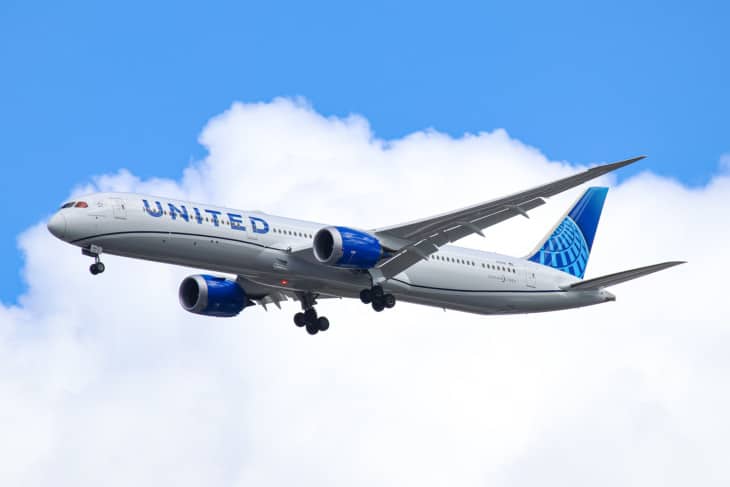
United has kept adding aircraft since that February count, reaching 1,135 mainline jets by August 2026. It is the only airline that has ever claimed a mainline fleet that large.
Scale is the whole strategy. United flies 330 billion available seat miles a year, more than any other airline, and serves 392 destinations, also the most.
The fleet leans hard on the Boeing 737 family for domestic flying and on the 787 for long haul, a split that shows how completely the twin-aisle widebody has replaced the four-engine jets that used to define a flag carrier. United’s Chicago, Denver, Houston, Newark and San Francisco hubs are among the busiest airports in the US.
2. American Airlines (1,013 aircraft)
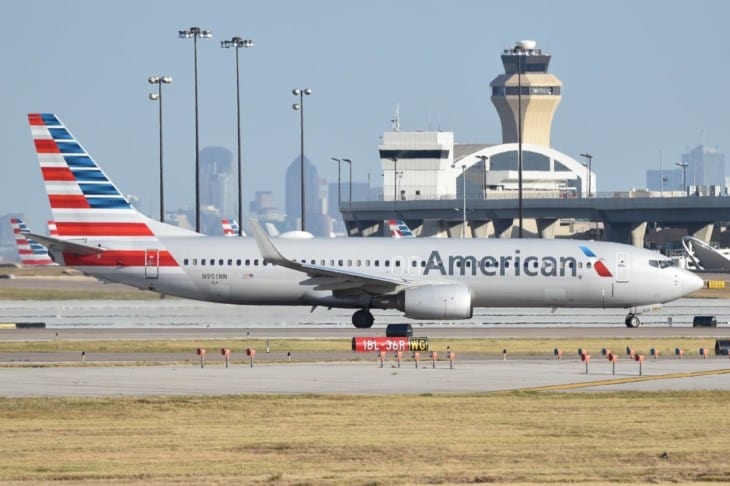
American reported 1,030 mainline aircraft by June 2026, second only to United, and had 301 more Airbus and Boeing aircraft on order as of October 2025.
The fleet is unusually narrowbody-heavy for a global carrier. The 737-800 alone accounts for 303 airframes, with 203 Airbus A321-200s behind it.
Add the American Eagle regional network and the operation gets much bigger again, which is the single biggest reason different lists crown different airlines. More on that below.
3. Delta Air Lines (1,004 aircraft)

Delta operated 1,004 mainline aircraft as of July 2026, and it is the largest airline in the world by revenue, at $63.3 billion in 2025.
Its fleet is the oldest of the big three, averaging 15.0 years as of June 2026, and that is deliberate. Delta runs its own heavy maintenance operation and keeps types other airlines have written off, which is why it holds the world’s largest passenger fleets of the Airbus A220, Boeing 717, Boeing 757, Boeing 767 and Airbus A330.
The result is a fleet that keeps earning long after rival airlines would have traded the same aircraft in, and a maintenance operation big enough to make that work.
4. China Southern Airlines (850 aircraft)

China Southern is the largest airline outside the United States and the largest in Asia, with 850 aircraft flown from hubs in Guangzhou and Beijing.
It is also the most domestically focused airline of this size anywhere. Chinese internal demand is deep enough that a carrier can reach 850 aircraft while serving 226 destinations, far fewer than United’s 392.
It was also the only Chinese airline ever to fly the Airbus A380. China Southern took five of them from 2011 and flew the last commercial service on 5 November 2022, ferrying the final two to storage at Mojave the following month.
5. Southwest Airlines (810 aircraft)

Southwest is the largest Boeing 737 operator in the world. Apart from seven Boeing 727-200s leased between 1978 and 1985, it has never flown anything else.
One type means one set of spare parts, one maintenance program and one pilot qualification, so any crew can fly any aircraft in the fleet. That is a structural cost advantage no mixed-fleet airline can copy.
It also concentrates risk. When the 737 MAX was grounded in 2019, Southwest lost its entire growth plan at once, with no alternative type to shift flying onto.
6. China Eastern Airlines (664 aircraft)

China Eastern flies 664 aircraft from Shanghai, the second of China’s three state-backed majors and the sixth largest airline in the world.
It was the launch operator of the Comac C919, the Chinese-built narrowbody aimed squarely at the Boeing 737 and Airbus A320. The first commercial flight left Shanghai Hongqiao for Beijing on 28 May 2023.
China Eastern held 17 of the 40 C919s delivered by May 2026, with Air China and China Southern taking 11 each. If that line reaches volume, it would be the first real challenge to the Boeing and Airbus duopoly in decades.
7. Ryanair (647 aircraft)

Ryanair is Europe’s largest airline and the largest low-cost carrier in the world, with 647 aircraft as of September 2026.
The fleet is 411 Boeing 737 Next Generation aircraft, 210 higher-density 737-8200 “Gamechangers” seating 197, and 26 Airbus A320s inherited with Lauda. A further 300 Boeing 737 MAX 10s are on order through 2034.
Ryanair Holdings carried 184 million passengers in 2024, third in the world and more than United, despite flying almost nothing beyond Europe and North Africa.
8. SkyWest Airlines (579 aircraft)

SkyWest is the largest airline most travelers have never knowingly flown. Its 579 regional jets operate as United Express, Delta Connection, American Eagle and Alaska SkyWest, painted in the majors’ colors.
The business model is capacity purchase. A major sells the ticket and sets the schedule, SkyWest supplies the aircraft and the crew, and the major pays per block hour regardless of how full the flight is.
That arrangement is why SkyWest ranks eighth here on its own, and why lists that fold regional flying into the brand it wears get very different totals.
9. Turkish Airlines (545 aircraft)
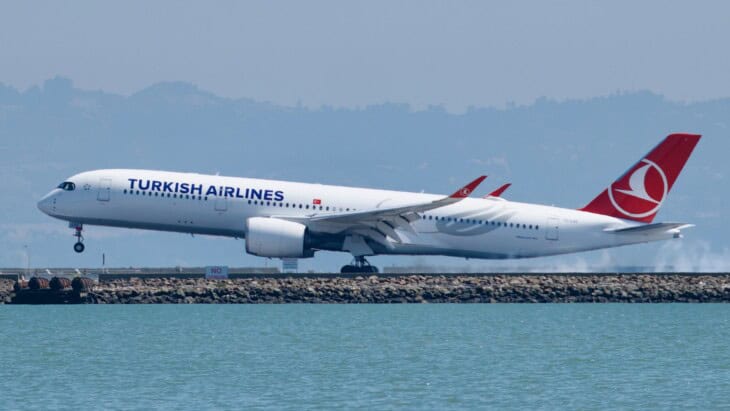
Turkish Airlines flies 545 aircraft and reaches 130 countries, more than any other airline in the world.
Geography does the work. Istanbul sits between Europe, Africa, the Middle East and South Asia, close enough to all four that a single hub can connect them on narrowbody aircraft rather than widebodies.
Turkish serves 290 destinations, fourth worldwide, and earned $24.1 billion in 2025. You can see the full ranking on our airlines with the most destinations data page.
10. Air China (510 aircraft)
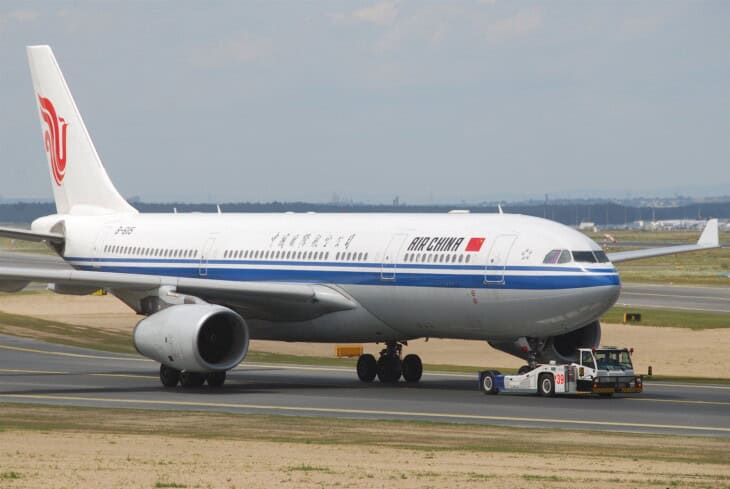
Air China is the country’s designated flag carrier and the third of the Chinese majors, with 510 aircraft based mainly in Beijing.
It is the smallest of the three by fleet but carries the state’s diplomatic flying, including the government charters that other countries hand to their air force.
Air China reported $23.4 billion in revenue in 2025, tenth in the world and within striking distance of Turkish Airlines.
11. IndiGo (425 aircraft)
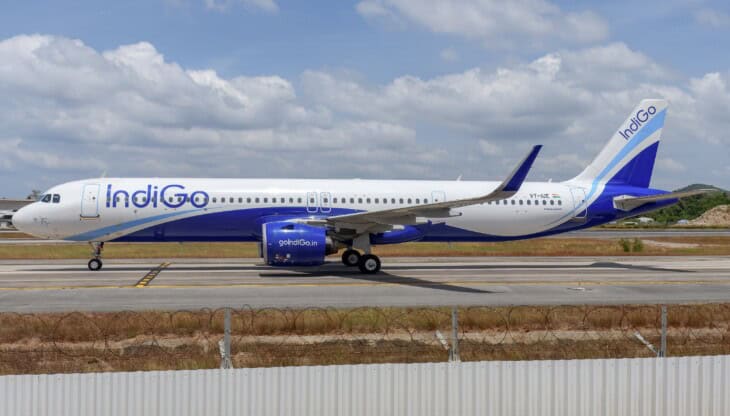
IndiGo operated 425 aircraft as of July 2026 and is the fastest-growing airline on this list by a wide margin.
It carried 118 million passengers in its 2025 financial year, eighth in the world, from a base of 2,700 daily flights to 137 destinations.
India’s domestic market is where the growth is, and IndiGo holds most of it. On current delivery schedules it is the airline most likely to break into the global top 10 next.
12. JetBlue (279 aircraft)
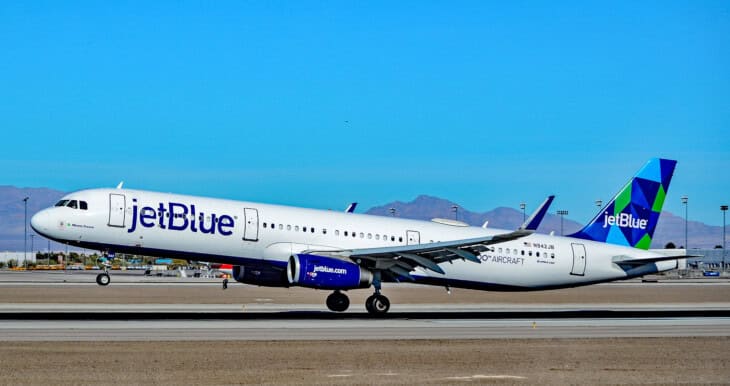
JetBlue operated 279 aircraft as of June 2025, serving 111 destinations across the Americas and a handful of European cities.
It sits in an awkward middle: too small to match the big three’s networks, too expensive to compete with the ultra-low-cost carriers on price.
Its fleet count is the least current figure in this ranking, so treat positions 12 through 15 as close enough to move with a season’s deliveries and retirements.
13. Lufthansa (274 aircraft)

Lufthansa mainline flew 274 aircraft as of June 2026, with 140 more on order. That count excludes Lufthansa City Airlines and Lufthansa Cargo.
Counted as a group, with Swiss, Austrian, Brussels Airlines, Eurowings and ITA folded in, the total reached 735 aircraft at the end of 2024, which would place it fifth in the world.
Lufthansa Group earned $45.7 billion in 2025, fourth globally and the highest of any airline outside the United States. It is also one of the last operators of both the Airbus A380 and the Boeing 747, two of the largest commercial airplanes ever built.
14. Emirates (266 aircraft)

Emirates flew 266 passenger aircraft as of June 2026, plus 24 freighters under Emirates SkyCargo. Only two types matter: 116 Airbus A380s and 127 Boeing 777s.
That is the smallest fleet on this list and the fourth largest airline in the world by available seat miles, at 222 billion in 2024. The reason is size per aircraft: an A380 carries roughly twice what a narrowbody does, on routes twice as long.
Emirates serves 137 destinations in 77 countries from a single hub, and flies more than 3,600 flights a week. No other airline has bet so completely on the very large aircraft.
15. British Airways (254 aircraft)
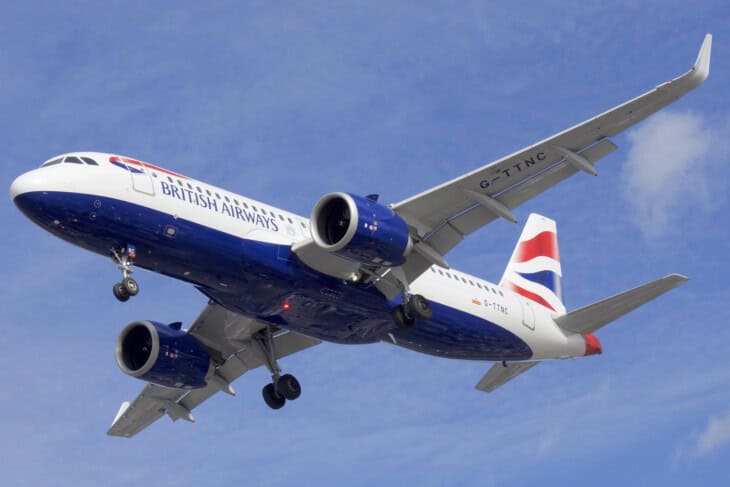
British Airways operated 254 mainline aircraft as of October 2025, with 74 on order. The count excludes BA CityFlyer and BA EuroFlyer.
Its largest single type is the Boeing 777-200ER, with 43 in service, an unusually widebody-heavy profile driven by Heathrow’s slot constraints.
When a hub cannot add flights, the only way to grow is to add seats per flight. Parent company International Airlines Group, which also owns Iberia and Aer Lingus, earned $38.3 billion in 2025 and carried 122 million passengers in 2024.
Change the measure, change the winner
Fleet size is one honest answer to “largest.” Here are the others, each with the year it was measured.
Most passengers carried
| Rank | Airline group | Passengers (millions) |
|---|---|---|
| 1 | American Airlines Group | 225 |
| 2 | Delta Air Lines | 200 |
| 3 | Ryanair Holdings | 184 |
| 4 | United Airlines | 174 |
| 5 | Southwest Airlines | 140 |
| 6 | Lufthansa Group | 131 |
| 7 | International Airlines Group | 122 |
| 8 | IndiGo | 119 |
These are group figures, which is why Ryanair beats United here and loses to it on fleet size. A low-cost airline flying short sectors turns each aircraft around far more often than a long-haul carrier can.
Most available seat miles
| Rank | Airline | ASMs (billions) | Year |
|---|---|---|---|
| 1 | United Airlines | 330 | 2025 |
| 2 | American Airlines | 299 | 2025 |
| 3 | Delta Air Lines | 298 | 2025 |
| 4 | Emirates | 222 | 2024 |
| 5 | Southwest Airlines | 180 | 2025 |
| 6 | Qatar Airways | 159 | 2024 |
Available seat miles is the measure the industry itself uses, because it captures distance as well as volume. It is the fairest single number for comparing a long-haul airline with a short-haul one.
Most revenue
| Rank | Airline group | 2025 revenue |
|---|---|---|
| 1 | Delta Air Lines | $63.3 billion |
| 2 | United Airlines | $59.0 billion |
| 3 | American Airlines Group | $54.6 billion |
| 4 | Lufthansa Group | $45.7 billion |
| 5 | International Airlines Group | $38.3 billion |
| 6 | Air France-KLM | $35.5 billion |
Most destinations and most countries
| Measure | Leader | Figure |
|---|---|---|
| Destinations served | United Airlines | 392 |
| Countries served | Turkish Airlines | 130 |
| Routes served | Southwest Airlines | most in the world |
| Freight carried | FedEx Express | 18,133 million CTK |
Our airlines with the most daily flights page tracks a fifth measure, departures per day, which favors short-haul operators again.
The biggest airline operation is not the biggest airline
Add the American Eagle regional network to American Airlines and the combined operation runs roughly 1,500 aircraft, more than any other airline brand on earth. But those regional jets belong to contractors such as SkyWest, Republic Airways, Envoy and PSA, not to American, so no mainline ranking counts them. The same is true of United Express and Delta Connection. It is the single reason two well-researched lists can give two different number one airlines and both be right.
What about FedEx and the cargo airlines?
FedEx Express is the largest cargo airline in the world and would rank high on any raw aircraft count. It operates about 702 aircraft in total, but only 380 of those are mainline jets.
The other 317 are FedEx Feeder aircraft flown by contractors, mostly single-engine Cessna 208B Caravans and ATR turboprops. Counting a Caravan alongside a Boeing 777 is how older lists put FedEx in the global top five.
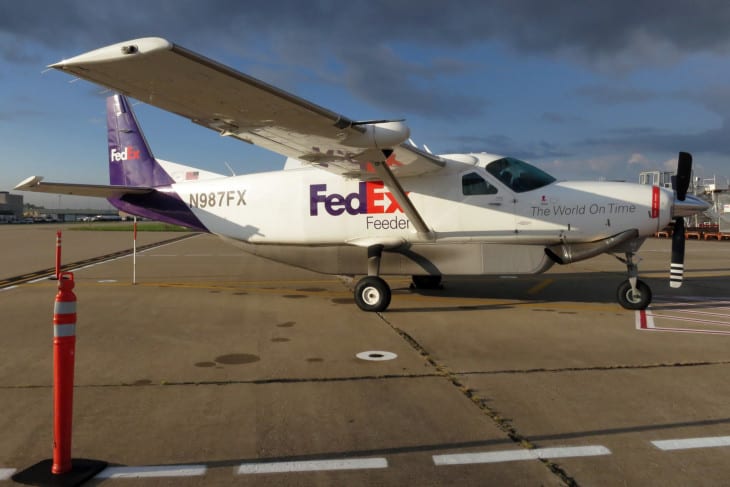
On mainline jets alone, 380 aircraft would place FedEx around twelfth. On freight actually moved it is first in the world by a clear margin, ahead of Qatar Airways Cargo and UPS Airlines.
Its most numerous type is the Boeing 767-300F, with 152 in service, and it also flies 56 Boeing 777Fs, among the largest cargo planes in commercial service.
Airlines that just missed the top 15
Alaska Airlines reports 351 aircraft as of June 2026, which would place it twelfth. That figure includes Horizon Air, SkyWest-operated regional jets and cargo aircraft, so it is not comparable with the mainline counts used here.
Republic Airways flies 254 regional jets for American, Delta and United, the same contractor model as SkyWest at roughly half the size.
Qatar Airways sits just outside as well, with around 230 aircraft serving 198 destinations, and Hainan Airlines flies 233 as of July 2026.
Be careful with fleet numbers you find online
Airline fleet counts are among the most frequently recycled bad numbers in aviation. A figure published in 2022 will still be circulating with a 2026 date on it, and different sources include or exclude regional affiliates, cargo arms, aircraft in storage and aircraft on order without saying which. Every number on this page is dated and sourced below. When you see a count with no date attached, assume it is several years old.
How this ranking will change
United, American and Delta are all still taking deliveries, and the gaps between them are small enough that the order of the top three could change within a year. United’s lead is the most secure of the three.
IndiGo is the airline to watch at the other end. It is 85 aircraft behind Air China in tenth, and it is adding them faster than any airline on this list.
The Chinese majors are the wild card. Their growth now depends partly on Comac deliveries rather than on Boeing and Airbus, and 40 C919s in three years is not yet a production rate that moves a fleet ranking.
FAQ
Sources and references used for research and fact-checking.
- Wikipedia, Largest airlines in the world
- Wikipedia, United Airlines fleet
- Wikipedia, American Airlines fleet
- Wikipedia, Delta Air Lines fleet
- Ryanair Corporate, Our Fleet
- Wikipedia, FedEx Express
- Wikipedia, Comac C919
- Wikipedia, Southwest Airlines fleet
- Wikipedia, China Southern Airlines
- Wikipedia, IndiGo
- Wikipedia, Lufthansa fleet
- Wikipedia, Lufthansa
- Wikipedia, Emirates
- Wikipedia, British Airways fleet
- Wikipedia, Alaska Airlines fleet
- Wikipedia, JetBlue
- Wikipedia, Republic Airways
- Wikipedia, Qatar Airways
- Wikipedia, Hainan Airlines
Get the Newsletter
The latest aviation news and stories sent to your inbox.
About the Author

Tim is the owner and lead editor of AeroCorner since 2019, overseeing aviation content covering aircraft, airlines, airports, and the broader aviation industry. Through years of researching, writing, editing, and publishing aviation-focused content, he has developed extensive practical knowledge of commercial aviation and air travel. Based in Asia and a frequent traveler himself, Tim also brings firsthand passenger experience to AeroCorner’s coverage. Outside of publishing, he has also explored aviation firsthand through hands-on flight training in New Zealand.