


Table of Contents
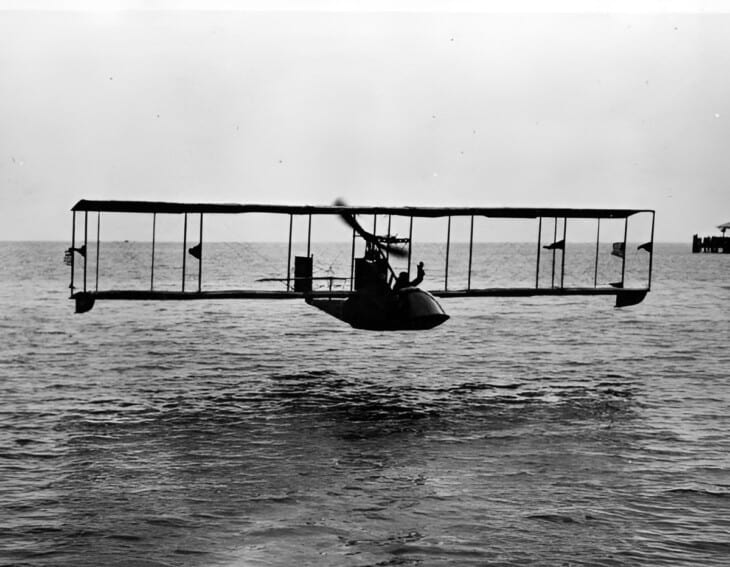
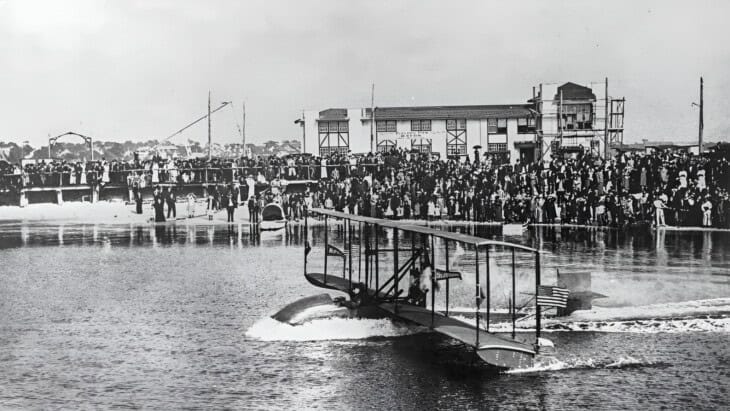
On New Year’s Day 1914, a crowd gathered on the St. Petersburg, Florida waterfront to watch a wooden flying boat that seated exactly two people, one of whom was the pilot. The other seat had been auctioned off the day before.
A former mayor of the city, Abram C. Pheil, won it with a bid of $400. That is roughly $13,000 in today’s money, and it bought him a 23-mile (37 km) hop across Tampa Bay that took 23 minutes.
That flight is the one usually named as the start of commercial aviation. It is a good answer. It is also not the only defensible one, and the other two candidates say far more about how the industry we actually fly on came to exist.
When Did Commercial Aviation Start?
There are three honest answers, and which one is right depends entirely on what you mean by the question. Do you mean the first scheduled flight someone bought a ticket for, the first time flying became a business, or the first time carrying people paid for itself?
Each has a different date, a different country of origin, and a different lesson. The reason the question has no single answer is that the ticket came more than twenty years before the business model.
The three answers, in one line each
1 January 1914: the first scheduled airline flight sold to a paying passenger. February 1925: the Kelly Act handed airmail to private contractors and created the companies that became the US airlines. 1936: the Douglas DC-3 became the first airliner that could turn a profit carrying passengers alone.
| Date | What it was first | Why it does not settle the question |
|---|---|---|
| 1 Jan 1914 | First scheduled fixed-wing airline flight with a paying passenger | The airline folded after roughly four months and left no industry behind |
| Feb 1925 | First durable business model, built on government mail contracts | Passengers were an afterthought; the money came from the Post Office |
| 1936 | First aircraft that made passenger flying profitable on its own | Airlines had already been flying people for a decade by then |
1914: The Airline That Sold the First Ticket and Folded in Four Months
The St. Petersburg-Tampa Airboat Line was the work of three men: promoter Percival Fansler, aircraft builder Thomas Benoist, and a 25-year-old exhibition pilot named Tony Jannus. The aircraft was a Benoist Type XIV, an open wooden flying boat that crossed the bay rarely climbing more than a few feet above the water.
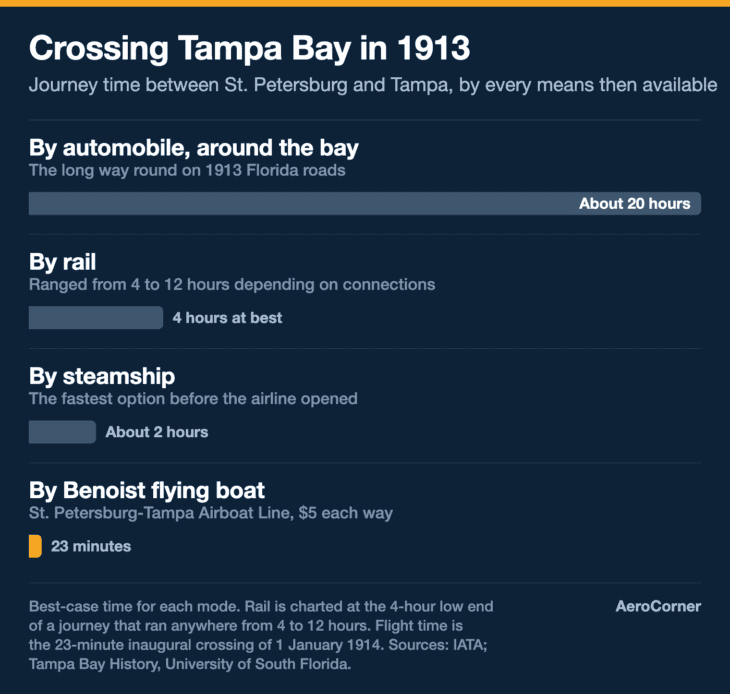
Its commercial logic was sound, which is what makes it a genuine airline rather than a stunt. In 1913, getting from St. Petersburg to Tampa took about two hours by steamship, anywhere from 4 to 12 hours by rail, and something like 20 hours by automobile around the bay.
Jannus did it in 23 minutes. After the auctioned first seat, the standing fare was $5 each way, and the line flew at least two round trips a day carrying passengers, newspapers and freight.
The route was underwritten before it ever flew
On 17 December 1913, the tenth anniversary of the Wright brothers’ first flight, the St. Petersburg Board of Trade signed a three-month contract guaranteeing the airline’s expenses if the service failed to break even. The subsidy actually drawn ran to somewhere between $540 and $1,740. Even the world’s first airline needed a backstop.
It worked, up to a point. Over roughly four months the line flew about 172 flights, carried around 1,205 passengers, and covered more than 7,000 miles (11,300 km) without seriously hurting anyone.
Then the Florida tourist season ended. Traffic collapsed with it, the service wound down through the spring, and the last flight went on 5 May 1914. The world’s first airline had existed for four months and left no successor.
That is the pattern for the next decade. Selling seats was technically possible and commercially hopeless, which is why the aircraft of the era show up in histories of aviation’s famous firsts rather than in anybody’s route network.
1925: Mail, Not Passengers, Built the Airline Industry
The thing that actually created the US airline industry was not a passenger. It was a letter.
The Post Office had been flying its own mail since 1918, using its own pilots and aircraft. In February 1925, the Contract Air Mail Act, universally known as the Kelly Act after its sponsor Clyde Kelly, let the Post Office hand those routes to private contractors instead.
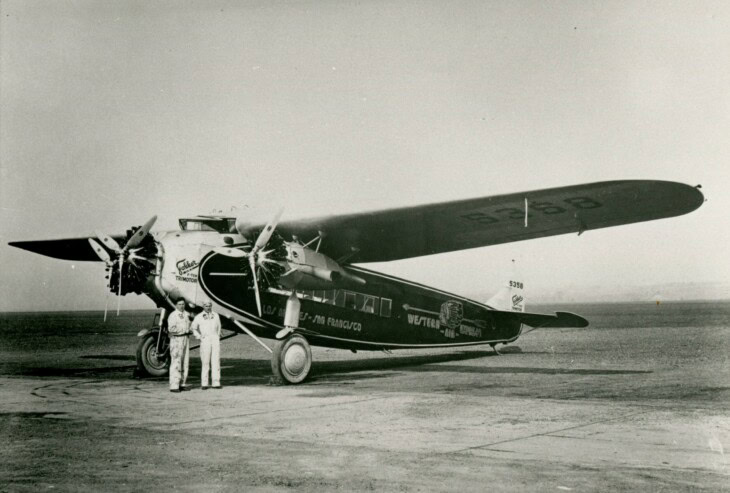
That single change is the origin story of most of the names you still recognise. The early contract winners and the holding companies built around them grew into United, American, Northwest and Delta, while Western Air Express became part of the airline that would be TWA. Foreign airmail contracts did the same job abroad and built Pan Am.
Passengers were tolerated, not courted. In 1926 the entire US industry carried around 6,000 of them, roughly what a single widebody route moves in a fortnight today.
The imbalance persisted for years. By 1931, on the order of 85 percent of US airline revenue still came from mail contracts, with passenger fares contributing well under a fifth of the total.
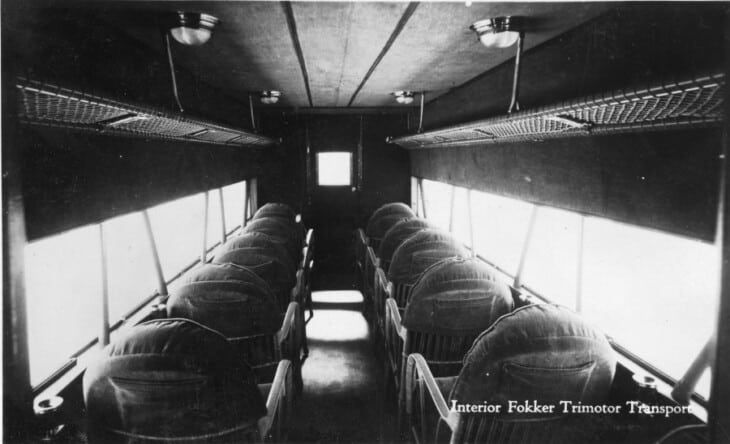
Riding along was correspondingly grim: unpressurised cabins at low altitude, deafening noise, and a ride that made airsickness the norm rather than the exception. If you want the texture of it, our account of what 1920s air travel was actually like covers the part the brochures left out.
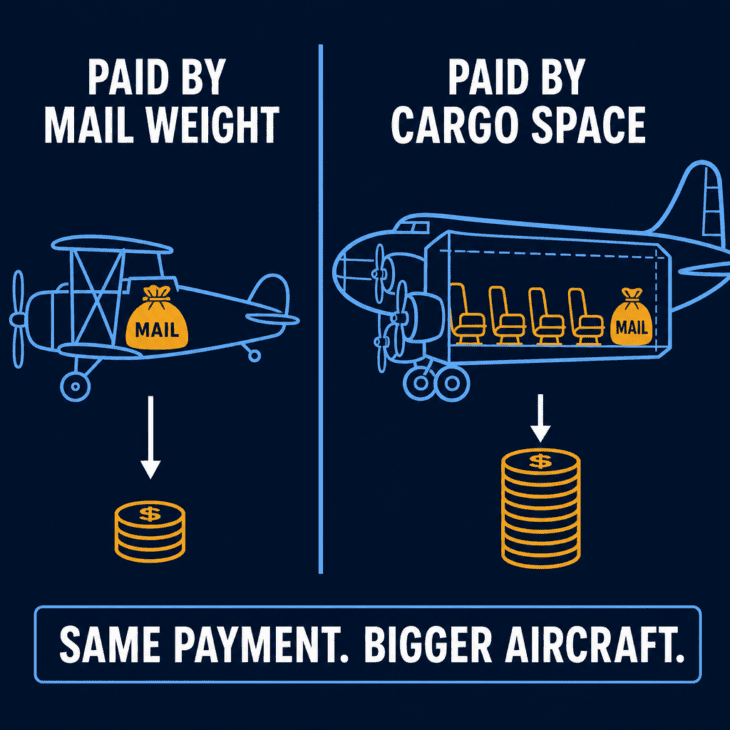
Washington then engineered the shift deliberately. The McNary-Watres Act of April 1930 changed how contractors were paid, from the weight of mail carried to the amount of cargo space made available, whether or not any mail filled it.
The intent was to push airlines into buying bigger aircraft they could fill with people. It worked, and it also concentrated the routes in a few large hands, which ended badly.
Senate hearings in January 1934 alleged the contracts had been carved up among favoured firms. President Roosevelt cancelled all of them on 19 February 1934 and ordered the Army Air Corps to fly the mail.
The month the government learned what airlines were for
Army pilots had neither the instrument training nor the weather-flying experience the mail contractors had spent nine years accumulating. By 10 March 1934, barely three weeks in, 12 pilots had been killed across 66 crashes and forced landings, and the cost per mile had risen to $2.21. The routes went back to commercial carriers within months.
The Air Mail Act of 12 June 1934 returned the mail to private airlines, but broke up the holding companies that had combined aircraft manufacturing with airline operations. The modern shape of the industry, airlines that fly aircraft rather than build them, dates from that law.
1936: The First Airplane That Could Make Money Hauling People
Even after all that, no airline was making real money on passengers. The aircraft were too small, too slow and too thirsty for the fares to cover the trip.
American Airlines chief C. R. Smith pushed Donald Douglas to build a sleeper version of the DC-2, and committed to buying 20 of them to fund the work. The result first flew on 17 December 1935 and entered service with American on 26 June 1936.
The Douglas DC-3 carried 21 passengers, cruised at about 207 mph (333 km/h) and had a range near 1,500 miles (2,400 km). Those three numbers together were the whole revolution.

Enough seats, moving fast enough, far enough, for ticket revenue to exceed the cost of the flight. Smith’s own verdict was that it was the first airplane in the world that could make money just by hauling passengers.
The market agreed emphatically. By 1939, something close to 90 percent of the world’s airline flights were being operated by a DC-3 or one of its variants.
The Myth That One Date Settles It
Ask when commercial aviation started and you will usually get 1914, stated flatly. The date is right, but the framing quietly assumes that selling a ticket and having an airline industry are the same event, and they are separated by twenty-two years.
The picture gets messier once you leave the United States. DELAG, the German Zeppelin operator founded in November 1909, was carrying paying passengers five years before Tony Jannus, and had moved more than 34,000 of them by mid-1914.
It is usually excluded on a technicality: it flew airships rather than aeroplanes, and much of its work was sightseeing rather than scheduled travel between two cities. That is a defensible exclusion, but it is a definition doing the work, not a fact.
Then there is Europe in 1919, when several other firsts land in the same year. Aircraft Transport and Travel opened the world’s first daily scheduled international service between London and Paris on 25 August 1919, and KLM was founded that October, making it the oldest airline still flying under its original name.
So the honest answer names its measure. First ticket sold, 1914. First industry, 1925. First profitable passenger aircraft, 1936.
Nov 1909
DELAG is founded in Germany. The first airline to carry fare-paying passengers, using Zeppelin airships, mostly on pleasure cruises rather than scheduled city-to-city routes.
1 Jan 1914
The St. Petersburg-Tampa Airboat Line flies. Tony Jannus carries Abram Pheil 23 miles across Tampa Bay in 23 minutes, on the first scheduled fixed-wing airline service.
5 May 1914
The world’s first airline shuts down. The tourist season is over. About 1,205 passengers have flown in roughly four months, and no successor takes the route.
Aug-Oct 1919
Europe’s airline year. Aircraft Transport and Travel opens the first daily scheduled international service, London to Paris, and KLM is founded in the Netherlands.
Feb 1925
The Kelly Act passes. US airmail routes are contracted out to private operators, creating the companies that become United, American, TWA and Delta.
Apr 1930
McNary-Watres changes the payment. Carriers are paid for cargo space rather than mail weight, deliberately pushing them toward larger aircraft and passengers.
Feb-Jun 1934
The airmail scandal. Contracts are cancelled and handed to the Army Air Corps, with fatal results, then returned to private airlines under a law that breaks up the holding companies.
26 Jun 1936
The DC-3 enters service. American Airlines flies the first airliner able to earn a profit on passenger fares alone. By 1939 it operates around 90 percent of world airline flights.
What none of the three dates changes is the shape of the thing. An airline is a business that has to fill seats faster than the fuel burns, and the 1914 line failed at exactly that, four months in, for reasons any modern carrier would recognise instantly.
Pheil’s $400 bought a novelty. It took the mail contracts to make flying a business, and one aircraft to make carrying people the point of it.
Sources and references used for research and fact-checking.
- IATA, The story of the world's first airline
- Tampa Bay History, University of South Florida, The St. Petersburg-Tampa Airboat Line
- Wikipedia, St. Petersburg-Tampa Airboat Line
- Federal Aviation Administration, Airmail Comes of Age
- US Centennial of Flight Commission, Airmail and the Growth of the Airlines
- Wikipedia, Douglas DC-3
Get the Newsletter
The latest aviation news and stories sent to your inbox.
About the Author

Tim is the owner and lead editor of AeroCorner since 2019, overseeing aviation content covering aircraft, airlines, airports, and the broader aviation industry. Through years of researching, writing, editing, and publishing aviation-focused content, he has developed extensive practical knowledge of commercial aviation and air travel. Based in Asia and a frequent traveler himself, Tim also brings firsthand passenger experience to AeroCorner’s coverage. Outside of publishing, he has also explored aviation firsthand through hands-on flight training in New Zealand.