
Mid Size Passenger Jets
Airbus A318
ICAO: A318
The compact A220 variant built for efficient short and medium-haul routes.

The latest aviation news and stories sent to your inbox.
The Airbus A220-100 is the smaller member of the A220 family, originally developed as the Bombardier CS100. Introduced in 2016, it offers modern efficiency in the 100 to 130 seat segment. The aircraft features advanced aerodynamics and geared turbofan engines.
Live Fleet Activity (BCS1)
Fetching live data…

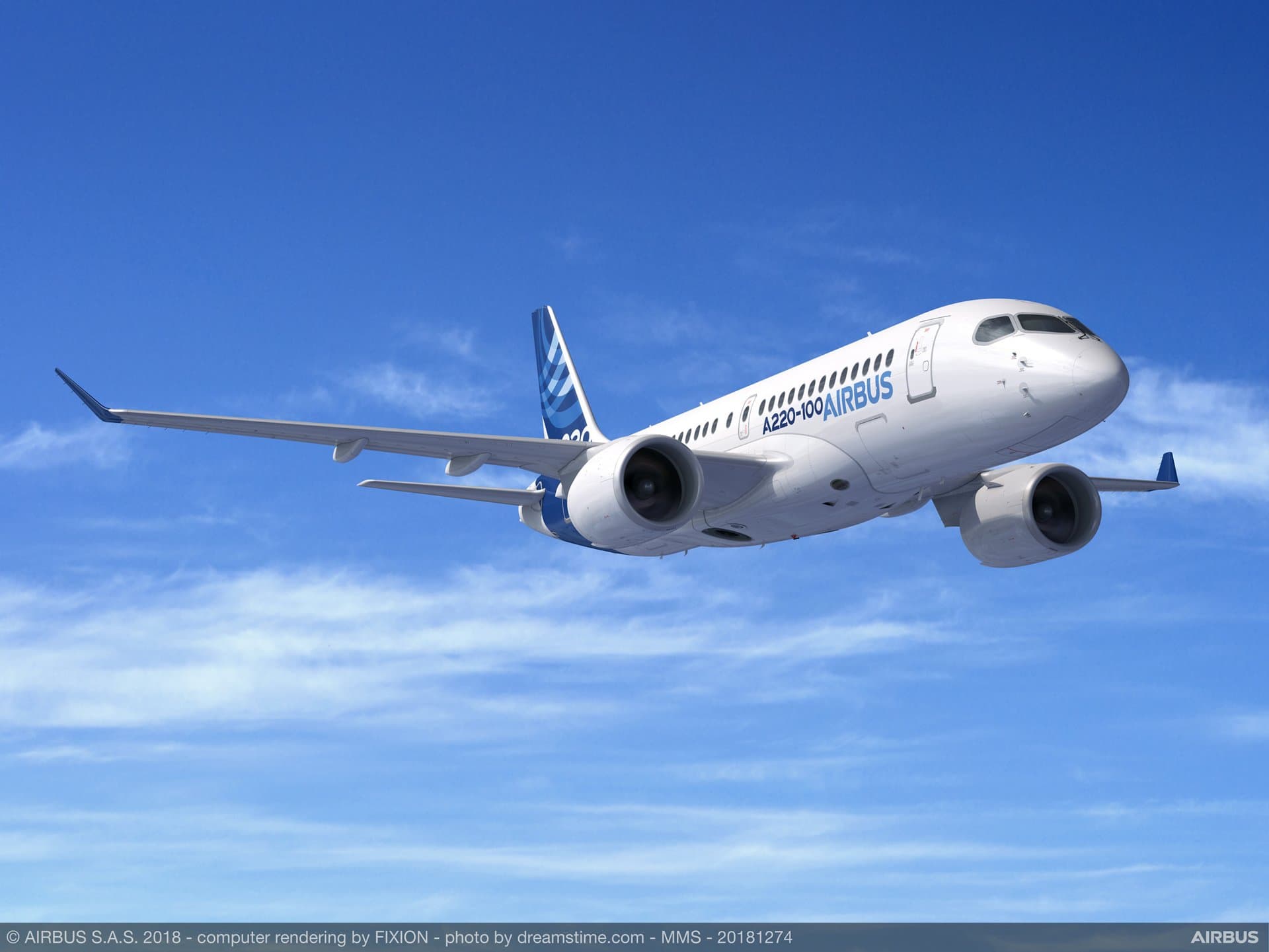
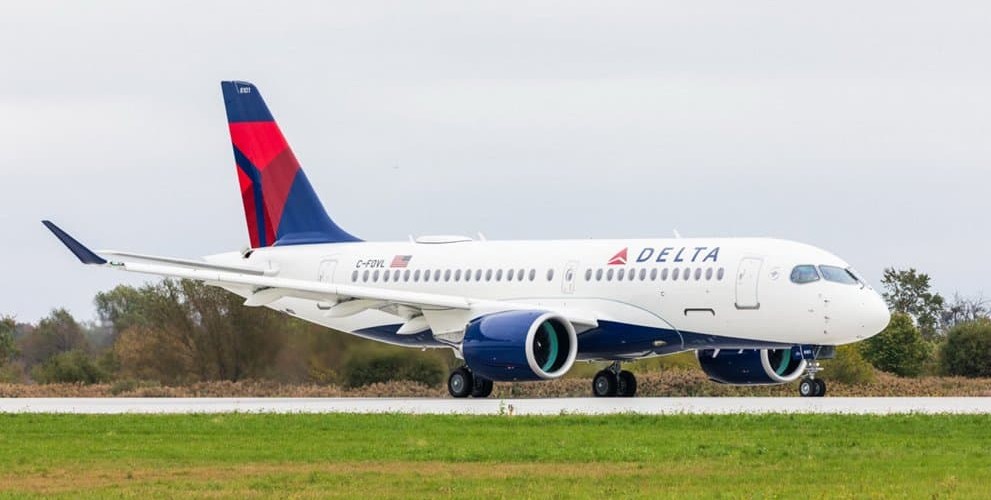

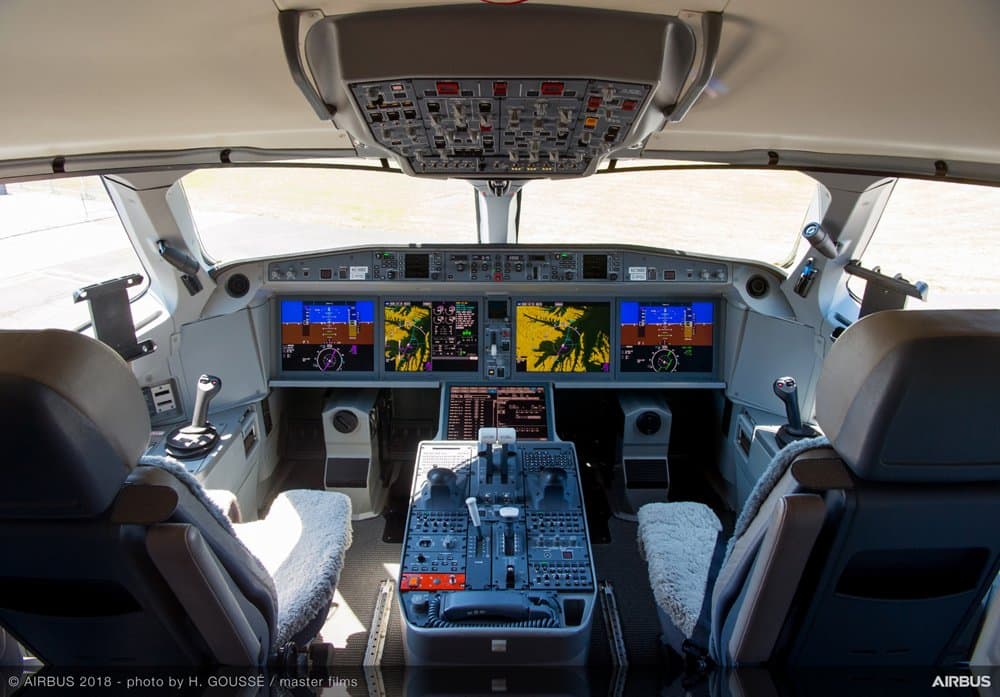
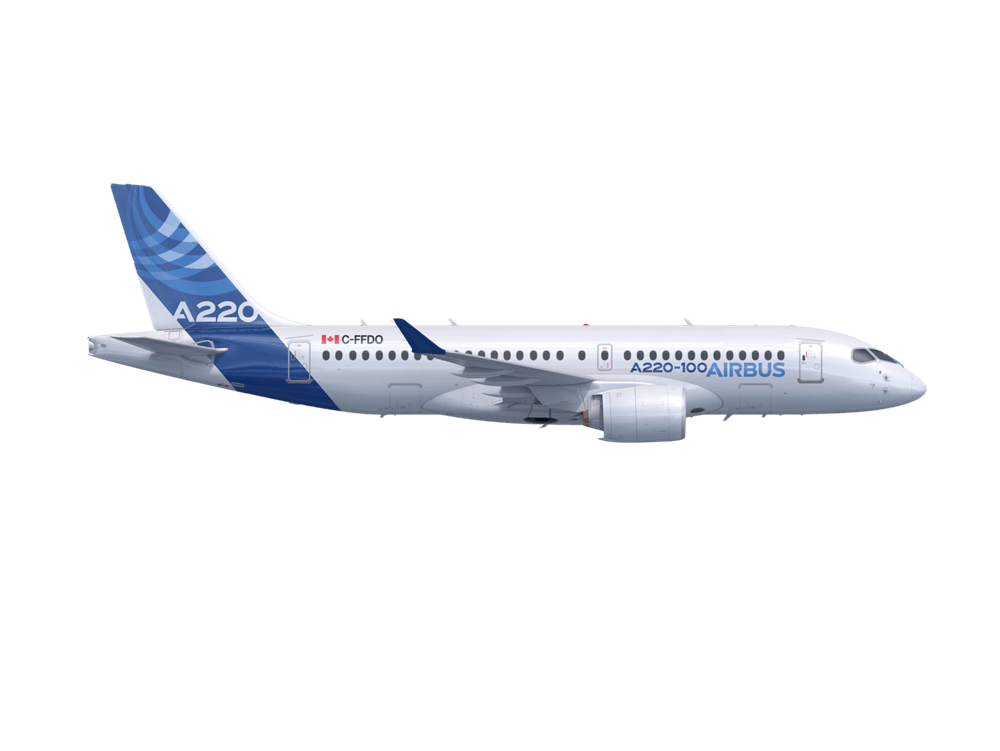
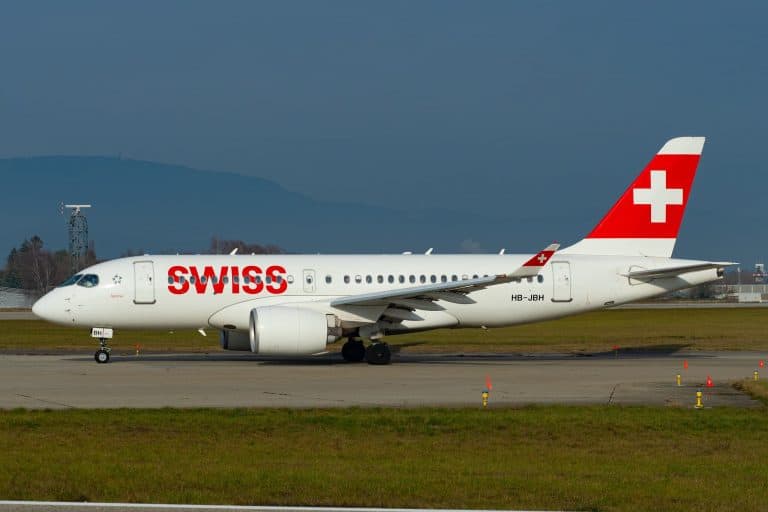
The A220-100 first flew in 2013 as the CS100 and entered service in 2016. It was designed as a clean-sheet aircraft with composite components and a spacious cabin cross-section. The program was later acquired by Airbus and integrated into its product line.
Powered by two Pratt & Whitney PW1500G geared turbofan engines producing approximately 23,000 pounds of thrust (102 kN) each, the A220-100 cruises at around 470 knots (870 km/h). Maximum takeoff weight exceeds 134,000 pounds (60,780 kg). Seating typically ranges from 100 to 130 passengers depending on layout.
The A220-100 offers airlines fuel efficiency and passenger comfort in smaller markets. It competes with larger regional jets and smaller narrow-body aircraft. The model has gained steady market acceptance since Airbus integration.
The A220-100 emerged from a requirement to serve thin trunk routes and point-to-point city pairs with lower seat counts and reduced operating costs. Program planners prioritized a clean-sheet approach to achieve step changes in fuel burn and per-seat economics relative to older designs in the same capacity band.
Initial prototype activity emphasized high-fidelity structural testing and extensive systems integration trials. Flight-test campaigns focused on handling qualities with the new wing and the integration of the geared turbofan. Ground testing addressed cabin pressurization, environmental control, and airplane-level vibration characteristics linked to the engine architecture.
Production was organized around a combination of composite and metal subassemblies to allow scalable assembly at multiple final assembly lines. Supply-chain planning sought to limit assembly complexity while enabling modest production ramp rates consistent with forecast demand from regional and low-density mainline operators.
Certification work concentrated on showing compliance with modern noise and emissions limits as well as demonstrating the reliability of the new engine and integrated avionics suite. Concurrent validation of maintenance procedures and training syllabi allowed operators to adopt the type without major changes to existing airline structures.
The A220-100 uses a conventional twinjet low-wing layout with a pronounced high-aspect-ratio wing optimized for low-speed lift and cruise efficiency. Wing features include advanced aerodynamic shaping and blended winglets to reduce induced drag and improve climb performance with high payloads.
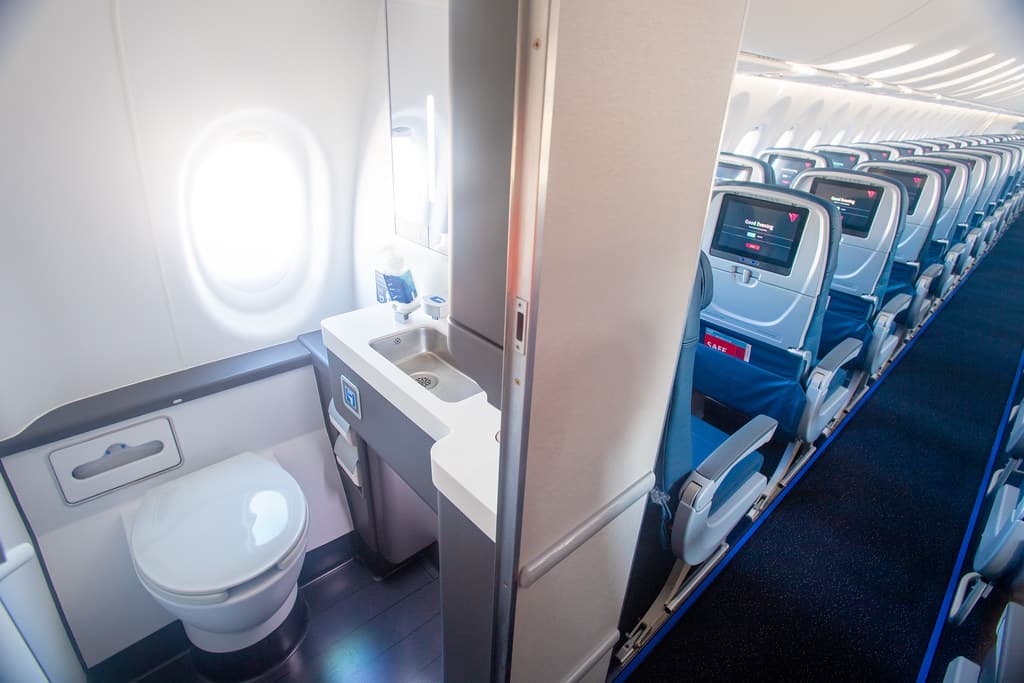
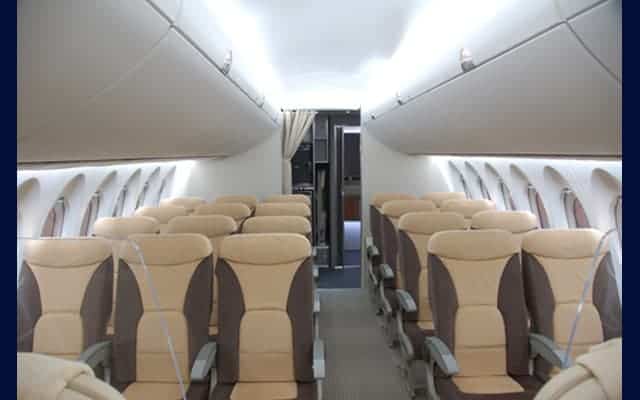
Airframe construction combines aluminum alloys for primary structure with composite materials in control surfaces and select fairings. Fuselage cross-section is comparatively wide for the class, allowing two-by-three seating and a cabin environment with larger windows and increased baggage volume relative to older small narrow-bodies.
The flightdeck integrates a modern glass avionics suite with large-format displays and fly-by-wire flight controls. The avionics philosophy emphasizes pilot situational awareness and systems health monitoring to reduce crew workload and support predictable maintenance planning.
Passenger systems center on comfort and operational flexibility. The environmental control system maintains cabin pressure differentials conducive to passenger well-being while options for galley and lavatory arrangements enable different airline cabin concepts. Access provisions and cargo hold design reflect an emphasis on quick turnarounds at regional airports.
The A220-100 is optimized for short to medium stage lengths with fuel consumption that rivals larger narrow-bodies on a per-seat basis. Its operational fuel efficiency supports deployment on thin high-frequency routes where larger types are uneconomic.
Climb capability benefits from the wing aerodynamics and high-bypass turbofan design, yielding useful altitude capture for congested airport departures. Cruise performance is balanced to deliver strong block speeds for point-to-point flights while preserving range capability for extended single-aisle sectors.
Payload capacity and cargo volume allow mixed passenger and freight missions typical of regional and lower-density mainline routes. Aircraft weight margins provide operators with flexibility in seating and galley configurations without severely constraining range on common city-pair missions.
Operational limitations are primarily linked to runway length and airport performance constraints at hot-and-high fields. The aircraft performs well from shorter runways compared with larger narrow-bodies but requires careful weight and balance planning for the most demanding altitudes and temperatures.
The A220-100 is the smaller member of the A220 family and shares a common type certificate basis with its larger sibling. Structural and systems commonality allow airlines to operate mixed fleets with limited additional pilot training and shared maintenance practices.
Although the airframe family shares core design features, differences in fuselage length, maximum takeoff weight, and engine power ratings produce distinct mission envelopes between variants. These differences allow fleet planners to match capacity to route demand while retaining operational commonality advantages.
Interchangeability extends to some line-replaceable components and avionics software standards. This commonality reduces spares inventory and simplifies logistical support compared with operating entirely dissimilar aircraft types.
Airlines deploy the A220-100 on a wide range of missions from short regional hops to transcontinental sectors within large countries. The type is used to open new city pairs where demand does not justify larger narrow-bodies and to increase frequency on established routes to offer more convenient schedules.
Turnaround performance and cabin comfort contribute to its selection on business-oriented markets where time-sensitive travelers value direct flights over hub connections. The aircraft also serves secondary airports with limited ground infrastructure, benefiting carriers focused on point-to-point networks.
Maintenance programs provided by operators emphasize condition-based maintenance enabled by onboard health monitoring. This approach aims to reduce unscheduled removals and shorten ground time through targeted interventions driven by real-time system data.
Fleet experience indicates predictable operational costs with utilization patterns that vary by airline strategy. Operators configuring dense seating prioritize frequency and unit cost, while those opting for lower-density layouts target improved passenger experience and higher yields.
The A220-100 has been incorporated into fleets by a mix of regional and mainline carriers seeking modern single-aisle capability in the 100-seat class. Airlines often deploy the type to replace older regional jets and small narrow-bodies, citing benefits in fuel burn and passenger appeal.
Network planners use the type to right-size capacity on thin trunk routes and to expand nonstop service between secondary markets. Its cabin width and systems commonality simplify crew rostering and spare parts planning when paired with the larger variant.
Leasing companies include the type in portfolios aimed at airlines seeking capital-light fleet expansion. The aircraft's operational flexibility and range options make it attractive for both growth carriers and established airlines modernizing their short-haul fleets.
Operators report training synergies when transitioning pilots from other modern glass-cockpit twinjets, with type-rating differences mitigated by common systems logic and automated flight protections. Maintenance training emphasizes the geared turbofan and specific composite repair techniques.
The A220-100 demonstrates the commercial viability of investing in aerodynamic refinement and advanced propulsion for small single-aisle aircraft. Its design choices show how cabin comfort, fuel efficiency, and operational flexibility can be integrated into a compact platform.
Program execution provides case study material on supply-chain coordination and the challenges of introducing a new clean-sheet product into a competitive market. The family approach to commonality offers lessons on fleet planning for carriers balancing frequency and capacity.
Technological practices used on the type, including extensive use of health-monitoring systems and high-aspect-ratio wing design, inform subsequent narrow-body developments. The aircraft remains relevant in fleets where matching capacity to demand and reducing trip costs are priorities.