Cargo Airplanes
The A330-based whale that flies two A350 wings at a time between Airbus factories.
Updated: by Tim de Vries
The latest aviation news and stories sent to your inbox.
The Airbus BelugaXL is an outsize freighter built from the A330 to fly wings, fuselage sections and tail parts between Airbus factories. Its formal designation is A330-743L, and its hold can take two A350 wings at once. Six were built. Airbus says they will be its only component transporter from mid-2027, once the older Beluga ST fleet is gone.
Live Fleet Activity (A337)
Fetching live data…
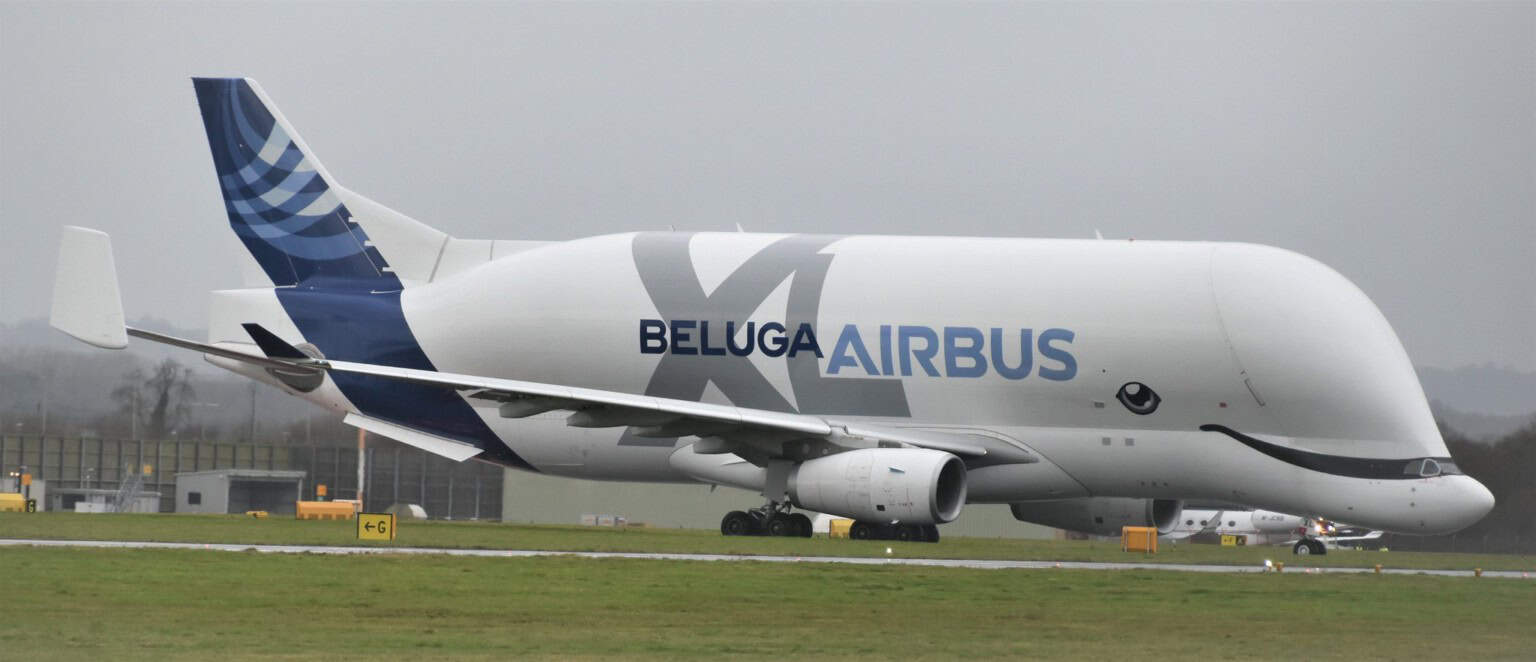


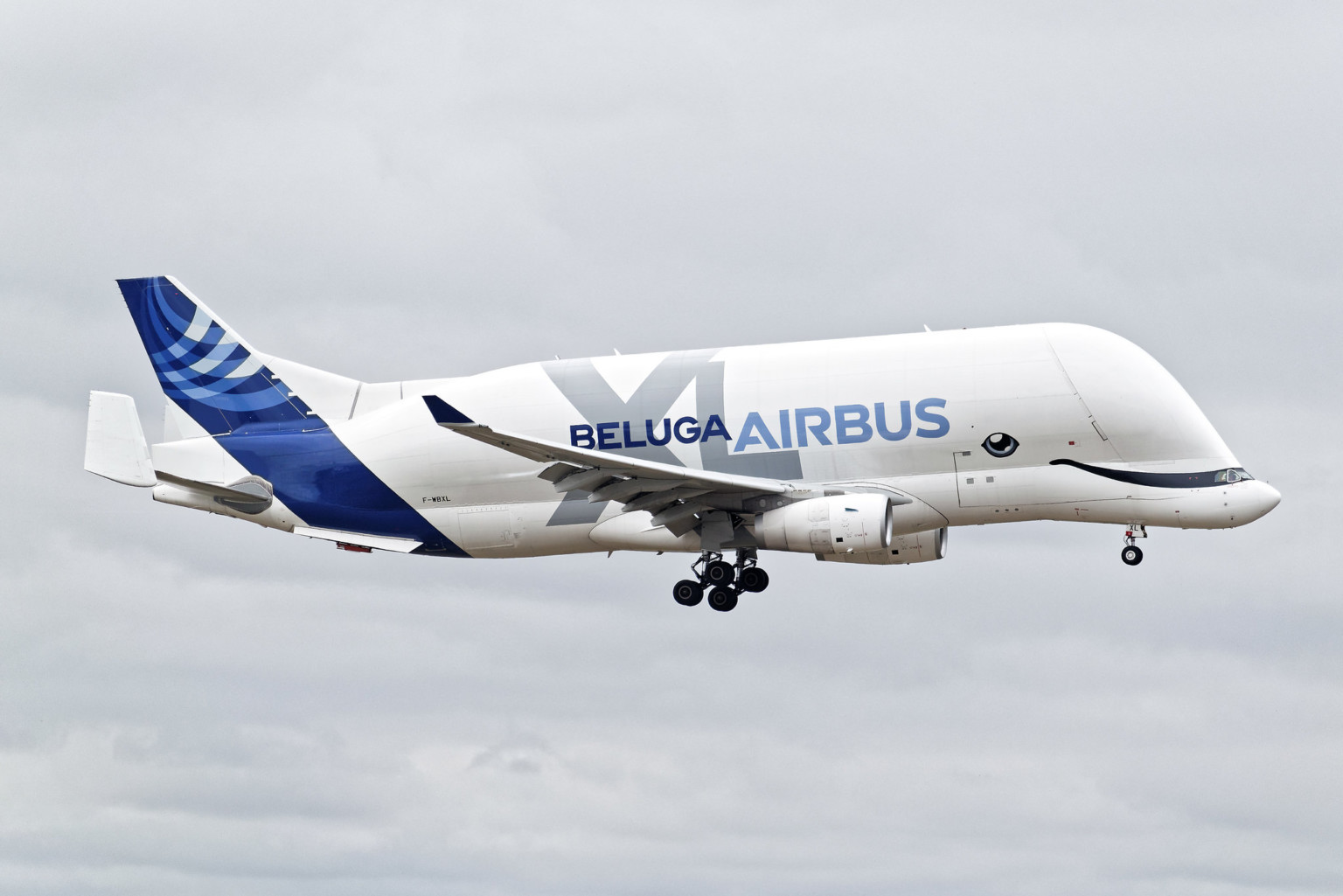

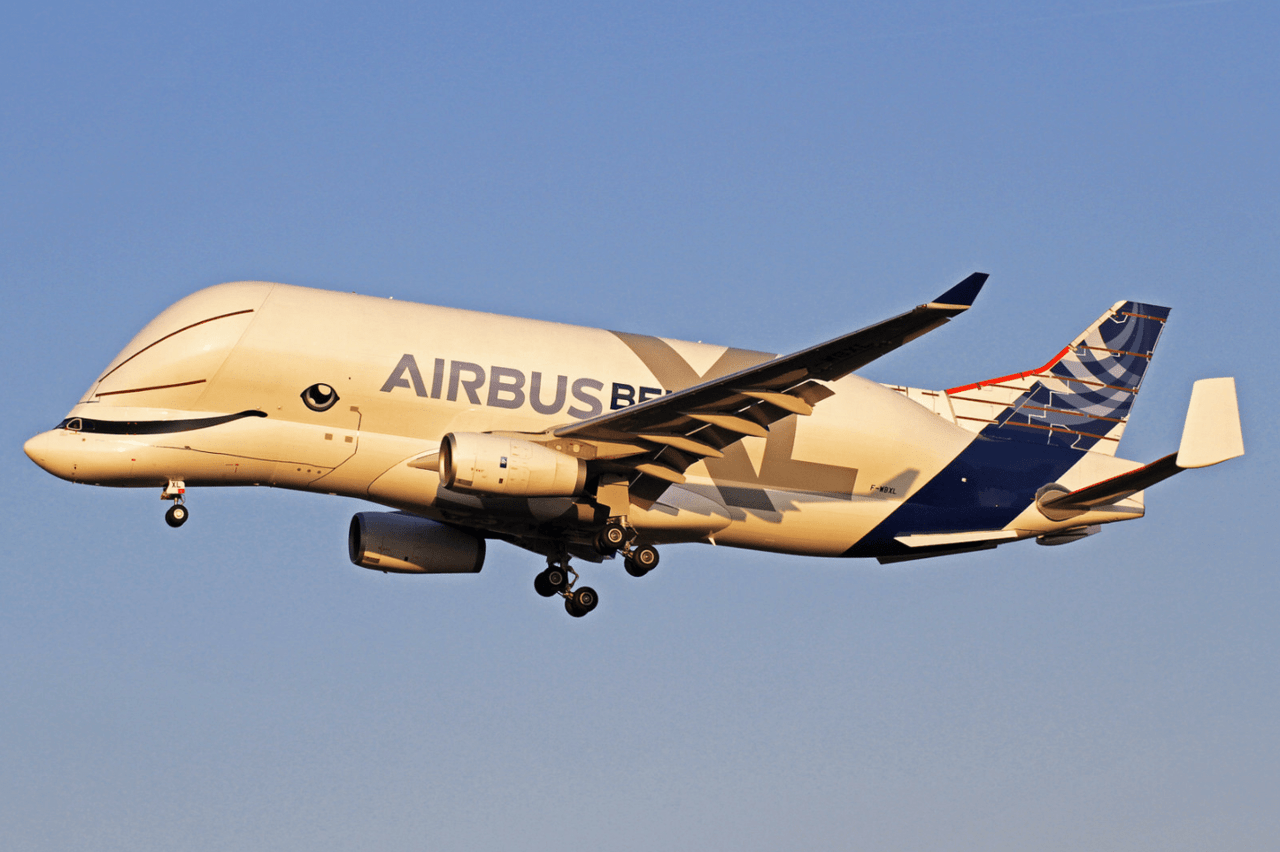
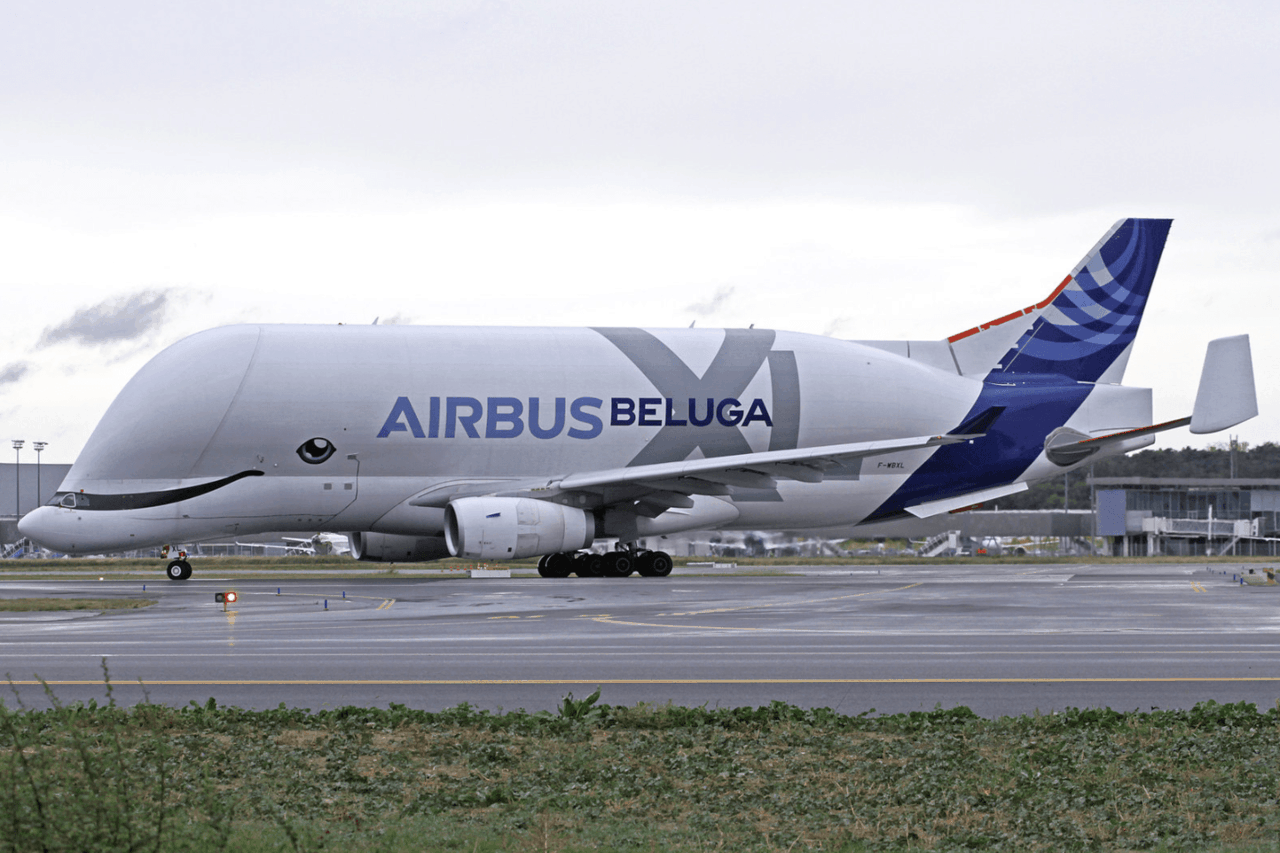

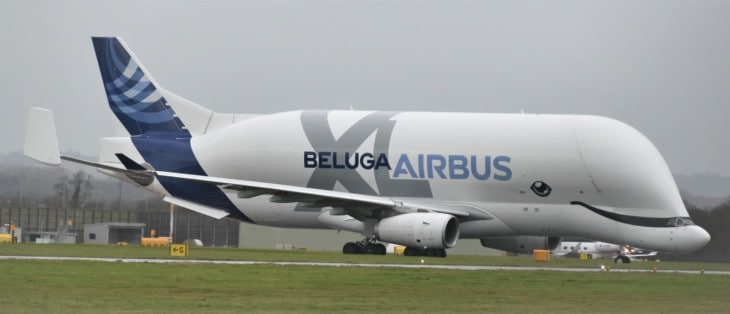
The Airbus BelugaXL is a whale-shaped freighter that moves aircraft parts between Airbus factories. Its formal designation is A330-743L, and it is built from the A330-200F with a much bigger upper fuselage.
Its job is to carry wings, fuselage sections and tail parts that are too large for any normal cargo plane. A single BelugaXL can take two A350 wings at once, where the older Beluga ST could take one.
Airbus built six. They are flown by Airbus Transport International, the group’s in-house airline, which has operated Airbus’s own freight since 1996.
By 2013 the five original Belugas could not keep up with Airbus’s production growth. Airbus looked at the Antonov An-124 and An-225, the Boeing C-17, the Dreamlifter and the A400M, then chose to modify one of its own airliners.
The program launched in November 2014 to replace five aircraft with five. Reported figures put the development and production cost at about €1 billion.
Airbus ordered a sixth aircraft in June 2019 as A350 and A320neo output climbed. Airbus said that in 2024 alone it expected to move 5% more payload than it did with a mixed Beluga ST and BelugaXL fleet.
Airbus did not stretch an A330 so much as rebuild its top half. The forward fuselage comes from the A330-200F and the rear from the A330-300, with the reinforced floor and structure taken from the freighter.
The cockpit was moved down so the main cargo deck sits above it with direct access to the hold. The fuselage grew to 28 ft 10 in · 8.80 m in diameter, up from about 18 feet (5.6 m) on a standard A330.

The tail was reworked too. The vertical stabilizer is about 50% larger, with extra fins on the horizontal stabilizer and two ventral fins under the rear fuselage.
Power comes from two Rolls-Royce Trent 700 turbofans, rated at 71,000 lbf · 316 kN each. Airbus test pilot Karl-Heinz Mai told aeroTELEGRAPH in 2021 that any pilot who can fly the A330 can fly the BelugaXL with minimal extra training, and conversion courses run five to six weeks.
The full specification table for the aircraft is on this page. These paragraphs cover only the figures that need context.
The panel lists a maximum payload of 111,500 lb · 50,500 kg. Airbus’s press releases round that up to the nearest whole tonne, and its aircraft characteristics manual calls it an estimated maximum payload.
The main deck cargo compartment is 149 ft 6 in · 45.56 m long and holds 78,010 ft³ · 2,209.0 m³. Airbus’s manual calls that the compartment’s water volume, meaning its maximum volume, and Airbus’s own comparison is that it could swallow 26 small cars or seven elephants.

Airbus quotes a range of 2,200 nm · 2,530 mi · 4,070 km at maximum payload. Some references still list 2,300 nm, a figure from before the aircraft flew.
That range is plenty for the job. The fleet flies short hops between 11 European sites, so payload and hold size matter far more than distance.
Cruise is Mach 0.69 at 35,000 ft · 10,700 m, which the panel lists as 398 kt · 458 mph · 737 km/h. The maximum takeoff weight is 500,000 lb · 227,000 kg.
Cargo goes in through a large door at the front of the aircraft. On arrival, a loadmaster opens the door, unloads the components and hands them to a ground coordinator.
Before departure, the loadmaster clears the cargo for flight with a signature. Airbus says the average turnaround at its sites is 70 minutes.
The first BelugaXL flew on July 19, 2018. EASA certified the type on November 13, 2019, after more than 200 flight tests and 700 flight hours.
The first aircraft entered service on January 9, 2020. It was the second one built, because the first was kept back as the test aircraft.
That test aircraft became the sixth BelugaXL. After more than 800 flight test hours over four years and a major refurbishment, it joined the fleet at a ceremony in Toulouse on June 10, 2024.

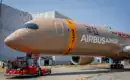
The sixth aircraft is easy to spot. It carries a winking eye added to the smile on its nose, unlike the other five.
Airbus forecasts the fleet will reach 9,500 flight hours a year by 2027, up from a planned 6,500 in 2024. The fleet has a planned life of 30 years.
Airbus announced the retirement of the BelugaST fleet in 2025. By June 2026 one had been retired at Broughton in Wales as a STEM education facility, and another had moved to the Aeroscopia museum in Toulouse.
Airbus says the BelugaXL becomes its sole component transporter from mid-2027. The full story of the older aircraft is on our Airbus Beluga page, and the biggest freighters overall are ranked in our guide to the largest cargo planes.
Airbus puts the BelugaXL’s extra capacity at 30%. It is about 23 feet (7 m) longer and 3 feet (1 m) wider than the Beluga ST.
The bigger difference is what fits inside. The XL carries two A350 wings or the largest A350 fuselage section, where the ST carried one wing at a time.
No. It is not a passenger aircraft, and the only seats beyond the flight deck are four courier seats.
The BelugaXL carries Airbus components only, and the loadmaster rides with the cargo.
Six BelugaXLs were in service as of Airbus’s June 2026 announcement. The older BelugaST fleet is being retired, and Airbus says the XL becomes its sole transporter from mid-2027.
Yes. The BelugaXL fleet is in service, and Airbus plans to keep it flying for around 30 years.
Only six BelugaXLs exist, so away from Airbus sites they are uncommon. They serve 11 European sites, including the final assembly lines in Toulouse and Hamburg.
No. It carries Airbus aircraft parts, and its only seats beyond the flight deck are four courier seats.
It is the BelugaXL’s formal designation. Airbus’s own characteristics manual calls it the A330-700L, and its ICAO type code is A337.
Two Rolls-Royce Trent 700 turbofans, the same engine family used on the A330. Each is rated at 71,000 lbf · 316 kN.
Airbus has not published a unit price. Reported figures put the program’s development and production cost at about €1 billion.
Two. Airbus describes the hold as able to carry a pair of A350 wings, which is double what the Beluga ST could take.
No. Six were built between 2016 and 2023, and the last entered service in June 2024.
Sources and references used for research and fact-checking.