
Jumbo Passenger Jets
Airbus A380-900
ICAO: A389
The prototype widebody that laid the groundwork for Airbus success
The latest aviation news and stories sent to your inbox.
Before Airbus became a global powerhouse, it built a single aircraft that proved Europe could challenge the dominance of American airliners. The Airbus A300B1 was that breakthrough, a prototype widebody whose test flights showed the world that a new competitor had arrived.
Live Fleet Activity (A30B)
Fetching live data…



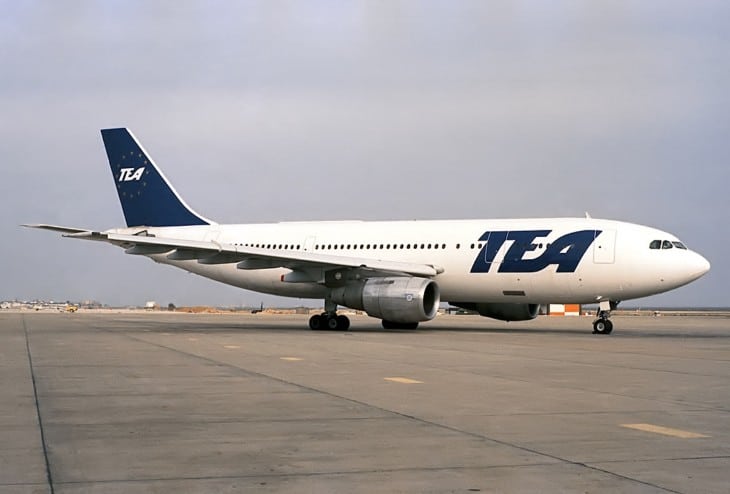
The Airbus A300B1 was the very first version of the A300 program and served as the prototype that launched Airbus into commercial aviation. Developed in the late 1960s and early 1970s, the A300B1 was created to demonstrate a completely new approach to widebody design. It was smaller and lighter than the production models that followed, and it existed primarily as a testbed for the technologies and design principles that would define Airbus aircraft for decades.
The A300B1 made its maiden flight on 28 October 1972. Only two examples were built, both used for certification, demonstration tours, and early evaluation by airlines. The aircraft was shorter and carried less fuel than the later B2 and B4 models. These early airframes helped Airbus refine systems, cockpit layout, wing aerodynamics, and structural concepts that would later become standard across the fleet.
Despite never entering commercial service in large numbers, the A300B1 played a significant role in securing early customer confidence. Its test program included extensive route proving and public displays, which highlighted its fuel efficiency and quiet operation compared to older four-engine jets of the era. These demonstrations helped convince airlines that a twin-engine widebody could deliver strong performance for regional and medium-haul routes.
The success of the A300B1’s trials paved the way for the A300B2, the first true production variant. From that starting point, Airbus expanded its product line and began its rise as one of the world’s leading aircraft manufacturers. The A300B1 remains a rare and important milestone in the company’s early history.
Sources and references used for research and fact-checking.