Mid Size Passenger Jets
Airbus A318
ICAO: A318
The Airbus A320neo is the re-engined, sharklet-fitted version of the world's best-selling single-aisle jet, and it has become the most-ordered airliner generation in history with more than 12,000 orders.
Updated: by Tim de Vries
The latest aviation news and stories sent to your inbox.
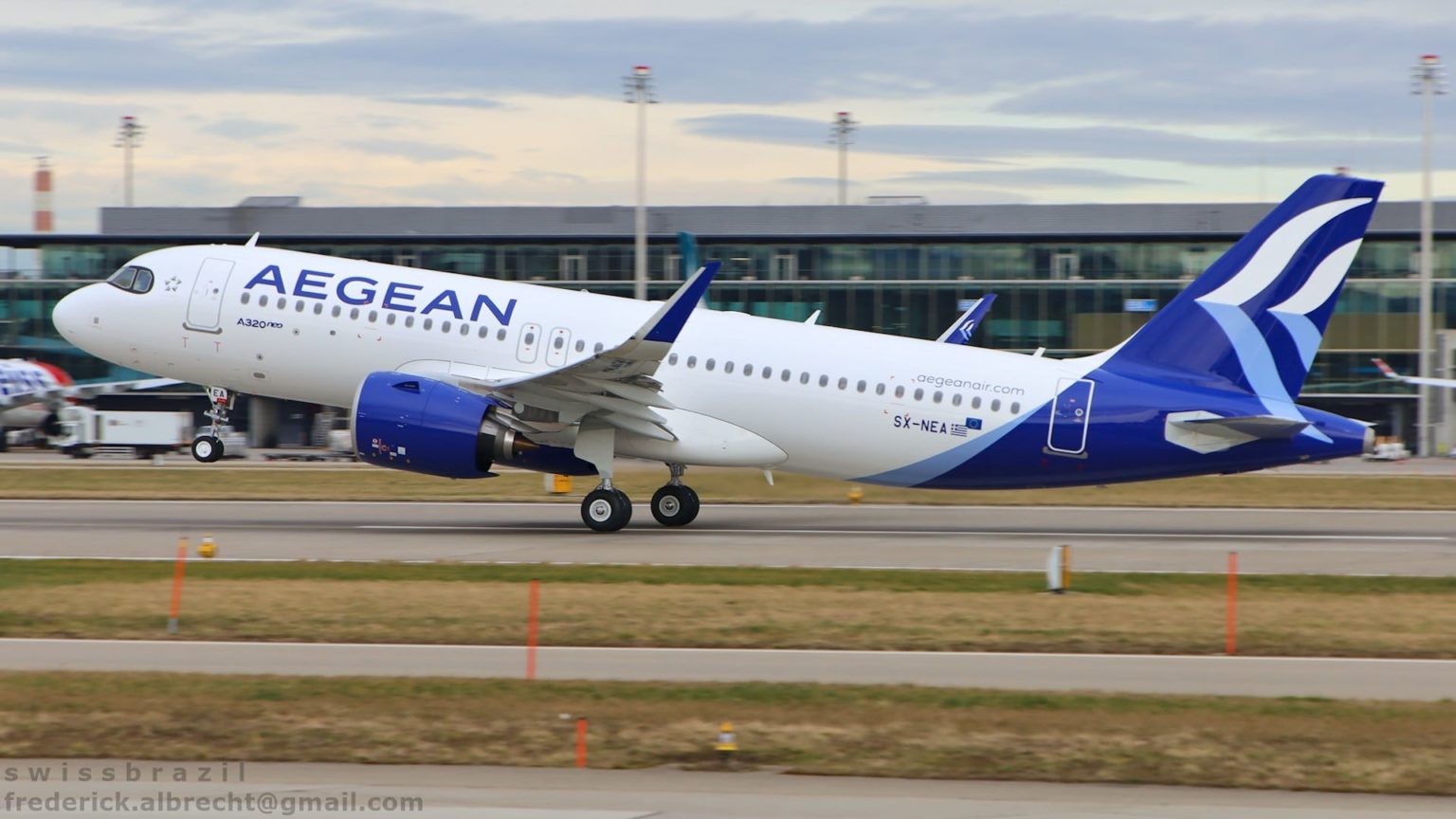
The Airbus A320neo is a narrow-body airliner built by Airbus, the middle member of the A320neo family between the A319neo and the A321neo. It keeps the A320’s fuselage but adds CFM LEAP-1A or Pratt & Whitney PW1100G engines and sharklets, which Airbus says cut fuel burn by up to 20%. First flown in 2014 and in service with Lufthansa since 2016, it now flies short-haul and medium-haul routes for more than 120 operators.
Live Fleet Activity (A20N)
Fetching live data…




The Airbus A320neo is a narrow-body, single-aisle airliner and the middle member of the A320neo family, between the A319neo and the A321neo. “Neo” stands for “new engine option”.
It is the re-engined successor to the A320ceo, where “ceo” means “current engine option”. Airbus launched the programme on 1 December 2010.
The first A320neo rolled out of the Toulouse factory on 1 July 2014 and made its first flight on 25 September 2014. Lufthansa, the launch customer, put it into service on 25 January 2016.
The full specification table for the aircraft is on this page. The sections below explain the figures that need context.
Every A320neo has two engines, either the CFM International LEAP-1A or the Pratt & Whitney PW1100G geared turbofan. Airlines choose between them, and as of September 2026 Wikipedia counts 85 operators of the family using CFM engines and 42 using Pratt & Whitney.
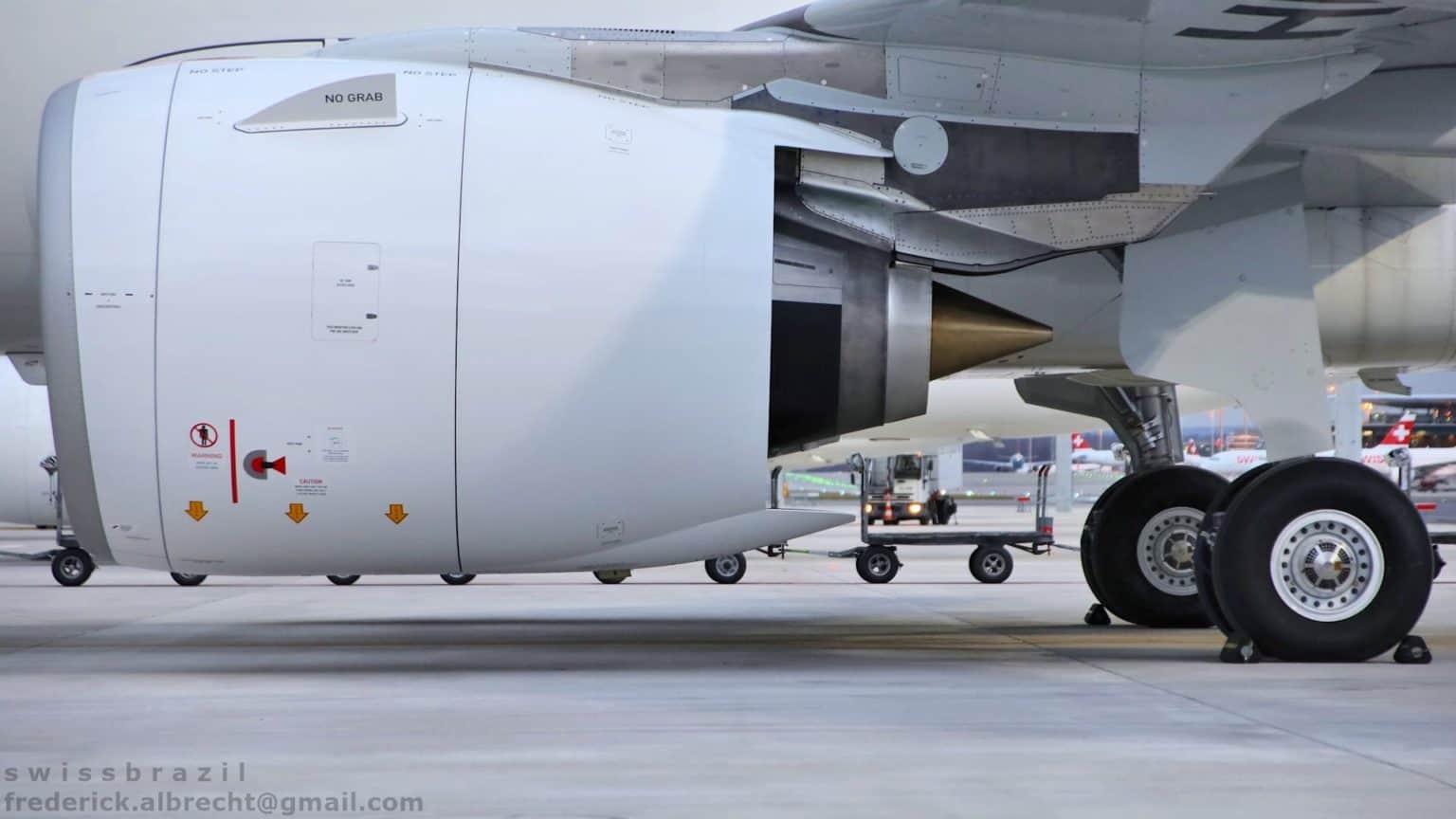
The PW1100G has an 81 in (206 cm) fan. Airbus says the new engines and sharklets together cut fuel burn by up to 20% compared with the previous generation.

Sharklets are the upturned wingtip devices at the end of each wing. Airbus launched them at the November 2009 Dubai Airshow, where it said they add about 200 kg (440 lb) and cut fuel burn by 3.5% on flights over 1,510 nm. They were optional on the A320ceo and are standard on the neo.
The wingspan with sharklets is 117 ft 5 in (35.80 m).
The neo is also much quieter. Wikipedia reports it as half as loud as an A320 at takeoff, with an 85-decibel noise footprint.
Airbus lists a typical two-class A320neo at 150 to 180 passengers. The maximum is 194 seats in a high-density layout, which is the figure in the panel.
The range in the panel is Airbus’s maximum for the A320neo, 3,400 nm. Wikipedia’s specifications table gives about 3,500 nm for a typical load of 165 passengers, and about 3,700 nm with 150.
The two sources round and load the aircraft differently, so the gap is not a disagreement about the aircraft. In practice, airlines plan a route from the seat count, the payload and the fuel they choose to carry.
The cabin is 12 ft 2 in (3.70 m) wide, the same as the rest of the family. Six-abreast economy seats are 18 in (46 cm) wide in Wikipedia’s table, and business seats sit four abreast.
Wikipedia puts the takeoff distance at 6,400 ft (1,950 m) and the ceiling between 39,100 ft and 39,800 ft, depending on the source. The panel shows the upper bound.
The A320neo is 123 ft 3 in (37.57 m) long. The A319neo is shorter at about 111 ft (33.84 m) and the A321neo is longer at about 146 ft (44.51 m).
Wikipedia lists the A319neo at up to 160 seats and the A321neo at up to 244. The A319neo first flew on 31 March 2017, and interest in it has been low.
The bigger sibling is the Airbus A321neo, which added the long-range A321LR and A321XLR variants and has taken a growing share of orders.
Wikipedia reports that the A321neo accounted for about 40% of sales by July 2019.
As of September 2026, 12,329 A320neo family aircraft have been ordered by 130 customers, and 4,800 have been delivered. In December 2023 the family became the first airliner generation to reach 10,000 orders.
By 2019 the A320neo had a 60% market share against the Boeing 737 MAX, according to Wikipedia.
The fuel savings explain much of that. After a year in service, Lufthansa confirmed a 20% efficiency gain per passenger on layouts of up to 180 seats. Lufthansa had raised its seat count from 168 to 180 by adding two rows.
The list price in 2018 was US$110.6 million, and the panel shows it. Airlines rarely pay list price.
As of September 2026, 4,776 A320neo family aircraft are in service with 127 operators. IndiGo is the largest operator with 376, followed by Wizz Air with 215, China Southern with 188, China Eastern with 167 and Frontier Airlines with 143.
Those counts cover the whole family, so they include A319neos and A321neos as well as A320neos.

Most flying is short-haul. Wikipedia says that across 142 routes in March 2017 the average stage length was 900 nm, and the type flew an average of 8.4 block hours a day.
Lufthansa flew 45-minute sectors from Frankfurt to Hamburg or Munich, while China Southern flew sectors of close to six hours.
Airbus has also sold the aircraft as the ACJ320neo corporate jet, which carries 25 passengers up to 6,000 nm. The first one was delivered in January 2019.

The early years were not smooth. Pratt & Whitney’s ramp-up difficulties left Airbus expecting about 30 aircraft parked awaiting engines in 2017.
In February 2018, in-flight shutdowns of the PW1100G caused by compressor aft hub and seal issues led EASA and Airbus to ground part of the A320neo fleet until replacement parts arrived.
Spirit Airlines and IndiGo also reported bleed air problems on PW1000G-powered aircraft, which in Spirit’s case kept them below 30,000 ft for a time.
In July 2019, Airbus disclosed two flight-control software issues that could cause excessive pitch-up, one on the A320neo and one on the A321neo. Neither had been seen in service. While Lufthansa waited for the update, it blocked the last row of its 180-seat layout and offered 174 seats.
The family has one hull loss accident that Wikipedia classes as airport-safety related. On 18 November 2022, LATAM Peru Flight 2213 hit a fire engine on the runway during takeoff from Lima.
The two firefighters on the engine were killed, and a third died months later. All 102 passengers and six crew survived.
As of January 2026, Wikipedia reports 99.7 percent operational reliability for the global A320neo fleet over the previous six months, with more than 20 million flights completed.
Airbus announced STEP4 upgrades for the A320 Family in 2026. For the A320neo they include the Cobra Duct, which moves the auxiliary power unit air intake to the top of the fuselage, stronger cabin floors, better corrosion protection and more LED lighting.
Later stages add new flight control laws and an eRudder. Airbus will phase the upgrades in rather than give every aircraft the same package.
Production is also growing. In October 2025 Airbus opened its ninth and tenth A320neo-family final assembly lines, a second line in the United States and a second in Tianjin, China.
Retirements are rare so far. In February 2026 Spirit Airlines sold two A320neos for breaking up, which Wikipedia describes as the youngest twin-engine jets ever retired for that purpose.
Airbus gives a maximum range of 3,400 nm for the A320neo. Wikipedia lists about 3,500 nm with 165 passengers in a two-class layout.
It stands for “new engine option”. It distinguishes the aircraft from the A320ceo, which uses the “current engine option”.
Mainly because of fuel burn. Airbus says it burns up to 20% less fuel than the previous generation, and operators have confirmed savings of about 15% to 20% per seat. It is also a re-engined A320 rather than an all-new design, and Wikipedia notes that this commonality helped reduce delays. By September 2026 it had 12,329 orders.
The A321neo prototype first flew on 9 February 2016. Virgin America put the first one into service in May 2017, about 16 months after the A320neo entered service with Lufthansa.
Airbus lists 150 to 180 passengers in a typical two-class layout and a maximum of 194. Wikipedia gives 165 for a typical two-class layout.
IndiGo, with 376 A320neo family aircraft as of September 2026, ahead of Wizz Air with 215.
Sources and references used for research and fact-checking.