

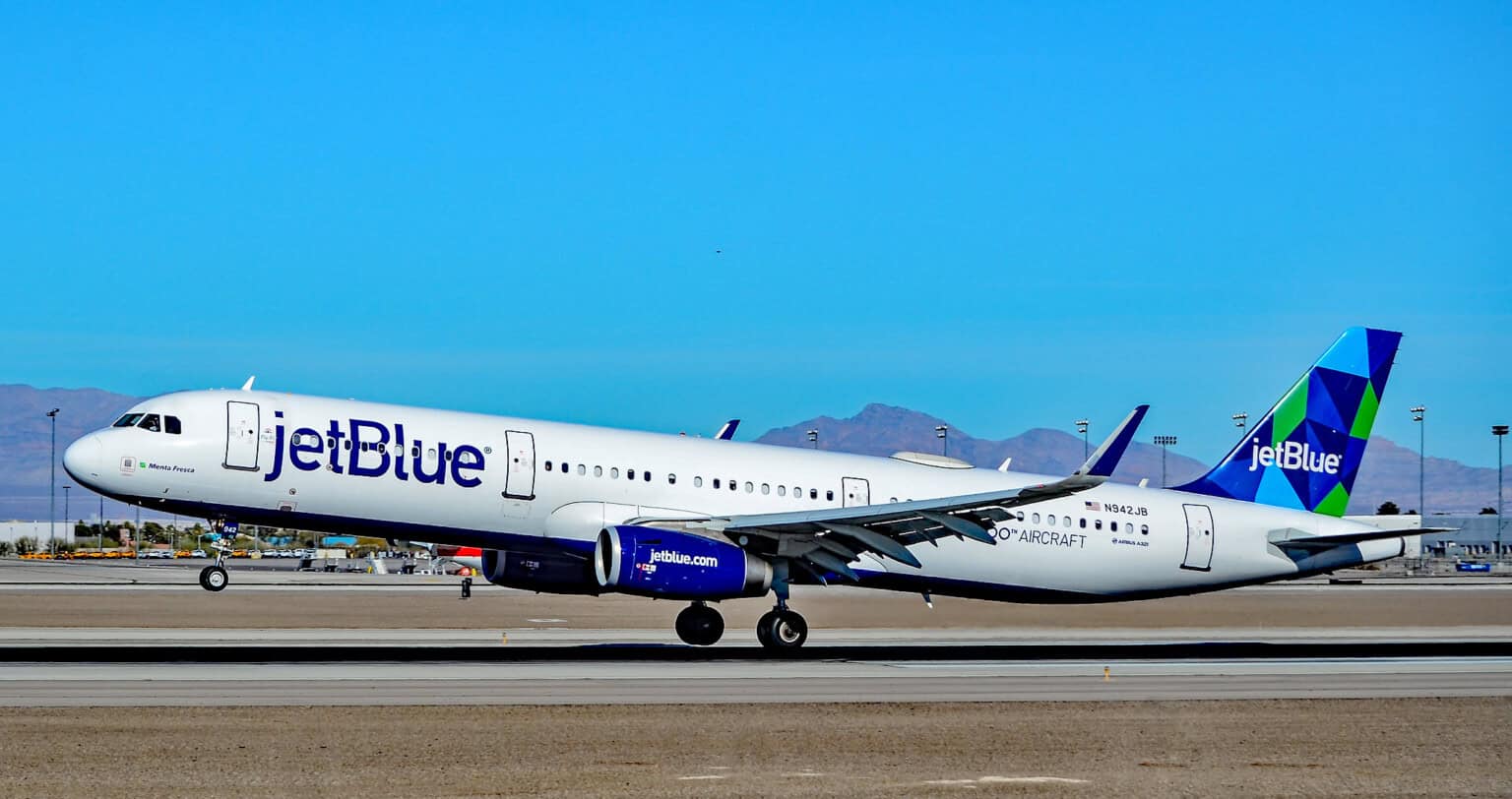
On August 31, 2026, the FAA said it tentatively intends to let JetBlue Airways buy 22 takeoff and landing authorizations at New York LaGuardia Airport from the estate of the liquidated Spirit Airlines. The finding was published in the Federal Register under Docket FAA-2026-9043.
The agency opened a 20-day comment window that closes on September 21, 2026. Nothing is final until it reviews those comments and issues a decision.
What the FAA Actually Decided
The 22 authorizations break down as 12 daily departures and 10 arrivals. JetBlue won them in a court-supervised auction with a $58.5 million bid, edging out a $57.5 million offer from Frontier Airlines.
In its notice, the FAA wrote that relieving the two carriers “from the prohibition on selling and purchasing slots in the Order, subject to certain conditions and limitations, is in the public interest.” It found no safety impact, because the transfer does not change how many operations LaGuardia handles in total.
The conditions attached are substantial. JetBlue may not trade or lease the 22 slots until after April 2028, and it is permanently barred from selling them on to anyone else.
The agency also waived the usual use-or-lose requirement through April 2027. That gives JetBlue a full season to, in the FAA’s words, “integrate the Operating Authorizations into its network, assign aircraft and crews, complete schedule and revenue-management work.”
May 2, 2026
Spirit ceases operations. The airline stops flying and its assets pass to a bankruptcy estate for liquidation.
July 22, 2026
Bankruptcy Court approves the transfer. JetBlue’s $58.5 million auction bid beats Frontier’s $57.5 million offer.
July 23, 2026
Joint petition filed. JetBlue and Spirit ask the Department of Transportation for an exemption allowing the sale.
August 31, 2026
FAA publishes its tentative finding. The agency proposes to grant the exemption subject to trading, leasing, and resale restrictions.
September 21, 2026
Comment period closes. The FAA can then confirm, alter, or reject the conditions before issuing a final decision.
Why a Private Slot Sale Needs Federal Permission
LaGuardia is one of a small group of US airports where the FAA caps how many operations can happen in each hour. Demand there has exceeded runway capacity for decades, so access is rationed rather than sold on the open market.
A slot at such an airport is not property in the ordinary sense. It is a federal operating authorization, and the FAA order governing LaGuardia bars carriers from buying and selling them outright.
That is why a deal between two private companies, already blessed by a bankruptcy judge, still needed a government exemption to close. The FAA restated the point bluntly: any purchased slot “remains subject to FAA’s authority, superior interest, and absolute control,” including the power to withdraw it.
Scarcity is what makes the price make sense. LaGuardia has 1,141 slots in total, and they almost never come loose in a block this size. Spirit’s liquidation put 22 of them on the market at once.
Tentative, not final
The FAA’s finding is a proposal, not an approval. Comments close on September 21, 2026, and the agency can change the conditions or decline the exemption entirely before it issues a final decision.
What 22 Slots Do for JetBlue
The purchase lifts JetBlue from 31 authorizations at LaGuardia to 53, an increase of roughly 71 percent. Even so, its share of the airport rises only from about 2.7 percent to 4.6 percent.
That small share is central to the FAA’s reasoning. The agency described JetBlue as a “limited incumbent, independent, non-aligned carrier” and framed the sale as a way to strengthen a smaller airline against LaGuardia’s dominant operators.
Aviation Week reported that JetBlue expects the slots could support up to 12 additional daily round trips at LaGuardia during 2027. Because the carrier already holds 31 authorizations there, it can rebalance arrivals against departures across its whole portfolio rather than flying the new 22 as a standalone block.
For the Spirit estate, the slots are one more asset to convert into cash for creditors. The same liquidation earlier sold the airline’s internal data to Google for $10 million, and the question of who now owns Spirit has a distinctly unglamorous answer.
Sources and references used for research and fact-checking.
Get the Newsletter
The latest aviation news and stories sent to your inbox.
About the Author

Tim is the owner and lead editor of AeroCorner since 2019, overseeing aviation content covering aircraft, airlines, airports, and the broader aviation industry. Through years of researching, writing, editing, and publishing aviation-focused content, he has developed extensive practical knowledge of commercial aviation and air travel. Based in Asia and a frequent traveler himself, Tim also brings firsthand passenger experience to AeroCorner’s coverage. Outside of publishing, he has also explored aviation firsthand through hands-on flight training in New Zealand.