

Table of Contents
Right now, a passenger jet is somewhere over the Arctic ice, roughly halfway between Singapore and New York. It left more than nine hours ago. It has more than eight hours still to fly.
This is the longest scheduled flight in the world, and getting a plane to do it is far harder than it sounds. An airliner cannot simply point at a distant city and go.
To stay airborne for 18 hours, an airline has to rebuild the aircraft, rethink the cabin, and carry two full sets of pilots. It even has to give up selling cheap seats.
The distance, oddly, is the easy part. The machinery behind it is the real story.
The flight itself
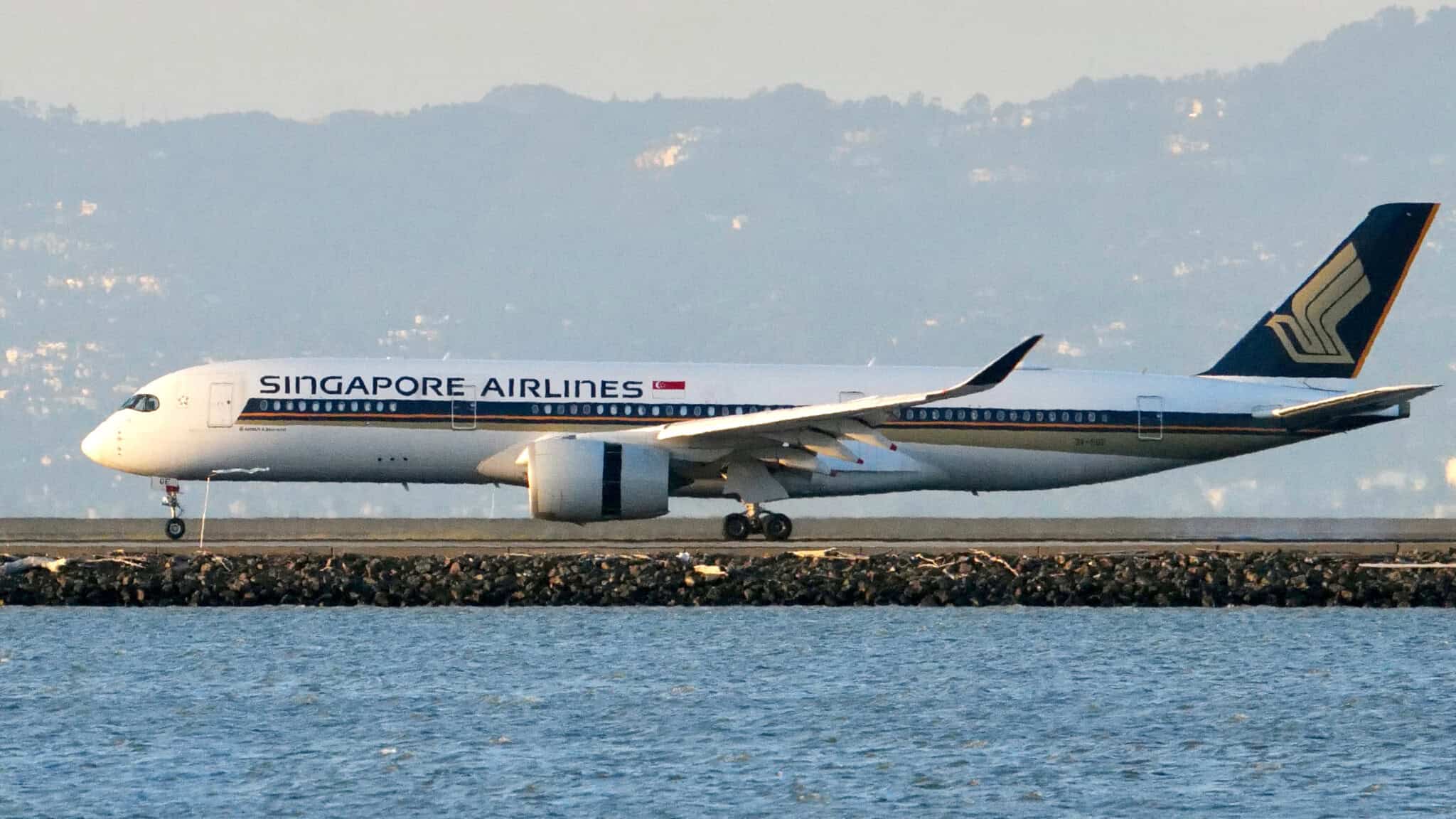
As of 2026, the record holder is Singapore Airlines’ nonstop from Singapore to New York’s JFK airport. AeroCorner’s longest-routes ranking puts it at about 9,532 miles (15,341 km), scheduled at roughly 18 hours and 20 minutes.
Its sister route to Newark is only a few miles shorter, and both use the same aircraft. No other flight in service today comes close, as the ranking below shows.
The world's longest flight, in one line
Singapore to New York (JFK), about 9,532 miles and 18 hours 20 minutes nonstop, on the Airbus A350-900ULR. It has held the title for years, and it is the same journey that once proved too expensive to fly at all.
| # | Route | Distance | Flight time |
|---|---|---|---|
| 1 | Singapore to New York (JFK) | 9,532 mi | 18h 20m |
| 2 | Singapore to Newark (EWR) | 9,530 mi | 18h 20m |
| 3 | London to Perth | 9,015 mi | 17h 15m |
| 4 | Dallas-Fort Worth to Melbourne | 8,994 mi | 17h 40m |
| 5 | New York (JFK) to Auckland | 8,833 mi | 17h 25m |
Longest routes in service, by distance. Source: AeroCorner route rankings, July 2026.
An aircraft rebuilt to carry more fuel
A flight this long is really a fuel problem. To burn fuel for 18 hours, the aircraft first has to carry it, and jet fuel is heavy.
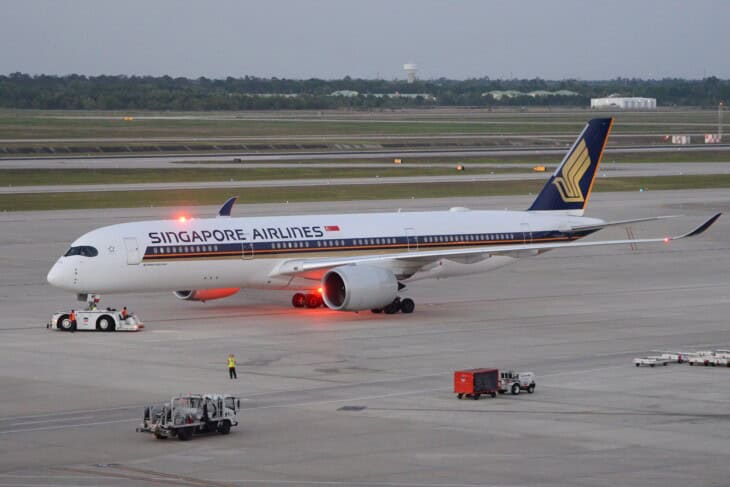
Singapore Airlines uses a special version of the Airbus A350 called the ULR, short for ultra long range. Airbus did not bolt extra tanks into the hold. Instead it modified the fuel system to unlock unused space inside the wing structure.
That lifts the aircraft’s fuel capacity to around 165,000 litres, roughly 24,000 litres more than a standard A350-900. The payoff is a range of about 9,700 nautical miles, the longest of any airliner flying today.
At takeoff, a huge share of the jet’s weight is simply fuel. It leaves Singapore heavy and slow to climb, and only starts to feel nimble many hours later as the tanks run down.
Singapore Airlines keeps only a small subfleet of these jets, reserved for its longest routes. You can see the exact distance and scheduled time on AeroCorner’s Singapore to New York flight-time page.
Here is the catch that shapes everything else. Every aircraft has a maximum weight it can lift, so fuel and payload compete for the same allowance.
The more fuel you load, the less weight is left for passengers, bags, and cargo. This is the same tension behind why planes carry more fuel than they seem to need, pushed to its absolute limit.
Why the world’s longest flight has no economy class
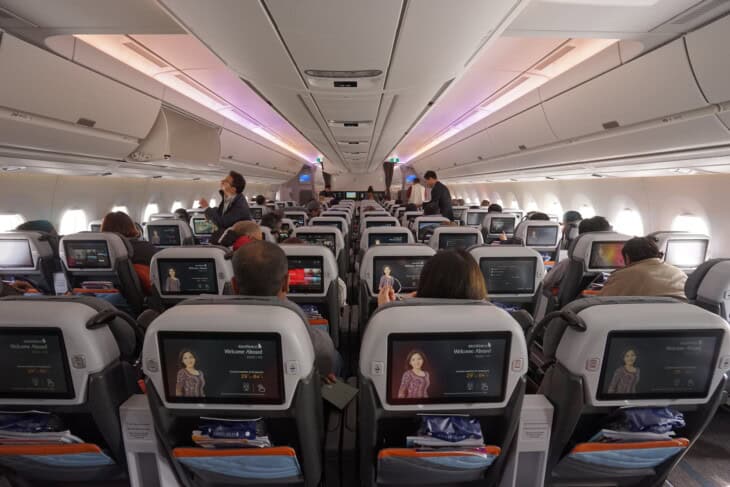
Because weight is so tight, Singapore Airlines does not try to pack the cabin. The A350-900ULR on these routes carries just 161 passengers, split between two premium cabins.
There are 67 business class seats and 94 premium economy seats. There is no economy class at all.
No cheap seats at the back
A typical A350 can seat well over 300 people. The ultra-long-range version flying to New York carries just 161, and not one of them is in economy. Fewer, higher-paying passengers is the only way the numbers work when so much of the aircraft’s weight budget is spent on fuel.
The logic is simple once you see it. A full cabin of low fares cannot cover the cost of a route that burns more than 100 tonnes of fuel and ties up an aircraft for the better part of a day.
So the airline sells fewer, more expensive seats instead. The travellers who most value an 18-hour time saving, business flyers and premium tourists, are the ones willing to pay for it.
It is a neat inversion of how we picture flying. The longest, most demanding flight in the world carries fewer people than the short-haul jet that took you on your last weekend trip.
Those seats are not cheap either. A business class fare on the route can run into several thousand dollars each way, and that is exactly the point.
A small cabin of high fares is what turns 18 hours of fuel burn into a route worth flying. Fill the same jet with bargain seats and the whole thing stops making sense.
What 18 hours in the air actually takes
The aircraft is only half of it. A flight this long also runs straight into the limits of the people on board.
No pilot can legally fly 18 hours in one stretch, so the flight carries two full sets of pilots. They work in shifts and sleep in a hidden crew rest compartment, all governed by strict crew rest rules.
The cabin crew rotate through their own breaks the same way. Keeping everyone rested across an 18-hour duty is a scheduling puzzle on its own.
The passengers get engineered for, too. The airline tunes the cabin lighting to ease the body between time zones, times the meals to encourage sleep, and keeps the air more humid than usual to soften jet lag.
None of it makes 18 hours feel short. But it is the difference between a flight people will pay a premium for and one they would never book twice.
The time zones add their own strangeness. A passenger who leaves Singapore in the morning can land in New York on the same calendar day, having crossed 12 time zones. The clock barely moves, even as the body insists otherwise.
The route that was too expensive to fly
This exact journey has been the world’s longest flight before, and it was cancelled. The history of the record is really a story of aircraft catching up with ambition.
2004
The first nonstop launches. Singapore Airlines begins flying Singapore to Newark on the four-engine Airbus A340-500, then about the only aircraft that could manage the distance.
2013
The record is retired. With fuel prices high, the thirsty A340-500 cannot fly the route profitably, and the service is suspended.
2018
A comeback on new wings. The far more efficient Airbus A350-900ULR relaunches the Newark route and makes ultra-long-haul viable again.
2020
The current champion appears. Singapore to New York JFK begins and edges out Newark by a few miles to become the world’s longest commercial flight.
The first version, in 2004, used the four-engine Airbus A340-500 and later flew as an all-business-class service. But four engines drink fuel, and when oil prices climbed the route stopped making money.
It returned in 2018 only because a better tool existed. The twin-engine A350-900ULR flew the same distance far more efficiently, turning an impossible route into a merely difficult one.
The record is about to move
Singapore’s title now has a deadline. In October 2027, Qantas plans to launch a nonstop from Sydney to London, a project it calls Sunrise.
That route runs roughly 10,600 miles (17,000 km) and is expected to stay airborne for up to 22 hours, using a stretched Airbus A350-1000ULR. When it starts, it will take the crown comfortably.
It will also lean on the same mechanics, only more so. More fuel, fewer seats, more crew, and an even longer stretch of the planet crossed in a single hop.
Longest by distance is not longest by time
Notice that ranking these flights gets slippery. How long a flight is depends on whether you count miles or minutes.
Longest by distance is not longest by time
Winds change everything. London to Perth covers more ground than Dallas to Melbourne, yet it usually takes less time, because the winds along the way are kinder. A tailwind can shave an hour off a longer route, so the ranking shifts depending on whether you count miles or minutes.
There is a second surprise hiding in the map. Singapore to New York does not fly east across the Pacific, the way a flat map seems to suggest.
It flies north, up over China and the Arctic, and back down into New York. On a globe that is genuinely the shortest path, even though it looks like a long detour on a wall map.
So the next time you hear about the world’s longest flight, picture the machinery, not just the mileage. A re-plumbed fuel system, a cabin with no cheap seats, two crews trading shifts, and a route arcing over the top of the world.
If superlatives like this interest you, the opposite extreme is just as strange. The same forces of geography and demand explain why a short domestic hop is the world’s busiest route, and both come down to the quiet logic of how airlines actually work.
Sources and references used for research and fact-checking.
- AeroCorner, Longest Flights in the World
- Aviation A2Z, 5 Longest Non-Stop Flights in the World in 2026
- Ready for Take Off, How the Airbus A350-900ULR Enables Ultra-Long Flights
- Simple Flying, Why The World's Longest Flight Does Not Have Economy Class
- The National, In it for the ultra-long-haul: World's longest flights and Project Sunrise
Get the Newsletter
The latest aviation news and stories sent to your inbox.
About the Author

Tim is the owner and lead editor of AeroCorner since 2019, overseeing aviation content covering aircraft, airlines, airports, and the broader aviation industry. Through years of researching, writing, editing, and publishing aviation-focused content, he has developed extensive practical knowledge of commercial aviation and air travel. Based in Asia and a frequent traveler himself, Tim also brings firsthand passenger experience to AeroCorner’s coverage. Outside of publishing, he has also explored aviation firsthand through hands-on flight training in New Zealand.