Fighter Jets
Sukhoi Su-25 “Frogfoot”
ICAO: SU25
The heavy half of a Soviet fighter program, still flying on both sides in Ukraine
Updated: by Tim de Vries
The latest aviation news and stories sent to your inbox.
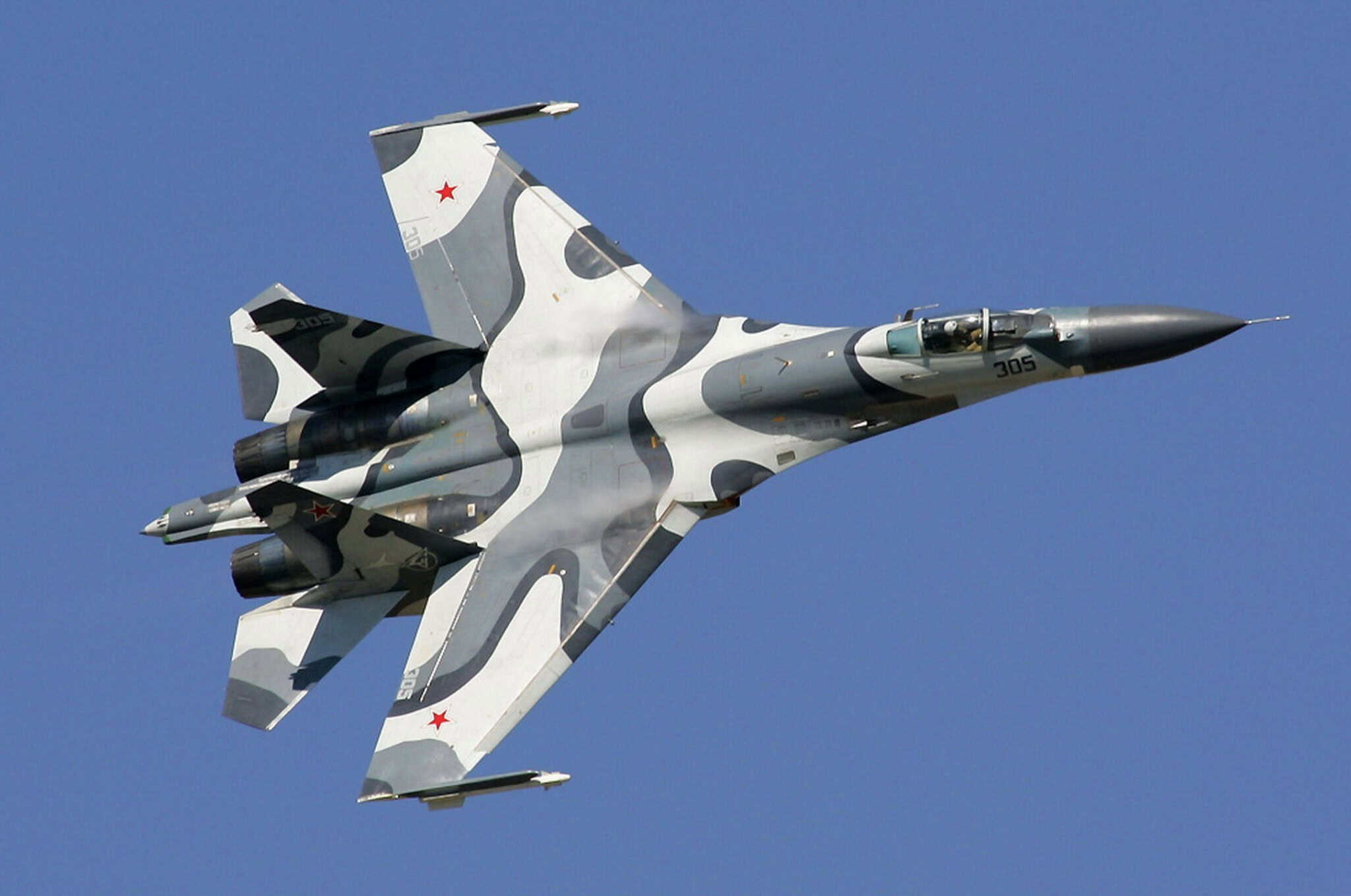
The Sukhoi Su-27, called Flanker by NATO, is the heavy half of a Soviet fighter requirement that was split in two: the light side became the MiG-29, and the Su-27 became a long-range air superiority fighter built to match the F-15 Eagle. It first flew as the T-10 prototype on 20 May 1977, entered Soviet service on 22 June 1985, and was built until 2010. Its blended wing-body airframe, fly-by-wire controls and 20,700 lb of internal fuel made it the foundation of the Su-30, Su-33, Su-34, Su-35 and China’s J-11.
Live Fleet Activity (SU27)
Fetching live data…
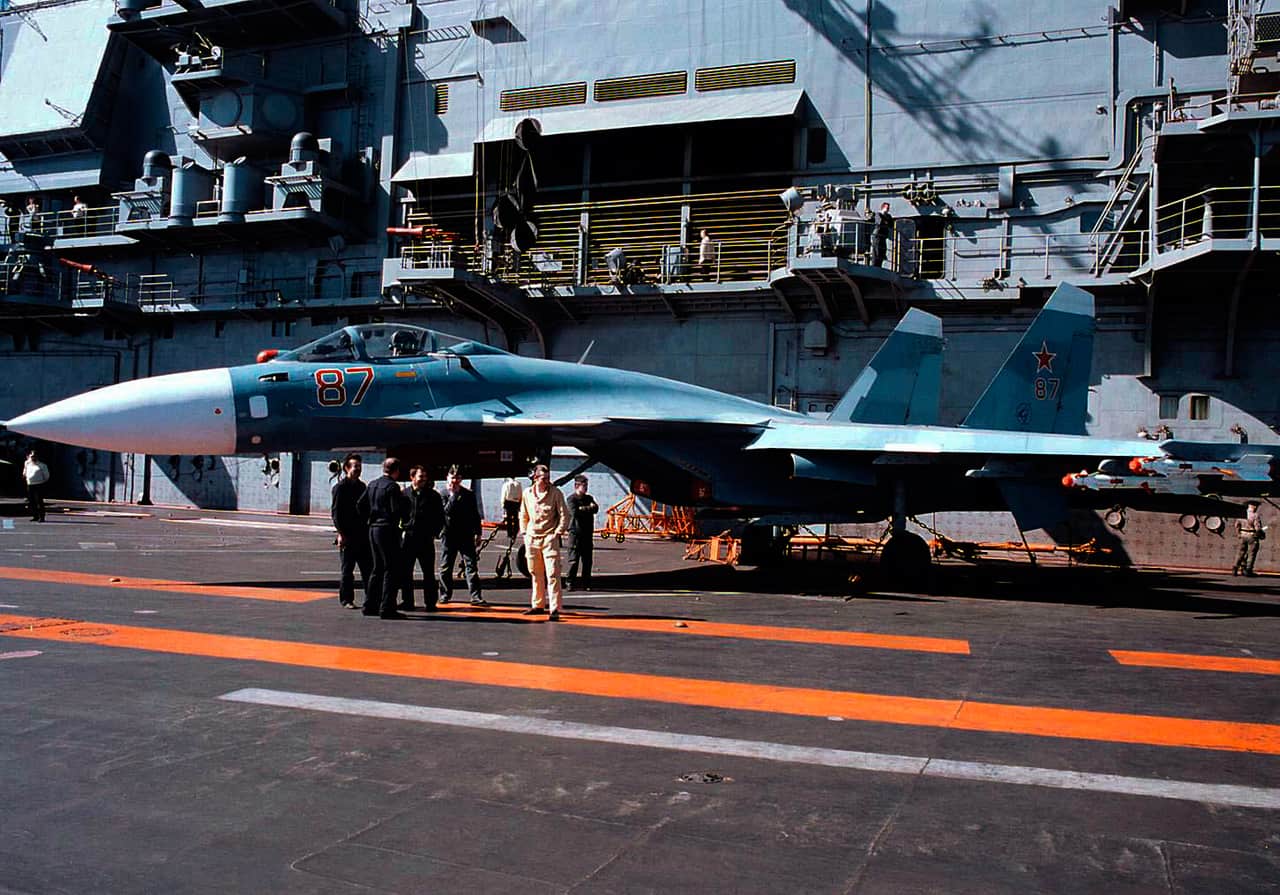
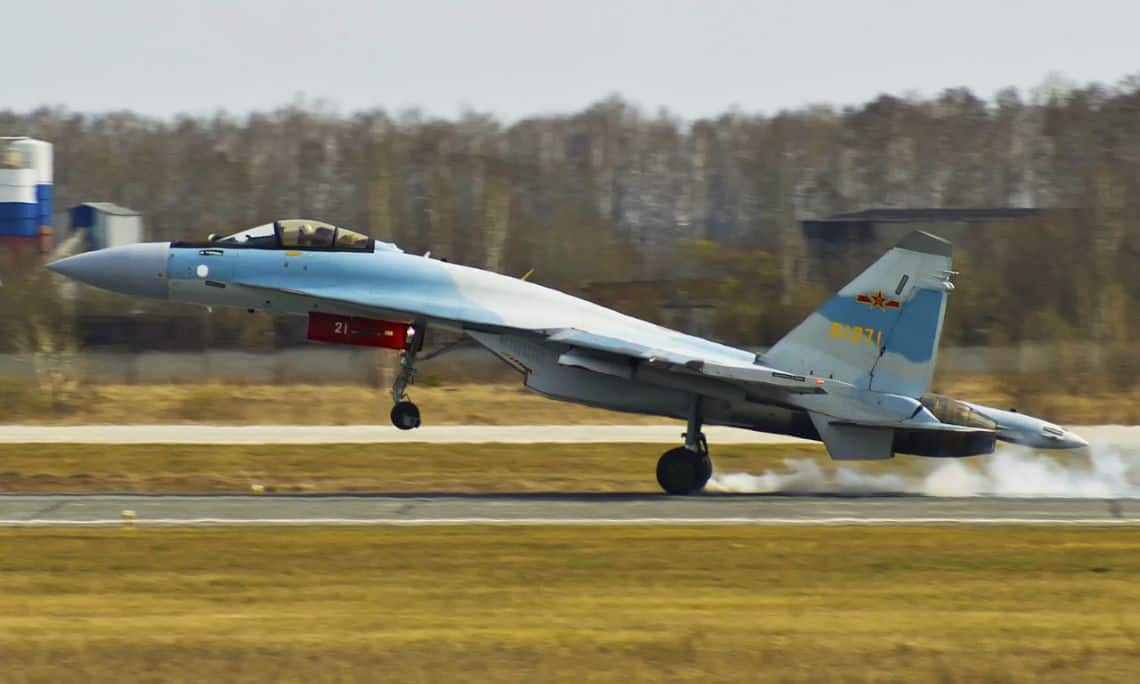
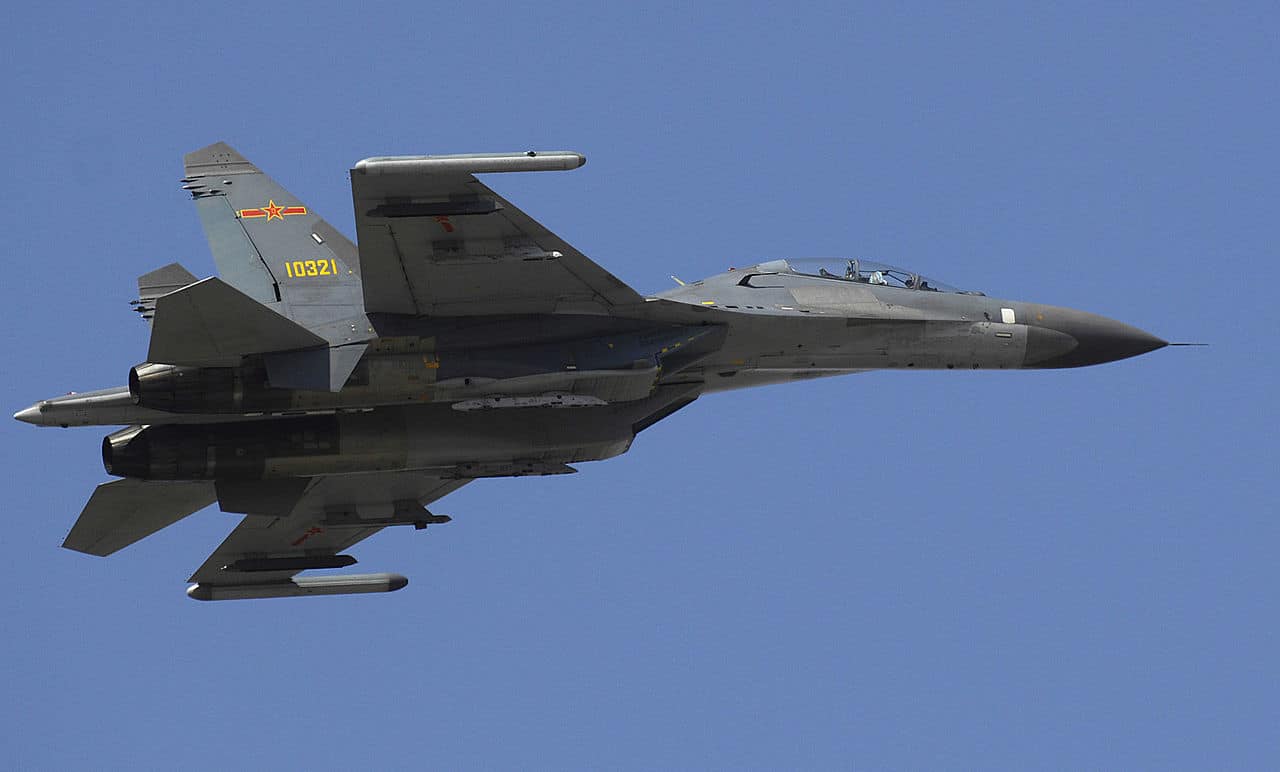


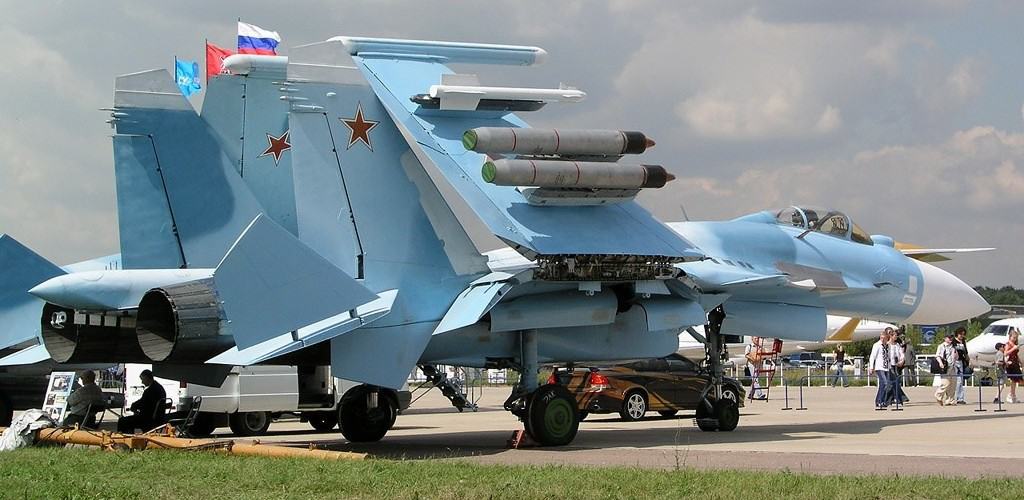


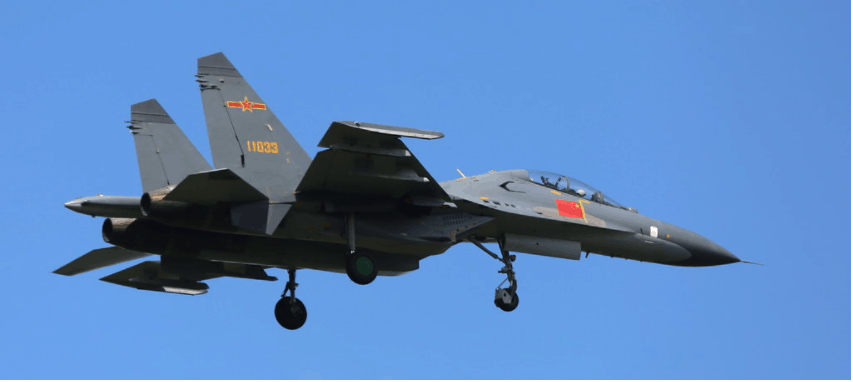


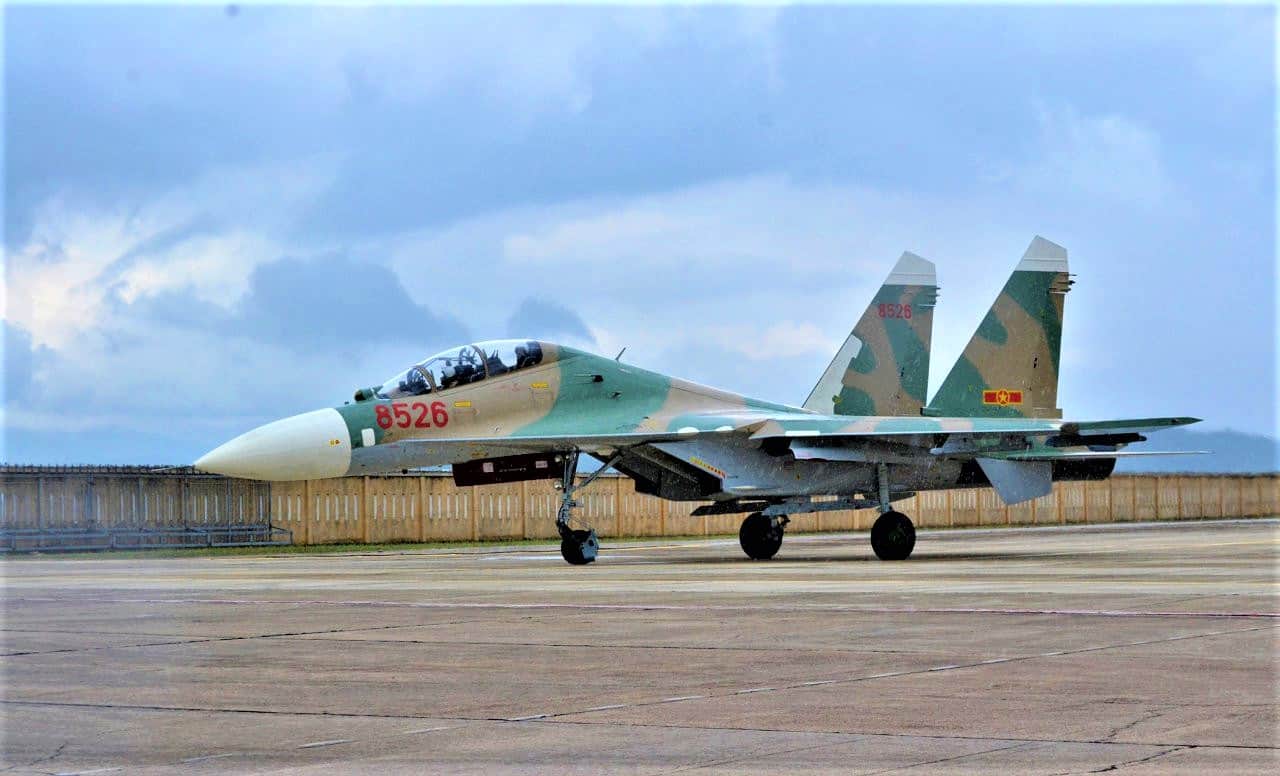


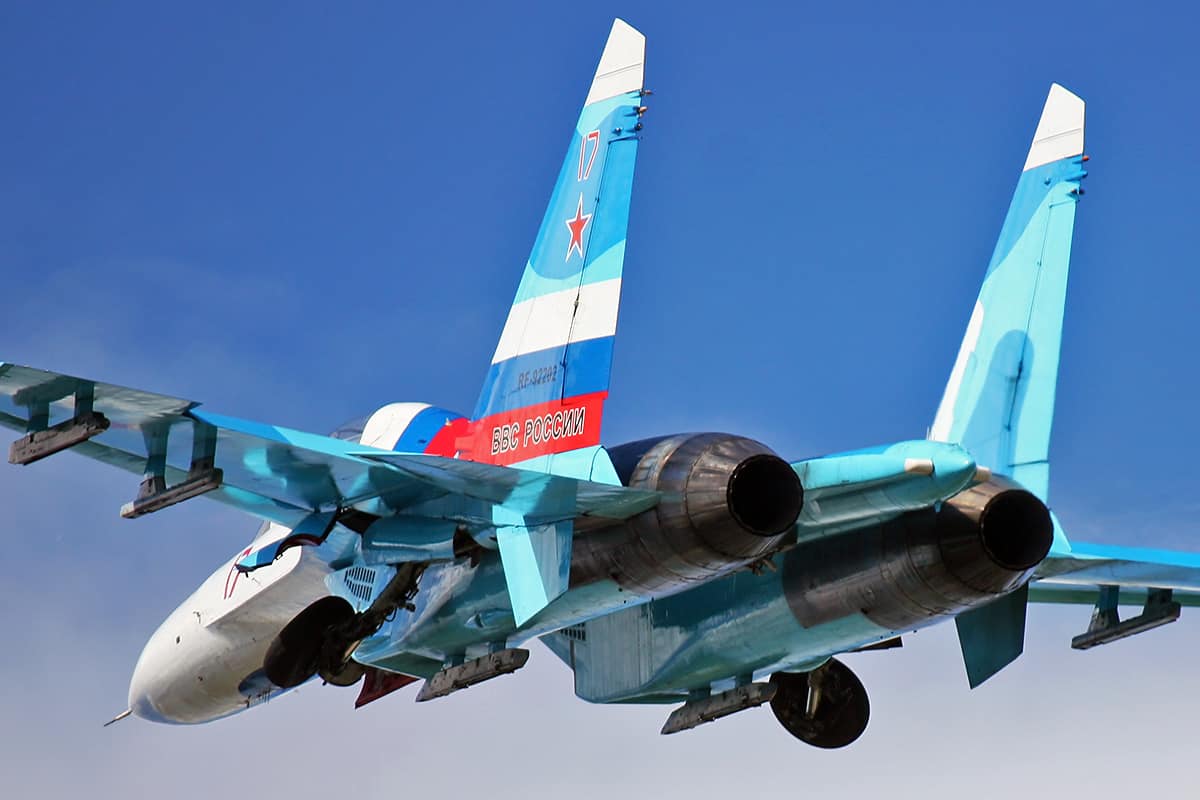
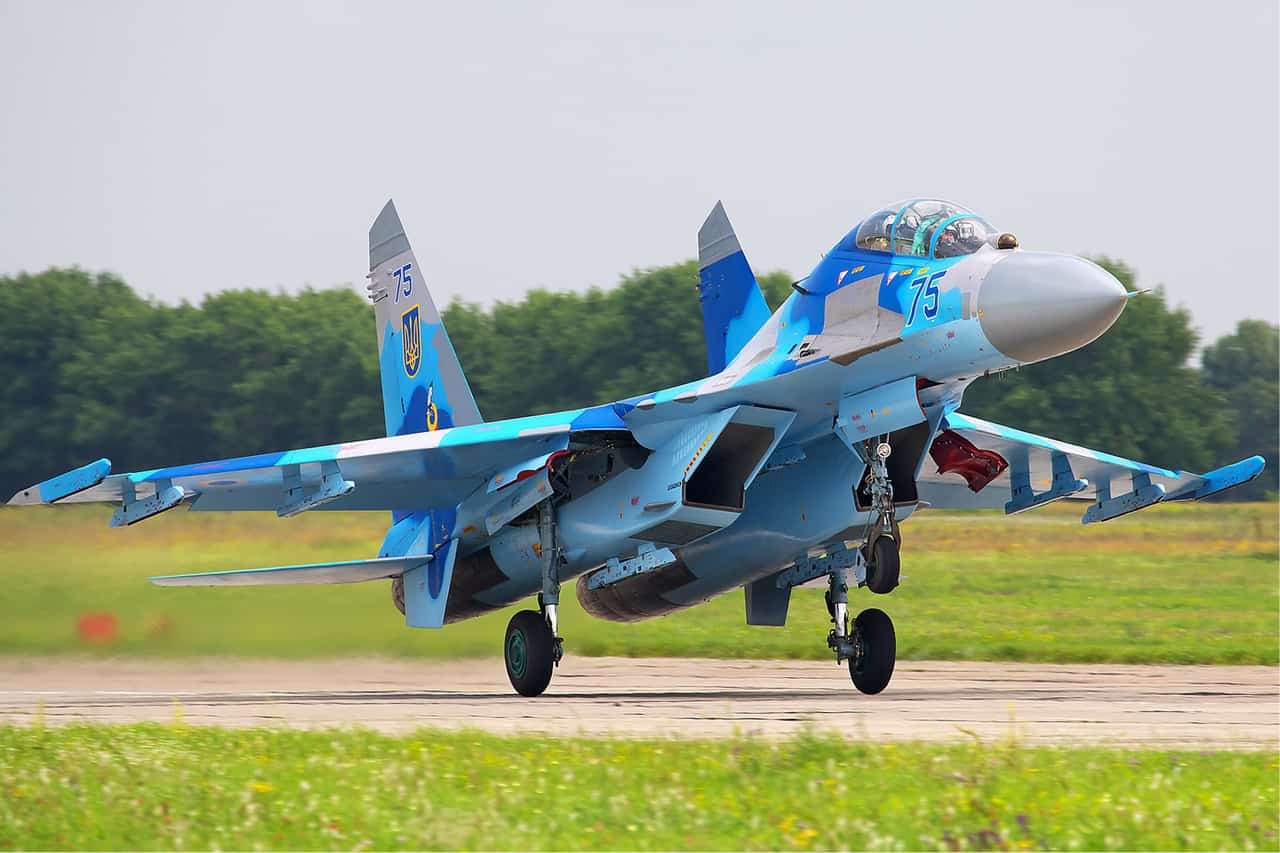


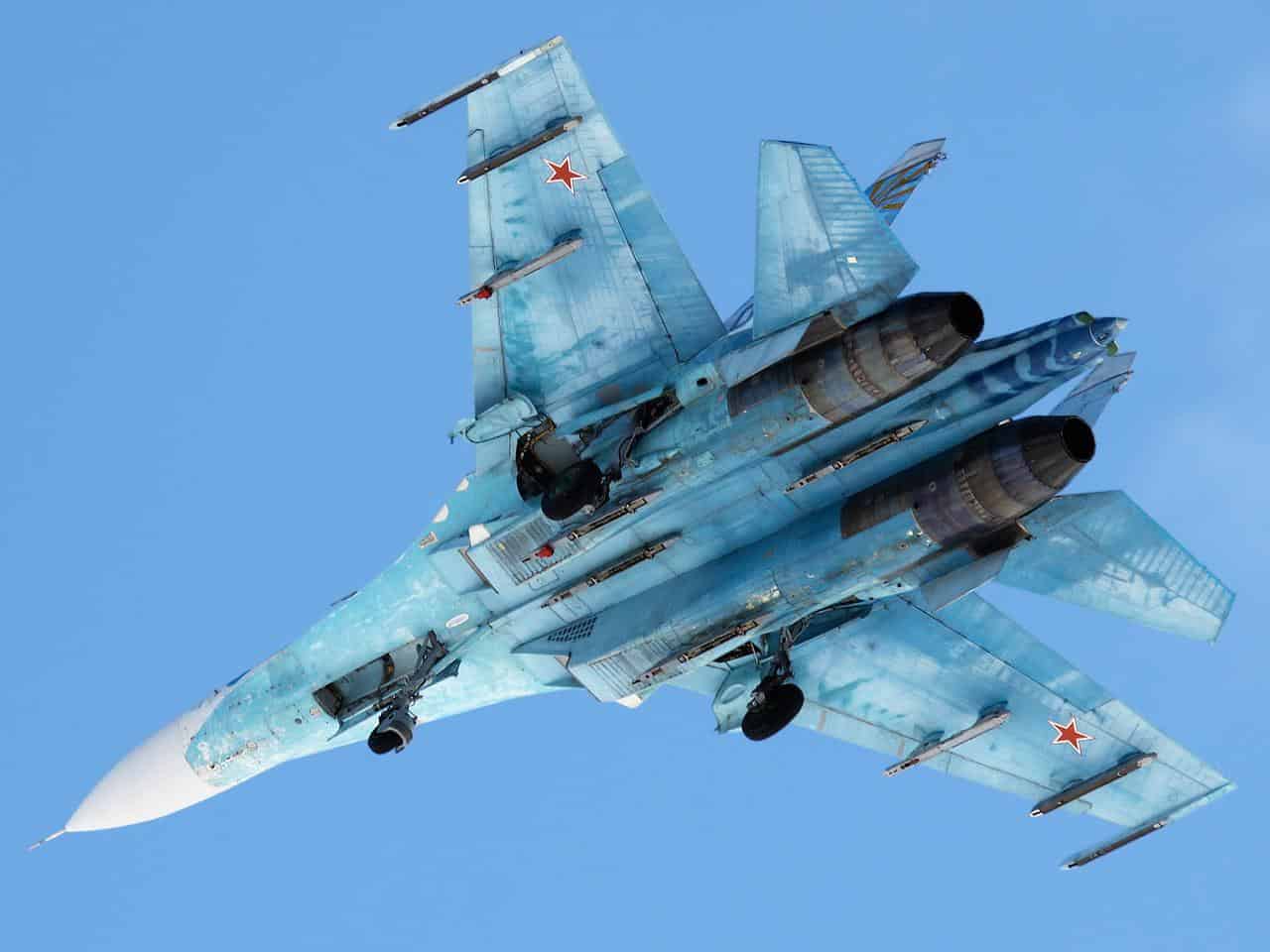

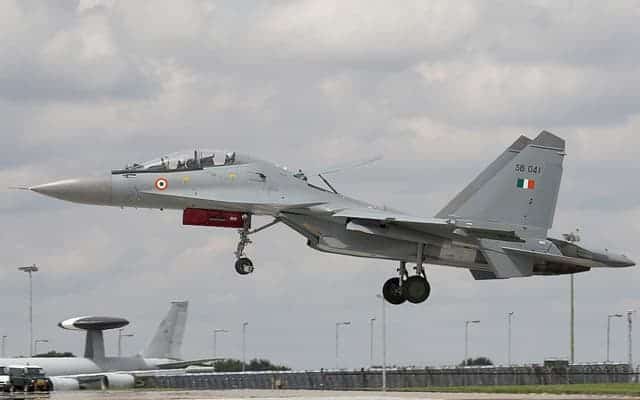

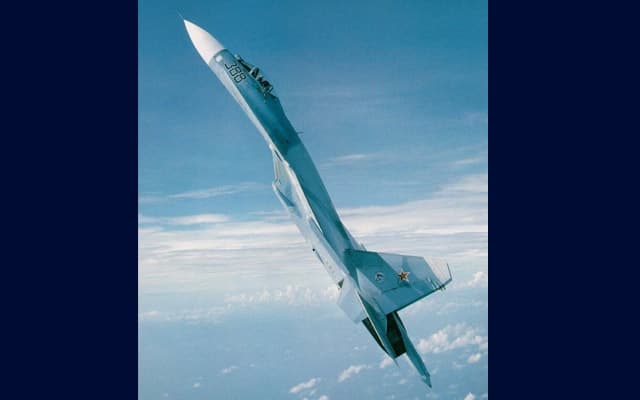
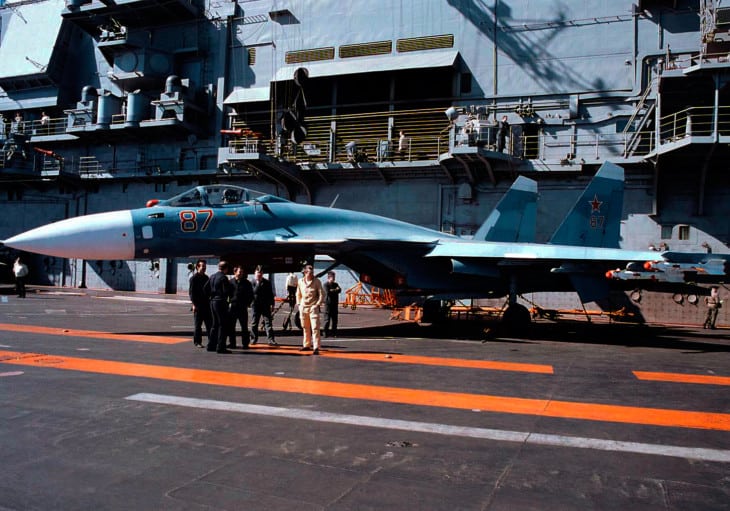
The Sukhoi Su-27, known to NATO as the Flanker, is a Soviet twin-engine air superiority fighter built to match the American F-15 Eagle. It first flew on 20 May 1977 as the T-10 prototype and entered Soviet service on 22 June 1985.
It is a large aircraft by fighter standards, and deliberately so. The Soviet requirement asked for Mach 2 speed, heavy armament and enough internal fuel to patrol the Soviet coastline without tankers, and the airframe grew to hold all three.
Production ran from 1982 to 2010 and totalled roughly 680 aircraft, though published counts vary and some references put the figure closer to 800. Its ICAO type designator is SU27, a code it shares with the rest of the Flanker family.
The Su-27 also became the most prolific fighter bloodline of the late Soviet era. The Su-33, Su-30, Su-34, Su-35 and China’s Shenyang J-11 all descend from this airframe.
In 1969 the Soviet Union learned of the U.S. Air Force’s F-X program, the effort that produced the F-15. The response was a requirement called PFI, for Perspektivnyy Frontovoy Istrebitel, or Advanced Frontline Fighter.
The PFI specification asked for long range, austere-field performance, Mach 2 speed, excellent agility and heavy armament in one airframe. It proved too expensive to build in the numbers the air force wanted.
So the Soviets split it in two. The lightweight half, LPFI, became the Mikoyan MiG-29; the heavy half, TPFI, went to the Sukhoi design bureau and became the Su-27.
That split is the whole answer to why the Flanker is so much larger than its stablemate. The MiG-29 was meant to fight over the front line from a rough strip.
The Su-27 was meant to do something else entirely: fly long-range air defense against B-52 and B-1B bombers, escort Tu-95, Tu-22M and Tu-160 bombers, and cover the Soviet coastline against carrier air wings.
Getting there took two attempts. The first T-10 prototypes missed their targets for avionics weight, engine fuel consumption and aerodynamics, and Sukhoi tore the design up and started again.
It was an expensive process. Prototypes were lost with their pilots in July 1978 and December 1981, and both the project chief and Sukhoi’s general designer were removed after crashes. The redesigned T-10S, completed in 1980, bears only a superficial resemblance to the first aircraft.
The Su-27 uses a blended wing-body layout in which the fuselage itself generates lift rather than simply carrying the wing. The cropped semi-delta wings meet the fuselage through long leading-edge root extensions, and the two engines sit in widely separated nacelles with a lifting tunnel between them.
That tunnel does two jobs. It adds lifting area, as it does on the F-14 Tomcat, and it shields the centerline weapons from radar.

The Su-27 was also the first Soviet fighter to enter service with an operational fly-by-wire flight control system, developed from Sukhoi’s work on the T-4 bomber project. The airframe is deliberately unstable in pitch, and the computers make it flyable.
Combine relaxed stability with low wing loading and roughly 668 square feet (62 m2) of wing, and you get an aircraft that stays controllable at very low speeds and very high angles of attack.
That is the technical basis for the Cobra, the maneuver in which a Flanker pitches to about 120 degrees angle of attack, hangs there in level flight for a moment, and recovers.
Test pilot Viktor Pugachev first demonstrated it publicly in 1989, and it has been the type’s signature ever since. Whether it has any tactical use is still argued over; what it demonstrates is control authority well outside the normal envelope.

The baseline Su-27 carries a Phazotron N001 Myech coherent pulse-Doppler radar with track-while-scan and look-down, shoot-down capability. Alongside it, in a ball just forward of the windscreen, sits an OLS-27 infrared search and track set credited with a detection range of 50 to 62 miles (80 to 100 km).
The IRST matters more than the radar spec sheet suggests. It lets the pilot detect and track a target without radiating, which a radar-only fighter cannot do.
Armament is a single 30 mm Gryazev-Shipunov GSh-30-1 cannon in the starboard wing root with 150 rounds, plus up to 10 external hardpoints. The standard air-to-air load mixes radar-guided R-27 missiles, known to NATO as the AA-10 Alamo, with infrared R-73s, the AA-11 Archer.
The R-27 came in several forms, including extended-range and infrared-homing versions, so one load could cover both radar-guided and heat-seeking shots. With 10 pylons to fill, a Flanker could carry a deeper magazine than most fighters it would meet.
The full specification table for this aircraft is in the panel on this page. A few of those figures get quoted against each other in ways that need explaining.
Range. The 1,906 nautical mile figure is Sukhoi’s own number, 2,193 miles (3,530 km) at cruising altitude, flown with two R-27R1 and two R-73E missiles fired at the halfway point.
Fly the same aircraft clean and high and references publish about 2,420 miles (3,900 km). Fly it down at sea level and the number collapses to roughly 830 to 870 miles (1,340 to 1,400 km), because a fighter this size drinks fuel in dense air.
Speed. The panel stores 1,350 kt (1,554 mph, 2,500 km/h) at altitude, or Mach 2.35. At sea level the limit is about 870 mph (1,400 km/h), roughly Mach 1.13, and that lower number is the one that matters in a real intercept.
Weight. Maximum takeoff weight is published as 67,000 lb (30,500 kg) for the standard Su-27, but you will also see 61,700 lb (28,000 kg) and 72,750 lb (33,000 kg) quoted.
The lowest figure is a normal maximum rather than an overload limit. The highest belongs to the export Su-27SK, whose landing gear was reinforced at Chinese request so the aircraft could carry air-to-ground loads.
Ceiling. The 60,700 ft in the panel is Sukhoi’s figure for a clean airframe with no external stores. Hang missiles and pylons on it and the practical ceiling is lower, which is part of why published ceilings for the type disagree.
Fuel. The Su-27 holds 20,700 lb (9,400 kg) of fuel internally, about 3,150 US gallons (12,000 L), across five integral tanks in the fuselage, center section and wings. That is roughly double what a light fighter of the same era carried, and it is the single specification that explains the airframe’s size.
The production single-seater is the Su-27S, called Flanker-B by NATO. The Su-27P is the same aircraft delivered to Soviet Air Defence Forces without the air-to-ground wiring, and the Su-27UB Flanker-C is the tandem two-seat combat trainer, which keeps full combat capability.
Export versions carry a K suffix. The Su-27SK went to China and later Indonesia, the Su-27UBK is the two-seat export trainer, and the Su-27SKM added a modern cockpit, better countermeasures and inflight refueling.
Russia’s own fleet was modernized rather than replaced. The Su-27SM upgrade swapped analog instruments for multifunction displays, improved the radar and electro-optical system, and added guided air-to-ground weapons and the R-77 missile, none of which the baseline aircraft could use. The Su-27SM3 went further with AL-31F-M1 engines and a higher takeoff weight.
Then there are the aircraft that stopped being Su-27s. The naval Su-27K became the Su-33, the interceptor-turned-multirole Su-27PU became the Su-30, the side-by-side strike variant became the Su-34, and the Su-27M line led to today’s Su-35. China’s license-built Su-27SK became the J-11 and, eventually, an indigenous family of its own.
Russia is the largest operator. Wikipedia’s operator list records 101 baseline Su-27s in service as of 2021, out of a 2014 inventory of 359 aircraft that included Su-27SM and SM3 upgrades and Su-27UB trainers, with the Russian Navy holding a further 53.
China was the first export customer and the only one to buy the type before the Soviet Union collapsed. It received about 76 Soviet and Russian-built aircraft, 36 Su-27SKs and 40 Su-27UBKs, with the first 12 arriving in late 1991 and payment initially made 70 percent in barter goods.

The rest of the operator list is small and scattered. Ethiopia, Eritrea, Angola, Indonesia, Kazakhstan, Uzbekistan and Vietnam all fly or flew handfuls of aircraft, several of them second-hand Russian or Ukrainian airframes.
Belarus retired its Su-27P and Su-27UBM1 fleet in December 2012. The United States is an operator too, of a kind: two Su-27Ps arrived from Belarus in 1995, and two demilitarized Su-27UBs bought from Ukraine were acquired by the U.S. Air Force in 2011.
Russia intends to replace both the Su-27 and the MiG-29 with the Su-57, but that has been the plan for well over a decade and the Flanker is still flying. If you want the wider context, our roundup of the best Russian fighter jets puts the type against its domestic rivals.
The Flanker’s first recorded encounter with a Western aircraft was not a shootdown. On 13 September 1987 a Soviet Su-27 made repeated close passes on a Norwegian P-3 Orion over the Barents Sea and struck it on the third pass; both aircraft landed safely.
Its clearest air-to-air record belongs to Ethiopia. Ethiopian Su-27s, bought second-hand from Russia in 1998, are confirmed to have shot down two Eritrean MiG-29s and damaged a third in February 1999 during the Eritrean-Ethiopian War, and claimed two more in May 2000 that Eritrea denies. Ethiopia’s overall claim is seven MiG-29s, of which only two to four are confirmable.
Losses have come mostly from the ground. Angola reportedly lost an Su-27 to a shoulder-fired Strela-3 while landing on 19 November 2000, and Russian Su-27s flew airspace control missions over Tskhinvali during the 2008 war in Georgia.
The type’s most-watched moment was on 14 March 2023, when a Russian Su-27 dumped fuel on a U.S. Air Force MQ-9 Reaper over the Black Sea and then struck its propeller, forcing the operator to ditch the drone.

Since February 2022 the Su-27 has been the rare aircraft flown by both belligerents. Ukraine inherited about 66 to 70 airframes in 1991 and had roughly 34 in service by 2019; Wikipedia’s operator list records 19 Ukrainian Su-27s lost as of 21 April 2026 against three Russian Su-27s lost as of late 2025.
The asymmetry that matters is not the loss count but the supply line. No allied air force operates the Su-27, so unlike the MiG-29 there is nothing to donate.
Analysis published in December 2025 put Ukraine’s active fleet somewhere between a dozen and 38 aircraft, depending on whose count you accept. Both air forces were still flying the type in combat as of April 2026, the date of the most recent loss tally.
The Su-27 also holds a grimmer record. On 27 July 2002 a Ukrainian Su-27 crashed during an aerobatic display in Ukraine, killing 77 spectators, in what is considered the deadliest air show disaster in history. Both pilots ejected and suffered only minor injuries.
No manufacturer flyaway price for the Su-27 is published, and the figures that circulate online trace back to aggregation rather than to a price list. What is documented is contract totals, and they say very different things.
Ethiopia paid about $150 million in 1998 for eight surplus Su-27s including two trainers, which works out near $19 million each but bundles support. China’s 1991 order for 24 aircraft was estimated in 1995 at $1.3 to $1.5 billion, well over $50 million per airframe, but that price carried weapons, a flight simulator and 70 percent payment in barter goods.
Private ownership is real but vanishingly rare. Two Su-27UBs were demilitarized by Pride Aircraft of Rockford, Illinois, re-marked in English and refitted with Garmin, Bendix/King and Collins avionics, then sold to private owners for roughly $5 million each before the U.S. Air Force bought them in 2011.
One of those two was retired in 2023 and is now on display at the National Museum of the United States Air Force in Dayton, Ohio. It was built in 1989, served with the Soviet Navy and then the Ukrainian Air Force, and was sold to a U.S. company in 2008.
For the wider picture of what private owners can legally fly, see our guide to fighter jets civilians can own.
Because the Soviet Union split one fighter requirement into two aircraft. The lightweight half became the MiG-29, and the heavy half became the Su-27, which had to carry 20,700 lb (9,400 kg) of internal fuel, a large radar and up to 10 hardpoints for long-range air defense sorties without tanker support.
It is one of the biggest fighter jets ever put into large-scale service.
They are different classes of aircraft, so “better” depends on the mission. The Su-27 is a twin-engine heavy fighter carrying far more internal fuel, range and weapons than a single-engine F-16, which is why it was built for long-range air defense rather than front-line work.
The F-16 is lighter, cheaper to operate and has been upgraded continuously for decades. Russia had to run its own Su-27SM and SM3 programs to keep the Flanker current, and the unmodernized aircraft is now clearly dated.
By 1980s standards it was a strong design. Long range, high-alpha control, an infrared search and track set and 10 hardpoints gave it a genuinely different capability set from the Western fighters it was built against.
The unmodernized airframe is now dated, which is why Russia upgraded much of its fleet to Su-27SM standard and moved new production to the Su-30 and Su-35.
Wikipedia’s operator list records 101 baseline Su-27s in Russian Aerospace Forces service as of 2021, with a further 53 in Russian Navy use as of January 2014. Higher figures you may see quoted, in the several hundreds, usually count the whole Flanker family including the Su-30 and Su-35 rather than the Su-27 itself.
Yes. Russia and Ukraine were both flying it in combat as of April 2026, and it remains in service with China, Vietnam, Kazakhstan, Uzbekistan, Ethiopia, Eritrea, Angola and Indonesia. Production ended in 2010, so every airframe still flying is at least sixteen years old.
The Su-27 is a fourth-generation fighter, built as the Soviet answer to large American fourth-generation types such as the F-14 and F-15. Its later derivatives, particularly the Su-35, are substantially more modern aircraft built on the same airframe.
They came from the same 1970s requirement, split into a heavy aircraft and a light one. The Su-27 is substantially larger, carries far more fuel and weapons, and was built for long-range air defense, while the MiG-29 was designed as a short-range front-line fighter operating from rough airstrips close to the battle.
Its maximum speed is 1,350 kt (1,554 mph, 2,500 km/h), which is Mach 2.35 at altitude. At sea level it is limited to about 870 mph (1,400 km/h), roughly Mach 1.13.
SU27. ICAO assigns that single type designator to the whole Flanker family, so the Su-30, Su-33, Su-34, Su-35 and the Chinese J-11, J-15 and J-16 all share it.
Sources and references used for research and fact-checking.