Fighter Jets
Sukhoi Su-27 “Flanker”
ICAO: SU27
Russia's thrust-vectoring 4.5-generation Flanker, built for air superiority and strike.
Updated: by Tim de Vries
The latest aviation news and stories sent to your inbox.
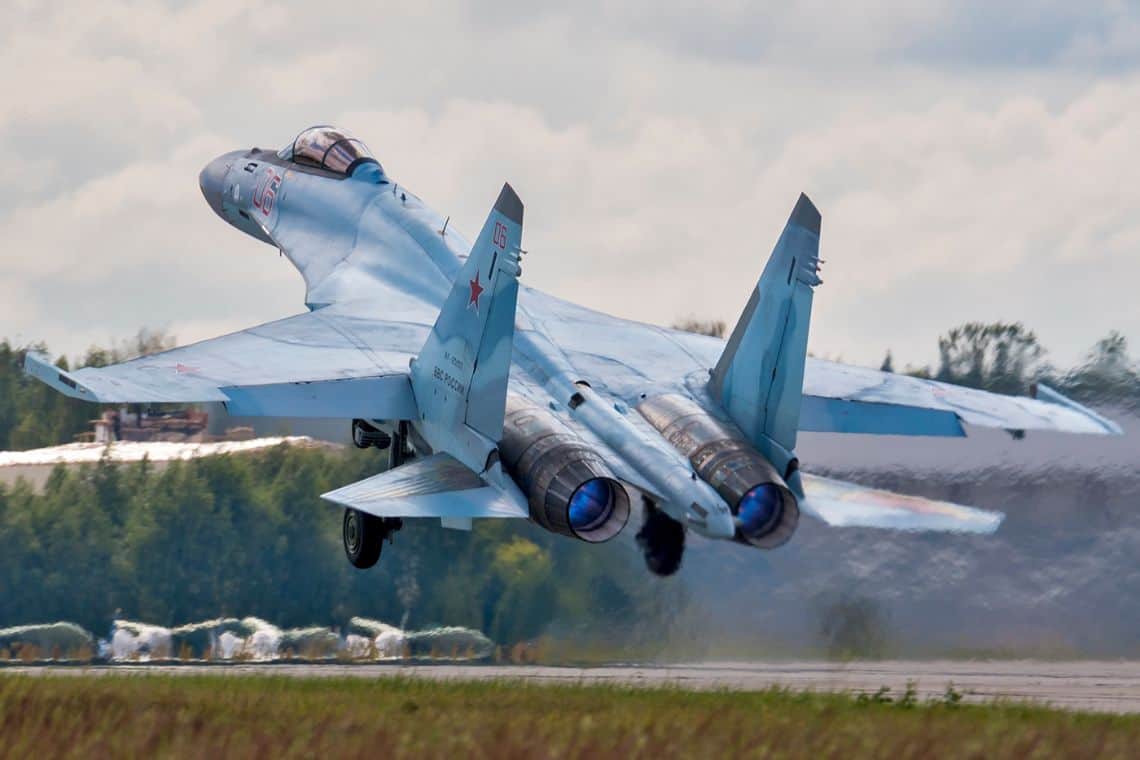
The Sukhoi Su-35 is a single-seat, twin-engine 4.5-generation fighter developed from the Su-27 Flanker. It pairs thrust-vectoring AL-41F1S engines with the Irbis-E radar and first flew in its current form on February 19, 2008. Russia flies the large majority, China and Algeria also operate it, and Iran began receiving aircraft in September 2026, according to eyewitness reports.


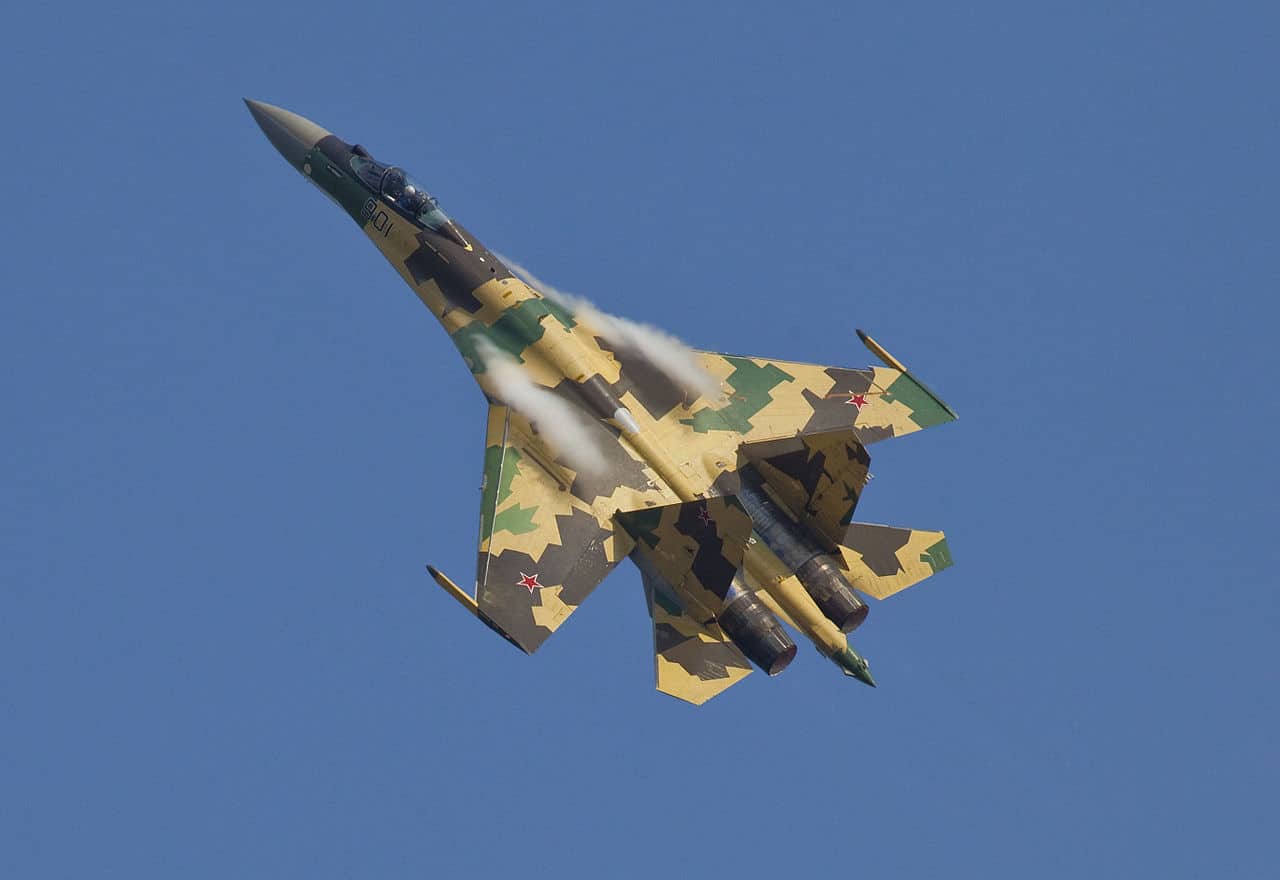
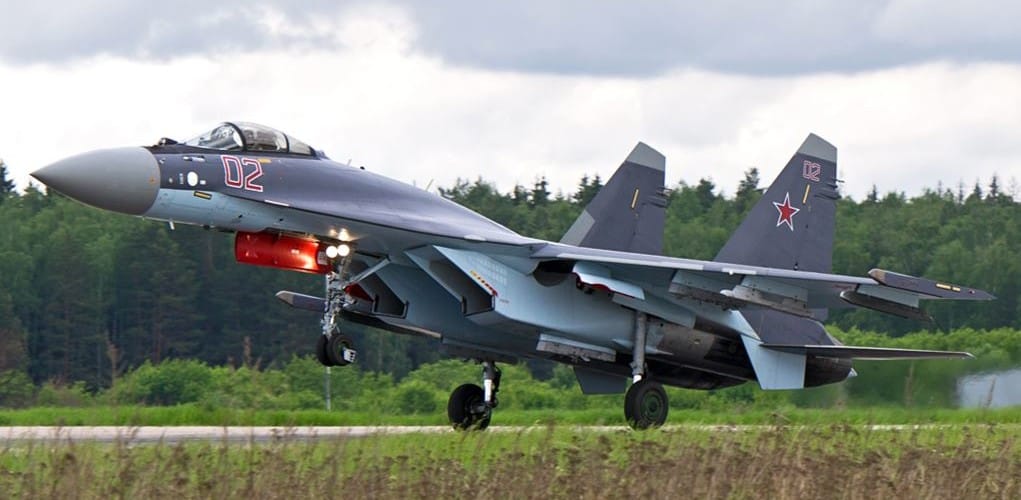

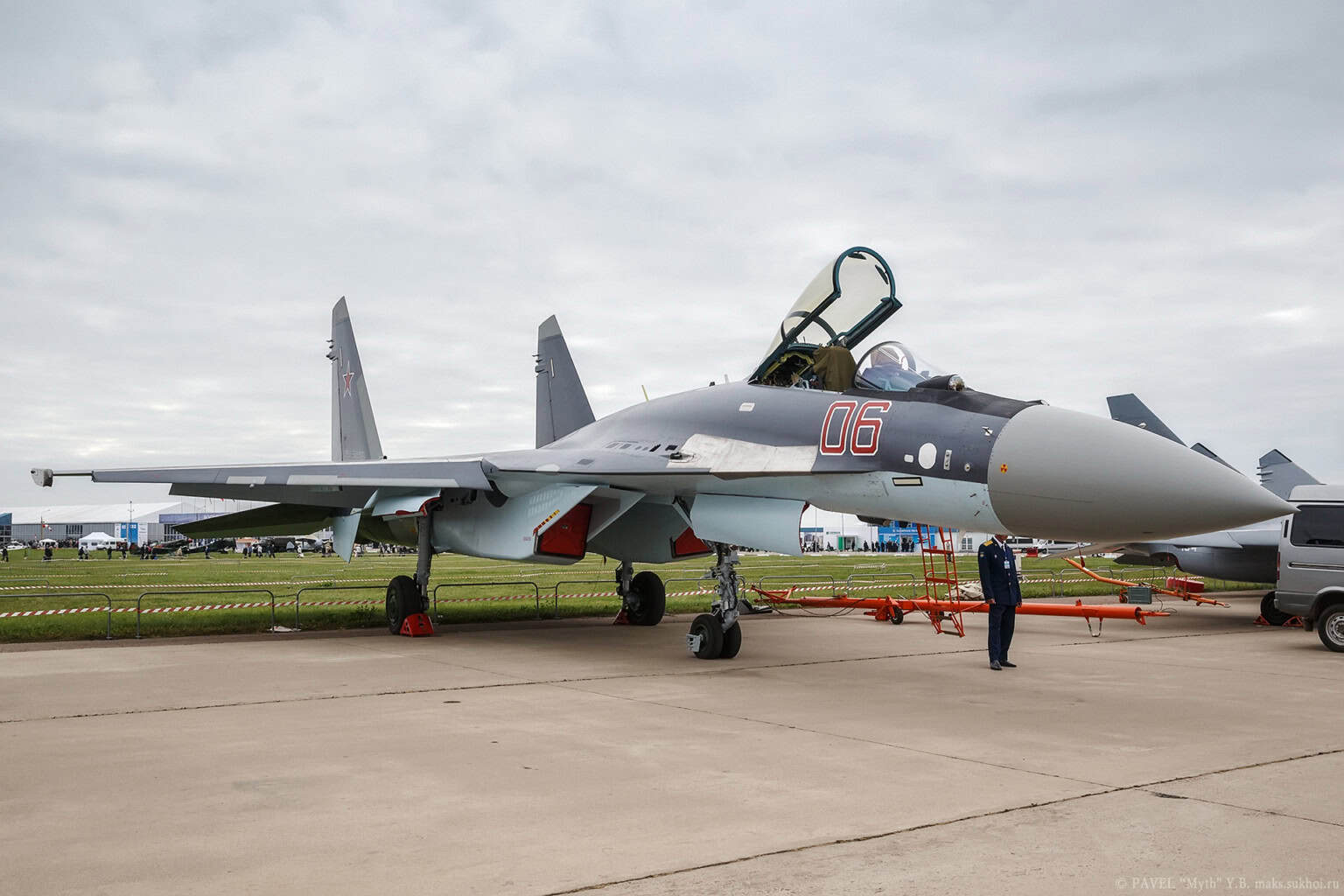
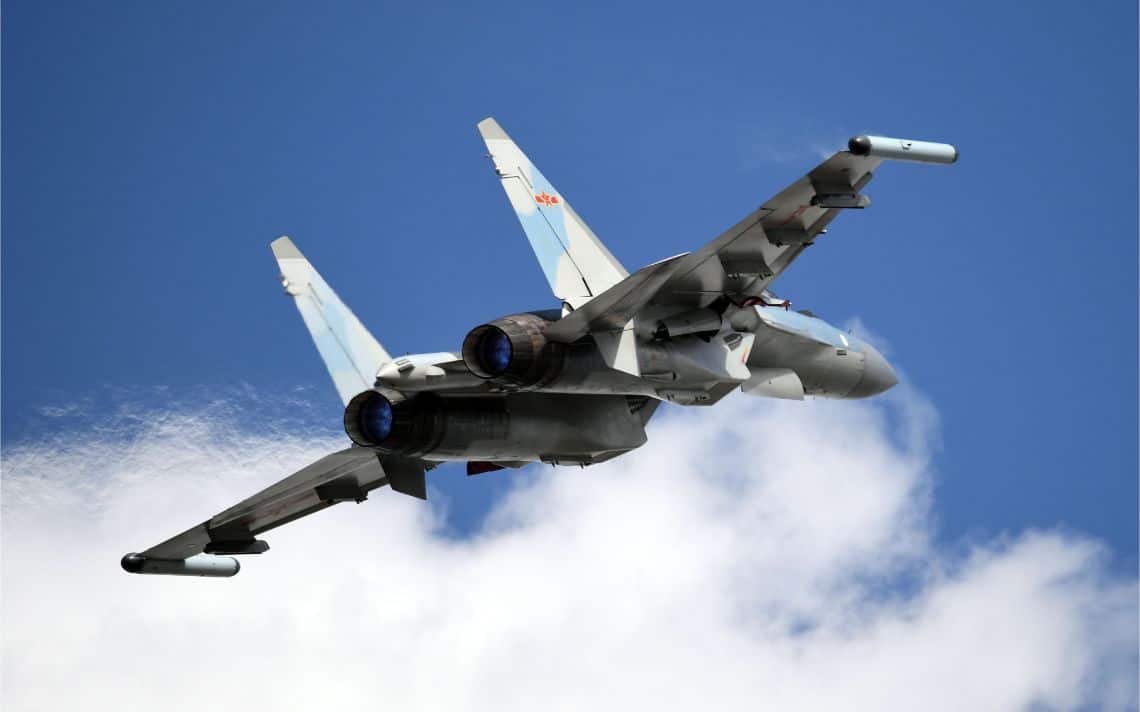
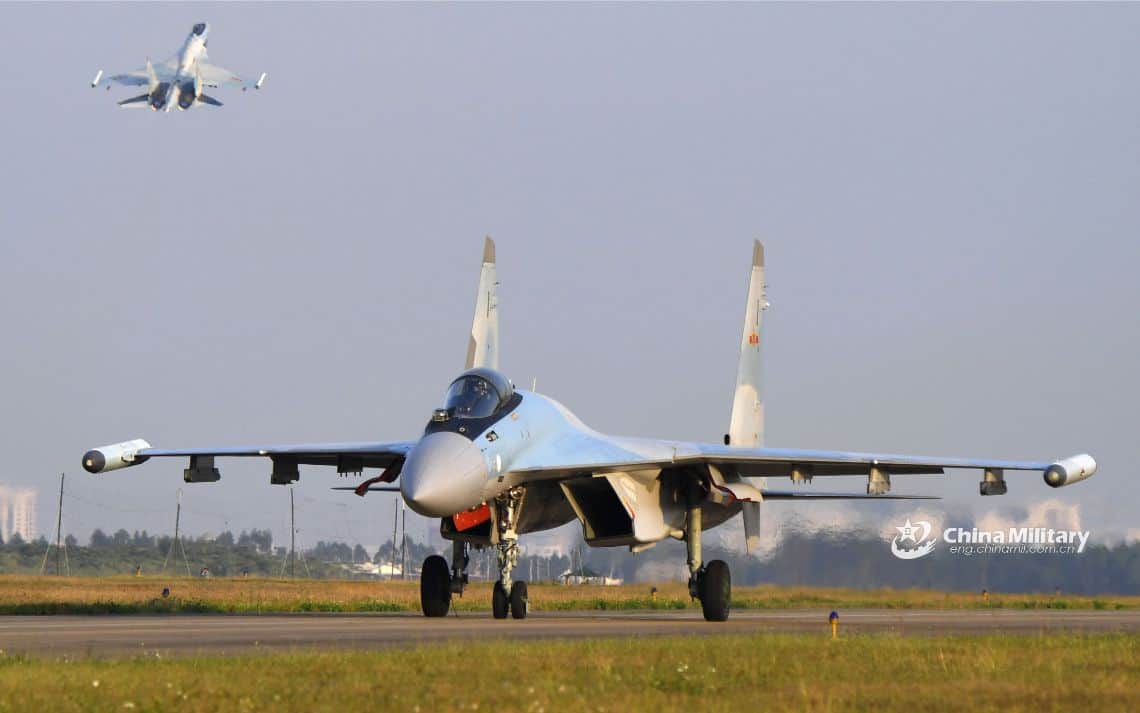
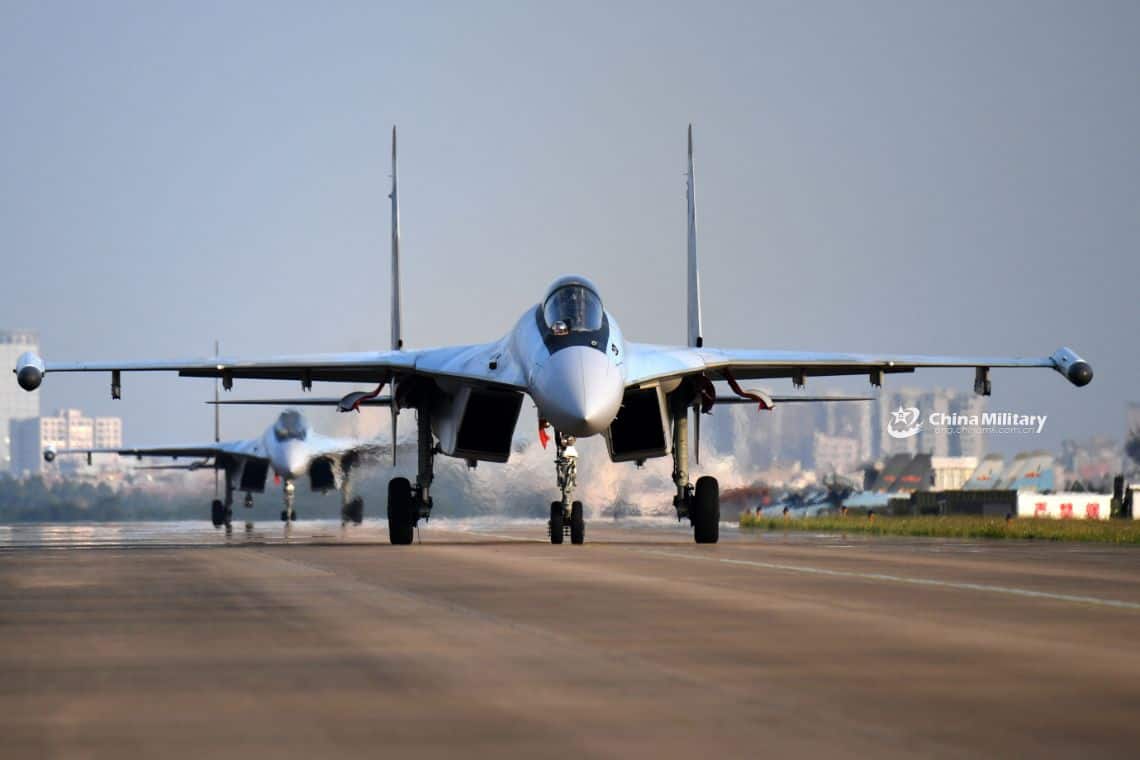

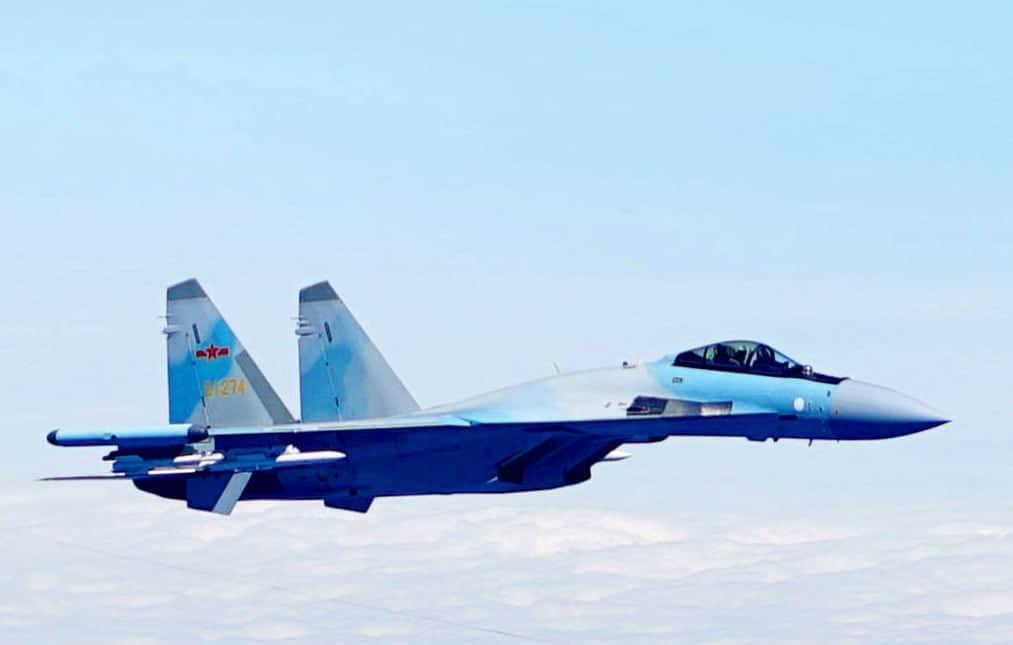
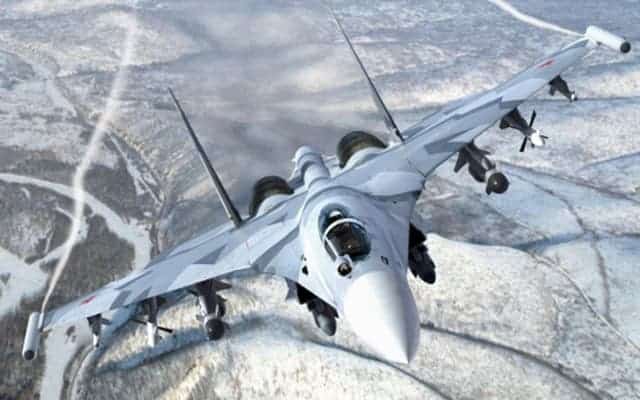
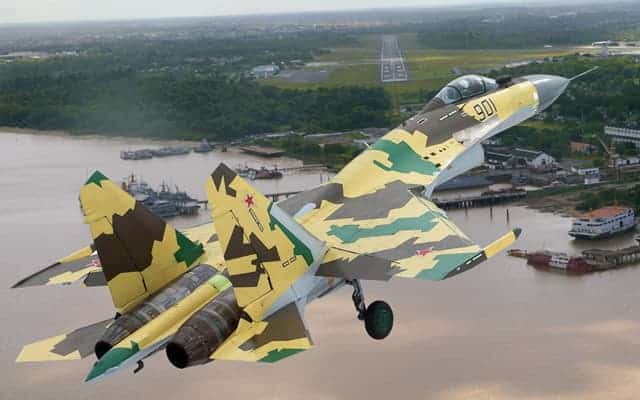

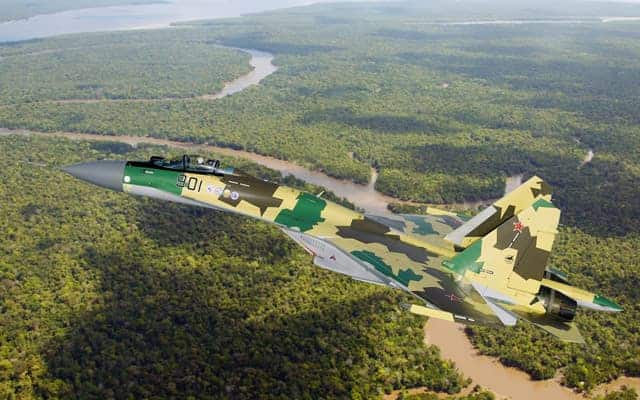
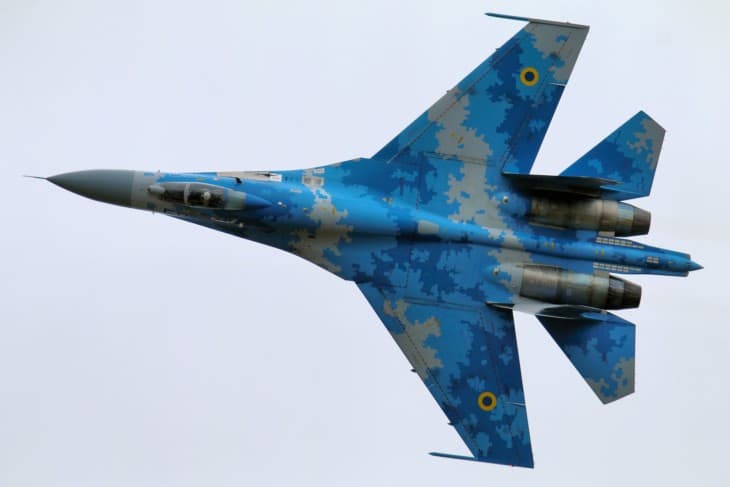
The Sukhoi Su-35 is a single-seat, twin-engine Russian fighter developed from the Su-27 Flanker. NATO calls it the Flanker-E/M, and it is sometimes nicknamed the “Super Flanker.”
It is usually classed as a 4.5-generation fighter, sometimes written as “4++”. That places it between classic fourth-generation jets like the Su-27 and fifth-generation stealth fighters such as the F-35.
The Su-35 is built for air superiority first, but it also carries anti-ship missiles, anti-radiation missiles and guided bombs. It is built at the Komsomolsk-on-Amur plant in Russia’s Far East, part of the wider family of Sukhoi fighter jets.
The designation has been used twice. The first Su-35 was the Su-27M, a Soviet upgrade with canard foreplanes ahead of the wings that first flew on June 28, 1988.
After the Soviet Union collapsed, Sukhoi renamed it the Su-35 to attract export orders. Fourteen were built for tests and demonstrations, and one was fitted with thrust-vectoring engines and redesignated the Su-37.
The Su-35 flying today is a second, deeper modernization that Sukhoi launched in 2003. It was meant as an interim fighter while the PAK FA program, which became the Su-57 Felon, was developed, and it borrows technology from that program.
This version dropped the canards and the dorsal air brake. Sukhoi concluded that thrust-vectoring nozzles could deliver the same agility without the weight the canards added, and the other differences from the original Flanker are laid out in our Su-27 vs Su-35 comparison.
Test pilot Sergey Bogdan took the first prototype on a 55-minute maiden flight from Zhukovsky on February 19, 2008. The fourth prototype was destroyed in a taxiing accident in April 2009, a day before its scheduled first flight.
Although the design was aimed at export customers, the Russian Defence Ministry became the launch customer. It ordered 48 production aircraft, designated Su-35S, at the MAKS air show in August 2009.
The type formally entered service in February 2014, when the 23rd Fighter Aviation Regiment in Russia’s Far East received its first aircraft. It reached full operational capability in late 2018.
Production has continued through the war in Ukraine. Defence Security Asia estimated that Russia received 15 to 18 new Su-35S in 2025, bringing its operational fleet to about 155 aircraft, and further batches were delivered in 2026.
The Su-35 is powered by two Saturn AL-41F1S afterburning turbofans, also known as the izdeliye 117S. Their nozzles can be deflected to steer the aircraft, a system Sukhoi’s brochure describes as all-axis thrust vector control.
Thrust vectoring lets the Su-35 hold extreme angles of attack and fly the post-stall maneuvers it is known for at air shows. Its manufacturer markets it as “super-maneuverable.”
The engines also give it a limited ability to sustain speeds above Mach 1.1 without afterburner, a capability known as supercruise.
Thrust for the AL-41F1S is quoted three ways. The panel on this page uses the full-afterburner rating of 30,865 lbf (137 kN) per engine; without afterburner, each engine produces about 19,400 lbf (86.3 kN).
Some references print about 32,000 lbf instead. That is the engine’s emergency or “special mode” rating of 31,968 lbf (142.2 kN), which sits above the normal combat maximum.
With half its internal fuel on board, the Su-35 has a thrust-to-weight ratio of about 1.13. With full internal fuel, that falls to about 0.92.
The full specification table for the Su-35 is on this page. A few of its figures need context, because the published numbers for this aircraft are often quoted against each other in ways that do not compare.
The first is speed. The Su-35’s top speed is Mach 2.25 at about 36,000 ft (11,000 m), roughly 1,491 mph (2,400 km/h). Near sea level, where the air is much denser, it is limited to about 870 mph (1,400 km/h).
The second is range. The 1,944 nm (2,240 miles) figure is Sukhoi’s range on internal fuel at cruising altitude. Flown at low level at Mach 0.7, the same fuel covers only 853 nm (982 miles).
With two 528-gallon (2,000-liter) drop tanks, ferry range rises to 2,430 nm (2,796 miles). A combat range of roughly 864 nm (994 miles) is also quoted, and it reflects an armed mission profile.
The third is weight. The maximum takeoff weight in the panel is the heaviest the Su-35 can lift off; Sukhoi’s normal takeoff weight, carrying two medium-range and two short-range missiles, is much lower at 55,777 lb (25,300 kg).
Empty weight is the least settled figure. This page uses 41,888 lb (19,000 kg), the value in Wikipedia’s specification, which cites Air International; Military Factory lists 37,919 lb (17,200 kg) and the Mitchell Institute 37,479 lb (17,000 kg).
The core of the Su-35’s weapons system is the N035 Irbis-E radar. It is a passive electronically scanned array (PESA) mounted on a two-axis hydraulic actuator, which lets it cover a wider arc than a fixed antenna.
Sukhoi says it can track 30 air targets and attack 8 of them at once. Published claims for its detection range run from 350 to 400 km (about 220 to 250 miles).
Critics argue those figures flatter it. Analyst Abhirup Sengupta, quoted by The Aviation Geek Club, puts the practical search range closer to 200 km (124 miles) and points out that it lacks the AESA radar now fitted to its Western rivals.
Russia plans to address that with the Su-35SM upgrade. It is to replace the Irbis-E with the N036 Byelka AESA radar, similar to the one in the Su-57.
Ahead of the cockpit sits the OLS-35 infrared search and track system, which detects aircraft by their heat rather than by radar. Sukhoi rates it at about 31 miles (50 km) against a target approaching head-on and 56 miles (90 km) from behind, where the engine exhaust is exposed.
For self-protection the Su-35 carries the L175M Khibiny-M electronic countermeasures system and an OAR missile approach warning system. Engineers applied radar-absorbent material to the engine inlets and front compressor stages to halve its frontal radar cross-section, which is reportedly 1 to 3 square meters.
The cockpit has two large color displays, a wide-angle head-up display with a 30 by 20 degree field of view, and a helmet-mounted targeting system. Sukhoi designed it around a “dark cockpit” concept intended to reduce the pilot’s workload.
The Su-35 has a single 30 mm GSh-30-1 cannon in the right wing root with 150 rounds. It has 12 hardpoints for external stores, including two wingtip rails.
Its air-to-air weapons include the R-77 medium-range missile, the short-range R-73 and R-74, older R-27s, and the very long-range R-37M.
In 2020, The Aviation Geek Club reported that shortages of the R-77 meant many Russian Su-35s flew with older R-27 variants instead.
For ground and sea targets it carries Kh-31 anti-radiation and anti-ship missiles, the Kh-59MK and Kh-35U, laser- and TV-guided KAB bombs, and unguided rockets. It can also carry the heavy P-800 Oniks anti-ship cruise missile.
Russia first sent the Su-35S to war in January 2016, deploying four aircraft to Syria after Turkey shot down a Russian Su-24 bomber in November 2015.
Over Syria the Su-35s were seen carrying unguided bombs. In 2019, Russian reports described Su-35s intercepting Turkish and Israeli jets on several occasions.
The war in Ukraine has been a far harder test. Su-35s have flown air superiority missions alongside Su-30SMs and MiG-31s since the start of the full-scale invasion in 2022.
They have also taken losses. The open-source tracker Oryx counted eight Su-35S losses as of February 25, 2026, as reported by Aerospace Global News.
Those losses came from several directions. Ukrainian Patriot missiles downed two over Russia’s Bryansk region in May 2023, and in September 2023 a Russian S-300 battery shot down one of its own Su-35s near Tokmak in a friendly-fire incident.
Another Su-35 was brought down in Russia’s Kursk region, near the Ukrainian border, on June 7, 2025. Russian military bloggers reported that its pilot survived.
On July 8, 2026, Ukraine’s Air Force said it had shot down a Su-35 about 26 miles (42 km) from the front line in Luhansk. Later that month General Dan Caine, Chairman of the Joint Chiefs of Staff, told the Senate that a Ukrainian F-16 had shot down a Russian fighter.
Caine did not name the aircraft type. The Ukrainian outlet Militarnyi linked his remarks to the July 8 Su-35 loss, while Russian military bloggers blamed a Patriot missile, so the weapon that downed that jet remains unconfirmed.
Russia’s Aerospace Forces are by far the largest operator, with an estimated 155 aircraft at the end of 2025. Units include the 23rd Fighter Aviation Regiment in the Far East, a regiment at Besovets air base near the Finnish border, and the Russian Knights aerobatic team, which received eight Su-35S in July 2020.
China was the first export customer. It signed for 24 aircraft in November 2015, in a deal reported at between $2 billion and $2.5 billion that also covered spare engines and ground support equipment.
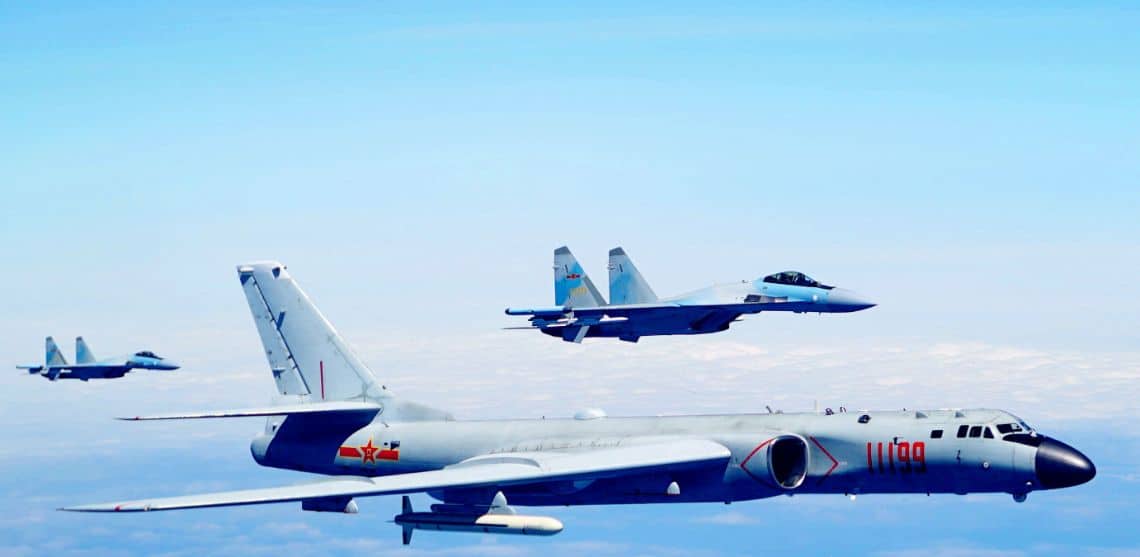
Russia confirmed in April 2019 that all 24 had been delivered. The Chinese jets entered service with the People’s Liberation Army Air Force in April 2018 and escorted H-6K bombers on a long-range patrol around Taiwan the following month.
Algeria has received Su-35s from a batch originally built for Egypt. Satellite imagery first showed one at Oum el Bouaghi air base in March 2025, and images from February 2026 show at least two in Algerian Air Force markings, though the number delivered has not been disclosed.
Egypt had ordered about two dozen Su-35s, in a deal reported at $2 billion to $3 billion. It dropped the purchase after the United States threatened sanctions under the CAATSA law and dangled an offer of F-15s, leaving the finished jets at the factory awaiting new buyers.
Iranian state media reported an agreement to buy the Su-35 in March 2023. In mid-September 2026, social media footage and eyewitness reports showed at least three Su-35s arriving at Mehrabad airport in Tehran, and Militarnyi reported that these jets were also originally built for Egypt.
Neither Tehran nor Moscow had officially confirmed the delivery at that point, and the number of aircraft and the contract value have not been disclosed.
Indonesia signed for 11 Su-35s in February 2018, but no aircraft had been delivered as of May 2024. Jakarta cited the threat of US sanctions and budget pressure, although its ambassador to Russia said that month that the contract remained in force.
No official flyaway price for the Su-35 has been published. A widely quoted figure of about $83 million per aircraft comes from dividing China’s $2 billion contract by its 24 jets.
That is a package price rather than the cost of a bare airframe, because China’s deal also covered spare engines and ground support equipment. The $85 million figure in this page’s header is an estimate on the same basis and should be read that way.
Other export deals point the same way or higher. Indonesia’s 2018 contract valued 11 aircraft at $1.14 billion, about $104 million each, with half of it to be paid in commodities rather than cash.
The Su-35 and the F-35 are two different answers to the same problem. The Su-35 relies on agility, a powerful radar and electronic jamming, while the F-35 relies on stealth and sensor fusion to find the enemy first and shoot before it is seen.
Most aircraft are now shot down beyond visual range, as The National Interest noted after the July 2026 engagement, and at those distances stealth counts for more than agility. The Su-35 was never designed as a stealth aircraft.
The Su-35 is a much larger, twin-engine aircraft than the single-engine F-16, built for longer range and heavier loads. In practice the missiles, the radar picture and the support around each jet decide more than the airframe, and a Ukrainian F-16 was credited with downing a Russian fighter in July 2026.
For the matchup against the F-22 Raptor, see our F-22 vs Su-35 comparison. The main European rival is covered in our Eurofighter Typhoon vs Su-35 page.
There is no exact American equivalent. In size and role, as a heavy twin-engine air superiority fighter with long range and a large weapons load, its closest US counterpart is the F-15 Eagle family, including the new F-15EX.
Russia’s other current fighters are compared in our guide to the best Russian fighter jets, and the leading types of every generation are ranked in our list of the best fighter jets in the world.
Neither is simply better. The Su-35 is a larger twin-engine fighter built for range, payload and close-in agility, while the F-16 is a lighter single-engine aircraft. In July 2026 a Ukrainian F-16 was credited with downing a Russian fighter that the Ukrainian outlet Militarnyi identified as a Su-35.
The open-source tracker Oryx counted eight Su-35S losses as of February 25, 2026. Ukraine said it shot down another on July 8, 2026, which, if confirmed, takes the total since February 2022 to at least nine. The losses include a friendly-fire shootdown by a Russian S-300 battery in September 2023.
There is no exact equivalent. The closest American counterpart in size and role is the F-15 Eagle family, including the F-15EX. Like the Su-35, it is a heavy twin-engine fighter built for air superiority, with long range and a large weapons load.
In long-range fights, where most modern air combat happens, the F-35’s stealth gives it the edge, because it is designed to detect and engage an opponent before being seen. The Su-35’s strengths are thrust-vectoring agility and a heavy weapons load, but it is not a stealth aircraft, with a reported frontal radar cross-section of 1 to 3 square meters.
No. The Su-35 is a 4.5-generation fighter, sometimes described as “4++”. It borrows technology from Russia’s Su-57 program but carries its weapons on external hardpoints and is not a stealth design.
Yes. Both AL-41F1S engines have vectoring nozzles, which Sukhoi describes as all-axis thrust vector control. Thrust vectoring replaced the canard foreplanes of the earlier Su-27M and lets the Su-35 fly extreme post-stall maneuvers.
The Su-35’s top speed is Mach 2.25, about 1,491 mph (2,400 km/h), at high altitude. Near sea level it is limited to about 870 mph (1,400 km/h). It can also supercruise, holding speeds above Mach 1.1 without afterburner.
Russia is the main operator, with an estimated 155 in service at the end of 2025. China received 24 by April 2019, and Algeria has taken aircraft originally built for Egypt. In mid-September 2026 eyewitness footage showed Su-35s arriving in Iran, though neither government had confirmed the delivery.
No official flyaway price has been published. The widely quoted figure of about $83 million comes from China’s $2 billion contract for 24 aircraft, a package that also covered spare engines and ground support equipment. Indonesia’s 2018 contract worked out to about $104 million per aircraft.
Sources and references used for research and fact-checking.