

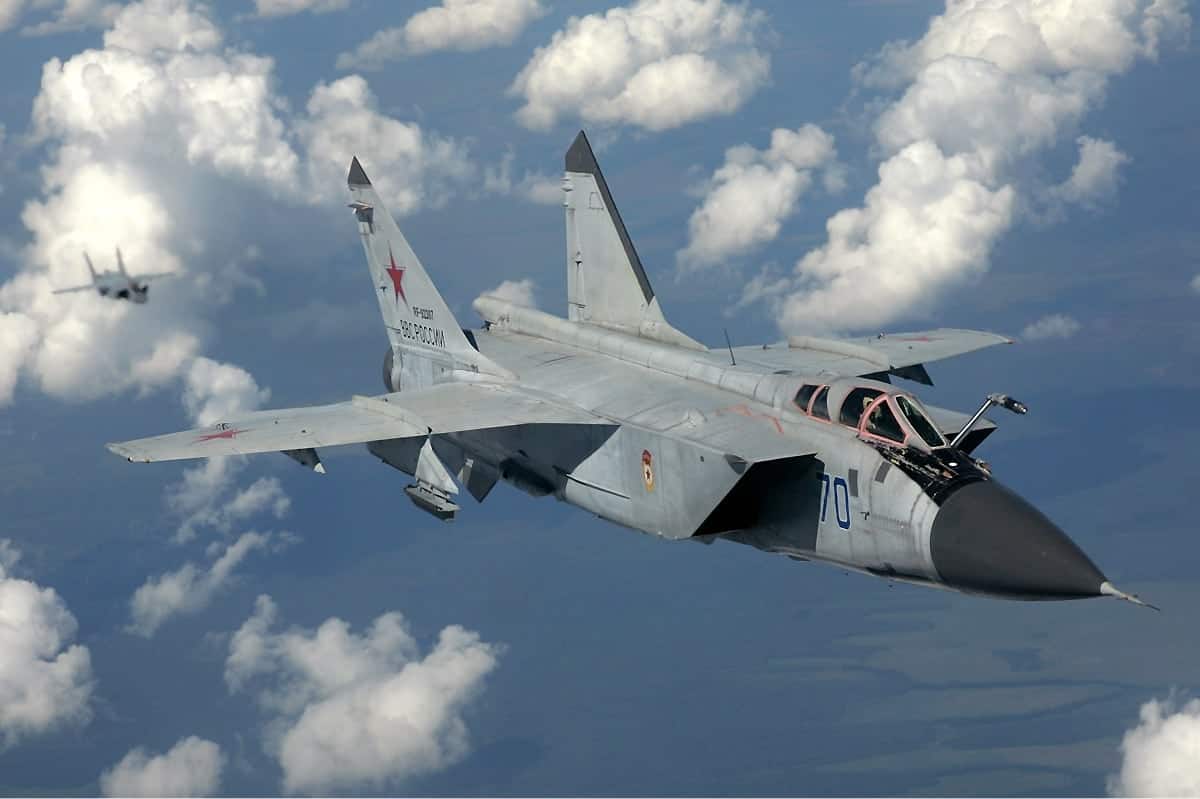
The best Russian fighter jet flying today is the Sukhoi Su-35S Flanker-E. It combines the longest-reaching radar in the Russian inventory, thrust-vectoring agility no Western fighter of its generation matches, and the one thing that separates a good aircraft from a good fighter force: there are enough of them to matter.
That answer is not the obvious one. The obvious answer is the Su-57 Felon, Russia’s fifth-generation stealth fighter, and it is genuinely the most advanced aircraft Russia has ever built. It is also the aircraft Russia has built fewest of, and flown most cautiously.
We rank by fielded combat capability as of 2026: sensors and weapons reach, kinematics, how many airframes are actually in frontline units, and what four years of full-scale air war has demonstrated. Capability that exists only in a press release does not score.
Below are the twelve Russian and Soviet fighters that matter most, split into the nine Russia flies on the front line now and the three Cold War designs that shaped everything after them. For the wider picture, see our ranking of the best fighter jets in the world.
| Aircraft | NATO name | Role | Top speed | Status in 2026 |
|---|---|---|---|---|
| 1. Sukhoi Su-35S | Flanker-E | Air superiority / multirole | Mach 2.25 | In service, in production |
| 2. Mikoyan MiG-31BM | Foxhound | Long-range interceptor | Mach 2.83 | In service, out of production |
| 3. Sukhoi Su-57 | Felon | Stealth multirole | Mach 2 | In service, low-rate production |
| 4. Sukhoi Su-34 | Fullback | Fighter-bomber | Mach 1.8 | In service, in production |
| 5. Sukhoi Su-30SM2 | Flanker-H | Multirole, two-seat | Mach 2 | In service, in production |
| 6. Sukhoi Su-27 | Flanker-B | Air superiority | Mach 2.35 | In service, out of production |
| 7. Mikoyan MiG-29 | Fulcrum | Multirole | Mach 2.25 | In service, out of production |
| 8. Sukhoi Su-33 | Flanker-D | Carrier-based fighter | Mach 2.17 | In service, no working carrier |
| 9. Mikoyan MiG-35 | Fulcrum-F | Multirole | Mach 2.25 | Barely fielded, no exports |
| 10. Mikoyan MiG-21 | Fishbed | Interceptor / fighter | Mach 2.05 | Retired by Russia, flies elsewhere |
| 11. Mikoyan MiG-25 | Foxbat | Interceptor / recon | Mach 2.83 | Retired by Russia |
| 12. Mikoyan MiG-17 | Fresco | Day fighter | Transonic | Retired, warbird use |
How we ranked them
Four measures, weighted in this order: sensor and weapons reach, kinematic performance, the number of airframes genuinely in frontline service, and demonstrated combat record since 2022. That last measure is why a 1981 interceptor outranks a fifth-generation stealth fighter here. We rank fighters and fighter-bombers only, so the Su-25 attack aircraft and Su-24 tactical bomber are covered separately below.
The best Russian fighter jets in frontline service
Two design bureaus account for every aircraft here: Sukhoi and Mikoyan-Gurevich, universally shortened to MiG. Sukhoi has won the modern era comprehensively, taking eight of the nine frontline slots.
1. Sukhoi Su-35S Flanker-E
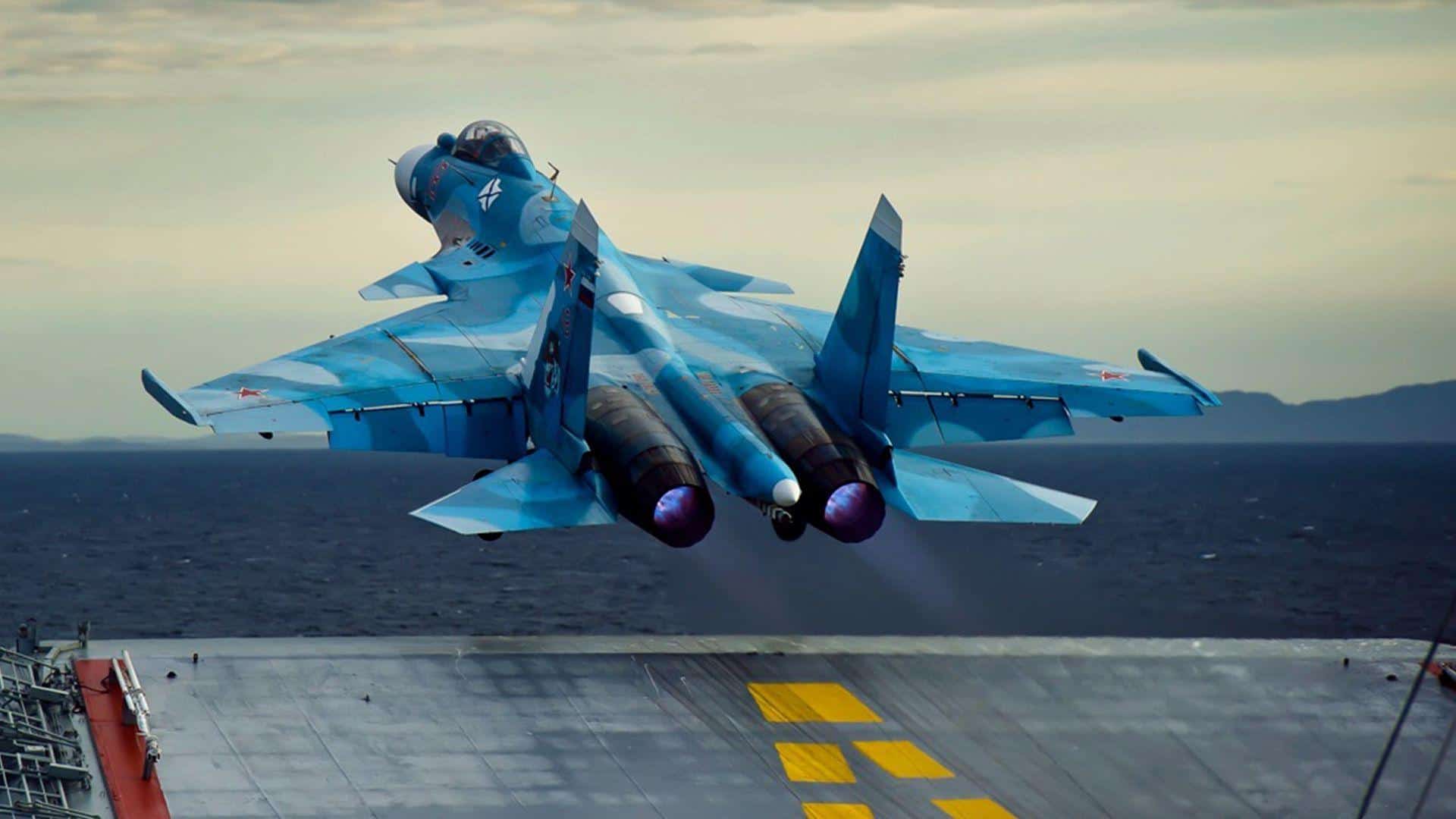
The Su-35S is a deeply reworked Su-27 rather than a new design, and that is its strength. It inherits an airframe with enormous internal fuel and adds a modern sensor and engine package on top.
Its N035 Irbis-E radar can detect a fighter-sized target at up to 250 miles (400 km), the longest reach of any radar on a Russian fighter. Two Saturn AL-41F1S engines with thrust-vectoring nozzles give it low-speed handling that genuinely embarrasses most Western contemporaries at an airshow.
It tops out at Mach 2.25, roughly 1,490 mph (2,400 km/h), with a 59,000-foot service ceiling and about 2,240 miles (3,600 km) of range unrefuelled. It can hold supersonic speed above Mach 1.1 without afterburner, a limited form of supercruise.
More than 155 have been built. Russia flies the bulk, with China taking 24 and Algeria also operating the type. It ranks first because it is the only Russian fighter that is simultaneously modern, numerous, and in production.
2. Mikoyan MiG-31BM Foxhound
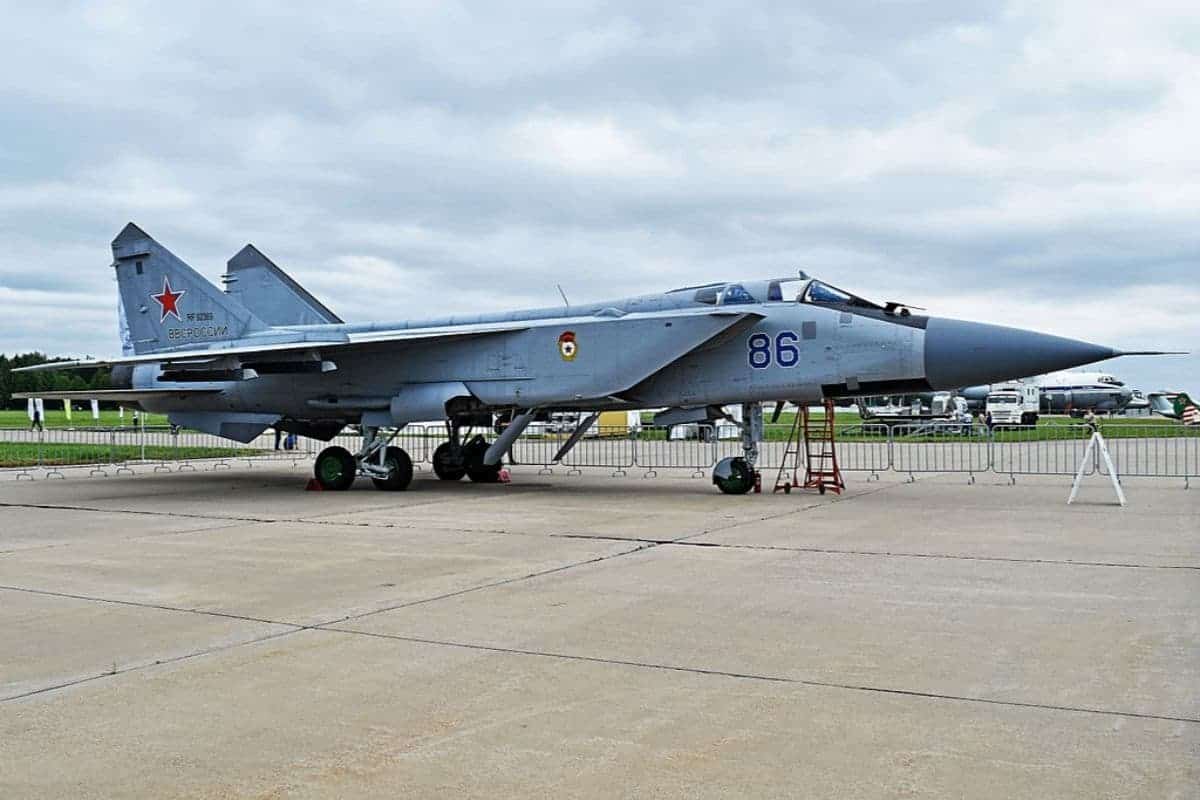
The MiG-31 is not a dogfighter and was never meant to be. It is a two-seat, high-altitude interceptor built to run down cruise missiles and bombers across Soviet airspace, and it does that better than anything else flying.
It reaches Mach 2.83, about 1,900 mph (3,000 km/h), at 70,500 feet, with a ceiling above 82,000 feet. That makes it the fastest combat aircraft in service anywhere in the world, and one of the fastest fighter jets ever built.
What earns it second place is a single weapon. The upgraded MiG-31BM carries the R-37M, an air-to-air missile credited with a range beyond 186 miles (300 km), the longest of any such missile in active service.
Its effect over Ukraine has been more behavioural than statistical. RUSI analysts recorded Russian crews firing as many as six R-37Ms a day at the peak of the autumn 2022 air battles, which pushed Ukrainian pilots down to treetop height and forced them to abort missions on launch warning alone.
Russia cannot build another one
The MiG-31 production line at Sokol closed in 1994 after 519 aircraft. Every Foxhound flying in 2026 was built during the Cold War and has been rebuilt rather than replaced. Russia’s most feared air-to-air platform is an aircraft it no longer knows how to manufacture, which is why the fleet is being modernised into the 2030s instead of retired.
3. Sukhoi Su-57 Felon
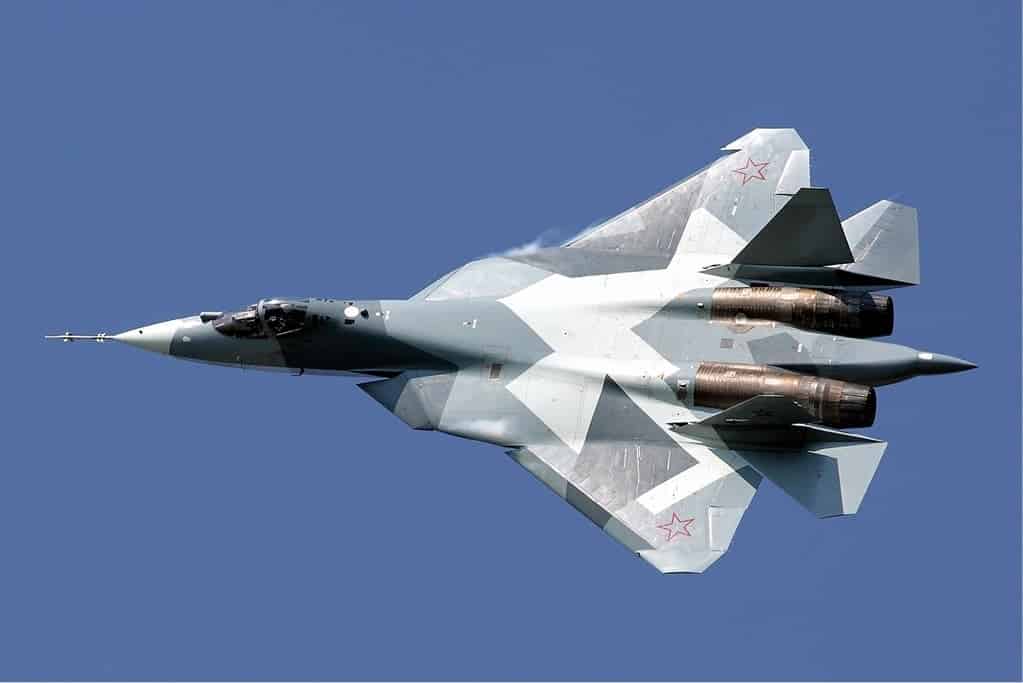
The Su-57 is Russia’s only fifth-generation fighter and the most sophisticated aircraft its industry has produced. Its N036 Byelka suite includes a nose-mounted AESA radar with 1,514 transmit-receive modules plus side-looking and L-band arrays.
It first flew on 29 January 2010 and the first production aircraft was delivered in December 2020. It supercruises at Mach 1.3 and tops out around Mach 2, with a supersonic range above 930 miles (1,500 km), more than double the Su-27’s.
The problem is arithmetic. Roughly 44 airframes existed as of 2026, and that figure includes ten test aircraft. Sanctions on the high-end aerospace supply chain have kept annual deliveries to a handful, and the definitive AL-51F-1 engine has still not replaced the interim AL-41F-1.
Its stealth is also widely judged shallower than the F-22 or F-35, with a shaped forward aspect but visible compromises elsewhere. Algeria ordered 14 and took its first two in November 2025, making it the first export customer.
The Su-57's first loss came on the ground
In June 2024 a Ukrainian long-range drone struck an Su-57 parked at Akhtubinsk air base, 366 miles (589 km) from the front line. Satellite imagery showed the aircraft intact on 7 June and blast craters beside it on 8 June. It remains the only Su-57 on the Oryx loss list, and it was never engaged in the air.
4. Sukhoi Su-34 Fullback
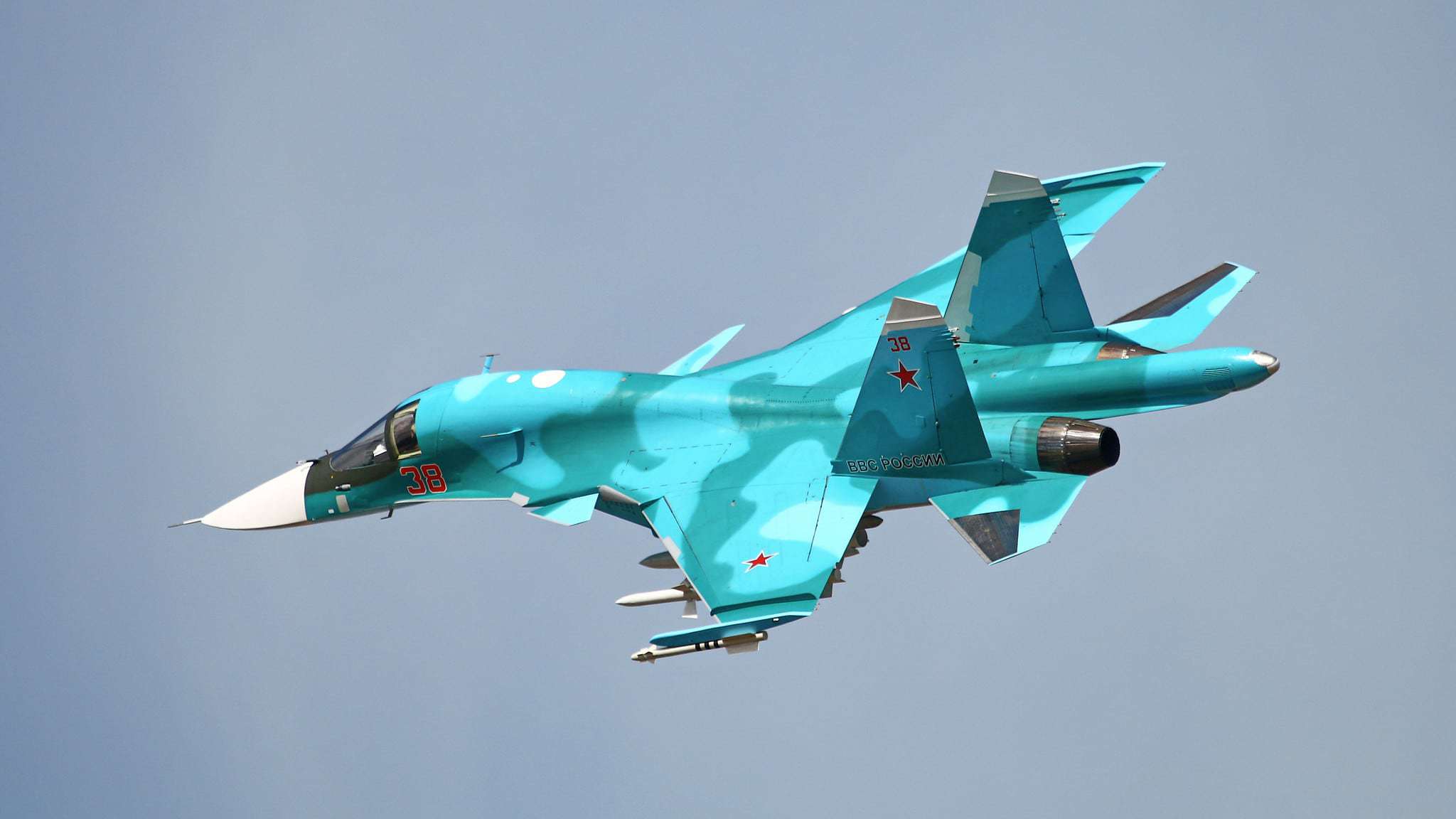
The Su-34 is a fighter-bomber built on Flanker bones, and it is the aircraft that has done the most actual work of any Russian type since 2022. Around 142 are in service, with production continuing at Novosibirsk.
Its crew of two sit side by side inside a capsule of 17 mm armour, pressurised so they can fly to 32,800 feet without oxygen masks. There is a hand-held urinal and a vacuum flask for hot food, and the cabin is tall enough to stand up in on long sorties.
It manages Mach 1.8, about 1,200 mph (1,900 km/h), with a 56,000-foot ceiling and a 680-mile (1,100 km) combat radius carrying 12 tonnes of weapons.
Since 2023 its defining weapon has been the UMPK kit, a strap-on set of wings and guidance that turns an ordinary FAB dumb bomb into a glide weapon released from tens of miles behind the line. By July 2026 Su-34s were being shown carrying four of the improved, small-turbojet-powered versions.
5. Sukhoi Su-30SM2 Flanker-H
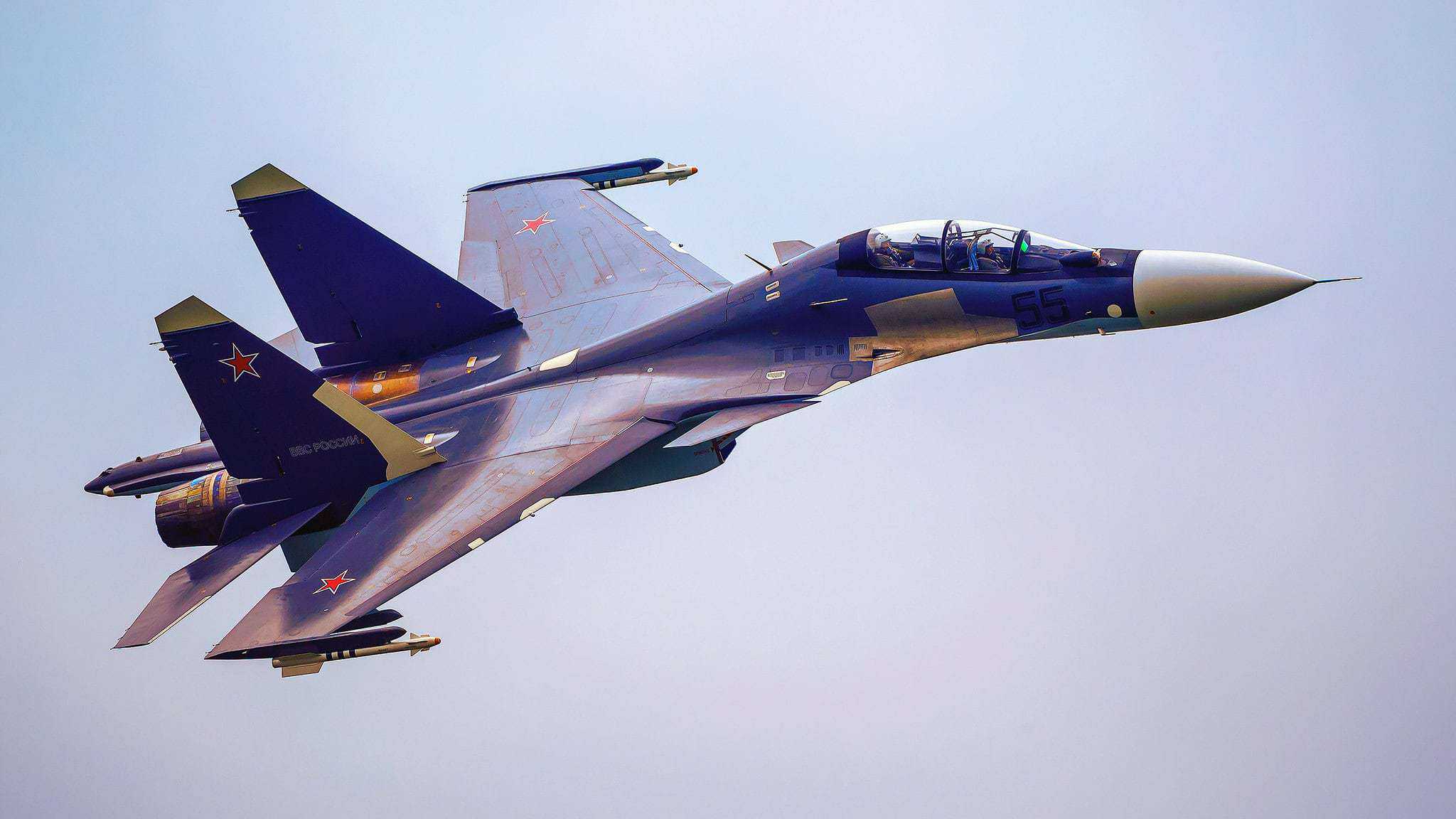
The Su-30 is the two-seat multirole branch of the Flanker family, first flown on 31 December 1989 and fielded from 1992. More than 630 have been built across all variants.
It reaches about 1,320 mph (2,120 km/h) at altitude, with a 56,800-foot ceiling and 1,900 miles (3,000 km) of range. The second crew member is the point: workload sharing makes it markedly better than a single-seater at complex strike and maritime missions.
Russia’s own version is the Su-30SM, now being upgraded to Su-30SM2 standard with the Su-35’s Irbis-E radar and engines. The export record is the strongest of any modern Russian fighter: India operates 261 Su-30MKIs, China 73 Su-30MKKs, and Malaysia 18 Su-30MKMs.
6. Sukhoi Su-27 Flanker-B
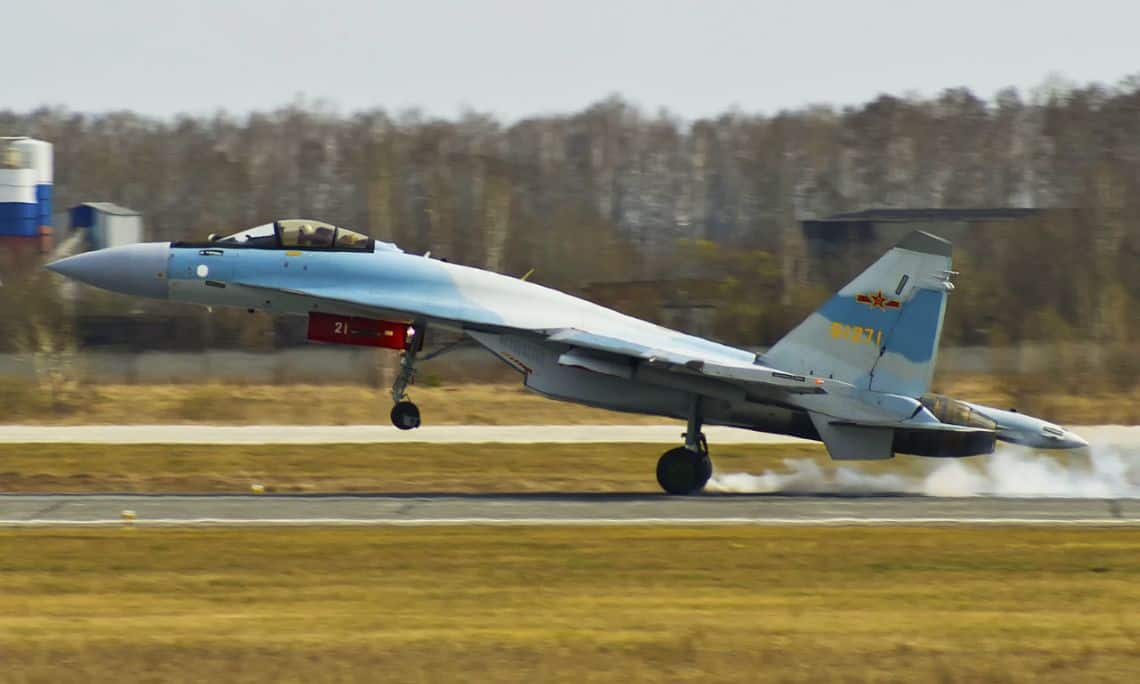
The Su-27 is the most consequential Soviet fighter design of the late Cold War, and its influence is the reason it still ranks. It first flew on 20 May 1977, entered service on 22 June 1985, and 680 were built.
It was conceived to beat the F-15 Eagle and it is still fast, hitting Mach 2.35, roughly 1,550 mph (2,500 km/h), with a 62,300-foot ceiling and 2,190 miles (3,530 km) of range on internal fuel alone.
Every Sukhoi fighter above descends from it: the Su-30, Su-33, Su-34 and Su-35 are all Flanker derivatives, and China’s Shenyang J-11 began as a licence-built copy. Ukraine also inherited Su-27s in 1991 and has flown them against Russia.
7. Mikoyan MiG-29 Fulcrum
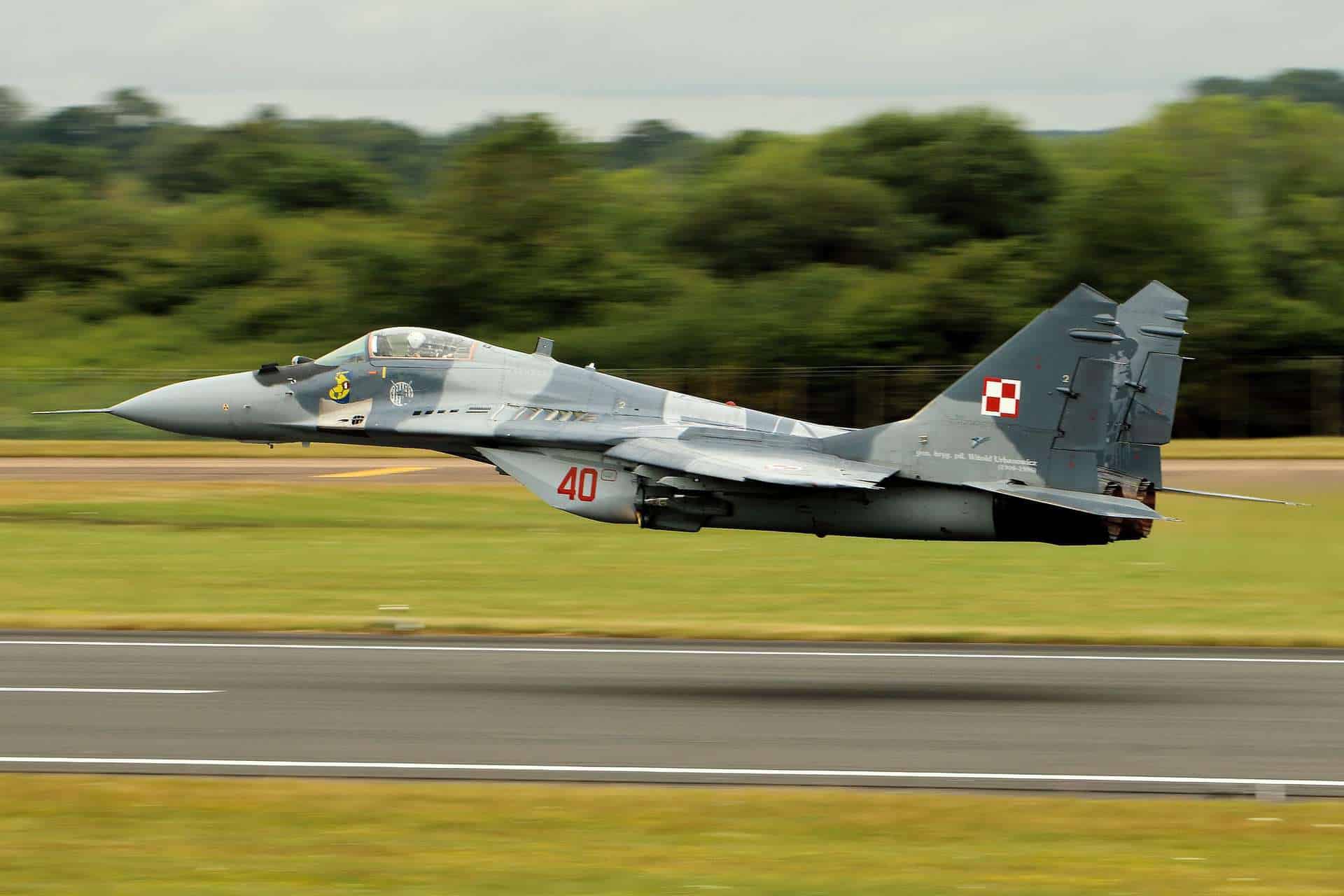
The MiG-29 was the light half of a high-low pair with the heavy Su-27, designed to counter America’s F-16 and F/A-18. It first flew on 6 October 1977 and entered service in August 1983.
Two Klimov RD-33 engines push it to Mach 2.25, about 1,490 mph (2,400 km/h), with a 59,100-foot ceiling. Range was always its weak point: 930 miles (1,500 km) clean, extending to 1,300 miles (2,100 km) with external tanks.
More than 1,600 were built between 1981 and 2019 and over 30 nations have flown it, making it the most widely exported Soviet fighter of its generation. An estimated 728 MiG-29 and MiG-35 airframes remained in service worldwide in 2026.
8. Sukhoi Su-33 Flanker-D
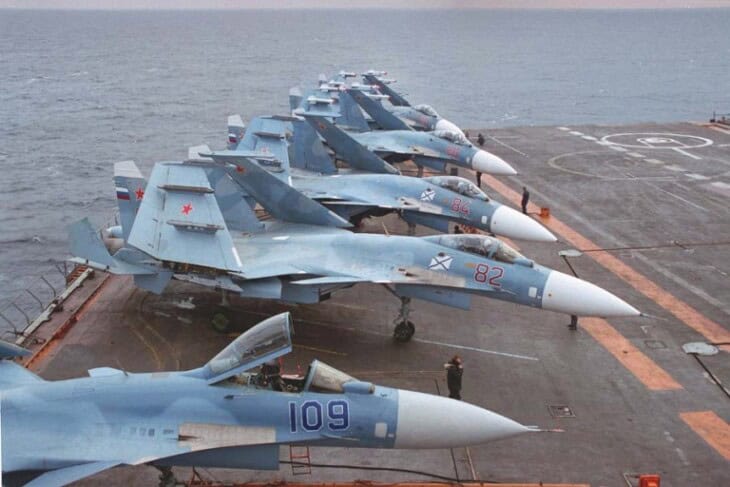
The Su-33 is the navalised Flanker: folding wings, a strengthened undercarriage, canards and an arrestor hook. It first flew on 17 August 1987 and formally entered service on 31 August 1998.
It is genuinely capable, reaching Mach 2.17, about 1,430 mph (2,300 km/h), with a 56,000-foot ceiling and 1,900 miles (3,000 km) of range. Only about two dozen were built before production ended in 1999.
It ranks eighth for a reason that has nothing to do with the aircraft. Russia suspended work on its only carrier, Admiral Kuznetsov, in July 2025 after an eight-year refit, and the state shipbuilding chief said it would likely be sold or scrapped. A carrier fighter without a carrier is a training asset.
9. Mikoyan MiG-35 Fulcrum-F
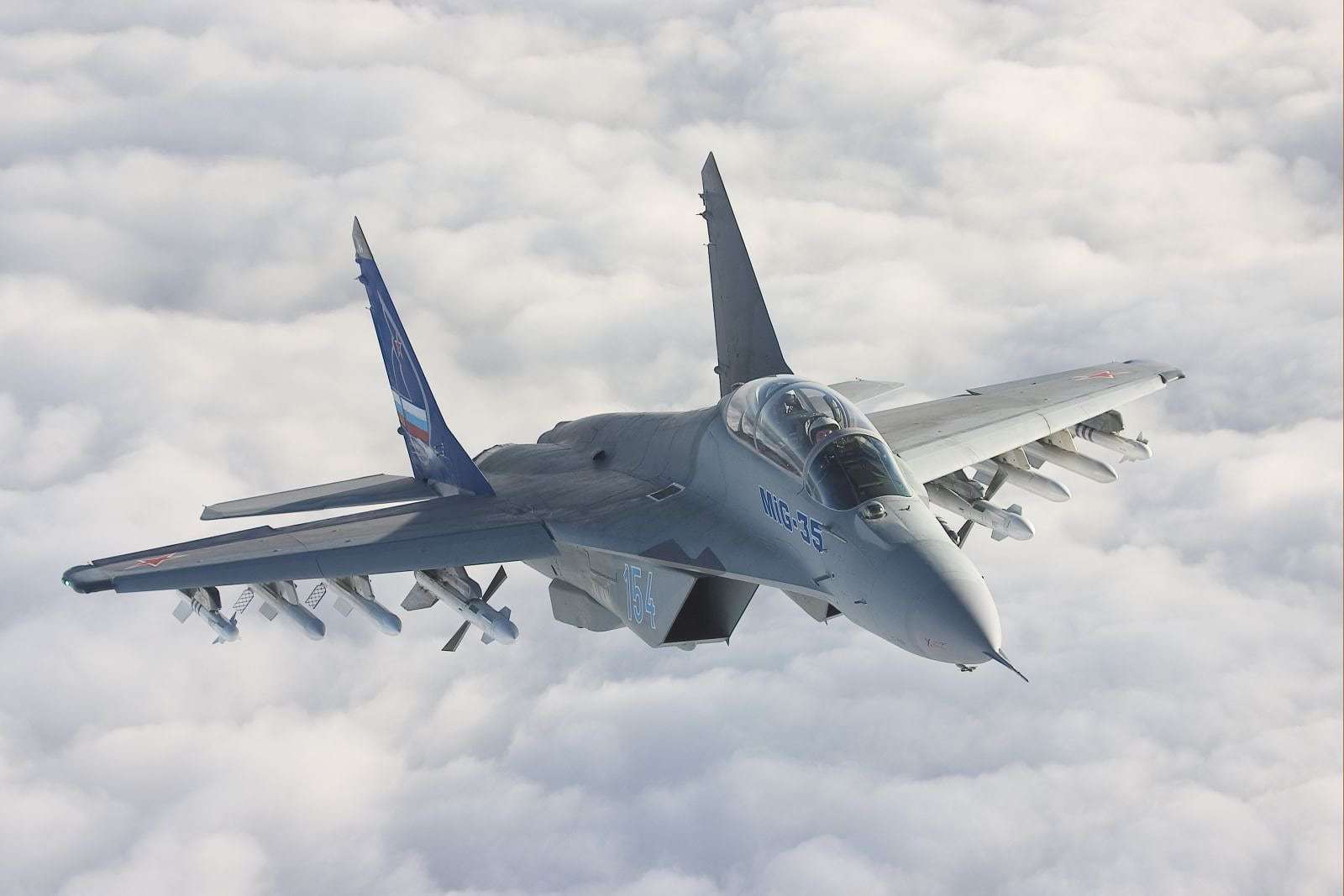
The MiG-35 is here because an honest ranking includes the failures. Unveiled at Aero India in 2007 and pitched as the MiG-29’s successor, it is a genuinely modern aircraft on paper with AESA radar and Mach 2.25 performance.
Russia ordered 24 in 2017. Estimates published in 2025 and February 2026 put fewer than ten actually in service, and some counts are as low as six, effectively a display-team fleet.
No export contract has ever been signed, by anyone. The Russian Aerospace Forces chose to put their money into the Su-30SM and Su-35S instead, and that decision has quietly ended MiG’s run as a frontline fighter house.
The Cold War classics that still define Russian fighter aviation
These three are out of Russian frontline service, so they cannot be ranked against the aircraft above on fielded capability. Leaving them out would be absurd, because two of them are among the most significant fighters ever built by anyone.
10. Mikoyan MiG-21 Fishbed
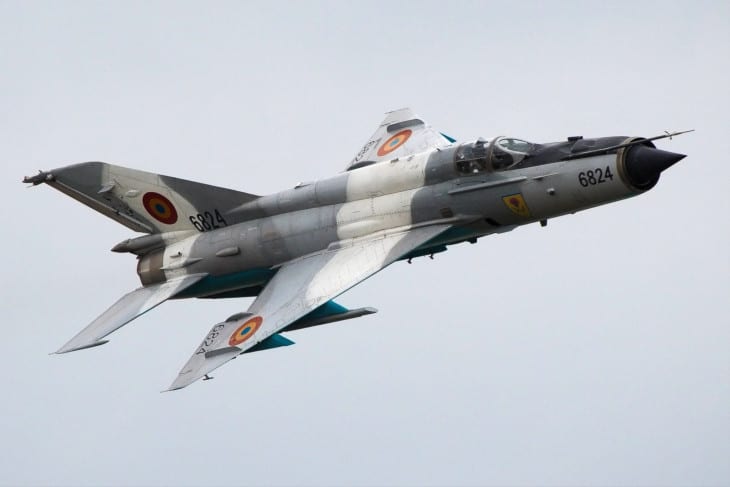
The MiG-21 is the most-produced supersonic aircraft in history and it is not close. A total of 11,496 were built, 10,645 in the USSR, 840 in India and 194 in Czechoslovakia, across a production run from 1959 to 1986.
Roughly 60 countries across four continents have flown it, and a handful still do more than seven decades after its first flight in 1955. It is a small, simple, Mach 2 delta-wing interceptor with short legs and no pretensions.
Its importance is not technical, it is arithmetical. For thirty years the MiG-21 was what most of the world’s air forces actually meant by a fighter jet.
11. Mikoyan MiG-25 Foxbat
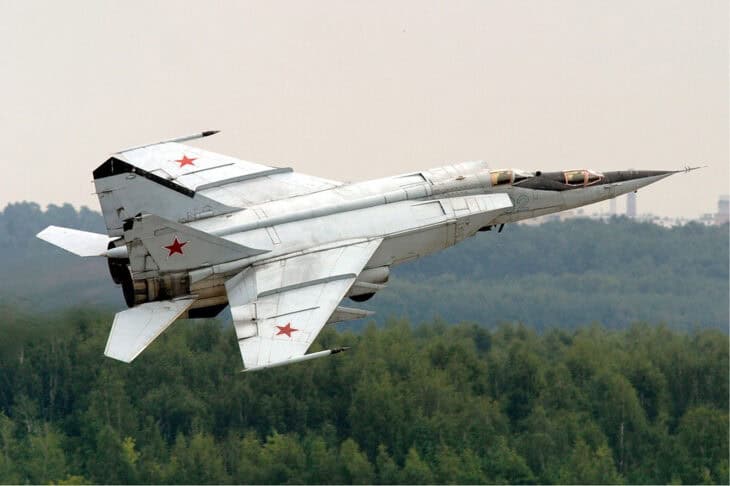
The MiG-25 caused one of the great intelligence misreadings of the Cold War. Western analysts saw a Mach 3 aircraft with enormous wings and concluded the Soviets had built a super-manoeuvrable air superiority fighter, a fear that helped drive the F-15 programme.
It could exceed Mach 3.2, about 2,371 mph (3,816 km/h), but doing so destroyed the engines, so crews were limited to Mach 2.83, roughly 1,705 mph (2,743 km/h). Its ceiling reached 78,740 feet with two missiles. It first flew on 6 March 1964, entered service in 1970, and 1,186 were built.
The truth arrived on 6 September 1976, when Lieutenant Viktor Belenko defected and landed his MiG-25P at Hakodate in Japan. Western engineers found a steel airframe, vacuum-tube electronics, and a brute-force interceptor with almost no manoeuvrability. It was never the aircraft the West had feared.
12. Mikoyan MiG-17 Fresco

The MiG-17 first flew on 14 January 1950 and entered service in October 1952. Including Polish, Czech and Chinese production, 10,649 were built.
It is the best argument on this list that the better aircraft does not always win. Subsonic, gun-armed and obsolete on paper by 1965, it was flown over North Vietnam against supersonic, missile-armed American fighters.
Vietnamese MiG-17 regiments claimed 71 aerial victories, including 32 F-4 Phantom IIs and 16 F-105 Thunderchiefs, for 63 MiG-17s lost in air combat. Tight-turning gunfighters caught early Phantoms that had been designed without a cannon.
Why the Su-25 and Su-24 are not on this list
Almost every “Russian fighter jets” list you will find includes these two. Both are important Russian combat aircraft, and neither is a fighter.
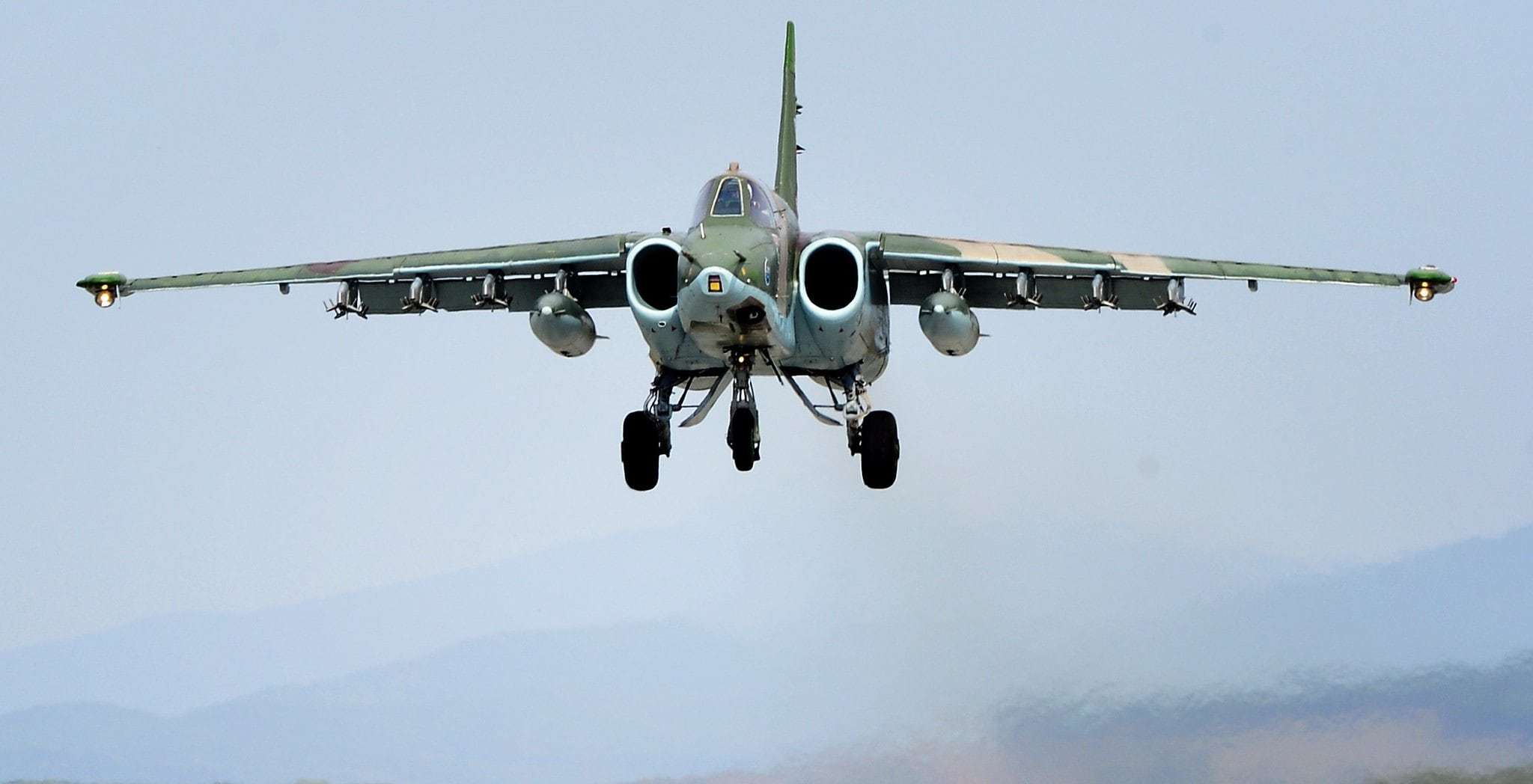
The Su-25 Frogfoot is a subsonic, heavily armoured close air support aircraft built to kill vehicles and troops for the ground forces. It is the Soviet equivalent of the A-10 Thunderbolt II, not of the F-16.
The Su-24 Fencer is a variable-sweep tactical bomber built for low-level, all-weather interdiction strikes. It carries no meaningful air-to-air capability and is being replaced by the Su-34, not by the Su-35.

Both have flown constantly since 2022 and both have paid for it: Oryx has visually confirmed 41 Su-25s and 15 Su-24s destroyed or damaged, the two heaviest attrition figures in the Russian inventory after the Su-34.
How many fighter jets has Russia lost in Ukraine?
Loss counts vary enormously depending on who is counting, so it matters which figure you are reading. Ukraine’s General Staff claimed 435 Russian aircraft destroyed by early 2026.
The conservative benchmark is Oryx, which only counts losses it can verify from photographs or video. As of February 2026 Oryx listed 181 Russian fixed-wing aircraft destroyed or damaged, of which 135 were frontline combat types.
| Type | Visually confirmed losses |
|---|---|
| Su-34 Fullback | 42 |
| Su-25 Frogfoot | 41 |
| Su-30SM | 20 |
| Su-24 Fencer | 15 |
| Su-35S Flanker-E | 8 |
| MiG-31 Foxhound | 5 |
| Su-27 Flanker | 3 |
| Su-57 Felon | 1 |
The Su-34 figure is the one worth pausing on. Russia’s pre-war Fullback fleet was around 140 aircraft, so confirmed losses alone account for close to a third of the original inventory, and Novosibirsk cannot build replacements as fast as they are being lost.
The Su-35S figure is equally telling in the other direction. Eight losses across four years is the lowest attrition of any Russian type flying regularly, which supports its position at the top of this ranking.
Are Russian fighter jets any good compared to American ones?
Individually, the best Russian fighters are competitive. The Su-35S out-turns most Western fourth-generation aircraft, the MiG-31 flies higher and faster than anything the United States fields, and the R-37M outranges the AIM-120 AMRAAM.
The gap is not in airframes, it is in fleets and in stealth. Russia has fewer than 50 Su-57s against well over a thousand F-35s, and its stealth fighter programme has been slowed for years by sanctions on precision components.
The other gap is enablers. Air superiority depends on airborne early warning, tankers, electronic attack and secure datalinks, and Russia has far fewer of each. For the fleet-level comparison see our breakdown of NATO versus Russia air power.
For the other side of the same rivalry, see the best Chinese fighter jets, many of which began as licensed or reverse-engineered Flankers. Russia’s piston-engined era is covered separately in the best Russian WW2 fighter planes.
What comes next for Russian fighter aviation
Three things will decide whether this ranking looks different in 2030. The first is whether Su-57 production ever escapes single figures per year, which depends more on sanctions and machine tools than on design.
The second is the AL-51F-1 engine. Until it replaces the interim AL-41F-1, the Su-57 is a fifth-generation airframe flying on fourth-generation propulsion.
The third is the MiG-31 replacement problem. Russia has no production line for a high-altitude interceptor, and the proposed MiG-41 remains a concept, so the Foxhound fleet has to be kept alive into the 2030s. Meanwhile the wider field is moving on to sixth-generation fighter programmes that Russia has not yet begun to fund.
FAQ
Sources and references used for research and fact-checking.
- Wikipedia, Sukhoi Su-35
- Wikipedia, Mikoyan MiG-31
- Wikipedia, R-37 (missile)
- Wikipedia, Sukhoi Su-57
- Wikipedia, Sukhoi Su-34
- Wikipedia, Sukhoi Su-30
- Wikipedia, Sukhoi Su-27
- Wikipedia, Mikoyan MiG-29
- Wikipedia, Sukhoi Su-33
- Wikipedia, Mikoyan MiG-35
- Wikipedia, Mikoyan-Gurevich MiG-21
- Wikipedia, Mikoyan-Gurevich MiG-25
- Wikipedia, Mikoyan-Gurevich MiG-17
- Aerospace Global News, Four years of war: Counting Russian and Ukrainian aircraft losses
- The Aviationist, Russia Shows Su-34s Carrying Four Jet-Capable UMPK Glide Bombs
- The Aviationist, Russian Su-57 Felon Hit by a Ukrainian Drone Strike 600 km From the Front
- The War Zone, Russia May Finally Abandon Its Cursed Aircraft Carrier
- Airforce Technology, Su-25 (Su-28) Frogfoot Close-Support Aircraft
- GlobalSecurity.org, Su-24 Fencer
Get the Newsletter
The latest aviation news and stories sent to your inbox.
About the Author

Articles credited to the AeroCorner Editorial Team are created or maintained by multiple aviation contributors working under a shared editorial framework. Content is researched using authoritative aviation sources and reviewed to ensure clarity, technical accuracy, and consistency across AeroCorner.