

Table of Contents
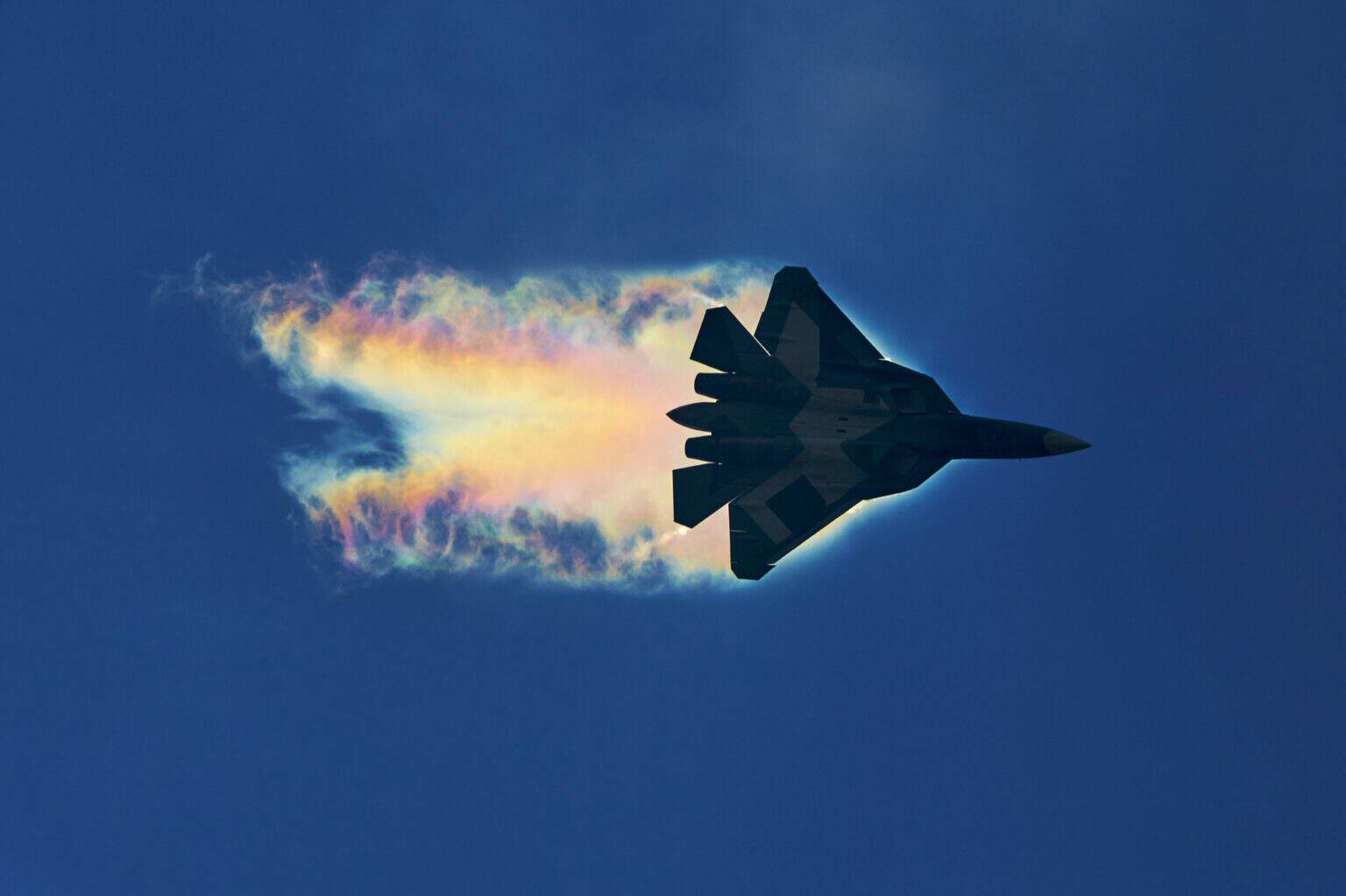
The best jet in the Russian Air Force is the Su-57 Felon stealth fighter, but there are very few of them. FlightGlobal’s World Air Forces 2026 directory lists 30, and a September 2026 count of tail numbers found at least 16.
The war is really fought by older Flankers: up to 130 Su-35S fighters and up to 156 Su-34 strike jets that lob glide bombs from behind the front line. Across all its branches, Russia has the world’s second-largest military fleet, 4,237 aircraft, behind only the United States.
This guide ranks every combat jet Russia flies by fighting value as of October 2026. It then covers the bombers, the radar planes and tankers, the transports and helicopters, what more than four years of war in Ukraine have cost, and how the fleet compares with America’s.
| Rank | Aircraft | Role | Fleet estimate | Lost since 2022 |
|---|---|---|---|---|
| 1 | Su-57 Felon | Stealth fighter | 16 to 30 | 2 |
| 2 | Su-35S Flanker-E | Air superiority fighter | Up to 130 | 11 |
| 3 | Su-34 Fullback | Strike fighter | 130 to 156 | 43 |
| 4 | MiG-31BM and MiG-31K | Interceptor, Kinzhal carrier | 128 to about 150 | 5 |
| 5 | Su-30SM and SM2 | Multirole fighter | 110+ | 22 |
| 6 | Su-27SM and SM3 | Air superiority fighter | No current split | 3 |
| 7 | Su-25SM3 Frogfoot | Close air support | 131 to about 200 | 41 |
| 8 | MiG-29SMT and MiG-35 | Light fighter | About 100 to 235 | 1 |
| 9 | Su-24M Fencer | Strike bomber | 260 listed | 15 |
| Bomber | Tu-22M3 Backfire | Long-range bomber | 56 | 12 |
| Bomber | Tu-95MS Bear | Strategic bomber | 44 | 12 |
| Bomber | Tu-160 Blackjack | Strategic bomber | 15 | 0 |
How this ranking works
Jets are ranked by fighting value in October 2026: sensors, weapons and upgrade state, weighed against how many Russia can actually fly. Bombers are listed separately because they do a different job. Fleet counts come from FlightGlobal’s World Air Forces 2026, which lumps all Su-27, Su-30 and Su-35 Flankers into one line of 407, so per-type figures also use the IISS Military Balance 2026 as quoted by the Russian outlet www1.ru. Losses are Oryx’s list of losses backed by photos or video, which is a minimum, not the true total.
1. Su-57 Felon: The Best Jet, in the Smallest Numbers
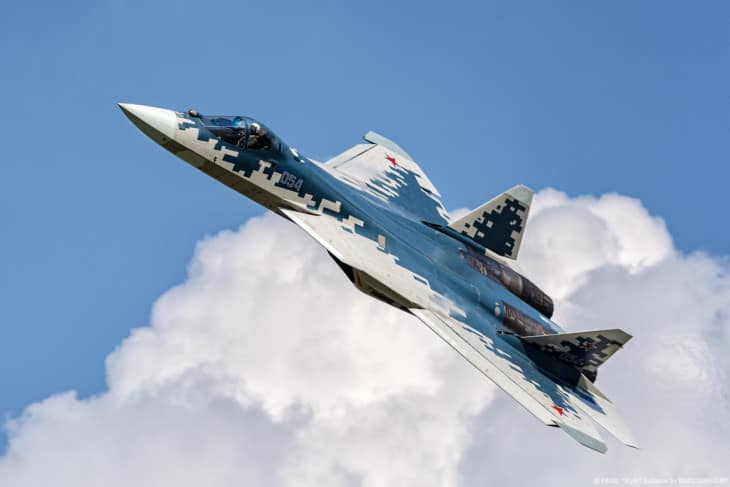
The Su-57 is Russia’s only fifth-generation fighter and the only one built around stealth. The export Su-57E is rated at Mach 2, about 1,327 mph (2,135 km/h) at high altitude, and can cruise at Mach 1.3 without afterburner.
Numbers are the problem. FlightGlobal lists 30 in service and 46 more on order, which together match the contract for 76 jets by 2027. Ukraine’s Militarnyi counted at least 16 by tail number in September 2026, and the IISS puts the fleet at “more than 21”.
Production is slow. Zona Militar found no official announcement of any Su-57 delivery to the Russian Aerospace Forces in 2025, and Militär Aktuell estimated just two. Two more arrived on September 24, 2026, the second batch of the year.
Oryx now lists two Su-57s: one damaged by a Ukrainian drone at Akhtubinsk, 366 miles (589 km) from the front, in June 2024, and one destroyed. Kyiv Post reported a Su-57 crash on a training flight near Moscow on July 23, 2026, though Russia’s defense ministry did not name the type.
Ukraine also claims it hit several Su-57s at Shagol airfield in Chelyabinsk on April 25, 2026, about 1,060 miles (1,700 km) from the border. The Kyiv Independent could not verify that, and Oryx does not count it. Algeria became the first export customer, with an order for 14.
2. Su-35S Flanker-E: The Real Front-Line Fighter
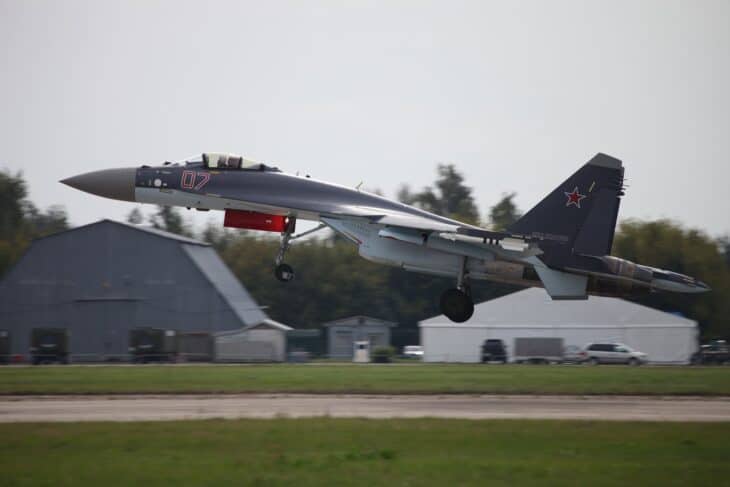

The Su-35S is Russia’s most numerous modern fighter. The IISS counts up to 130, and it made up the largest share of new jets delivered in 2026. UAC rates it at 870 mph (1,400 km/h) at ground level and Mach 2.25 at altitude.
It ranks below the Su-57 because it is not stealthy, but above everything else because no other Russian fighter is being built as fast. UAC announced seven Su-35S delivery batches in 2025, and analysts estimate 15 to 21 jets that year. Three more batches followed in 2026 by late August.
Oryx counts 11 destroyed. Two of those went down on September 7, 2026, when Ukrainian outlet UNITED24 reported that a pair of Su-35S fighters collided over the Kursk region, killing one pilot. Russia’s defense ministry has not commented.
Our ranking of the best Russian fighter jets compares it with the rest of the Flanker family.
3. Su-34 Fullback: The Glide-Bomb Truck
.jpg)
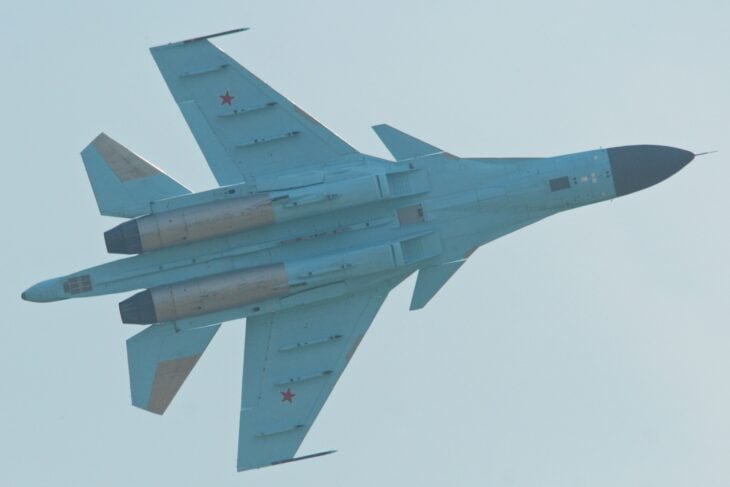
The Su-34 is a two-seat strike jet built to carry heavy bombs a long way. FlightGlobal lists 156 and the IISS about 130. It ranks third because it carries Russia’s heaviest glide bombs, the weapons that define its air campaign.
In July 2024 it became the first jet seen launching the winged, guided version of the giant FAB-3000, a bomb named for its nominal 3,000-kilogram (6,600-pound) weight. Ukraine’s defense ministry counted a record 8,766 guided bombs dropped in August 2026, from all aircraft types combined.
That work has cost it. Oryx lists 42 Su-34s and one upgraded Su-34M lost, 43 in all, the most of any Russian fixed-wing type. The factory delivered an estimated 15 in 2025 to make up the gap.
4. MiG-31BM and MiG-31K: The Fastest Jet in Service
.jpg)
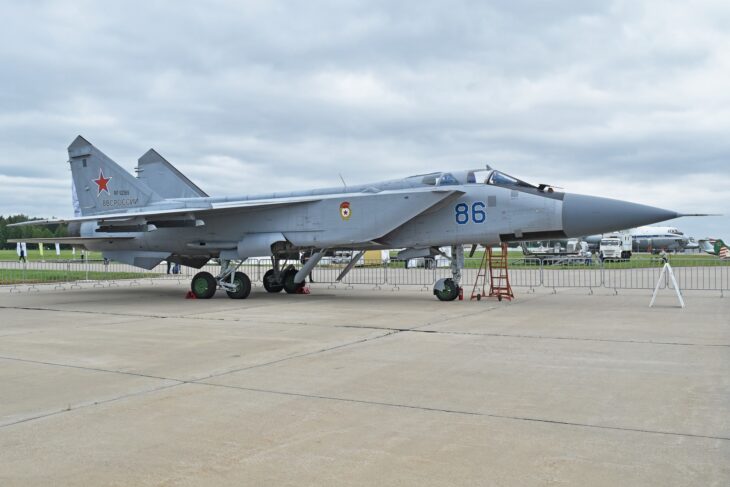
The MiG-31 is a Cold War interceptor rated at Mach 2.83, about 1,864 mph (3,000 km/h). FlightGlobal lists 128, and the IISS almost 150, including up to 25 modified to carry the Kh-47M2 Kinzhal missile.
It ranks fourth for one reason: the Kinzhal, which Russia calls hypersonic. Oryx lists only five MiG-31BMs lost, far fewer than the strike jets.
One takeoff, a whole country in shelters
When a MiG-31K leaves the runway, Ukraine’s Air Force alerts the entire country. On May 29, 2026, its warning read: All of Ukraine, missile threat, a MiG-31K takeoff has been detected. The jet is Russia’s main launch platform for the Kinzhal, so a single takeoff is treated as a strike on every city at once.
5. Su-30SM and SM2: The Two-Seat Workhorse


The Su-30SM is a two-seat multirole Flanker, and the SM2 is its upgraded version. FlightGlobal’s 2025 directory put the fleet at 110 or more. UAC rates the export Su-30SME at Mach 1.75.
It sits below the MiG-31 because it brings no unique weapon, but it is flexible and still in production: two SM2s arrived in November 2025 and about two more in July 2026.
Oryx lists 22 lost, including several destroyed on the ground at Saky in Crimea in August 2022. The Su-30 family page covers the export versions.
6. Su-27SM and SM3: The Original Flanker
.jpg)
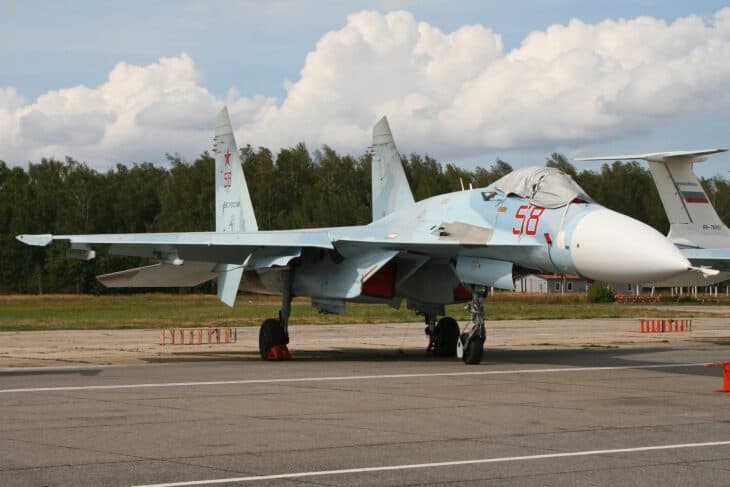
The Su-27 is the original Flanker that the Su-30 and Su-35 grew from. The export Su-27SK is rated at Mach 2.35, about 1,553 mph (2,500 km/h). Russia upgraded many to SM and SM3 standard, but FlightGlobal no longer splits them out of its 407 Flankers.
It ranks below the Su-30SM because its radar and missiles are a generation older. Oryx lists only three lost. Its best-known moment came on March 14, 2023, when a Su-27 struck the propeller of a US MQ-9 Reaper drone over the Black Sea and brought it down.
7. Su-25SM3 Frogfoot: The Jet That Pays the Highest Price
.jpg)
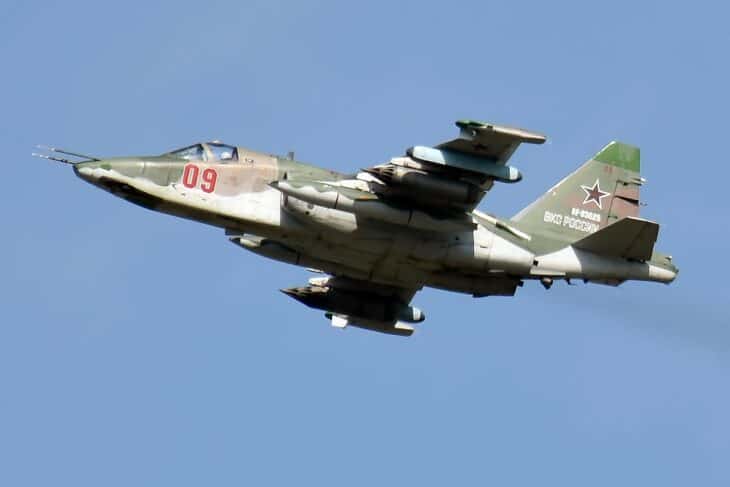
The Su-25 is a heavily armored ground-attack jet, Russia’s answer to the A-10, with a top speed of 606 mph (975 km/h) at sea level. FlightGlobal lists 131, plus 43 two-seat trainers, and the IISS about 200.
It ranks seventh because it is slow and its job puts it close to the front. Oryx lists 41 lost, second only to the Su-34 among Russian jets.
8. MiG-29SMT and MiG-35: The Fighters Russia Stopped Buying
.jpg)
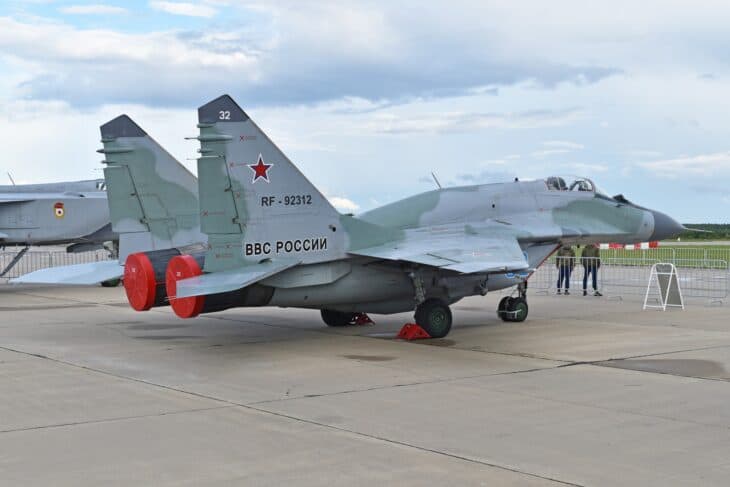
Russia’s MiG-29 fleet is where the sources disagree most. FlightGlobal lists 235 MiG-29s and MiG-35s in the Air Force, while the IISS counts about 100, a gap far too large to be rounding.
The MiG-35, a modernized Fulcrum, never won a large Russian order. Russian outlet www1.ru put the fleet at six in June 2026, citing a Telegram channel.
Russia has put its money into Sukhoi’s Flankers instead, which is why this family ranks eighth. Oryx lists one MiG-29 lost.
9. Su-24M Fencer: The Oldest Bomber Still on the Books

The Su-24 is a swing-wing bomber from the 1970s, rated at Mach 1.6, about 1,028 mph (1,654 km/h), at high altitude. FlightGlobal still lists 260 in the Air Force, plus 36 with Naval Aviation.
That 260 looks like the clearest case of a paper fleet, the kind FlightGlobal itself warns about. Oryx lists 15 Su-24 variants lost. Ukraine still flies its own Su-24s in a very different role, as our guide to Ukraine’s air force explains.
The Bombers: Long-Range Aviation After Spiderweb
Long-Range Aviation is Russia’s bomber force. FlightGlobal lists 56 Tu-22M3 Backfires, 44 Tu-95 Bears and 15 Tu-160 Blackjacks, but warns that its counts for these types “are likely to be higher than reality”.
The reason is Operation Spiderweb. On June 1, 2025, Ukraine’s SBU launched drones from hidden truck compartments at bomber bases across Russia, including Olenya near the Arctic and Belaya in Siberia. The SBU claimed 41 aircraft hit and $7 billion in damage.
Independent counts are lower but still severe. Two US officials told Reuters that as many as 20 aircraft were hit and about 10 destroyed. Satellite images showed at least four Tu-95MS destroyed at Olenya, and four Tu-22M3s and three Tu-95MS at Belaya.
The Tu-95 is the only turboprop strategic bomber still in operational use, first accepted by Long-Range Aviation units in September 1957. Oryx lists 12 lost. Another lost its tail in a drone strike on Engels air base in July 2026, satellite imagery showed.
The Tu-160 is the fastest bomber Russia flies, at Mach 2.05, about 1,379 mph (2,220 km/h). No Tu-160 loss has been confirmed. Russia’s defense minister said two upgraded Tu-160Ms were delivered in 2025, without saying whether they were new-builds or rebuilt jets.
The Tu-22M3 has had the hardest war of the three, with 12 lost on Oryx’s count. Another crashed on a training flight in the Irkutsk region on June 15, 2026, and both pilots ejected.
The Eyes and the Reach: Radar Planes, Tankers and Spy Jets
Russia’s airborne radar fleet is tiny. About 42 A-50s were built before the Soviet Union collapsed, and FlightGlobal lists eight A-50 and A-100 radar jets. The Aviationist estimated in June 2026 that Russia has five to seven A-50Us left.
Ukraine shot down two of them in six weeks: an A-50U over the Sea of Azov on January 14, 2024, and a second over Krasnodar Krai on February 23, 2024.
Each can track up to 150 targets within about 143 miles (230 km), so every loss leaves a gap. The replacement A-100 Premier first flew in 2017 and has not entered serial production.
FlightGlobal also lists 18 Il-78 tankers, a small number for an air force this size, plus 27 Il-20 and Il-22 reconnaissance and command jets and four Tu-214 spy and jamming planes.
Transports: The Il-76 Is Still the Backbone
Military Transport Aviation runs on the Il-76, with 136 Il-76 and Il-78 airframes in FlightGlobal’s transport line. The newest version, the Il-76MD-90A, carries up to 132,000 pounds (60 tonnes), and 37 had been built in Ulyanovsk by the start of 2026, seven of them in 2025.
The heavy end is shrinking. Russia flies five An-124 Ruslans, and the An-22 is no longer listed in the 2026 directory.
One crashed in the Ivanovo region on December 9, 2025, killing all seven aboard. Vladimir Putin’s Il-96-300PU is not an air force jet at all: it belongs to a presidential flight squadron.
Helicopters: 776 Mi-8s and the Ka-52’s Hard War
Russia’s helicopter fleet is huge, and FlightGlobal lists it under the Air Force. It counts 776 Mi-8 family transports, 322 Mi-24 and Mi-35 gunships, 135 Ka-52s, 94 Mi-28s and 40 Mi-26 heavy lifters.
More Ka-52 Alligators have been confirmed lost than any other Russian aircraft type. Oryx lists 69, ahead of 54 Mi-8s and 21 Mi-28s. Russia is still buying both attack helicopters, with 16 more Ka-52s and 98 Mi-28s on order.
The Ka-52 family was the world’s first operational helicopter with ejection seats. Our guide to Russian helicopters covers each type in depth.
What Four Years of War Have Cost
As of October 5, 2026, Oryx had confirmed 198 Russian aircraft lost (167 destroyed and 31 damaged) and 185 helicopters. Ukraine’s General Staff claims far more, 443 planes and 356 helicopters by October 9, but that is a claim by one side in the war.
The Russian Air Force has never achieved sustained air superiority over Ukraine, and it has adapted around that. Polish outlet Defence24 wrote in May 2026 that Russian aircraft and helicopters “do not venture over territories held by the Ukrainians”. Glide bombs let them strike from as far as about 81 miles (130 km) away.
New jets are now arriving faster than old ones are lost. Militär Aktuell estimated 33 new fighters entered service in 2025, and Defence24 estimated about 14 new aircraft in 2026 by September against at least eight destroyed.
Russia is also training more pilots. It is opening three new flight officer schools in 2026, in Syzran, Chelyabinsk and Ulyanovsk, on top of the two it runs today.
The Aerospace Forces also changed leaders: Col. Gen. Alexander Chaiko, a ground forces general, replaced Viktor Afzalov under a decree from Vladimir Putin in May 2026, which the defense ministry confirmed on June 10.
Does Russia really have 4,237 military aircraft?
On paper, yes. That is FlightGlobal’s 2026 total for every Russian service, second only to the US. But FlightGlobal itself says its counts for war-hit types are likely higher than reality, and 260 Su-24s is hard to square with what flies. Higher figures you may see, such as 5,314, add more than 1,000 army drones. RUSI analyst Justin Bronk counts 545 to 560 fighter jets and 110 to 115 strategic bombers genuinely in service.
How Strong Is the Russian Air Force, Really?
By combat aircraft, Russia ranks third in the world. FlightGlobal counts 1,559 Russian combat jets, behind China’s 1,814 and well behind the 2,718 of the United States. Across all aircraft types, the US total is 13,033, more than three times Russia’s.
The gap is widest in stealth. The US Air Force alone lists 177 F-22s and 305 F-35As in its combat fleet, against 16 to 30 Su-57s. Russia’s lighter stealth jet, the Su-75 Checkmate, had still not flown by mid-2026, five years after it was unveiled.
That does not make it weak. RUSI’s Justin Bronk argued in April 2026 that Russia’s air force is more dangerous now than when it invaded, because it has lost far fewer pilots than jets and its crews have become more capable. Our NATO vs Russia air power comparison sets it against the whole alliance.
FAQ
Sources and references used for research and fact-checking.
- FlightGlobal, World Air Forces 2026
- Oryx, Attack On Europe: Documenting Russian Equipment Losses During The Russian Invasion Of Ukraine
- Aerospace Global News, World combat aircraft fleets 2026
- www1.ru, The US outstrips Russia in combat aviation (IISS Military Balance 2026)
- www1.ru, Number of Su-34 and Su-57 in the Russian Aerospace Forces named
- Militarnyi, UAC delivers Su-57s to the Russian Aerospace Forces in 2026
- Zona Militar, UAC ended 2025 without official deliveries of new Su-57 stealth fighters
- Militär Aktuell, Russia: 2025 was a record year for fighter aircraft production
- Defence24, Russia with more aircraft: production exceeds losses
- Defence24, Russia prepares to rebuild its Air Force
- Wikipedia, Sukhoi Su-57
- The Aviationist, Su-57 Felon hit by Ukrainian drone strike
- Kyiv Post, Russian Su-57 crashes during training flight
- The Kyiv Independent, Ukraine strikes Russian airfield, damaging 2 fighter jets
- United Aircraft Corporation, Su-35
- Air Data News, Russia receives more Su-35S fighters, but how many have been delivered?
- UNITED24 Media, Two Russian Su-35 jets collide in mid-air over Kursk region
- The War Zone, Russia's giant 6,000lb glide bomb seen launched from Su-34 for the first time
- Ministry of Defence of Ukraine, Over 7,100 battles and 8,700 guided bombs: the situation at the front in August
- Defence Ukraine, Russian FAB-UMPK glide bombs in 2026
- Kyiv Post, Ukraine's Air Force warns of MiG-31K takeoff
- United Aircraft Corporation, Sukhoi Su-30SME
- Wikipedia, List of active Russian military aircraft
- Wikipedia, 2023 Black Sea drone incident
- www1.ru, Number of MiG-35s built for the Russian Aerospace Forces revealed
- Wikipedia, Operation Spiderweb
- The Kyiv Independent, Ukraine struck fewer Russian bombers during Operation Spiderweb than estimated, US officials claim
- The Barents Observer, Satellite images from Olenya show 4 strategic bombers destroyed
- Wikipedia, Tupolev Tu-95
- United Aircraft Corporation, Tu-95MS
- Ukrainska Pravda, Satellite images confirm Tu-95MS destroyed at Engels
- Wikipedia, Tupolev Tu-160
- Militarnyi, Russia to receive two Tu-160M missile carriers after years of delay
- The Aviationist, Russian Tu-22M3 nosedive before crash
- Wikipedia, Beriev A-50
- Wikipedia, 2024 Russia Beriev A-50 and Ilyushin Il-22 shootdowns
- The Aviationist, Russia fielded a new A-50U
- www1.ru, Number of Il-76 transports built in Russia named
- United Aircraft Corporation, Il-76MD-90A
- The War Zone, There's likely no way back for Russia's An-22 turboprop heavy transports after fatal crash
- Wikipedia, Russian presidential aircraft
- Wikipedia, Russian Aerospace Forces
- Enab Baladi, Putin appoints Chaiko to lead Aerospace Forces
- Wikipedia, Commander-in-Chief of the Aerospace Forces
- Novaya Gazeta Europe, Russia appoints new Air Force commander wanted by International Criminal Court
- Minfin, Russian invading army casualties
- RUSI, Russia's air force is much more dangerous now than it was when it invaded Ukraine
- Migflug, Russia's Su-75 Checkmate prototype under construction
- Global Firepower, Russia military strength 2026
- GlobalMilitary.net, Russian Air Force inventory 2026
Get the Newsletter
The latest aviation news and stories sent to your inbox.
About the Author

Tim is the owner and lead editor of AeroCorner since 2019, overseeing aviation content covering aircraft, airlines, airports, and the broader aviation industry. Through years of researching, writing, editing, and publishing aviation-focused content, he has developed extensive practical knowledge of commercial aviation and air travel. Based in Asia and a frequent traveler himself, Tim also brings firsthand passenger experience to AeroCorner’s coverage. Outside of publishing, he has also explored aviation firsthand through hands-on flight training in New Zealand.