Military Helicopters
Kamov Ka-50 “Hokum”
ICAO: KA50
The attack helicopter built for modern Russian combat operations.
The latest aviation news and stories sent to your inbox.
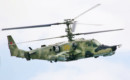
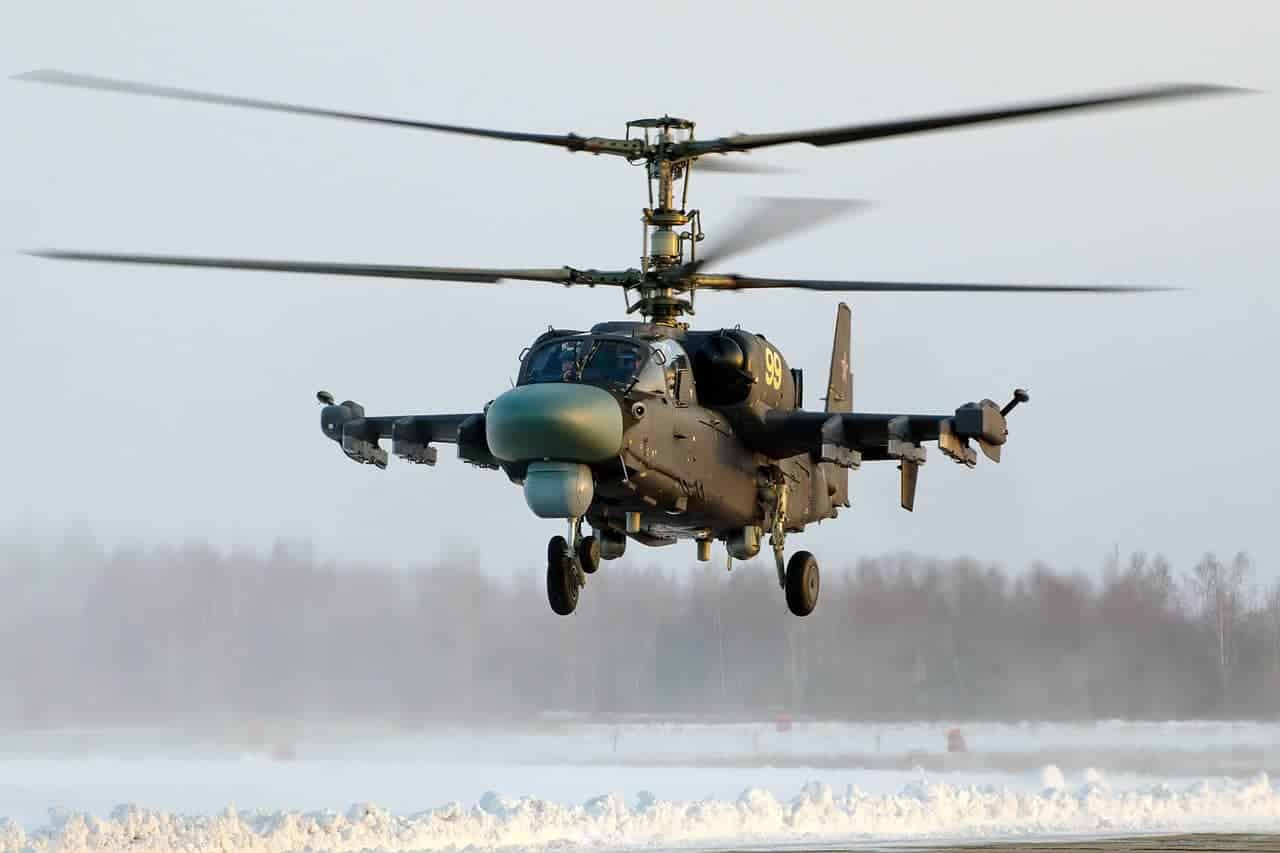
The Kamov Ka-52 Alligator is a twin-seat attack helicopter introduced in the 2000s. Derived from the single-seat Ka-50, it features coaxial rotors and advanced avionics. The aircraft serves in Russian military operations.


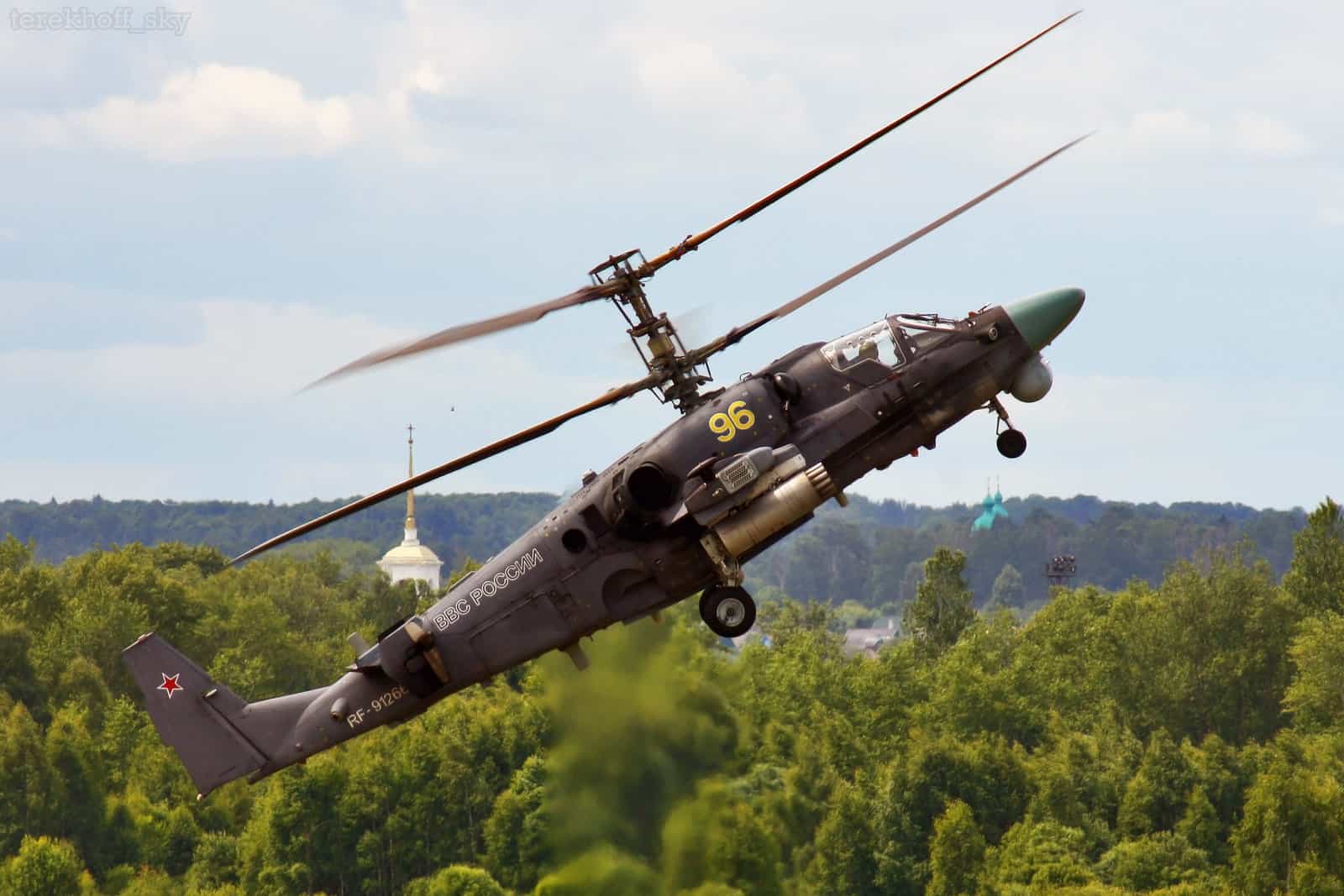
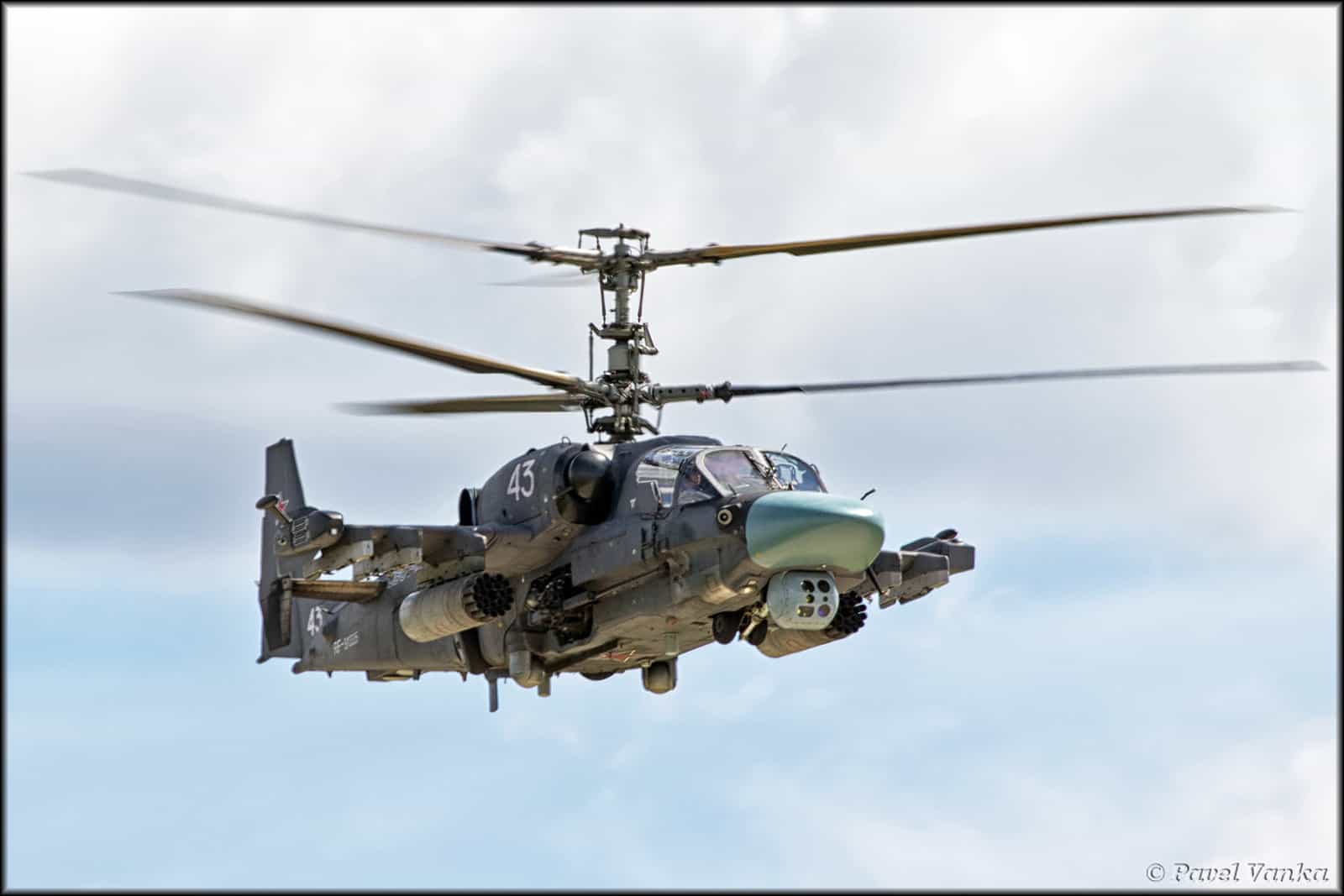
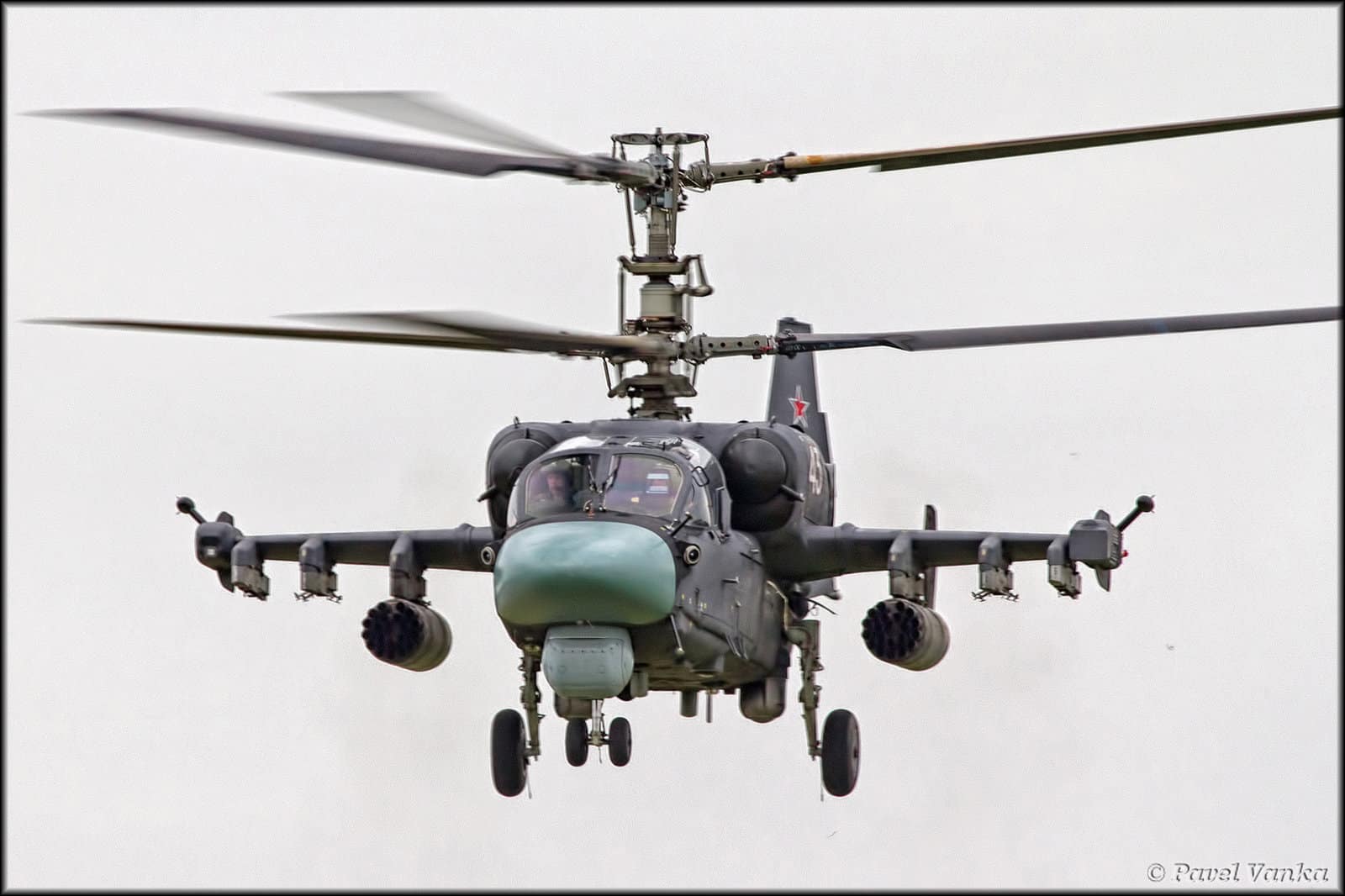
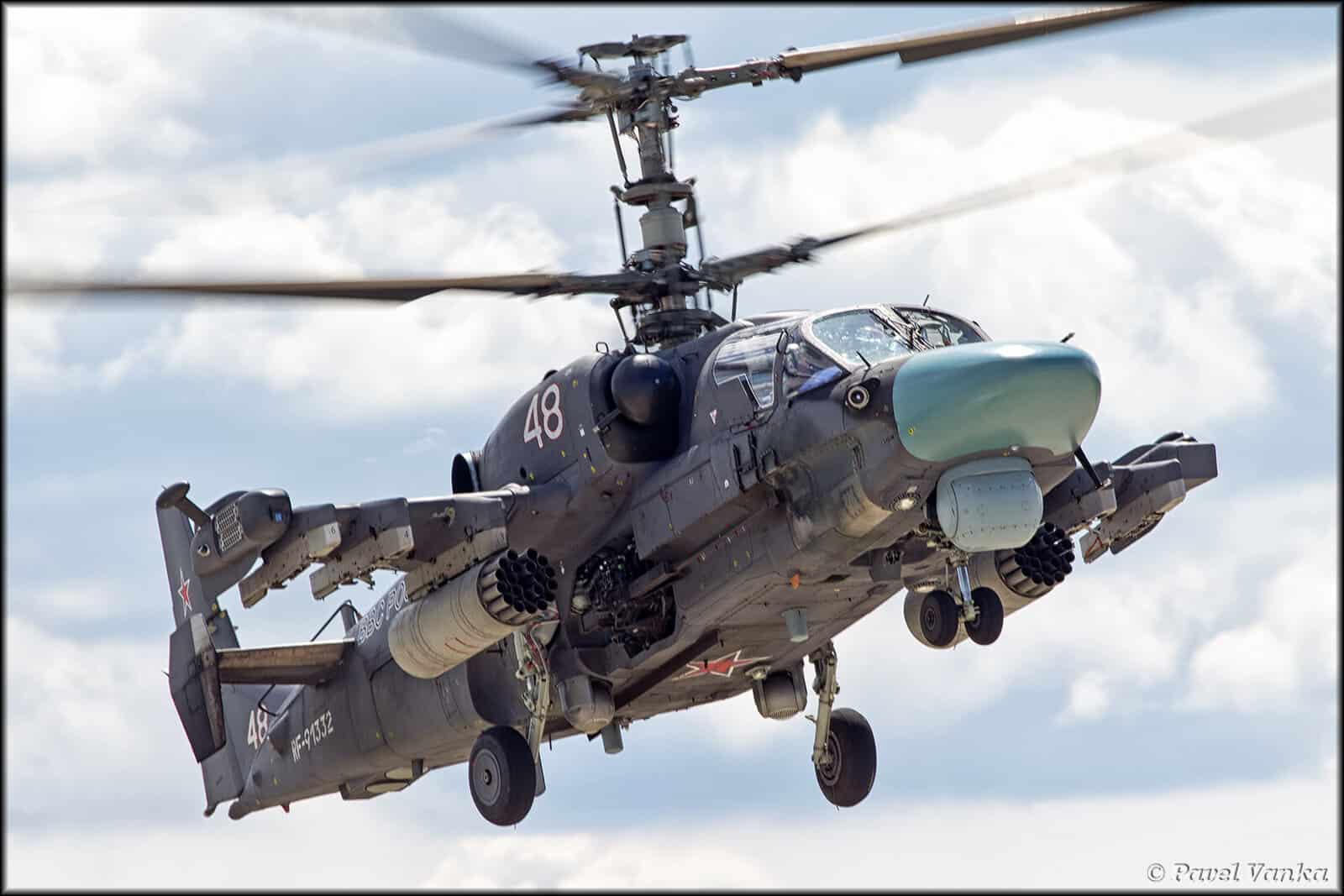
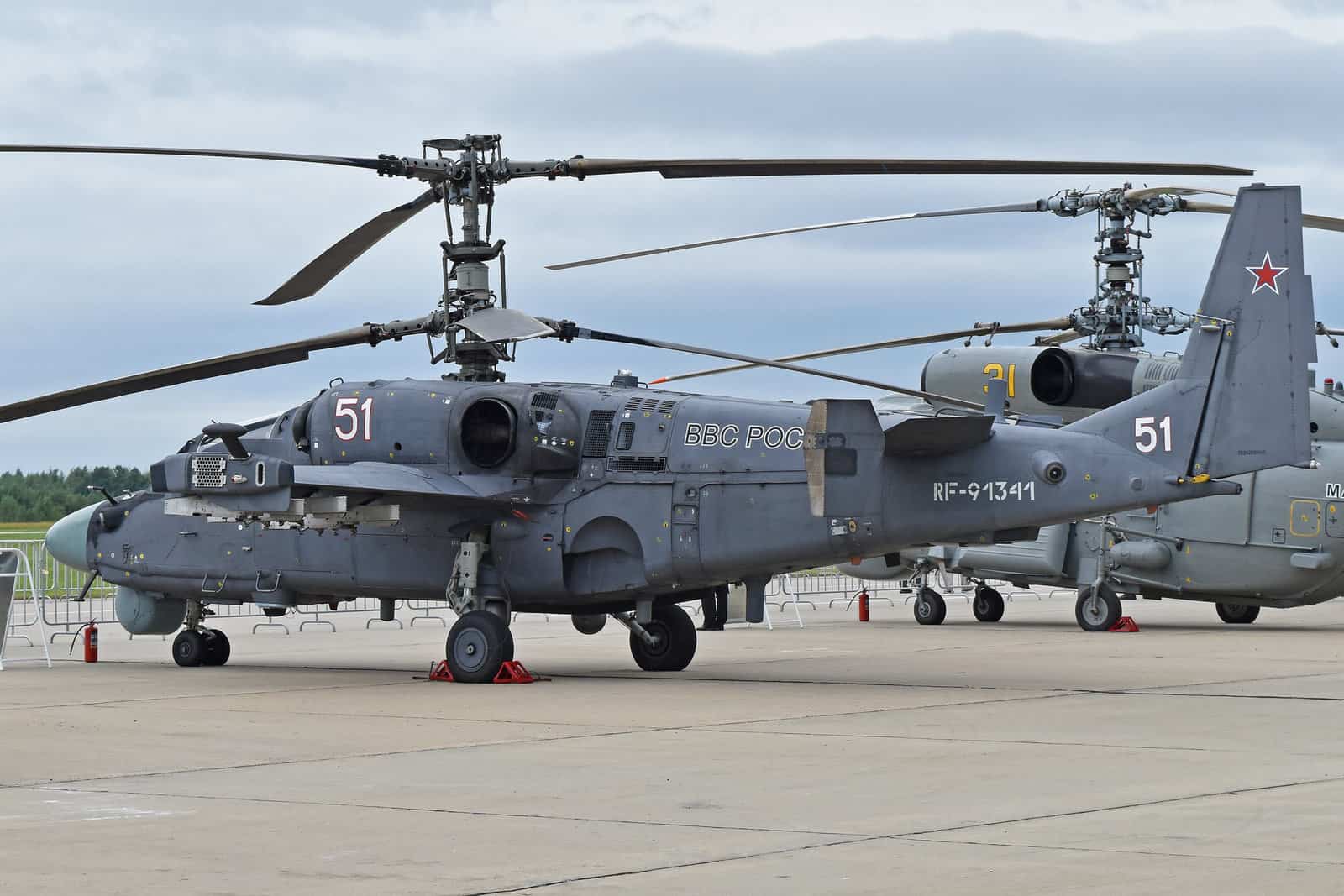
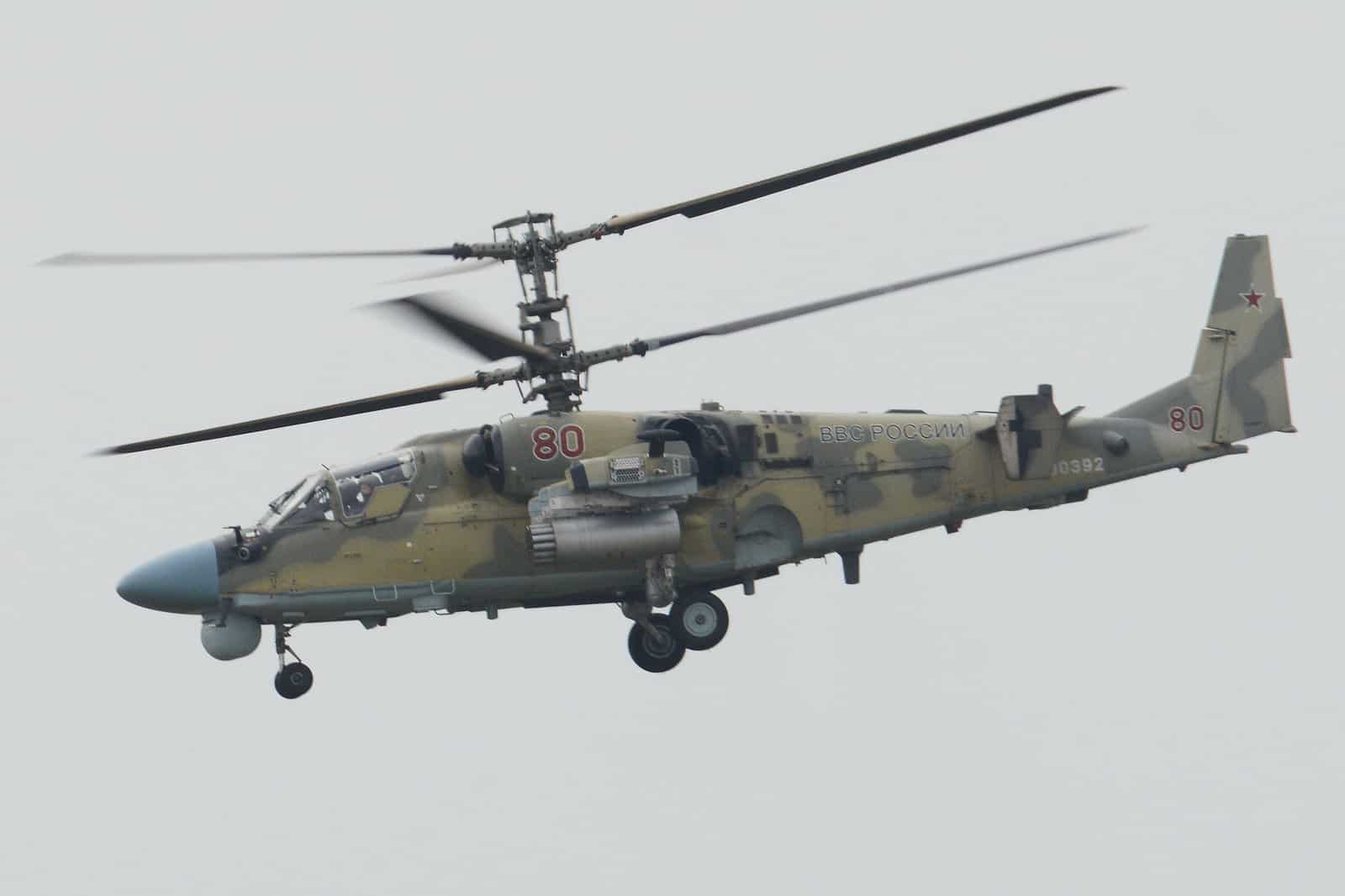
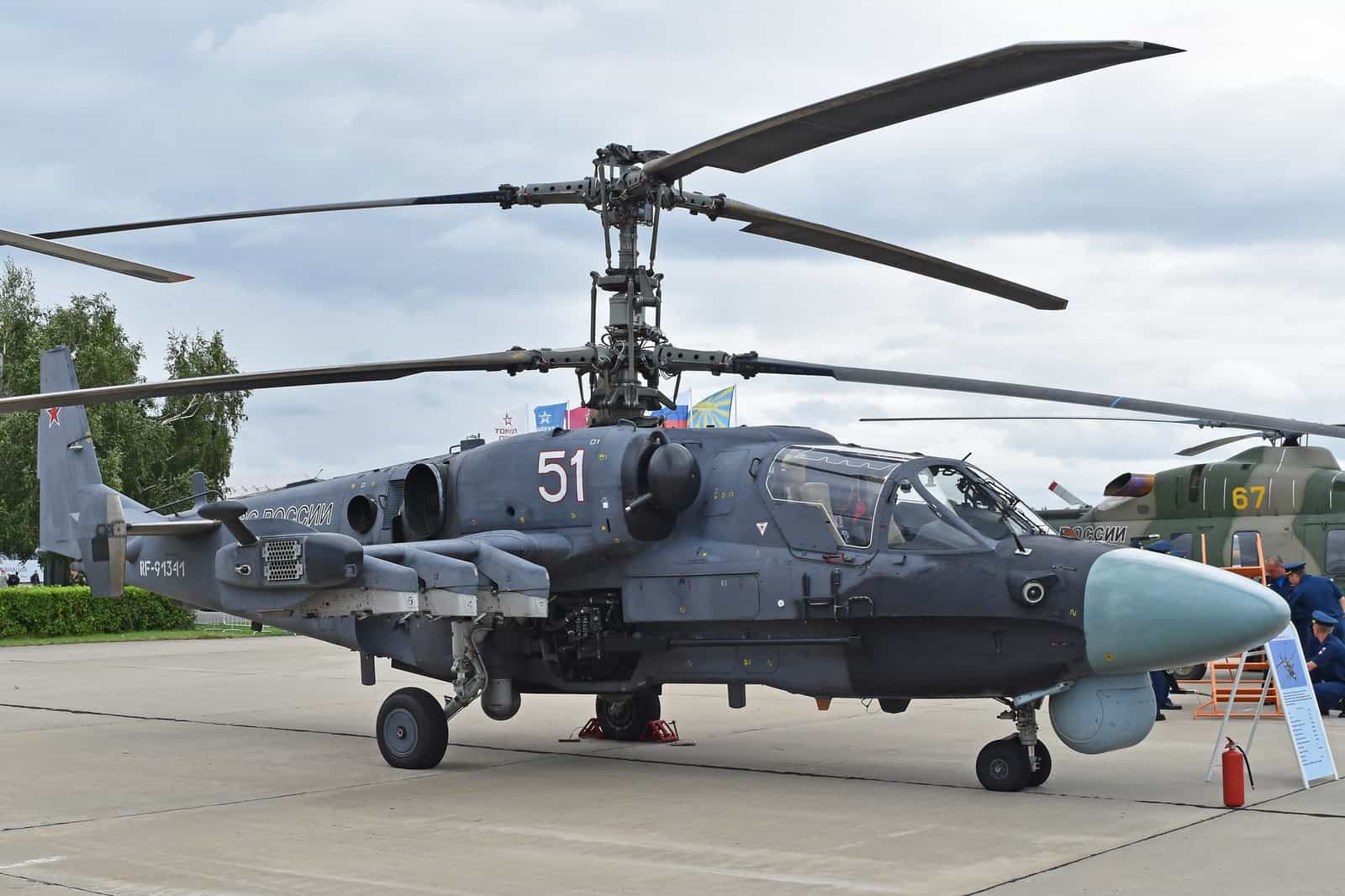
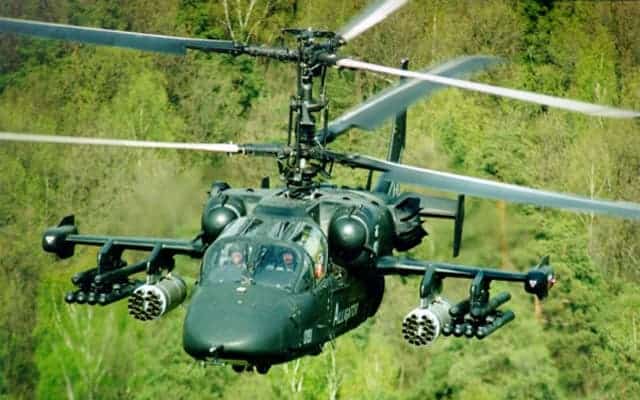
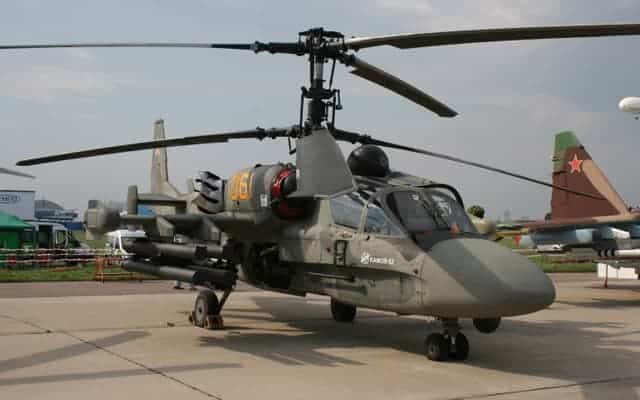

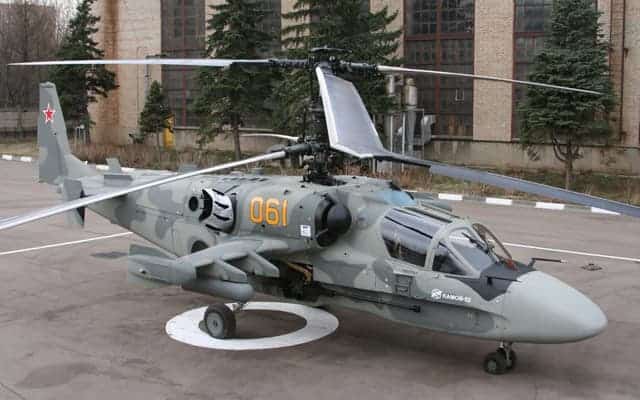
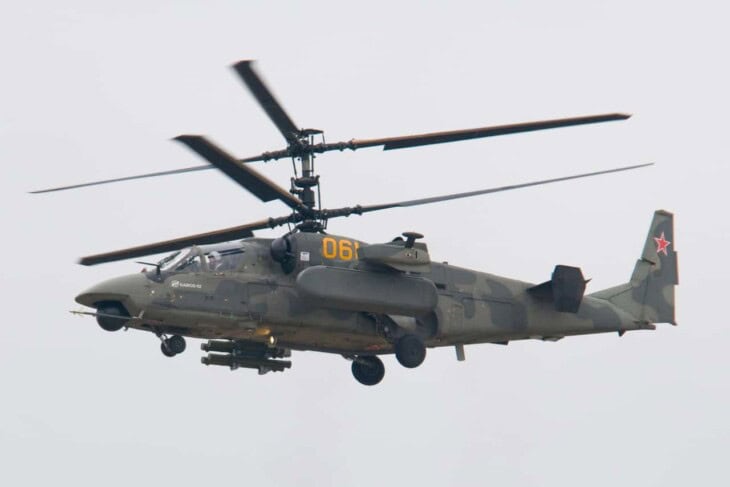
The Ka-52 first flew in 1997 and entered service in 2011. It retains the coaxial rotor system characteristic of Kamov designs. The aircraft supports reconnaissance and strike missions.
Two turboshaft engines producing approximately 2,400 shaft horsepower each power the helicopter. Cruise speed approaches 150 knots (278 km/h). Maximum takeoff weight exceeds 24,000 pounds (10,886 kg).
The Ka-52 is equipped with guided missiles and modern sensors. It has been deployed in combat operations. The aircraft represents Russia’s contemporary attack helicopter capability.
The Ka-52 originated from a post-Cold War effort to field a two-seat battlefield rotorcraft that combined dedicated firepower with expanded sensor and reconnaissance capability. Program intent emphasized crew coordination for target acquisition and weapons employment under contested conditions where single-pilot operation was judged less effective.
Initial prototypes underwent flight and weapons integration trials focused on avionics interoperability and mission-system ergonomics. Test campaigns evaluated sensor fusion between electro-optical systems and onboard mission computers, and validated weapons release characteristics across tactical profiles.
Type approval and entry into service proceeded after a staged evaluation by Russian military authorities. Production was established within the Kamov design bureau organizational structure with assembly and final outfitting carried out under the national rotary-wing manufacturing framework.
Manufacturing and fielding occurred against a backdrop of defense budget constraints and evolving procurement priorities. Industrial workstreams addressed corrosion resistance and shipboard operation adaptability for a navalised derivative while export marketing was pursued selectively.
The Ka-52 presents a side-by-side cockpit layout that places both crew members on a common centerline for direct visual and instrument sharing. The cabin integrates armor protection and energy-absorbing structures to enhance crew survivability against small-arms and fragmentation effects.
Cockpit systems follow a multi-function display philosophy with integrated mission computers and an emphasis on sensor fusion. Crew interfaces include helmet-mounted sighting and combined electro-optical and laser designator inputs to support day-night target identification and engagement.
Airframe construction uses mixed metal and composite assemblies to balance local strength, weight, and signature considerations. Access panels and modular bays are arranged to simplify maintenance of avionics and weapons pylons, reflecting an approach oriented toward field serviceability.
Distinctive features include a mission sensor turret and a dedicated forward-looking sensor suite designed for acquisition, surveillance, and ranging. Weapon stations accept a mix of guided and unguided stores with conduit and pylons arranged for rapid reconfiguration between missions.
The helicopter is intended for short- to medium-range tactical missions combining attack and reconnaissance tasks. Cruise and dash profiles favor rapid transit to forward areas followed by sensor employment and weapons delivery in support of maneuver units.
Endurance is sufficient for cyclic reconnaissance and armed overwatch missions when operating from forward bases or ships, with mission duration shaped by payload and sensor use rather than fuel volume alone. Fuel consumption rises notably during high-power maneuvering and hot-weather operations.
Climb and maneuvering characteristics support nap-of-the-earth flight and terrain-following approaches typical of attack helicopter tactics. Performance margins diminish at altitude and in high-temperature conditions, which in turn affects weapons carriage and sensor effectiveness.
Operational limitations include increased maintenance demands associated with complex avionics and mission systems, and susceptibility to layered air defenses when operating without suppression of enemy air defenses. Crew workload remains significant during simultaneous navigation, sensor management, and weapons employment.
A navalised variant was developed to permit shipboard basing and operation from limited-deck vessels. Modifications include structural corrosion protection, reinforced fittings for deck handling, and arrangements to ease stowage in confined shipboard hangars.
A modernization path introduced upgraded mission computers, new navigation and targeting software, and revised avionics suites intended to accept newer precision-guided munitions. These improvements focused on software-defined sensors and expanded datalink capabilities.
Trainer and testbed versions were configured to evaluate electronic warfare and communications packages. These platforms served to validate integration of countermeasure systems and interoperability with ground and airborne command networks.
Operational doctrine assigns the type to combined-arms formations where it performs reconnaissance, target acquisition, and direct-attack tasks against armored and soft targets. Tactics emphasize coordinated strikes in concert with ground maneuver and artillery fires.
The helicopter routinely conducts armed reconnaissance ahead of maneuver elements, using onboard sensors to locate targets and provide laser designation for precision munitions. Its sensor-suite integration supports both autonomous engagement and networked targeting.
Maintenance and logistics practices in the field highlighted the importance of sustainment planning for sophisticated avionics and weapons. Field units adapted ground support routines to manage software updates and sensor calibrations between sorties.
Primary operator status is held by the Russian Ministry of Defense, with units assigned to army aviation brigades and naval aviation formations. Fleet deployments include both land-based regiments and platforms intended for maritime support roles.
International export activity has been selective, with demonstrations and offers directed at nations seeking a modern attack helicopter with integrated reconnaissance capability. Confirmed foreign operators are limited and procurement has been constrained by political and budgetary considerations.
Training pipelines were established to convert crews from earlier attack types, emphasizing two-crew coordination, integrated sensor employment, and shipboard handling where applicable. Logistics footprints expanded to include specialized test and maintenance facilities.
The program demonstrates a persistent preference within its operator base for a two-crew attack rotorcraft that combines heavy sensors and weapons with survivability features. Its design choices reflect lessons about crew workload and the benefits of integrated mission systems.
Naval adaptation reinforced the value of early consideration for maritime environments in attack-helicopter design, particularly corrosion protection and deck handling. The navalised derivative clarified the engineering effort required to deploy an armed helicopter from smaller surface combatants.
Continued modernization illustrates a software-centric approach to extending airframe relevance. Upgrades centered on mission computers, sensors, and datalinks indicate a path to capability growth without wholesale airframe replacement.
Program experience underscores procurement trade-offs between advanced capability and sustainment complexity. Fielding and support costs shaped deployment patterns, while iterative upgrades sought to keep the platform aligned with evolving tactical requirements.