

Table of Contents
The best attack helicopter in the world in 2026 is the Boeing AH-64E Apache Guardian. It wins not on speed or payload but on the thing that actually decides a gunship fight: it sees targets first, shares them across a networked battlefield, and has more proven combat hours than every rival on this list combined.
This list ranks dedicated attack helicopters by combat capability as a complete weapon system. That means sensors and targeting, firepower, survivability, and a real combat record, in that order.
Speed is not the measure, and the table below shows why. The AH-1Z Viper is the fastest machine here and still finishes second, because a gunship that sees a target 5 miles out beats one that arrives 20 mph sooner.
| Rank | Helicopter | Origin | Top speed | Status (2026) |
|---|---|---|---|---|
| 1 | Boeing AH-64E Apache Guardian | USA | 182 mph (293 km/h) | In service, 19 nations |
| 2 | Bell AH-1Z Viper | USA | 230 mph (370 km/h) | In service |
| 3 | Kamov Ka-52M Alligator | Russia | 186 mph (300 km/h) | In service, heavy combat losses |
| 4 | Mil Mi-28NM Havoc | Russia | 186 mph (300 km/h) | In service |
| 5 | Airbus Tiger | France / Germany / Spain | 178 mph (287 km/h) | In service, MkIII upgrade pending |
| 6 | CAIC Z-10ME | China | 168 mph (270 km/h) | In service, exported |
| 7 | TAI T129 ATAK | Turkey / Italy | 170 mph (274 km/h) | In service, exported |
| 8 | HAL Prachand | India | 167 mph (268 km/h) | In service, 156 on order |
| 9 | Leonardo A129 Mangusta | Italy | 173 mph (278 km/h) | In service, being replaced |
| 10 | Denel AH-2 Rooivalk | South Africa | 172 mph (278 km/h) | In service, limited fleet |
| 11 | Mil Mi-24 / Mi-35 Hind | Russia | 208 mph (335 km/h) | In service, widely exported |
How this ranking works
Four criteria, weighted in this order: sensors and targeting (can it find and identify a target before the target finds it), firepower (what it can carry and how accurately it delivers it), survivability (armor, redundancy, countermeasures), and proven combat record. Only dedicated attack helicopters qualify: purpose-built gunships whose primary mission is delivering fire. Armed utility and scout helicopters are excluded, which is why the UH-60 Black Hawk does not appear. Development aircraft are covered separately below rather than ranked against machines already in service.
What Actually Counts as an Attack Helicopter
An attack helicopter is a purpose-built gunship. Its primary job is finding and destroying targets, and it is designed around that mission from the airframe out.
The tells are consistent: a narrow fuselage to reduce the target profile, tandem seating with a gunner and a pilot, stub wings carrying missiles and rockets, a chin or nose turret gun, and armor around the crew and critical systems. There is no cabin, because there are no passengers.
That definition rules out a lot of famous helicopters. The UH-60 Black Hawk, the UH-1 Iroquois, and the Bell H-13 Sioux are utility and observation aircraft that can be armed, which is not the same thing as being built to attack.
The distinction matters because it changes the answer. If armed utility helicopters counted, the list would be twice as long and considerably less useful. For the wider family, see our guide to the types of military helicopters and how each role is defined.
1. Boeing AH-64E Apache Guardian (United States)
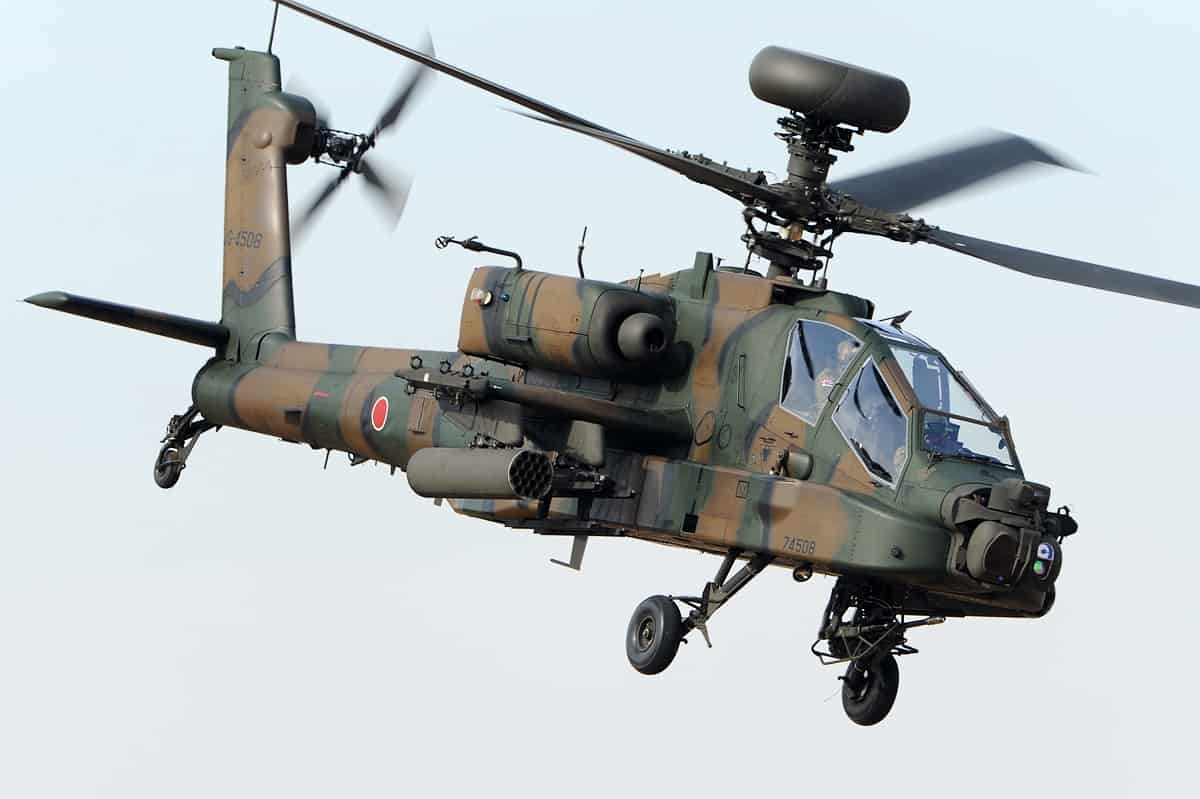


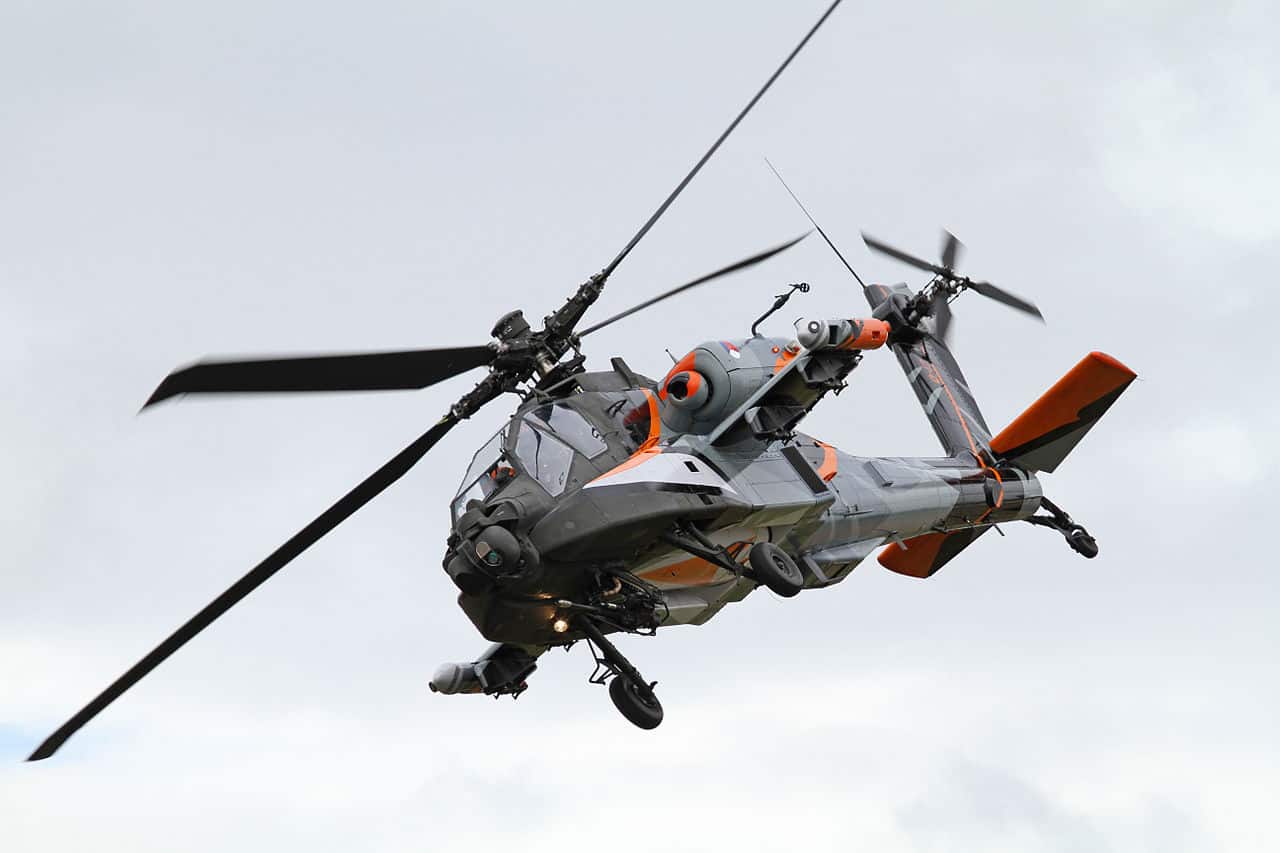
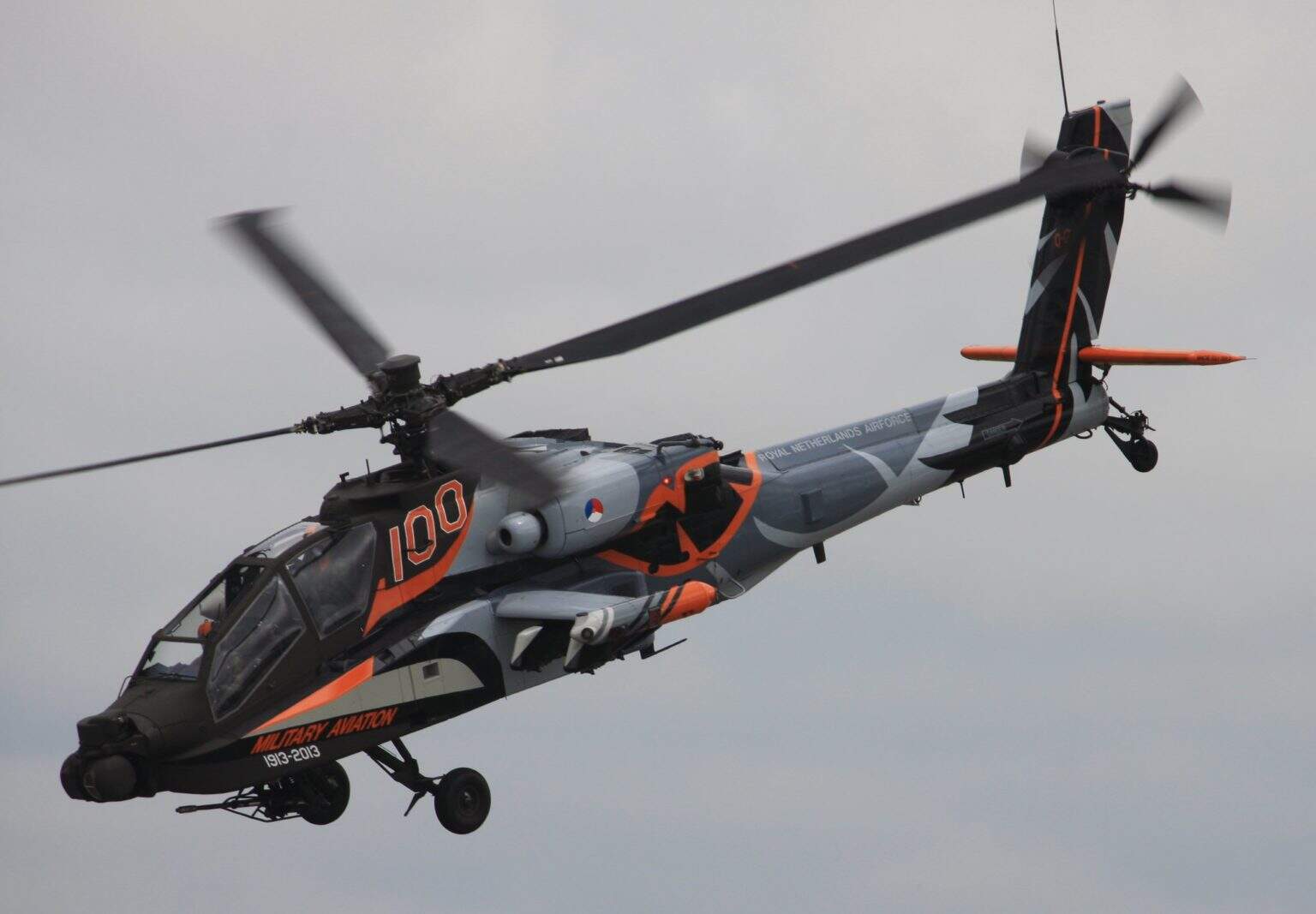

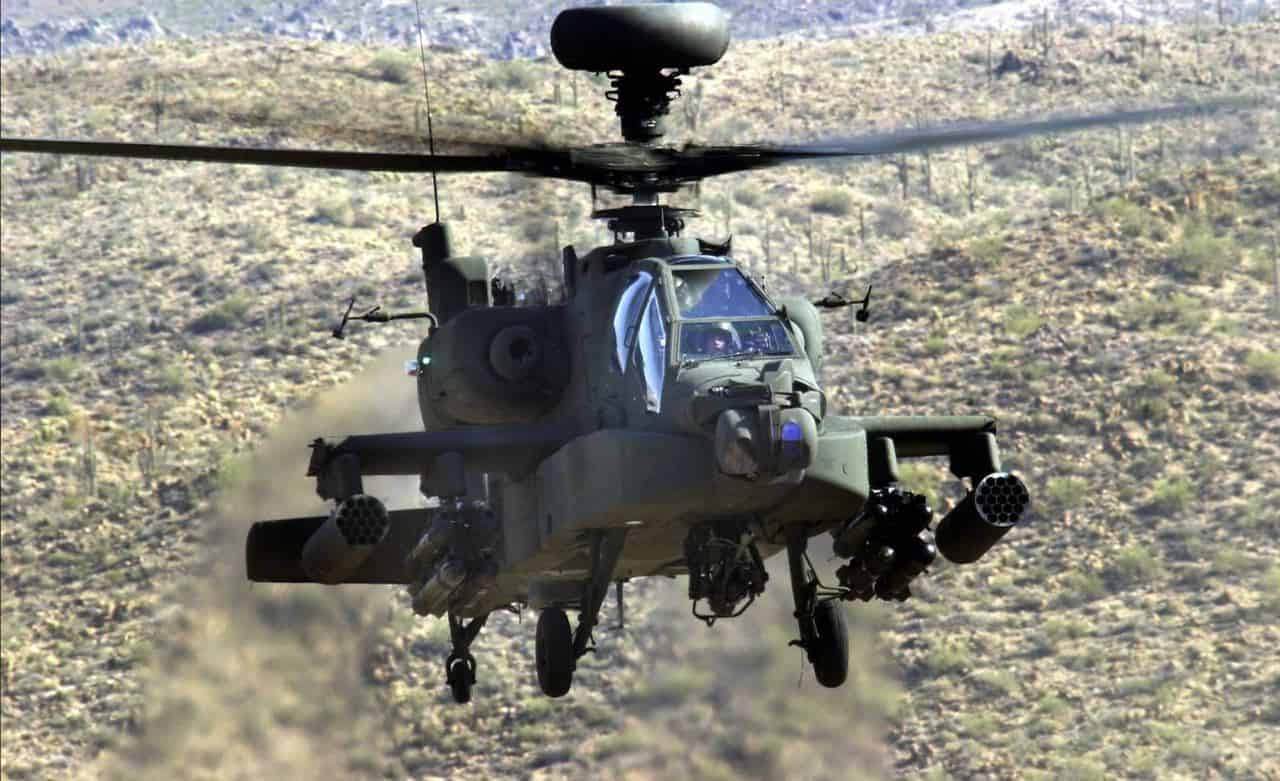


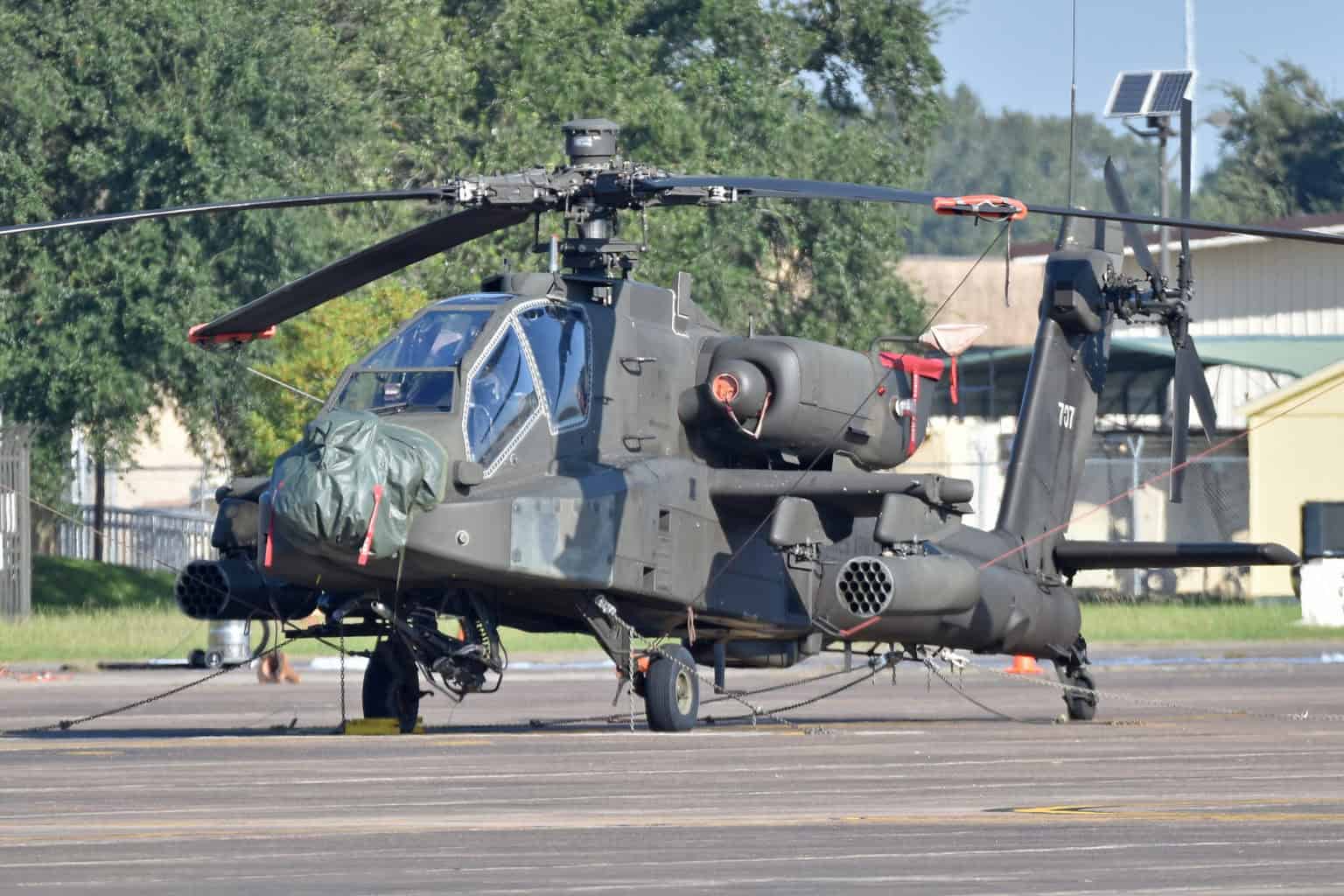
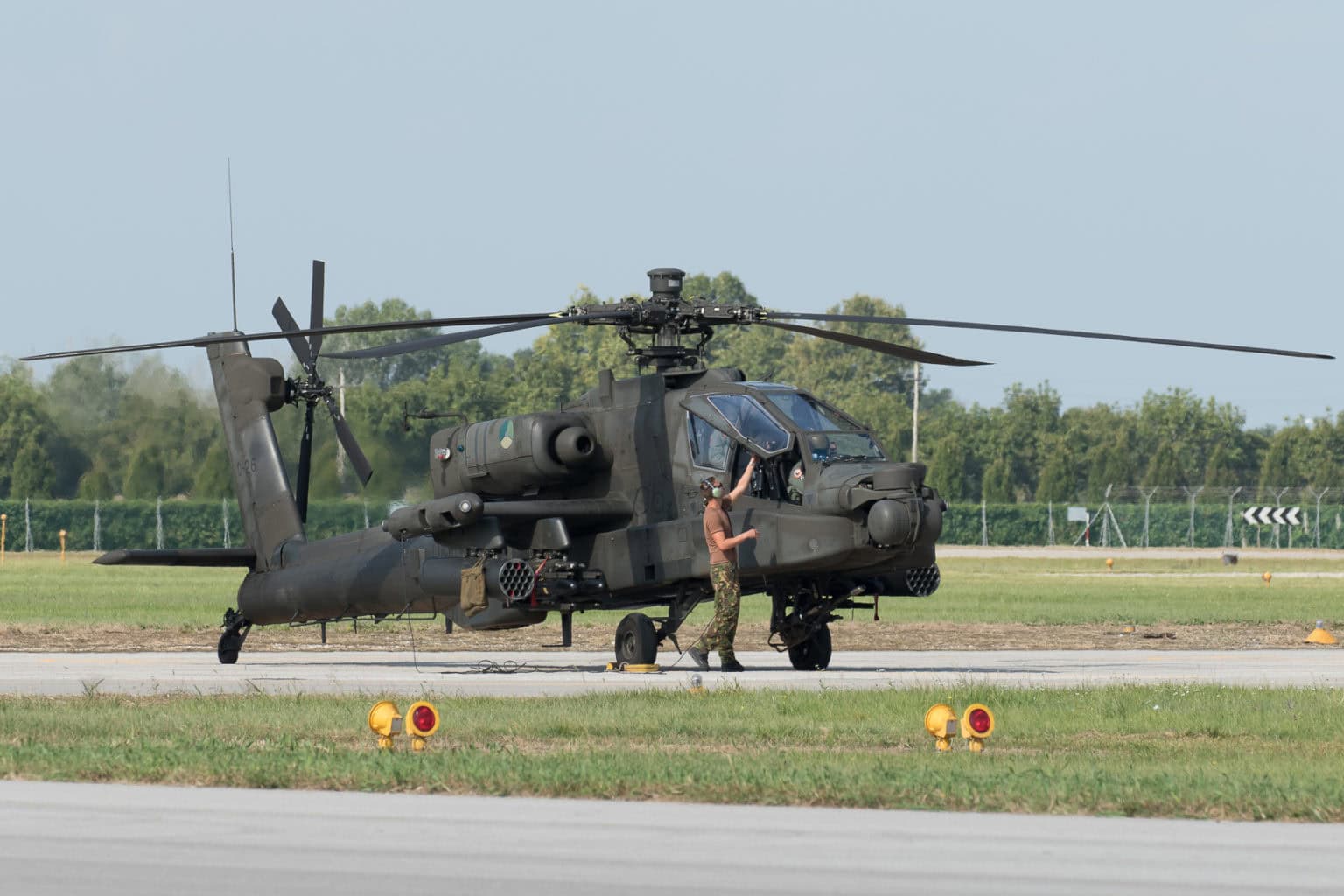
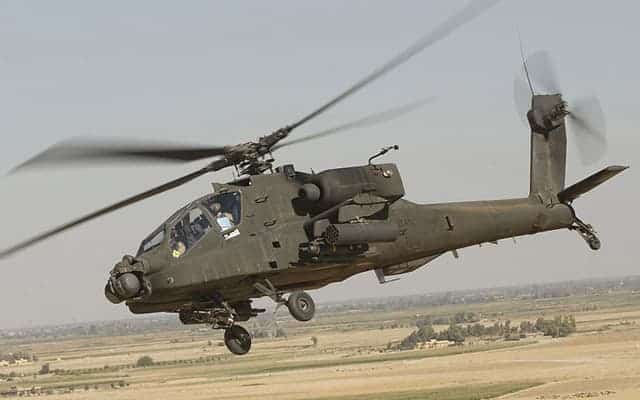
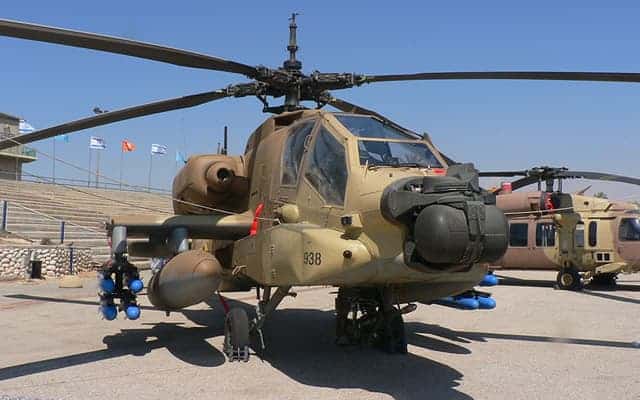

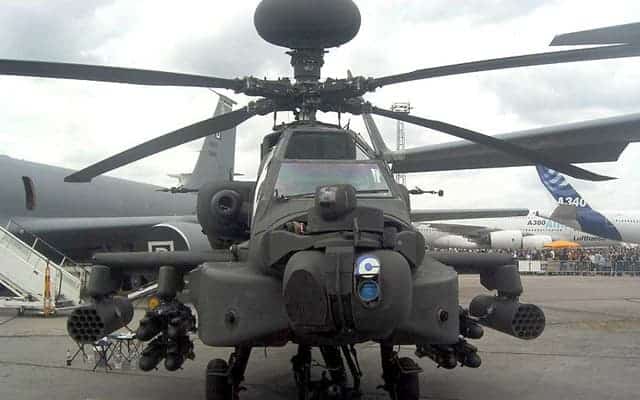
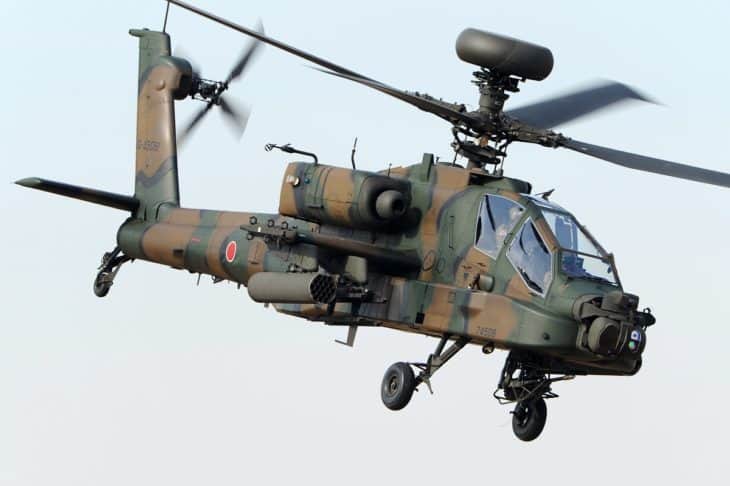
The AH-64E is the most capable attack helicopter in service, and the gap is not close. Boeing has built more than 2,875 Apaches across all models, with over 1,300 in operation across 19 countries and more than 891 E-models delivered as of November 2025.
What sets the E apart is the sensor and networking package rather than the airframe. The Longbow fire-control radar mounted above the rotor lets the Apache pop up from behind terrain, scan, classify targets, and drop back into cover in seconds.
The E-model also controls drones from the cockpit, a capability the US Army calls manned-unmanned teaming. The crew can take the video feed from an unmanned aircraft flying miles ahead and direct it, which means the Apache can find targets without exposing itself at all.
Firepower is the standard against which the class is measured: 16 Hellfire missiles, 76 2.75-inch rockets, and 1,200 rounds for the 30 mm M230 chain gun, which fires at 600 to 650 rounds per minute. Boeing lists a 20,000-foot service ceiling and a climb rate above 2,800 feet per minute.
On speed the published figures vary by measure. Boeing quotes maximum level flight above 150 knots, while the US Army fact sheet lists a 164-knot combat cruise for the E against 145 knots for the older D-model.
The Apache has flown more combat hours than any other attack helicopter
Since entering service in 1986 the Apache has fought in Panama, both Gulf wars, Afghanistan, Iraq, and Syria. That record is not just a trophy: every deployment fed maintenance data, survivability fixes, and tactics back into the design. Rivals with better paper specs have never had that feedback loop.
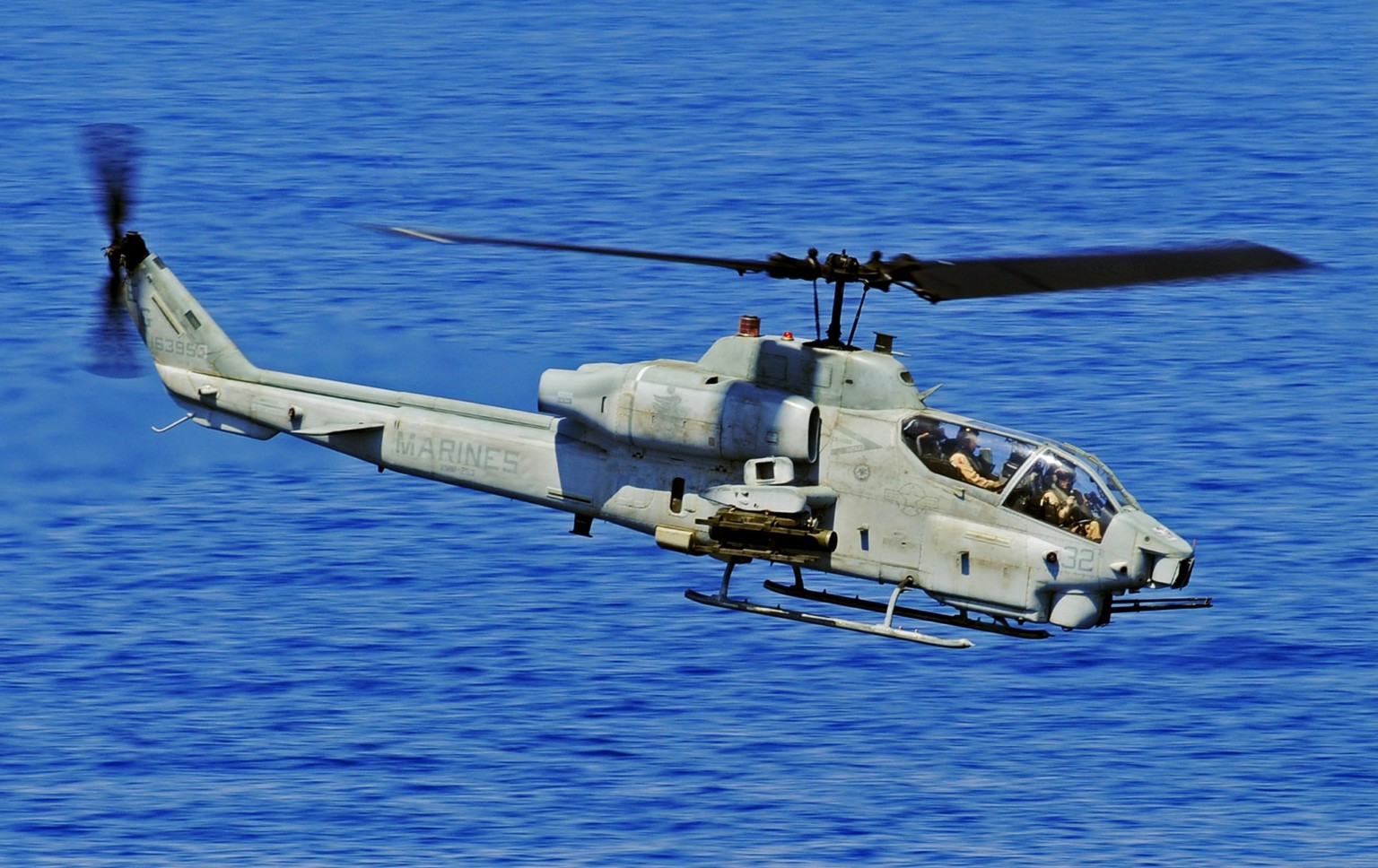
2. Bell AH-1Z Viper (United States)
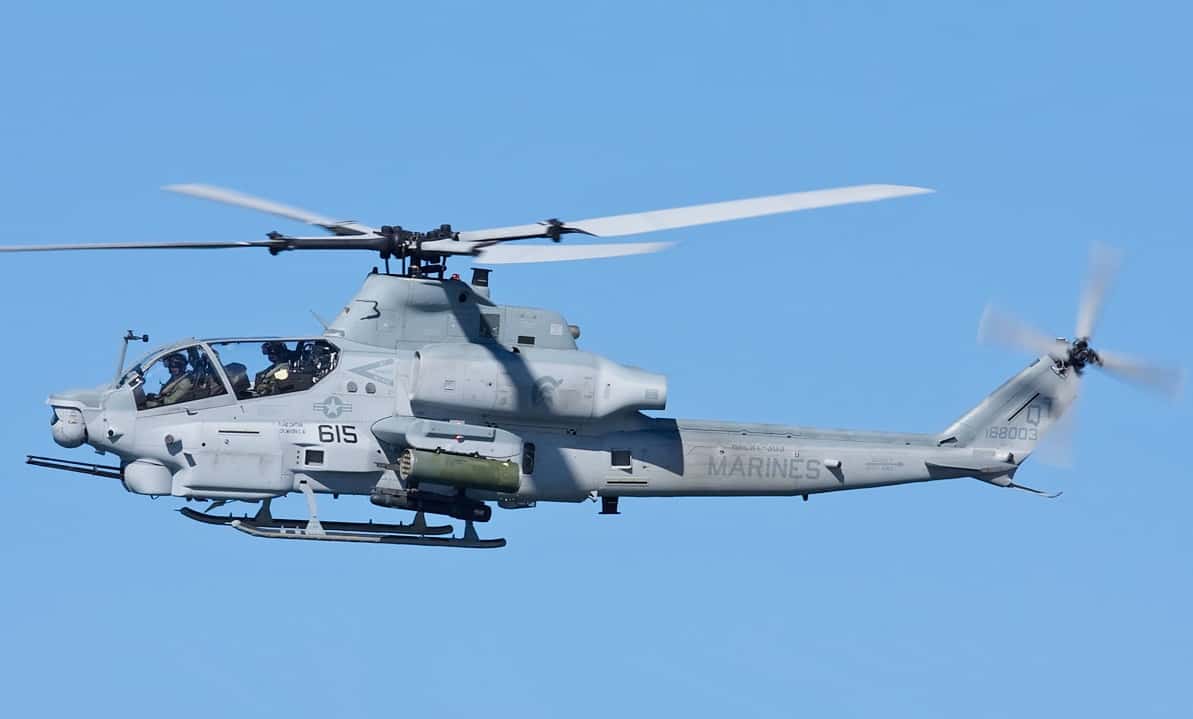


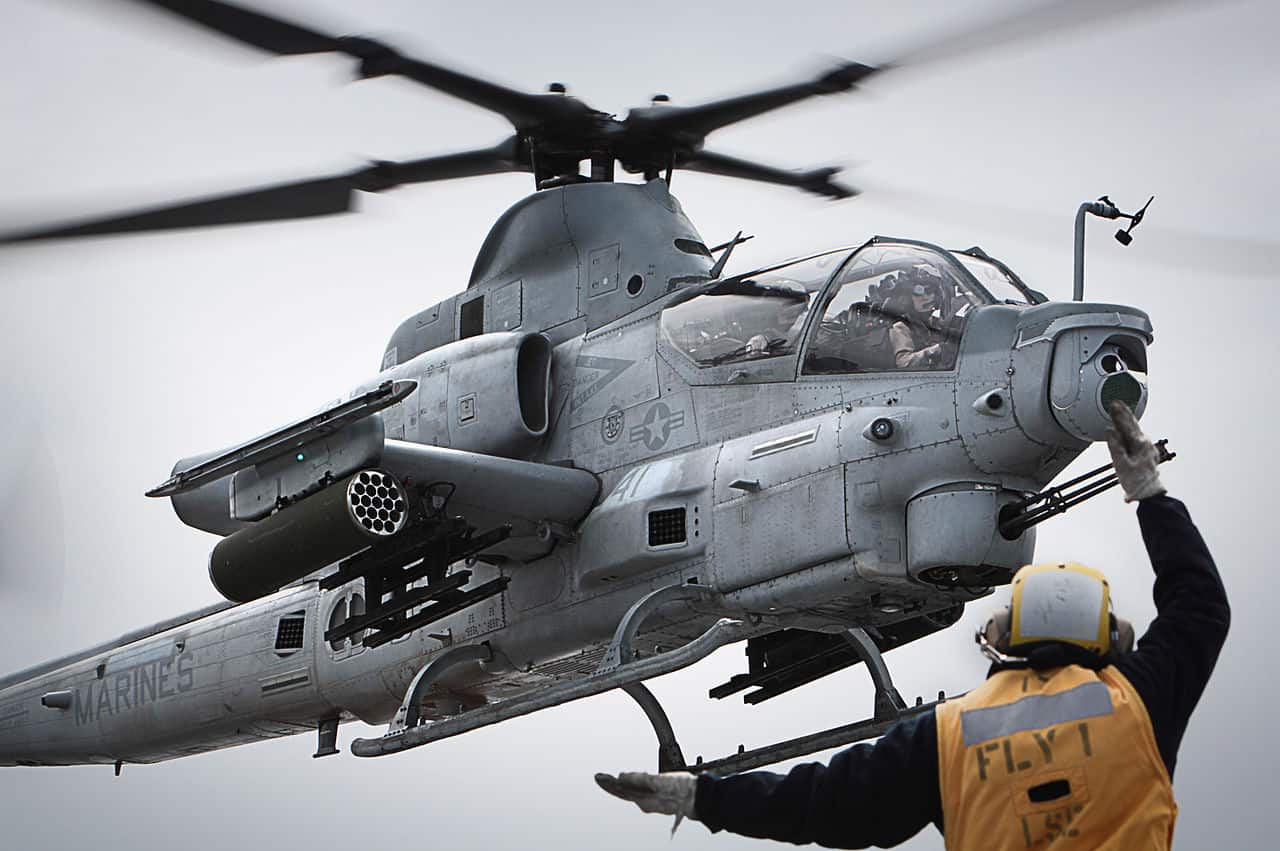
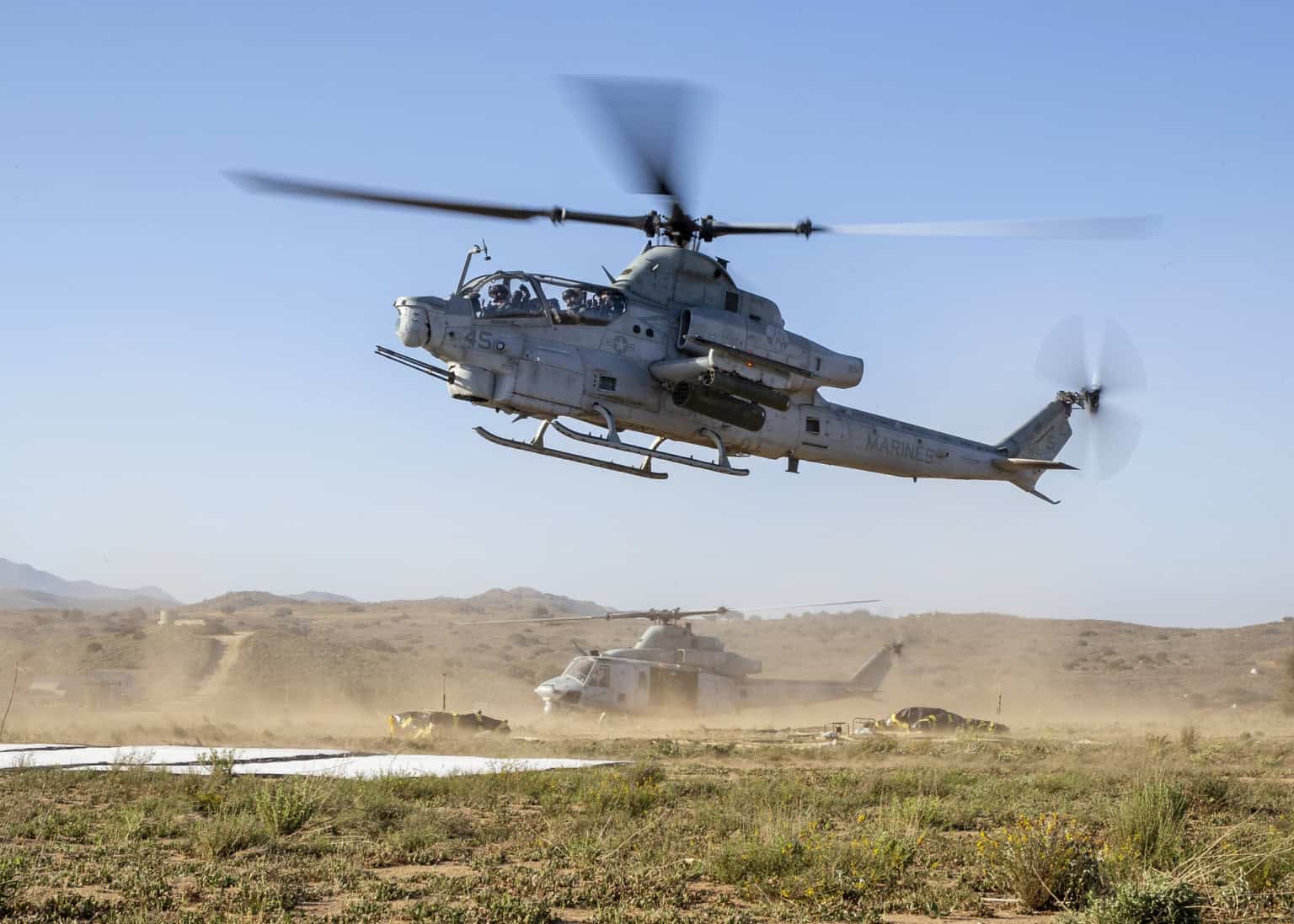


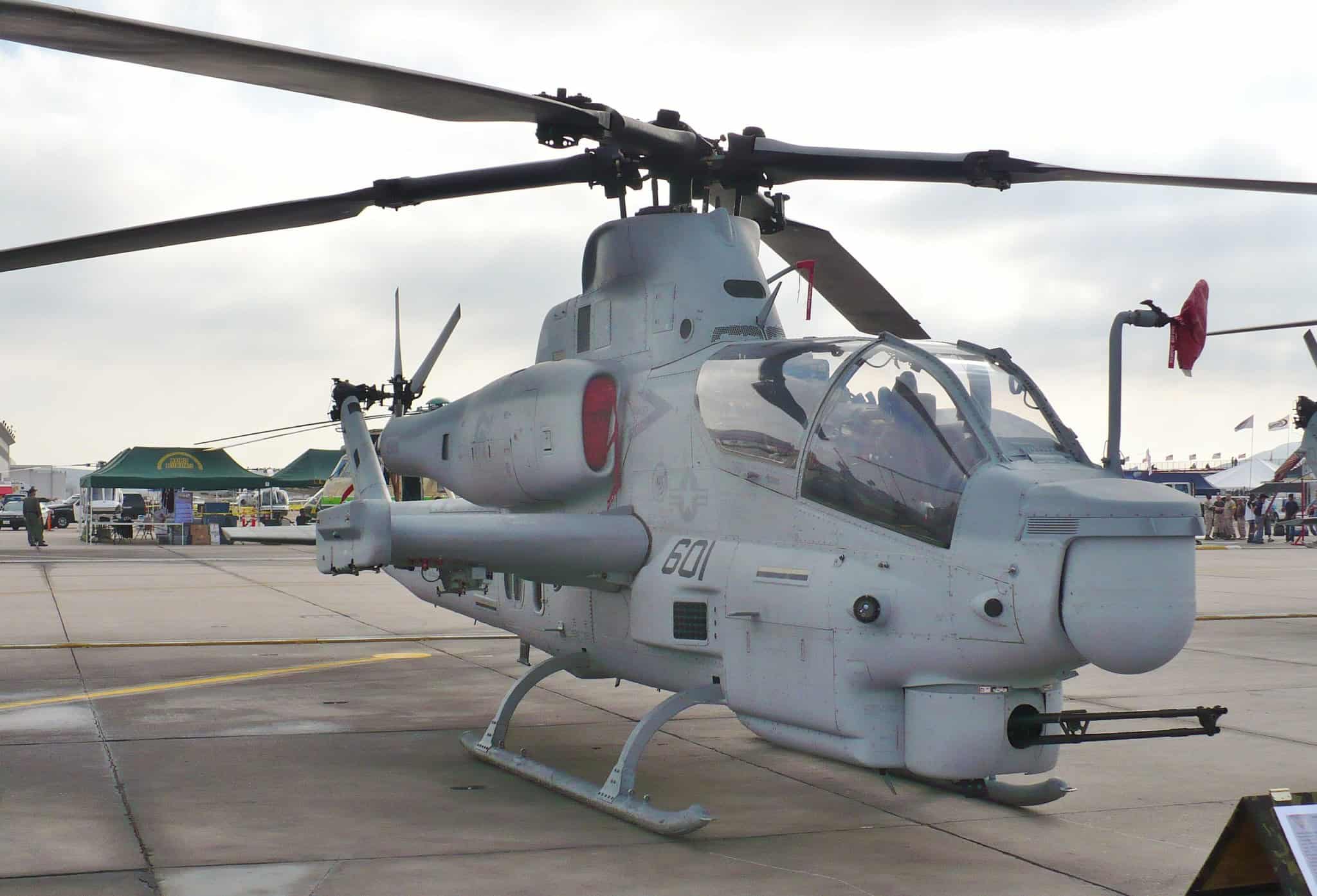
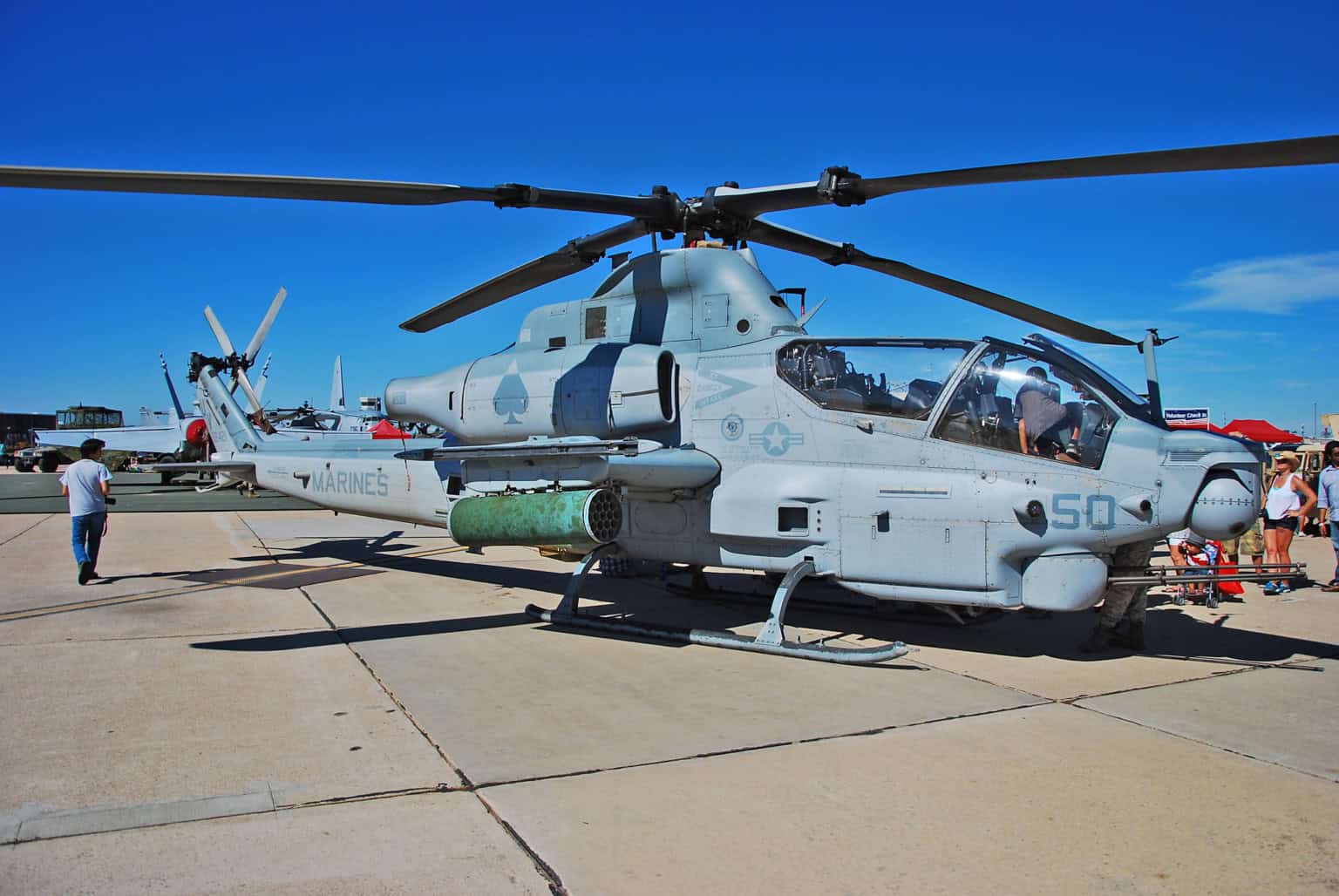
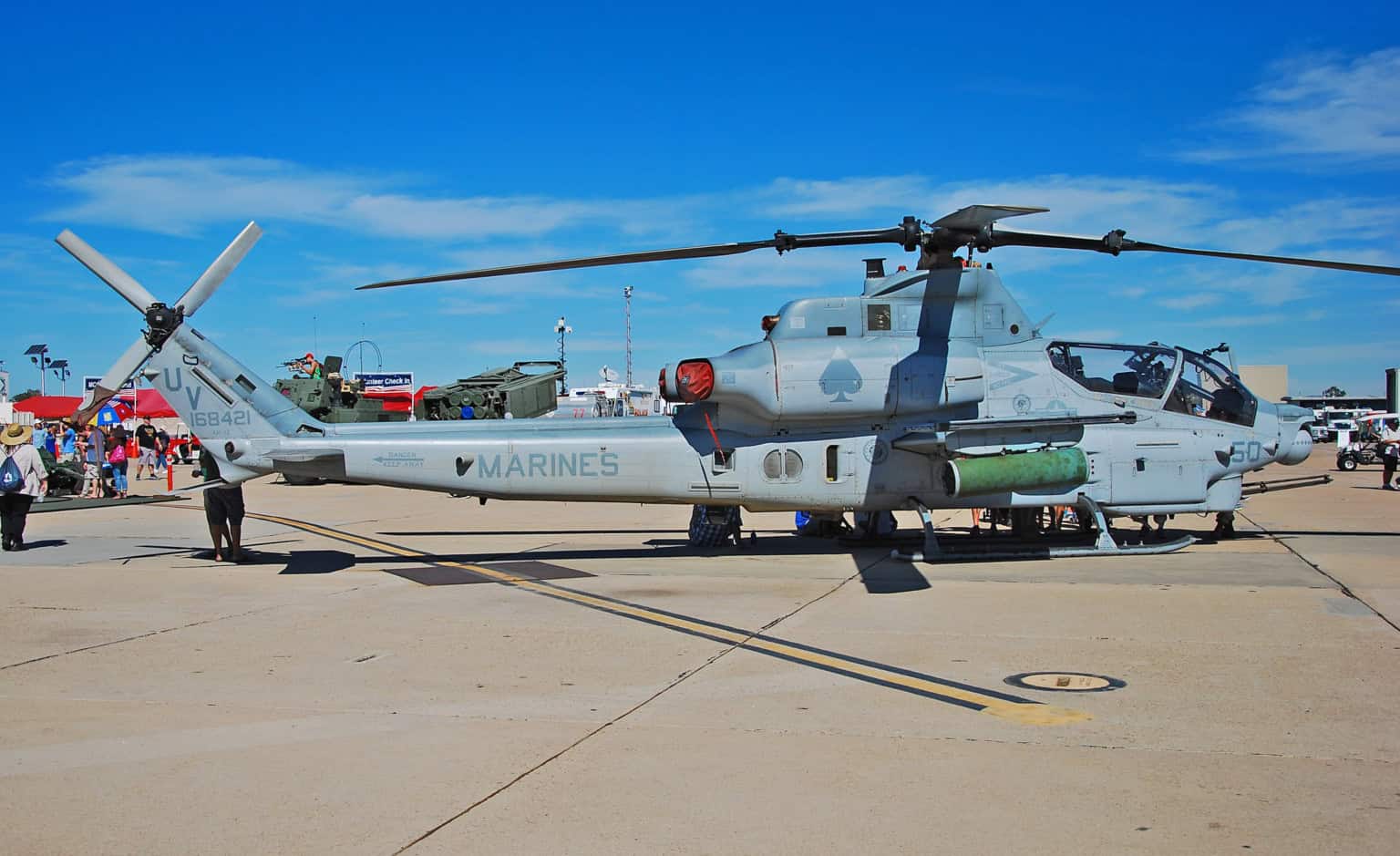

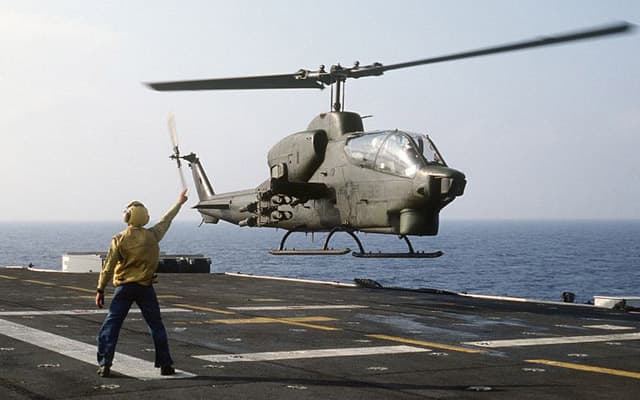
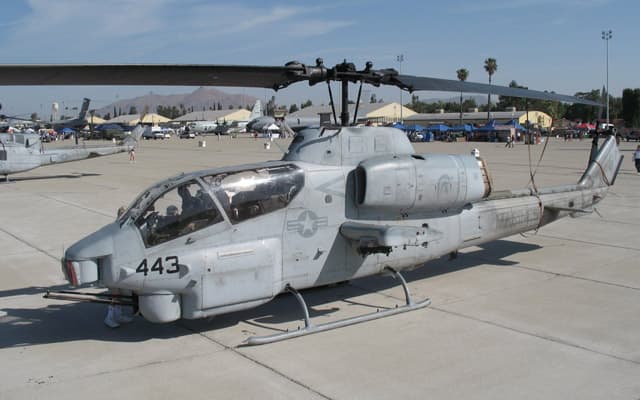

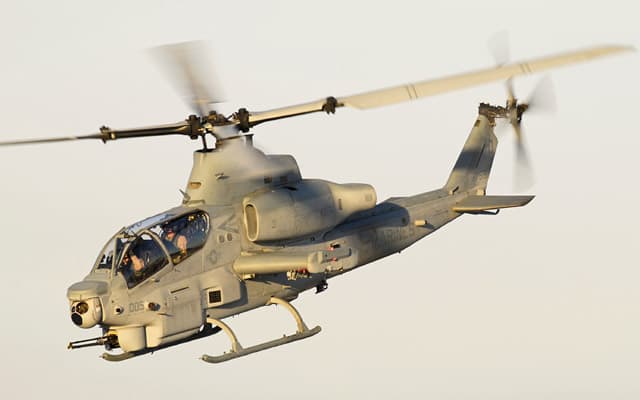
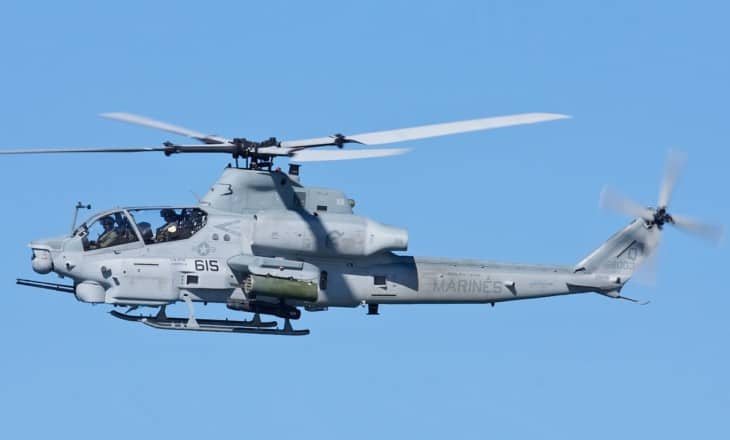
The Bell AH-1Z Viper is the fastest attack helicopter in frontline service at roughly 200 knots (230 mph), and it finishes second anyway. That is the clearest illustration of why speed is not the ranking measure.
The Viper is the end point of the Cobra lineage, rebuilt around a four-bladed, bearingless, all-composite main rotor and two General Electric T700-GE-401C engines of about 1,800 shaft horsepower each. Its service ceiling is roughly 20,000 feet.
Its real advantage is marinisation. The Viper is built to live on an amphibious assault ship, fold up, tolerate salt air, and share about 85 percent of its parts with the UH-1Y Venom utility helicopter, which massively simplifies shipboard logistics.
It ranks below the Apache because it carries a smaller sensor and weapons load, and because it has no equivalent of the Longbow mast-mounted radar as standard. For a Marine Corps operating from the sea, that is a trade worth making.
3. Kamov Ka-52M Alligator (Russia)


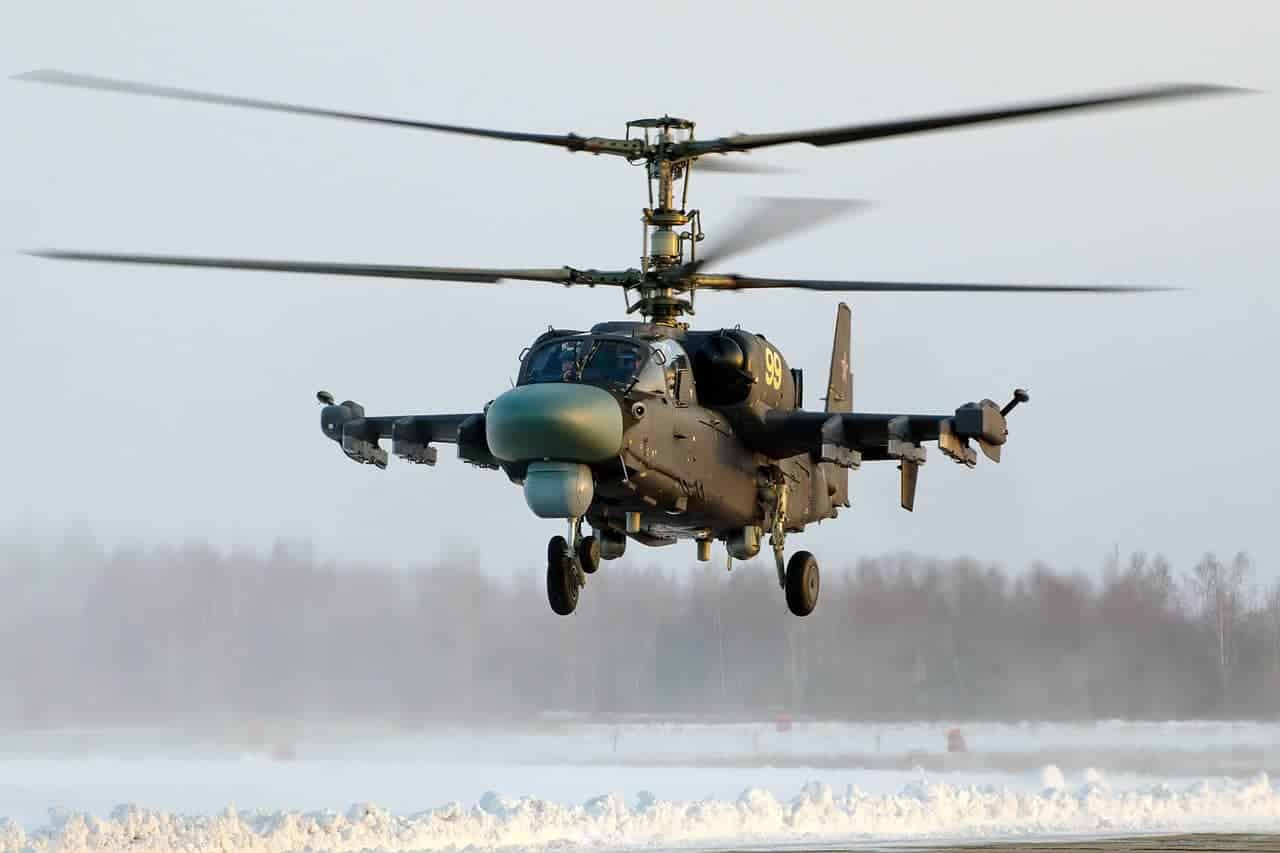


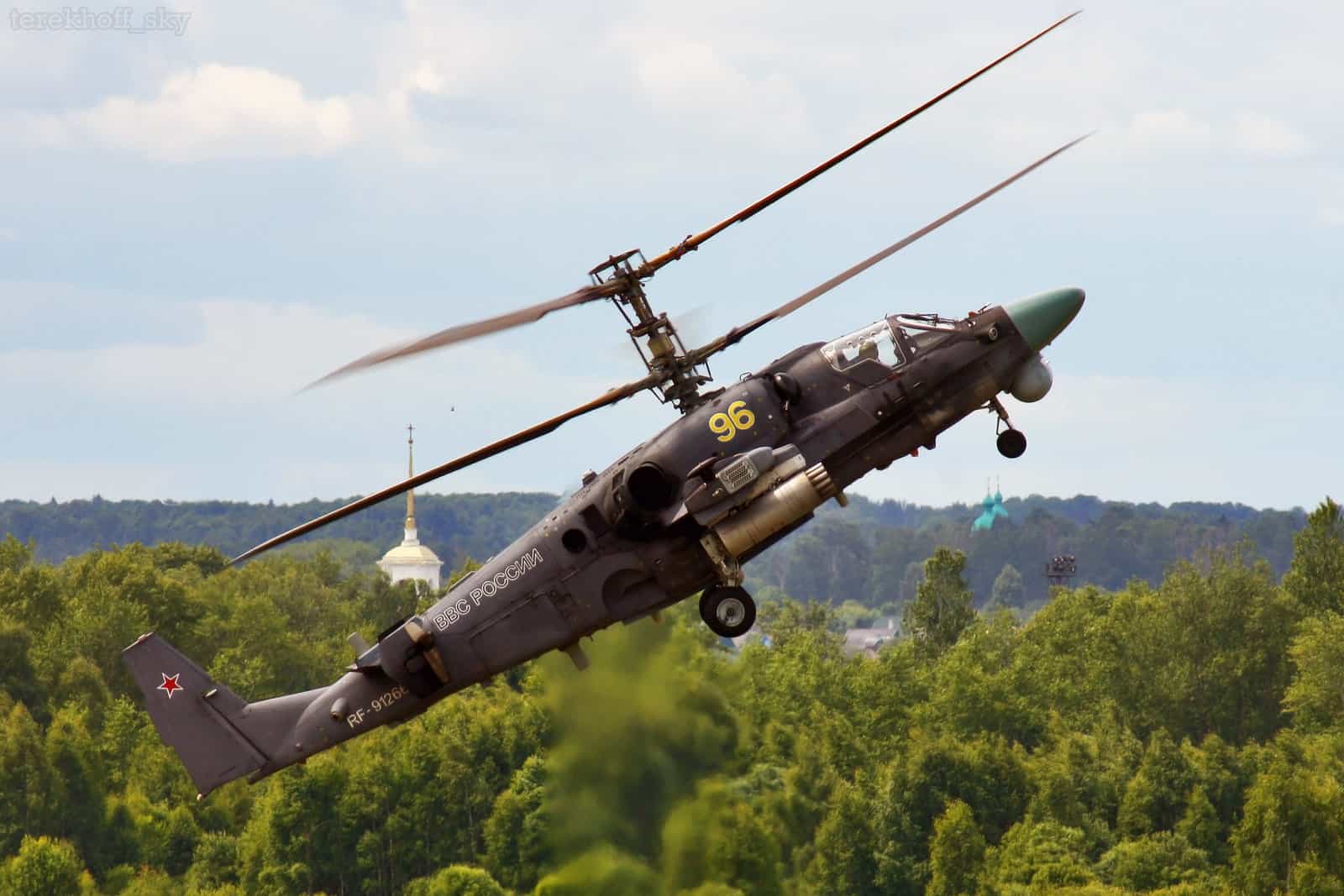
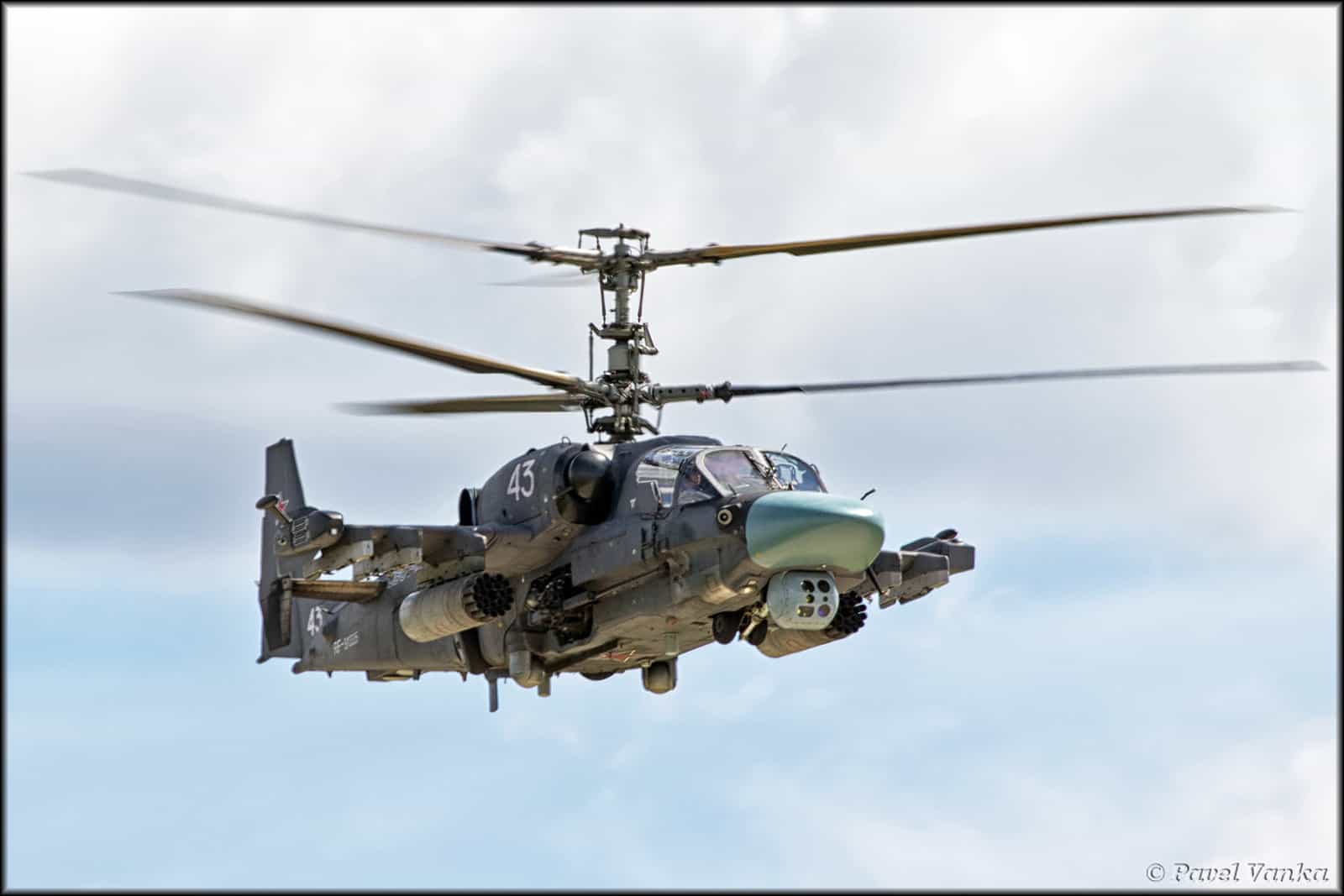
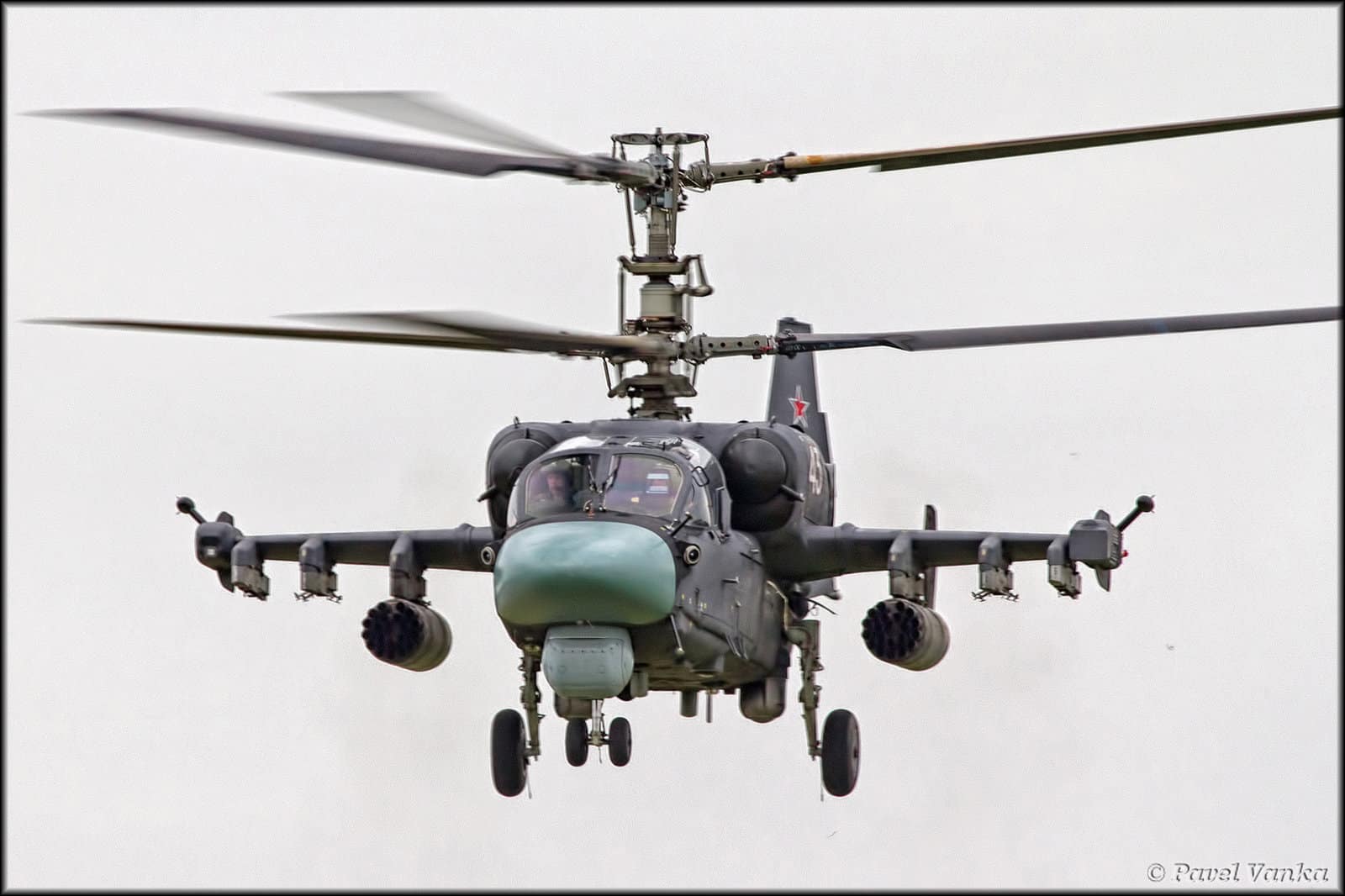
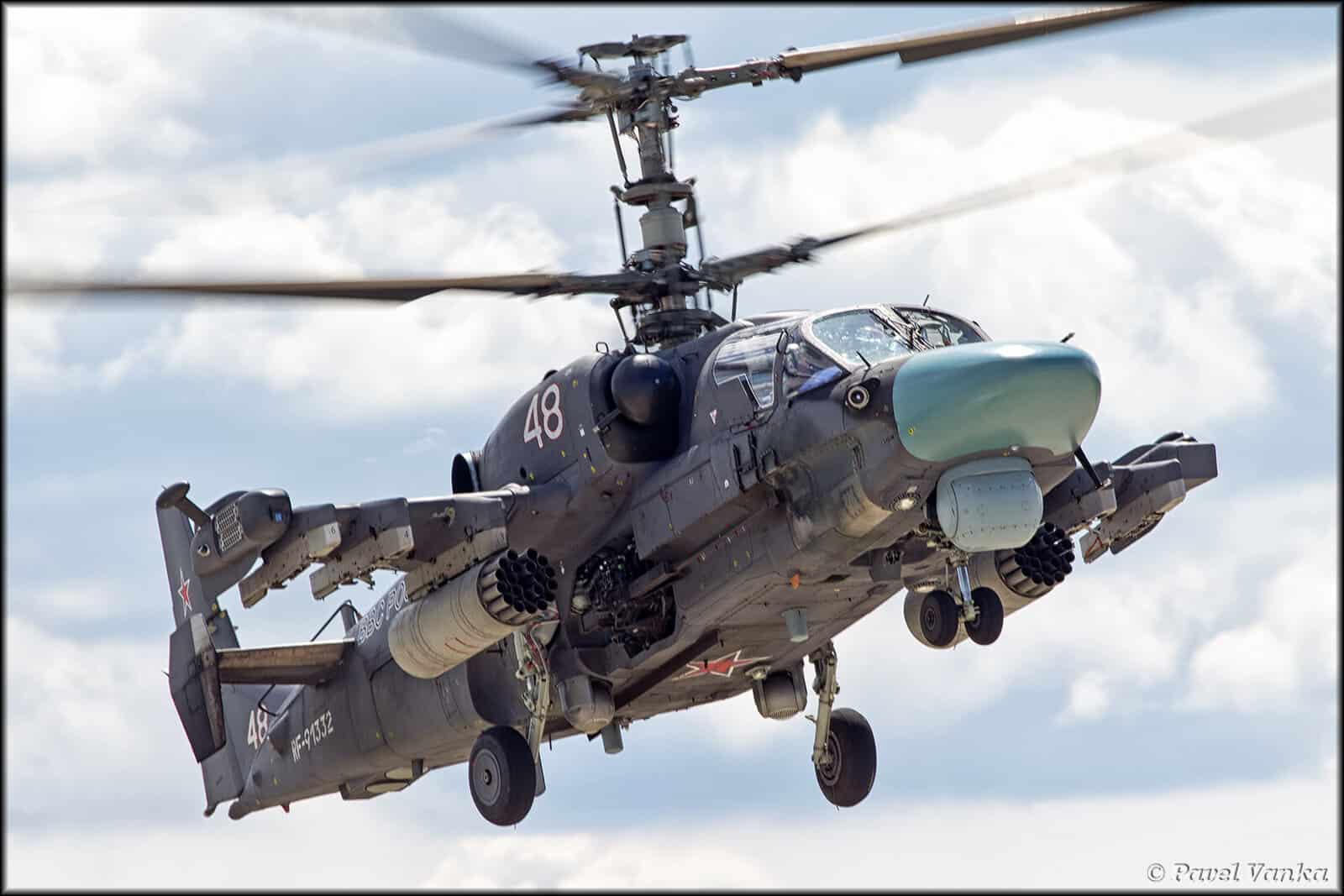

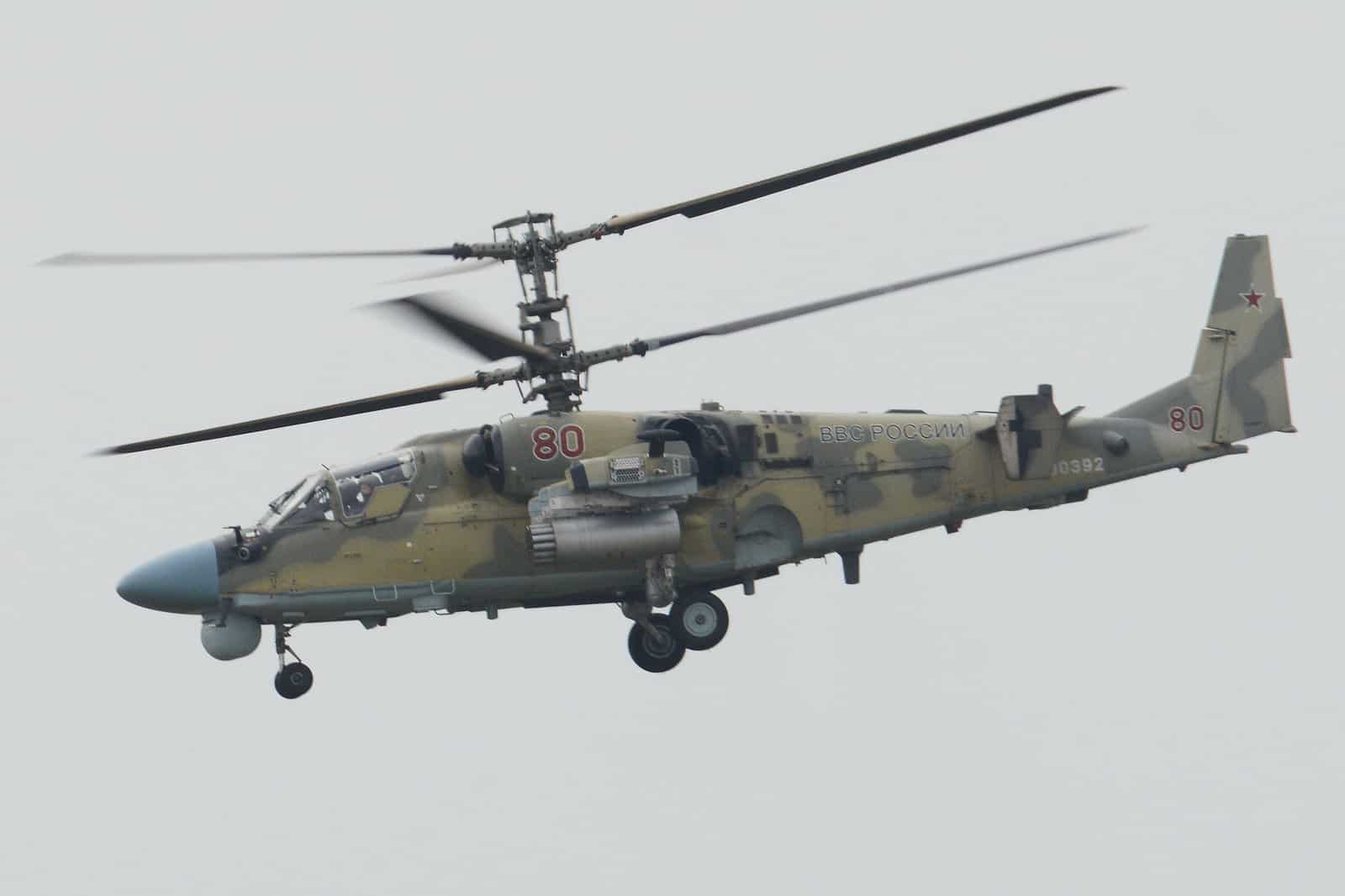

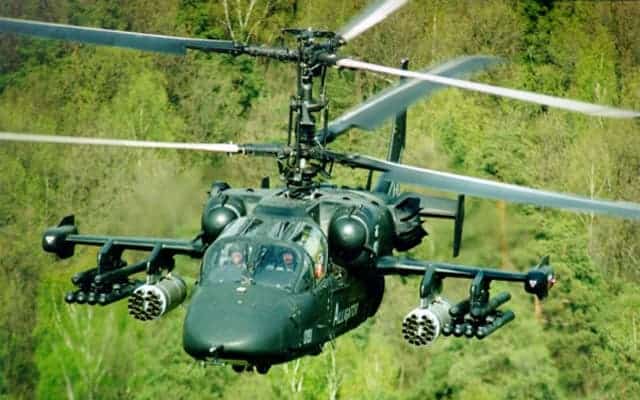
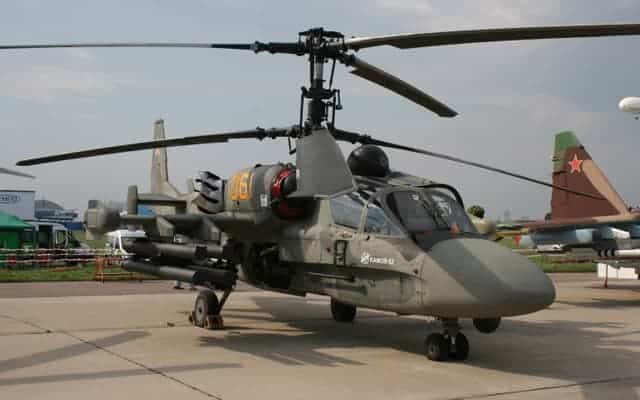

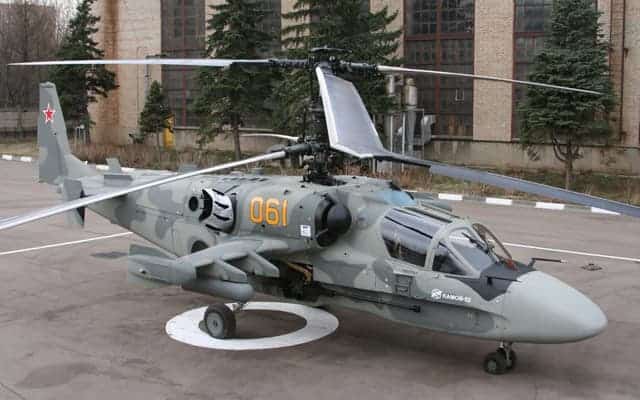
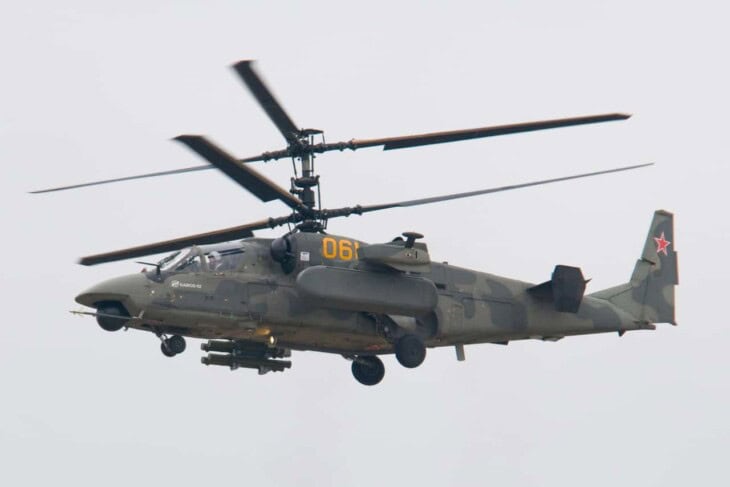
The Ka-52 is the most distinctive attack helicopter flying. Its coaxial contra-rotating rotors need no tail rotor, which makes it exceptionally agile, and it is one of very few helicopters in the world fitted with crew ejection seats.
Performance is competitive: about 186 mph (300 km/h) top speed, roughly 310 miles (500 km) of range, a maximum takeoff weight near 23,800 pounds (10,800 kg), and a combat load up to about 6,200 pounds (2,800 kg). The upgraded Ka-52M entered service in 2022 with a longer-range anti-tank missile and improved fire control.
It ranks third because its combat record cuts both ways. The Ka-52 has been Russia’s most heavily used attack helicopter in Ukraine and has been effective in the anti-armor role, particularly during the 2023 counteroffensive.
It has also been the most heavily lost. Open-source investigators at Oryx had documented at least 68 Ka-52s destroyed, damaged, or captured as of July 2026, a figure that counts only visually confirmed losses.
The only attack helicopter you can eject from
The Ka-52’s coaxial rotor layout makes ejection possible: explosive bolts blow the rotor blades clear, the canopy is jettisoned, and rocket seats fire the crew out. Conventional helicopters cannot do this, because the escape path runs straight through the main rotor disc.
4. Mil Mi-28NM Havoc (Russia)

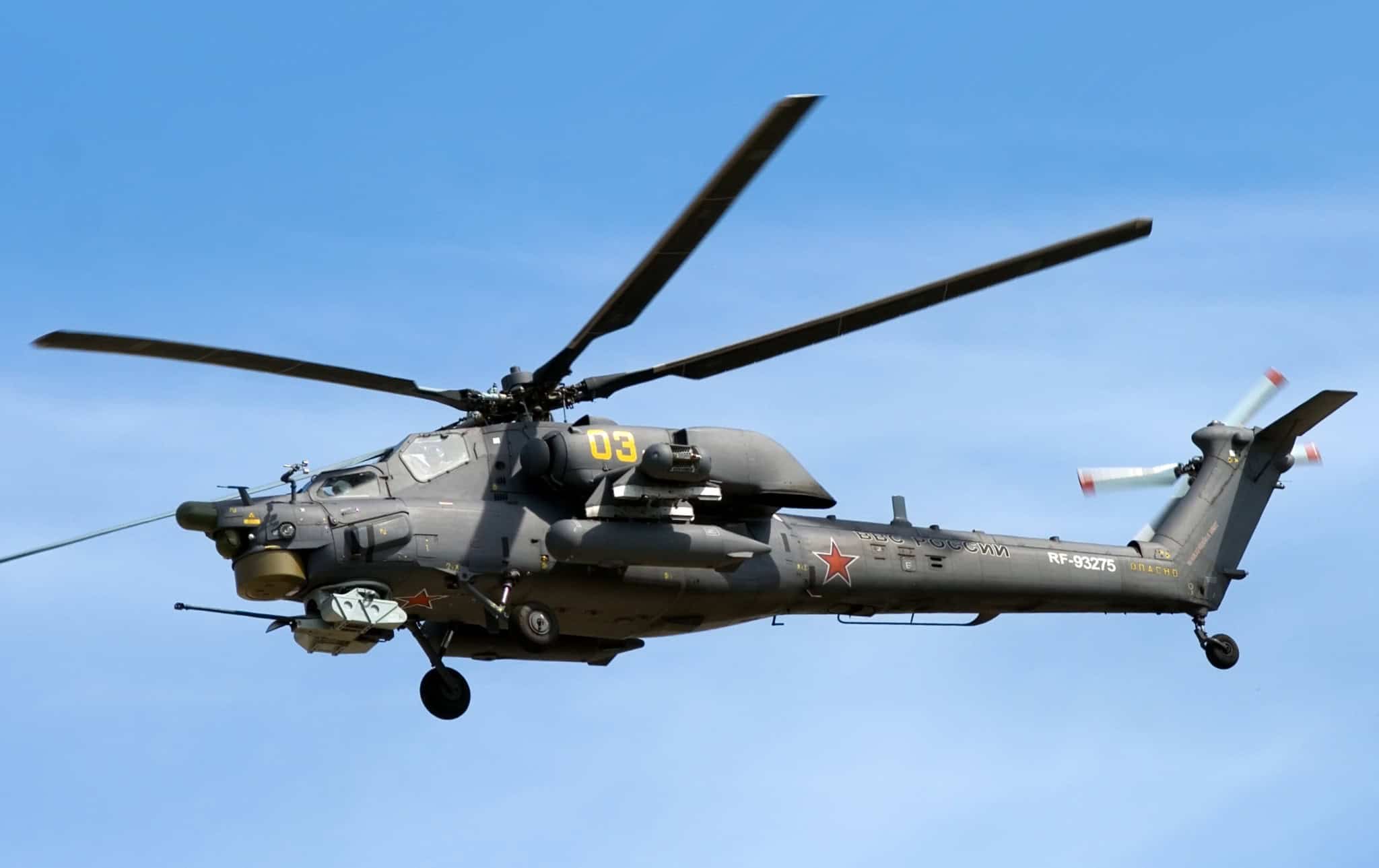

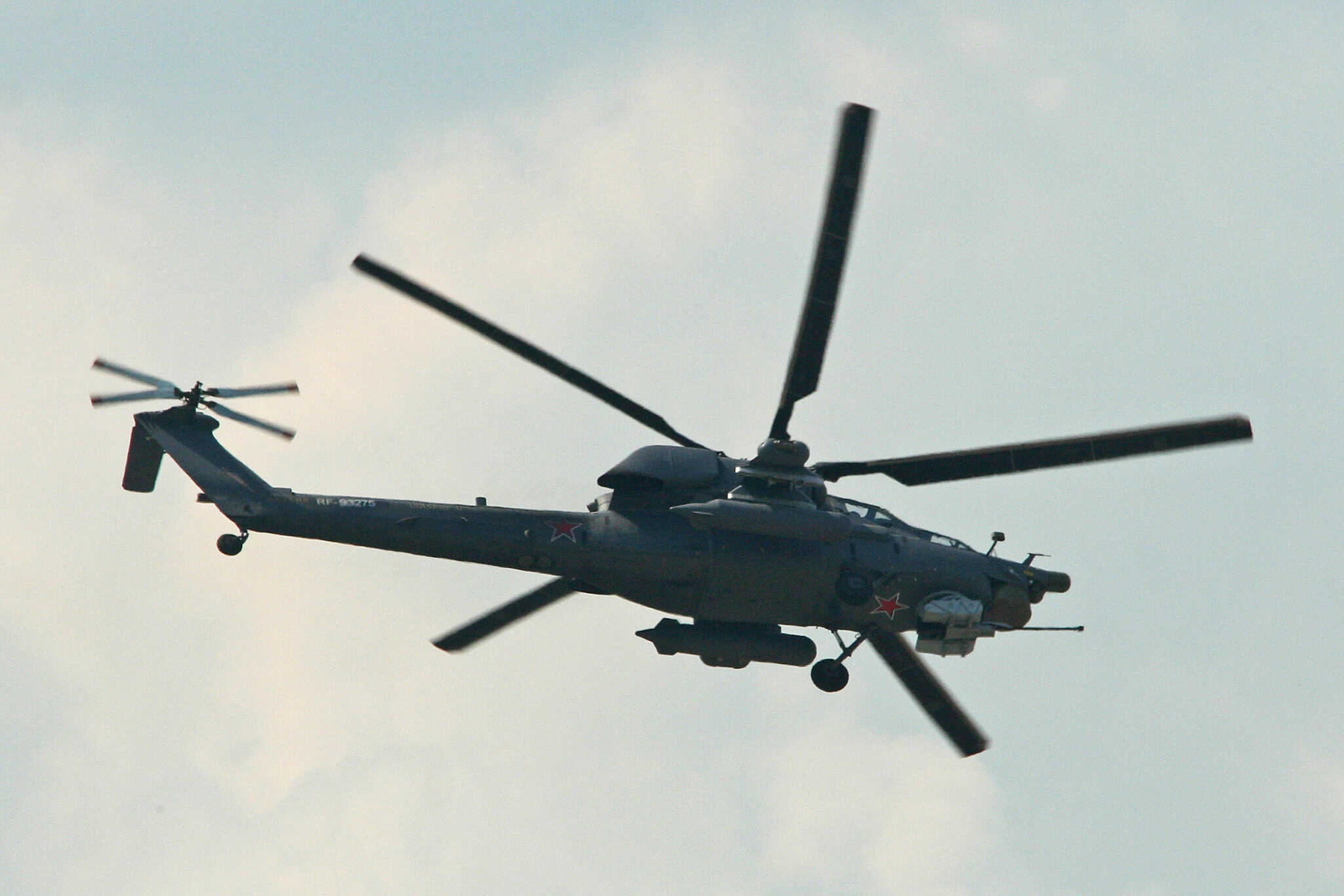
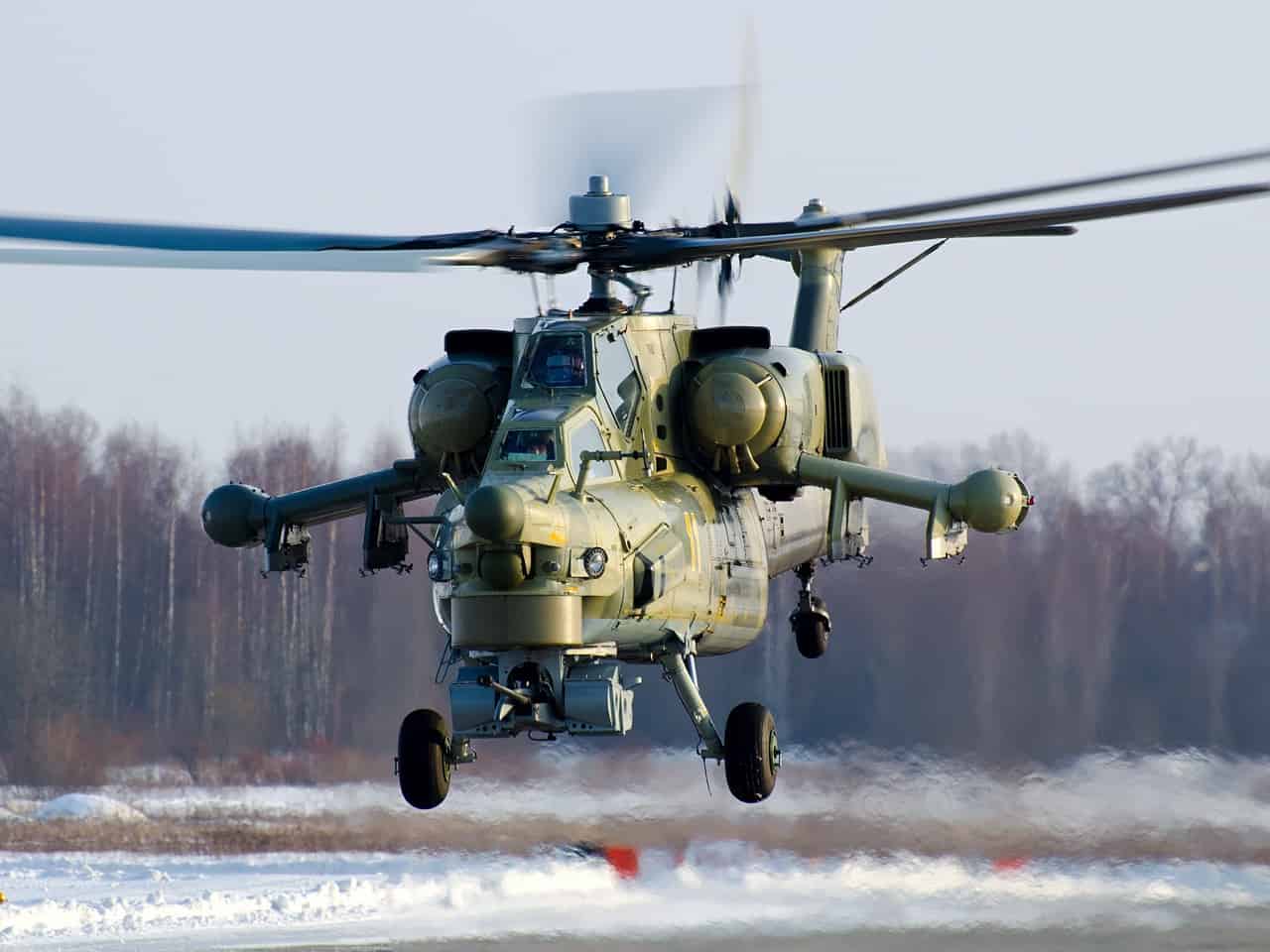
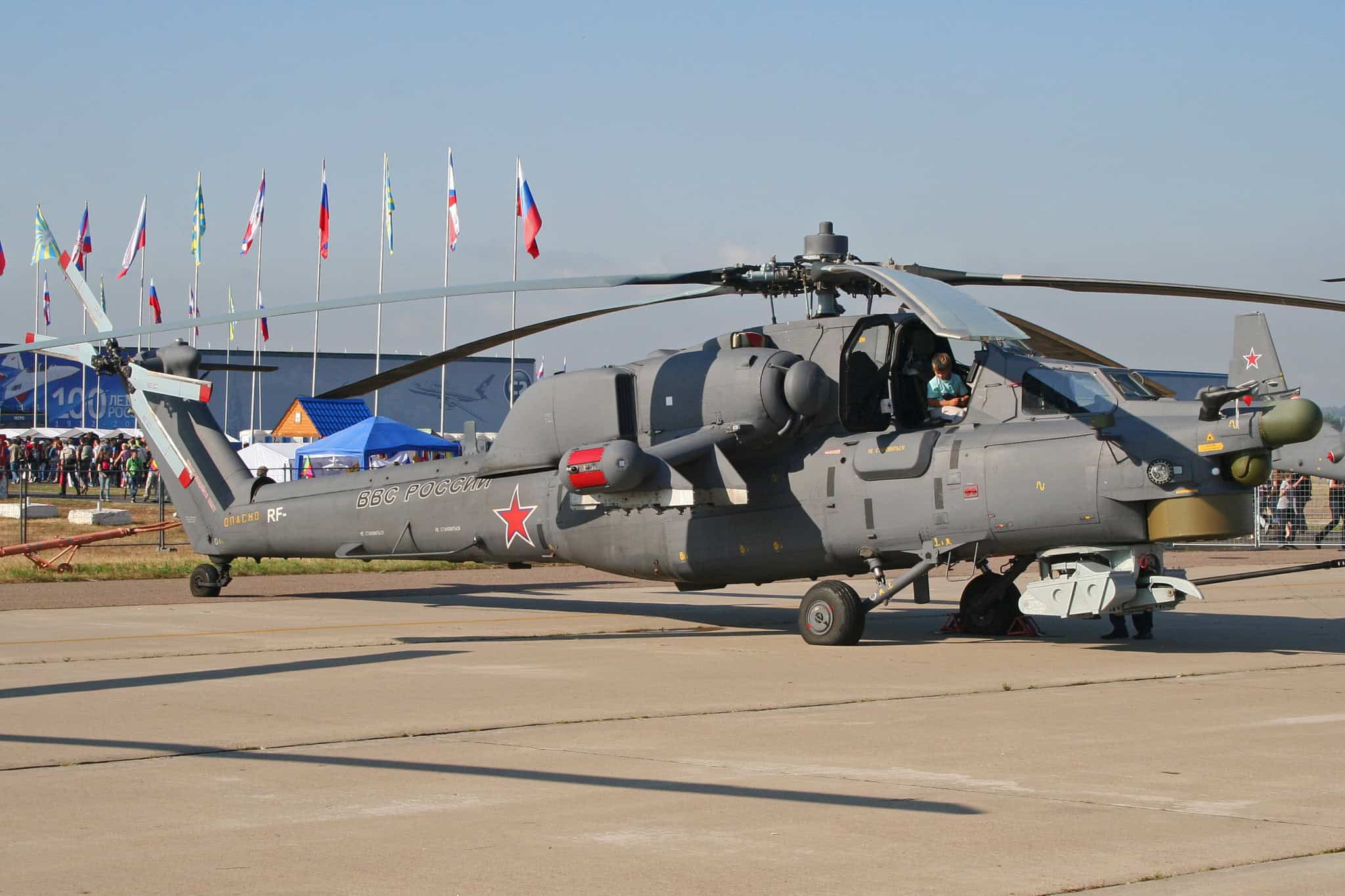


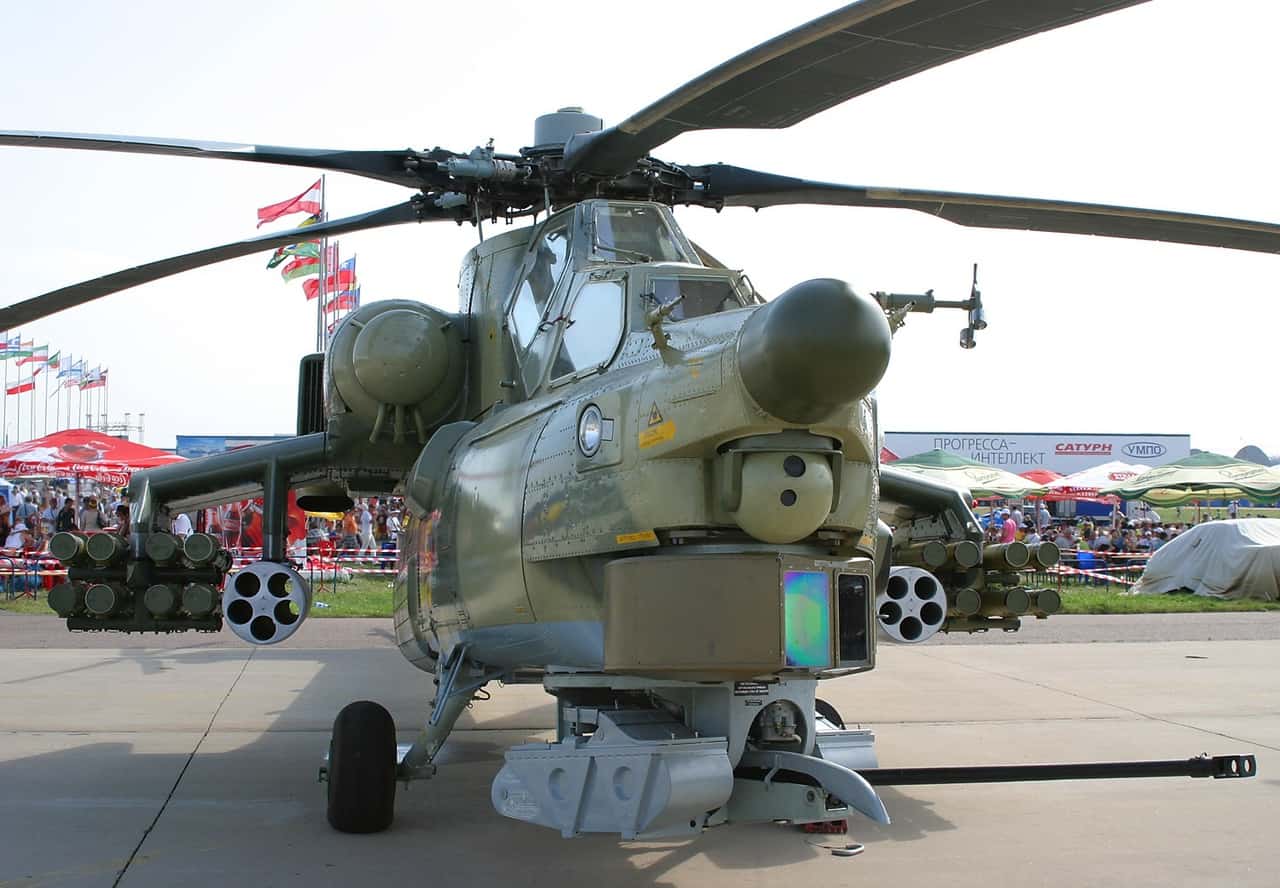
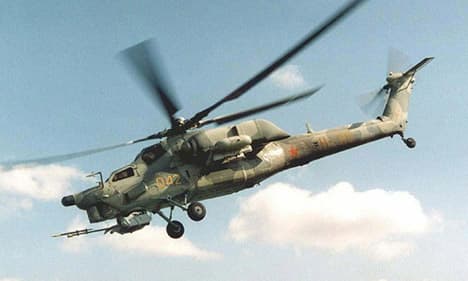
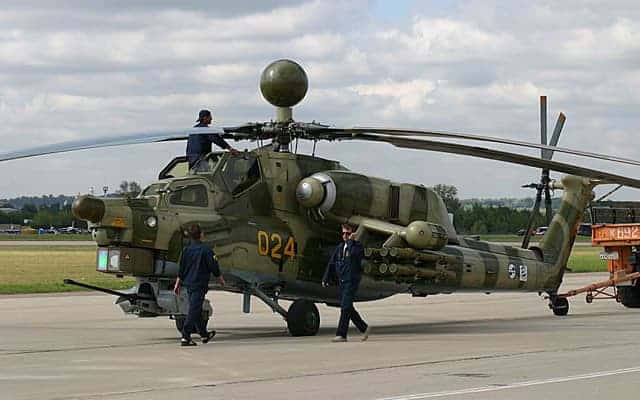
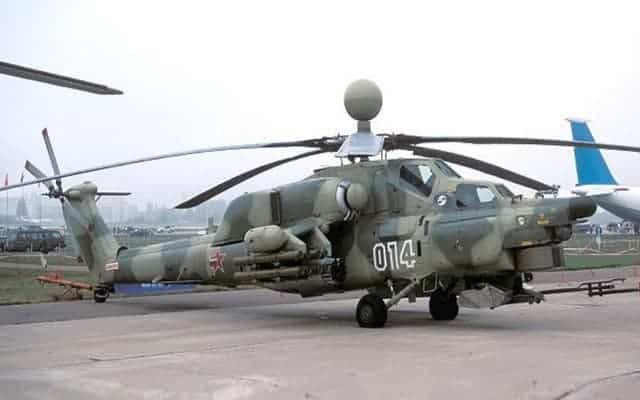
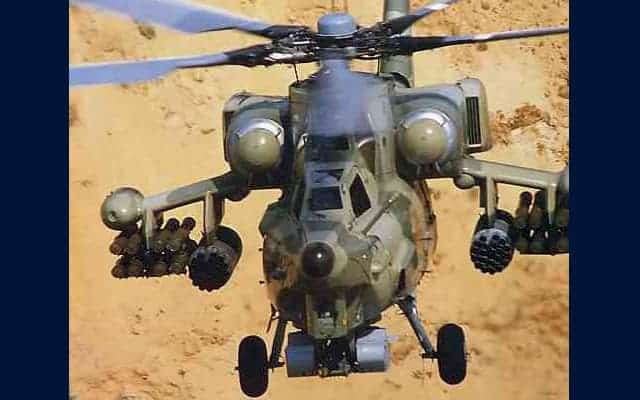
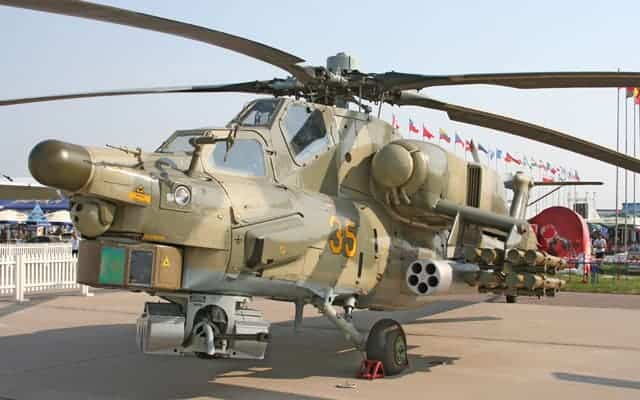
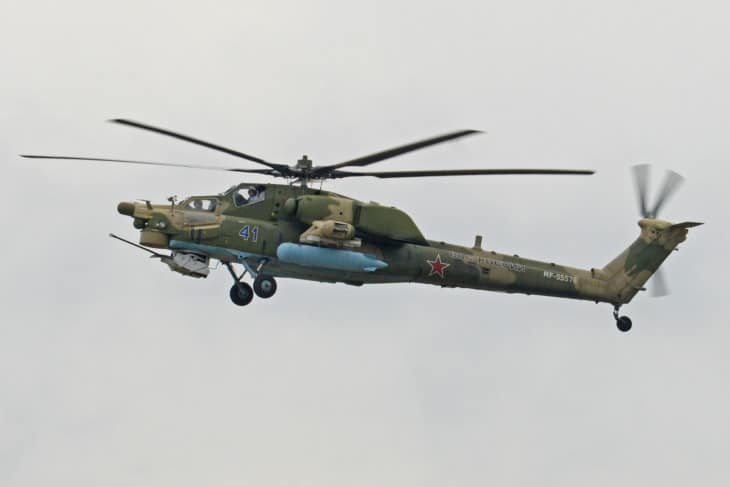
The Mil Mi-28 Havoc is Russia’s conventional answer to the Apache, and structurally it is the closer match: tandem seating, a nose turret, stub wings, and heavy armor around the crew compartment.
The current Mi-28NM adds the N025E radar, uprated VK-2500P engines built for harsh climates, and improved networking. Top speed is about 186 mph (300 km/h), with roughly 280 miles (450 km) of range and around 5,100 pounds (2,300 kg) of ordnance.
Armament centers on a 30 mm cannon, 9M120 Ataka anti-tank missiles, and rocket pods. The Havoc is generally regarded as the tougher of Russia’s two gunships, built to absorb hits the Ka-52 would not survive.
It ranks behind the Ka-52 on sensors and agility rather than on toughness. For more on how these fit into the wider fleet, see our overview of Russian helicopters.
5. Airbus Tiger (France, Germany, Spain)


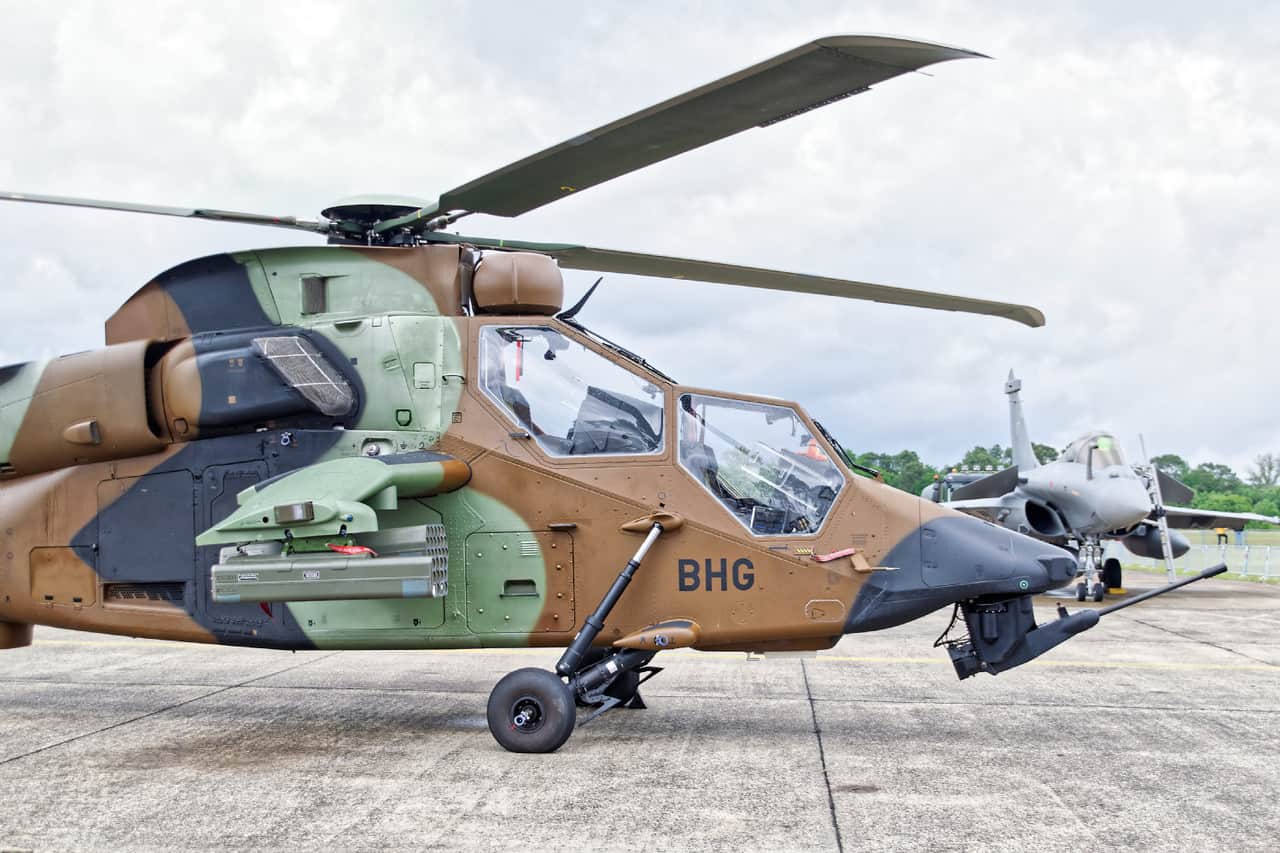
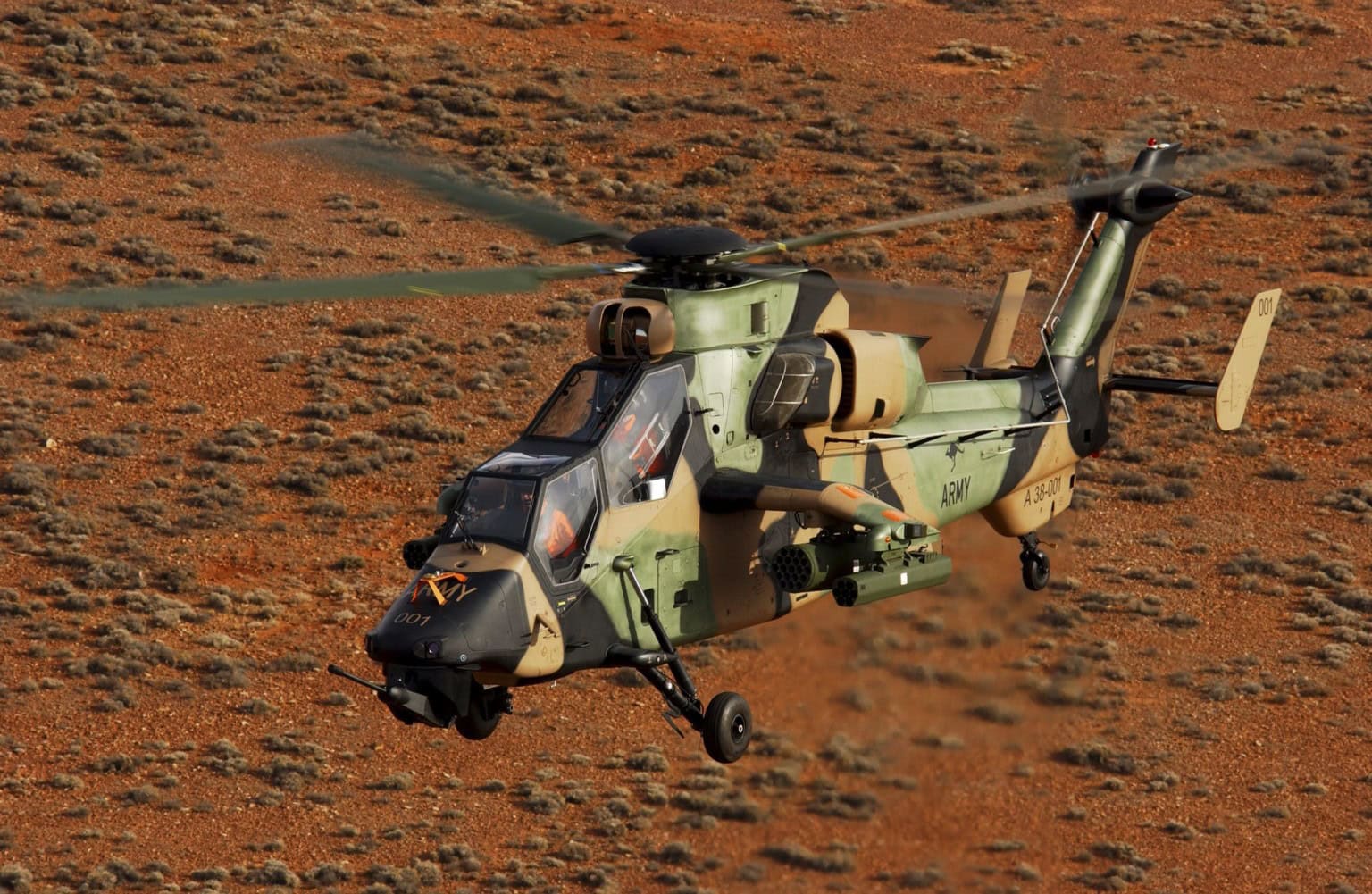


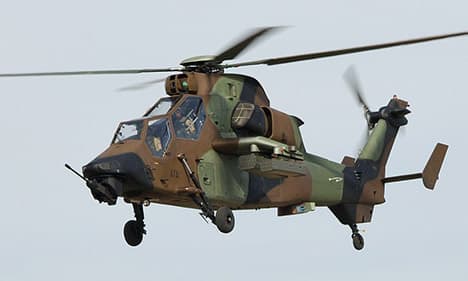

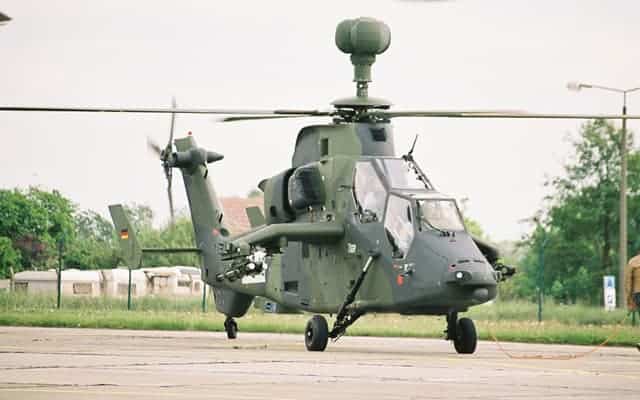
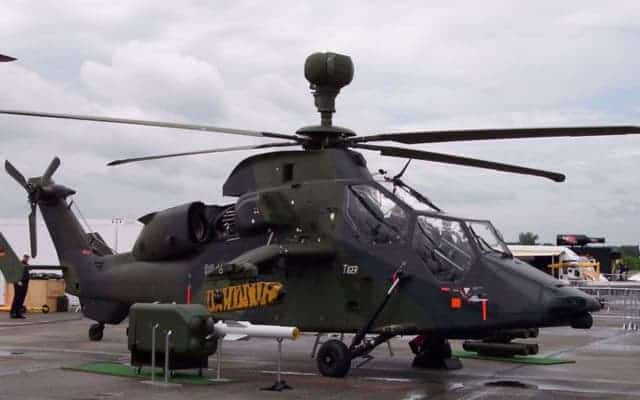

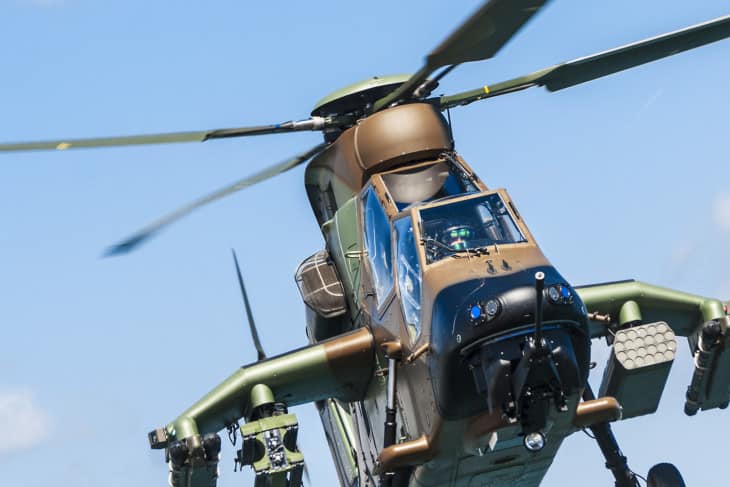
The Tiger is Europe’s frontline attack helicopter and the most sophisticated airframe of the group. Extensive composite construction gives it a small radar signature and excellent agility, with a top speed near 178 mph (287 km/h).
It has seen real combat in Afghanistan, Libya, and the Sahel, where French Tigres flew sustained operations in punishing heat and dust. Crews consistently rate its handling above anything else in the class.
The Tiger’s weakness has been its weapons and sensor fit, which lagged the Apache for years, plus availability rates that have frustrated all three operators. The MkIII mid-life upgrade is the fix.
Airbus detailed the MkIII package in June 2026, covering new sensors, a new French missile, and the ability to control drones. In total 67 French and 18 Spanish airframes are slated for rebuild, with first delivery to France in late 2029 and Spain in 2030.
6. CAIC Z-10ME (China)

The Z-10 is China’s first purpose-built attack helicopter, and the export Z-10ME is the version that matters now. Top speed is around 168 mph (270 km/h).
The ME adds a serious survivability package: uprated engines, infrared suppression on the exhausts, missile approach warning, and additional armor. Pakistan inducted its first Z-10MEs in 2025, giving the type its first significant export operator.
In May 2026 footage appeared of Pakistani Z-10MEs carrying a mast-mounted millimetre-wave fire-control radar, the same broad concept as the Apache’s Longbow. Analysts have informally labelled this configuration the Z-10ME-II.
It ranks sixth because the platform is credible and improving fast but unproven in combat, and because published Chinese specifications are difficult to verify independently.
7. TAI T129 ATAK (Turkey and Italy)
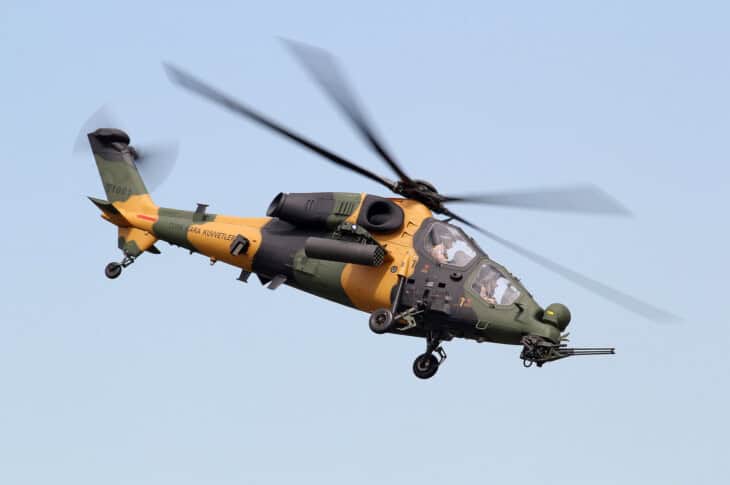
The T129 is a Turkish development of the Italian A129 Mangusta, rebuilt with more powerful LHTEC CTS800 engines and Turkish avionics and weapons. Top speed is about 170 mph (274 km/h).
It is optimised for hot-and-high performance, which suits mountain operations, and it has been used operationally by Turkey in counter-insurgency campaigns. The Philippines took delivery of its own T129s, making it a genuine export success.
Its ceiling as a design is set by size. The T129 is a light-to-medium gunship, so it cannot match the payload or sensor volume of an Apache or a Havoc, which is precisely why Turkey is building the much larger T929.
8. HAL Prachand (India)
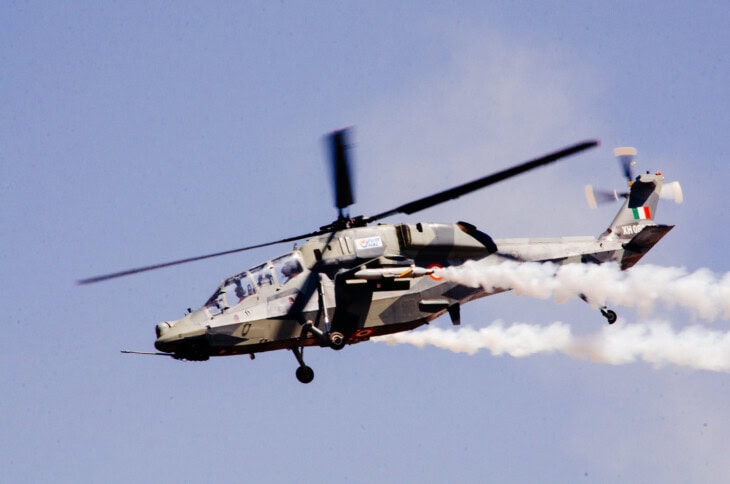
The Prachand is the most specialised attack helicopter in the world, and it holds a record none of the aircraft above it can touch. It is built to fight above 16,400 feet (5,000 m), higher than any other attack helicopter operates.
That single requirement drove the whole design. India needed a gunship that could work along the Himalayan frontier, so HAL built it light, with a maximum takeoff weight of just 12,800 pounds (5,800 kg), a hingeless main rotor, and a bearingless tail rotor.
Top speed is about 167 mph (268 km/h) with a service ceiling near 21,300 feet (6.5 km) and roughly 340 miles (550 km) of range. Armament covers a 20 mm turret gun, 70 mm rockets, and both air-to-air and anti-tank missiles.
It entered Indian Air Force service on 3 October 2022, and in March 2025 India signed contracts for 156 more, 66 for the Air Force and 90 for the Army. It ranks eighth because that altitude advantage comes at the cost of payload and sensor capability.
9. Leonardo A129 Mangusta (Italy)
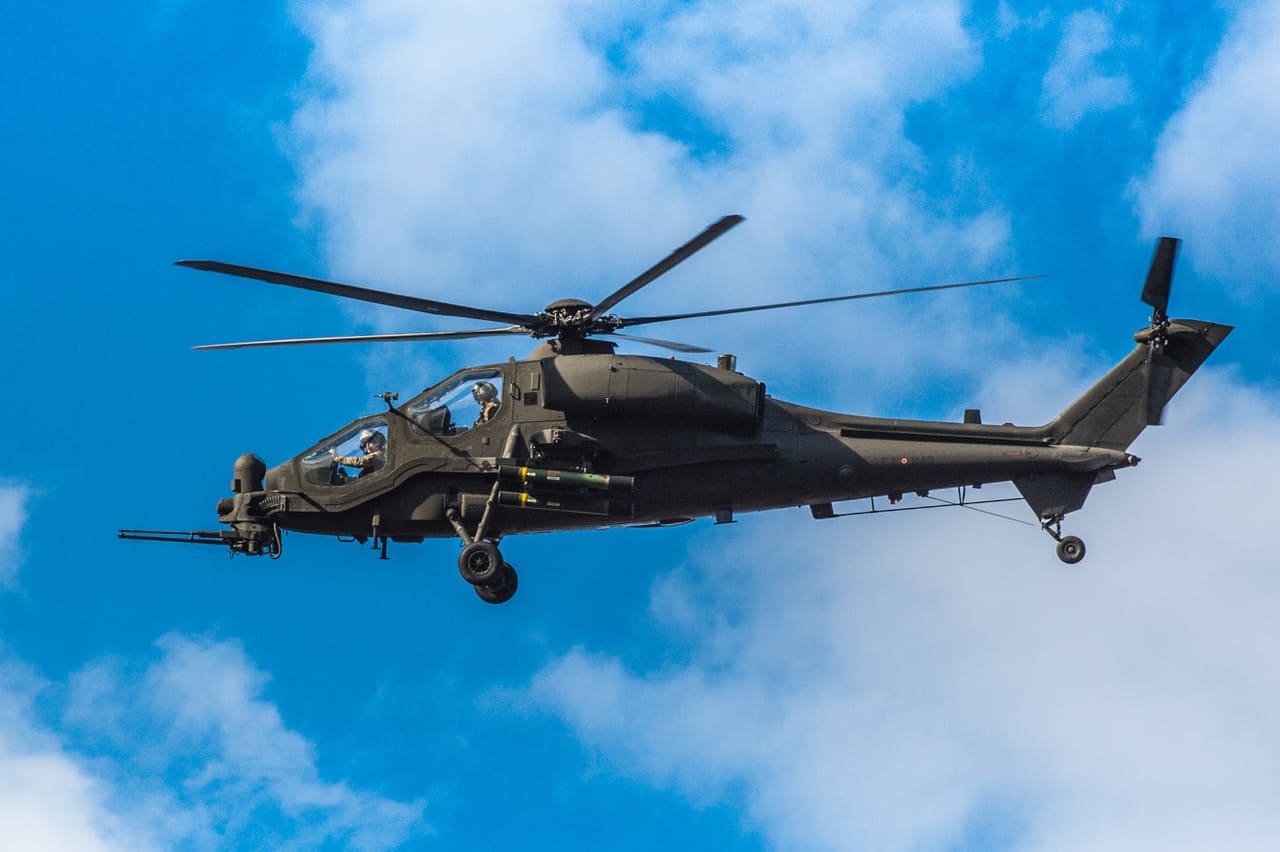
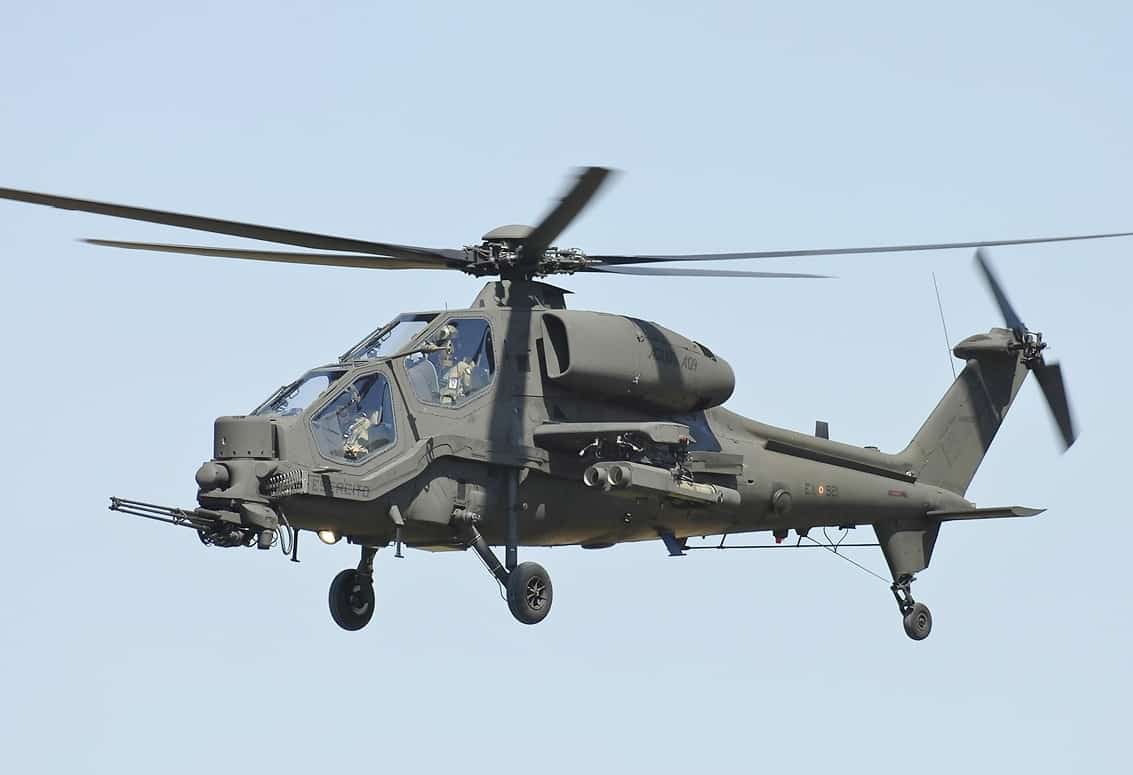
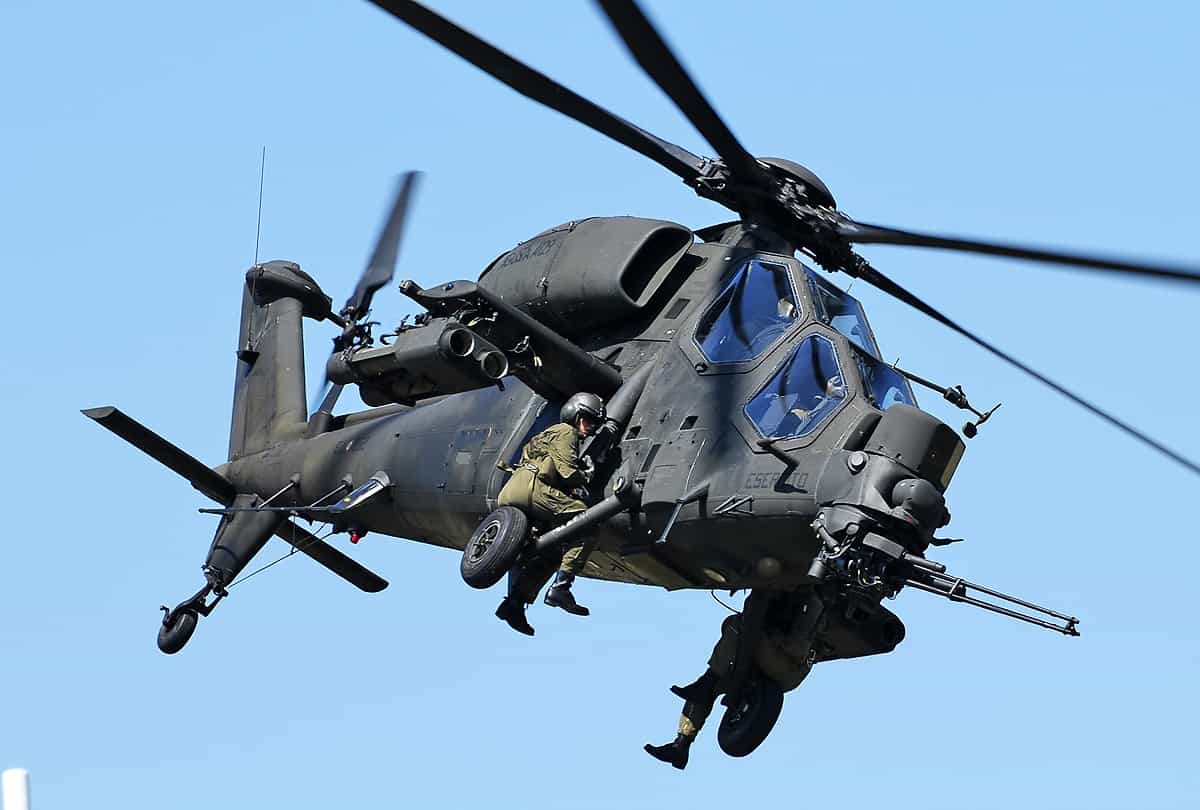

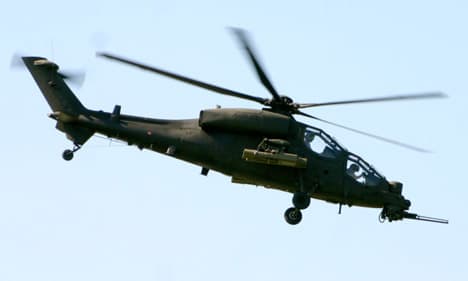
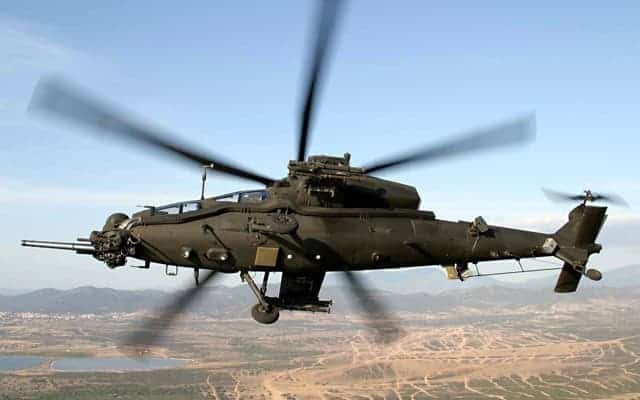

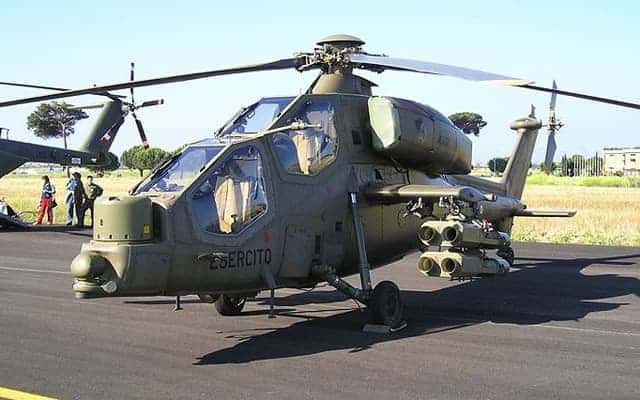

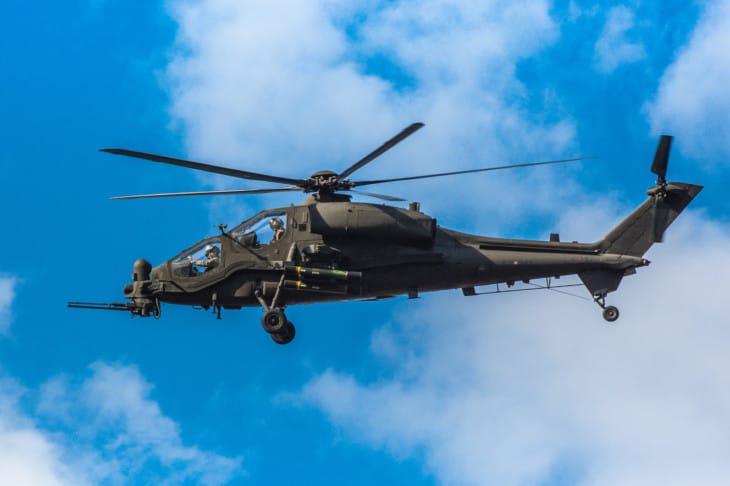
The A129 Mangusta was the first attack helicopter designed and built entirely in Western Europe, and it remains an elegant piece of engineering. Top speed is roughly 173 mph (278 km/h).
It was among the first gunships with a fully integrated digital mission system, and it served Italy in the Balkans, Somalia, Iraq, and Afghanistan. Its composite airframe and infrared suppression were ahead of their time.
It ranks eighth on age and payload. The Mangusta is light for the modern threat environment, and Italy is now replacing it with the far larger AW249 Fenice.
10. Denel AH-2 Rooivalk (South Africa)


The Rooivalk is the most impressive attack helicopter almost nobody flies. South Africa developed it largely in isolation under an arms embargo, using the Aerospatiale Puma’s engine and rotor lineage as a starting point.
The result is genuinely good: about 172 mph (278 km/h), a 20 mm nose cannon, Mokopa anti-tank missiles, and rugged systems designed for African operating conditions with minimal support infrastructure.
It proved itself with the UN mission in the Democratic Republic of the Congo in 2013, where Rooivalks flew strikes against M23 rebel positions. That remains its main combat record.
Only 12 were ever ordered for the South African Air Force, and budget pressure has left just a fraction of that small fleet serviceable. Denel has partnered with Turkey’s Aselsan on an avionics modernisation, but the numbers cap where it can rank.
11. Mil Mi-24 and Mi-35 Hind (Russia)


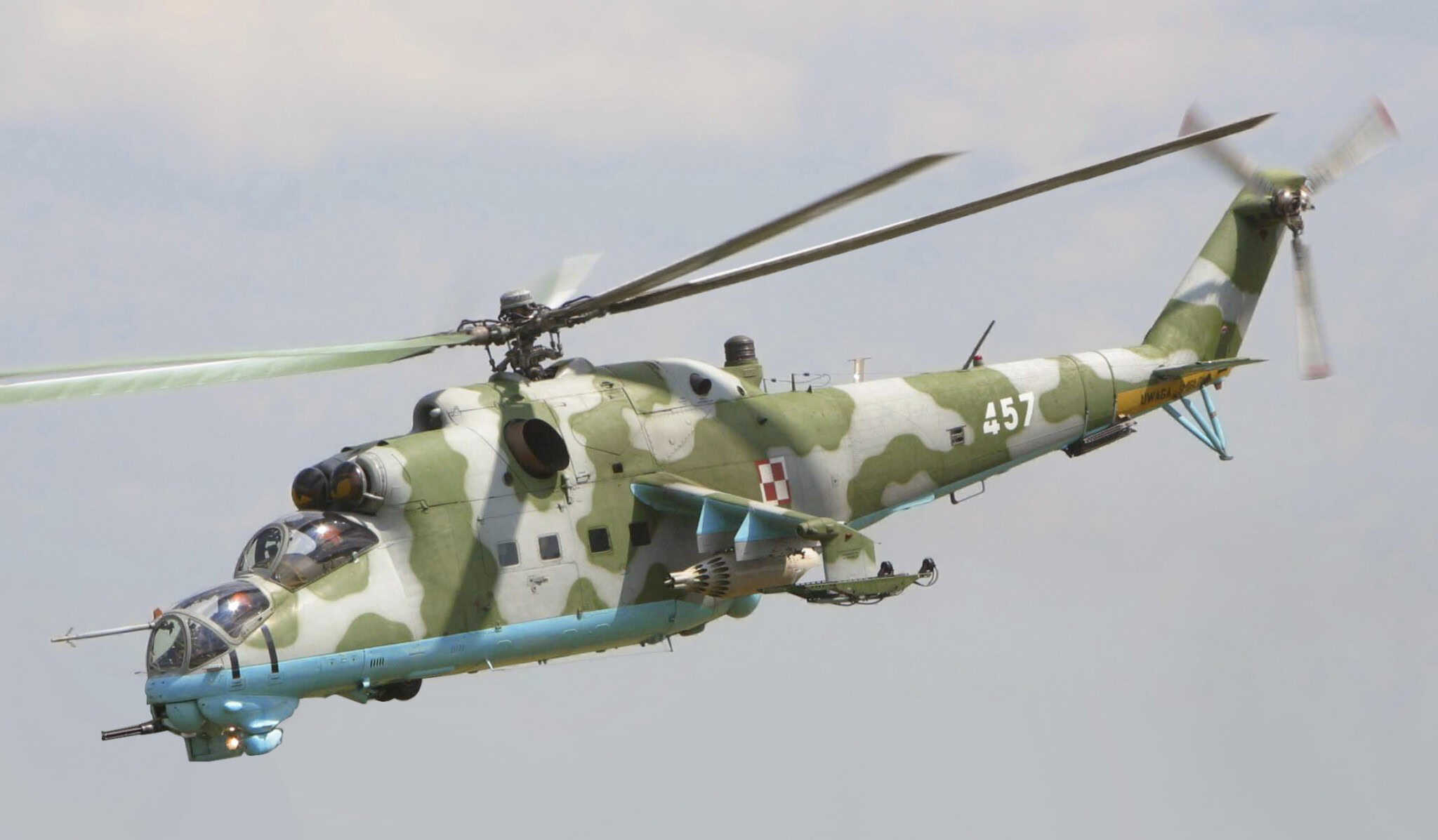


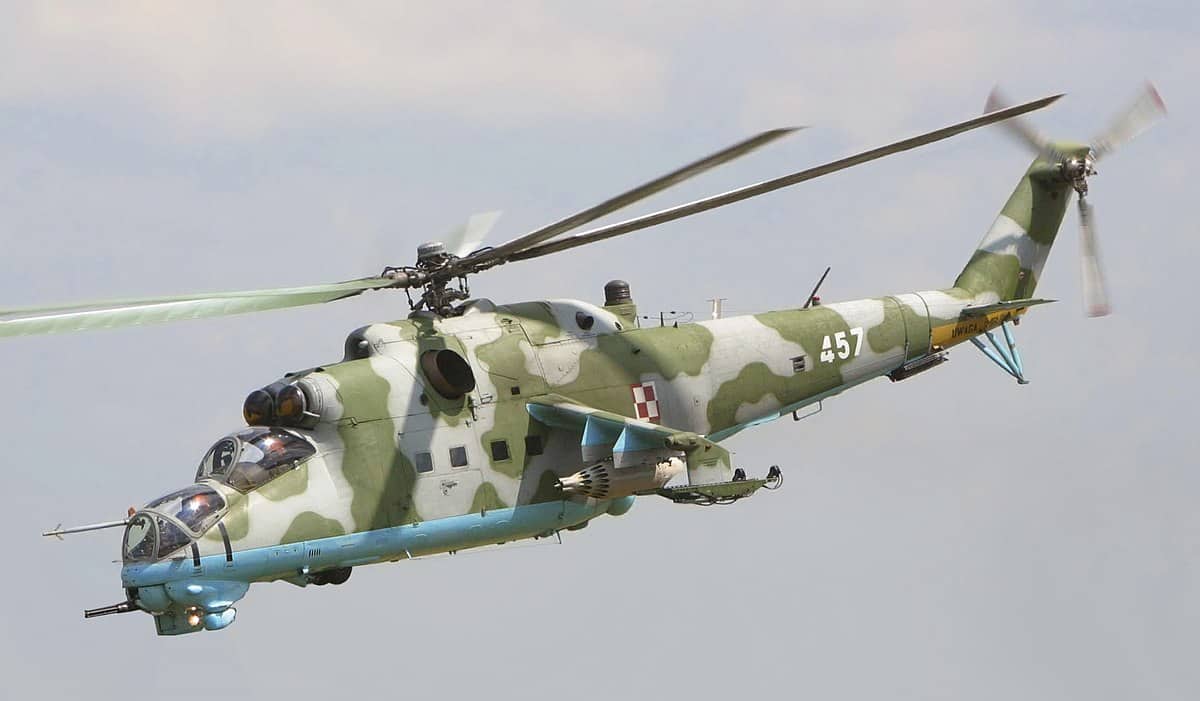
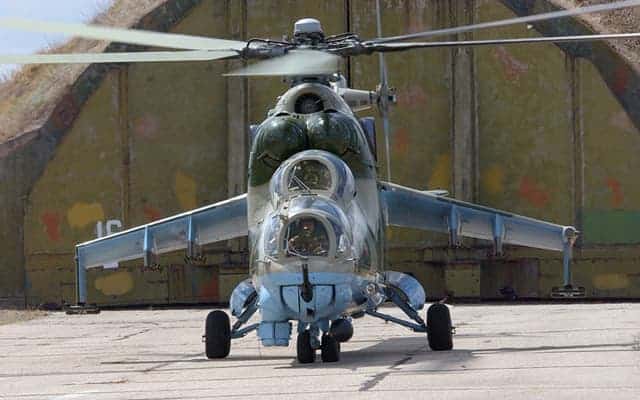
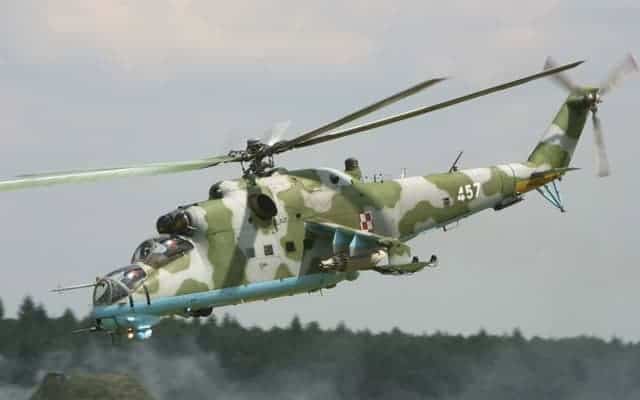
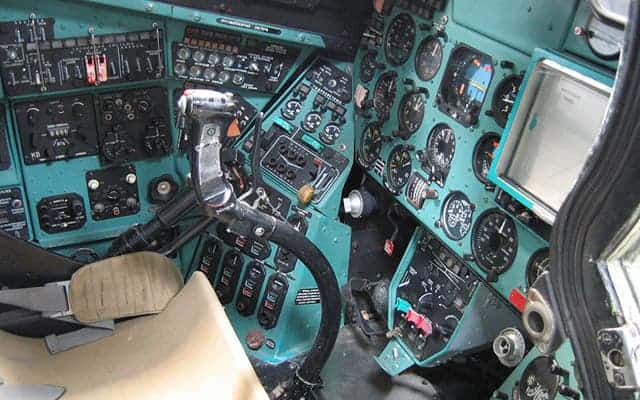
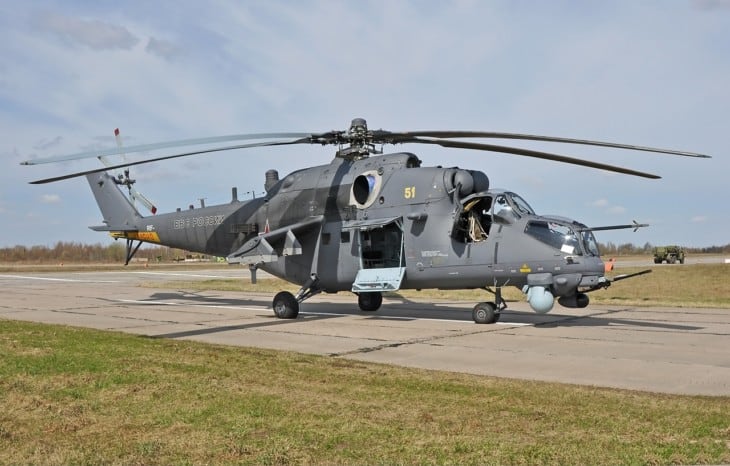
The Hind is the odd one out and earns its place anyway. It is the only aircraft here that is both a gunship and a troop carrier, with a cabin that seats eight soldiers behind the weapons crew.
It is also genuinely fast at about 208 mph (335 km/h), second here only to the AH-1Z Viper. A modified Mi-24 set a world helicopter speed record of 228.9 mph (368 km/h) in 1975, and the design remains quick enough that its own modernised successor, the Mi-35M, is slower at roughly 190 mph (306 km/h).
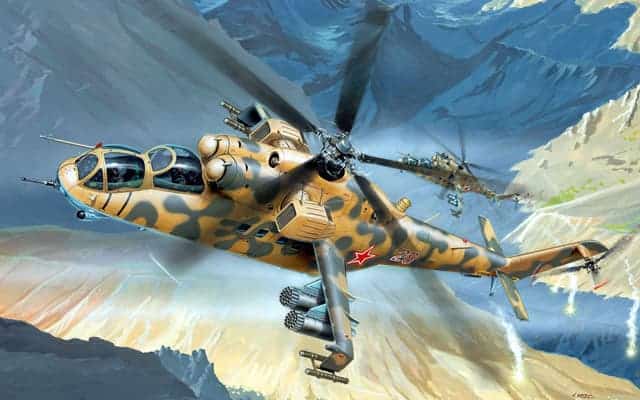
Soviet crews in Afghanistan nicknamed it the flying tank. More than 50 countries have operated the type since 1972, making it the most widely exported attack helicopter ever built.
It ranks tenth because the concept has aged. Carrying troops makes the Hind large and easy to hit, and modern doctrine separates the gunship and transport roles for exactly that reason.
The Next Generation: What Is Coming
Four programs will reshape this ranking before 2030, and none of them is in service yet. They are listed here rather than ranked, because comparing a prototype to a combat-proven fleet is how bad lists get written.
Leonardo AW249 Fenice (Italy). The Mangusta’s replacement and the most advanced Western attack helicopter in development. Four test aircraft have flown more than 1,000 hours since August 2022, and it made its public flying debut at the ILA Berlin Airshow in June 2026.
Italy has 19 firm orders and intends to take 48 in total. First delivery slipped from late 2027 to early 2028 in an initial operating standard.
TAI T929 ATAK 2 (Turkey). A heavy gunship in a completely different weight class from the T129, with an 11-ton takeoff weight and at least 3,300 pounds (1,500 kg) of ordnance. It first flew on 28 April 2023 and is still in prototype testing.
Harbin Z-21 (China). Footage of a new Chinese heavy attack helicopter began circulating in June 2026, showing a larger airframe than the Z-10 with greater weapons capacity and a clear Apache influence. If it performs as it appears, it is the first credible Chinese challenger at the top of this list.
Airbus Tiger MkIII (Europe). Not a new airframe but a deep rebuild, adding drone control and new weapons to 85 French and Spanish Tigers from 2029.
The Legends That Built the Class
Three retired or cancelled designs did more to shape the modern attack helicopter than most of the aircraft ranked above. Our history of the attack helicopter covers the full story.
Bell AH-1 Cobra


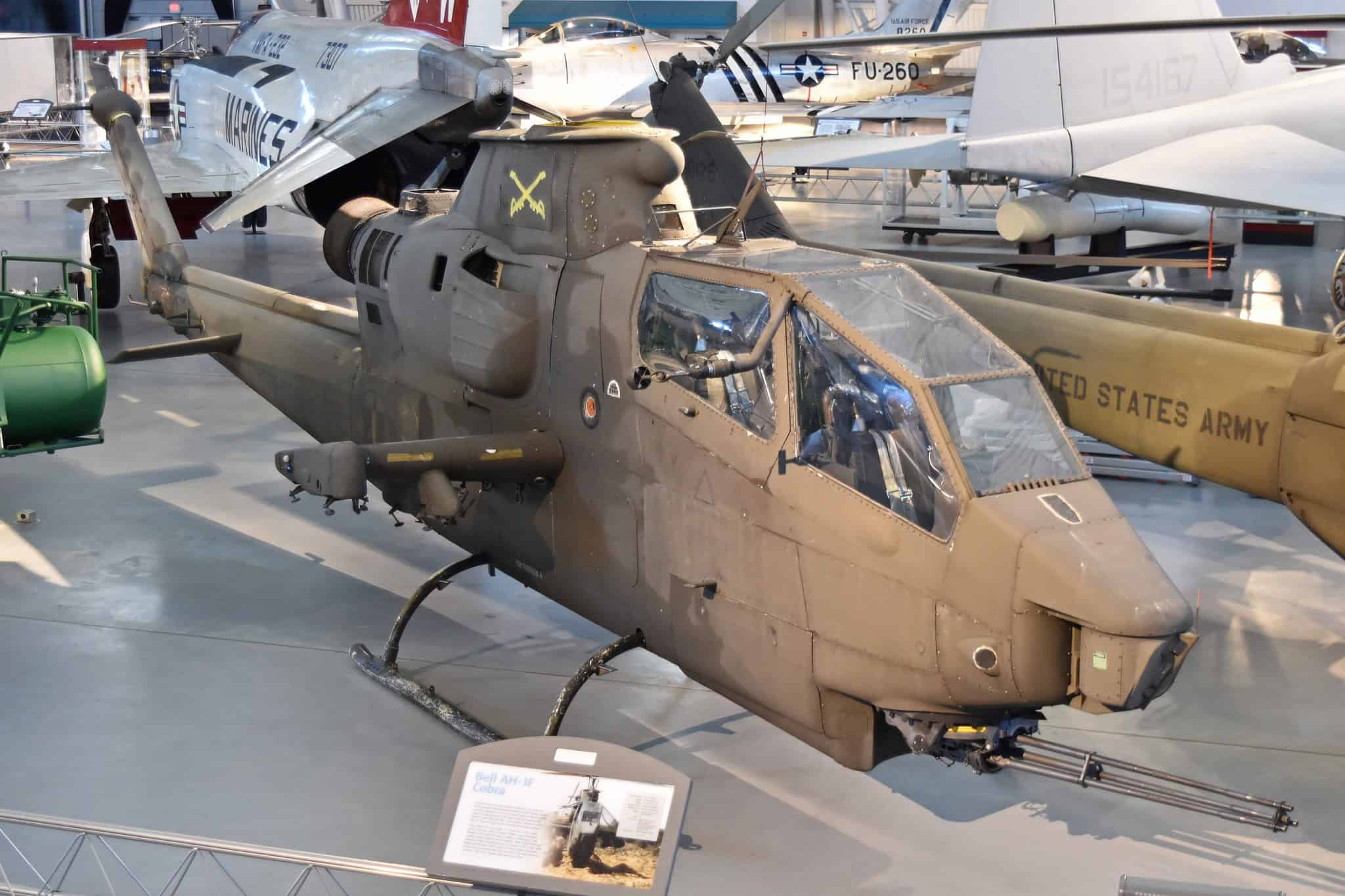


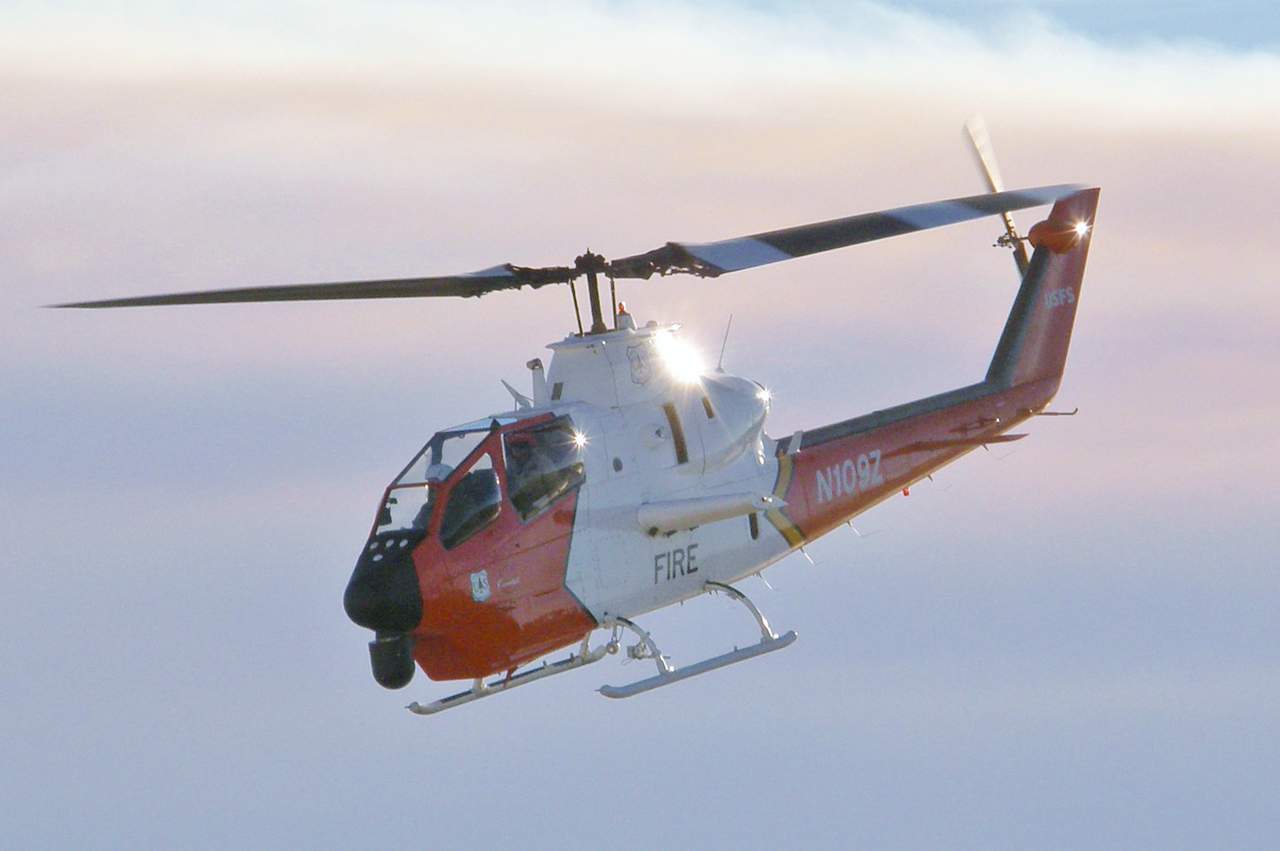
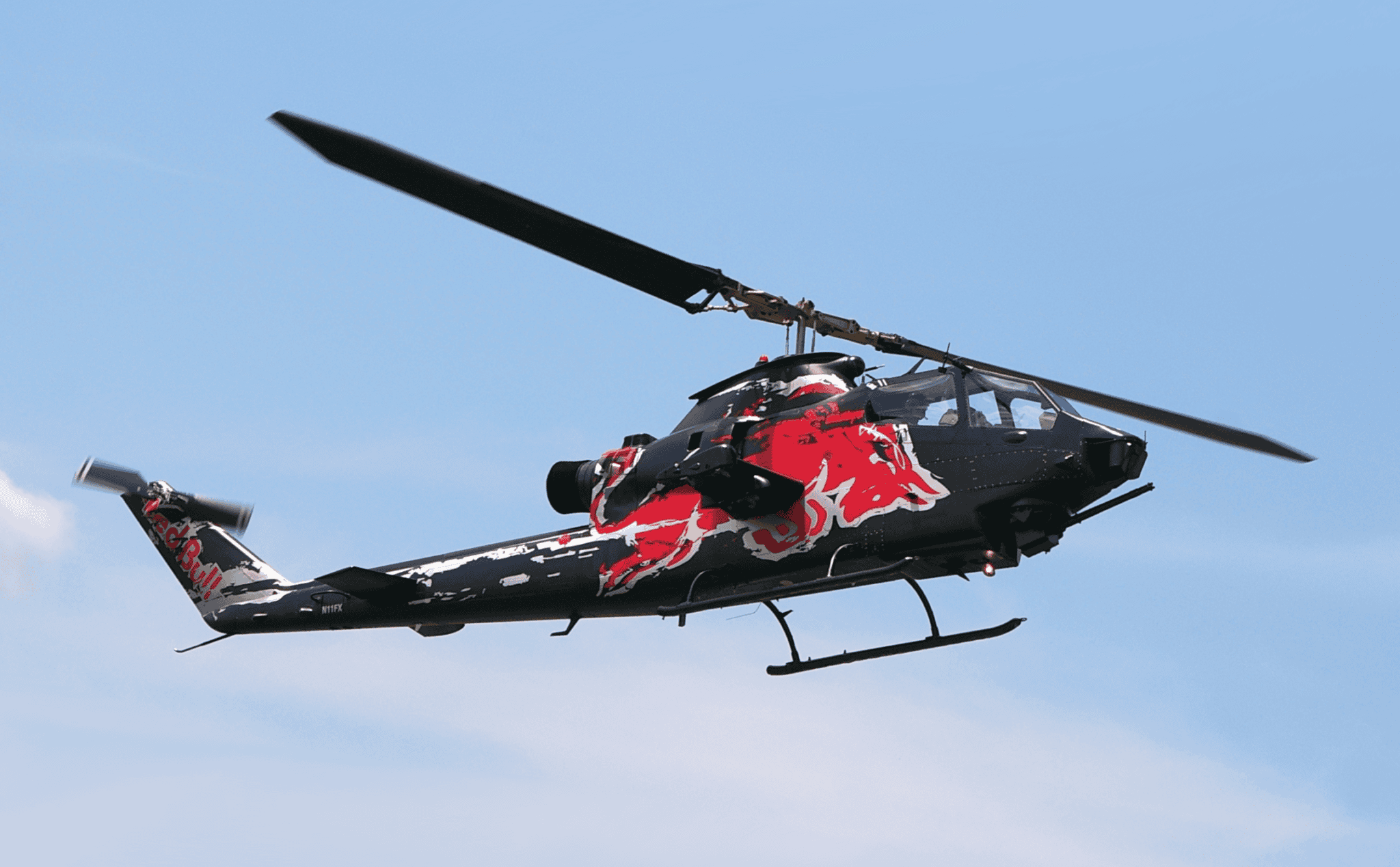


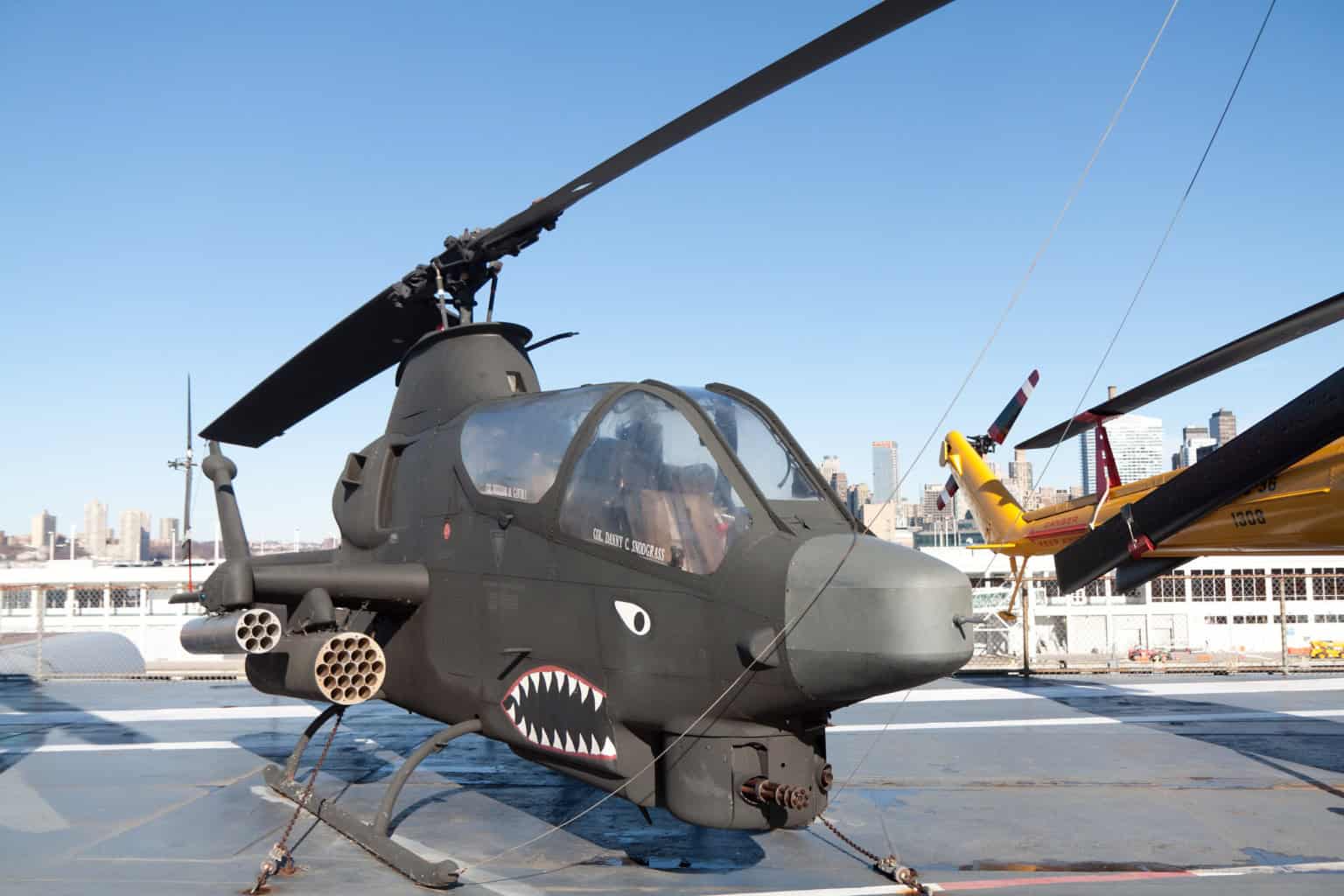


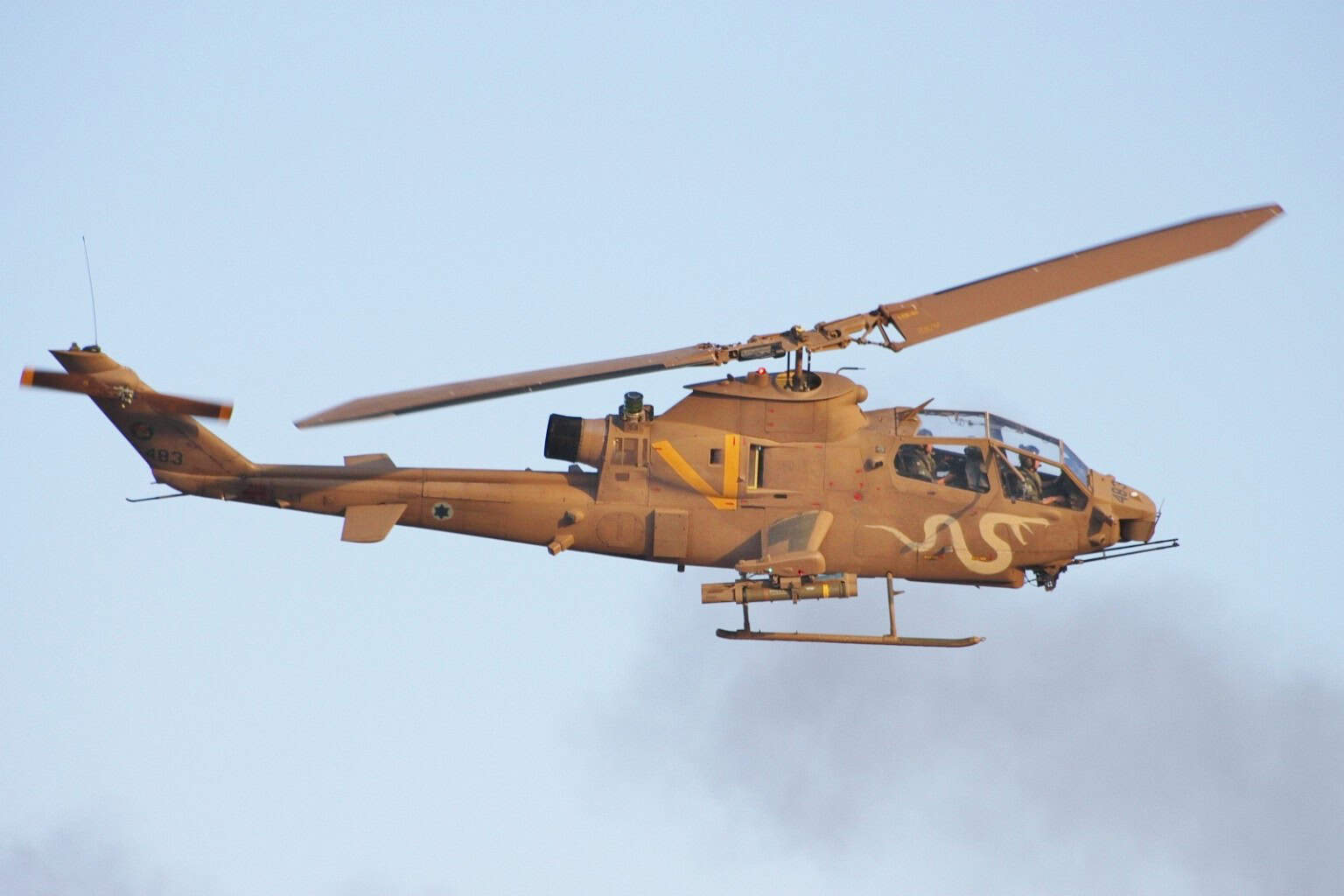
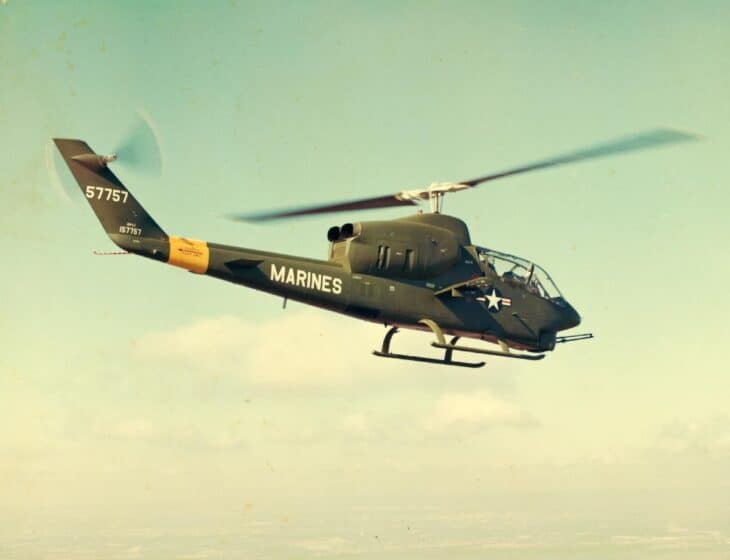
The AH-1 Cobra was the first helicopter designed from the ground up to attack, and it created the template every gunship still follows. Bell built it fast for Vietnam by mating a new slim fuselage to the proven UH-1’s engine and rotor system.
The narrow profile, tandem cockpit, stub wings, and chin turret all debuted here in 1967. Every helicopter in the ranking above is a descendant of that layout.
Kamov Ka-50 Black Shark
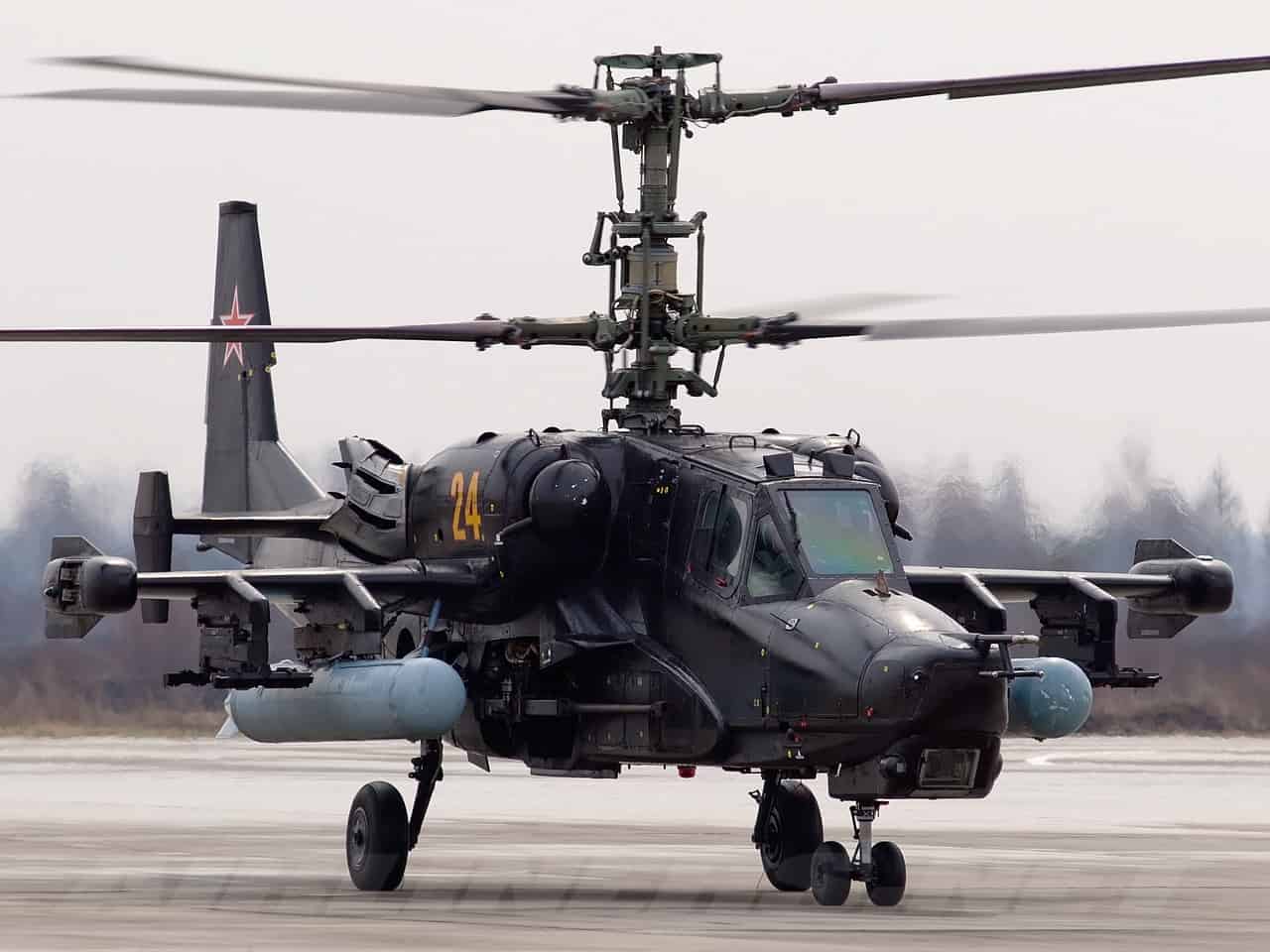

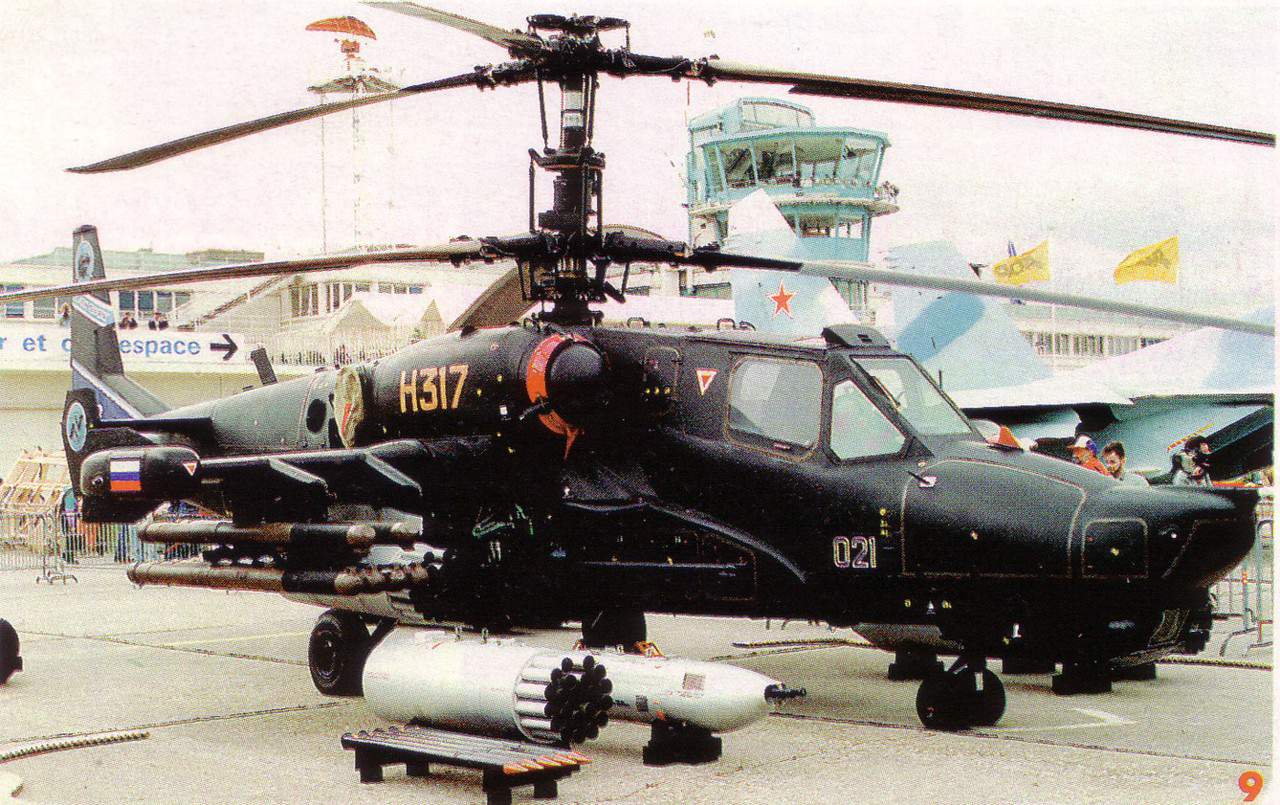

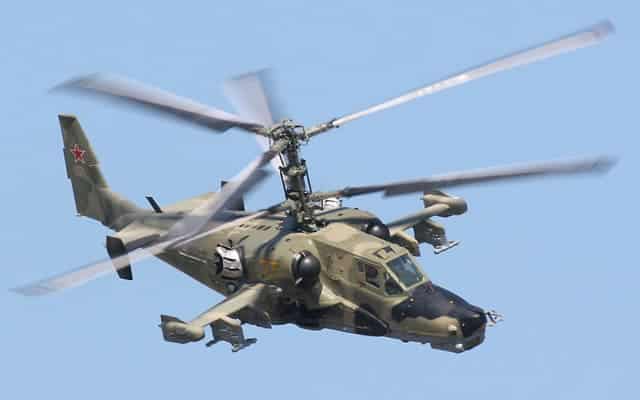
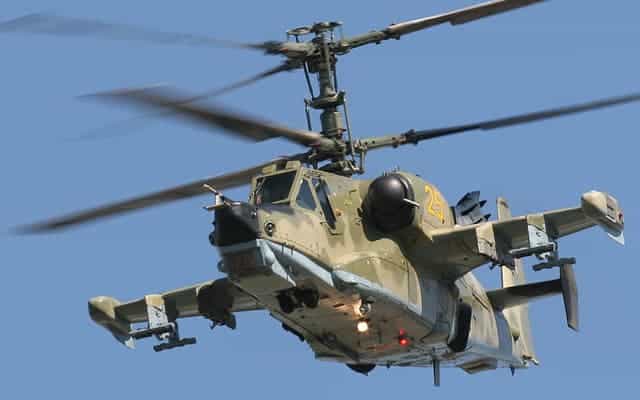
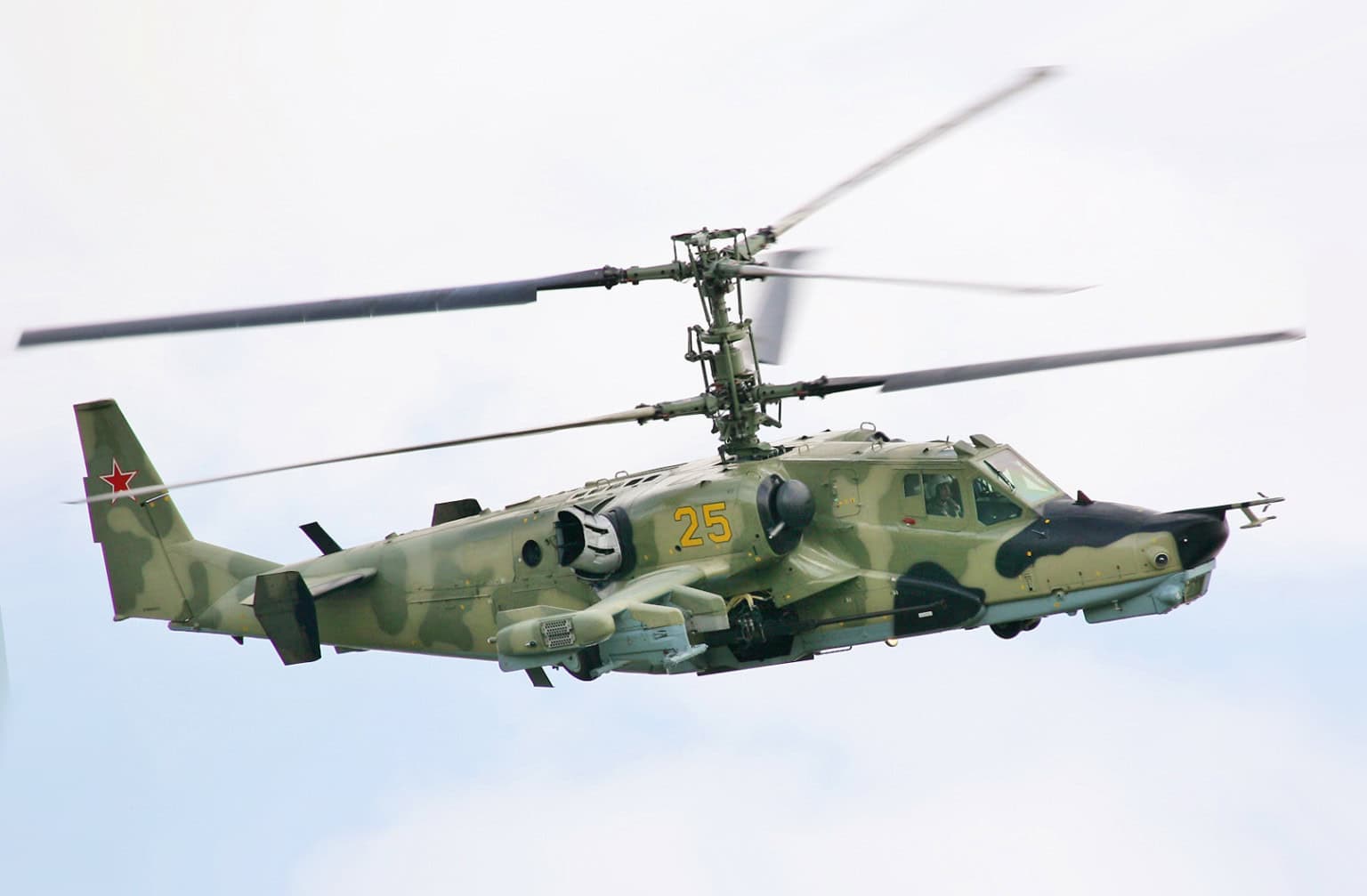
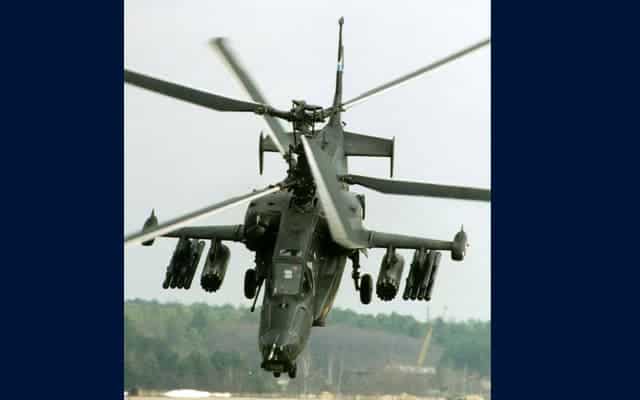
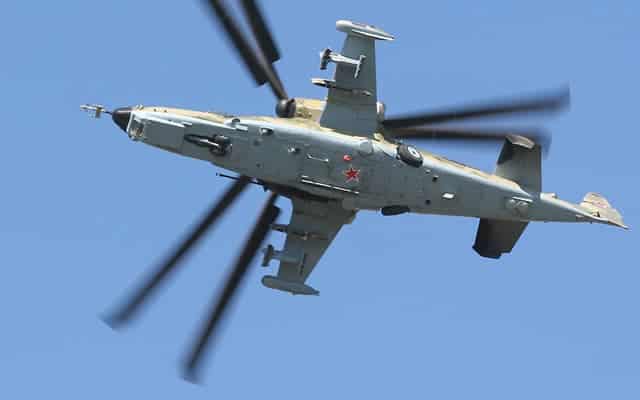
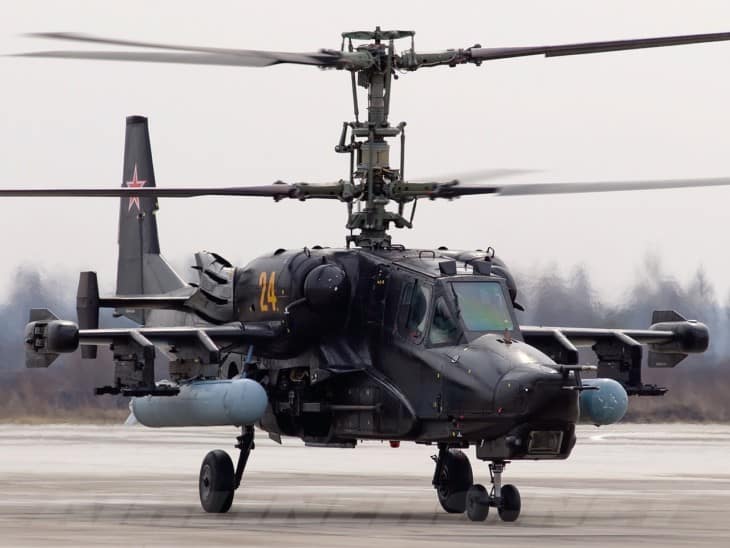
The Ka-50 was the boldest attack helicopter ever fielded: a single-seat gunship with coaxial rotors and an ejection seat, betting that automation could replace the gunner entirely.
The bet did not pay off. Workload proved too high for one crew member, only a handful were built, and Kamov developed the two-seat Ka-52 instead. The Ka-50 is not the world’s most advanced attack helicopter, a claim that circulates widely and has not been true for years.
Lockheed AH-56 Cheyenne
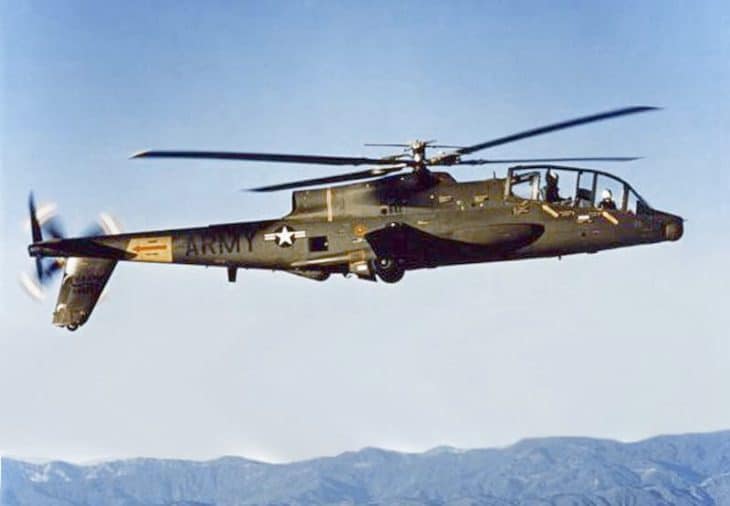
The Cheyenne was decades ahead of its time and it was cancelled anyway. A pusher propeller and rigid rotor gave it performance no conventional gunship could match, including speeds beyond anything in service today.
Only 10 prototypes were built before the program died in 1972, killed by cost, technical problems, and an inter-service fight with the Air Force over who should provide close air support. Its compound-helicopter ideas resurfaced 50 years later in US Army high-speed rotorcraft programs.
Are attack helicopters obsolete?
This is the honest question hanging over every aircraft on this list, and the answer as of 2026 is no, but the job has got far harder. Russia has lost at least 68 Ka-52s in Ukraine, and cheap threats now reach helicopters that expensive ones could not: in March 2026 a Ukrainian fibre-optic FPV drone forced a Ka-52 into an emergency landing, and from January 2026 Russia began fitting MANPADS to Shahed-type drones specifically to ambush Ukrainian helicopters. A January 2026 RUSI assessment concluded air assault remains viable when defenses are properly suppressed first. That is the real shift: the attack helicopter has stopped being a weapon you can send in alone, and has become one that only works as part of a system.
Which Attack Helicopter Is Best for Each Job
Ranking one to eleven hides the fact that these aircraft are optimised for different problems. The short version, by mission:
- Anti-armor at range: AH-64E Apache, for the Longbow radar and 16 Hellfires.
- Shipboard and expeditionary: AH-1Z Viper, the only one designed for it.
- Raw agility: Ka-52M, thanks to the coaxial rotors.
- Surviving hits: Mi-28NM, the most heavily armored of the group.
- Hot and high terrain: T129 ATAK, built for exactly that.
- Moving troops and firepower together: Mi-24 Hind, still the only option.
If you want the machines that carry the most rather than the ones that shoot best, our list of the biggest military helicopters covers the heavy-lift side, and the fastest helicopters ranks by speed alone.
How Attack Helicopters Get Their Names
US Army helicopters carry Native American names by long-standing tradition, which is why the roster reads Apache, Cobra, Comanche, Kiowa. The practice traces to General Hamilton Howze and the Bureau of Indian Affairs, who saw the speed and agility of early helicopters as fitting the reputation of Plains warriors.
Russian naming works differently. Manufacturers use predator names such as Alligator, Havoc, and Black Shark, while the NATO reporting names that English speakers know best, Hind and Hokum, were assigned externally and follow the convention that helicopter code names start with H.
Many of these names entered popular culture through Vietnam-era film and television, where attack and medevac helicopters played a central role.
FAQ
Sources and references used for research and fact-checking.
- Boeing, AH-64 Apache
- United States Army, AH-64E Apache Attack Helicopter
- FlightGlobal, AW249 stays on track for first delivery to Italian army in 2027
- The Aviationist, Airbus Prepares Ground for Tiger MkIII Upgrades
- Ukrainska Pravda, Helicopters in the age of drones: how the Russia-Ukraine war is reshaping military aviation doctrine
- Army Recognition, China's New Z-21 Heavy Attack Helicopter Emerges as a Potential Competitor to the U.S. AH-64E Apache
Get the Newsletter
The latest aviation news and stories sent to your inbox.
About the Author

Tim is the owner and lead editor of AeroCorner since 2019, overseeing aviation content covering aircraft, airlines, airports, and the broader aviation industry. Through years of researching, writing, editing, and publishing aviation-focused content, he has developed extensive practical knowledge of commercial aviation and air travel. Based in Asia and a frequent traveler himself, Tim also brings firsthand passenger experience to AeroCorner’s coverage. Outside of publishing, he has also explored aviation firsthand through hands-on flight training in New Zealand.