Military Helicopters
The attack helicopter built for Italian military operations.
The latest aviation news and stories sent to your inbox.
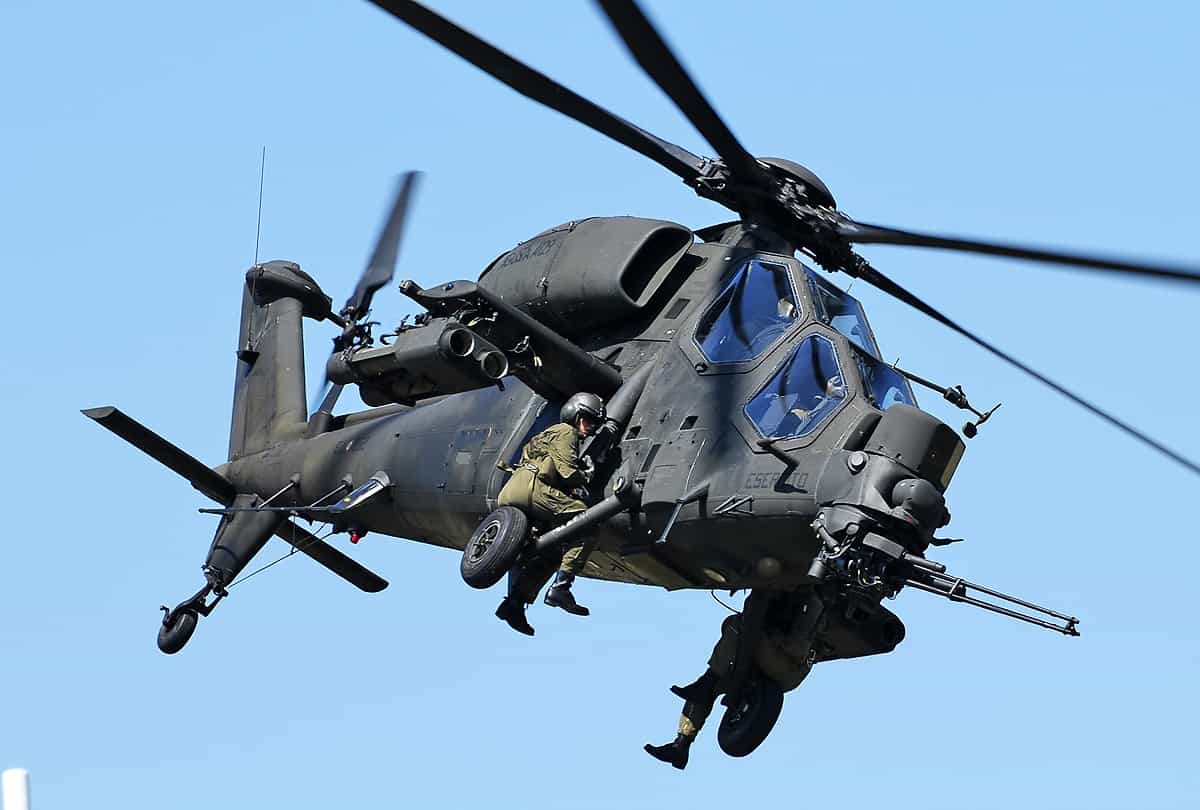
The Agusta Westland AW129 Mangusta is a dedicated attack helicopter developed in Italy. First flown in the 1980s, it was designed to provide anti-armor and close support capability. The aircraft has undergone modernization over its service life.
Live Fleet Activity (A129)
Fetching live data…
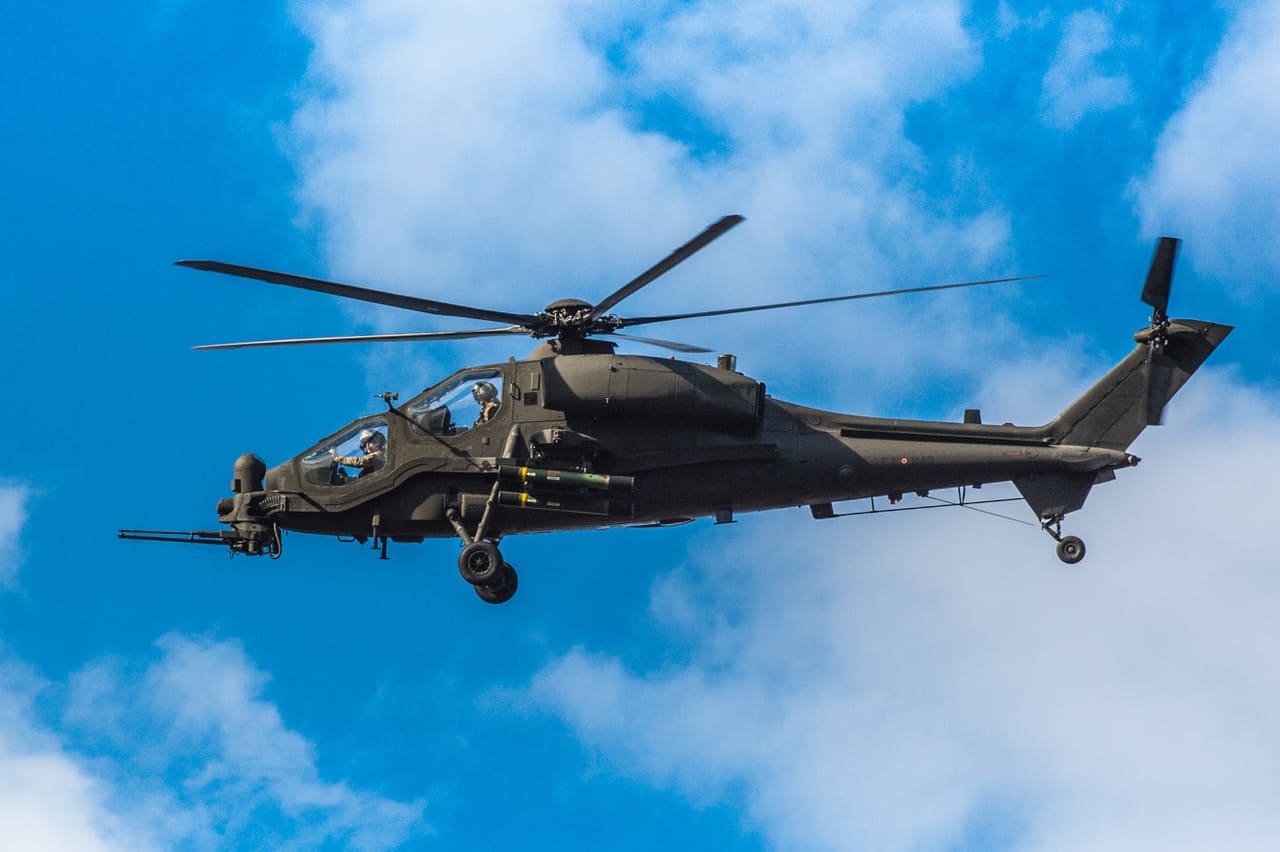
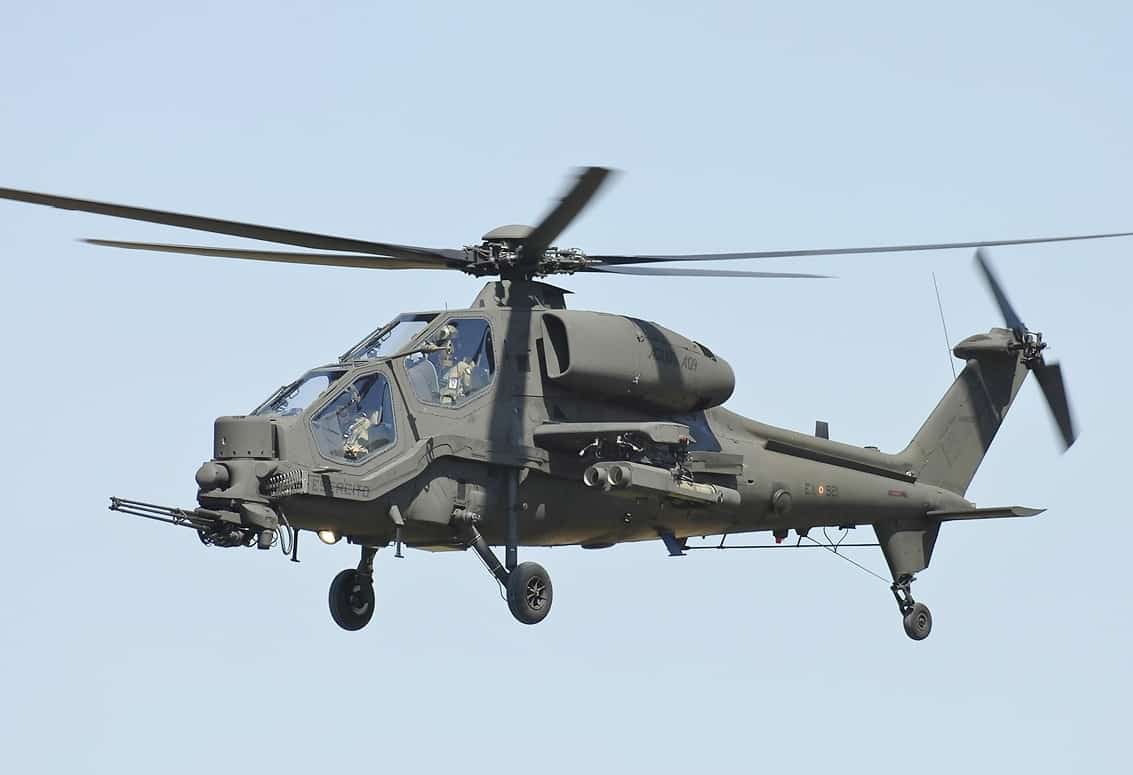

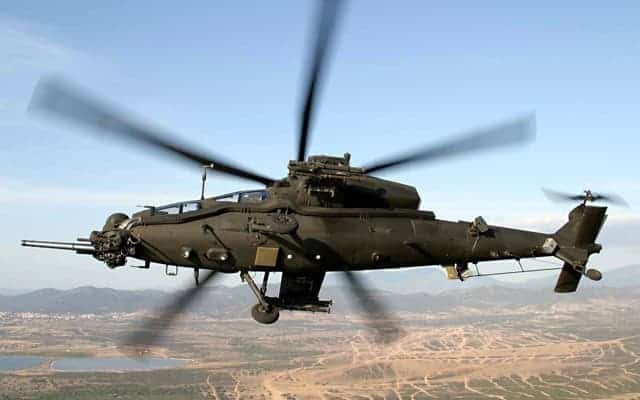

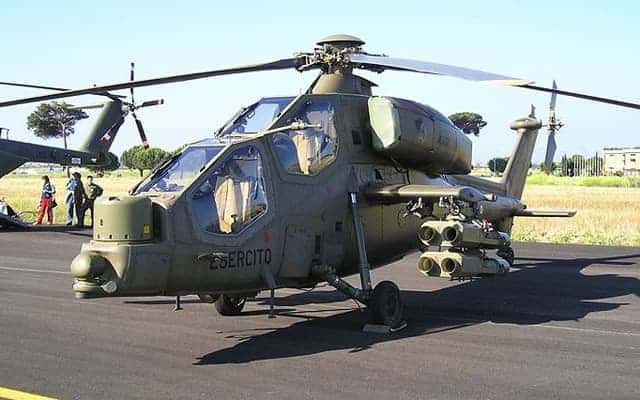

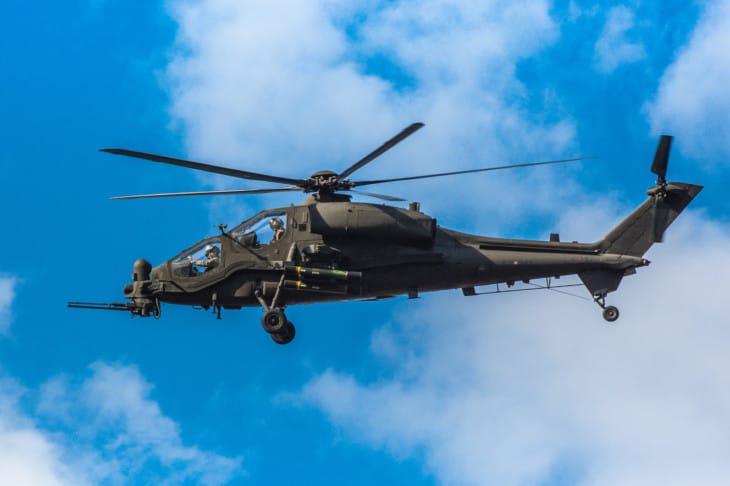
The AW129 first flew in 1983 and entered service in 1990. It features a tandem cockpit and narrow fuselage optimized for reduced profile. The helicopter was Italy’s first domestically developed attack rotorcraft.
Two turboshaft engines producing approximately 900 shaft horsepower each power the aircraft. Cruise speed approaches 150 knots (278 km/h). Maximum takeoff weight exceeds 10,000 pounds (4,536 kg).
The Mangusta has been deployed in international operations. Upgraded variants incorporate improved avionics and weapons systems. The aircraft remains in service with the Italian Army and export users.
The Mangusta program began as an effort to provide Italy with an indigenous armed rotorcraft tailored to its terrain and defense doctrine. Italian industry sought a platform focused on anti-armor engagement and close support, built around domestic design and manufacturing capabilities rather than adaptation of a foreign attack helicopter.
Early work concentrated on a lightweight, agile airframe with tandem seating for pilot and weapon systems officer. Prototypes evaluated pilot visibility, survivability features, and the integration of sensors and weapons with limited impact on agility. Development prioritized a balance between armor protection and weight to preserve maneuverability.
Industrial partners organized production and upgrade work within the Italian aerospace sector to sustain the type through service life modernization. This structure enabled iterative avionics and systems updates without wholesale platform replacement. Certification and entry to service proceeded alongside incremental capability enhancements driven by operational feedback.
Program planning included considerations for export potential and possible licensed derivatives. Design provisions allowed for alternate engines and avionics suites to be fitted for specific customers. These options informed later proposals and international collaborations that adapted the basic airframe for other requirements.
The helicopter employs a tandem cockpit with a slim fuselage profile to reduce detection and framing against small targets. Crew stations are arranged to optimize task division between flying and weapons employment, with armor protection concentrated around critical components and crew positions. Access panels and modular components support field maintenance.
The rotor system and transmission are configured for high responsiveness and redundant load paths. Drive and dynamic components emphasize serviceability and damage tolerance. The airframe uses a mix of metallic primary structures and composite elements in control surfaces and fairings to save weight while maintaining rigidity.
Avionics architecture follows a modular philosophy, enabling phased upgrades to mission avionics, sensors, and defensive aids. The sensor suite integrates a helmet or sighting system with a forward-looking electro-optical sensor and targeting datalinks. Fire control integrates weapon stations with the avionics to permit coordinated engagements at range.
Distinctive features include externally mounted weapons pylons optimized for a range of stores and a narrow fuselage cross section that reduces frontal area. Survivability features incorporate self-sealing fuel cells, crash-resistant seats, and armoring in key zones. Defensive aids packages have been fitted in later updates to enhance threat awareness and countermeasures.
The platform delivers handling characteristics oriented toward low-altitude maneuvering and terrain masking. Rotors and control systems provide responsive handling important for nap-of-earth flight profiles and rapid target re-acquisition in close support missions. Agility for confined-area operations is a key design outcome.
Endurance and range depend strongly on the loadout carried. When configured with full external armament and sensors, endurance decreases relative to lightly equipped patrol configurations. Mission planning typically trades sensor and weapon load versus loiter time to match task needs such as escort, reconnaissance, or direct fire support.
Climb performance and hot-and-high capability have operational limits tied to engine power margins and total weight. Operators account for these constraints when planning operations in warm climates or at altitude by adjusting fuel and weapons load or by operating from intermediate staging points to preserve safety margins.
Operational restrictions reflect the balance between protection and payload. Armor and systems upgrades increase empty weight, which may reduce available payload for stores or fuel. Crew training emphasizes energy management and threat avoidance to mitigate these limitations while achieving mission objectives.
The type served as the baseline for at least one export-oriented derivative that combined the original airframe with alternative propulsion and avionics for foreign customers. That proposal emphasized increased power and Western-standard avionics to meet differing operational and support requirements.
Licensed development by an international partner produced a further derivative optimized for a different engine fit and local systems integration. That derivative included structural and systems modifications to accommodate the new powerplant and mission equipment preferred by its procuring service.
Upgrade packages produced for domestic service created sub-configurations distinguished by their avionics and weapons fit rather than by major structural changes. These sub-configurations enabled operators to field aircraft with differing mission specializations without replacing the basic airframe.
Italian Army aviation is the primary operator, employing the helicopter for anti-armor, armed reconnaissance, convoy escort, and close support missions. Units operating the type integrate it with combined arms formations to provide direct fire and targeting support for ground forces. Training regimens emphasize gunnery, formation flying, and coordination with ground controllers.
Routine deployments include national defense tasks, NATO missions, and multinational activities where the helicopter's sensors and weapons support a range of tasks. Maintenance and logistics practices evolved in service to address corrosion control, rotor system life limits, and avionics obsolescence through scheduled upgrades and mid-life refurbishment.
Operational feedback drove avionics and weapon interface improvements that increased targeting accuracy and situational awareness. Maintenance organizations adopted modular spares provisioning and emitter-specific diagnostics to reduce downtime and keep aircraft mission-ready in austere conditions.
Fleet experience identified common sustainment challenges typical for attack helicopters of comparable vintage. These included managing growth in avionics weight, integrating new defensive systems without excessive penalties, and ensuring supply chain continuity for proprietary components while maintaining mission availability goals.
In service, the helicopter performs direct fire support, anti-armor engagements with guided weapons, and armed reconnaissance. Mission profiles often involve coordinated strikes with dismounted or armored units, and rapid repositioning to exploit terrain. Engagement doctrine emphasizes precision delivery of effects to minimize collateral damage in complex environments.
Aircrews employ tactics that use terrain for concealment and short, high-power bursts to deliver ordnance before relocating. Night operations and sensor-guided engagements became more prominent following avionics upgrades, allowing operations under restricted visibility with lower risk to aircrews.
Survivability measures, combined with tactical employment, reduce exposure to ground fire. Crews are trained in immediate action drills for damage control and recovery, and mission planning incorporates threat analyses to avoid high-density air defense zones when possible.
The primary operator is the Italian Army aviation corps, which maintains the type in its attack helicopter squadrons. Unit organization allocates aircraft among several regiments to support regional and expeditionary tasking. Operational units coordinate closely with armored and infantry formations for integrated support.
The program demonstrated how a medium-weight, domestically produced attack helicopter can be developed and sustained within a national industrial base. Lessons learned influenced export proposals and licensed development programs that adapted the airframe for other customers and requirements.
Technological contributions include lessons in modular avionics upgrading, integration of electro-optical targeting systems with weapon stations, and balancing armor protection against payload. These informed later upgrade philosophies for comparable rotorcraft and showed practical approaches to mid-life avionics refresh without replacing airframes.
Sustainment practices developed for the type highlighted the importance of logistics planning and modular maintenance to maintain sortie generation rates. The platform's service record supported argumentation for future investments in rotorcraft tailored to national procurement and export strategies.
Sources and references used for research and fact-checking.