Military Helicopters
The original attack helicopter, built from Huey parts around a 36-inch-wide fuselage.
Updated: by Tim de Vries
The latest aviation news and stories sent to your inbox.
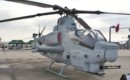
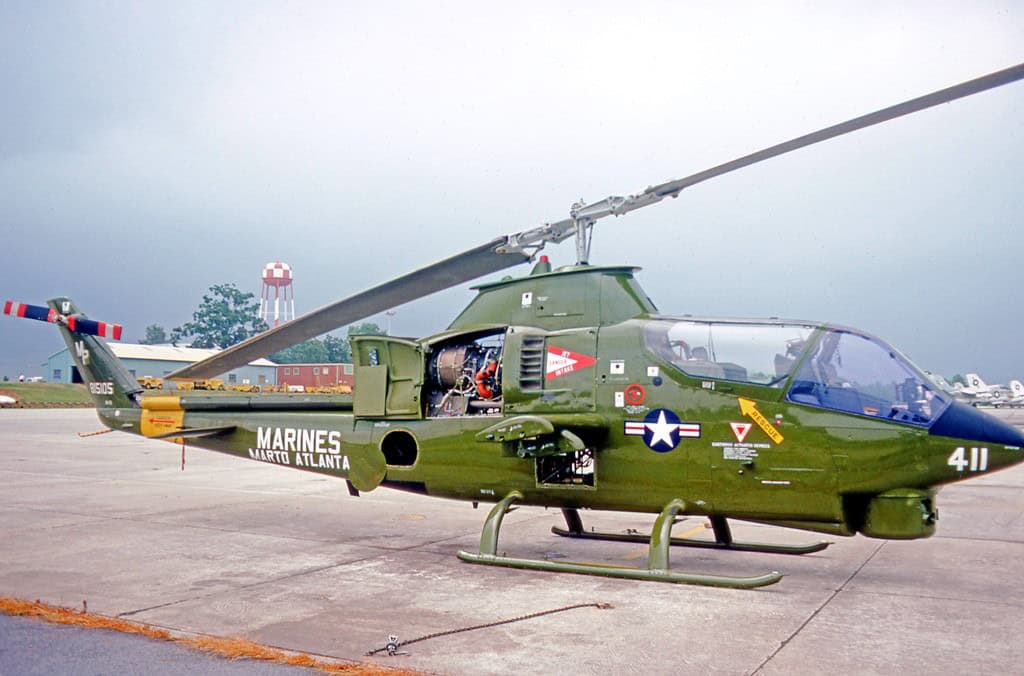
The Bell AH-1 Cobra is the single-engine attack helicopter Bell built for the US Army during the Vietnam War, pairing the UH-1 Huey’s engine, transmission and rotor with a 36-inch-wide, two-seat tandem fuselage. It first flew in 1965, entered service in 1967 and formed the core of the Army’s attack helicopter fleet until the AH-64 Apache replaced it.
Live Fleet Activity (HUCO)
Fetching live data…


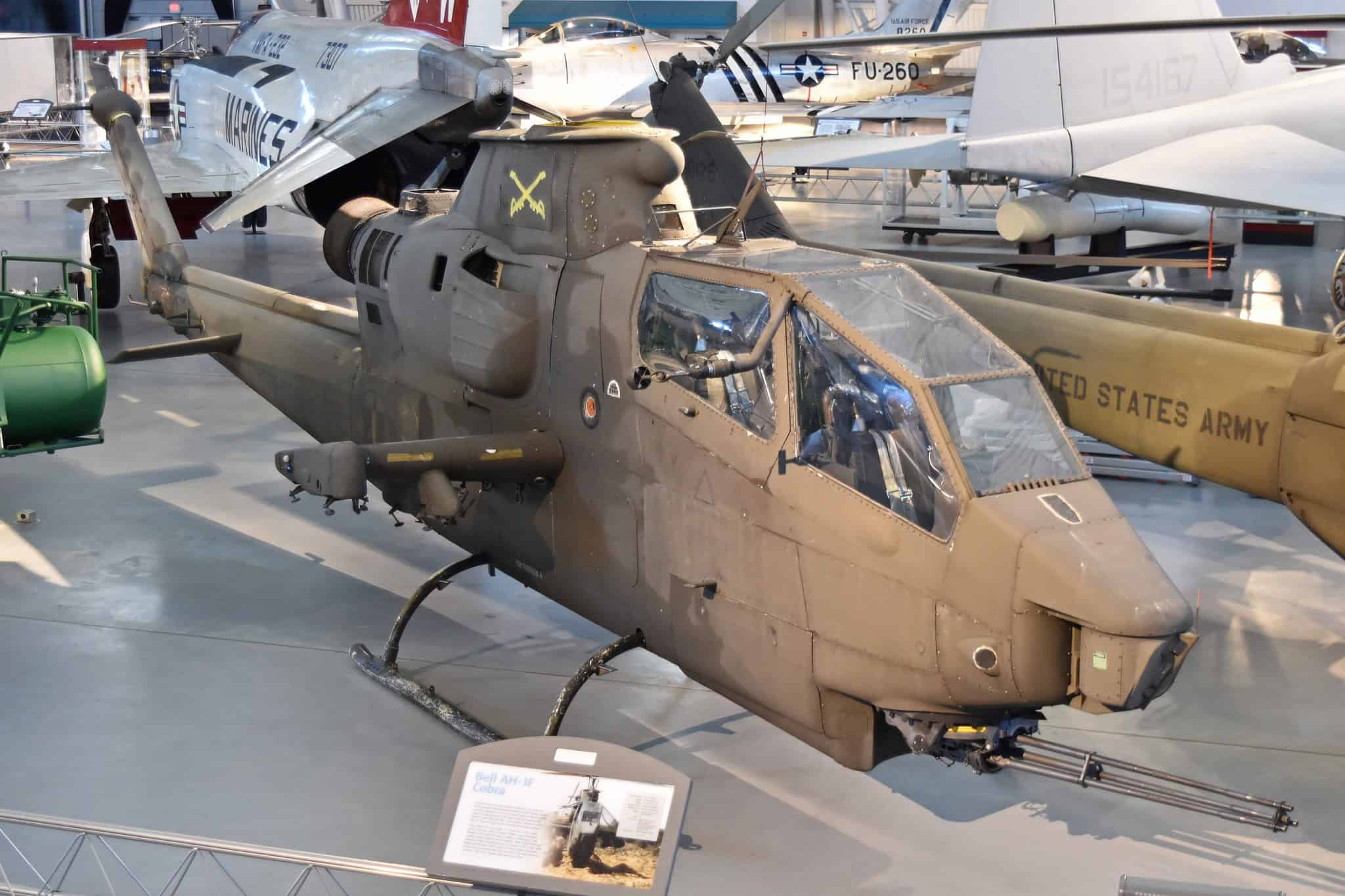




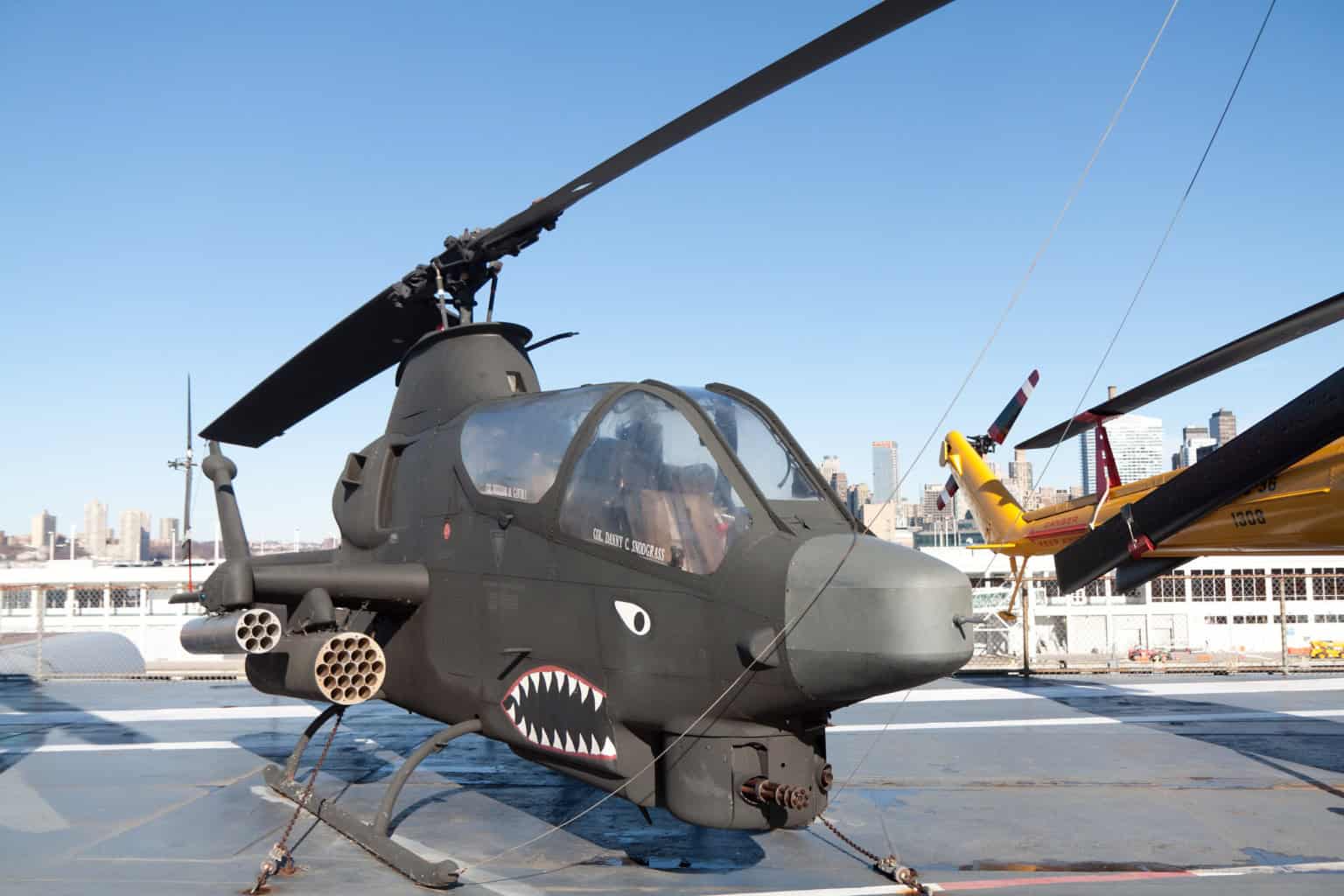


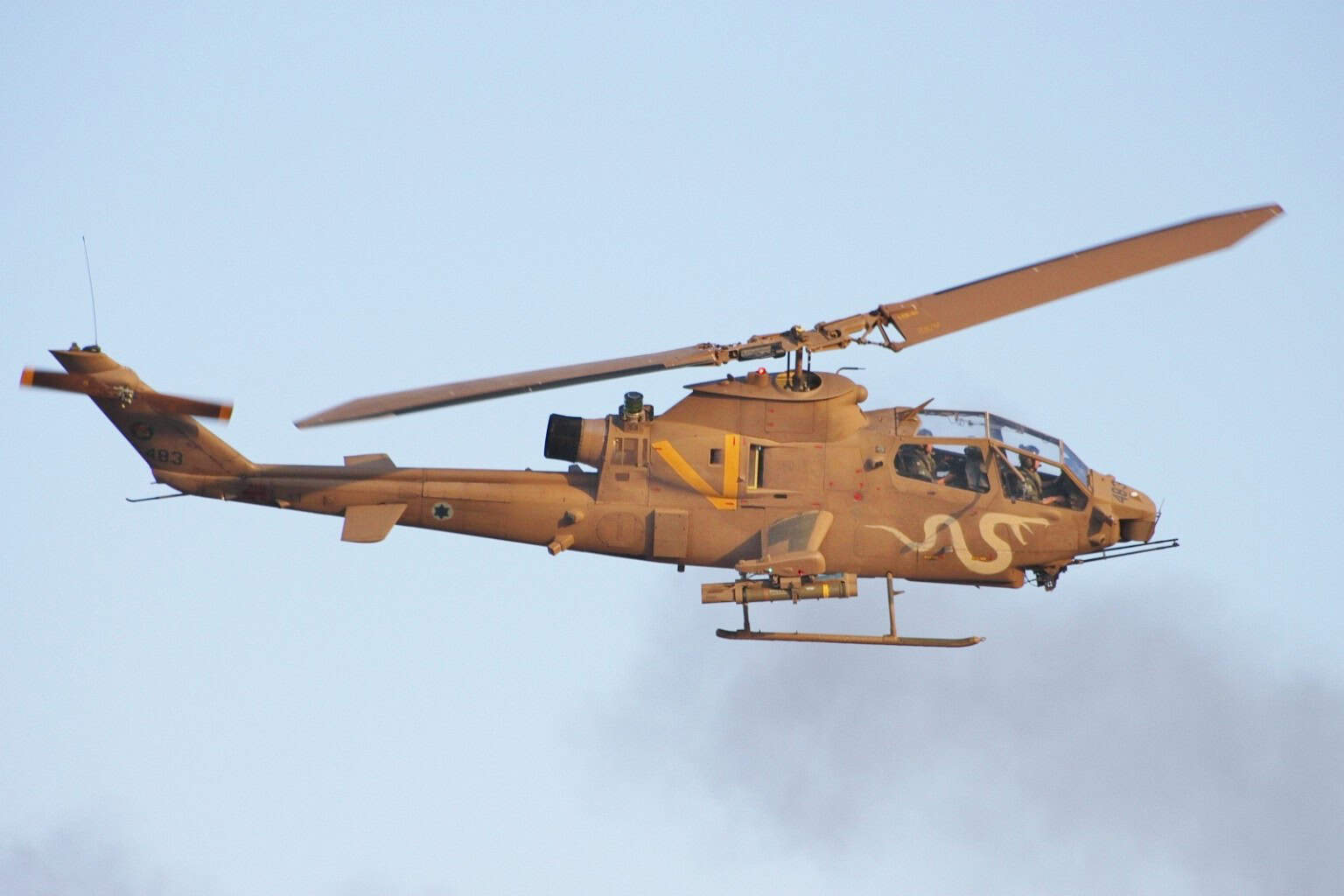
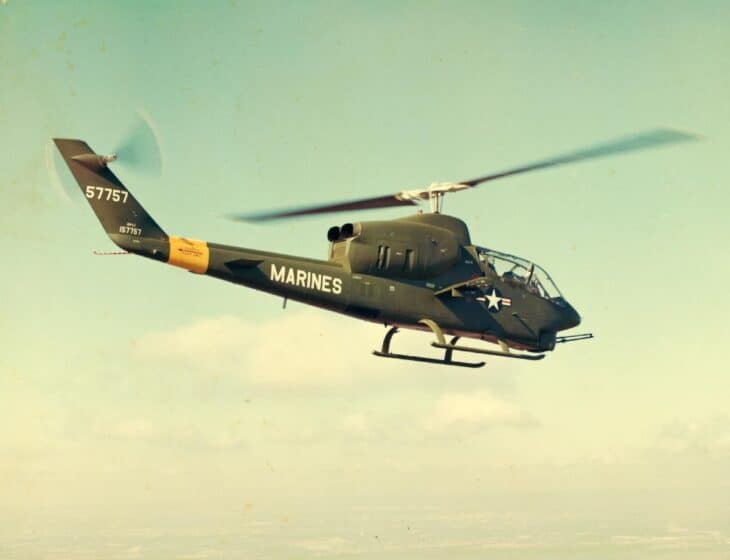
The Bell AH-1 Cobra is a two-seat, single-engine attack helicopter that Bell built for the US Army. It is also known as the HueyCobra, and its crews called it the Snake.
It first flew on September 7, 1965, and entered Army service in 1967. The Smithsonian’s National Air and Space Museum describes it as the first purpose-built helicopter gunship to enter military service.
Bell calls the AH-1 the original attack helicopter, whose configuration defined the ones that followed: a narrow body, two crew seated one behind the other, stub wings for weapons and a gun turret under the nose. That story is told in full in our history of the attack helicopter.
This page covers the single-engine Cobras, from the AH-1G to the AH-1F. The twin-engine Marine Corps line has its own pages: the AH-1J, AH-1T and AH-1W on the Bell AH-1 SuperCobra page, and the current AH-1Z Viper.
The Cobra was born in Vietnam’s helicopter war. The UH-1 Huey carried troops into landing zones, and it was most exposed to ground fire as it slowed to land or lift off.
By 1962 the Army was arming UH-1As as escorts, with machine guns and rocket mounts. Those improvised gunships could barely keep pace with the transports they were meant to protect.
The Army’s long-term answer was the Advanced Aerial Fire Support System competition, which produced the Lockheed AH-56 Cheyenne. The Cheyenne proved too complex and costly and was cancelled in 1972, and the Army needed something far sooner than that.
Bell was not selected to compete for the Cheyenne contract, so it pursued a smaller, lighter gunship on its own. In January 1965 the company put $1 million of its own money into the detailed design of what it called the Model 209.
The shortcut was reuse. The Model 209 took the T53 turboshaft, the transmission and the “540” rotor system of the UH-1C, and roughly 80 percent of its components already had Huey part numbers.
What Bell changed was the fuselage. Seating the gunner and pilot in tandem narrowed the body to 36 inches (0.91 m). The slim profile was meant to make the Cobra harder to hit with small-arms fire, though shoulder-fired missiles later proved effective against it.
Bell’s own account says the number came from a doorway. Someone pointed out that the door of the room the engineers were in was just over 36 inches wide, and that became the fuselage width.
Bell rolled out the prototype on September 3, 1965, and flew it four days later, eight months after the go-ahead. In April 1966 it won an Army evaluation against armed versions of the Chinook, the Seasprite, the Piasecki Pathfinder and the Sikorsky S-61.
The first production order was for 110 aircraft, and follow-on orders raised it to 500 by the end of 1966. Bell added “Cobra” to the Huey nickname to create the name HueyCobra, and the Army used the Cobra name with the AH-1G designation.
The first six AH-1Gs reached Bien Hoa Air Base in South Vietnam on August 30, 1967. A Cobra scored the type’s first combat kill five days later, and the first Cobra unit, the 334th Assault Helicopter Company, was declared operational on October 6, 1967.
Cobras escorted troop-carrying Hueys, gave fire support to troops on the ground and flew in aerial rocket artillery battalions. They also worked in “hunter-killer” teams with a Hughes OH-6 Cayuse scout, which flew low and slow to draw fire so the Cobra could strike whatever revealed itself.
Bell built 1,116 AH-1Gs for the Army between 1967 and 1973, and the fleet logged more than one million operational hours in the war. It became one of the key helicopters of the Vietnam War, alongside the Huey it was built from.
It came at a cost. Of nearly 1,110 AH-1s delivered between 1967 and 1973, about 300 were lost to combat and accidents, roughly a third of them in operational or non-combat losses.
During Operation Lam Son 719 in Laos in 1971, 26 Army AH-1Gs were destroyed and 158 were damaged.
One rescue stands out. In September 1968, Air Force Capt. Ronald Fogleman was shot down in an F-100 Super Sabre about 200 miles (320 km) north of Bien Hoa, and was carried out clinging to the open gun-panel door of an Army AH-1G.
The Cobra changed a great deal between 1967 and the 1980s, often by rebuilding existing airframes rather than buying new ones. The single-engine line runs like this:
The Marine Corps ordered a twin-engine version in 1968 as the AH-1J. That branch, which runs through the AH-1T and AH-1W to today’s AH-1Z, is a separate family from the Army’s single-engine Cobras.
The two crew sit in a stepped tandem cockpit under a fighter-style canopy. The gunner sits in front, where the view is best, and the aircraft commander sits behind.
Both seats have flight controls, and both crew were usually qualified pilots, so control could pass between them mid-mission. Protection came from armored seats and personal body armor.
Against an armed UH-1, the Cobra typically carried twice the ammunition, reached the fight in half the time and could stay three times as long. That let it arrive at a landing zone ahead of the transports, cover them while they unloaded and keep firing as they left.
In combat the Cobra avoided hovering and relied on speed and movement. The gunner fired the nose turret between rocket volleys fired from the back seat, and Cobras rarely worked alone.
The AH-1G’s M28 chin turret took two 7.62 mm Miniguns, two M129 40 mm grenade launchers, or one of each. The stub wings carried 2.75 in (70 mm) rocket pods holding 7 or 19 rockets, Minigun pods or the XM35 20 mm cannon system.
From the AH-1Q onward the Cobra carried TOW anti-tank missiles, and the AH-1E and AH-1F moved to the three-barrel M197 20 mm cannon. The Federation of American Scientists gives a representative anti-armor load of eight TOWs and two rocket pods on the four wing stations, plus 750 rounds for the 20 mm gun.
Army AH-1S Cobras flew close air support and escort missions in Grenada in 1983. In Panama in 1989 they fought alongside the AH-64 Apache, their eventual replacement, for the first time.
In the 1990 to 1991 Gulf War the Army deployed 140 Cobras of various models, flying from forward bases near the Saudi border with Iraq. Army Cobras also supported operations in Somalia in 1993 and Haiti in 1994.
The Apache took over the Army’s attack mission through the 1990s. The Army retired the Cobra from its active force in March 1999 and from the reserves in September 2001.
Most of the retired fleet went to allies. A rebuild-and-sell program at Fort Drum, New York, refurbished Cobras for buyers including Jordan, Bahrain and Turkey, and shipped its last four aircraft to Thailand in 2010.
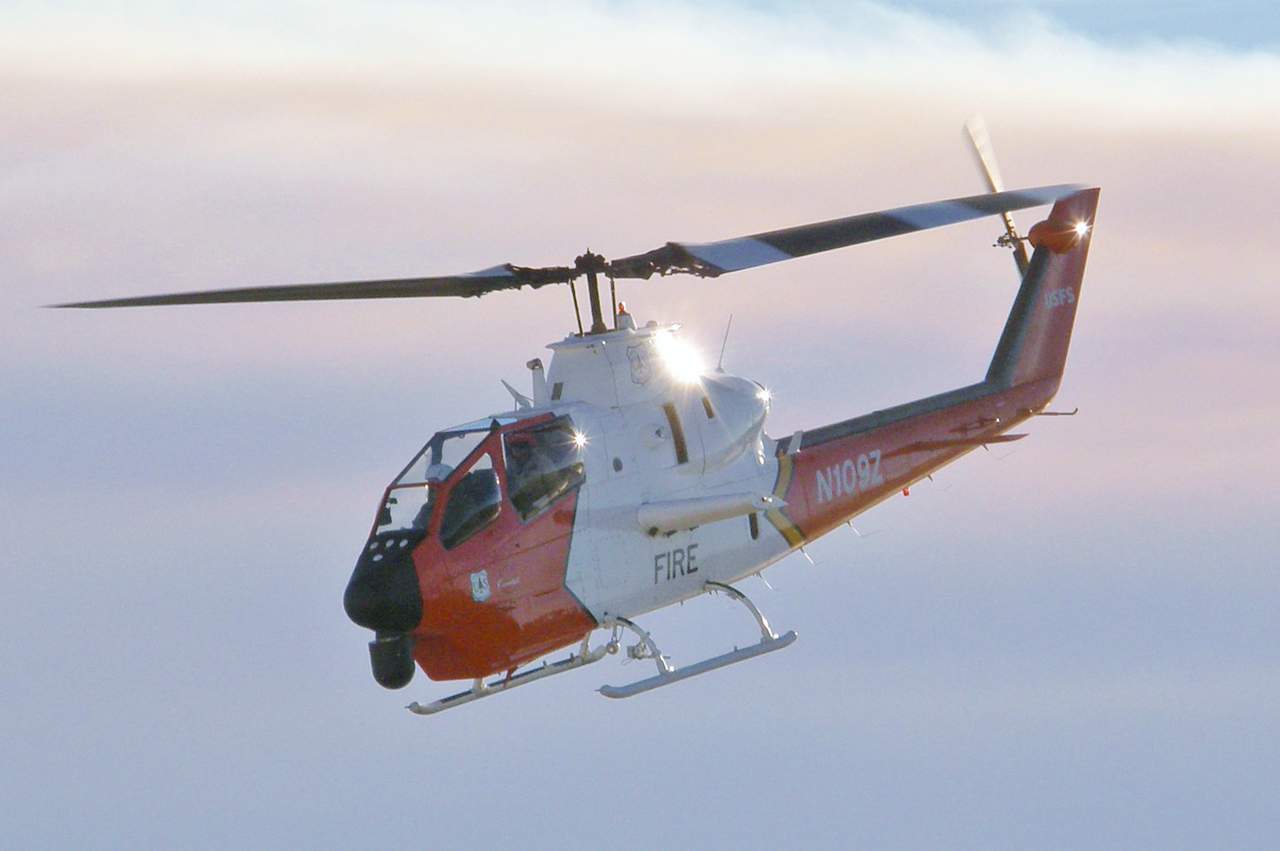
Some went to fight fires instead. The US Forest Service took 25 retired AH-1Fs in 2003 and converted them into Firewatch Cobras with infrared sensors for monitoring fires in real time, and retired the last two in October 2021.
Israel’s air force, which called the Cobra the Tzefa (Hebrew for viper), formed its first attack helicopter squadron on December 1, 1977. Its Cobras fought on the Lebanon front for more than 20 years, including heavy use against Syrian armor in the 1982 Lebanon War.
Israel later armed its Cobras with Spike missiles, then retired its last 33 from front-line service in late 2013, mainly because of budget cuts. Apaches and drones took over the mission, and 16 of the retired Cobras went to Jordan in 2014.
Turkey bought 32 ex-Army Cobras, most of them brought to AH-1F standard, and Turkish Cobras saw repeated combat against Kurdish insurgents in the 2010s. Pakistan flew its Cobras on UN duty in Somalia in 1994 and later in Sierra Leone.
Spain’s navy bought eight new AH-1Gs, designated Z.14, and retired the survivors in 1985. The Philippine Air Force received two ex-Jordanian AH-1S Cobras in 2019 and retired them in December 2024 as spare parts became hard to find.
Yes, but the single-engine Cobra is in its last years. As of September 2026, South Korea, Japan and Pakistan still operate it, and all three are replacing it.
South Korea planned to retire its AH-1S fleet between 2028 and 2031 and replace it with the new Light Armed Helicopter. After an AH-1S crashed in Gapyeong County in February 2026, killing both pilots, the Army grounded the fleet.
In September 2026 the Army attributed that crash to an engine flameout caused by a fault in the engine’s exhaust diffuser. It said it would consult the Joint Chiefs of Staff about bringing retirement forward, but announced no new date.
Japan decided in December 2022 to replace its 47 AH-1S Cobras, along with its AH-64D Apaches and OH-1 scouts, with unmanned aircraft. The plan mandates a phased retirement, and the fiscal 2026 defense budget funds five wide-area drone systems for the Ground Self-Defense Force.
Pakistan still flew AH-1F Cobras in a live-fire exercise in November 2025, alongside the Chinese Z-10ME attack helicopters it inducted that August.
Jordan, Bahrain and Kenya are also listed as current operators. Bahrain’s fleet includes AH-1Fs modernized by Turkish Aerospace Industries as the AH-1FB.
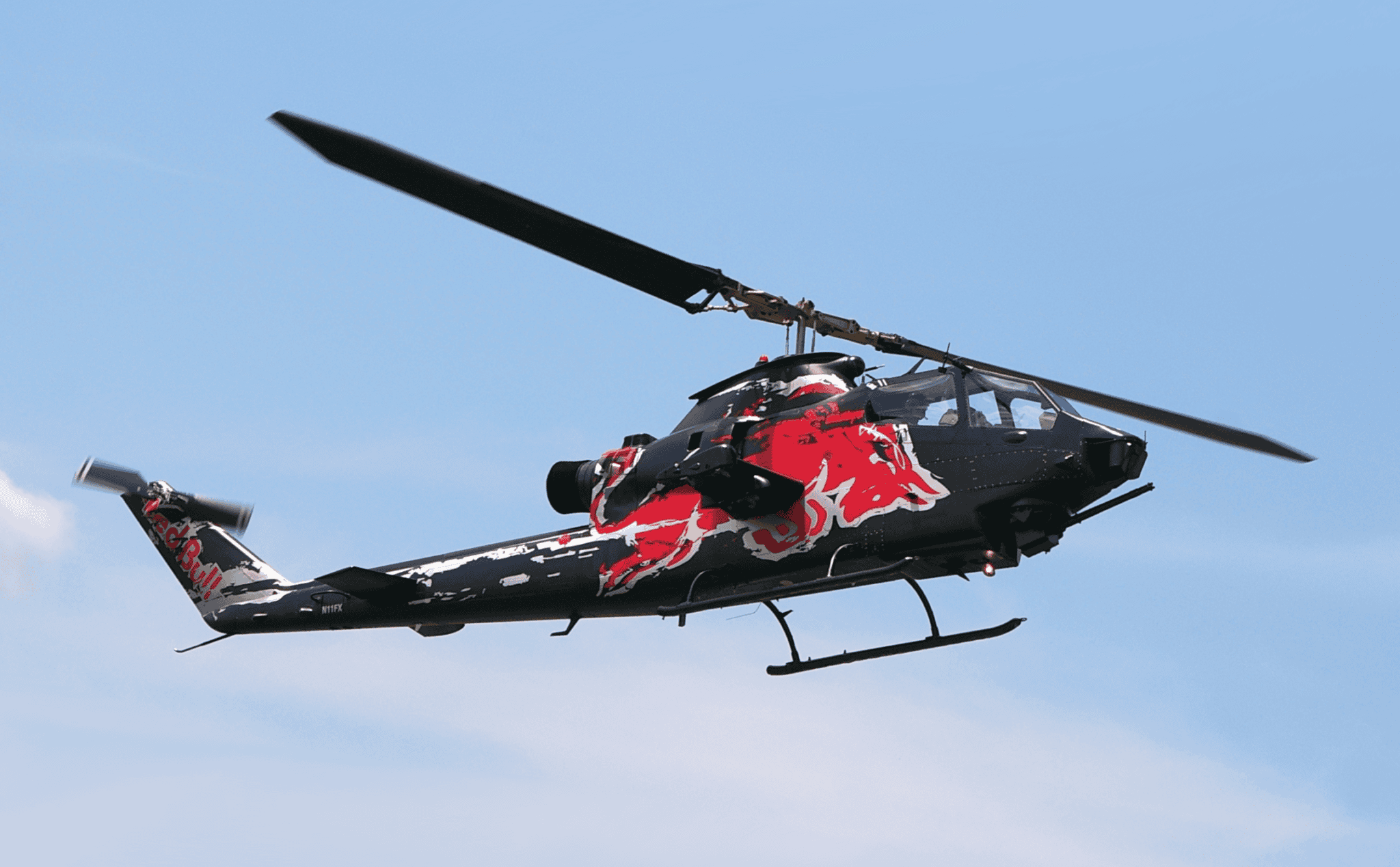
Restored Cobras also fly at air shows. The Army Aviation Heritage Foundation flies several, and Red Bull’s Flying Bulls fly a 1967-built AH-1F based at Hangar-7 in Salzburg, Austria.
The Viper carries the AH-1 designation, but it is a very different helicopter. It is the Marine Corps’ current attack helicopter and one of the mainstays of today’s Marine Corps helicopter fleet.
The Cobra has one T53 engine and a two-blade main rotor. The Viper has two General Electric T700-GE-401C engines, rated by Bell at about 1,800 shp each, and a four-blade rotor.
The difference shows in weight. Bell lists the Viper’s maximum gross weight at 18,500 pounds (8,390 kg), almost twice the AH-1G’s 9,500 lb (4,300 kg).
Bell quotes a maximum range of 310 nm for the Viper, the same figure published for the AH-1G.
The Apache was the Cobra’s replacement rather than its rival. After the Cheyenne was cancelled, the Army launched the Advanced Attack Helicopter program for a conventional, more survivable attack helicopter, and that program produced the AH-64.
The Apache has two General Electric T700 turboshafts to the Cobra’s single T53, and it entered Army service in April 1986. More than 2,700 had been delivered by March 2024, and the upgraded AH-64D Apache Longbow reached the Army in March 1997.
By 1999 the Apache had fully replaced the Cobra in the active Army. Today’s AH-64E tops our ranking of the best attack helicopters in the world.
The full specification table for the aircraft is on this page, and it describes the original AH-1G. Four of its figures need context.
The power figure is the one most often quoted differently. The panel follows the AH-1G specification block at 1,100 shp for the T53-L-13, while other published figures give the same engine 1,400 shp, and the AH-1S and AH-1F moved to the 1,800 shp T53-L-703.
The wing span and rotor row shows the 44 ft (13.4 m) main rotor, not the wings. The Cobra’s stub wings span only 10 ft 4 in (3.15 m).
The top speed in the panel is the AH-1G’s maximum level speed. Its never-exceed speed is higher, at 190 knots (219 mph, 352 km/h), but that is a limit never to be exceeded, not a speed the Cobra could hold in level flight.
Later Cobras were heavier. The Smithsonian lists its AH-1F at a gross weight of 10,000 pounds (4,535 kg), compared with 9,500 pounds for the AH-1G.
Yes, in small and shrinking numbers. As of September 2026, South Korea, Japan and Pakistan still operate single-engine Cobras and all three are replacing them, while the US Army retired its last Cobras in 2001. The US Marine Corps flies the twin-engine AH-1Z Viper, a different helicopter.
No reliable flyaway price has been published for the single-engine Cobra. We could not tie the widely repeated $11.3 million figure to any specific Cobra version or contract, so we do not publish it.
The best documented number comes from the Army’s own rebuild program: refurbishing a retired Cobra for sale abroad took about 5,500 man-hours and nearly $1 million in parts and materials per aircraft.
Yes. The Cobra was built for Vietnam, arrived there in August 1967 and flew until the US withdrawal in 1973, logging more than one million operational hours. About 300 were lost to combat and accidents.
Our ranking of today’s attack helicopters puts the Boeing AH-64E Apache Guardian first and the Bell AH-1Z Viper second. The original single-engine Cobra is no longer in that class, but it was the helicopter that created it.
The Cobra is the original single-engine, two-blade attack helicopter that entered service in 1967. The Viper is a twin-engine, four-blade development flown by the US Marine Corps, with almost twice the maximum weight.
Bell added “Cobra” to the UH-1’s Huey nickname to name its Model 209 the HueyCobra; the new gunship used the Huey’s engine, transmission and rotor. The Army used the shorter Cobra name with the AH-1G designation.
Bell built 1,116 AH-1Gs for the US Army between 1967 and 1973. New-build AH-1P, AH-1E and AH-1F batches added 341 more, Fuji built 89 in Japan, and 387 AH-1Gs were rebuilt as AH-1Fs rather than replaced.
Former military Cobras do reach private owners, and they are registered with the FAA as Bell 209s. Exporting one is harder: the Flying Bulls needed protracted export formalities to bring theirs from the US to Austria in 2021.
Sources and references used for research and fact-checking.