Military Helicopters
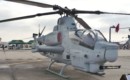
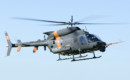
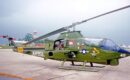
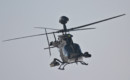
The Marine Corps' four-blade Super Huey, built as a pair with the AH-1Z Viper.
Updated: by Tim de Vries
The latest aviation news and stories sent to your inbox.
The Bell UH-1Y Venom is the twin-engine, four-blade utility helicopter of the US Marine Corps, built under the H-1 upgrade program to replace the UH-1N Twin Huey. It entered service in 2008, shares 85 percent of its parts with the AH-1Z Viper, and also flies with the Czech Air Force.
Live Fleet Activity (UH1Y)
Fetching live data…
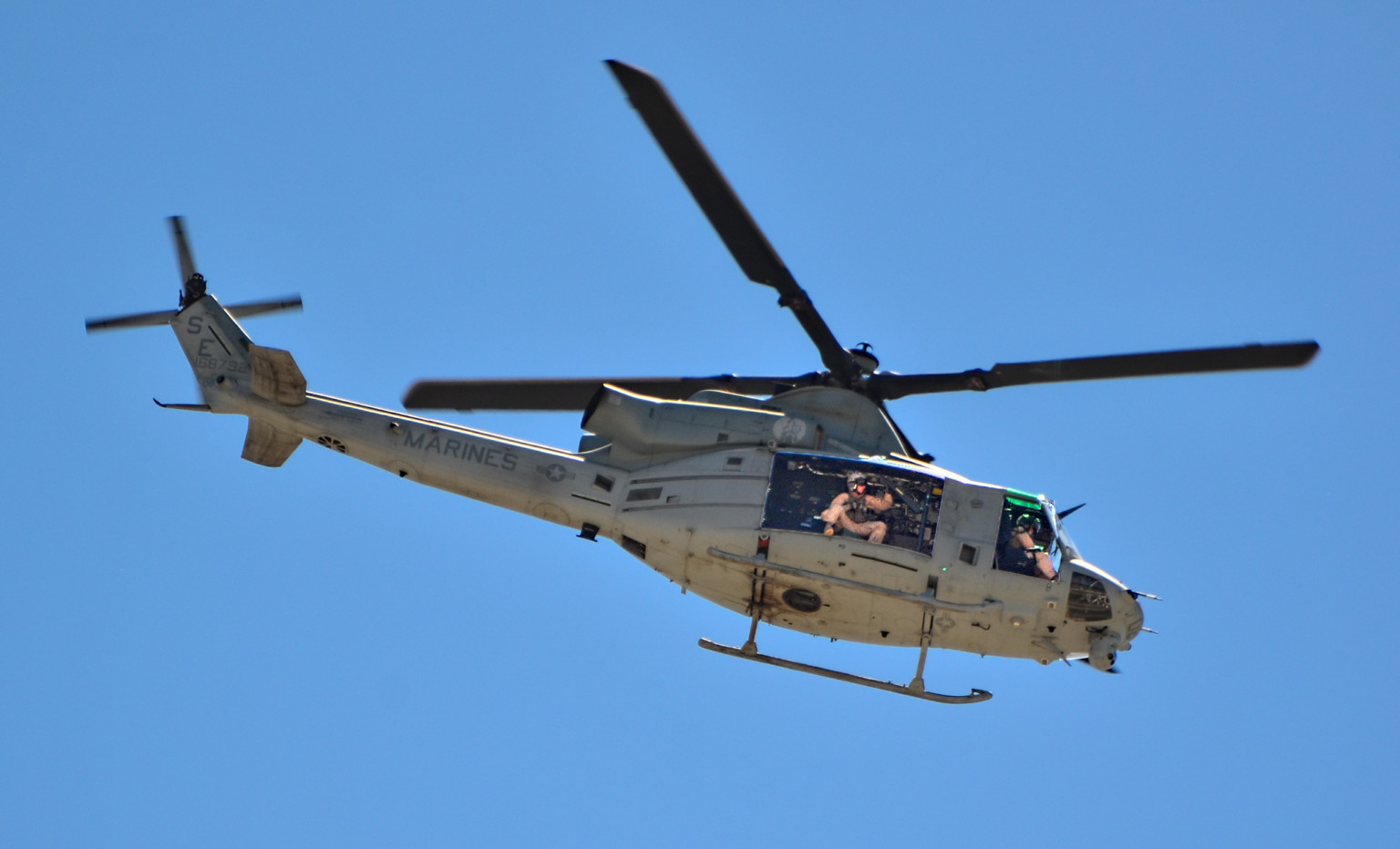


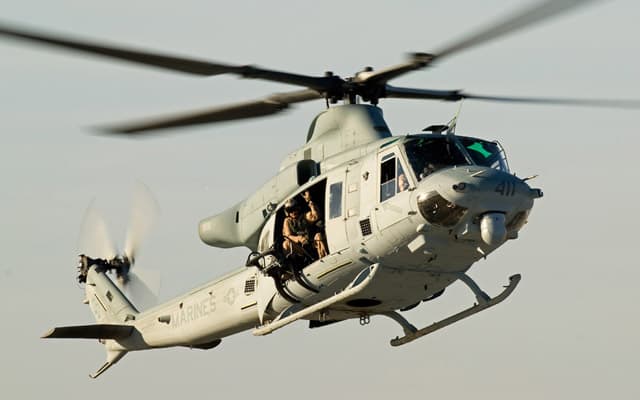
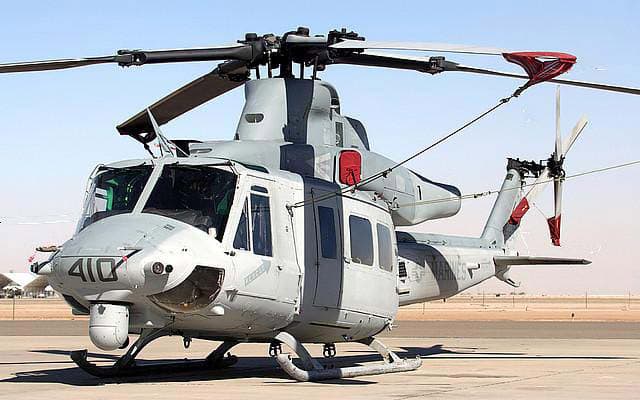

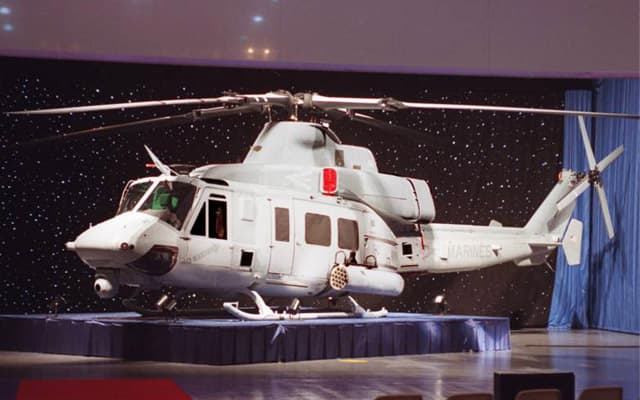
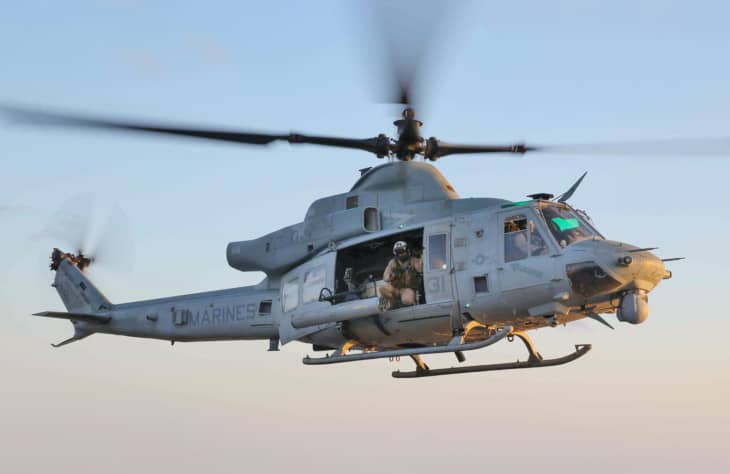
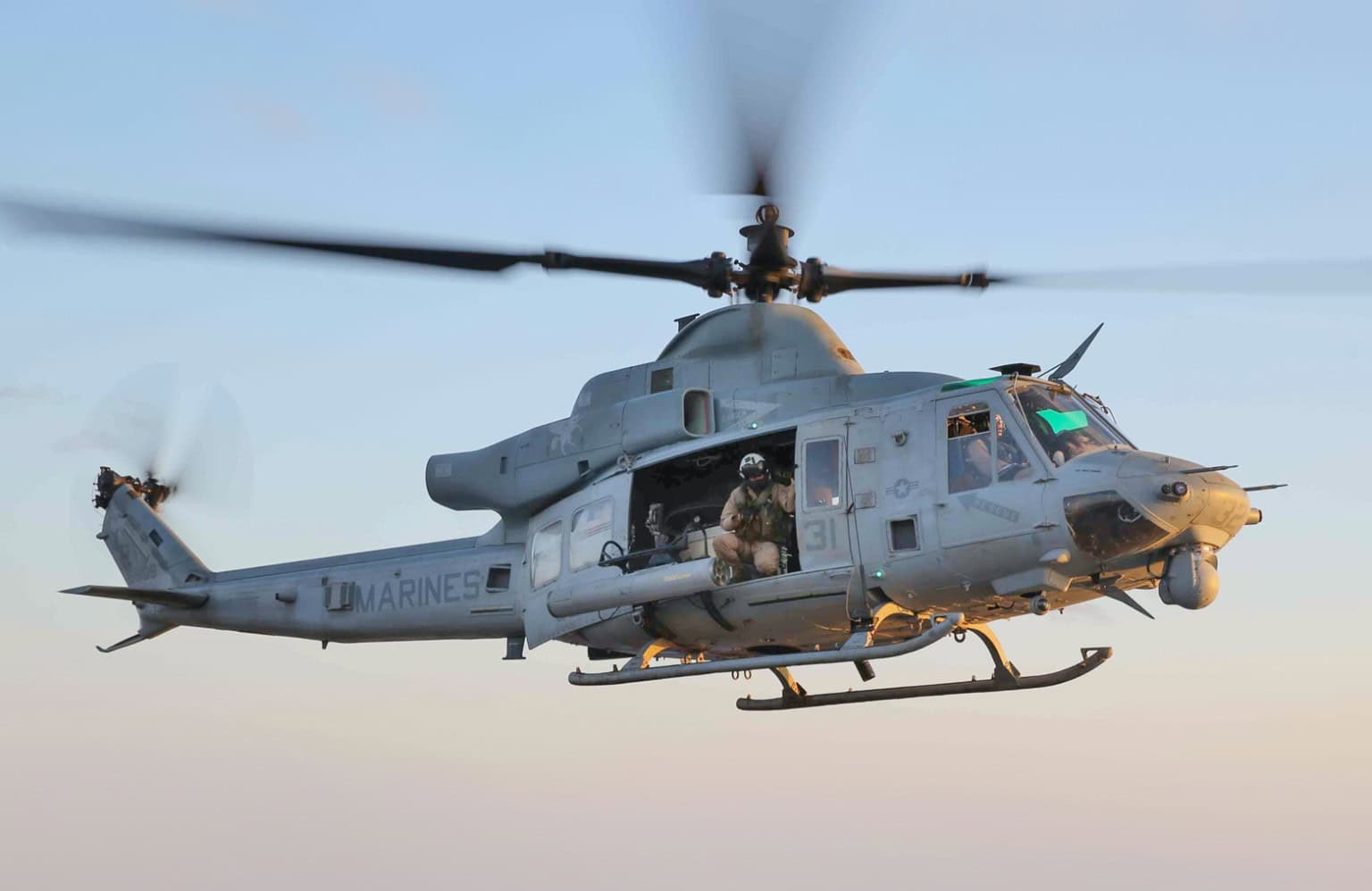
The Bell UH-1Y Venom is a twin-engine, four-blade utility helicopter built for the US Marine Corps under the H-1 upgrade program. It is one of the newest members of the Huey family, and it is also called the Super Huey, or the “Yankee” after the NATO phonetic word for its variant letter.
It replaced the Marines’ UH-1N Twin Huey, and it became the Corps’ standard utility helicopter when the last UH-1N retired in 2014. It is one of the mainstays of today’s Marine Corps helicopter fleet, flying alongside the AH-1Z Viper attack helicopter in the Marines’ light attack squadrons.
As of September 2026, the Venom flies with the US Marine Corps and the Czech Air Force. This page covers its development, design, weapons, service record and current status, and how it compares with the Viper, the older Hueys, the Black Hawk and the Bell 412.
The UH-1N entered US service in 1970. In its modified Marine Corps form it had a maximum takeoff weight of 10,500 pounds (4,763 kg) and carried six to eight combat-equipped troops.
Decades of new avionics, radios, modern door guns and safety upgrades had greatly increased the N model’s empty weight, and every pound of that came out of what it could carry.
Bell’s answer kept the Huey outline and very little else. Its 2006 UH-1Y guide says a familiar silhouette is about the only feature the Y shares with its predecessors, and claims over 170 percent more payload than the UH-1N, with almost 50 percent more range and maximum cruise speed.
The Marine Corps launched the H-1 upgrade program in 1996. Bell’s contract covered converting 100 UH-1Ns into UH-1Ys and 180 AH-1W SuperCobras into AH-1Zs.
The point was commonality. The two helicopters share a tail boom, engines, rotor system, drivetrain, avionics architecture, software, controls and displays, and Bell and the Navy put the shared parts at 85 percent.
The first UH-1Y flew on December 20, 2001. The early aircraft were rebuilt from UH-1N airframes, but in April 2005 the program won approval to build Venoms as new helicopters instead.
Developmental testing ended in early 2006, and operational evaluation began that year at Naval Air Station Patuxent River, Maryland. Bell delivered two UH-1Ys to the Marine Corps in February 2008, and the type reached initial operating capability the same year.
The Marine Corps bought 160 Venoms. The Navy dates the end of US production of the variant to 2020, and Bell restarted the line in 2021 to build eight more for the Czech Republic.
The most visible change is the rotor. The Venom has a four-blade, all-composite main rotor that Bell describes as ballistically tolerant and that can sustain a direct hit from a 23 mm round, plus a four-blade tail rotor.
The main rotor hub is bearingless, with semi-automatic blade folding, and it drives through a new, higher-output main transmission. Bell’s guide credits the new drive system with more payload, speed and range, and with lower vibration.
Power comes from two General Electric T700-GE-401C turboshafts, the same engines the AH-1Z uses. The differences between turboshafts and other aircraft engines are covered in our guide to types of helicopter engines.
The fuselage is 21 inches (53 cm) longer than the UH-1N’s, stretched just forward of the door post, and the stretch houses avionics racks. Most of the structure is new, built to handle the higher gross weight and crash loads.
Fuel sits in self-sealing, crashworthy tanks inside the fuselage. An onboard inert gas system stops fuel vapor from building up in the tanks, where it could become a fire hazard after a hit.
Two 77-gallon (291 liter) auxiliary tanks can be hung on the external stores racks for longer missions.
The two pilots sit in a night vision goggle compatible glass cockpit, with two 8 by 8 inch (20 by 20 cm) color multifunction displays at each crew station. Thales supplies the TopOwl helmet-mounted sight and display.
Under the nose sits a FLIR Systems BRITE Star turret, which combines a triple field-of-view thermal imager, a high-resolution TV camera and an eye-safe laser rangefinder and designator.
Standard protection includes an infrared suppressor on the engine exhausts, radar, laser and missile warning systems, and countermeasure dispensers. The crew seats are armored and energy-absorbing, and the cabin floor is built to take the crash loads of 10 energy-absorbing troop seats.
The Navy lists a full load as a pilot, co-pilot, crew chief, gunner and eight combat-equipped Marines. Bell’s specification page gives the same split, four crew and eight troops.
The cabin takes either 10 crashworthy troop seats or six litters for casualty evacuation. Two fast-rope gantries are permanently installed and deploy from inside the cabin, and the external cargo hook is rated at 5,000 pounds (2,270 kg).
Bell also offers kits for a rescue hoist and firefighting. The Navy lists the Venom’s missions as close air support, combat assault support, search and rescue and casualty evacuation, armed escort and reconnaissance, command and control, and special operations support.
The Venom is classed as a utility helicopter, one of the types of military helicopters built to carry people and cargo, but it is well armed. Two external stations carry 2.75 in (70 mm) Hydra 70 rockets or APKWS II laser-guided rockets.
Two pintle mounts take the 7.62 mm M240D machine gun, the .50 caliber GAU-21, or the 7.62 mm GAU-17/A Gatling gun. The GAU-17/A can fire up to 3,000 rounds a minute.
The Venom reached initial operating capability in 2008, and in January 2009 it deployed for the first time with the 13th Marine Expeditionary Unit. The first UH-1Ys arrived in Afghanistan the same year.
During the Taliban raid on Camp Bastion in Afghanistan in September 2012, Marine UH-1Ys and AH-1W SuperCobras flew air support for the base’s defenders while under fire.
The Marine Corps retired its last UH-1N in August 2014, making the UH-1Y its standard utility helicopter.
Venom detachments deploy with Marine Expeditionary Units for ship-based amphibious exercises and operations. In August 2026, a Venom crew chief with Littoral Combat Force-24 was photographed firing an M134 Minigun during a maritime interdiction operation in the Pacific, part of a US counter-drug effort.
Under its Force Design 2030 restructuring, the Marine Corps said in 2021 that it expected to put 26 UH-1Ys and 27 AH-1Zs into long-term storage, trimming the Venom fleet by about 22 percent. The squadrons cut included HMLA-367 at Marine Corps Air Station Kaneohe Bay, Hawaii.
Some of that capacity came back. HMLA-269 at Marine Corps Air Station New River, North Carolina, was deactivated in December 2022 and reactivated on July 1, 2024, after the Corps found persistent demand for light attack and utility aviation.
The fleet is now being modernized. Bell has finished the first UH-1Y and the first AH-1Z upgraded under SPINE, short for Structural and Power Improvements for NextGen Effects, which reinforces key structure and upgrades engine performance and the electrical system.
The work took 19 months at Bell’s plant in Amarillo, Texas, and both helicopters went to Naval Air Station Patuxent River for flight tests. Upgraded aircraft are to reach the Marine Corps under future contracts, and no fleet numbers had been announced as of September 2026.
In October 2017 the US government notified Congress of a possible sale of 12 UH-1Ys to the Czech Republic, with related systems and support, for $575 million. In 2019 Prague chose a mixed H-1 fleet instead: eight UH-1Y Venoms and four AH-1Z Vipers.
The first two helicopters, both Vipers, arrived in August 2023, and the last two Venoms arrived in June 2024, completing all 12. They serve with the 221st Helicopter Squadron at Náměšť nad Oslavou air base.
A second batch is on the way. In August 2024 Prague signed a contract to overhaul and upgrade two more UH-1Ys and six AH-1Zs formerly flown by the Marine Corps, with the Venoms due in late 2027.
On July 23, 2026, a Czech UH-1Y crashed at the Náměšť base, killing one soldier and injuring the other four people aboard. It fell from about 160 feet (50 m) while landing after a routine training flight, and the military grounded all of its H-1 helicopters.
The Czech Vipers based in Poland returned to alert duty first, and flights at Náměšť resumed on August 26, 2026, after extraordinary technical inspections, organizational measures and crew training. At that point the investigating commission had not published its final conclusions on the cause.
On October 20, 2025, Bell signed letters of intent in Washington with Ukraine’s Ministry of Economy, Ecology and Agriculture and UkraineInvest. They cover industrial cooperation as part of a potential purchase of AH-1Z and UH-1Y helicopters through US Foreign Military Sales.
Bell’s announcement gave no quantity. Bahrain, the Navy’s other listed international H-1 partner, operates only the Viper.
Yes. As of September 2026, the Venom is the Marine Corps’ standard utility helicopter, it flies with the Czech Air Force, and its SPINE upgrade is in flight test.
The Navy dates the end of US production of new Venoms to 2020, and the last new Czech Venoms were delivered in June 2024. The fleet’s next step is modernization rather than new aircraft.
The two are built as a pair. They share engines, rotor system, tail boom and cockpit systems, and the Navy gives both a maximum takeoff weight of 18,500 lb (8,400 kg).
The difference is the fuselage. The AH-1Z Viper is a two-seat attack helicopter crewed by a pilot and a co-pilot/gunner, while the Venom has a cabin for troops and cargo.
The Viper flies close air support, anti-armor, anti-air and armed escort missions. The Venom shares several of those missions but adds troop transport, casualty evacuation and special operations support.
The Venom descends from the original Huey, the single-engine UH-1 Iroquois, through the twin-engine UH-1N. The Navy counts more than 16,000 H-1 family helicopters, Hueys and Cobras, produced since 1956.
Against the UH-1N it replaced, maximum takeoff weight rose from 10,500 to 18,500 pounds. The N model’s Pratt & Whitney Canada T400 coupled powerplant, rated at 1,250 shp in Marine service, gave way to two T700s.
From the outside, the easiest ways to tell them apart are the Y model’s four-blade rotor, its slightly longer cabin and its larger twin engine exhaust vents.
The UH-60M Black Hawk is the bigger aircraft. Its published specification gives a maximum takeoff weight of 22,000 pounds (9,980 kg) and room for 11 seated troops, against 18,500 pounds and eight combat-equipped Marines for the Venom.
Both run on General Electric T700 engines, the Black Hawk on the T700-GE-701C/D at 1,902 shp each. For the Marine Corps, the Venom’s advantage is commonality with the AH-1Z, which the H-1 program was designed around to reduce operating costs.
The two are related, but the Bell 412 is a separate helicopter from Bell’s civil line. It is a development of the Bell 212, the civil model derived from the UH-1N, with a four-blade composite rotor, and it first flew in August 1979.
The 412 keeps the Pratt & Whitney Canada PT6T Twin-Pac powerplant and has a maximum takeoff weight of 11,900 pounds (5,400 kg), well below the Venom’s 18,500 pounds. More than 1,300 had been delivered by 2022.
The full specification table for the UH-1Y is on this page. Several of its figures need context.
The range row shows Bell’s maximum range of 325 nautical miles. A combat mission is much shorter: Bell quotes a combat radius of 119 nautical miles, and Wikipedia’s specification gives a combat range of 130 nautical miles with a 2,182 lb (990 kg) payload.
The speed row shows Bell’s maximum speed of 170 knots indicated airspeed, and Bell gives cruise speed as 147 knots true airspeed. Wikipedia’s specification, drawn from older Bell and reference figures, lists 164 knots maximum and 158 knots cruise, with a never-exceed speed of 198 knots.
The power row is Bell’s uninstalled rating of 1,800 shp per engine. The same T700-GE-401C is rated at 1,546 shp for continuous use and 1,828 shp for two and a half minutes.
The max payload row, 6,650 lb (3,000 kg), is roughly the gap between the 11,840 lb (5,371 kg) empty weight and the 18,500 lb maximum takeoff weight. That useful load includes fuel and crew, so the troops and cargo a Venom can carry depend on how much fuel it takes on.
The fuel row, 390 gal (1,500 L), is Bell’s current internal fuel figure. The wing span and rotor row shows the 48 ft 10 in (14.88 m) main rotor.
Yes. As of September 2026 it is the US Marine Corps’ standard utility helicopter and also serves with the Czech Air Force, which resumed H-1 flights on August 26, 2026, after grounding its fleet following a fatal crash in July.
We found no current flyaway price for the UH-1Y published by Bell or the Navy, so we do not list one in the specification table. The best documented figure is the 2017 US notification of a possible sale of 12 UH-1Ys to the Czech Republic for $575 million, which also covered related systems and support.
Yes. The Marine Corps flies the UH-1Y Venom, and the US Air Force still flies UH-1N Hueys while the MH-139 Grey Wolf, operational since August 2026, takes over their nuclear missile security role.
Our ranking of the best attack helicopters in the world puts the Boeing AH-64E Apache Guardian first and the Bell AH-1Z Viper, the Venom’s attack partner, second. The Venom itself is a utility helicopter, though it carries rockets and machine guns.
The Marine Corps bought 160, and Bell restarted production in 2021 to build eight for the Czech Republic, the last delivered in June 2024. That makes 168 Venoms delivered to the two customers, although the first Marine aircraft were rebuilt from UH-1Ns before production switched to new airframes.
Eight combat-equipped Marines, with a pilot, co-pilot, crew chief and gunner, according to the Navy. The cabin can instead hold six litters for casualty evacuation.
Bell gives a maximum speed of 170 knots (196 mph, 315 km/h). Its cruise speed is 147 knots (169 mph, 272 km/h).
The Venom is a utility helicopter with a cabin for eight troops, while the Viper is a two-seat attack helicopter. They share 85 percent of their parts, including the engines and rotor system.
Venoms have gone only to governments. The Czech helicopters came through the US Foreign Military Sales program, and Ukraine’s 2025 letters of intent with Bell concern a potential Foreign Military Sale.
Sources and references used for research and fact-checking.