

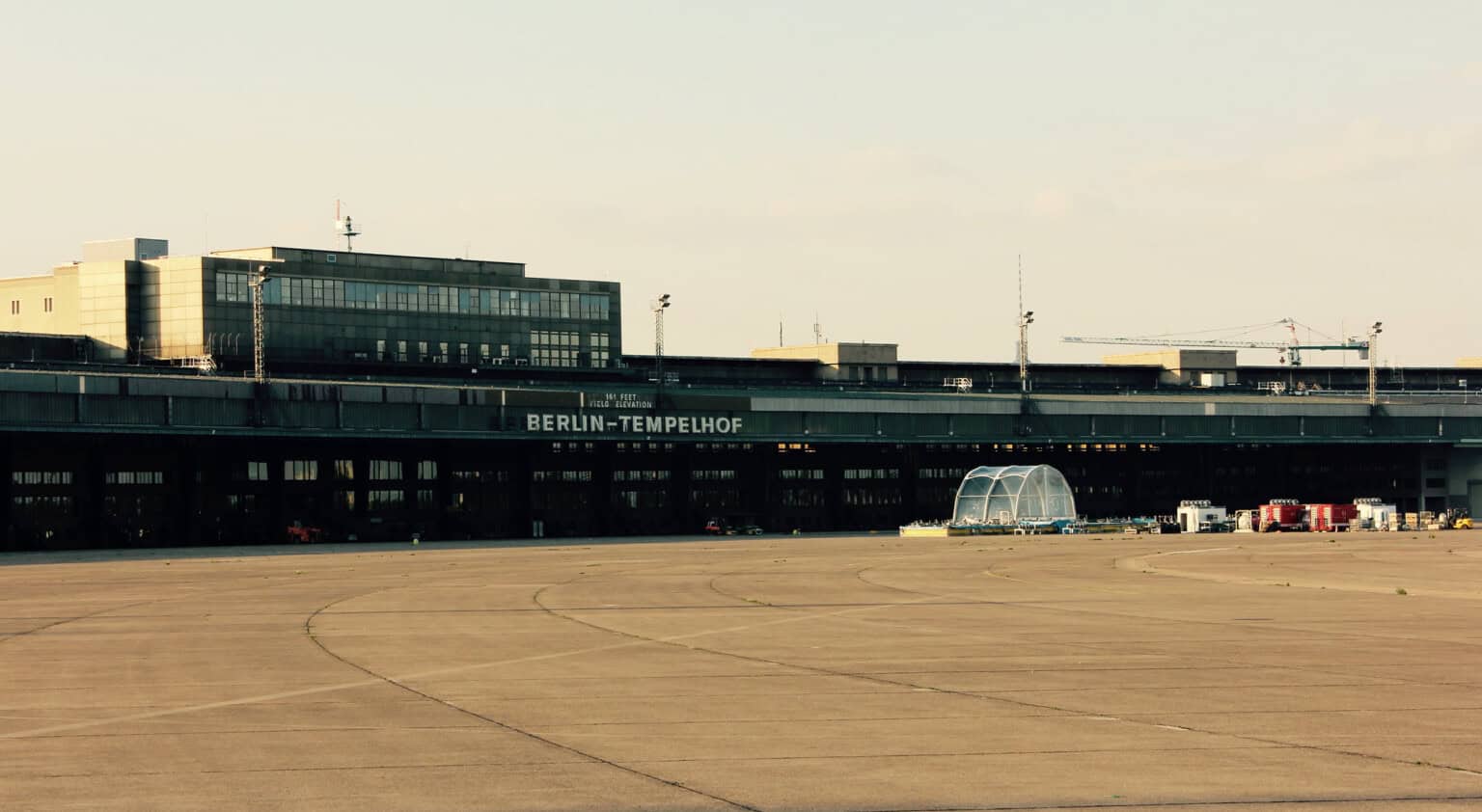
Table of Contents
There is a park in Istanbul where a runway used to be. In Hong Kong, families now live in high-rise apartments built over the spot where jets once skimmed the rooftops of Kowloon. In Denver, an entire neighborhood of houses, schools, and coffee shops sits on the footprint of an airport that handled millions of passengers a year.
These were not small, failing airfields. Several were among the busiest and most beloved airports in the world. And then, more or less overnight, their cities walked away from them.
It seems like an extraordinary thing to do. An airport is one of the most expensive pieces of infrastructure a city ever builds. So why do cities keep abandoning them, and where do all those flights go? The answer is less about failure than most people assume, and it explains a lot about how modern aviation actually grows.
The short answer
Cities rarely abandon an airport because it stopped working. They abandon it because it worked too well and then ran out of room to grow.
Most famous airport closures follow the same script. The airport fills up, the city has grown right up against its fences so it cannot expand, and building a bigger replacement somewhere else turns out to be cheaper and safer than fighting for a few more acres in the middle of town. Once the new airport opens, keeping the old one running rarely makes financial sense, so it closes.
The pattern in one line
An airport is abandoned when demand outgrows a site that can no longer be expanded. The city builds a larger replacement on cheaper land farther out, moves the flights, and closes the original. Success, not failure, is usually the trigger.
They run out of room, and the city will not let them grow
The single biggest reason is capacity. Airports are built on the edge of a city, the city expands toward them, and within a few decades the airport is boxed in by houses, roads, and businesses on every side. There is nowhere left to add a runway or a terminal.
Denver’s old Stapleton airport is the textbook case. Its parallel runways sat too close together to allow simultaneous landings in bad weather, which meant crippling delays every time snow or fog rolled in. The airport was hemmed in by neighborhoods that had grown around it, and expanding meant fighting years of noise complaints and lawsuits.
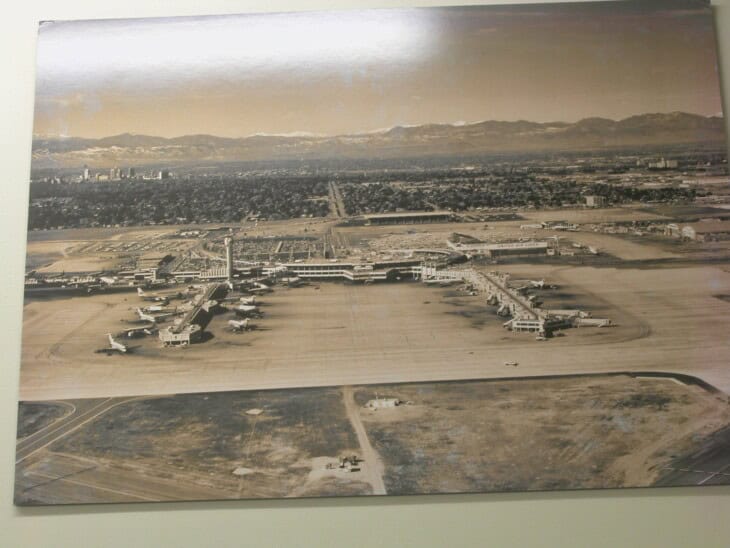
So Denver did not expand. It built Denver International Airport on open prairie to the east and closed Stapleton in 1995. The payoff is visible in the numbers: the new airport now handles more than 1,200 flights a day across 53 airlines, a volume the cramped old field could never have absorbed.
Hong Kong faced the same squeeze in an even tighter space. Its legendary Kai Tak airport had a single runway jutting into the harbor and an approach so tight that pilots banked hard over apartment blocks to line up with the pavement. There was no room to grow in the middle of a dense city, so Hong Kong reclaimed land from the sea to build a whole new airport on an island and closed Kai Tak overnight in July 1998.
Noise, safety, and politics finish the job
Capacity is the main driver, but it rarely acts alone. Once a city has grown around an airport, three other pressures pile on and make relocation the easier path.
The first is noise. An airport that was on the outskirts when it opened is now surrounded by residents who did not sign up to live under a flight path, and the political pressure to move the noise elsewhere becomes relentless.
The second is safety. Approaches like Kai Tak’s, threading between buildings, leave no margin for error. Regulators and airlines increasingly prefer a clean, open site where an aircraft in trouble is not lined up with a neighborhood.
The third is money and prestige. A modern hub airport is a national showpiece and an economic engine. Istanbul closed its historic Ataturk airport in 2019 not because it was broken, but because Turkey wanted one of the largest hub airports on earth, and Ataturk could never have been that. The switch was so deliberate that the new field even inherited Ataturk’s famous IST airport code.
These moves are staggering feats of logistics. The Istanbul relocation, nicknamed the “Big Migration,” shifted an entire airline hub in a single 45-hour operation, trucking tens of thousands of tons of equipment across the city while the airport was briefly closed to flights.
The same story has played out in city after city. A few of the best-known examples:
| Old airport (city) | Closed | Replaced by |
|---|---|---|
| Stapleton (Denver) | 1995 | Denver International Airport |
| Kai Tak (Hong Kong) | 1998 | Hong Kong International Airport (Chek Lap Kok) |
| Mirabel (Montreal) | 2004 | Flights returned to Montreal-Trudeau (Dorval) |
| Tempelhof (Berlin) | 2008 | Consolidated into Berlin’s other airports, then BER |
| Ataturk (Istanbul) | 2019 | Istanbul Airport |
| Tegel (Berlin) | 2020 | Berlin Brandenburg Airport (BER) |
Not every replacement works: the ghost-airport risk
Replacing an airport is a huge gamble, and cities do not always win it. The classic warning is Montreal Mirabel, an airport so ambitious it became a cautionary tale.
Opened in 1975 and meant to be the largest airport in the world, Mirabel sat about 24 miles (39 km) from downtown Montreal. The promised high-speed rail link and highways that were supposed to connect it to the city were never built, so travelers were stuck with a long, awkward road trip to catch a flight.
Passengers and airlines quietly refused to cooperate. They kept favoring the older, closer Dorval airport, and once international flights were allowed to return there, Mirabel’s traffic collapsed. It handled its last scheduled passengers in 2004 and now works only as a cargo and industrial field. The lesson is blunt: an airport nobody can conveniently reach is an airport nobody uses, no matter how large you build it. It is the same distance problem that plagues secondary airports named after cities they sit far away from.
When the new airport is the disaster
Berlin’s replacement hub, BER, was supposed to open in 2011. It finally opened in October 2020, nine years late, after fire-safety systems alone racked up more than 20,000 defects. Its budget ballooned from roughly 1 billion euros to over 5 billion. Replacing an airport is one of the hardest projects a city can attempt.
Even when the plan is sound, the execution can go badly wrong. Berlin spent nearly a decade unable to open its finished-looking replacement while its aging airports limped along, a reminder that abandoning an old airport only works if the new one actually opens on time.
The myth: that the old airport was failing
The instinctive assumption is that a closed airport must have been a dud: too small, too dangerous, too unpopular to survive. Usually the opposite is true.
The misconception
People assume cities close airports because those airports failed. In reality, most were closed because they were too successful for their site. The airport was thriving, but the land underneath it could not keep up with the demand.
Kai Tak was one of the busiest airports in Asia and is still remembered fondly by pilots and passengers for its jaw-dropping approach. Stapleton was a major national hub. Ataturk was a proud, historic gateway. None of them closed because travelers stopped coming.
They closed because they were victims of their own success. The demand kept rising, the surrounding city kept growing, and the physical site simply could not hold both. Abandoning the airport was not an admission of defeat. It was the price of handling more flights than the old ground could ever fit.
What happens to the land
A closed airport leaves behind an enormous, flat, well-connected patch of land in or near the heart of a city. That is some of the most valuable real estate imaginable, and it rarely sits empty for long.
Denver turned Stapleton into a full residential district, now home to thousands of families where jets once taxied. Hong Kong redeveloped Kai Tak into housing, a sports park, and a cruise terminal built along the old runway. Istanbul converted much of the Ataturk site into a sprawling public garden.
In a sense, the land is never really abandoned at all. The runways go quiet, but the ground gets a second life, often housing far more people than the airport ever served in a day. It is a very different fate from the world’s oldest airports, which earned their place in history by never closing.
Tempelhof: the airport Berliners refused to build on
Berlin’s story did not end with Tegel and the botched opening of BER. The city actually closed two airports on its way to consolidating its flights, and the first is now one of the most striking abandoned airports anywhere.
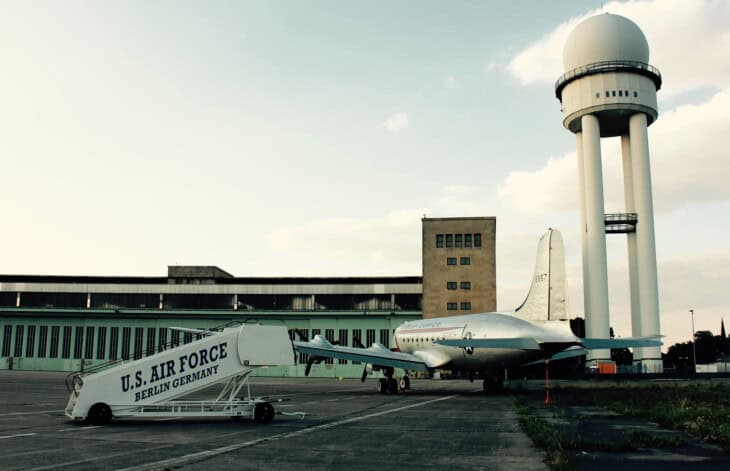
Tempelhof sat almost in the center of Berlin, boxed in by the city on every side, and it carried enormous history. Its vast curved terminal is one of the largest buildings in Europe, and in 1948 and 1949 the airport was the lifeline of the Berlin Airlift, when Allied aircraft landed around the clock to supply a blockaded city.
None of that history saved it from the usual squeeze. Tempelhof was too small and too hemmed in to grow, and it closed to flights in 2008 as Berlin pushed to consolidate everything at one new airport. Its runways fell silent right in the middle of a capital city.
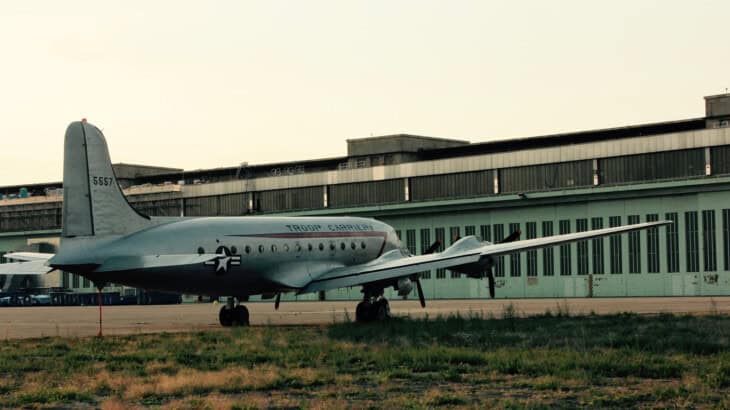
What happened next is the real twist. Rather than sell the land for offices and apartments, Berlin opened the old airfield as a public park in 2010, and then, in a 2014 referendum, residents voted to ban construction on it altogether. Today people cycle, skate, and fly kites down the old runways where airliners once touched down.
A city chose empty runways over new housing
In a 2014 referendum, about 68 percent of Berliners voted to keep Tempelhof as open parkland and forbid any building on it, even with the city short of housing. The result is one of the largest inner-city open spaces in Europe: a decommissioned airport preserved almost exactly as it was left.
Not every city that outgrows an airport tears the old one down, of course. Some keep both and split the traffic between them, which is why places like Tokyo run two big airports side by side rather than picking one. Another example is Bangkok’s DMK and BKK airports.
So the next time you read that a city is “closing” its airport, resist the urge to picture a ghost town of cracked runways. More often it is the exact opposite: an airport that grew so busy the city outgrew the ground beneath it, moved the flights somewhere with room to breathe, and handed the old site back to the people who live there.
Sources and references used for research and fact-checking.
- Wikipedia, Kai Tak Airport
- Wikipedia, Stapleton International Airport
- FlightGlobal, Full transfer of flights from Ataturk to new Istanbul hub begins
- Wikipedia, Montreal-Mirabel International Airport
- German Federal Government, On 31 October 2020 Berlin Brandenburg Airport opened
- AeroCorner, Denver International Airport (DEN)
Get the Newsletter
The latest aviation news and stories sent to your inbox.
About the Author

Tim is the owner and lead editor of AeroCorner since 2019, overseeing aviation content covering aircraft, airlines, airports, and the broader aviation industry. Through years of researching, writing, editing, and publishing aviation-focused content, he has developed extensive practical knowledge of commercial aviation and air travel. Based in Asia and a frequent traveler himself, Tim also brings firsthand passenger experience to AeroCorner’s coverage. Outside of publishing, he has also explored aviation firsthand through hands-on flight training in New Zealand.