

Table of Contents
Hartsfield-Jackson Atlanta International is the busiest airport in the United States. It boarded 51,459,786 passengers in 2025, roughly 10 million more than second-place Dallas/Fort Worth.
This list ranks all 30 of the country’s busiest airports by passenger boardings, the measure the Federal Aviation Administration uses in its own rankings. The figures below are the FAA’s preliminary calendar year 2025 numbers, published on July 8, 2026.
One thing to know before you scroll: the busiest airport by passengers is not the busiest by flights. Chicago O’Hare handles more takeoffs and landings than Atlanta, and it is closing fast on second place.
| Rank | Airport | Code | 2025 boardings | vs 2024 |
|---|---|---|---|---|
| 1 | Atlanta | ATL | 51,459,786 | -2.00% |
| 2 | Dallas/Fort Worth | DFW | 41,297,009 | -2.49% |
| 3 | Chicago O’Hare | ORD | 40,680,735 | +5.46% |
| 4 | Denver | DEN | 39,976,695 | -0.09% |
| 5 | Los Angeles | LAX | 36,497,303 | -3.35% |
| 6 | New York JFK | JFK | 30,792,806 | -2.14% |
| 7 | Orlando | MCO | 27,999,709 | +0.50% |
| 8 | Las Vegas | LAS | 26,531,765 | -6.07% |
| 9 | Miami | MIA | 26,450,972 | -0.52% |
| 10 | San Francisco | SFO | 26,251,850 | +4.68% |
| 11 | Charlotte | CLT | 25,873,555 | -9.29% |
| 12 | Seattle-Tacoma | SEA | 25,417,071 | +0.01% |
| 13 | Phoenix | PHX | 25,094,817 | -1.96% |
| 14 | Newark | EWR | 23,464,492 | -4.40% |
| 15 | Houston Bush | IAH | 23,265,028 | -0.36% |
| 16 | Boston | BOS | 21,021,153 | -0.33% |
| 17 | Minneapolis-St Paul | MSP | 17,488,261 | -3.14% |
| 18 | Detroit | DTW | 16,294,768 | +1.14% |
| 19 | New York LaGuardia | LGA | 16,278,532 | -2.61% |
| 20 | Fort Lauderdale | FLL | 15,646,752 | -8.48% |
| 21 | Philadelphia | PHL | 14,779,849 | -2.13% |
| 22 | Washington Dulles | IAD | 13,859,569 | +6.59% |
| 23 | Salt Lake City | SLC | 13,429,128 | -0.84% |
| 24 | San Diego | SAN | 12,675,684 | -0.82% |
| 25 | Nashville | BNA | 12,549,304 | +4.07% |
| 26 | Baltimore/Washington | BWI | 12,274,134 | -7.17% |
| 27 | Tampa | TPA | 12,110,427 | +0.29% |
| 28 | Reagan National | DCA | 12,003,594 | -5.86% |
| 29 | Austin | AUS | 10,651,727 | -0.25% |
| 30 | Honolulu | HNL | 10,430,353 | -0.18% |
How this ranking works
Airports are ranked by enplanements, meaning passengers who board a flight there. It is the measure the FAA publishes and the one used to classify an airport as a large hub. Total passenger counts you see elsewhere are roughly double these numbers, because they count arrivals as well, but they produce almost the same order. Cargo tonnage and flight counts are different measures with different winners, and both are covered further down.
1. Hartsfield-Jackson Atlanta International Airport (ATL)
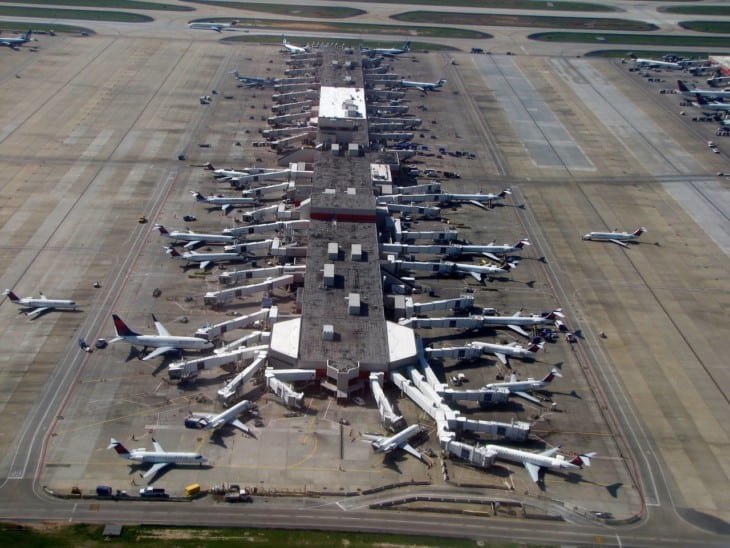
Atlanta boarded 51,459,786 passengers in 2025. That is about 10.2 million more than Dallas/Fort Worth, a lead no other ranking on this page comes close to matching.
Traffic actually fell 2.00% against 2024, and Atlanta still won by a distance. The reason is Delta, which runs Atlanta as its primary connecting hub, so a large share of those passengers never leave the airport.
Atlanta is also the busiest airport on earth, a title it has held every year since 1998 apart from 2020. We dug into the geography and airline strategy behind that in why the world’s busiest airport is in Atlanta.
2. Dallas/Fort Worth International Airport (DFW)
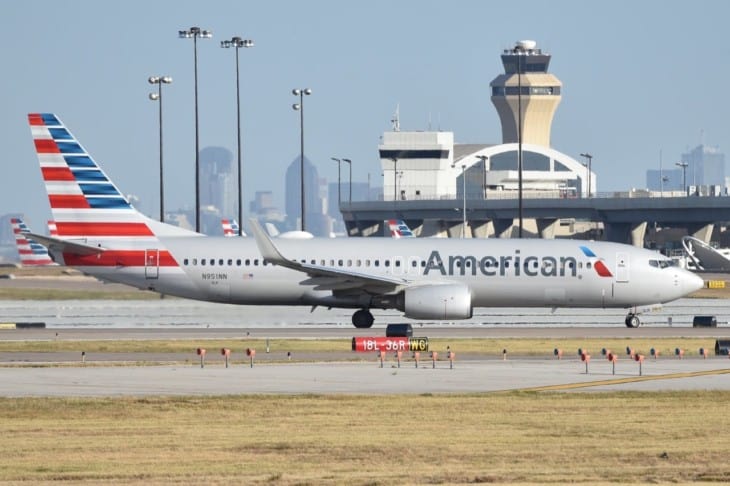
Dallas/Fort Worth boarded 41,297,009 passengers in 2025, down 2.49% on the year. It is American Airlines’ largest hub and the anchor of the carrier’s domestic network.
Second place is no longer safe. O’Hare grew while DFW shrank, and the gap between them closed to about 616,000 boardings, or roughly 1.5%.
3. Chicago O’Hare International Airport (ORD)
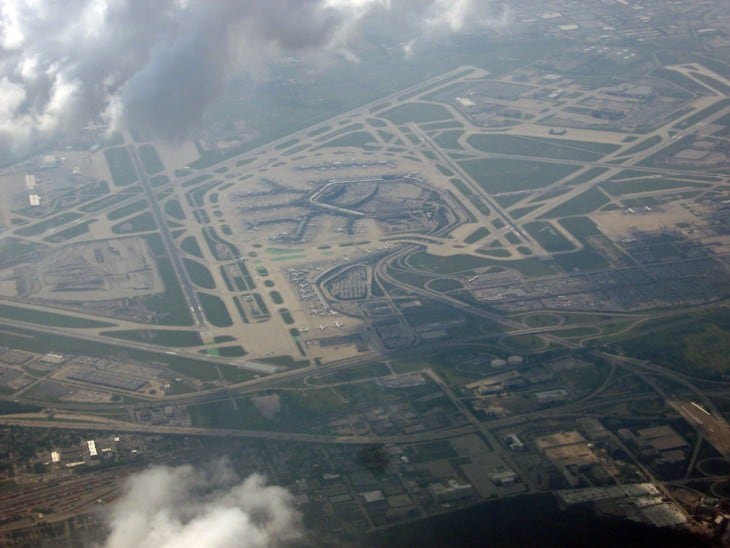
O’Hare boarded 40,680,735 passengers in 2025, a rise of 5.46%. It was the only airport in the top five that grew at all, and by some margin the strongest performer among the big hubs.
By a different measure, O’Hare is already the country’s number one. It handled 857,392 aircraft movements in 2025, more than any other US airport, and it leads our own ranking of US airports by flights per day.
Most flights does not mean most passengers
O’Hare runs more flights than Atlanta but boards 10.8 million fewer passengers a year. O’Hare’s schedule leans heavily on smaller regional jets feeding United and American, while Atlanta fills bigger aircraft on Delta’s connecting banks. More departures, fewer seats per departure.
4. Denver International Airport (DEN)

Denver boarded 39,976,695 passengers in 2025, down just 0.09%, which is as close to flat as a hub this size gets. United, Southwest and Frontier all treat it as a major base.
Denver is also the largest airport in the country by land, covering 33,531 acres (52.4 square miles). That makes it fourth by passengers but first by sheer size, a split we cover in America’s biggest airport is not its busiest.
5. Los Angeles International Airport (LAX)
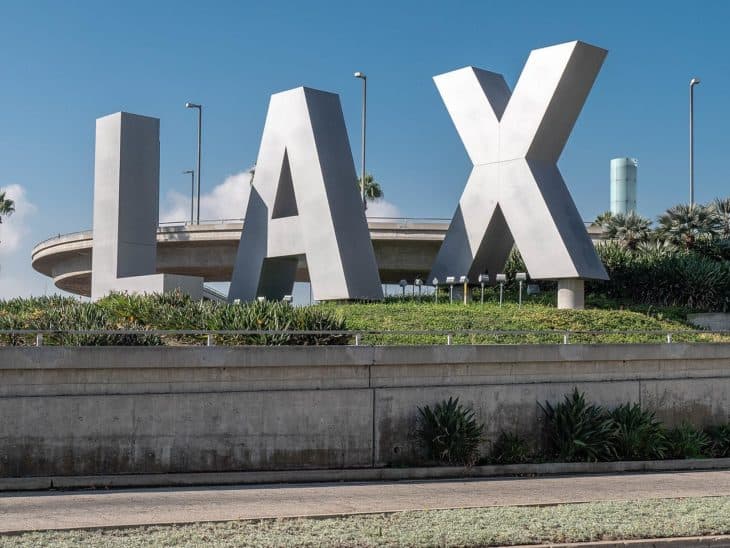
Los Angeles boarded 36,497,303 passengers in 2025, a drop of 3.35%. That was the largest decline of any airport in the top five.
LAX is unusual among the leaders because it is not built around one carrier’s connecting bank. Most of its passengers start or end their journey in Southern California, which makes it more exposed to local demand than a pure hub.
6. John F. Kennedy International Airport (JFK)
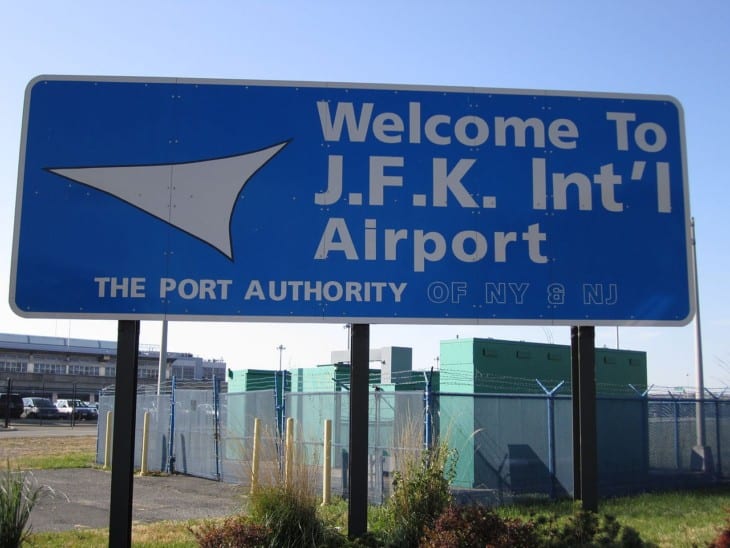
JFK boarded 30,792,806 passengers in 2025, down 2.14%. It is the busiest of New York’s three major airports, ahead of Newark at 14th and LaGuardia at 19th.
Add the three together and the New York region boards more than 70 million passengers a year, which would comfortably top this list as a single system. The FAA ranks airports individually, so the region’s traffic stays split three ways.
7. Orlando International Airport (MCO)
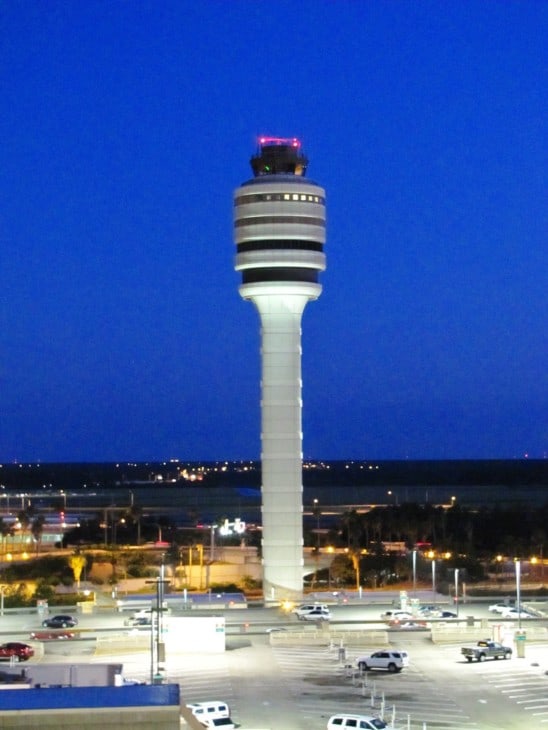
Orlando boarded 27,999,709 passengers in 2025, up 0.50%. It is the busiest airport in Florida and one of the few leisure-driven airports near the top of the table.
Almost every other airport in the top ten is a connecting hub for a major airline. Orlando gets there on people who actually want to be in Orlando, which is a rarer thing at this scale.
8. Harry Reid International Airport, Las Vegas (LAS)
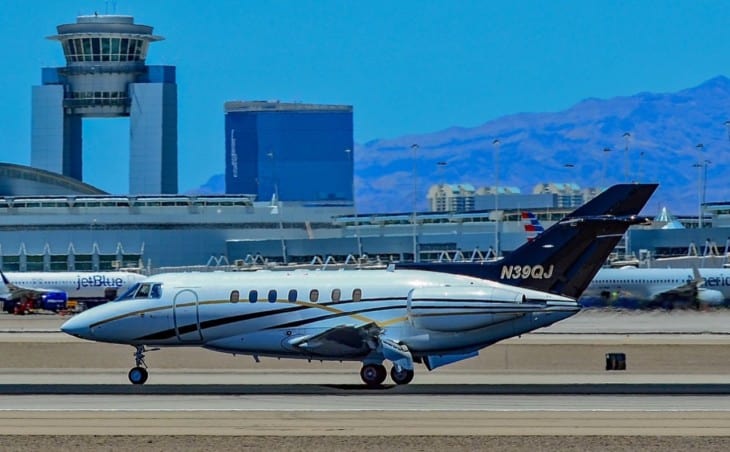
Las Vegas boarded 26,531,765 passengers in 2025, down 6.07%. That was the steepest fall anywhere in the top ten.
Like Orlando, Harry Reid runs on discretionary travel rather than connecting traffic. That makes it one of the quickest airports on this list to feel a softer year.
9. Miami International Airport (MIA)
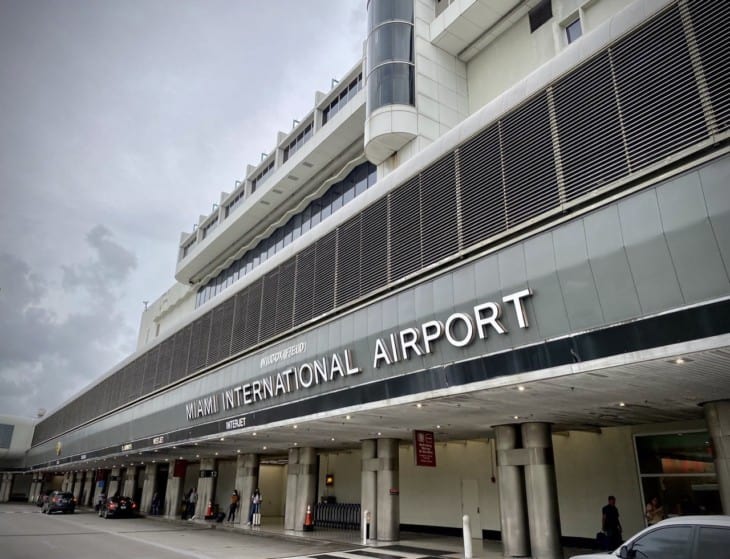
Miami boarded 26,450,972 passengers in 2025, down a marginal 0.52%. It is American Airlines’ gateway to Latin America and the Caribbean.
Miami’s international share is what sets it apart from the domestic hubs above it. A far larger proportion of its traffic crosses a border than at Atlanta, Dallas or Denver.
10. San Francisco International Airport (SFO)
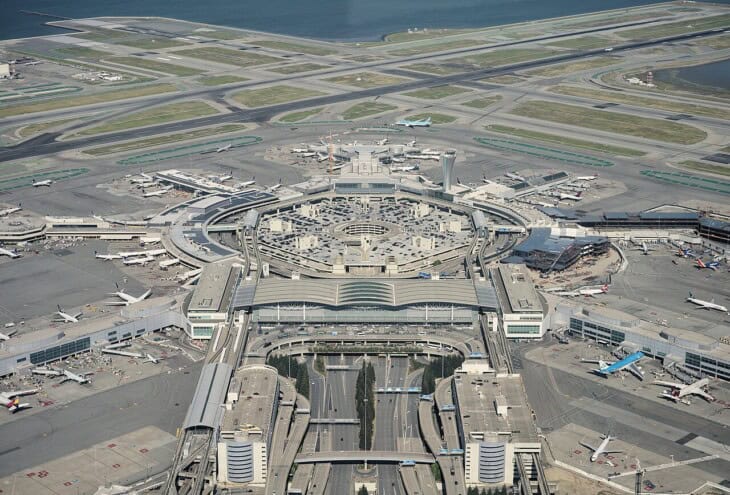
San Francisco boarded 26,251,850 passengers in 2025, up 4.68%. That was the second-strongest growth rate in the top ten behind O’Hare.
SFO sits just 199,000 boardings behind Miami. On these margins the two could swap places in the 2026 data without anything dramatic happening at either airport.
The rest of the top 20
Charlotte sits 11th on 25,873,555 boardings after a 9.29% fall, the sharpest decline anywhere in the top 20. Seattle-Tacoma follows in 12th, essentially unchanged at 25,417,071.
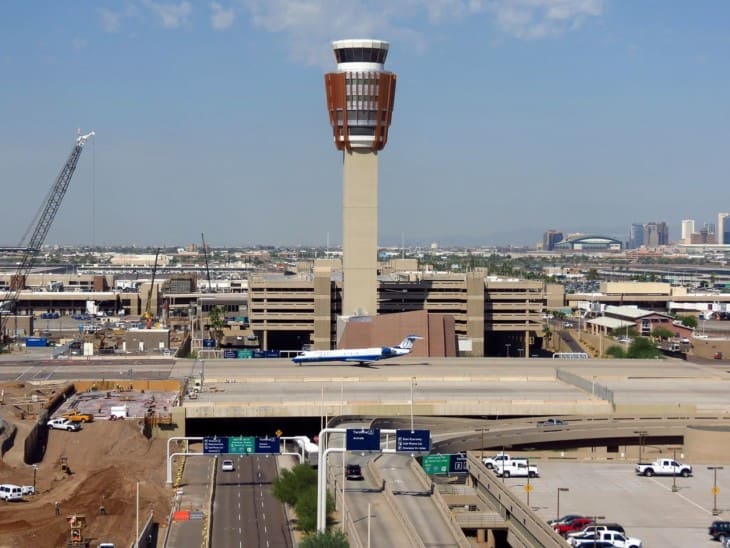
Phoenix Sky Harbor is 13th on 25,094,817, down 1.96%. Newark is 14th on 23,464,492 and Houston’s George Bush Intercontinental 15th on 23,265,028.
Boston takes 16th on 21,021,153, then Minneapolis-St Paul on 17,488,261 and Detroit on 16,294,768. Detroit was one of the few risers in this group, up 1.14%.
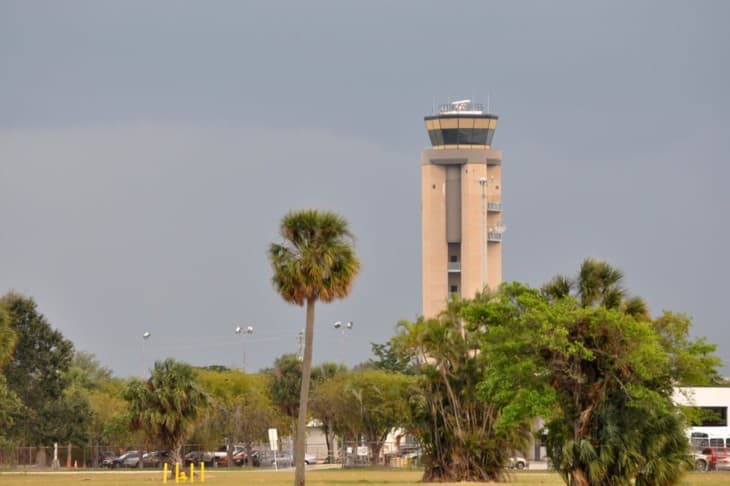
LaGuardia is 19th on 16,278,532, and Fort Lauderdale rounds out the top 20 on 15,646,752 after an 8.48% drop. Below them, Washington Dulles was the standout riser of the whole top 30, up 6.59% to 13,859,569.
How the biggest US airports compare worldwide
Global rankings count total passengers, arrivals included, so the numbers roughly double. Airports Council International published its final 2025 figures on July 15, 2026, and five US airports made the world top 20.
| World rank | Airport | 2025 total passengers | vs 2024 |
|---|---|---|---|
| 1 | Atlanta (ATL) | 106,302,208 | -1.6% |
| 4 | Dallas/Fort Worth (DFW) | 85,660,127 | -2.5% |
| 6 | Chicago O’Hare (ORD) | 84,856,018 | +6.0% |
| 10 | Denver (DEN) | 82,427,962 | +0.1% |
| 13 | Los Angeles (LAX) | 73,709,594 | -3.8% |
Atlanta is the only airport anywhere to clear 100 million passengers in 2025. Dubai was second worldwide on 95.2 million and Tokyo Haneda third on 91.7 million.
Busiest by a different measure
Change the measure and the winner changes with it. By aircraft movements, O’Hare leads on 857,392 flights in 2025. By land area, Denver wins at 33,531 acres.
By freight tonnage the leaderboard is unrecognizable, with cargo hubs most travelers never pass through taking the top places. None of them appears in the passenger top ten.
Busiest is also not the same as worst. Passenger volume says nothing about delays, security queues or how the place feels at 6am, which is why our ranking of the worst US airports looks nothing like this one.
What about the biggest airport?
Denver covers 33,531 acres, about 52.4 square miles, and is comfortably the largest airport in the United States by land. It still ranks only fourth by passengers. Size buys room for runways and future terminals, not traffic, and the two rankings have never matched.
The FAA’s own hub classifications follow these same boardings. Every airport in the top 30 is a large hub, meaning it handles at least 1% of all US passenger boardings, one of several categories the FAA uses to classify airports.
FAQ
Sources and references used for research and fact-checking.
- Federal Aviation Administration, Preliminary CY 2025 Enplanements at All Airports by State and Airport, July 8, 2026
- Airports Council International, World's Busiest Airports: Atlanta Holds, Asia Climbs
- Wikipedia, List of busiest airports by passenger traffic
- Wikipedia, List of the busiest airports in the United States
- Simple Flying, 6 Largest Airports In The US By Passenger Volume
- Wikipedia, Denver International Airport
Get the Newsletter
The latest aviation news and stories sent to your inbox.
About the Author

Tim is the owner and lead editor of AeroCorner since 2019, overseeing aviation content covering aircraft, airlines, airports, and the broader aviation industry. Through years of researching, writing, editing, and publishing aviation-focused content, he has developed extensive practical knowledge of commercial aviation and air travel. Based in Asia and a frequent traveler himself, Tim also brings firsthand passenger experience to AeroCorner’s coverage. Outside of publishing, he has also explored aviation firsthand through hands-on flight training in New Zealand.