

Table of Contents
The site was bought in the 1980s, shelved for decades, and finally built for a city whose only big airport has to close every night.
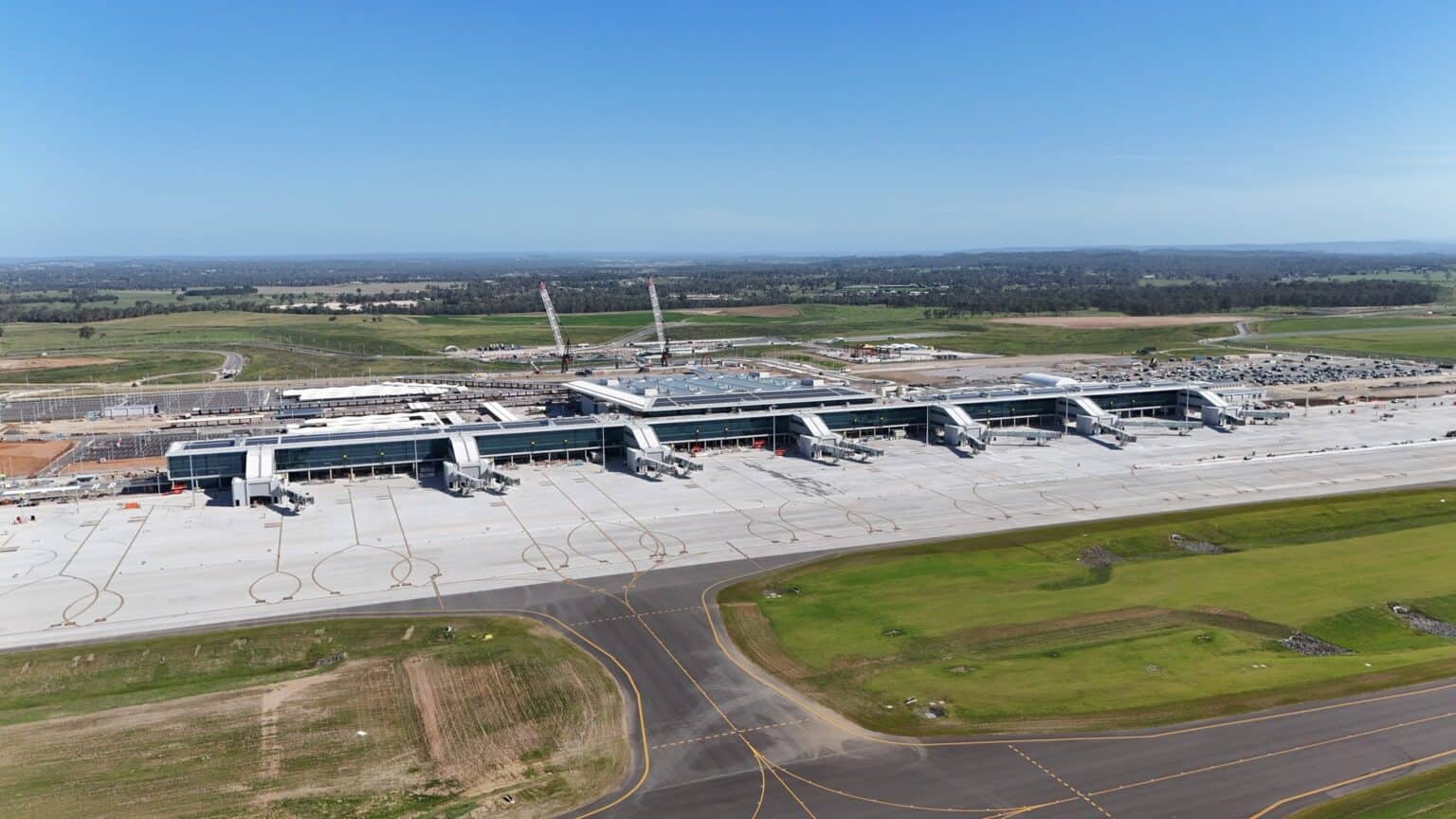
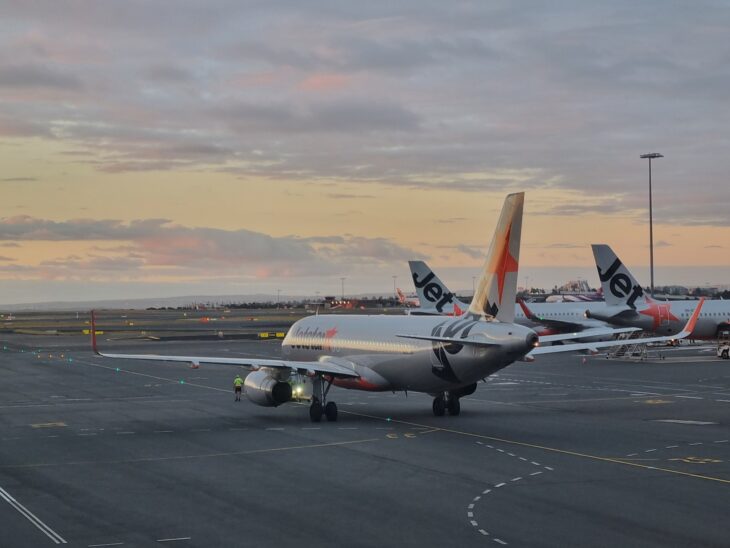
Western Sydney International (Nancy-Bird Walton) Airport opened to passengers on Sunday, Oct. 25, 2026, when a sold-out Jetstar flight, JQ362, took off for the Gold Coast. It ended a search for a second Sydney airport that governments started in 1946.
ABC News called it the first service from a major new Australian airport in more than 50 years. The new airport runs 24 hours a day. Sydney Kingsford Smith, the city’s airport since 1920, has been shut to most jets between 11 p.m. and 6 a.m. since 1995.
Why Sydney’s Second Airport Took 80 Years
The first study came in 1946. According to the Australian Parliament’s own chronology, it weighed Towra Point in Botany Bay, Bankstown and Mascot, and governments went on discussing Towra Point until 1968 before environmental problems ruled it out.
On Aug. 28, 1973, transport minister Charlie Jones announced that Galston, north-west of the city, had been chosen. It was never built. On Feb. 17, 1986, the government picked Badgerys Creek instead and started buying land straight away.
Canberra spent about A$170 million acquiring and developing the site over the next decade. Then it decided a third runway at Kingsford Smith was the better answer, and work at Badgerys Creek stopped.
The Howard government looked at the Holsworthy army base and dropped it. In December 2000 it decided not to build a second airport at all, and in 2002 the transport minister told Parliament that Kingsford Smith could handle demand for the next decade.
A 3,200-page federal and state study in 2012 found Badgerys Creek “clearly the best site.” The transport minister who released it, Anthony Albanese, said the government still would not build there and would plan for Wilton, further south, instead.
The Abbott government finally designated Badgerys Creek on April 15, 2014, and construction began in September 2018. Albanese, now prime minister, stood at the opening and called it Australia’s best airport “without question.”

The Numbers Behind Western Sydney International
The airport sits about 28 miles (45 km) west of Sydney’s city center, near Luddenham and Badgerys Creek. Stage one is a single runway and a single terminal handling both domestic and international flights.
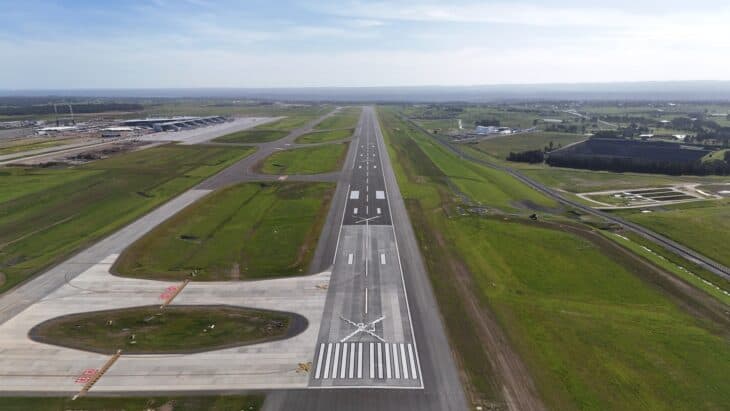

That runway is 12,139 feet (3,700 m) long and built to Code F, the category for the largest airliners flying, including the Boeing 747 and Airbus A380.
The terminal is about the size of Adelaide Airport’s, built for roughly 10 million passengers a year. Airport CEO Simon Hickey told ABC News that WSI will not start at that number and should get close to it in the early to mid 2030s.
The long-term plan is much bigger. With more terminals and a second runway, the airport projects it could handle 82 million passengers a year by the 2060s, close to the more than 84 million that London Heathrow handled in 2025.
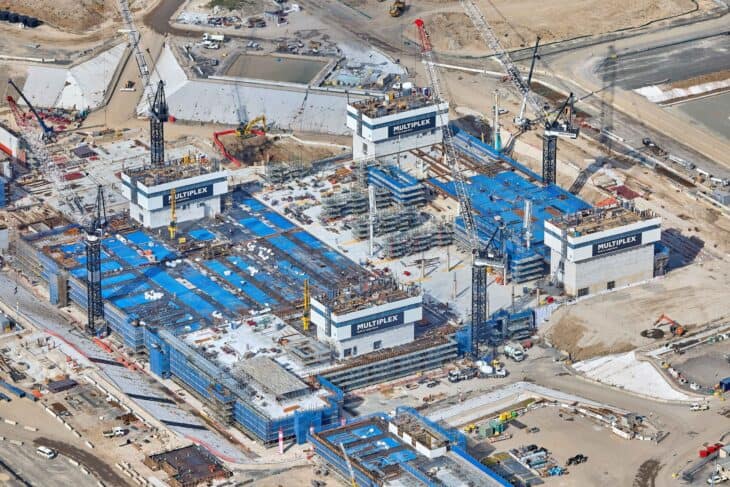
The federal government committed up to A$5.3 billion to build the airport in its 2017 budget, through a new company, WSA Co. About 10,000 workers built it, around half of them from Western Sydney, Hickey said.
Freight came first. Qantas Freight began regular services on July 27, 2026, three months before the first passenger left the terminal.
Why a Curfew-Free Airport Changes Sydney
Kingsford Smith’s curfew comes from the Sydney Airport Curfew Act 1995. From 11 p.m. to 6 a.m., only a short list of aircraft may operate there: emergency flights, small noise-certified propeller planes and jets, aircraft with a special dispensation, and a few weekly BAe 146 freighters.

A breach can bring a fine of more than A$1.1 million. A flight that arrives before 6 a.m. has to hold or divert, so long-haul timetables into Sydney are built around the closed hours.
The daytime is capped too. Kingsford Smith is limited to 80 aircraft movements an hour, and in 2012 Albanese ruled out the joint study’s recommendation to raise that to 85.
Western Sydney has no curfew. The curfew law says that once the minister declares the new airport ready for night movements, Kingsford Smith loses its exceptions for freight, propeller and small-jet aircraft. The transport department says WSI is intended to become Sydney’s overnight freight airport from Nov. 1, 2026.
Passengers will see it in departure times. Singapore Airlines’ SQ202 is scheduled to leave Western Sydney at 11:55 p.m. and land at Changi at 5:05 a.m., and the airline says that late-night capacity is what makes its connections through Changi work. Kingsford Smith allows no take-offs at all in the hour before midnight.
Qatar Airways’ QR906 is timetabled to land at 11:45 p.m. when it starts flying Doha to Western Sydney in December 2027. At Kingsford Smith, that would be a curfew arrival, allowed only for a limited number of approved international flights in the shoulder hour.
Who Flies From Western Sydney Now
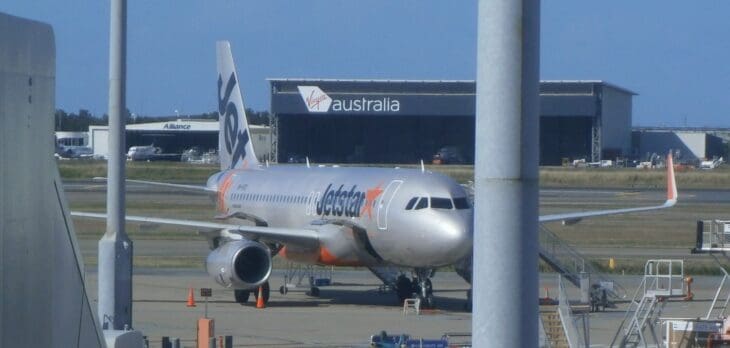
Jetstar opened the airport with an Airbus A320. It starts with up to 14 return flights a week to Melbourne, four to the Gold Coast and three to Brisbane.

Air New Zealand’s three-times-a-week service to Auckland was scheduled to start on Oct. 26, the day after opening. Singapore Airlines follows on Nov. 23, 2026, with a daily Airbus A350-900 carrying 303 seats, 40 of them in business class.
QantasLink arrives on March 28, 2027, with four flights a week each to Melbourne and Brisbane. Qatar Airways starts three weekly flights on Dec. 15, 2027.
Getting there is still by road. The Sydney Metro airport line is not open yet, so a free WSI Link shuttle runs nonstop between the terminal and St Marys station in the meantime.
Albanese’s claim that this is Australia’s best airport will be tested against the places that top the world’s best airports rankings. Most of those are judged on terminals and transit, and WSI’s rail link has not arrived.
What it has instead is time. Sydney spent 80 years arguing about where a second airport should go, and the one it built is open in the seven hours a night that the first one is not.
Sources and references used for research and fact-checking.
- ABC News, Western Sydney International Airport opens to passengers, with its first commercial flights
- Department of Infrastructure, Transport, Regional Development, Communications, Sport and the Arts, Western Sydney Airport set to open
- Department of Infrastructure, Transport, Regional Development, Communications, Sport and the Arts, Curfew at Sydney Kingsford Smith Airport
- Parliament of Australia, Parliamentary Library, Second Sydney Airport: A Chronology (Background Paper 20, 1997-98)
- Wikipedia, Proposals for a second Sydney airport
- Wikipedia, Western Sydney Airport
- Wikipedia, Sydney Airport
- Executive Traveller, Qatar Airways to fly to Western Sydney Airport
- Singapore Airlines, Singapore Airlines To Launch Daily Services To Western Sydney International Airport In November 2026
- Australian Aviation, WSI opening date revealed as Jetstar to fly first passenger service
Get the Newsletter
The latest aviation news and stories sent to your inbox.
About the Author

Tim is the owner and lead editor of AeroCorner since 2019, overseeing aviation content covering aircraft, airlines, airports, and the broader aviation industry. Through years of researching, writing, editing, and publishing aviation-focused content, he has developed extensive practical knowledge of commercial aviation and air travel. Based in Asia and a frequent traveler himself, Tim also brings firsthand passenger experience to AeroCorner’s coverage. Outside of publishing, he has also explored aviation firsthand through hands-on flight training in New Zealand.