

Table of Contents
The FAA put its concern in writing in 1995. Closing the gap took a Pentagon objection, two ballot measures, a 10-year moratorium and 33 months of construction.
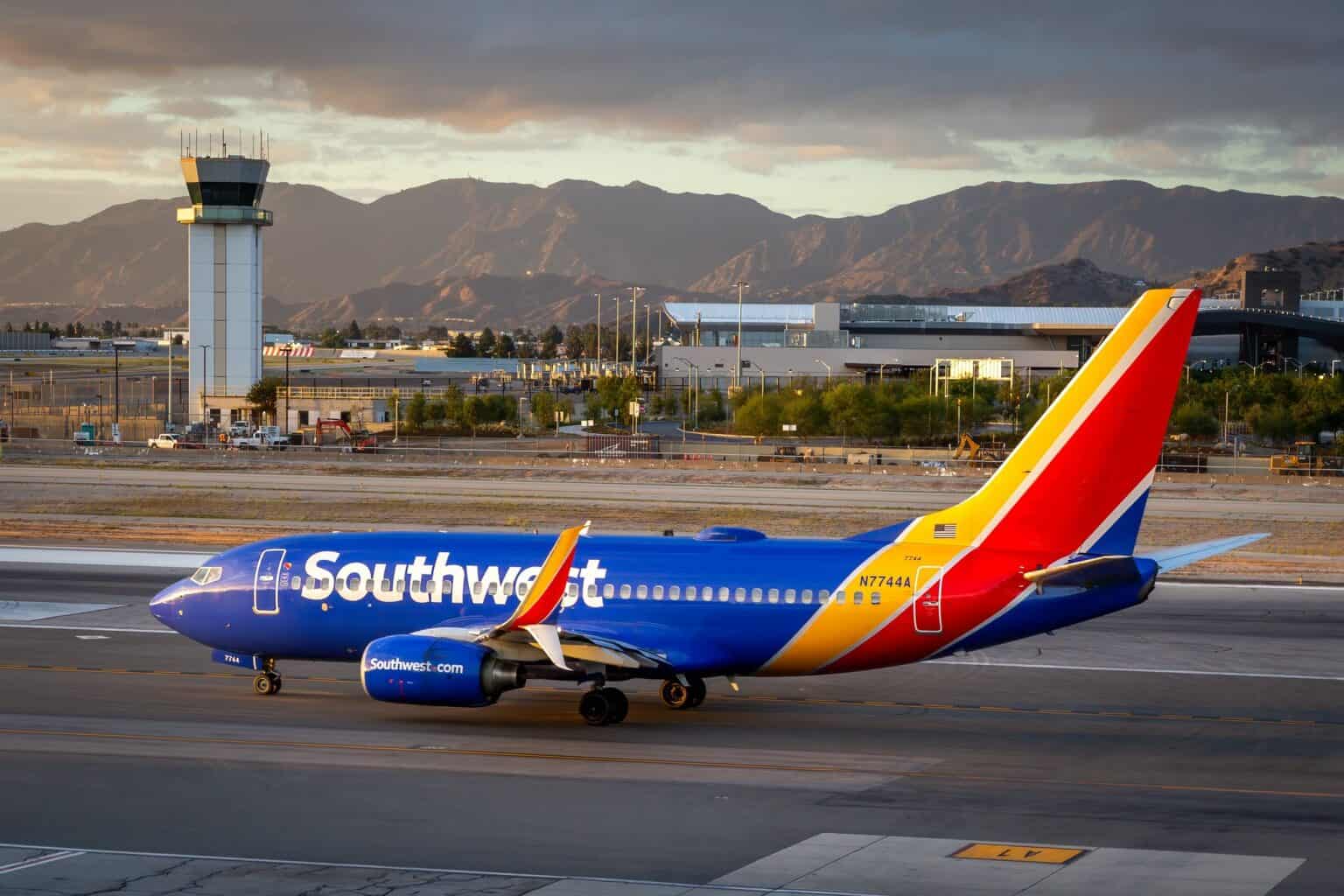
On Oct. 13, 2026, Hollywood Burbank Airport moved every flight into a new $1.3 billion terminal about 880 feet (268 m) from the nearest runway. The complex it replaced, whose oldest parts dated to 1930, sat as little as 257 feet (78 m) away, against the 750 feet (229 m) that FAA design standards call for.
The first departure was Alaska Flight 3401 to Santa Rosa at 7:03 a.m., with 33 passengers aboard, the Los Angeles Times reported. The airport still has 14 gates, and passengers still walk across the tarmac to the stairs.
Burbank’s Terminal Was Older Than the Rule It Broke
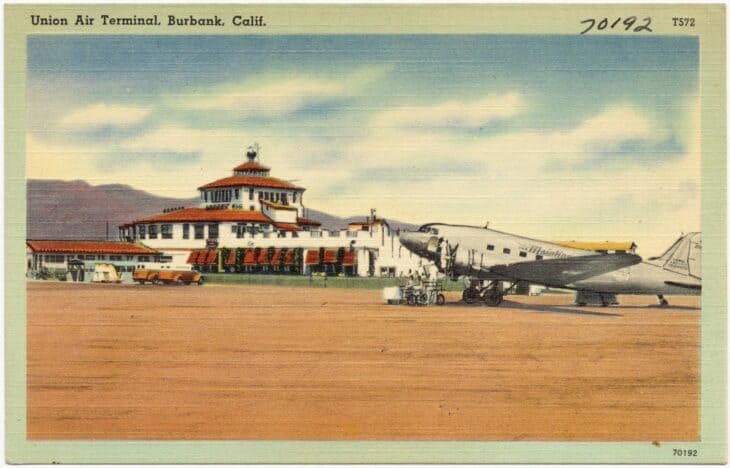
The airport opened as United Airport over Memorial Day weekend in 1930, with a Spanish Revival terminal and an air show. Until 1946 it was the largest commercial airport in the Los Angeles area.
.jpg)
The runways and the jets that used them grew over the following decades. The terminal was renovated and expanded in the 1970s and 1980s, but it never moved.
Lockheed bought the field in 1940 and ran it as Lockheed Air Terminal. Through the Cold War its Skunk Works sat on the eastern side of the airport, where engineers developed the U-2 and the SR-71 Blackbird.
By the 1990s the FAA was blunt. A 1995 federal report expressed “an extremely high level of concern” over how far the terminal’s placement compromised runway separation standards, according to a 2005 Los Angeles Times report.
The airport’s own project FAQ describes how tight it was. Aircraft parked and loaded within 50 feet (15 m) of the edge of a runway, and in 1986 the FAA banned easterly takeoffs by any aircraft over 12,500 pounds (5,670 kg), citing that proximity and the lack of a parallel taxiway.
The ban outlived its cause
A taxiway extension in 2006 fixed the FAA’s immediate worry, but easterly departures on Runway 8-26 are still banned. A jet that loses its right engine on takeoff must turn left, and the Verdugo Mountains leave no room to do it safely.
Pilots felt it too. A United pilot who served as an Air Line Pilots Association safety coordinator told the Times in 2005 that when he pushed back from the gate, his wingtips came almost to the edge of Runway 26 while other jets were cleared to take off on it.
31 Years From the FAA’s 1995 Warning to Opening Day
Moving the terminal was the obvious fix. Every attempt ran into politics, the military or the neighbors, who feared more flights, noise and traffic.
1985
The Pentagon blocks the first site. A plan to move onto Lockheed land collapses when the Department of Defense objects that it sits too close to top-secret manufacturing facilities.
1999
The airport buys 130 acres from Lockheed. A tentative deal with Burbank includes an overnight terminal closure, which the FAA rejects as a de facto curfew. The deal expires in May 2000.
2000
Burbank voters pass Measure B. Any new terminal now needs approval at the ballot box.
Feb. 2003
The FAA loses patience. Administrator Marion Blakey tells local officials to build the terminal or return the federal money given for it.
2004-2005
The airport gives up. It agrees to repay the FAA, and the city and airport adopt a 10-year moratorium on moving or expanding the terminal.
Nov. 8, 2016
A second Measure B passes with 69% of the vote. Burbank approves a 14-gate, 355,000-square-foot replacement in exchange for the power to block future expansion.
Jan. 2024
Construction begins on the opposite side of the airfield, so flights continue without interruption.
Oct. 13, 2026
The new terminal opens. About 90 arrivals and departures by eight airlines are scheduled on day one.
The building that resulted is 355,000 square feet (33,000 m²), about 53% larger than the 232,000-square-foot (21,600 m²) complex it replaces. It has eight TSA lanes instead of five, and the walk from the entrance to the farthest gate drops from 1,600 feet to 1,285 feet (about 490 m to 390 m).
The money came from the airport and its users, not local taxes. The airport sold $724.78 million in 2024-series senior revenue bonds, won an $8.2 million federal grant and set a guaranteed maximum price of $1.11 billion for design and construction, ENR reported.
The project FAQ lists the rest: federal airport grants, passenger facility charges and airline rates, with no state, county or city funds from Burbank, Glendale or Pasadena. Passenger facility charges are collected on airline tickets, one of the revenue streams behind how airports make money.
Traffic grew while the fight dragged on. Burbank handled 4.9 million passengers in 2004 and about 6.2 million in 2025.
The FAA Never Called the Old Terminal Dangerous
That is the part the “257 feet” headline hides. In 2002 the same FAA that had pushed for the move wrote that operations in the existing location could continue safely in the future as in the past.
Airport officials and the Southwest Airlines Pilots Association agreed. The FAA’s position was that more separation meant more safety, not that less meant danger, and as of 2005 no jet had ever veered into the terminal or the planes parked beside it.
Burbank has shown what the margins are for, though. On March 5, 2000, Southwest Flight 1455 from Las Vegas overran Runway 8, broke through a blast barrier and the perimeter fence, and stopped in the traffic lanes of Hollywood Way near a Chevron station. Forty-four people were hurt.
The gas station was later removed, and the airport installed an arrestor bed of crushable material at the runway’s end. On Dec. 6, 2018, it stopped Southwest Flight 278 from Oakland after the 737 overran the runway in heavy rain.
The new building also fixes something passengers never saw. The old gates came in different sizes, so some aircraft could use only certain gates, executive director John Hatanaka told Airways. All 14 new gates take a jet as wide as the Boeing 737 MAX 10 and as long as an Airbus A321.
The Old Terminal Comes Down in 2027
The 1930 complex now sits empty. Demolition is expected in 2027, AirlineGeeks reported, and the builders have scheduled nine months for it.
Opening day had rough edges. Staff stood at the old building redirecting travelers who had not heard about the move, and none of the 13 food concessions was fully operating that day, the Times found.
Some limits stay. The 2016 deal caps the airport at 14 gates and rules out jet bridges, the voluntary 10 p.m. to 6:59 a.m. curfew remains, and the easterly takeoff ban stands. Its legal name is still Bob Hope Airport, the name it has carried since 2003.
“We have 14 gates. LAX has 161,” airport authority president Tyron Hampton told the Times on opening day.
That is the trade Burbank made. It kept the small airport people choose over LAX, the stairs on the tarmac included, and moved the building about 620 feet (190 m) farther from the runway. It took 31 years.
Sources and references used for research and fact-checking.
- Los Angeles Times, Burbank airport's new $1.3-billion terminal opens, bigger and sleeker than ever
- AFAR, Hollywood Burbank Airport Just Opened its New Terminal
- AirlineGeeks, Hollywood Burbank Opens New, $1.3B Terminal
- Burbank-Glendale-Pasadena Airport Authority, Elevate BUR frequently asked questions
- California Pilots Association, Airfield's Safety Issues Left Up in Air (Los Angeles Times, July 11, 2005)
- Los Angeles Times (Burbank Leader), Airport officials go big with Bob Hope terminal plans
- ENR, Long-Awaited Airport Terminal Soars Swiftly in Burbank
- Airways Magazine, Hollywood Burbank Plans October Opening
- Wikipedia, Hollywood Burbank Airport
- Wikipedia, Skunk Works
Get the Newsletter
The latest aviation news and stories sent to your inbox.
About the Author

Tim is the owner and lead editor of AeroCorner since 2019, overseeing aviation content covering aircraft, airlines, airports, and the broader aviation industry. Through years of researching, writing, editing, and publishing aviation-focused content, he has developed extensive practical knowledge of commercial aviation and air travel. Based in Asia and a frequent traveler himself, Tim also brings firsthand passenger experience to AeroCorner’s coverage. Outside of publishing, he has also explored aviation firsthand through hands-on flight training in New Zealand.