

Table of Contents
The smallest airport in the world with scheduled passenger flights is Juancho E. Yrausquin Airport on Saba, in the Caribbean Netherlands. Its only runway is 1,316 feet (401 m) long, and a landing aircraft gets as little as 1,145 feet (349 m) of it to stop.
This list ranks airports by the length of their longest runway, because that is the one measure every aviation authority publishes and the one that decides what can land. Every entry has an airline flying to it on a timetable as of October 2026, and every length comes from the official aeronautical publication for that airport.
Most “smallest airport” lists recycle the same five names and rarely cite a source for their runway lengths. Some of the airports they include, Courchevel above all, have no scheduled flights at all, and several tiny Scottish island strips that beat almost all of them never get a mention.
At the other end of the scale, the biggest airports in the world cover areas that could swallow every runway below many times over.
| Rank | Airport | Longest runway | Surface | Scheduled airline (2026) |
|---|---|---|---|---|
| 1 | Saba (SAB), Caribbean Netherlands | 1,316 ft (401 m) | Concrete | Winair |
| 2 | Coll (COL), Scotland | 1,644 ft (501 m) | Asphalt | Hebridean Air Services |
| 3 | Colonsay (CSA), Scotland | 1,647 ft (502 m) | Asphalt | Hebridean Air Services |
| 4 | Stronsay (SOY), Scotland | 1,690 ft (515 m) | Graded hardcore | Loganair |
| 5 | Papa Westray (PPW) and the Orkney North Isles, Scotland | 1,729 ft (527 m) | Graded hardcore | Loganair |
| 6 | Lukla (LUA), Nepal | 1,729 ft (527 m) | Asphalt concrete | Tara Air, Summit Air, Sita Air |
| 7 | Fair Isle (FIE), Scotland | 1,772 ft (540 m) | Gravel | Airtask |
| 8 | Montserrat (MNI) | 1,955 ft (596 m) | Asphalt | FlyMontserrat, Winair |
| 9 | St. Barthélemy (SBH) | 2,119 ft (646 m) | Concrete | Winair, St Barth Commuter, Tradewind and others |
| 10 | St Mary’s (ISC), Isles of Scilly, England | 2,280 ft (695 m) | Asphalt | Skybus |
| 11 | Corvo (CVU), Azores, Portugal | 2,497 ft (761 m) | Asphalt | SATA Air Açores |
| 12 | Barra (BRR), Scotland | 2,776 ft (846 m) | Sand (beach) | Loganair |
| 13 | Lord Howe Island (LDH), Australia | 2,913 ft (888 m) | Sealed | Skytrans (Qantas codeshare) |
How this ranking works
We rank by the physical length of each airport’s longest runway, taken from the national Aeronautical Information Publication (AIP) or equivalent official directory in force in October 2026. An airport only qualifies if an airline sells seats to it on a published schedule today. That rules out private altiports, mission airstrips, and islands whose service has lapsed, which are covered at the end. Papa Westray and Lukla tie on length; the Orkney strips go first because two of them declare less usable landing distance.
1. Juancho E. Yrausquin Airport, Saba
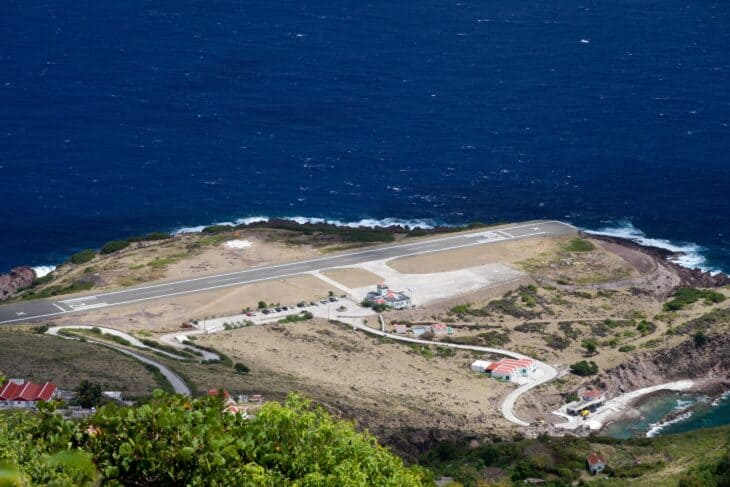

Saba’s runway 12/30 is 1,316 feet long and 59 feet wide (401 by 18 m), according to the Dutch Caribbean AIP. That is shorter than any other runway on Earth that sees scheduled passenger flights, and Guinness World Records lists it as the shortest commercially serviceable runway.
The usable figures are even tighter. The landing distance available is 1,145 feet (349 m) on runway 12 and 1,165 feet (355 m) on runway 30, the runway slopes at about 2 percent, and there is no runway end safety area beyond either end.
The AIP is blunt about who may use it: the airport is “not open to the public.” Only aircraft authorized by the Dutch government whose crews meet the airport’s qualification requirements may land, and only in visual conditions.
Winair flies the island’s scheduled service from St. Maarten, and its fleet includes 19-seat DHC-6 Twin Otters built for exactly this kind of strip. Saba handled about 32,400 passengers in 2025, according to provisional figures from Statistics Netherlands.
The same pilot opened two of these airports
Rémy de Haenen made the first landing on Saba on February 9, 1959. He had already made the first landing on St. Barthélemy in 1946, on the savannah where that island’s airport now stands. St. Barths’ airport, number 9 on this list, now carries his name.
2. Coll Airport, Scotland
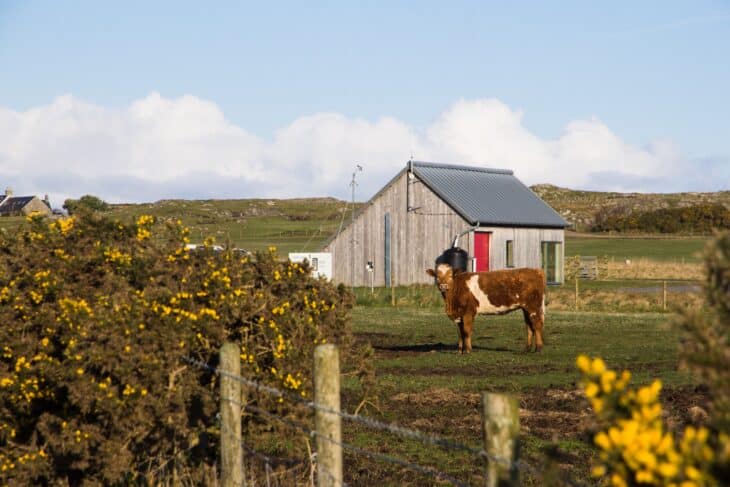

Coll’s single asphalt runway is 1,644 feet (501 m) long and 59 feet (18 m) wide, according to the UK AIP. That makes this Inner Hebrides island the second-smallest airport in the world by our measure.
Hebridean Air Services flies to Coll from Oban with three Britten-Norman Islanders, usually on a triangle that also stops at Tiree or Colonsay. Some weekday departures run only in school term, listed in the timetable as “scholar flights.”
3. Colonsay Airport, Scotland
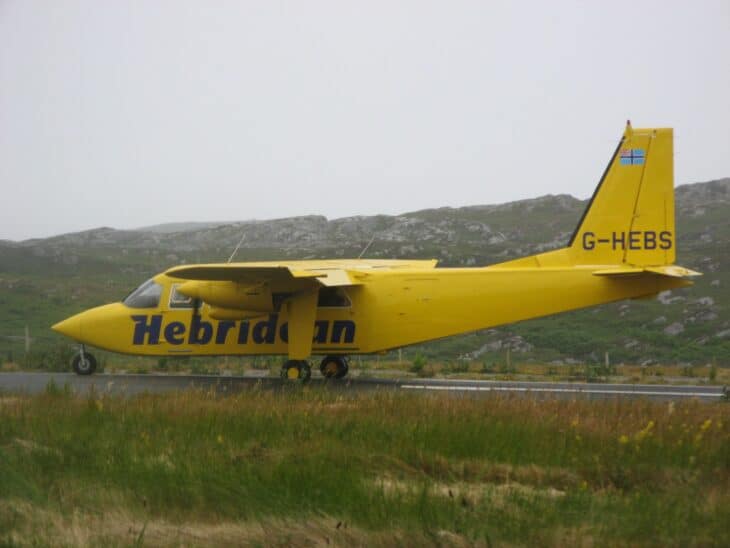

Colonsay misses second place by a single meter. Its asphalt runway 10/28 is 1,647 feet (502 m) long and 59 feet (18 m) wide, at an elevation of just 44 feet.
The UK AIP carries an unusual warning for pilots: when lined up for takeoff, the full length of the runway “may not be visible from the cockpit.” The same Hebridean Air Services Islanders from Oban serve it, with timetables published through March 2027.
4. Stronsay Airfield, Scotland
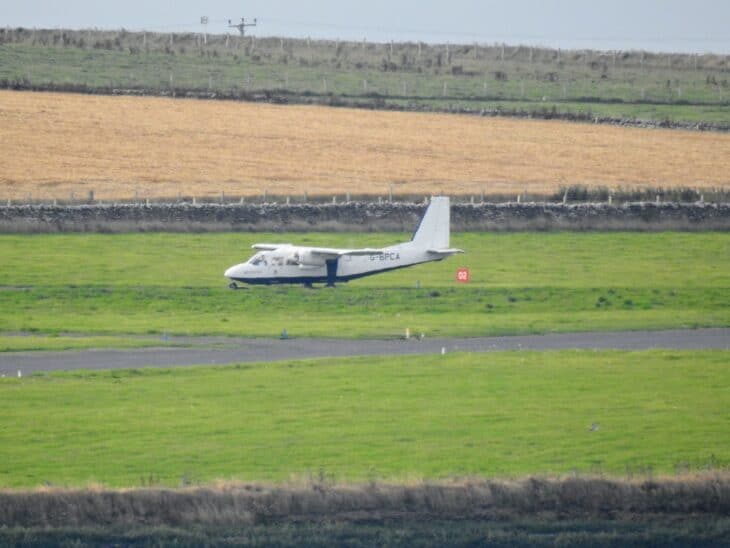
Stronsay, in Orkney, has a main runway of 1,690 feet (515 m) in graded hardcore, a compacted gravel surface, plus a 1,086-foot (331 m) grass strip for crosswind days. It is the shortest of the Orkney North Isles airfields.
Loganair serves it from Kirkwall as part of the Orkney inter-isles network, flying eight-seat Britten-Norman Islanders under a contract with Orkney Islands Council that runs to March 2029.
5. Papa Westray and the Orkney North Isles, Scotland
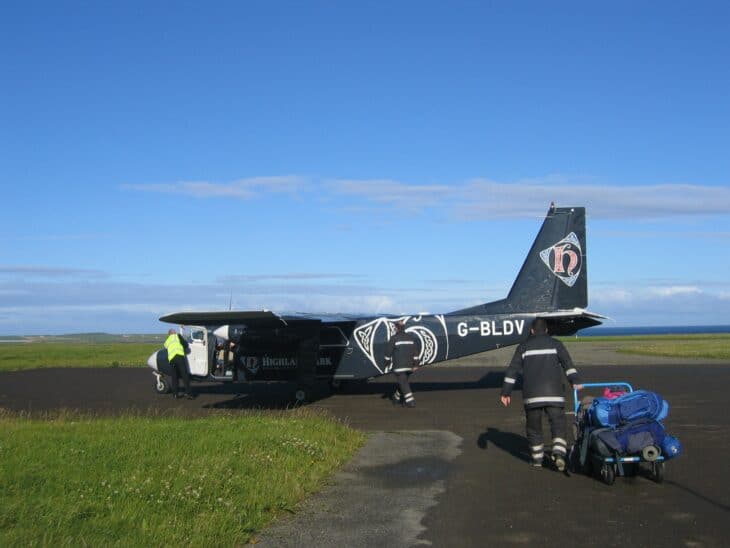

Papa Westray, Westray, North Ronaldsay, Sanday and Eday all share the same main runway length: 1,729 feet (527 m) of graded hardcore, 59 feet (18 m) wide. Papa Westray also has two grass and gravel cross-strips, the shortest only 961 feet (293 m) long.
These five airfields tie with Lukla on length. We list them first because two of them declare even less usable landing distance: 1,539 feet (469 m) at Eday and 1,532 feet (467 m) at Sanday.
Papa Westray is famous for the other end of its route. The hop from Westray is 1.7 miles (2.7 km), which Guinness World Records lists as the shortest domestic scheduled flight, and Loganair says it usually takes about 90 seconds. It leads our guide to the shortest flights in the world.
The 53-second record
The record for the Westray to Papa Westray flight is 53 seconds, set by Loganair pilot Stuart Linklater, who retired in 2013. Loganair has flown the route with Britten-Norman Islanders since 1967, and the inter-isles network carries around 20,000 passengers a year.
6. Tenzing-Hillary Airport, Lukla, Nepal
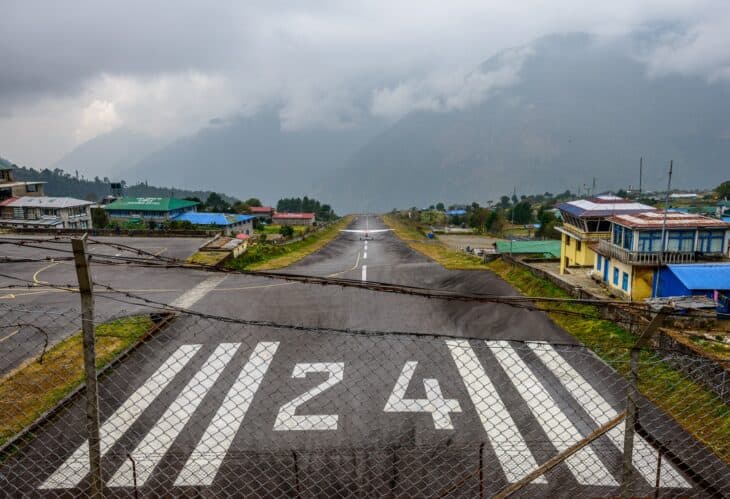
Lukla is the airport most people picture when they think of a tiny runway. Its strip is 1,729 feet (527 m) long, the same as the Orkney airfields, but it sits at 9,337 feet (2,846 m) on a mountainside with an upslope of 11.7 percent.
Aircraft land uphill on runway 06 and take off downhill on runway 24, and Nepal’s civil aviation authority notes there is no missed approach procedure. Once a pilot commits to land, there is no going around. Our full guide to Lukla Airport covers the approach in detail.
Sir Edmund Hillary built the strip in 1964 through his Himalayan Trust, and Nepal renamed it for him and Tenzing Norgay in 2008. Tara Air, Summit Air and Sita Air fly Twin Otters, Dornier 228s and Let L-410s into it, and it handled about 129,500 passengers in 2019, the last year before the pandemic.
7. Fair Isle Airstrip, Scotland
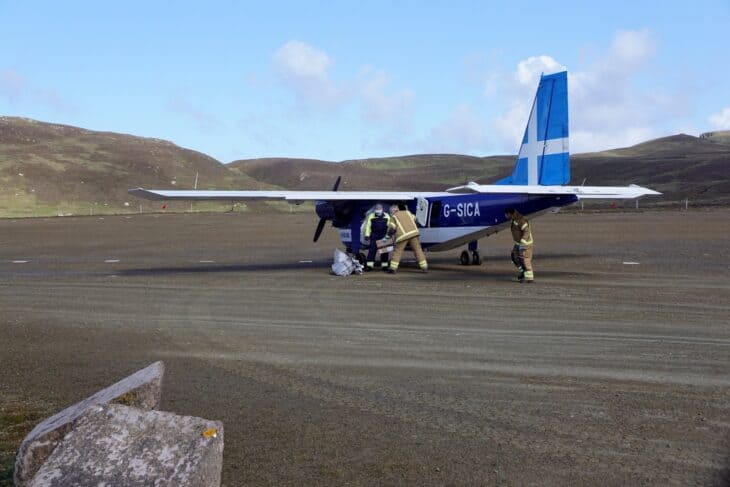

Fair Isle, in Shetland, has a gravel runway 1,772 feet (540 m) long. Its declared distances are only 1,568 feet (478 m) in every direction, which would put it near the top of this list if we ranked by usable length.
The UK AIP warns that the ground “falls away very steeply” about 100 feet (30 m) beyond each end, that moss makes the surface slippery when wet, and that terns nest under the final approach to runway 06 from May to August. Airtask flies Britten-Norman Islanders to the island from Tingwall, near Lerwick.
8. John A. Osborne Airport, Montserrat
.jpg)
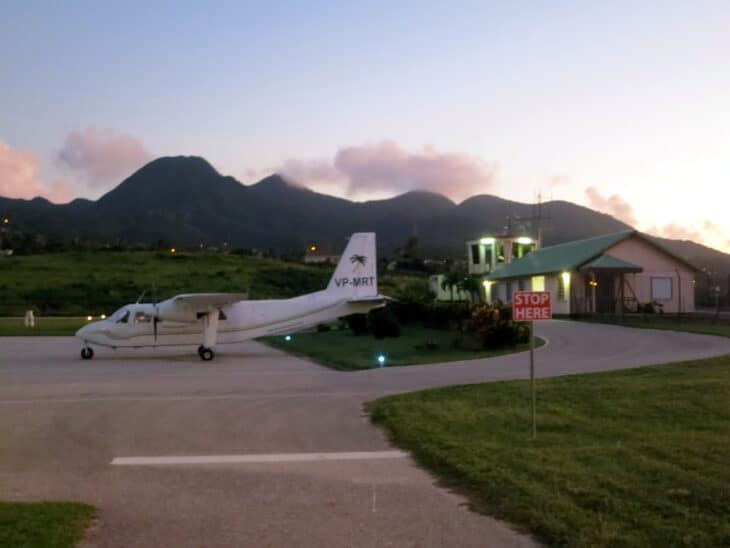
Montserrat’s runway 10/28 is 1,955 feet (596 m) of asphalt, but its declared takeoff run is just 1,716 feet (523 m) and its landing distance 1,673 feet (510 m). That takeoff run is shorter than Lukla’s entire runway.
The airport opened in 2005 at an elevation of 550 feet, and its aerodrome chart tells pilots to “exercise extreme caution” with the wind. FlyMontserrat runs three daily round trips from Antigua with nine-seat Islanders, about 20 minutes each way, and Winair adds Twin Otter flights from St. Maarten.
9. Gustaf III Airport, St. Barthélemy
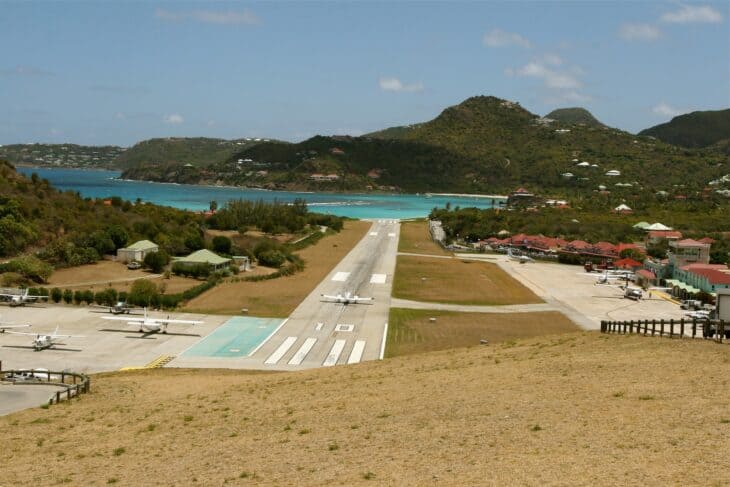

St. Barthélemy’s airport has a single concrete runway, 2,119 feet (646 m) long, according to the French AIP. It is longer than everything above it, but its approach is one of the most demanding on this list.
Arrivals on runway 10 cross the Col de la Tourmente, a hilltop pass, at less than 33 feet (10 m) about 490 feet (150 m) before the threshold, according to the French accident bureau BEA. Takeoffs on runway 28 are banned, so every departure heads out toward the sea, and night landings are not allowed.
St. Barths is one of the airports pilots need special certification to land at. Airlines need a per-type authorization, private pilots need an instructor to sign off their proficiency on type, and the pavement limits aircraft to 12,600 pounds (5.7 metric tons) at takeoff.
Winair, St Barth Commuter, Tradewind Aviation and Air Inter Îles all fly in, and the airport handled 109,213 passengers from January to April 2026 alone.
10. St Mary’s Airport, Isles of Scilly, England
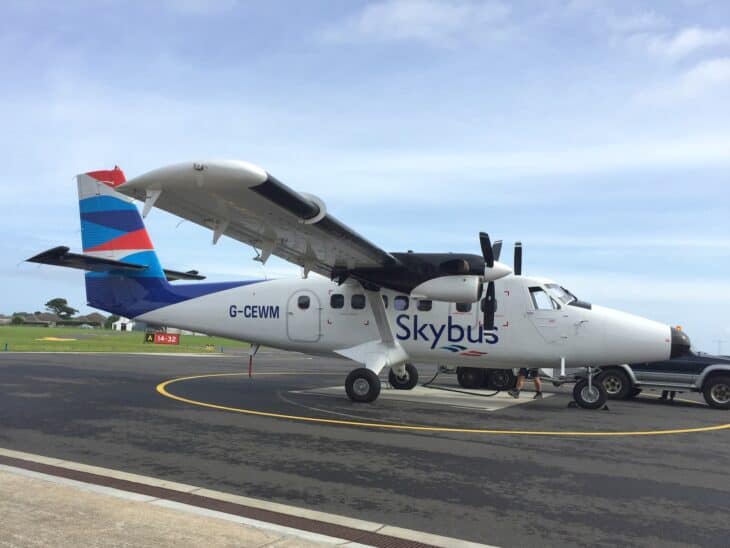

St Mary’s, the main airport for the Isles of Scilly off Cornwall, has two asphalt runways: 2,280 feet (695 m) on 14/32 and 1,713 feet (522 m) on 09/27. The main runway’s declared landing distance is shorter still, at 1,978 feet (603 m).
Skybus flies 19-seat Twin Otters from Land’s End all year, about 20 minutes, and from Exeter between March and October. St Mary’s handled 72,244 passengers in 2025, according to the UK Civil Aviation Authority.
11. Corvo Airport, Azores, Portugal
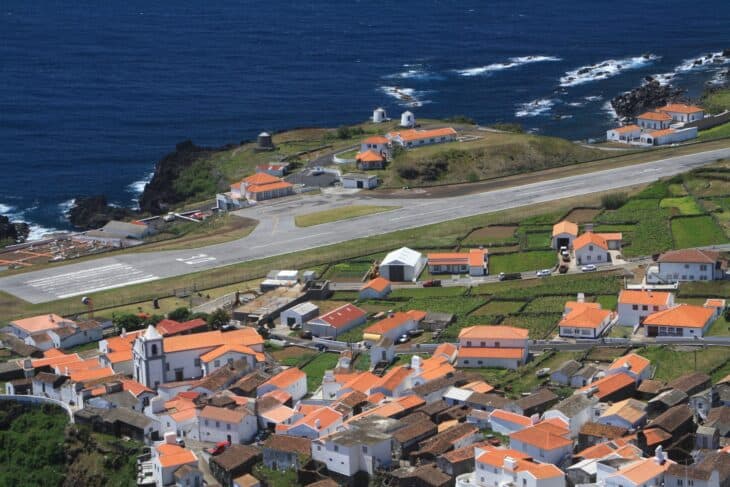

Corvo’s runway 11/29, in Portugal’s Azores islands, is 2,497 feet (761 m) long. The 800 m figure often quoted is the takeoff distance, which includes a 131-foot (40 m) starter extension, not the runway itself.
The Portuguese AIP describes it simply as an “aerodrome in the village”, daylight only, with no control tower.
SATA Air Açores keeps two Dash 8-200s mainly for Corvo and Flores because of their short runways, and its chief executive has said there is “no alternative in the market” to replace them. Just 6,024 passengers got off flights at Corvo in 2025.
12. Barra Airport, Scotland
.jpg)
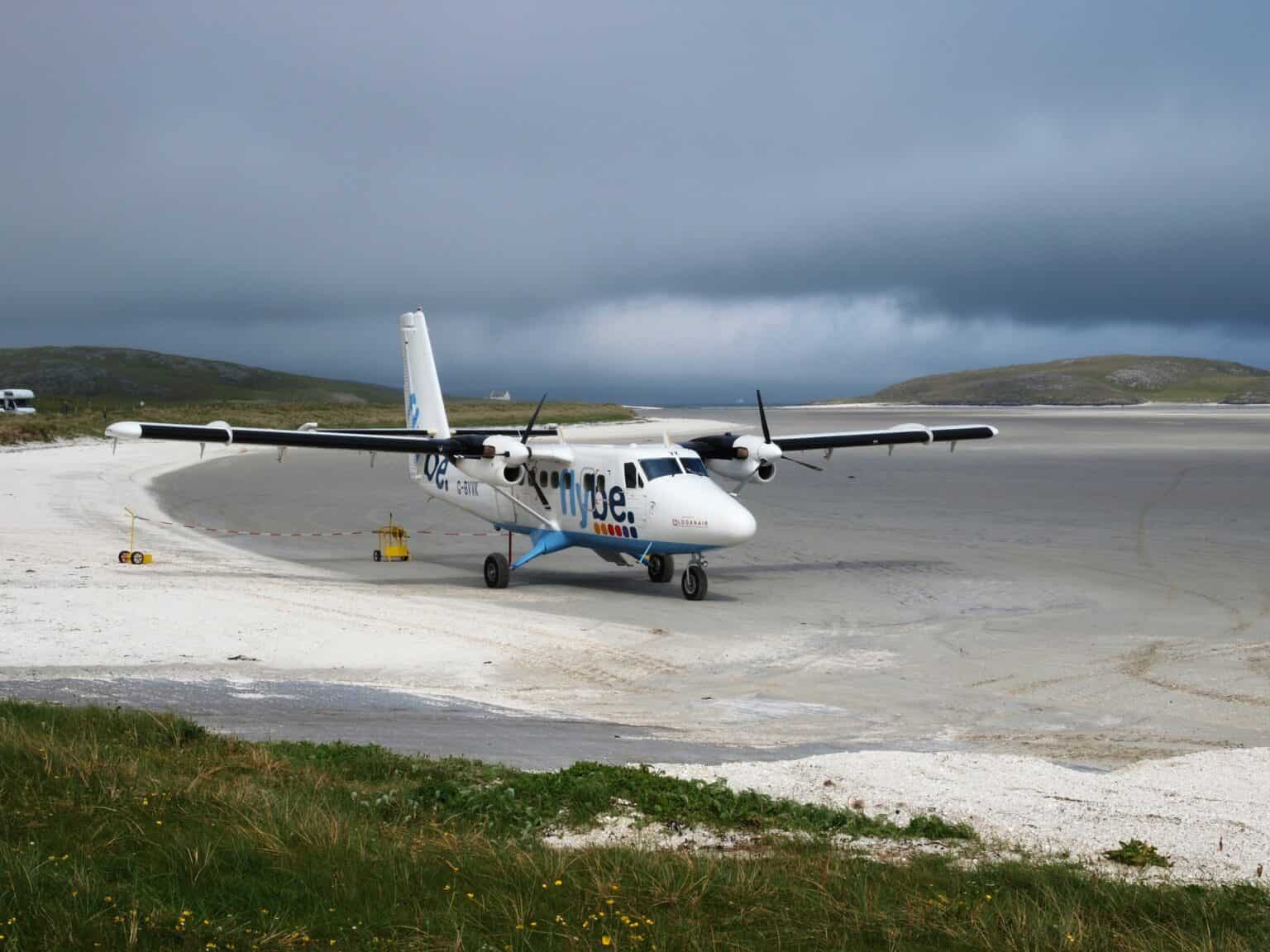
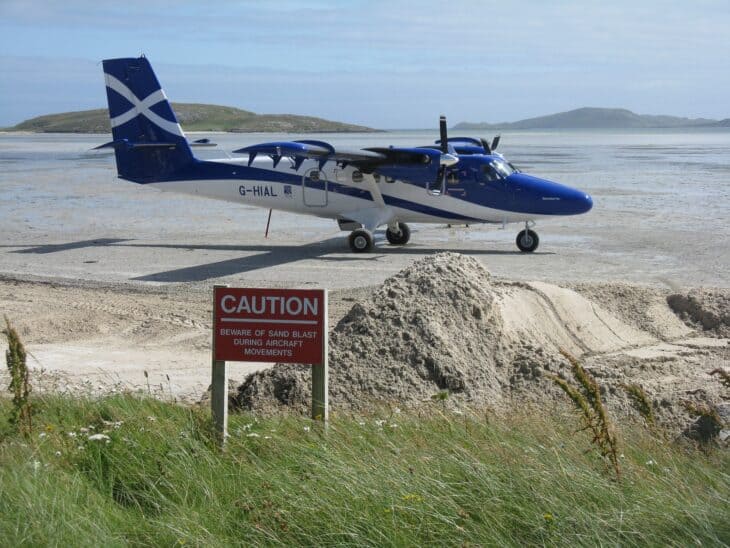
Barra is on every “smallest airport” list, but by runway length it is one of the bigger entries here. Its three runways are marked out on the sand of Traigh Mhòr beach, and the longest, 15/33, is 2,776 feet (846 m).
What makes Barra unique is the surface. Highlands and Islands Airports calls it “the only scheduled beach runway in the world”, the airport is open only when the tide allows, and the AIP warns that cockle pickers work between the runway markers and the tide line.
Loganair flies the route from Glasgow under a Scottish Government lifeline contract. The first scheduled service landed on the beach on August 7, 1936, so 2026 marks 90 years, and Barra handled 11,822 passengers in 2025.
13. Lord Howe Island Airport, Australia
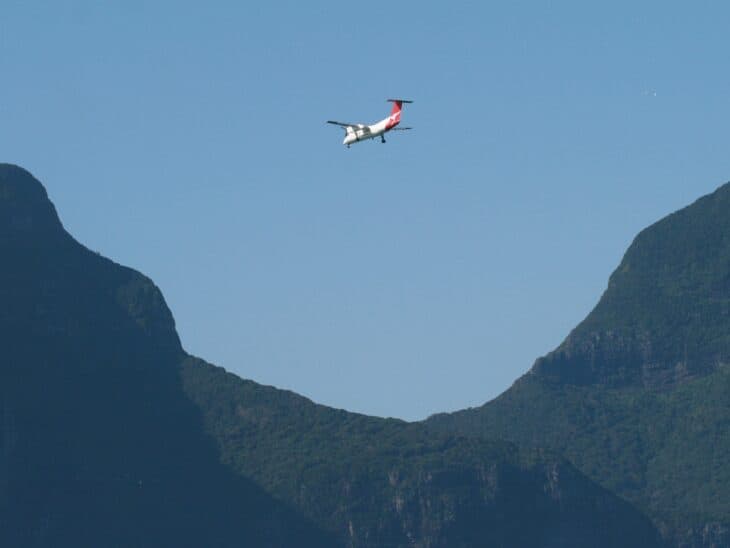

Lord Howe Island’s single runway is 2,913 feet (888 m) long, and a displaced threshold on runway 28 cuts its landing distance to 2,575 feet (785 m). Australia’s official aerodrome directory warns that wind can cause severe turbulence on approach, and that sometimes “the only safe course of action” is to divert back to the mainland.
Skytrans took over the Sydney route on February 26, 2026, flying ex-QantasLink Dash 8-200s on a Qantas codeshare. The island also caps tourists at 400 at a time through a fixed number of licensed beds, so even a full schedule of flights stays small.
What about Courchevel, Matekane and the others?
Several airports that appear on other lists are missing here on purpose. Each has a short runway, but none has an airline flying to it on a timetable in October 2026.
Courchevel is not a commercial airport
The Courchevel Altiport in the French Alps has a 1,759-foot (536 m) runway with sections as steep as 18.5 percent, and it sits at about 6,580 feet. It also has no scheduled flights. Air Alpes once ran a daily service to the ski resorts, but TAT bought the airline in 1981 and ended it. Today it handles private planes and helicopters, and pilots need a French mountain rating or a specific altiport authorization to land.
- Les Saintes, Guadeloupe: a 1,903-foot (580 m) runway with a 10 percent final approach slope, but no flights in any October 2026 schedule. Air Inter Îles says service is coming “very soon.”
- Out Skerries, Shetland: a gravel strip of about 1,200 feet (365 m), shorter than Saba, but Directflight dropped it in December 2015 because the island could no longer guarantee fire cover on “Scotland’s shortest runway.”
- Matekane, Lesotho: the airstrip that ends at a cliff edge is used by flying doctors and mission pilots in single-engine aircraft, not by airlines. No official length is published, and accounts of it vary.
- Foula, Shetland: Airtask does fly scheduled Islanders here, but an extension of at least 282 feet (86 m), planned in 2022, was completed by 2023 and no official length has been published since, so we cannot rank it.
- Heligoland-Düne, Germany: the island’s short Düne airfield has had no scheduled flights since spring 2025.
Gibraltar also turns up on these lists because a road once crossed its runway. Cars have used a tunnel since March 31, 2023, and it is a full-size airport rather than a small one. For airports that are short and genuinely risky, see our list of the most dangerous airports in the world.
FAQ
Sources and references used for research and fact-checking.
- DC-ANSP (Dutch Caribbean Air Navigation Service Provider), AIP AD 2 TNCS Saba (AIRAC AMDT 03-26)
- Statistics Netherlands (CBS), Airports in the Caribbean Netherlands: passengers and movements (table 82332NED)
- Guinness World Records, Shortest commercially serviceable runway
- The Saba Islander, Fifty years of air service to Saba
- Winair, Winair fleet
- Winair, Flights to Saba
- NATS, UK AIP AD 2 EGEL Coll (AIRAC 2026-10-01)
- NATS, UK AIP AD 2 EGEY Colonsay (AIRAC 2026-10-01)
- Hebridean Air Services, Timetables
- Hebridean Air Services, Who we are
- NATS, UK AIP AD 2 EGER Stronsay (AIRAC 2026-10-01)
- NATS, UK AIP AD 2 EGEP Papa Westray (AIRAC 2026-10-01)
- NATS, UK AIP AD 2 EGED Eday (AIRAC 2026-10-01)
- NATS, UK AIP AD 2 EGES Sanday (AIRAC 2026-10-01)
- Guinness World Records, Shortest domestic scheduled flight
- Loganair, Orkney Inter-Isles
- Loganair, Loganair selected as Orkney inter-isles transport provider for further four years
- Civil Aviation Authority of Nepal, Tenzing Hillary Airport profile
- Civil Aviation Authority of Nepal, National Airports Plan: Diagnosis (archived)
- Himalayan Trust Nepal, Tenzing-Hillary Airport, Lukla
- grough, Nepal airport honour for Everest heroes
- NATS, UK AIP AD 2 EGEF Fair Isle (AIRAC 2026-10-01)
- Airtask Group, Passenger transport
- ECCAA / Trinidad and Tobago CAA, AIP Supplement 03/26, John A. Osborne Airport
- GOV.UK, Study on aircraft suitability to operate at John A. Osborne Airport, Montserrat
- FlyMontserrat, Schedule
- SIA, French Civil Aviation, AIP AD 2 TFFJ Saint-Barthélemy (AIRAC 2026-10-01)
- BEA, Report on the serious incident to Winair DHC-6 PJ-WIS, 24 January 2014
- Journal de Saint-Barth, Un trafic aérien élevé mais stable
- access.sb, Rémy de Haenen Airport, Saint-Barthélemy
- NATS, UK AIP AD 2 EGHE St Mary's, Isles of Scilly (AIRAC 2026-10-01)
- Isles of Scilly Steamship Group, Skybus
- UK Civil Aviation Authority, UK airport data 2025, annual
- NAV Portugal, eAIP Portugal AD 2 LPCR Corvo
- CAPA Centre for Aviation, SATA Air Açores to receive sixth Dash 8-400 in July 2026
- SREA, Azores Regional Statistics Service, Movimento de passageiros aéreos, dezembro 2025
- NATS, UK AIP AD 2 EGPR Barra (AIRAC 2026-10-01)
- Highlands and Islands Airports, Barra Airport
- Highlands and Islands Airports, Barra celebrates 90 years on the sand
- Transport Scotland, Lifeline flights contract award
- Airservices Australia, ERSA Lord Howe Island runway data (3 September 2026)
- Airservices Australia, ERSA Lord Howe Island facilities (3 September 2026)
- Lord Howe Island Board, Householder air services announcement
- CNN (via KVIA), Why only 400 people at a time can visit this paradise island
- SIA, French Civil Aviation, VAC AD 2 LFLJ Courchevel
- Mairie de Courchevel, L'altiport aujourd'hui
- Alpine Airlines, Courchevel Altiport history
- SIA, French Civil Aviation, AIP AD 2 TFFS Les Saintes (AIRAC 2026-10-01)
- Air Inter Îles, Air Inter Îles
- Shetland News, No more flights to Skerries
- Shetland Islands Council, Aviation baseline report
- Shetland News, Foula airstrip extension needed to ensure flight service continues
- Shetland Islands Council, Transport 2023
- Tom Claytor, Lesotho bush flying
- aeroTELEGRAPH, Seit mehr als einem Jahr keine Linienflüge: OFD gibt Helgoland noch nicht auf
- HM Government of Gibraltar, Airport tunnel to open on 31st March 2023
Get the Newsletter
The latest aviation news and stories sent to your inbox.
About the Author

Tim is the owner and lead editor of AeroCorner since 2019, overseeing aviation content covering aircraft, airlines, airports, and the broader aviation industry. Through years of researching, writing, editing, and publishing aviation-focused content, he has developed extensive practical knowledge of commercial aviation and air travel. Based in Asia and a frequent traveler himself, Tim also brings firsthand passenger experience to AeroCorner’s coverage. Outside of publishing, he has also explored aviation firsthand through hands-on flight training in New Zealand.