

Table of Contents
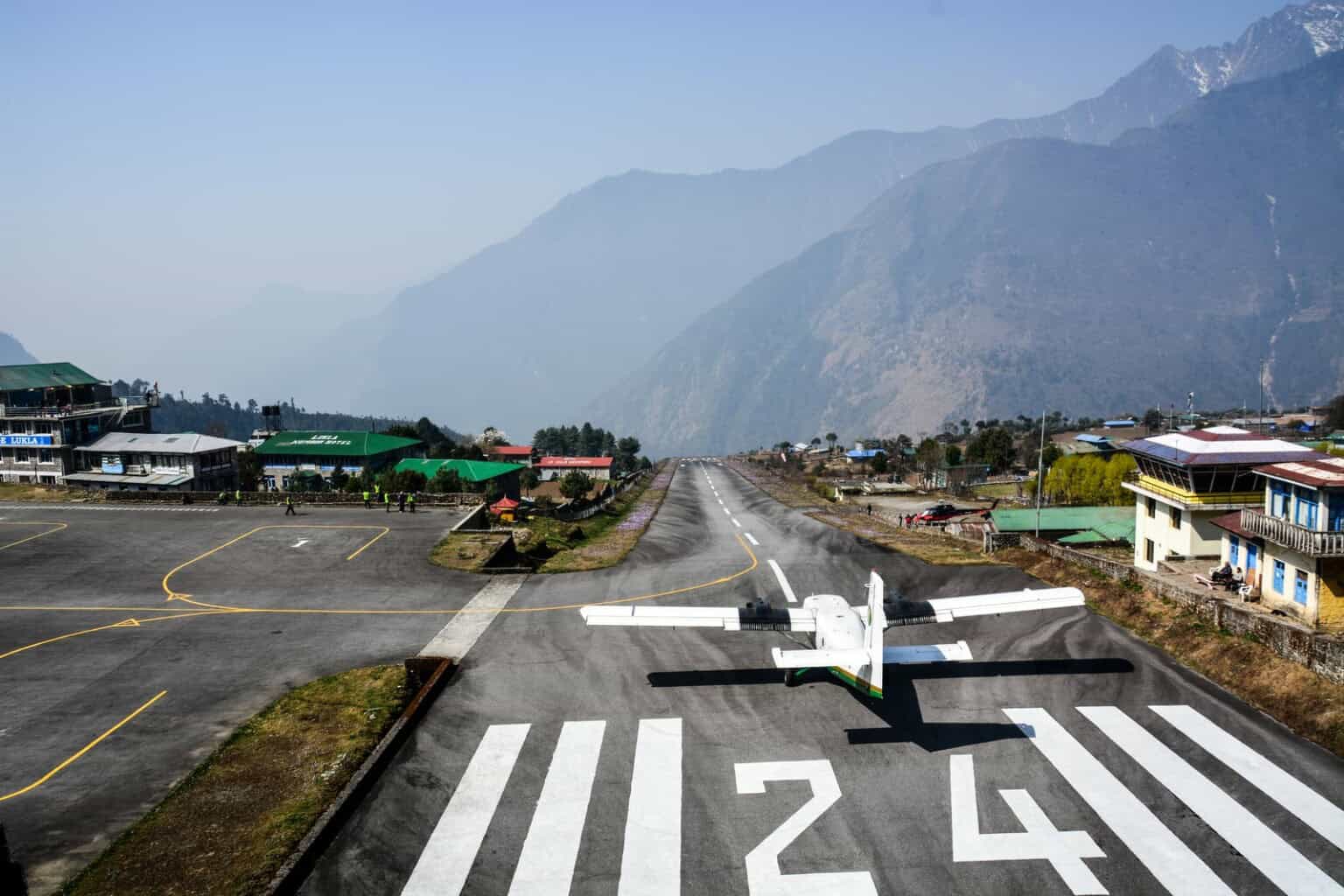
The most dangerous airport in the world to land at is Tenzing-Hillary Airport in Lukla, Nepal. Its runway is 1,729 feet (527 m) long, tilted uphill at 11.7 percent, with a cliff at one end and a mountain wall at the other, and there is no go-around procedure at all.
Restrict the question to airports a full-size airliner actually flies into and the answer changes to Paro in Bhutan.
Both belong to a very small club. These are airports where a captain who flies an Airbus A320 into Frankfurt and Dubai every week is simply not allowed to land, because the airport demands a separate, airport-specific qualification on top of everything else they hold.
That qualification is the measure this ranking uses. Below are the 12 hardest airports to land at in the world as of 2026, ranked on terrain, runway margin, approach complexity, and whether the law or the airline actually gates who is allowed to fly the approach.
| Airport | Runway | Defining hazard | Special pilot qualification |
|---|---|---|---|
| 1. Lukla, Nepal (LUA) | 1,729 ft (527 m), 11.7% uphill | No go-around, cliff and mountain wall | Yes, plus 100 STOL missions in Nepal |
| 2. Paro, Bhutan (PBH) | 7,431 ft (2,265 m) | Hand-flown slalom between 18,000 ft peaks | Yes, roughly 50 pilots worldwide |
| 3. Courchevel, France (CVF) | 1,762 ft (537 m), 18.6% uphill | No go-around, no instrument approach | Yes, mountain qualification |
| 4. Saba, Caribbean Netherlands (SAB) | 1,312 ft (400 m) | Cliffs on three sides, hills on the fourth | Yes, airline endorsement |
| 5. St Barts, French West Indies (SBH) | 2,119 ft (646 m) | Descent over a hilltop road, then a beach | Yes, airport-specific licence |
| 6. Aspen, Colorado (ASE) | 8,006 ft (2,440 m) at 7,820 ft elevation | Steep approach, one way in and one way out | Yes, FAA special airport |
| 7. Innsbruck, Austria (INN) | 6,562 ft (2,000 m) | Alpine valley, foehn wind and turbulence | Yes, Category C, captain only |
| 8. Madeira, Portugal (FNC) | 9,124 ft (2,781 m) on 180 columns | Published wind-shear limits, runway on stilts | Yes, additional training |
| 9. Toncontin, Honduras (TGU) | 7,096 ft (2,163 m) | Low sharp turn onto short runway in a bowl | Historically yes, now mostly cargo |
| 10. London City, UK (LCY) | 4,948 ft (1,508 m) | 5.5-degree approach between city obstacles | Yes, aircraft and crew both certified |
| 11. Barra, Scotland (BRA) | 2,776 ft (846 m) of tidal beach | Runway is under the sea at high tide | Yes, operator-specific |
| 12. Gibraltar (GIB) | 5,827 ft (1,776 m) | Severe crosswind and rotor off the Rock | Airline discretion, not a formal rating |
How we ranked the most dangerous airports in the world
Most lists of dangerous airports rank vibes. They are assembled from the same handful of viral landing videos, and the ordering rarely survives a question as simple as “dangerous to whom?”
This ranking uses four factors that can actually be checked, in this order of weight.
The four-factor measure
1. Terrain lock: how completely the ground boxes the runway in, and whether a go-around exists at all. 2. Runway margin: usable length, slope, and the elevation that thins the air and lengthens the landing roll. 3. Approach complexity: glide slope angle, curving or visual-only paths, and the absence of an instrument approach. 4. The crew gate: whether a regulator or the operator legally restricts who may fly the approach. An airport that scores high on all four is not merely scenic. It is difficult in a way the industry has formally recognised.
The fourth factor matters most, because it is the one that is written down. In the United States the FAA can designate an airport as a special airport under 14 CFR 121.445 when terrain, obstructions, or complex procedures warrant it.
Once designated, no airline may use a pilot in command there unless that pilot has flown into the airport within the preceding 12 calendar months, or has qualified using approved pictorial means.
European rules do the same job through an aerodrome categorisation. A Category C aerodrome requires a briefing plus either a visit or a simulator session before a commander may operate there.
What makes an approach hard enough to need its own qualification
Almost every airport on this list shares one core problem: terrain. The runway sits where the ground rises steeply around it, and that single fact cascades into every other difficulty.
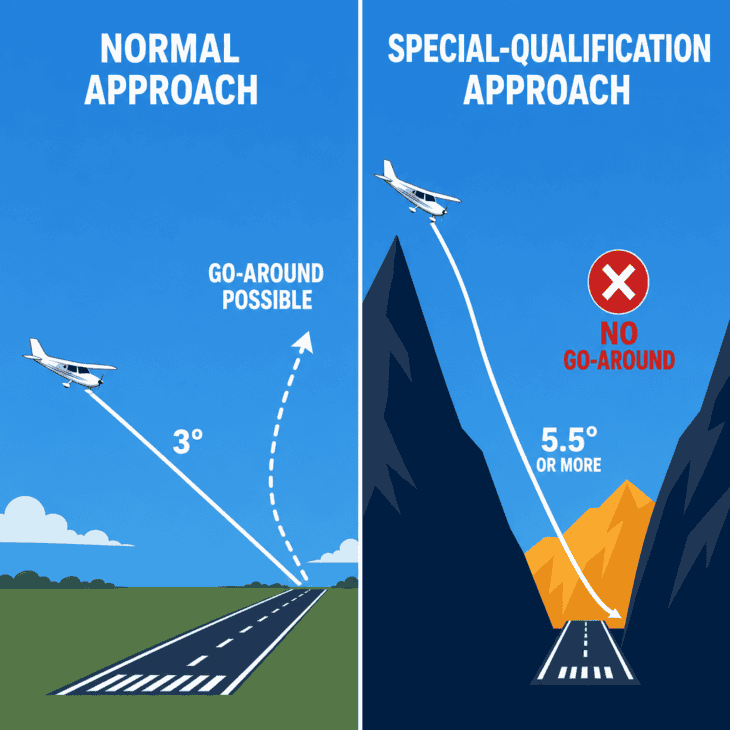
Mountains force a steeper-than-normal descent. A standard approach comes down at 3 degrees, while the airports on this list routinely demand 5.5 degrees or more, which means a faster rate of descent and far less margin near the ground.
Terrain also destroys the straight, stabilized final approach pilots are trained to fly. In its place comes a curving, hand-flown path that threads between ridges, often with the autopilot off and the runway invisible until the last turn.
The most unforgiving detail is the missing safety net. At an ordinary airport, a pilot who is unhappy with the approach climbs away and tries again, but at several of these airports the rising ground ahead leaves nowhere to climb, so past a certain point there is no go-around at all.
Add short runways, thin air at high elevation that lengthens the landing roll, and mountain winds that turn violent without warning, and ordinary competence stops being enough. That is the moment an airport becomes its own qualification.
The 12 hardest airports to land at in the world, ranked
1. Tenzing-Hillary Airport, Lukla, Nepal (LUA)
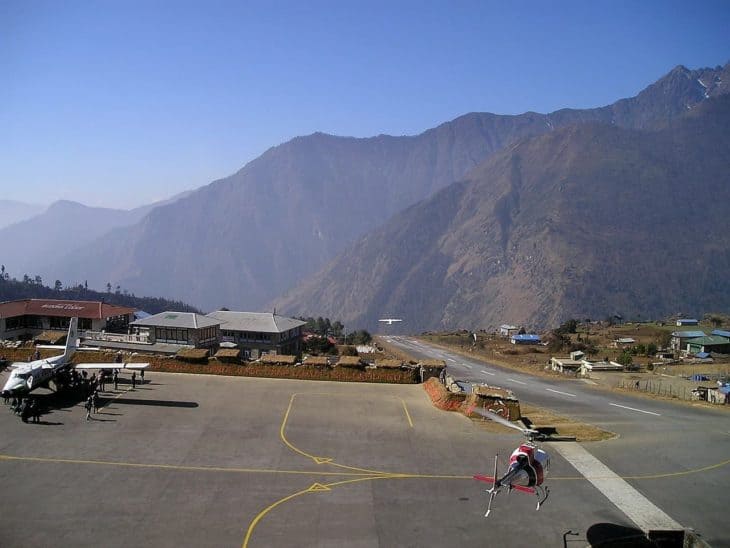
Lukla is the gateway to Everest, and it takes the top spot because it is the only airport here that scores at the maximum on all four factors. The runway is 1,729 feet (527 m) long, tilts uphill at an 11.7 percent gradient, and sits at 9,334 feet (2,845 m) of elevation.
One end drops into a valley, the other runs straight at a mountain wall, and there is no go-around procedure because there is nowhere to climb. The uphill slope is deliberate, helping small aircraft brake on landing and accelerate downhill on departure.
It also has the accident record to match, with fatal crashes in 2008, 2017, and 2019. Before a pilot may fly there in command, Nepali rules require at least 100 short-takeoff-and-landing missions, more than a year of STOL experience in Nepal, and ten supervised flights into Lukla itself.
2. Paro International Airport, Bhutan (PBH)
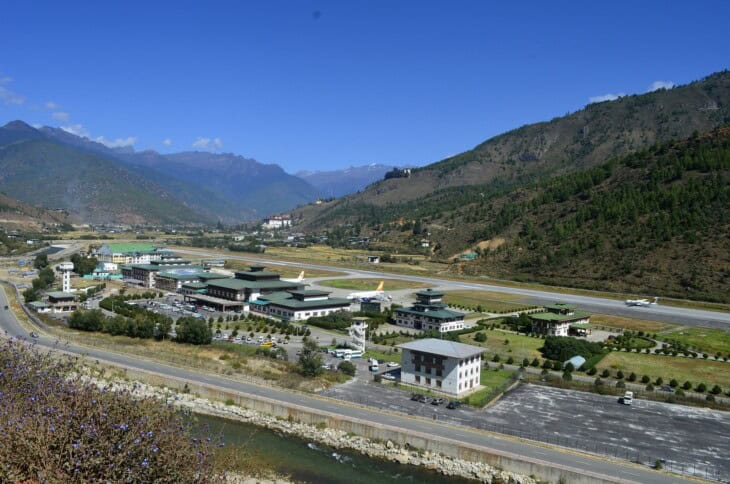
Paro is the hardest landing in the world that a full-size airliner actually performs. It sits at 7,333 feet (2,235 m) in a Himalayan valley ringed by peaks reaching about 18,000 feet (5,500 m), and the approach is a hand-flown slalom between mountainsides with no straight-in path.
Only a small group of pilots are certified to operate there, commonly reported as roughly 50 worldwide. Flights are permitted in visual conditions only and restricted to daylight hours, with further limits in the windy months of the afternoon.
The runway itself is a reasonable 7,431 feet (2,265 m). Everything hard about Paro happens before the wheels touch, which is exactly why the qualification is the airport’s real gatekeeper.
3. Courchevel Altiport, France (CVF)
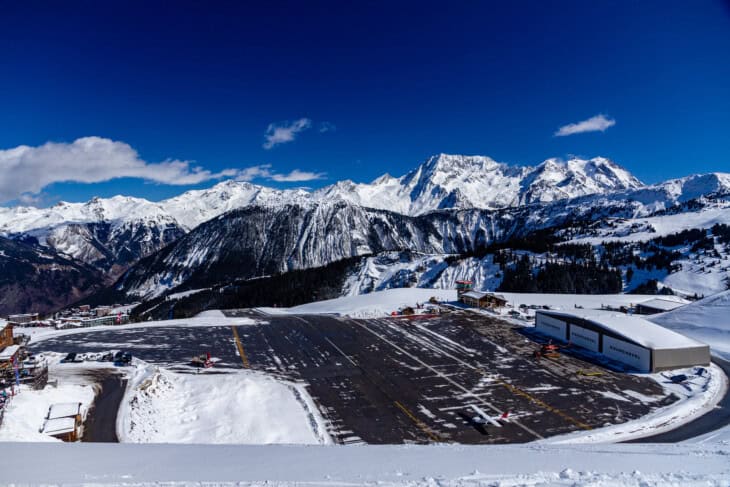
Courchevel serves the French ski resort at 6,588 feet (2,008 m) and has the most dramatic runway in Europe. The strip runs 1,762 feet (537 m) at an 18.6 percent gradient, a slope so steep it works less like a runway and more like a ramp.
Like Lukla, there is no go-around. A pilot who commits to the approach into the mountain is landing, which is why the altiport carries a mandatory mountain qualification.
It has no instrument approach procedure and no approach lighting, so fog or a low cloud base closes it outright. That is the quiet reason it has stayed off the accident lists that Lukla appears on.
4. Juancho E. Yrausquin Airport, Saba (SAB)
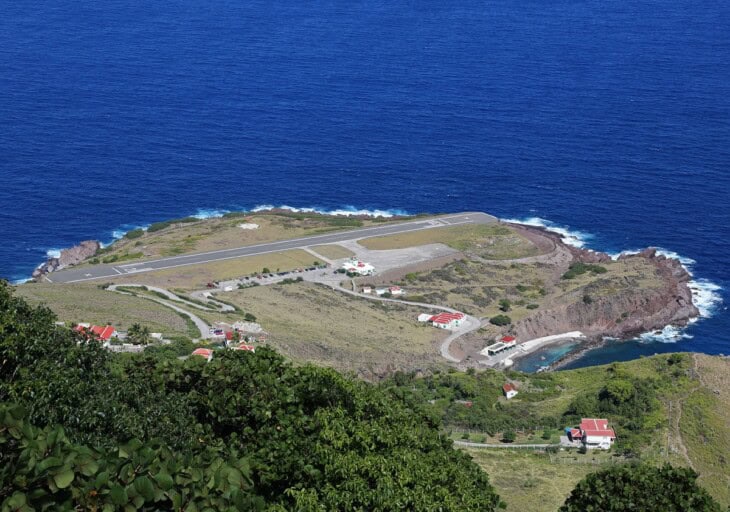

Saba has the shortest commercial runway on the planet at 1,312 feet (400 m), and it is not the result of cost-cutting. It is the longest flat strip the island physically allows.
Three sides of the runway end in cliffs that fall into the sea, and the fourth runs into high ground. There is no room for error in either direction, and only STOL types such as the de Havilland Canada Twin Otter and the Britten-Norman Islander can use it.
Winair, the sole scheduled operator, requires a specific endorsement before a pilot may fly the 15-minute hop from Sint Maarten. Given that a Twin Otter needs about a third of a normal regional runway, that endorsement is doing real work.
5. Gustaf III Airport, St Barts (SBH)
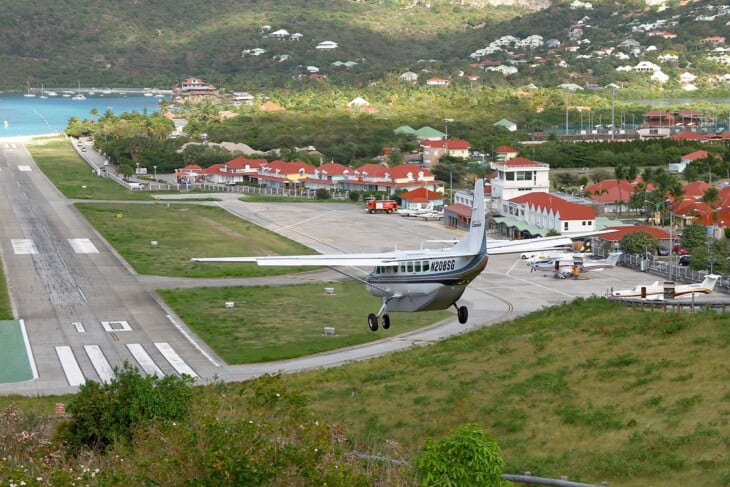
The approach to Gustaf III Airport descends steeply over a hilltop traffic circle, clearing the road by a margin that alarms drivers, before dropping onto a 2,119-foot (646 m) runway that ends at a public beach.
Pilots need a specific licence to land there, and the aircraft are correspondingly small. The largest type ever cleared for the airport was the de Havilland Canada Dash 7, and most arrivals carry fewer than twenty passengers.
St Barts is the clearest example of an airport that is genuinely difficult and almost never dangerous, because the qualification, the aircraft limits, and the daylight operation remove the combinations that cause accidents.
6. Aspen-Pitkin County Airport, Colorado (ASE)
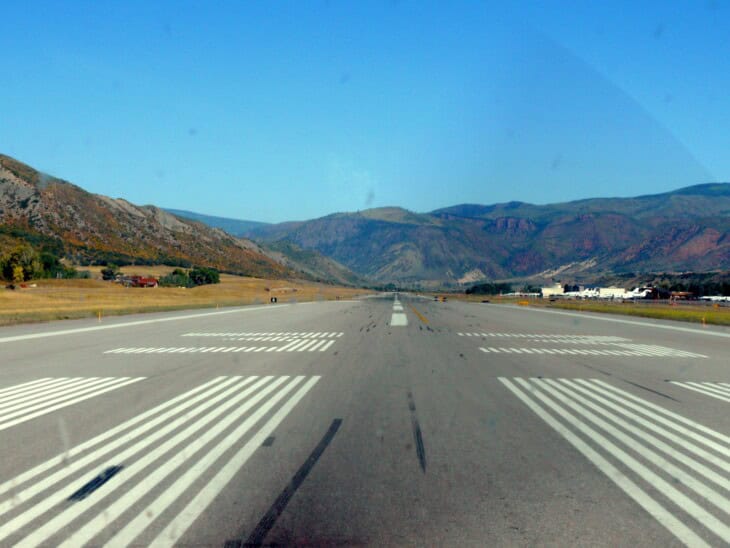
The American entry sits at 7,820 feet (2,384 m) in the Rocky Mountains, high enough that thin air stretches every takeoff roll and every landing distance. Its instrument approach comes down at well over 6 degrees, more than twice the standard, producing descent rates that would trigger a warning almost anywhere else.
It is a one-way-in, one-way-out airport. Aircraft land to the south on runway 15 and depart to the north on runway 33, because the mountains behind the field leave no other option.
Aspen is an FAA special airport, so commercial crews need a specific qualification, and aircraft are capped at a 95-foot (29 m) wingspan. That is why one regional airline holds effectively all the scheduled service into the valley.
7. Innsbruck Airport, Austria (INN)
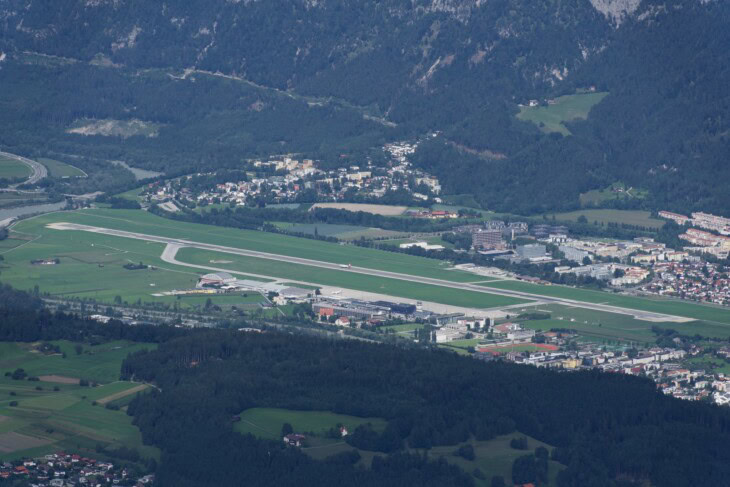
Innsbruck is the mainstream jet operation on this list, a Category C aerodrome handling airline traffic deep in a narrow Alpine valley. Only captains may fly the approach, and every crew must complete specific ground and simulator training first.
The hazards are the classic mountain set: curving non-standard approaches, low-level wind shear and turbulence spilling off the terrain, and weight limits forced by a 6,562-foot (2,000 m) runway in thin air.
What makes Innsbruck instructive is the traffic mix. Ski-season charters bring crews here in the worst months of the year, so the training requirement is not ceremonial.
8. Madeira Airport, Portugal (FNC)
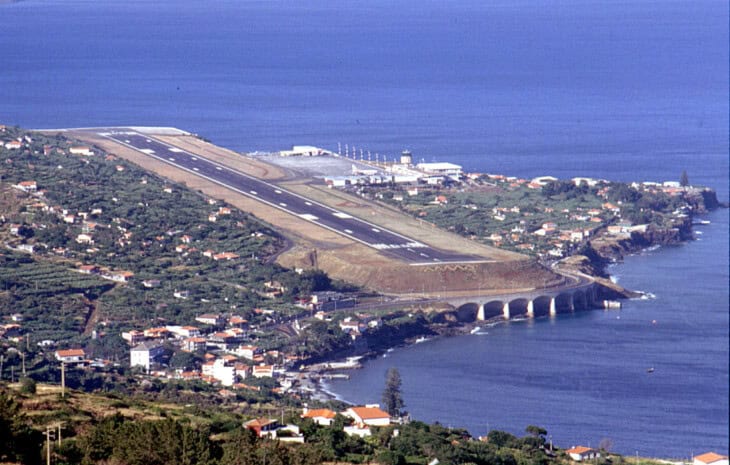
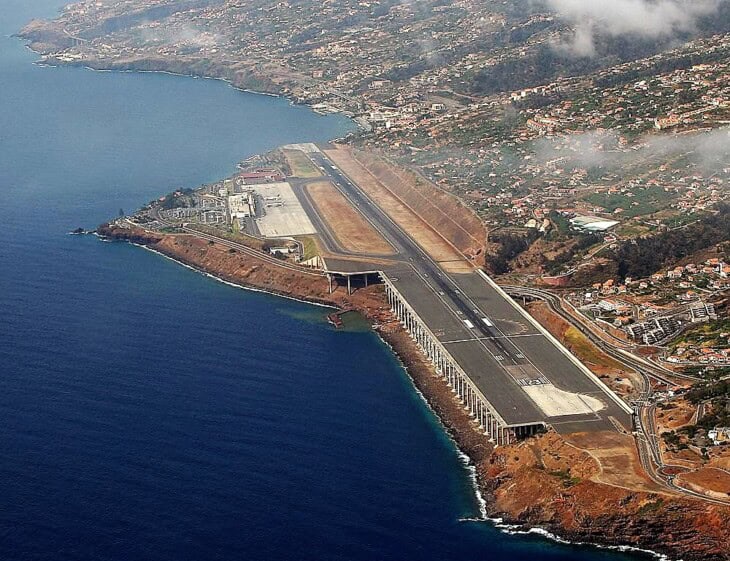
Madeira looks like an ordinary international airport until you learn what half of it is standing on. The 9,124-foot (2,781 m) runway was extended in 2000 on a platform carried by 180 concrete columns, each roughly 230 feet (70 m) tall, partly over the Atlantic.
The real hazard is wind. Air spilling over the island’s mountains produces turbulence and wind shear severe enough that Madeira is one of the very few airports in the world with published wind-shear limits that ground arrivals outright.
Pilots must complete additional training before operating there. The airport also carries the deadliest accident on this list, the 1977 loss of TAP Flight 425, which overran the then-shorter runway and killed 131 of the 164 people aboard.
9. Toncontin International Airport, Honduras (TGU)
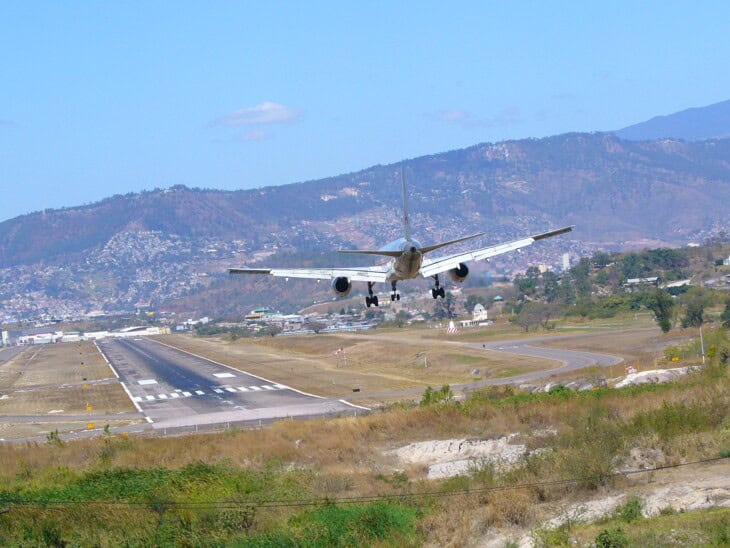
Toncontin in Tegucigalpa earned its reputation with a hard low turn onto runway 02, banking onto a 7,096-foot (2,163 m) strip in a bowl of hills moments before touchdown. It sits at 3,307 feet (1,008 m), so the approach is flown fast as well as tight.
Its ranking comes with an asterisk that most lists still miss. International passenger traffic moved to the new Palmerola airport in Comayagua from December 2021, and Toncontin is now largely a cargo and domestic field.
It stays on the list because it remains the textbook case of a terrain-boxed approach, and because the 2008 crash of TACA Flight 390 is the clearest illustration of what happens when a short wet runway meets an unforgiving surrounding.
10. London City Airport, United Kingdom (LCY)
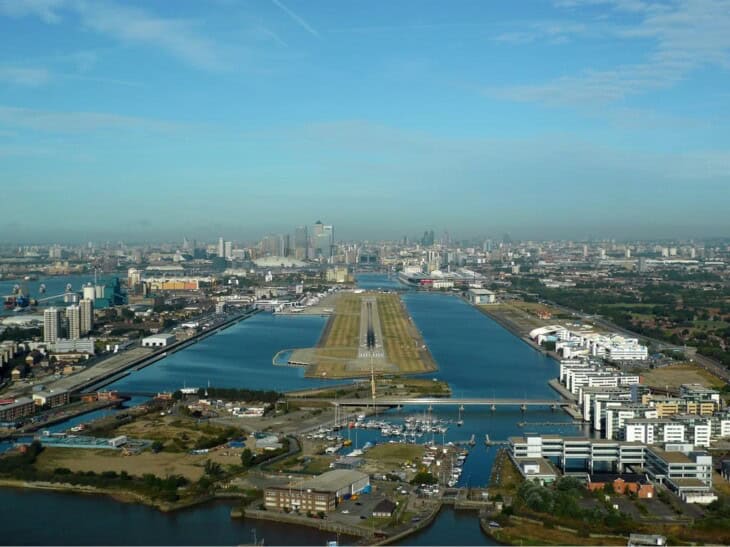
London City proves the club is not only about mountains. Boxed in by the towers of Canary Wharf and dense housing, it uses a 5.5-degree approach to a 4,948-foot (1,508 m) runway, keeping aircraft high over the city for as long as possible.
The original approach was steeper still at 7.5 degrees, and was only relaxed to 5.5 when the runway was extended in 1992.
Both the aircraft type and the individual pilot must be certified for the steep approach. That is why the fleet flying there is a short list of types such as the Embraer E190 and E195-E2 and the Airbus A220.
It is the everyday reminder that obstacles built by people can be as demanding as a Himalayan ridge.
11. Barra Airport, Scotland (BRA)
Barra is believed to be the only airport in the world where scheduled flights land on a tidal beach. Three sand runways are laid out in a triangle across Traigh Mhor bay and marked with permanent wooden poles, the longest measuring 2,776 feet (846 m).
At high tide the runways are underwater, so the timetable is written around the tide rather than the clock. Departure times shift day by day, and a delayed inbound can lose its landing surface entirely.
Only the Twin Otter serves it, and crews are trained specifically for the surface, which changes with weather, tide, and how much soft sand the last wave left behind.
12. Gibraltar International Airport (GIB)
Gibraltar’s 5,827-foot (1,776 m) runway sits in the wind shadow of the Rock, which shears and tumbles the airflow across the approach. Winter landings there are among the most physically demanding in Europe, and diversions to Malaga are routine.
It ranks last because the crosswind, not a formal rating, is the limiting factor. Airlines gate it through their own operations manuals rather than a regulator-mandated qualification.
Gibraltar's famous road no longer crosses the runway
Almost every dangerous-airport list still describes cars queueing at barriers while a jet lands across Winston Churchill Avenue. That stopped at one minute past midnight on 31 March 2023, when the Kingsway tunnel opened beneath the runway and vehicle traffic was permanently rerouted underneath it. Pedestrians and cyclists still cross the runway on foot, so the photograph is not entirely dead, but the traffic jam is.
The airports that look dangerous and are not
The single most famous “dangerous airport” image in the world is a wide-body passing a few feet above sunbathers at Maho Beach on the approach to Princess Juliana International Airport in Sint Maarten. It is also the clearest example of a hard-looking approach that is not hard at all.
Princess Juliana has a 7,546-foot (2,300 m) runway and a completely standard 3-degree glide slope. The aircraft in the photograph is exactly where it should be; the beach simply happens to sit under a normal final approach.
The danger there is real, but it is on the ground rather than the flight deck. People have been injured and, in 2017, killed by the jet blast of departing aircraft while holding onto the fence at the end of the runway.
Difficulty and danger are not the same thing
A steep, terrain-locked approach flown by a specially qualified captain, in daylight, in good weather, under conservative limits, is one of the most tightly controlled operations in aviation. What actually causes accidents is a demanding approach flown by an unprepared crew in bad conditions. The qualification exists precisely to remove that combination, which is why the scariest-looking airports on this list have quieter safety records than their reputations suggest.
The same logic separates a hard airport from a bad one. A congested, delay-prone hub can be miserable to travel through while being entirely routine to fly into, which is why the airports on most worst-airport lists frustrate passengers rather than pilots.
What is the deadliest airport in the world?
By body count, the deadliest airport in the world is not on the ranking above at all. It is Los Rodeos on Tenerife, now Tenerife North, where two Boeing 747s collided on the runway in 1977 and 583 people died in the worst accident in aviation history.
Nothing about Los Rodeos was aerodynamically hard. The Tenerife disaster came from fog, a diverted and overcrowded apron, a saturated radio frequency, and an ambiguous clearance, which is a very different failure mode from a mountain valley.
That gap is the most useful thing to take from any dangerous-airport list. The runways that kill people in numbers are usually ordinary ones on a bad day, not the extraordinary ones the industry has already surrounded with rules.
The rules airlines stack on top of the rating
Passing the qualification is only the start. Airlines wrap these airports in extra rules that a normal destination never carries, and those rules do a great deal of the safety work.
The captain-only rule is common: the more experienced pilot flies the approach while the first officer runs the checklists and calls the numbers. Many of these airports are also daylight-only, and they carry tighter weather minimums, so the crew needs more visibility and a higher cloud base before they may even begin.
Currency is the other half. Under the FAA rule, a qualification lapses if the pilot has not been into the airport within 12 calendar months, so a captain who spends a season on other routes has to requalify before returning.
The result is a strange inversion. The scariest-looking airports in the world are surrounded by the most conservative operating rules, which is exactly why they keep working.
Why these airports still exist
Nobody would build any of these from scratch today. They survive because the place they serve is worth the effort, whether that is Everest base camp, a ski resort, an island with no flat ground, or the financial heart of London.
Where a country can afford the alternative, it takes it. Honduras moved its international flights to Palmerola precisely to escape the bowl at Toncontin, and airports built on high ground trade a mountain approach for the thin-air problems you see across the highest airports in the world.
AeroCorner’s own runway data shows the payoff of flat land. The longest runways in the US exist because there was room to build them, the exact luxury none of these twelve airports ever had.
So the next time a landing video makes the rounds, look past the drama. What you are watching is not recklessness, it is one of the small group of pilots the world specifically trusted to be there, flying an approach they trained for and nobody else is allowed to attempt.
Sources and references used for research and fact-checking.
- Electronic Code of Federal Regulations, 14 CFR 121.445 Pilot in command airport qualification: Special areas and airports
- European Union Aviation Safety Agency, Easy Access Rules for Air Operations (Regulation EU 965/2012)
- Government of Gibraltar, Airport Tunnel to open on 31st March 2023 (press release 177/2023)
- Wikipedia, Tenzing-Hillary Airport
- Wikipedia, Juancho E. Yrausquin Airport
- Wikipedia, Madeira Airport
Get the Newsletter
The latest aviation news and stories sent to your inbox.
About the Author

Tim is the owner and lead editor of AeroCorner since 2019, overseeing aviation content covering aircraft, airlines, airports, and the broader aviation industry. Through years of researching, writing, editing, and publishing aviation-focused content, he has developed extensive practical knowledge of commercial aviation and air travel. Based in Asia and a frequent traveler himself, Tim also brings firsthand passenger experience to AeroCorner’s coverage. Outside of publishing, he has also explored aviation firsthand through hands-on flight training in New Zealand.