


Table of Contents
The worst airport in the United States right now is Chicago O’Hare. It is the only major US airport that finishes near the bottom of both measures that matter, and the only one on this list whose flight schedule the federal government has had to cut to keep it working.
Every “worst airports” list on the internet is somebody’s opinion about bad sandwiches and ugly carpet. This one is not. It ranks on two published data sets, both released in 2026.
The first is the Bureau of Transportation Statistics record of on-time departures at the 30 busiest US airports for January through June 2026. The second is the J.D. Power 2026 North America Airport Satisfaction Study, published on September 16, 2026, built from 24,710 traveler surveys.
An airport that fails one of those measures is having a bad year. An airport that fails both has a structural problem. That is the order below.
How this ranking works
Rank is set by how badly an airport fails two published measures: on-time departure performance in BTS data for January to June 2026 (a flight counts as on time if it leaves the gate within 15 minutes of schedule), and its J.D. Power 2026 satisfaction score within its own size segment. J.D. Power groups airports by annual passengers: mega is 33 million and up, large is 10 to 32.9 million, medium is 4.5 to 9.9 million. Scores are only comparable inside a segment. Where the two measures disagree, the article says so rather than hiding it.
The 15 worst US airports at a glance
| Rank | Airport | On-time departures, Jan to Jun 2026 | Why it is here |
|---|---|---|---|
| 1 | Chicago O’Hare (ORD) | 71.03% | Tied last among mega airports, and federally capped |
| 2 | Newark Liberty (EWR) | 79.02% | Tied last among mega airports, worst TSA waits, capped to 2027 |
| 3 | Fort Lauderdale (FLL) | 66.39% | Worst on-time record in the country |
| 4 | Philadelphia (PHL) | 77.08% | Last among large airports for the sixth year running |
| 5 | Dallas/Fort Worth (DFW) | 68.22% | Second-worst on-time record, at a mega hub |
| 6 | Chicago Midway (MDW) | 69.30% | Third-worst on-time record |
| 7 | Reagan National (DCA) | 69.87% | Fourth-worst on-time record, most constrained airspace in the US |
| 8 | Nashville (BNA) | 69.97% | Fifth-worst on-time record |
| 9 | Baltimore/Washington (BWI) | 70.74% | Sixth-worst on-time record, fourth-worst TSA waits |
| 10 | Cleveland Hopkins (CLE) | Not in BTS top 30 | Lowest-scoring medium airport |
| 11 | Orlando (MCO) | 71.79% | Eighth-worst on-time record |
| 12 | LaGuardia (LGA) | 72.09% | Ninth-worst on-time record, despite an award-winning terminal |
| 13 | Miami (MIA) | 72.96% | Tenth-worst on-time record, third-worst TSA waits |
| 14 | Denver (DEN) | 76.14% | Third-lowest mega airport score |
| 15 | Daniel K. Inouye, Honolulu (HNL) | Not in BTS top 30 | Bottom three among large airports |
15. Daniel K. Inouye International Airport, Honolulu (HNL)
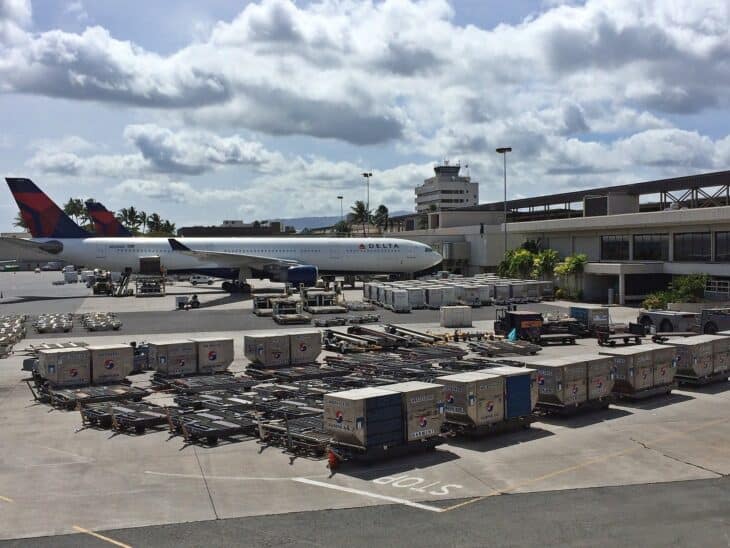

Honolulu finishes in the bottom three of J.D. Power’s large-airport segment for 2026. That is a hard result for an airport most travelers arrive at in a good mood.
The complaints are structural rather than attitudinal. Inter-island and long-haul traffic share terminals built for a smaller era, and the walking distances between them are long.
Honolulu is not in the BTS group of 30 major airports, so it has no federal on-time figure here. It lands on this list on satisfaction alone, which is why it ranks 15th and not higher.
14. Denver International Airport (DEN)
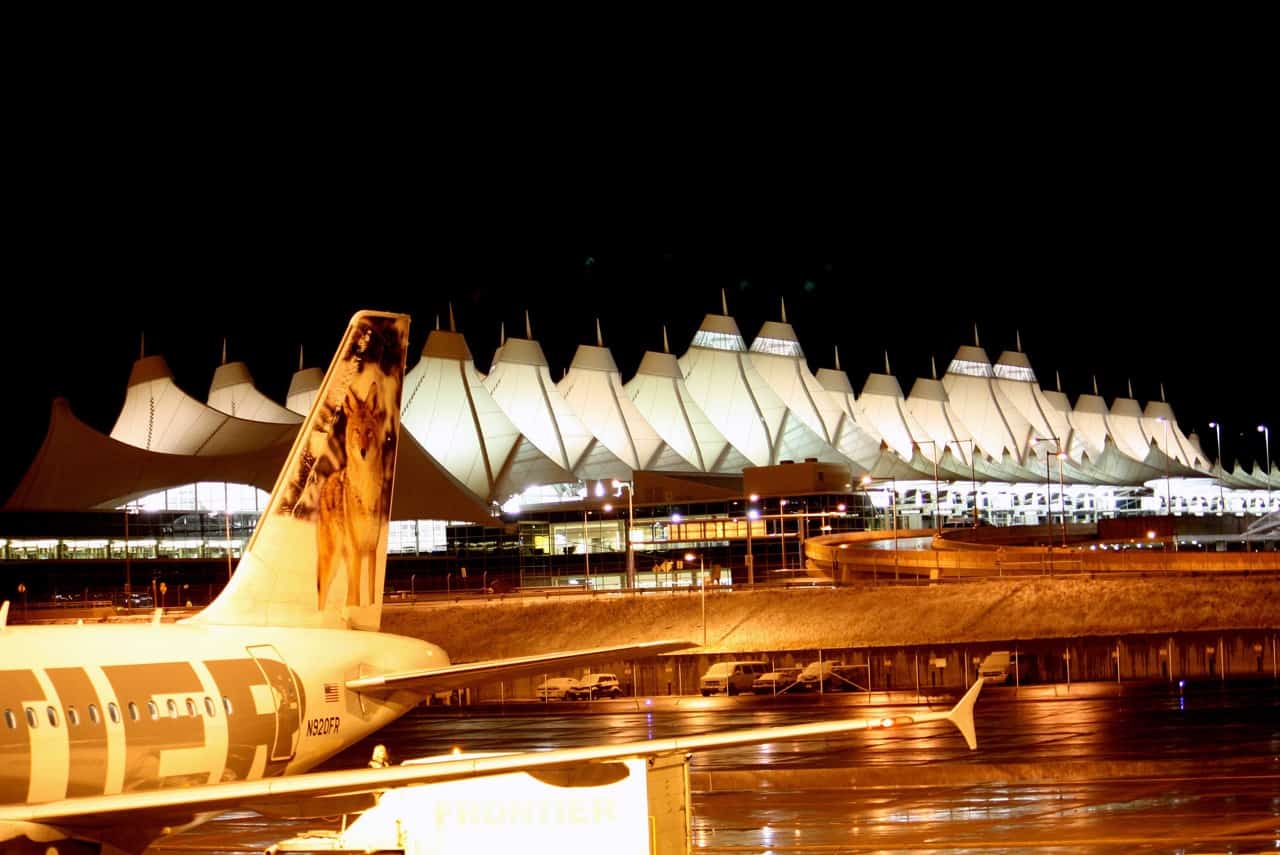
Denver is the third-lowest-scoring mega airport in the 2026 J.D. Power study, and it gets there despite a perfectly ordinary on-time record of 76.14%.
The problem is that passengers have been walking through a building site for years. The Great Hall renovation is now scheduled to finish in December 2027, with a new Concourse C-West and a north terminal expansion queued behind it.
Denver is the clearest case on this list of an airport that is unpleasant now and will probably be good later. Its score improved in 2026 even while it ranked near the bottom.
13. Miami International Airport (MIA)
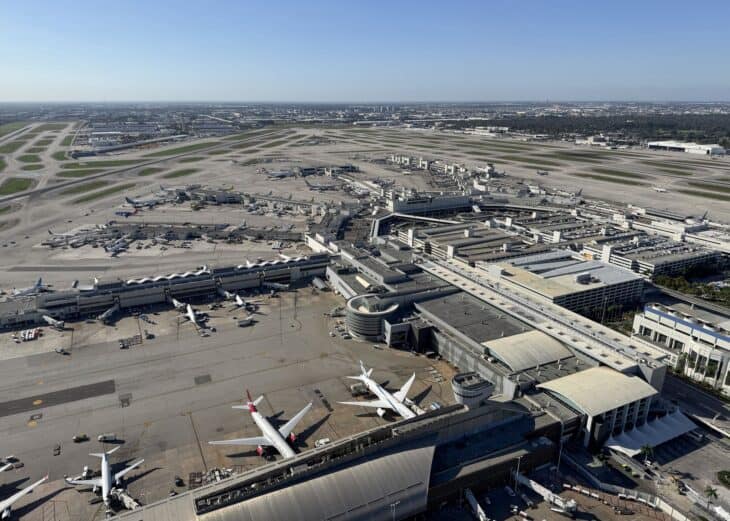

Miami got 72.96% of its flights out on time in the first half of 2026, the tenth-worst record among the 30 major airports.
It also has the third-worst security queues in the country. An analysis of the TSA’s own published hourly wait-time data puts Miami’s average at 19.6 minutes, behind only Newark and Houston Intercontinental.
Miami is a major international gateway with a heavy connecting bank, and the combination of customs volume and a long, narrow terminal spine is what generates the queues.
12. LaGuardia Airport (LGA)
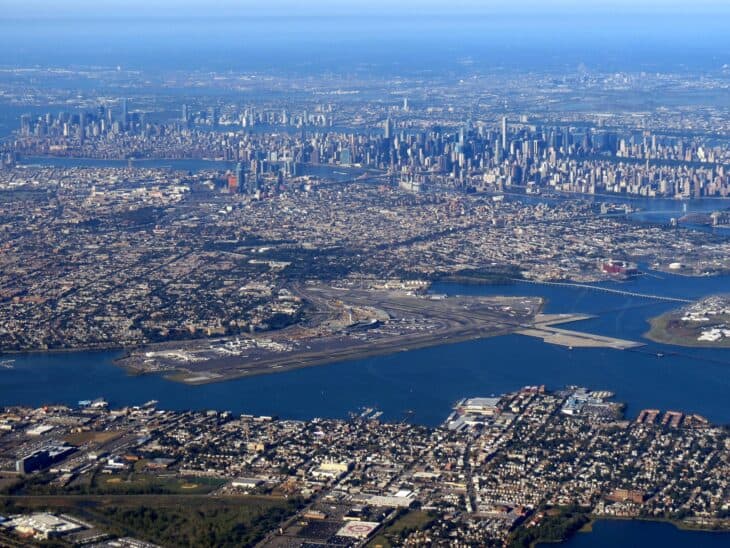

LaGuardia is the entry that breaks the internet’s mental model. It was the national punchline for two decades, and the $8 billion rebuild genuinely worked.
Forbes Travel Guide named LaGuardia the best airport in the United States in back-to-back years, 2024 and 2025, on the votes of a 9,000-strong panel of travel advisors. Terminal B has collected a Skytrax world’s best new terminal award and UNESCO’s Prix Versailles.
And yet only 72.09% of LaGuardia’s departures left on time in the first half of 2026, the ninth-worst record in the country. The terminals were never the real problem.
The building was never the problem
LaGuardia has won best-US-airport honors two years running and still cannot get three flights in four out on time. The reason is the airfield, not the architecture. LaGuardia sits on 680 acres of filled-in shoreline with two short, intersecting runways, wedged under the busiest airspace in the country. You can rebuild a terminal. You cannot buy Queens.
New York’s three-airport system spreads the same congested airspace across LaGuardia, JFK and Newark, which is why two of the three appear on this list.
11. Orlando International Airport (MCO)
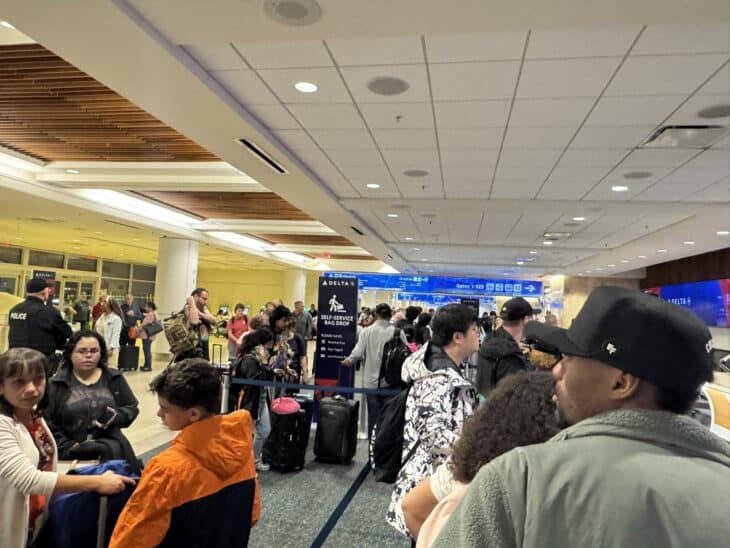

Orlando managed 71.79% on-time departures in the first half of 2026, the eighth-worst figure among major airports.
Orlando’s difficulty is its passenger mix. It handles an unusually high share of leisure travelers who fly rarely, arrive with large families, and move slowly through security and boarding.
Add Florida’s afternoon thunderstorm season, which reliably shuts the departure end of the runway for an hour at a time, and the delay numbers follow.
10. Cleveland Hopkins International Airport (CLE)
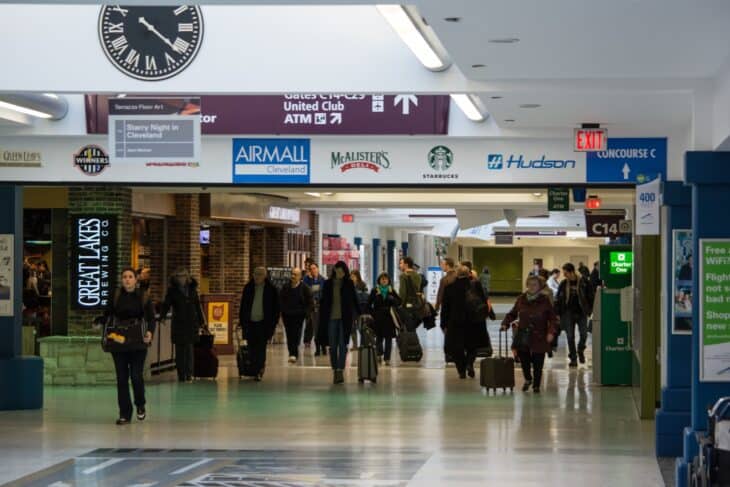
Cleveland Hopkins is the lowest-scoring medium airport in the 2026 J.D. Power study, bottom of its segment.
The airport has not hidden from the result. It is midway through CLEvolution, a redevelopment program that broke ground in July 2026 and is intended to deliver an entirely new terminal in 2032.
Until then, passengers get a concourse layout designed for a hub that Cleveland stopped being when United dismantled its operation there in 2014.
9. Baltimore/Washington International (BWI)


BWI released 70.74% of its flights on time in the first half of 2026, the sixth-worst record among the 30 major airports.
Its security lines are worse than its runways. BWI averages 18.2 minutes at the checkpoint, the fourth-longest wait of any major US airport.
BWI is also the least forgiving of the three Washington-area airports for a tight connection, because a single concourse handles most of Southwest’s considerable operation.
8. Nashville International Airport (BNA)
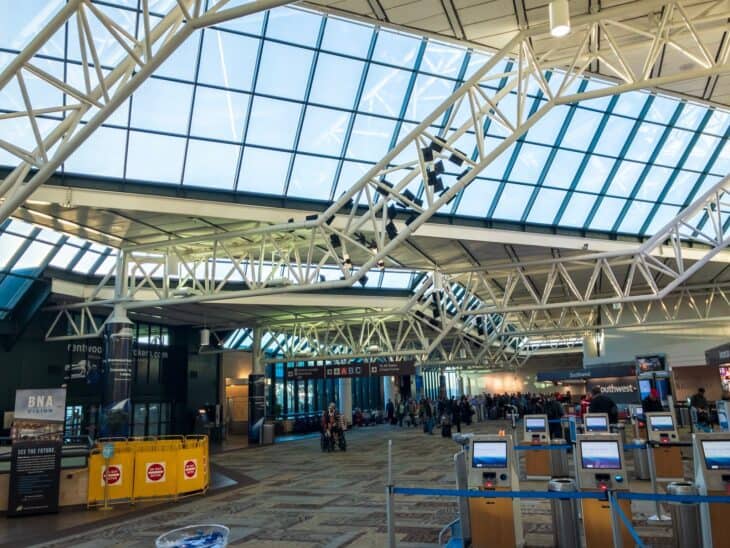
Nashville is the growth story that outran its own airport. Just 69.97% of its departures left on time in the first half of 2026, the fifth-worst mark in the country.
The airport has spent heavily on new concourses and a new international wing. The runway capacity underneath has not grown at the same rate.
When a city’s traffic doubles inside a decade, the terminal can be rebuilt and the airfield usually cannot. Nashville is the current example.
7. Ronald Reagan Washington National Airport (DCA)
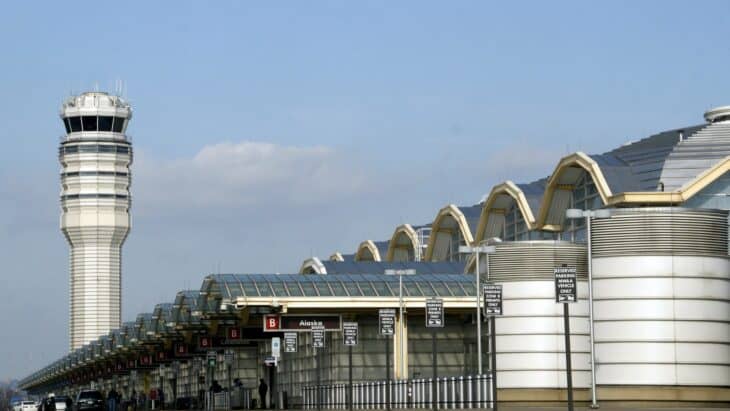

Reagan National posted 69.87% on-time departures in the first half of 2026, the fourth-worst figure among major airports.
DCA operates in the most constrained airspace in the country. Its main runway is crossed by two shorter ones, restricted flight corridors box it in on every side, and it sits directly beneath the approach path of heavy political scrutiny.
That airspace changed permanently after the January 29, 2025 midair collision between a PSA Airlines regional jet and a US Army UH-60 Black Hawk, which killed all 67 people aboard the two aircraft.
In March 2025 the NTSB found that a helicopter flying at the top of the Route 4 corridor could pass within about 75 feet vertically of an airliner on approach to Runway 33, calling the arrangement an intolerable risk. The FAA then closed Route 4 to routine traffic.
Those restrictions made DCA safer and made it slower. The two facts are related, and the second is the price of the first.
6. Chicago Midway International Airport (MDW)
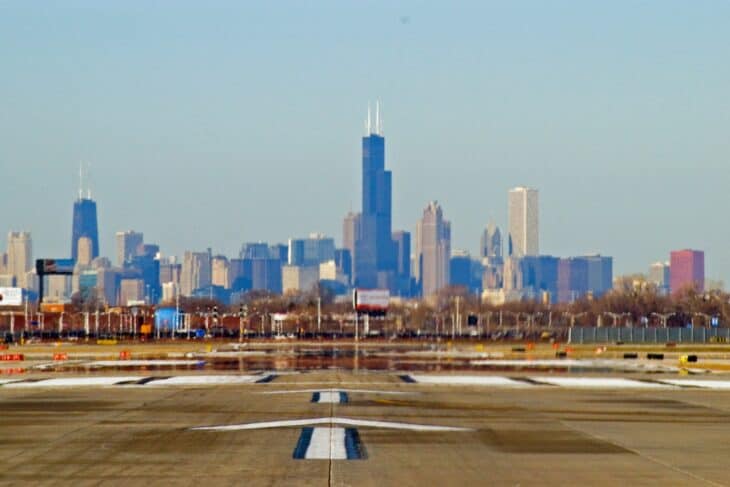

Midway got 69.30% of its flights out on time in the first half of 2026, the third-worst record in the country.
Midway is hemmed in by a residential street grid on all four sides, which caps its runway length and leaves no room for the taxiway capacity a Southwest base of its size needs.
It also inherits Chicago’s weather and Chicago’s airspace congestion without having O’Hare’s runway count to absorb them.
5. Dallas/Fort Worth International Airport (DFW)

DFW has the second-worst on-time departure record in the country at 68.22%, and it is the largest airport on this list by a wide margin.
Scale is what moves DFW up the ranking. A 68% on-time rate at a medium airport inconveniences a few thousand people a day. At American Airlines’ primary hub it reshapes the national schedule.
DFW runs tightly packed connecting banks, so one late inbound aircraft propagates into dozens of downstream departures. This is the mechanism behind why one delay creates more across a hub network.
4. Philadelphia International Airport (PHL)
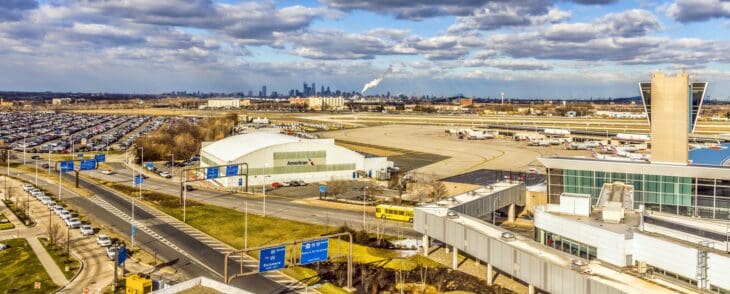

Philadelphia scored 596 out of 1,000 in the 2026 J.D. Power study, last among large airports for the sixth consecutive year.
Six years is the number that matters. A single bad result is a bad year, and six in a row is a building that does not work.
Philadelphia’s on-time record is not the issue: 77.08% puts it ninth-best of the 30 major airports. Passengers are unhappy with the terminals themselves, which is a harder problem to fix than a schedule.
PHL is spending close to $2 billion through its Transform PHL program on restrooms, seating, signage and exits. Its score did rise in 2026. It still finished last.
3. Fort Lauderdale-Hollywood International Airport (FLL)
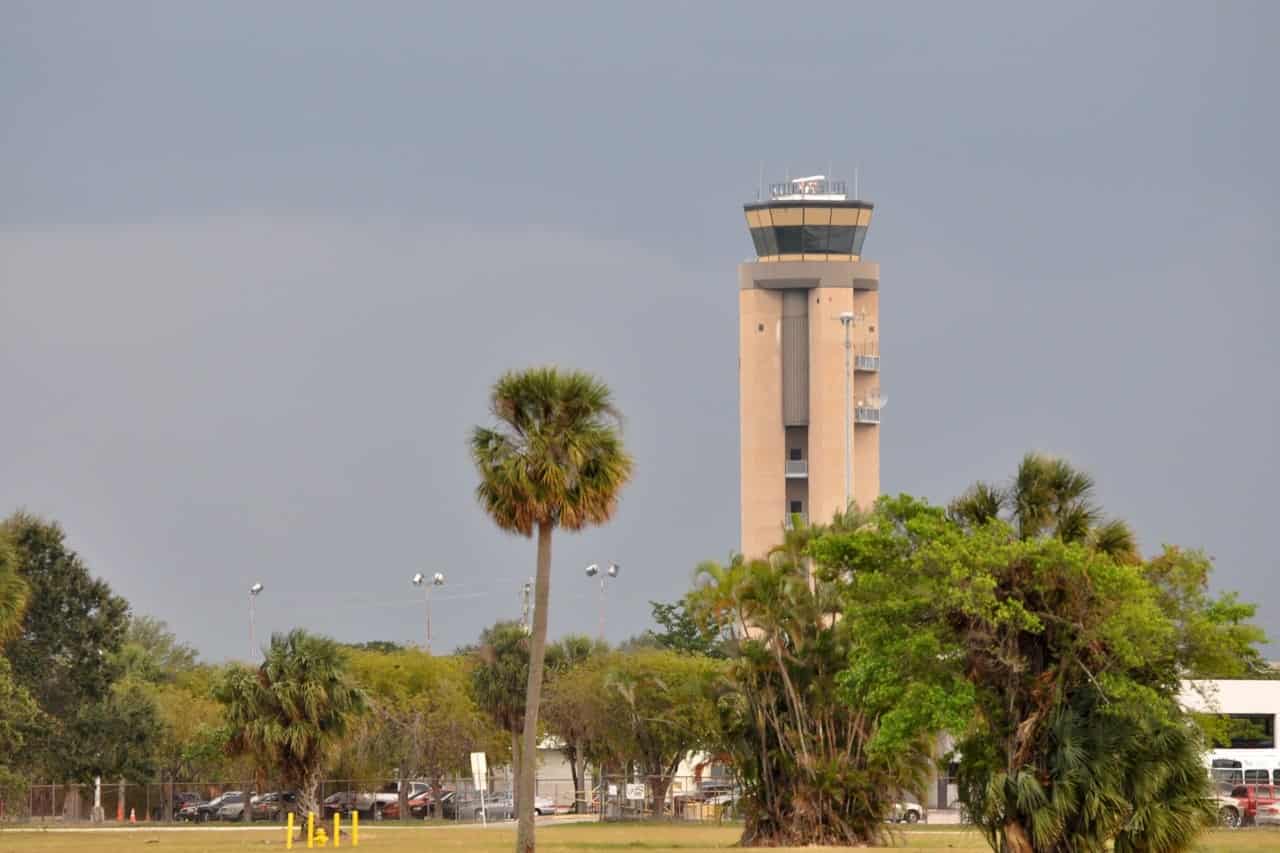
Fort Lauderdale has the worst on-time departure record in the United States. Just 66.39% of its flights left the gate within 15 minutes of schedule in the first half of 2026.
One flight in three was late. No other major US airport was close.
What makes this entry unusual is how fast it happened. In the first half of 2025, FLL ranked 21st of 30 with a respectable 75.80% on-time rate. It lost 9.4 percentage points in a single year.
The collapse tracks the disintegration of the airport’s defining airline. Spirit Airlines, whose primary hub was Fort Lauderdale and which held roughly a 31% share of the airport at its peak, ceased all operations on May 2, 2026 after two bankruptcies in under two years.
An airline does not fail quietly. The months of cancellations and thin staffing that precede a shutdown land on the airport, and at FLL they landed during exactly the window BTS was measuring.
There is a reasonable case that this entry is temporary. JetBlue has moved from about 24% of FLL capacity to roughly 36%, and the $829 million Terminal 5 project is adding gates. Check the 2027 numbers before writing Fort Lauderdale off permanently.
2. Newark Liberty International Airport (EWR)
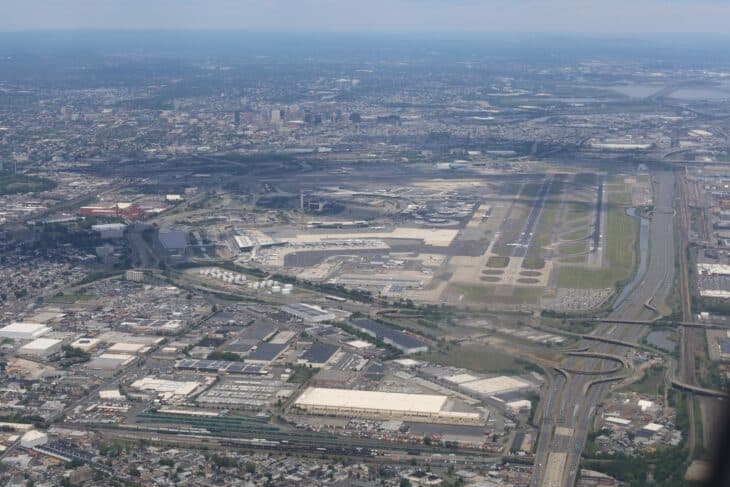

Newark is tied for last place among mega airports in the 2026 J.D. Power study, with a score of 585 out of 1,000.
It also has the longest security queues of any major airport in the country. Newark averages 23.1 minutes at the TSA checkpoint, more than three minutes worse than the next airport on the list.
Then there is the part that no other airport on this list can match. Newark is operating under a federal order that limits how many aircraft may be scheduled there at all.
The FAA capped Newark at 36 arrivals and 36 departures per hour, and in June 2026 extended that cap through October 30, 2027. The reason given is controller staffing: the Philadelphia TRACON sector that works Newark traffic has 28 certified controllers against a target of 46, or 60.8% of the requirement.
The FAA does not expect that sector to reach full staffing before the end of the summer 2027 season. The crisis that produced the cap, a run of radar and radio failures in 2025, has passed. The staffing hole that caused it has not.
But Newark's on-time record looks fine
It does. Newark released 79.02% of its flights on time in the first half of 2026, the fifth-best figure of any major US airport, up from 20th place a year earlier. That is not a recovery, it is arithmetic. The FAA achieved it by deleting flights: the cap holds Newark to 72 operations an hour against a pre-crisis peak above 80. Punctuality bought by cutting the schedule is worth reporting, not celebrating, and the passengers on the flights that no longer exist are not in the statistic.
Newark is second rather than first for one reason: the cap is working. O’Hare has the same federal intervention and still cannot get its flights out on time.
1. Chicago O’Hare International Airport (ORD)
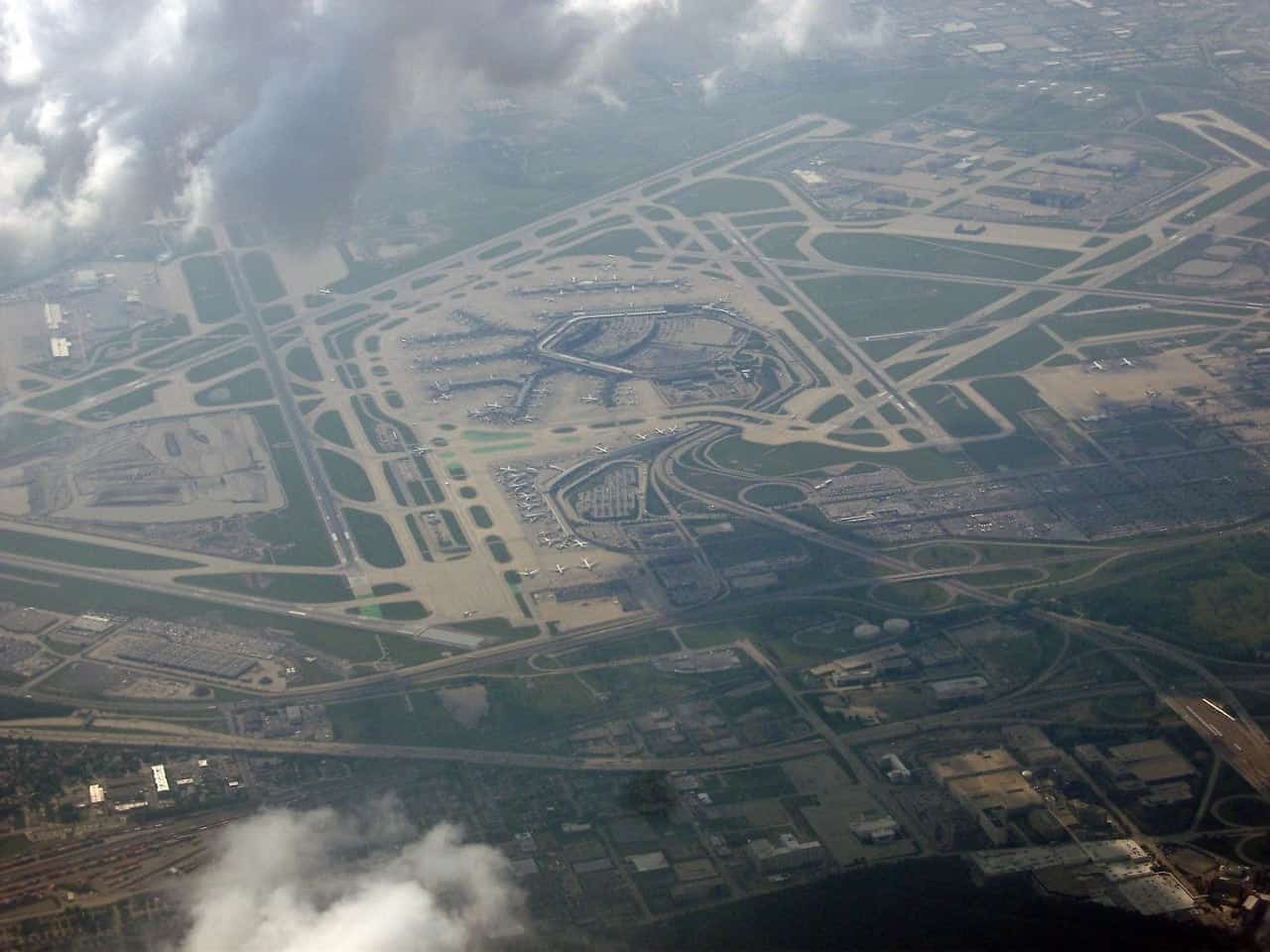
Chicago O’Hare is the worst airport in the United States because it is the only one that fails on every available measure at once.
It is tied with Newark for last place among mega airports in the 2026 J.D. Power study, on 585 points out of 1,000.
It released 71.03% of its flights on time in the first half of 2026, the seventh-worst record among the 30 major airports, and unlike Newark it posted that figure while under a federal schedule cap.
That cap is the third strike. In April 2026 the FAA ordered O’Hare limited to 2,708 scheduled operations per day for the summer season, because carriers had filed for more than 3,080 movements on peak days, a 14.9% jump on summer 2025 that the airport could not physically absorb.
The constraint is not runways, of which O’Hare has eight. It is taxiways. Rehabilitation work on Taxiways A and B, tollway construction along the western boundary and concrete work west of the main terminal have left the airfield unable to move the aircraft its runways can land.
All of it is in service of ORDNext, an $8.8 billion rebuild whose Global Terminal is not due until 2028, with Concourse D following by the end of that year and Concourse E arriving in stages through 2034.
O’Hare will very likely be an excellent airport in the 2030s. In 2026 it is a construction site that the federal government has had to throttle, and its passengers are paying for the decade ahead in the present tense.
What actually makes an airport bad
Read the list from the top and a pattern shows up that has almost nothing to do with the things travelers complain about.
Not one airport on this list is here for expensive food or rude staff. They are here for four structural reasons.
Airfield geometry. LaGuardia and Midway are boxed in by a city. No amount of terminal money adds a runway to either.
Controller staffing. Newark’s cap exists because one radar sector is 18 controllers short. The national controller shortage is the single most under-reported cause of delay in US aviation.
Construction. Denver, Cleveland, Philadelphia and O’Hare are all rebuilding, and all four are punished for it in the satisfaction data while the work is underway.
Airline health. Fort Lauderdale did not change in 2026. Its biggest airline died. If you want to predict next year’s worst airport, look at which carrier is in trouble and find its hub. Our ranking of the worst airlines in the US is the other half of that picture.
The airports everyone calls terrible that the data clears

Several airports with fearsome online reputations do not belong on a 2026 list, and saying so is part of ranking honestly.
Los Angeles (LAX) got 78.76% of its flights out on time, the seventh-best record of any major airport. The traffic outside is genuinely bad. The airport is not.
Washington Dulles (IAD) was the second-best performer in the country at 82.20%. Its reputation was earned in the mobile-lounge era and has outlived the facts by about fifteen years.
Seattle-Tacoma (SEA) came third at 79.66%, and San Francisco (SFO), long blamed for fog delays, sits mid-table at 73.42%.
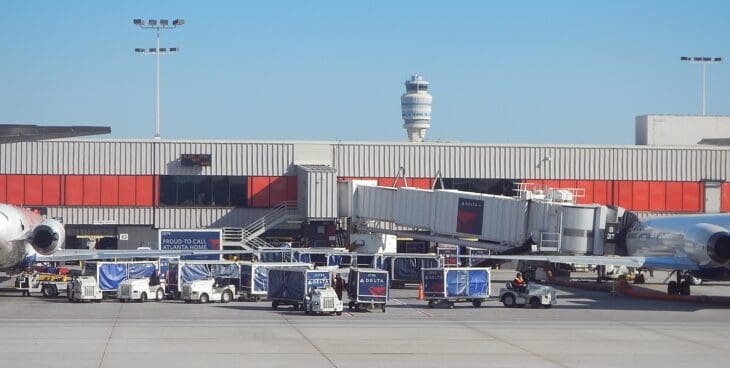
Atlanta (ATL), the airport most often called the worst in casual conversation, ranks eighth-best at 77.44%. Being the busiest airport in the world is not the same as being a bad one.
Two airports just missed this list: St. Louis Lambert, in the bottom three of the large segment, and Omaha’s Eppley Airfield, in the bottom three of the medium segment.
How to survive the airports on this list
Book the first departure of the day. Delay compounds through the schedule, so a 6 a.m. flight out of O’Hare or Fort Lauderdale is a materially different product from the same route at 6 p.m.
Avoid connecting through the hubs near the top. A tight connection at DFW or O’Hare during summer construction season is the single easiest way to lose a day.
At Newark, Miami and BWI, the security queue is the risk rather than the flight. Budget the extra twenty minutes rather than hoping.
And check the live picture before you travel. Our worst airports for delays tracker updates monthly, which is a better guide to next Tuesday than any annual ranking including this one.
FAQ
Sources and references used for research and fact-checking.
- Bureau of Transportation Statistics, Table 6 Ranking of Major Airport On-Time Departure Performance Year-to-date through June 2026
- Yahoo Travel, 30 major US airports with the most departure delays, ranked
- Johnny Jet, These U.S. Airports Have the Best and Worst On-Time Records in 2026
- J.D. Power, 2026 North America Airport Satisfaction Study
- FOX 35 Orlando, Ranked: The best and worst airports for 2026, according to J.D. Power
- NBC10 Philadelphia, PHL ranks last for 6th year in a row, passenger satisfaction survey finds
- Federal Register, FAA, Operating Limitations at Newark Liberty International Airport
- Federal Register, FAA, Operating Limitations at Chicago O'Hare International Airport, Order Establishing Scheduling Limits
- Federal Aviation Administration, FAA Extends Order Limiting Operations at Newark Liberty International Airport
- National Transportation Safety Board, NTSB Makes Urgent Recommendations on Helicopter Traffic Near Reagan National Airport
- FlightGlobal, FAA permanently closes helicopter route near DC's National airport, part of broader response to collision
- NPR, Spirit Airlines ceases operations after escalating financial struggles
- Business Traveller, Spirit's Collapse Creates a Major Test for Fort Lauderdale Airport
- Upgraded Points, Average TSA Security Wait Times by U.S. Airport
- AviationPros, LaGuardia Airport Wins Back-to-Back Best U.S. Airport Awards from Forbes Travel Guide
- The Points Guy, Chicago O'Hare to complete $12.5 billion expansion by 2035
- Axios Cleveland, Cleveland airport breaks ground on phase 1 of upgrade project
- Denver7, Denver International Airport reveals final phase of the Great Hall renovation
- Philadelphia International Airport, Department of Aviation Advances Nearly $2 Billion Transformation Focused on the Passenger Experience
Get the Newsletter
The latest aviation news and stories sent to your inbox.
About the Author

Tim is the owner and lead editor of AeroCorner since 2019, overseeing aviation content covering aircraft, airlines, airports, and the broader aviation industry. Through years of researching, writing, editing, and publishing aviation-focused content, he has developed extensive practical knowledge of commercial aviation and air travel. Based in Asia and a frequent traveler himself, Tim also brings firsthand passenger experience to AeroCorner’s coverage. Outside of publishing, he has also explored aviation firsthand through hands-on flight training in New Zealand.