

Table of Contents
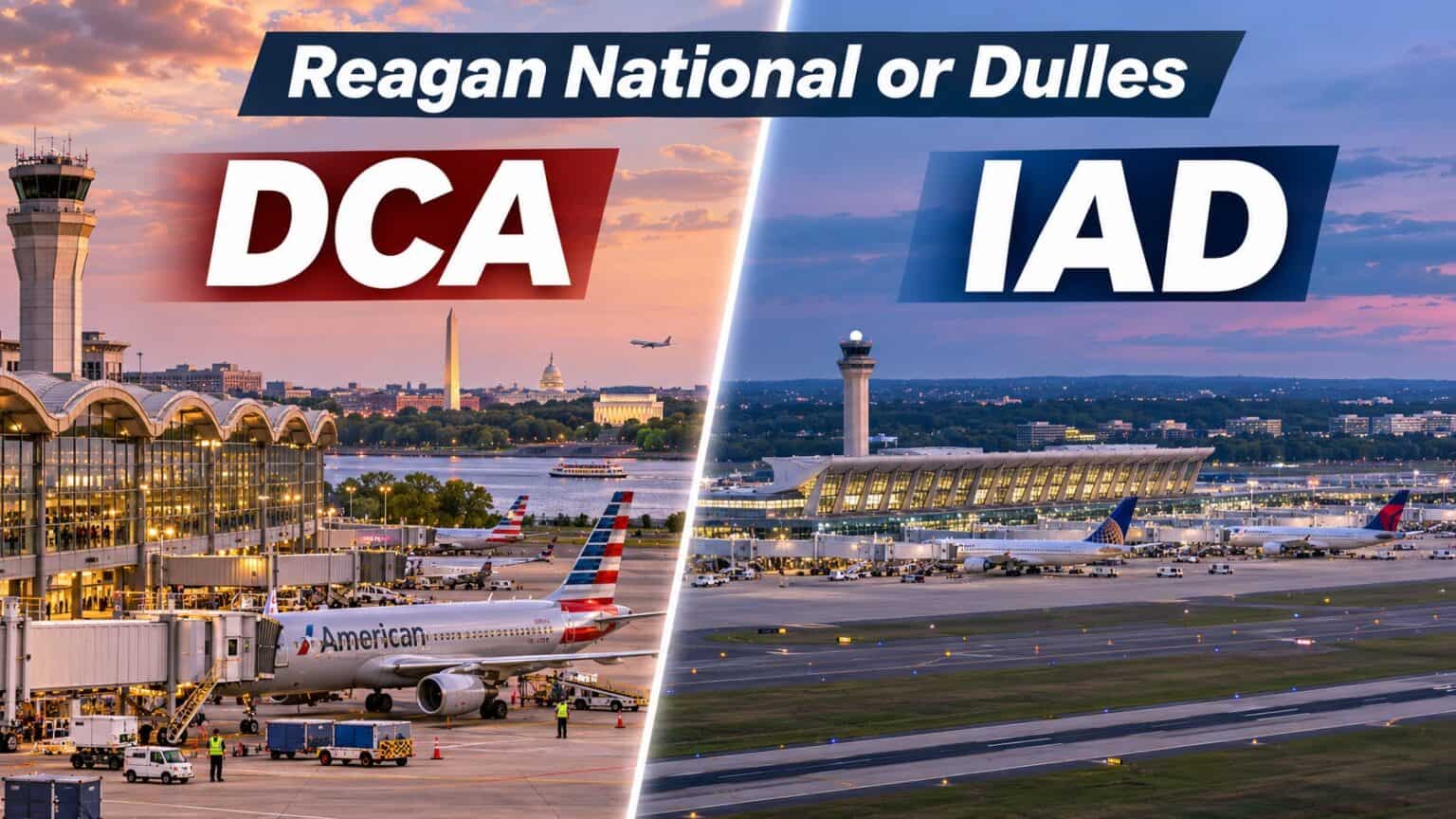
Pick Reagan National (DCA) for a domestic trip into Washington: it is about 5 miles (8 km) from the US Capitol, the Metro reaches downtown in 17 minutes, and its average fare ran $90 lower in mid-2026.
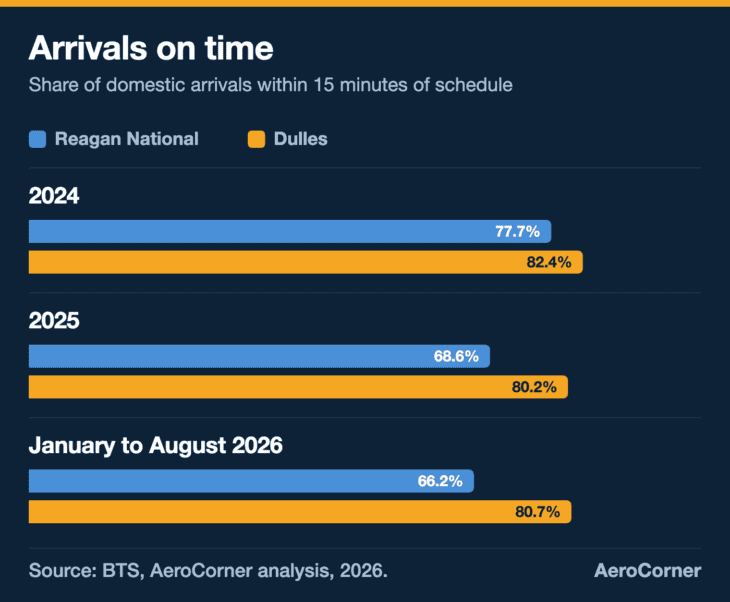
Pick Dulles (IAD) for anything international, for a long nonstop, or when your trip cannot absorb a delay. Dulles ran 80.7% of its domestic arrivals on time from January to August 2026, against 66.2% at Reagan National, and its cancellation rate was about a third as high.
Below, the two are compared on getting downtown, where you can fly, delays, fares and the airports themselves, as of November 2026. The numbers come from the Metropolitan Washington Airports Authority (MWAA), Metro, the Bureau of Transportation Statistics (BTS), J.D. Power and our own airport database.
| Criterion | Reagan National (DCA) | Dulles (IAD) | Edge |
|---|---|---|---|
| Distance to downtown | About 5 miles (8 km) to the US Capitol | 26 to 30 miles (42 to 48 km) to DC | Reagan National |
| Metro to Metro Center, weekday | About $2.85, 17 minutes | $6.75, about 53 minutes | Reagan National |
| Taxi to downtown | About $21 to $26 with the $3 fee | About $65 to $73 | Reagan National |
| Domestic airports with regular nonstops* | 101 | 68 | Reagan National |
| International passengers, Jan to Jul 2026 | About 300,000 | 5.9 million | Dulles |
| Arrivals on time, Jan to Aug 2026* | 66.2% | 80.7% | Dulles |
| Flights cancelled, Jan to Aug 2026* | 5.13% | 1.82% | Dulles |
| Average domestic fare, Q2 2026 | $435.42 | $525.87 | Reagan National |
| J.D. Power 2026 satisfaction score | 637 (18th of large airports) | 621 (21st) | Reagan National |
| Drive-up economy parking, per day | $25 | $20 | Dulles |
How we compared
On-time, cancellation and taxi-out figures are our own count from the BTS Reporting Carrier On-Time Performance files, using the DOT definition: within 15 minutes of schedule, with cancelled and diverted flights counted as late. Our August 2026 count matches the DOT Air Travel Consumer Report airport table exactly (64.0% and 76.6%). BTS covers only domestic flights by US airlines, which leaves out most of the international traffic at Dulles. Metro figures are for one adult on a weekday before 9:30 p.m., using fares marked valid July 2026. Taxi figures are the airports’ approximate sheets, dated 2024, before tip. The break-even figure is the taxi gap ($39 to $52) doubled for a round trip, and the Metro gap ($3.90) doubled the same way.
Getting downtown
This is where the two airports differ most. The Reagan National taxi sheet puts the US Capitol 5 miles (8 km) away and Union Station 5.5 miles (9 km) away. The Dulles sheet puts Washington, DC, 26 to 30 miles (42 to 48 km) from its terminal.
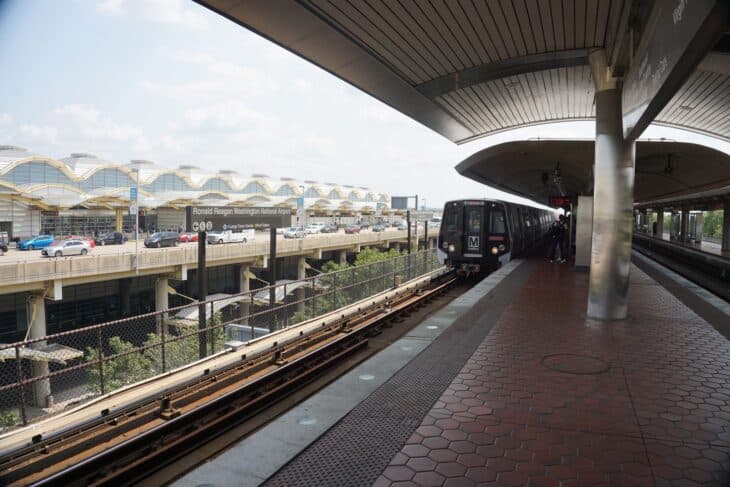
By Metro, Reagan National is on the Blue and Yellow lines, and an independent guide using WMATA’s published figures lists 17 minutes and $2.85 to Metro Center on a weekday. Two enclosed bridges connect the station to Terminal 2, while Terminal 1 passengers ride an airport shuttle bus to reach it.

Dulles got its own Silver Line station, about a 5-minute walk and 600 feet (183 m) from the terminal. The airport lists $6.75 to Metro Center on a weekday, which is the top of Metro’s fare range. After 9:30 p.m. and on weekends, fares at both airports fall to $2.50 or less.
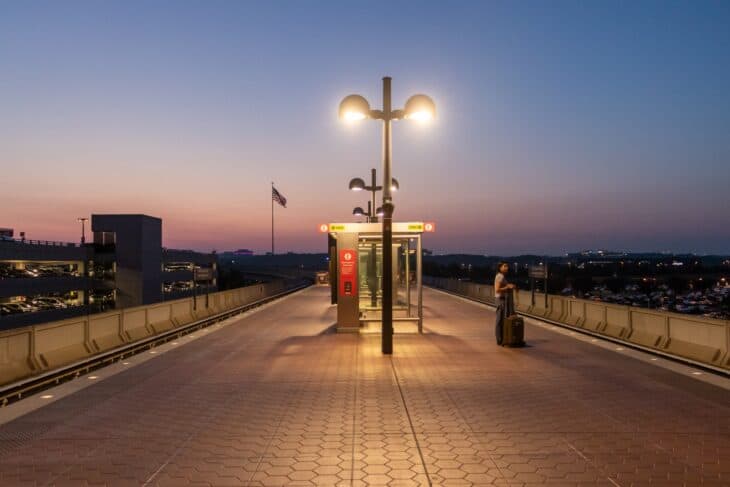

The ride is the catch. The same guide lists about 53 minutes from Dulles to Metro Center, while the airport itself says 50 to 55 minutes just to Rosslyn, the stop before the river. Plan on about an hour, walk included.
By taxi, the Reagan National sheet shows $18 to the Capitol Hilton and $23 to Union Station, plus a $3 airport fee, so about $21 to $26. The Dulles sheet shows $65 to $73 to DC.
The Dulles break-even: $78 to $104
A round trip by taxi from Dulles costs about $78 to $104 more than the same trip from Reagan National, so a Dulles ticket has to be at least that much cheaper to break even. By Metro on weekdays the money gap is only $7.80 round trip, but you give up about 72 minutes.
Staying in Northern Virginia changes the math. Tysons is about a tie by taxi, $45 from Reagan National and $47 from Dulles, and the Dulles sheet shows Reston at 8 miles (13 km) and $28.
Edge: Reagan National. It is closer, faster and cheaper to downtown by both Metro and taxi.
Where you can fly
Dulles is the region’s international gateway. MWAA counted 10.53 million international passengers there in 2025, out of 29.01 million in total, with 46 airlines and 164 destinations at the end of that year.
Reagan National barely plays in that market. All but about 300,000 of its 14.4 million passengers from January to July 2026 flew domestically, against 5.9 million international passengers out of 16.3 million at Dulles. Our Reagan National airport page lists five international routes in three countries, with Canada the largest market.
Federal limits explain much of that. Reagan National is held to 60 instrument flights an hour under a slot rule, and to nonstops within 1,250 statute miles under the perimeter rule and its exemptions. Congress has carved out 12 cities beyond the line, including Seattle, Los Angeles, San Francisco and Denver.
The result shows up in our count. Only 6.5% of completed domestic departures from Reagan National flew more than 1,250 miles from January to August 2026, against 32.3% from Dulles, whose flights average about 1,023 miles to Reagan National’s 682.
Inside the US, though, the smaller airport is the busier one. Reagan National flew regular nonstops to 101 domestic airports in that period and Dulles to 68, with 54 served from both.
"Dulles is the big airport, so it has more flights"
Only overseas. Dulles carried more passengers in 2025, 29.01 million to 24.89 million, but US airlines flew 95,240 domestic departures from Reagan National from January to August 2026 and 38,828 from Dulles. That is about 2.5 times as many, and of the two, only Reagan National flies to Dallas Love Field, Houston Hobby or Chicago Midway.
Your airline often settles it. American and its regional arms PSA and Envoy operated 51% of those Reagan National departures, with Southwest at 11.2% and Delta at 6.8%. At Dulles, United itself operated 64.7%, and of the two, only Dulles has nonstops to Honolulu, Anchorage, Sacramento or Bozeman.
Edge: split. Dulles wins internationally and on long nonstops, and Reagan National wins on domestic choice.
Delays and cancellations
Dulles is the more reliable airport by a wide margin, and that margin has grown. The gap on on-time arrivals was 4.7 points in 2024, 11.6 points in 2025 and 14.5 points in the first eight months of 2026.
| Domestic flights, BTS | 2024 | 2025 | Jan to Aug 2026 |
|---|---|---|---|
| Reagan National, on time | 77.7% | 68.6% | 66.2% |
| Dulles, on time | 82.4% | 80.2% | 80.7% |
| Reagan National, cancelled | 1.59% | 3.86% | 5.13% |
| Dulles, cancelled | 1.35% | 1.06% | 1.82% |
The break at Reagan National came in 2025, the year of the January midair collision. The FAA cut the hourly arrival rate from 32 to 26 after the crash and raised it to 30 by the end of February, a local report said in March 2025.
The timing fits, but our count cannot prove the cause, because it cannot separate the arrival cap from weather, staffing or airline scheduling. Reagan National ran below 60% only in July 2026 (58.1%), and its best month that year was April at 75.2%. Dulles ranged from 73.7% to 88.5%.
Airlines coded weather as the cause of about 69% of cancellations at Reagan National and 71% at Dulles. Those weather cancellations still took out 3.5% of scheduled departures at Reagan National, against 1.3% at Dulles.
Once you are on the plane, the wait is about the same: an average taxi-out of 22.8 minutes at Reagan National and 22.3 at Dulles. Congress may yet change the picture. The DCA Air Safety Act, introduced in September 2026, would cap arrivals at 28 an hour and cut 30 slot exemptions. It was still a proposal when we checked, with no report of committee action.
Edge: Dulles. It has been ahead on punctuality in every period we counted, and its cancellation rate in 2026 is about a third of Reagan National’s.
Airfares
BTS put the average domestic fare at $435.42 from Reagan National and $525.87 from Dulles in the second quarter of 2026, a gap of $90.45. The national average was $445.26, so Reagan National sits just under it and Dulles well over.
That is not like for like. The average domestic flight from Dulles is about 1.5 times as long, so some of the gap is simply distance, and on a specific route the cheaper airport can flip.
Compare the actual tickets, then add the ground cost from the callout above. A Dulles fare that looks $50 cheaper still loses if you would take a taxi both ways, though it wins by Metro, at the cost of more than an hour. Our JFK vs LaGuardia comparison runs the same sums for New York.
Edge: Reagan National. Its average fare is lower, although longer routes account for part of the difference.
The airports themselves
Travelers rate Reagan National slightly higher. J.D. Power’s 2026 study of large airports scored it 637, in 18th place, with Dulles at 621 in 21st. Neither is close to Tampa, the leader at 715.
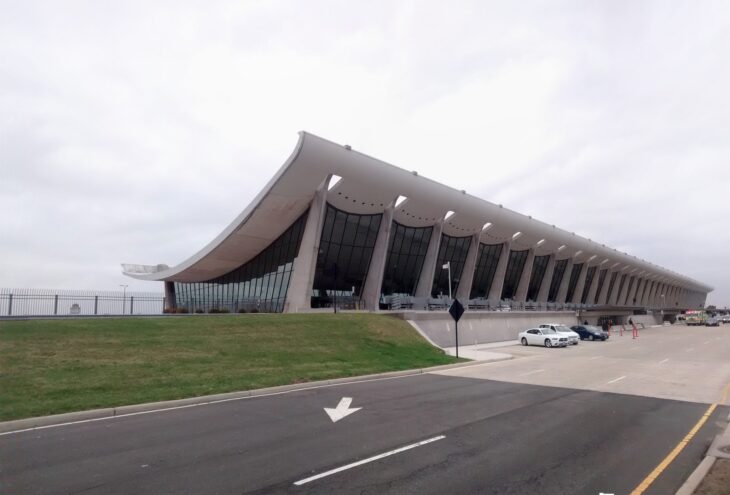

Dulles has more room and more to fix. Its longest runway is about 11,500 feet (3,500 m), according to our Dulles airport page, against about 7,200 feet (2,190 m) at Reagan National, a length our database says rules out 108 aircraft types there.
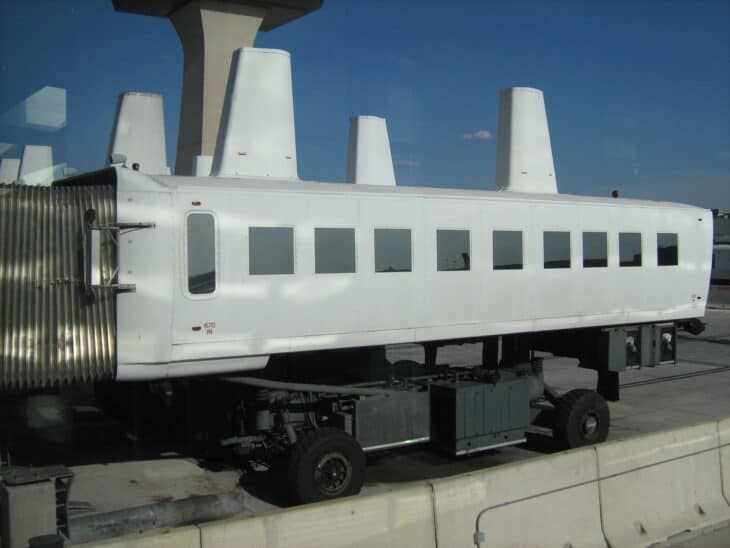
Its best-known oddity is the mobile lounges that shuttle passengers around the airfield. A $22.5 billion plan announced in July 2026 would end them. Transportation Secretary Sean Duffy said construction could start next spring, and President Trump said Congress would need to approve some parts.

Nearer term, Dulles is adding Concourse E, a $700 million building with 14 United gates and a 40,000-square-foot club. MWAA told its board in September that the opening had moved to October 2026, but we found no report of it opening as of November 2.
Parking leans the other way: drive-up economy parking is $20 a day at Dulles and $25 at Reagan National, and both lots have shuttles to the terminals. Dulles says reserving ahead usually gets the lowest rate.
Edge: Reagan National. Its satisfaction score is higher, although Dulles has the cheaper parking and the bigger building program.
Who should pick which
| If you are… | Pick | Because |
|---|---|---|
| Flying domestic and staying in DC | Reagan National | 17 minutes by Metro and about $21 to $26 by taxi |
| Flying overseas | Dulles | 5.9 million international passengers in seven months, against about 300,000 |
| Connecting, or on a tight schedule | Dulles | 80.7% on time and 1.82% cancelled, against 66.2% and 5.13% |
| Flying American | Reagan National | American’s group runs 51% of its domestic departures |
| Flying United | Dulles | United itself operates 64.7% of its domestic departures |
| Flying nonstop to Hawaii or Alaska | Dulles | Honolulu and Anchorage are not in Reagan National’s network |
| Staying in Reston, Herndon or Loudoun County | Dulles | Reston is 8 miles (13 km) and about $28 by taxi |
| Parking a car for a long trip | Dulles | $20 a day against $25, drive-up economy rate |
FAQ
Sources and references used for research and fact-checking.
- Bureau of Transportation Statistics, Reporting Carrier On-Time Performance (1987 to present), January 2024 to August 2026
- US Department of Transportation, Air Travel Consumer Report, October 2026
- Bureau of Transportation Statistics, Average Domestic Airline Itinerary Fares, Q2 2026
- Metropolitan Washington Airports Authority, Washington's Airports Served Record 54 Million Passengers in 2025
- FFXnow, Dulles Airport's year-to-date passenger numbers slip after record-breaking year
- Ronald Reagan Washington National Airport, DCA Reagan National Slot and Perimeter Rules
- Ronald Reagan Washington National Airport, Reagan National taxi fare sheet
- Washington Dulles International Airport, Dulles taxi rates map
- Washington Dulles International Airport, Silver Line FAQs
- Ronald Reagan Washington National Airport, Metro at Reagan National
- WMATA, National Airport station
- WMATA, Fares
- metrowashington.org, DCA to DC
- metrowashington.org, Dulles to DC
- Daily Voice, J.D. Power releases 2026 airport traveler satisfaction study
- Ronald Reagan Washington National Airport, Economy Parking
- Washington Dulles International Airport, Economy Parking Lot
- FFXnow, MWAA now expecting October opening for Dulles Airport's Concourse E
- The Associated Press via WTOP, Trump announces a $22.5B makeover of Dulles airport
- FOX45 / 7News, Big increase in delays, drop in passengers at Reagan National since midair collision
Get the Newsletter
The latest aviation news and stories sent to your inbox.
About the Author

Tim is the owner and lead editor of AeroCorner since 2019, overseeing aviation content covering aircraft, airlines, airports, and the broader aviation industry. Through years of researching, writing, editing, and publishing aviation-focused content, he has developed extensive practical knowledge of commercial aviation and air travel. Based in Asia and a frequent traveler himself, Tim also brings firsthand passenger experience to AeroCorner’s coverage. Outside of publishing, he has also explored aviation firsthand through hands-on flight training in New Zealand.