

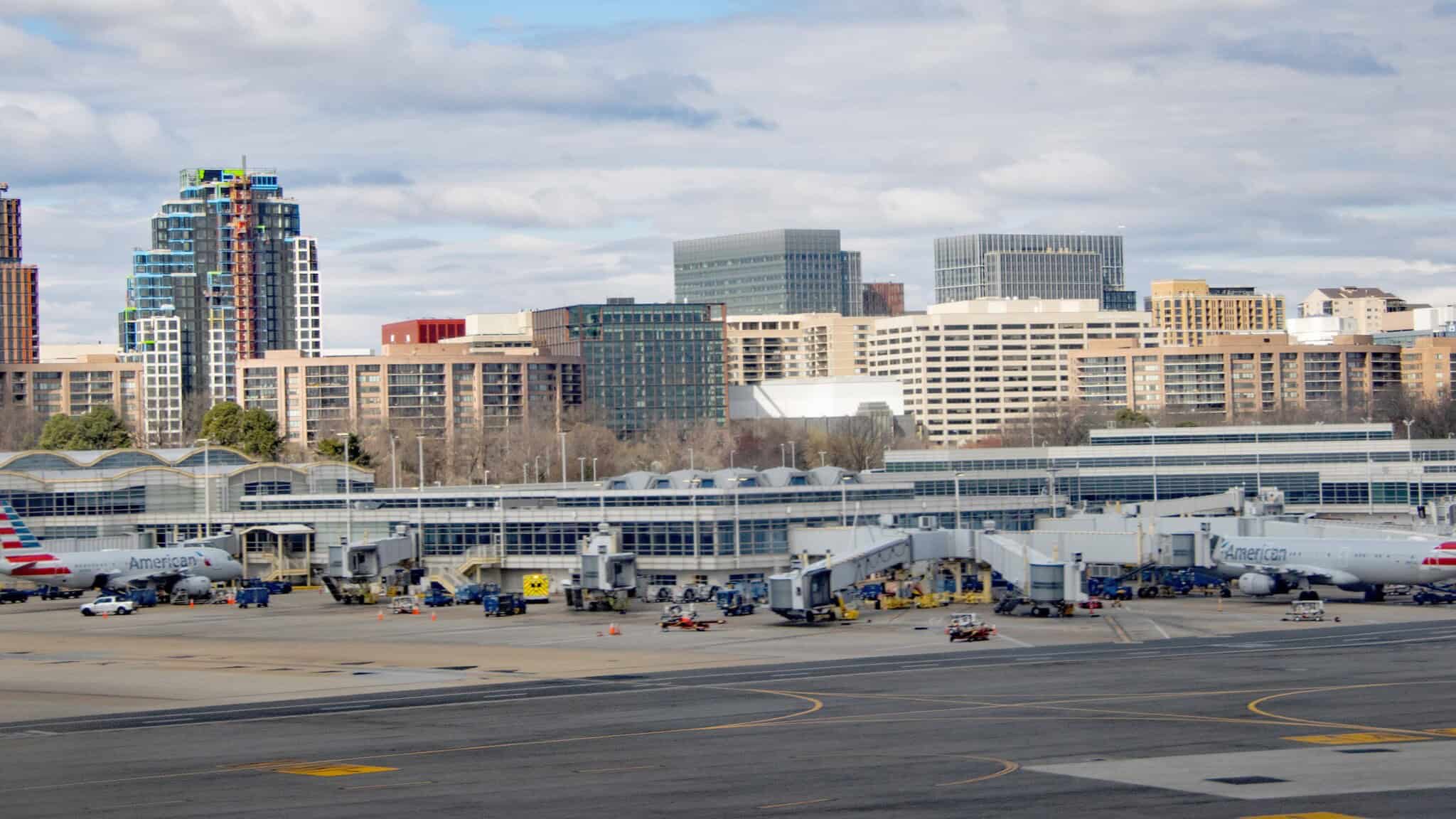
On September 10, 2026, Virginia Senators Tim Kaine and Mark Warner unveiled the DCA Air Safety Act, a bill that would cap arrivals at Ronald Reagan Washington National Airport at 28 an hour and permanently remove 30 slots. They tied it to the January 2025 midair collision near the airport, which killed 67 people.
Kaine said any set of reforms that ignores overcrowding at an airport “already operating beyond capacity” is “dangerously insufficient.” Warner said that since the collision “there have been numerous near misses in DCA airspace.”
What the bill would require
Within 90 days of becoming law, the FAA would have to cut DCA’s Airport Arrival Rate, the number of arrivals the airport and its airspace can accept in any 60-minute period, to no more than 28.
Within 180 days, it would turn that ceiling into binding 30-minute caps that spread arrivals and departures evenly and ban clustering, or “banking,” within any part of the hour.
The bill would also eliminate 30 slot exemptions, at least 26 of them for beyond-perimeter flights, the long routes allowed past the airport’s 1,250-mile limit. Six would go each year from 2028, with the last removed by December 31, 2032.
The FAA would choose which slots to cut, but only after publishing a proposed list and taking 60 days of public comment. It could delay any single cut by one year if it found no measurable safety gain, and the bill bars court challenges to those choices.
| Provision | What it requires | Deadline |
|---|---|---|
| Arrival cap | No more than 28 arrivals per 60 minutes | 90 days after enactment |
| 30-minute caps | Even spacing of arrivals and departures, no banking | 180 days after enactment |
| Slot list | Proposed list of 30 slots, then 60 days of comment | Proposed list within 180 days |
| Slot cuts | 30 exemptions, at least 26 beyond-perimeter | 6 a year, 2028 through 2032 |
| Oversight | Permanent DCA slot commission reporting to Congress | First report by December 31, 2028 |
How DCA’s slot and perimeter rules work
Reagan National has operated under a federal slot rule since 1969, which limits it to 60 instrument flight operations an hour between 6 a.m. and midnight, according to the Metropolitan Washington Airports Authority. A slot is permission for one takeoff or one landing, so a daily round trip uses two.
A separate perimeter rule, set in 1966 at 650 miles and widened to 1,250 statute miles (2,010 km) by the mid-1980s, bars longer nonstops unless Congress grants an exemption. The aim was to push long-haul traffic to Washington Dulles.
Congress has carved out exemptions four times: 24 in 2000, 22 in 2003, eight in 2012, and 10 in the 2024 FAA reauthorization. That adds up to 64, the number of daily flights the bill says Congress has added since 2000.
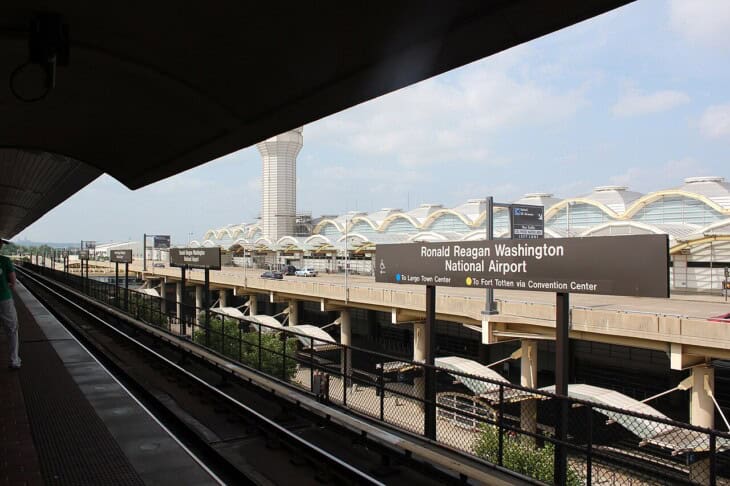
Of those, 50 serve beyond-perimeter cities such as Denver, Los Angeles, Phoenix, and Seattle. The 2024 batch went two apiece to Alaska, American, Delta, Southwest, and United, according to the Congressional Research Service. Removing at least 26 would take away more than half of the long-haul exemptions.
What the NTSB found
The bill’s findings say that on the night of the collision, one controller handled 29 aircraft over 18 minutes, including six takeoffs or landings in five minutes. The NTSB’s own analysis counted between seven and 12 aircraft under that controller at any one time in the final 20 minutes.
The board’s final report, detailed in February 2026 testimony by NTSB Chair Jennifer Homendy, found that managing DCA’s traffic flow had been a longstanding challenge. It said Potomac TRACON asked to lower the airport’s arrival rate in 2023, and the request was never sent up the chain because it was “too political.”
The NTSB also found that airlines bunched flights into surges of “compacted demand,” adding to air traffic controllers’ workload. It recommended that the FAA limit airline operations at DCA in 30-minute periods, as LaGuardia already does, and reassess the arrival rate.
In practice, the bill would write those two recommendations into law with hard numbers attached. The FAA cut the arrival rate to 26 an hour after the crash, and in April 2025 its then-acting administrator said it was holding at 30, Reuters reported. The NTSB’s final report noted that the temporary adjustment was still in effect.
The NTSB has also pressed Congress to enact all 50 of its recommendations. In August, a regional jet taxied onto a runway at Reagan National with a 737 on final approach.
A proposal, not a rule
The text released by Kaine’s office carries no bill number or committee assignment yet. It would have to pass both the Senate and the House and be signed into law before the FAA had to act on any of it.
The Metropolitan Washington Airports Authority said it “will monitor the progress of the proposed legislation,” WJLA reported.
Sources and references used for research and fact-checking.
- Office of Senator Tim Kaine, Kaine & Warner Unveil Legislation to Reduce Traffic, Improve Safety at DCA
- Office of Senator Tim Kaine, DCA Air Safety Act (bill text)
- NTSB, Testimony of Chair Jennifer Homendy on the NTSB Final Report on the DCA Midair Collision
- Metropolitan Washington Airports Authority, DCA Reagan National Slot & Perimeter Rules
- Congressional Research Service, Reagan National Airport Slot and Perimeter Rules and Exemptions Authorized in 2024 (IN12504)
Get the Newsletter
The latest aviation news and stories sent to your inbox.
About the Author

Tim is the owner and lead editor of AeroCorner since 2019, overseeing aviation content covering aircraft, airlines, airports, and the broader aviation industry. Through years of researching, writing, editing, and publishing aviation-focused content, he has developed extensive practical knowledge of commercial aviation and air travel. Based in Asia and a frequent traveler himself, Tim also brings firsthand passenger experience to AeroCorner’s coverage. Outside of publishing, he has also explored aviation firsthand through hands-on flight training in New Zealand.