

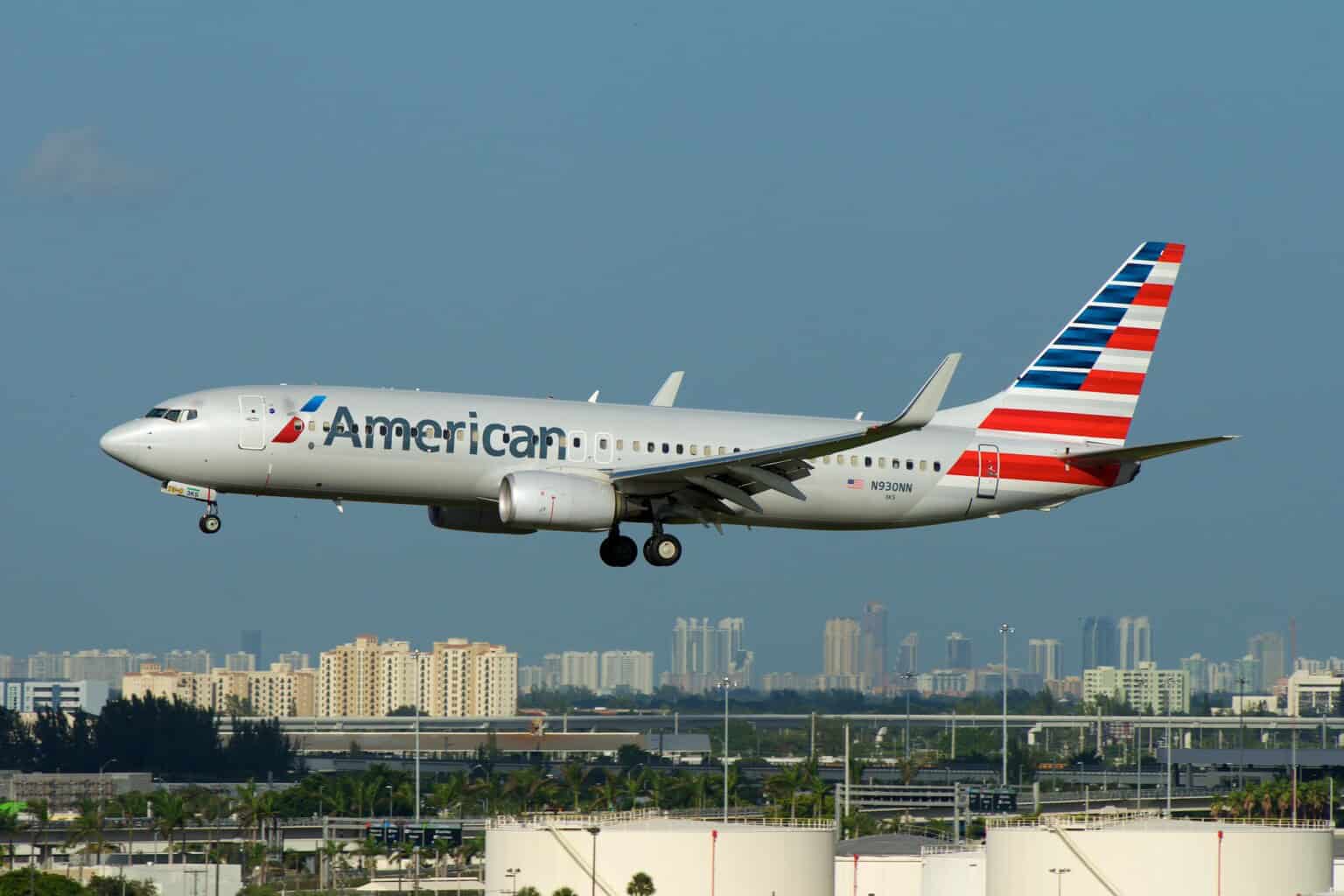
An American Airlines Boeing 737-800 broke off its landing at Ronald Reagan Washington National Airport on the evening of Thursday, July 30, 2026, after its crew saw a regional jet sitting on the runway in front of them. The regional jet, a Republic Airways Embraer 175 flying as American Eagle, had taxied onto Runway 1 without a clearance of its own.
Nobody was hurt. The 737 flew a go-around, returned and landed normally, and the regional jets involved departed without further incident.
A clearance that went to the wrong airplane
Two Republic-operated flights with nearly identical callsigns were holding at adjacent runways at around 6:55 p.m. Eastern. The tower cleared flight 4702, bound for LaGuardia, to line up and wait on Runway 4.
Flight 4752, bound for Raleigh-Durham, appears to have taken that instruction as its own and taxied onto Runway 1 instead. Its crew later told controllers that they had been told to line up and wait on Runway 1, according to tower audio reviewed by View from the Wing.
American 3101, arriving from Dallas Fort Worth, was already on short final for Runway 1. Its crew called the tower to report an airplane on the runway, and the controller sent them around.
The setup
Both regional jets were Republic Airways Embraer 175s operating under the American Eagle brand, on the same tower frequency, at the same moment, holding at two different runways. Their flight numbers differed by two digits: 4702 and 4752.
How close the two aircraft actually came is not settled. Flightradar24 data cited by Simple Flying puts the arriving 737 at roughly 725 feet above the ground at its lowest point, while the tower-audio account has it closer to 320 feet and about four fifths of a mile from the runway when it broke off.
Reality check
The FAA has not published a statement on the event and there is no official separation figure yet. Every distance quoted so far comes from public tracking data or tower audio, and those two methods rarely agree to the foot. Treat the numbers as provisional until an investigating agency publishes its own.
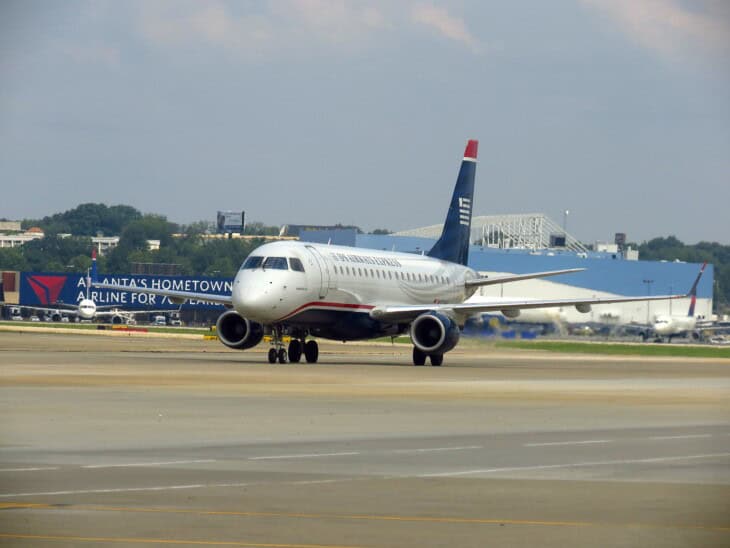
Why this keeps happening at Reagan National
Runway 1 and Runway 4 at Reagan National intersect, and the airport pushes an unusually heavy schedule through a small field with short taxi distances. That combination leaves very little time between a misheard instruction and an airplane crossing a hold line.
Similar-sounding callsigns are a long-recognized hazard in that environment. When one regional operator flies several departures a few minutes apart under one brand, the only thing separating two aircraft on the radio can be a pair of digits, and a crew primed to expect its own clearance can hear one that was never meant for it.
The defenses against that are deliberately layered: readback and hearback discipline on the frequency, hold short markings on the pavement, controllers scanning the runway, and finally the arriving crew’s own eyes. On July 30 the first several layers did not catch the error and the last one did.
That is worth stating plainly, because a go-around is not an emergency. It is the maneuver the system is built around, and an approach abandoned at a few hundred feet is the procedure working rather than failing.
The context is what makes this one land harder. Reagan National is where an Army Black Hawk and a PSA Airlines regional jet collided over the Potomac on January 29, 2025, killing 67 people, in the deadliest US airline accident in more than two decades.
The NTSB issued a long list of safety recommendations after that accident, covering helicopter routes near the airport, visual separation practices and traffic-alert equipment. Eighteen months on, the agency is still pressing Congress to turn them into law, and as of late July they were still not enacted.
A runway incursion with a go-around is a different failure mode from a midair collision, and no investigation has yet tied the two together. But it is another entry in the file on an airport whose margins were already the subject of a national argument.
Sources and references used for research and fact-checking.
Get the Newsletter
The latest aviation news and stories sent to your inbox.
About the Author

Tim is the owner and lead editor of AeroCorner since 2019, overseeing aviation content covering aircraft, airlines, airports, and the broader aviation industry. Through years of researching, writing, editing, and publishing aviation-focused content, he has developed extensive practical knowledge of commercial aviation and air travel. Based in Asia and a frequent traveler himself, Tim also brings firsthand passenger experience to AeroCorner’s coverage. Outside of publishing, he has also explored aviation firsthand through hands-on flight training in New Zealand.