

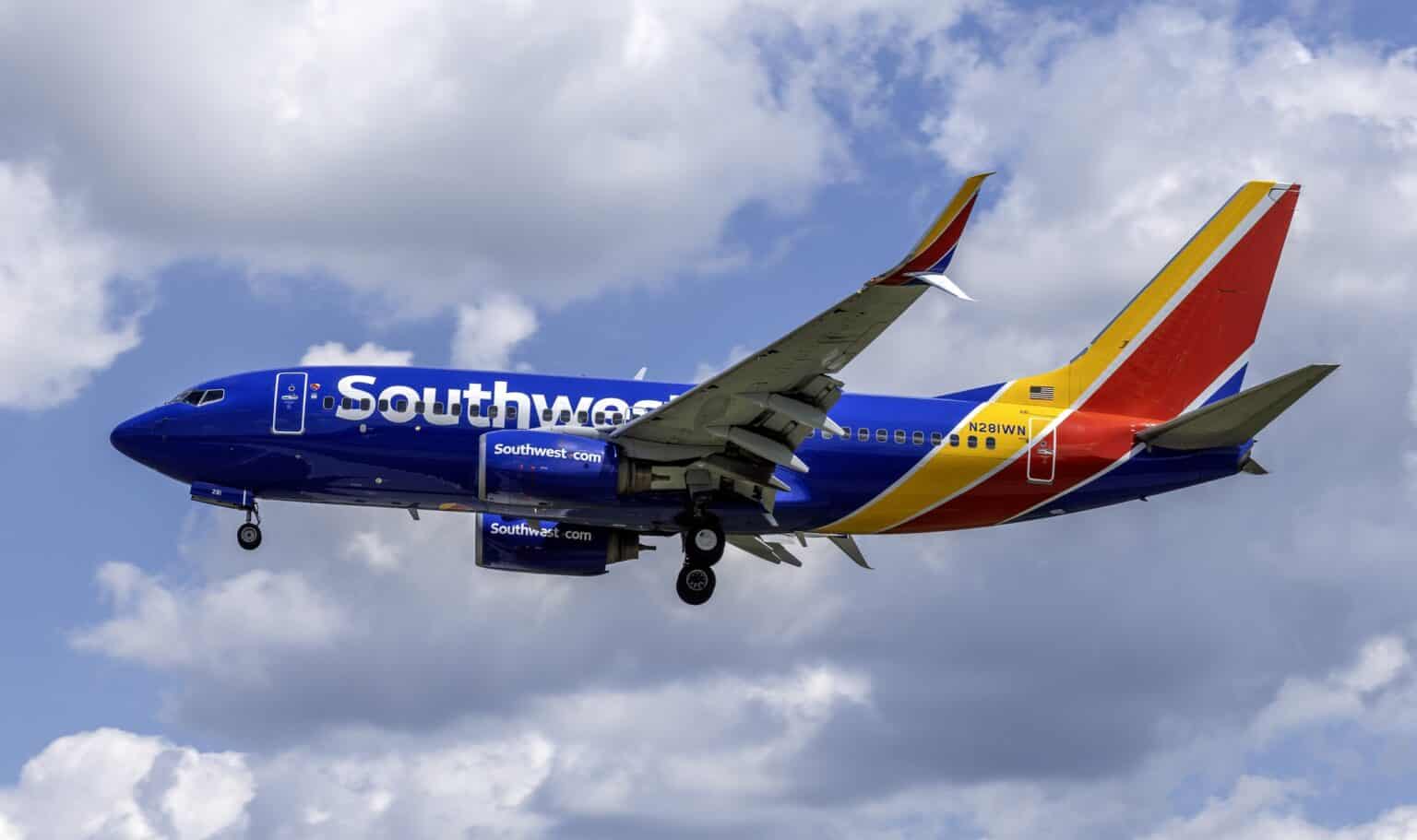
Southwest Airlines flight WN3396 from Orange County to San Jose declared an emergency shortly after takeoff on Friday, November 6, 2026, and diverted to Los Angeles International Airport. The FAA said the flight landed safely at LAX at about 12:25 p.m. local time after the crew reported an engine issue.
Southwest said the pilots received an “engine-related maintenance indication,” followed established procedures and landed the aircraft uneventfully. The airline said it would fly its customers on to San Jose on another aircraft.
What happened on WN3396
Flight-tracking data from FlightAware shows the jet pushing back from gate 20 at John Wayne Airport in Santa Ana at 11:32 a.m. Pacific time. It took off at 11:48 a.m. on what was scheduled as a short hop up the California coast to Mineta San Jose International Airport.
The track shows the 737 climbing out over the coast and leveling off at about 4,900 feet. Over the next quarter of an hour it flew wide circuits over the Pacific south of Huntington Beach, reaching about 30 miles (48 km) southwest of the airport, before heading north toward Los Angeles.
The Los Angeles Times reported that the flight declared a general emergency and squawked 7700, the transponder code for an emergency. Its report, also citing FlightAware, put the point where the climb stopped near 20,000 feet, well above the roughly 4,900 feet that the FlightAware track AeroCorner reviewed shows.
LAX said the flight “landed without incident, arriving on Runway 25L.” FlightAware logged the touchdown at 12:26 p.m., 38 minutes after takeoff.
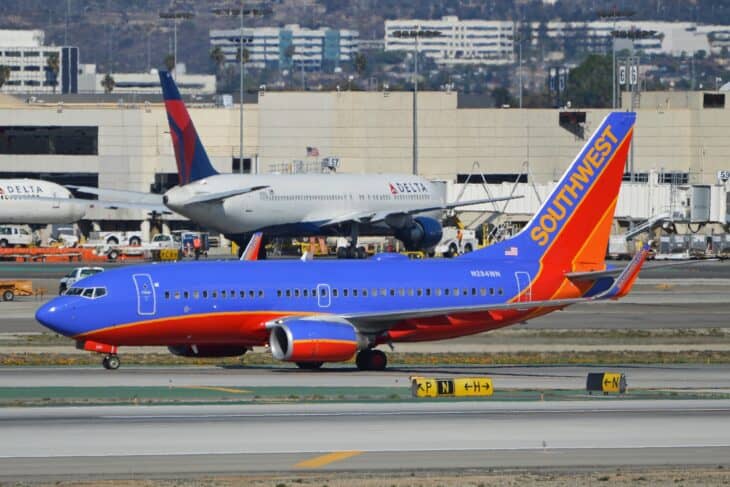

Flightradar24 data identifies the aircraft as N281WN, a Boeing 737-700. FAA registry records list it as a Southwest-owned 737-7H4 powered by CFM International CFM56-7B24 engines, with an airworthiness date of June 2007, which makes it about 19 years old.
What is not known yet
Southwest has not said what the engine indication was, or whether the crew shut an engine down. The number of people on board has not been published. The FAA said it will investigate.
Why a warning light becomes an emergency
A maintenance indication is the airplane’s own systems flagging that something is outside its normal range. On an engine, that can be anything from a sensor fault to a real problem with oil, temperature or vibration, and the cause is not always clear from the flight deck.
That is why crews declare an emergency early rather than late. A declaration gets the flight priority handling from air traffic control for the rest of the trip.
Circling offshore at low altitude, as the track suggests WN3396 did, also gives a crew time to work through checklists and talk to the airline’s maintenance control before choosing where to land. Southwest has not said why the crew picked LAX over a return to John Wayne.
The diversion added little distance. LAX lies about 35 miles (56 km) up the coast from John Wayne, a fraction of the roughly 340-mile (550 km) trip to San Jose.
A busy week for Southwest
WN3396 came two days after another Southwest flight cut its trip short. On November 4, flight WN712 returned to Louisville after its crew reported fumes in the cockpit and cabin of a 737 MAX 8.
Nothing published so far links the two events. For passengers at Los Angeles International on Friday, the practical result was a delayed afternoon and a different airplane to San Jose.
Sources and references used for research and fact-checking.
Get the Newsletter
The latest aviation news and stories sent to your inbox.
About the Author

AeroCorner News is the aviation news desk of AeroCorner.com. It covers accidents and incidents, safety rulings, airline and airport disruption, and new aircraft. It works from primary sources such as the NTSB, FAA, EASA and the manufacturers' own announcements.