

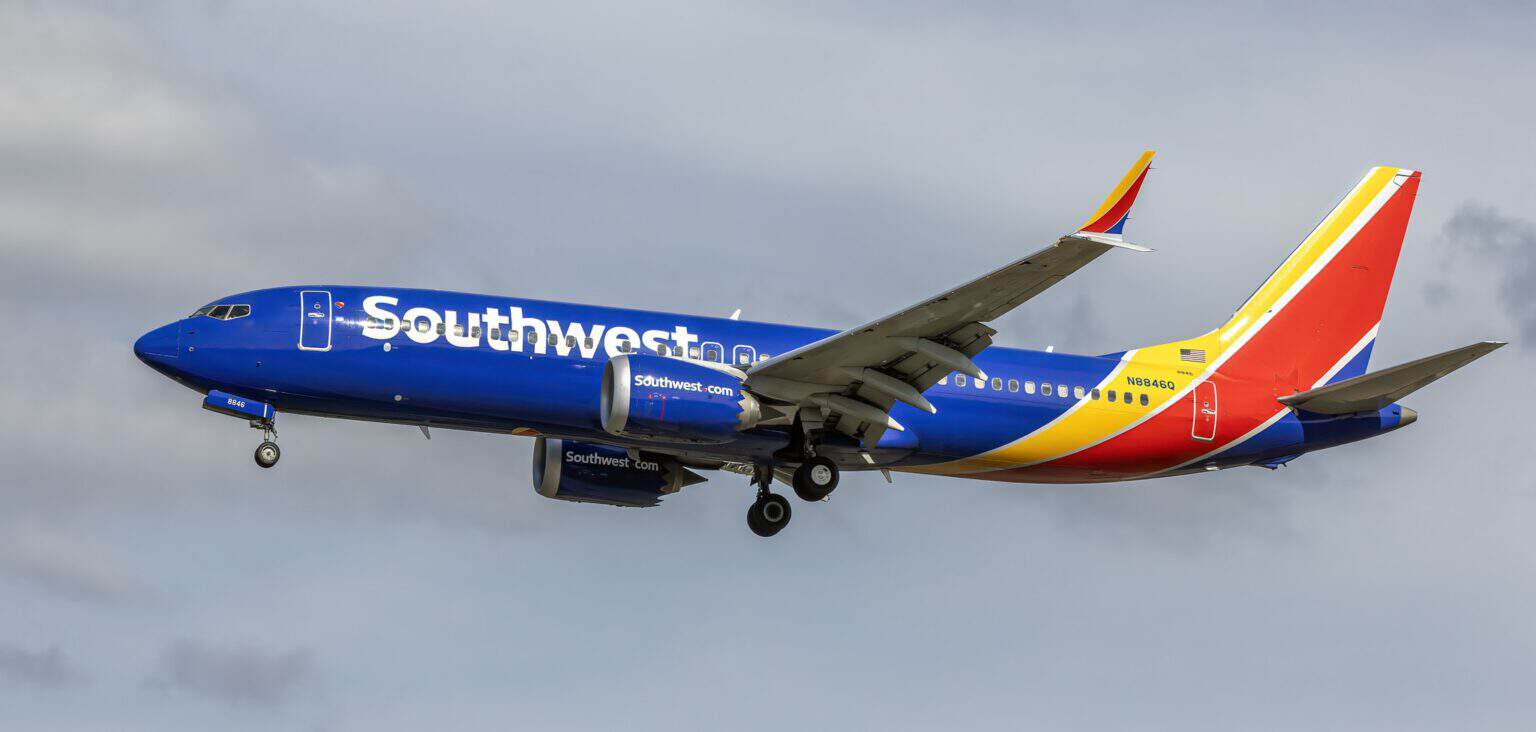
Southwest Airlines flight WN712 from Louisville to Orlando turned back to Louisville on Wednesday afternoon, November 4, 2026, after the crew reported fumes in both the cockpit and the cabin. The Boeing 737 MAX 8, registration N8846Q, landed safely about 22 minutes after takeoff.
There were 172 people on board, The Aviation Herald reported. Passengers reached Orlando on a replacement jet that evening, about five hours behind schedule.
What happened on WN712
Flight-tracking data from FlightAware shows the jet left the gate at Louisville Muhammad Ali International Airport at 1:18 p.m. Eastern time, 23 minutes late. It took off at 1:29 p.m., in rain, on a flight scheduled to reach the gate in Orlando at 3:00 p.m.

According to The Aviation Herald, the crew stopped the climb at about 6,000 feet (1,800 m) and reported fumes in the cabin and cockpit. The ADS-B track shows the 737 leveling off near that height and turning back about 24 miles (39 km) south of the airport.
The jet flew an instrument approach to runway 17R, the report says, and touched down at 1:51 p.m. Louisville weather reports at the time recorded rain and mist, with heavy rain earlier in the hour.
FlightAware’s history for a second 737 MAX 8, N8923Q, shows it flying the Louisville to Orlando leg instead. It took off at 6:24 p.m. and landed in Orlando at 8:04 p.m., a little over five hours after the original arrival time.
N8846Q stayed on the ground in Louisville overnight. Its tail history shows it flying to Chicago Midway at 10:29 a.m. the next day, about 20 and a half hours after landing, and then on to St. Louis.
FAA registry records list N8846Q as a 737-8 powered by CFM LEAP-1B engines, with an airworthiness date of February 2023.
What is not known yet
The source of the fumes has not been reported, and AeroCorner found no statement from Southwest Airlines or the FAA at the time of writing. The available reports do not say whether anyone needed medical attention.
Why a smell is enough to turn back
An unfamiliar smell is hard to diagnose in flight, and fumes in the flight deck can affect the people flying the airplane. Returning to the departure airport puts the jet on the ground quickly while the cause is found.
On WN712 that choice was simple. The jet was still within about 24 miles of Louisville, with almost all of a roughly 720-mile (1,160 km) trip to Orlando ahead of it.
Like most airliners, the 737 MAX feeds its cabin with air drawn from the engine compressors, known as bleed air. The FAA says the mix of fresh and recirculated air is about 50 percent each, varying with altitude and power setting.
The agency also says that in rare cases a failed engine oil seal or a worn recirculation fan bearing can let fumes into the cabin. Other sources, such as electrical faults or hydraulic fluid, are possible too, which is why the cause is normally found only once maintenance has inspected the aircraft.
How fume events are tracked
The FAA has no formal definition of a “fume event.” Airlines must, however, file a Service Difficulty Report whenever smoke, vapor or noxious odors enter the cockpit or cabin.
The FAA says it investigates the causes of these incidents and makes sure they are fixed before the aircraft returns to service. That report, rather than any public statement, is usually where the cause of an event like WN712 ends up.
Such events are uncommon. An FAA review published in December 2015 put the rate of cabin air quality events at fewer than 33 per million departures.
They are still a live subject. In August, a peer-reviewed study found that many organophosphate compounds, a chemical family that includes ingredients of aviation lubricants, can disrupt hormone systems.
Sources and references used for research and fact-checking.
Get the Newsletter
The latest aviation news and stories sent to your inbox.
About the Author

AeroCorner News is the aviation news desk of AeroCorner.com. It covers accidents and incidents, safety rulings, airline and airport disruption, and new aircraft. It works from primary sources such as the NTSB, FAA, EASA and the manufacturers' own announcements.