

Aircraft fume events, the episodes where oil or hydraulic fumes reach the air passengers and crew breathe, are drawing fresh scrutiny. On August 28, 2026, the trade outlet Aerospace Global News reported on a peer-reviewed study in the journal iScience that screened dozens of organophosphate compounds and found many can disrupt hormone systems.
The researchers named aviation lubricants among the sources of exposure to that chemical family. The report lands weeks before an international cabin air conference at Imperial College London on September 22 and 23, and during an ongoing UK parliamentary inquiry into the issue.
How Cabin Air Can Get Contaminated
Almost every airliner flying today pressurizes the cabin with bleed air, hot air tapped from the engine compressors before fuel is added. If an engine oil seal wears or leaks, heated oil can enter that airflow and carry through to the cabin and flight deck.
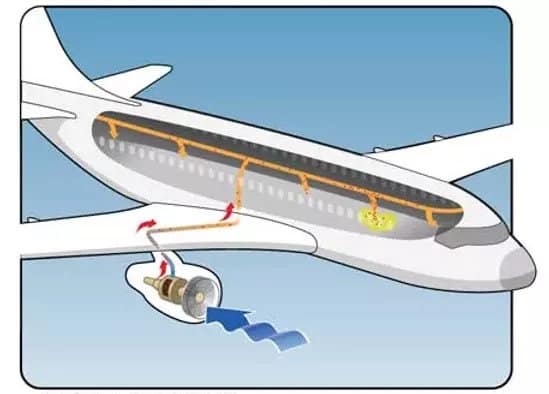
Jet engine oils contain tricresyl phosphate, an anti-wear additive from the same aryl-phosphate family the new study examined. Crews often describe a fume event by smell, from “dirty socks” to an acrid, oily haze, and reported symptoms range from headaches and dizziness to breathing and vision problems.
A Wall Street Journal investigation in 2024 counted about 108 reported fume events per million departures at major US airlines, roughly two a day. Internal airline data cited in that reporting suggested the real figure could be closer to 800 per million flights. Most events are brief odors; a smaller share involve visible smoke or crew incapacitation, as when an unexplained smell forced a Lufthansa 747 to divert this month, or smoke filled the cabin of a SWISS A330 over the Atlantic.
What the study does and does not show
The iScience work is a laboratory screening of chemical activity, not a measurement of what a passenger inhales during a fume event or proof of harm at real-world doses. AeroCorner has not independently reviewed the paper. Aviation regulators have so far held that cabin air meets safety standards, a conclusion pilot and cabin-crew unions dispute.
Where the Debate Is Heading
A UK All-Party Parliamentary Group on Cabin Air Quality, chaired by Tom Gordon MP, has been taking evidence from pilots, crew and passengers. Witnesses have urged the group to push for real-time cabin air sensors, which experts told the inquiry are technically straightforward and cheap relative to the size of the industry.
The 2024 FAA reauthorization law included cabin-air provisions, and EASA runs a research program on the question in Europe. The September conference brings together airlines, filtration and sensor suppliers, medical researchers and unions, including Association of Flight Attendants president Sara Nelson, to review the science and possible fixes such as less hazardous oils and bleed-air filtration.
One aircraft sidesteps the mechanism entirely. The Boeing 787 uses electric compressors to draw cabin air from dedicated inlets rather than from the engines, so engine oil cannot reach the supply the same way. Every other current airliner, from the A320 to the 777, still relies on bleed air.
Fume events in brief
Bleed air taps the engine compressors to pressurize the cabin. A worn oil seal can send heated oil, including tricresyl phosphate, into that airflow. US airlines reported about 108 events per million departures in 2024, with the true rate likely higher. The Boeing 787 is the only current airliner that does not use bleed air.
Get the Newsletter
The latest aviation news and stories sent to your inbox.
About the Author

Tim is the owner and lead editor of AeroCorner since 2019, overseeing aviation content covering aircraft, airlines, airports, and the broader aviation industry. Through years of researching, writing, editing, and publishing aviation-focused content, he has developed extensive practical knowledge of commercial aviation and air travel. Based in Asia and a frequent traveler himself, Tim also brings firsthand passenger experience to AeroCorner’s coverage. Outside of publishing, he has also explored aviation firsthand through hands-on flight training in New Zealand.