

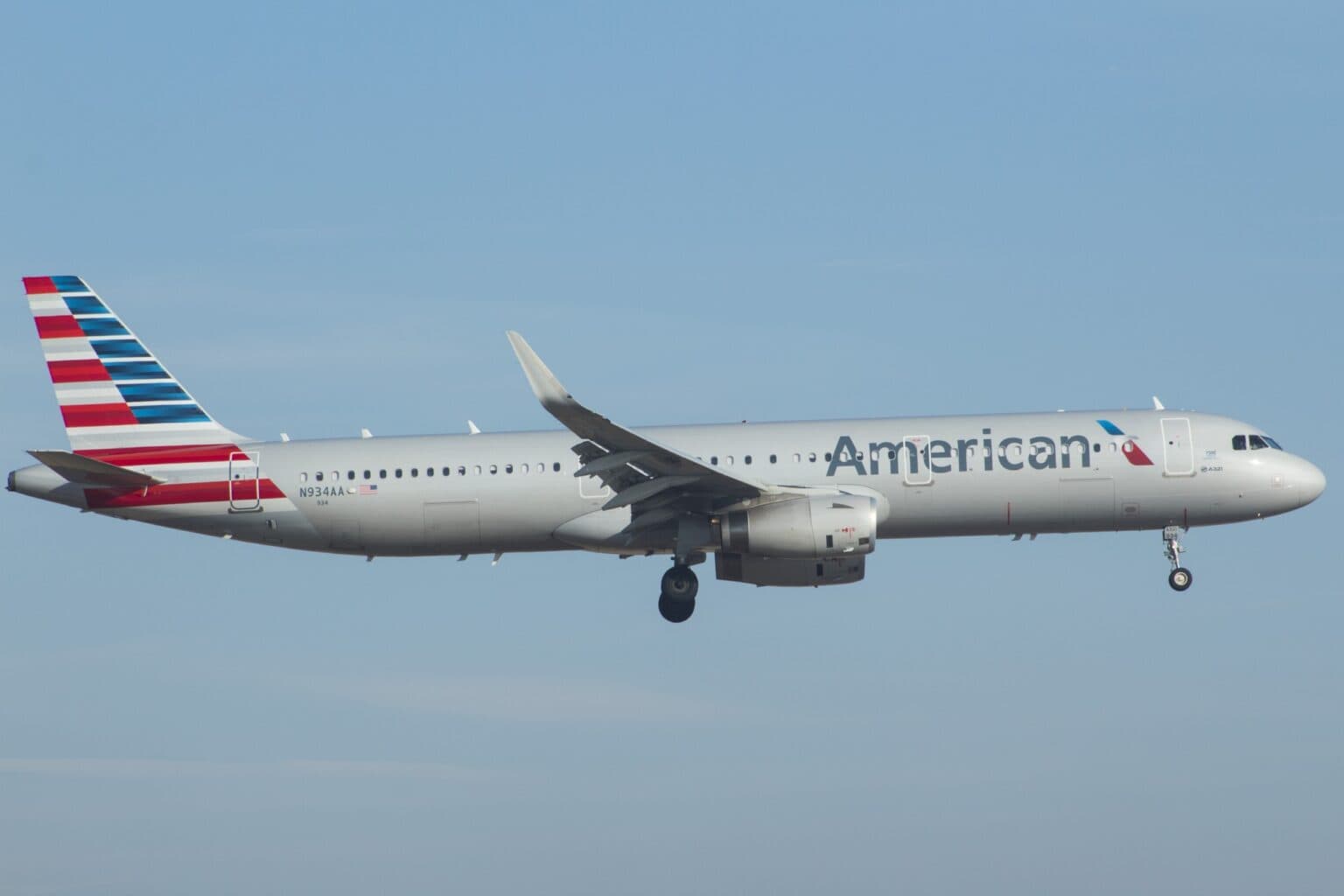
American Airlines flight AA2411 from Charlotte to San Francisco diverted to Memphis on Sunday morning, October 11, 2026, after the flight crew noticed a toxic fume smell in the cockpit and put on their oxygen masks. The Airbus A321, registration N934AA, landed safely with 113 people on board.
The flight was cruising at 34,000 feet about 100 nautical miles northeast of Memphis when the crew decided to divert, The Aviation Herald reported. It touched down on runway 36C about 22 minutes later.
What happened on AA2411
Flight-tracking data from FlightAware shows the jet pushed back from gate B11 at Charlotte Douglas International Airport at 7:24 a.m. Eastern time, 19 minutes behind schedule. It took off at 7:59 a.m. for a flight that normally runs close to five hours.
Instead, the A321 landed at Memphis International Airport at 8:17 a.m. Central time, 1 hour and 18 minutes after takeoff. It reached the gate at 8:47 a.m.
FlightAware’s tail history for N934AA confirms it was the aircraft on the Charlotte to Memphis leg. FAA registry records list it as an A321-231 with IAE V2533-A5 engines and an airworthiness date of April 2017.
FlightAware lists a continuation of AA2411 from Memphis to San Francisco. Late on Sunday it showed that leg estimated to leave Memphis at about 5:00 a.m. on Monday, which would leave passengers in the city overnight.
What is not known yet
The source of the fumes has not been reported. AeroCorner found no statement from American Airlines or the FAA by late Sunday, and the incident report does not mention any injuries. The aircraft and crew assignment for the onward flight had not been confirmed.
Why pilots put on oxygen masks first
Fumes in the flight deck are treated as a threat to the people flying the airplane, not just a comfort problem. Guidance summarized by SKYbrary, the aviation safety knowledge base, is that flight crew should don oxygen masks immediately at the first sign of smoke or fumes in the cockpit.
The masks protect the pilots from whatever they are smelling while they work through the checklist and choose an airport. On AA2411, Memphis was about 100 nautical miles away with most of the trip to San Francisco still ahead.
On jets like the A321, part of the cabin air is bled from the engine compressors. The FAA says that mix runs at roughly 50 percent outside air, and that in rare cases a failed engine oil seal or a worn recirculation fan bearing can let fumes into the cabin.
An odor does not always mean oil, though. Electrical faults, hydraulic fluid and leaks around the auxiliary power unit can all produce fumes, which is why the cause of an event is usually only known after maintenance has inspected the aircraft.
How fume events are reported
Under 14 CFR 121.703, an airline must file a Service Difficulty Report with the FAA when an aircraft component causes smoke, vapor, or toxic or noxious fumes to build up in the cockpit or cabin during flight. The FAA says it then makes sure the cause is fixed before the aircraft returns to service.
Congress pushed for more data in the 2024 FAA Reauthorization Act. Section 362 required a voluntary reporting system for airline employees to log fume and smoke events, with fields for the flight number, registration, smell, location and phase of flight.
The same section asks the National Academies to study cabin air quality and to recommend ways to improve fume detection. The FAA says it has signed agreements for that study, and the law lets the agency propose rules on crew training and onboard air quality detectors once it is done.
American has diverted for fumes before. In November 2025, flight AA2118 from Orlando to Phoenix landed in Houston after crew reported fumes in the flight deck and cabin, and four flight attendants and a passenger were taken to a hospital, CBS News reported.
In August, a peer-reviewed study found that many organophosphate compounds, a chemical family that includes ingredients of aviation lubricants, can disrupt hormone systems. The FAA’s own 2015 review put cabin air quality events at fewer than 33 per million departures.
Sources and references used for research and fact-checking.
Get the Newsletter
The latest aviation news and stories sent to your inbox.
About the Author

Tim is the owner and lead editor of AeroCorner since 2019, overseeing aviation content covering aircraft, airlines, airports, and the broader aviation industry. Through years of researching, writing, editing, and publishing aviation-focused content, he has developed extensive practical knowledge of commercial aviation and air travel. Based in Asia and a frequent traveler himself, Tim also brings firsthand passenger experience to AeroCorner’s coverage. Outside of publishing, he has also explored aviation firsthand through hands-on flight training in New Zealand.